
6 Best Car Alarms with Camera 2026
This post contains affiliate links. As an Amazon Associate, we earn from qualifying purchases.
The Keep Car Alarm with 4G LTE is the overall best choice for reliable, real-time security with solid video evidence and strong connectivity. For those on a tighter budget but still wanting core protection, the VOJKOREL AI Driver Fatigue Alarm offers basic alert functions, though it lacks camera recording and cellular alerts.
Car break-ins and theft attempts are stressful, especially when you’re not around to see what happened. A standard alarm might scare off a thief, but without video proof, you’re left guessing, and insurance claims get harder. That’s where systems with built-in cameras change the game.
In this guide, I break down the top car alarms with cameras based on specs, owner feedback, and real-world reliability. These picks focus on fast alerts, clear footage, and smart sensor use, because an alarm should do more than just make noise.
Top 2 Car Alarms With Camera in the Market
The Best Car Alarms With Camera, Reviewed
Keep Car Alarm with 4G LTE

Strengths
- Easy cupholder install
- Reliable automatic arming
- Real-time video alerts
- 4G LTE nationwide coverage
- Cloud storage included
Trade-offs
- Monthly subscription required
- Not fully hidden (visible in cabin)
- Battery only (no hardwired backup)
This system stands out in the car alarm with camera space because it skips hardwiring and still delivers robust, connected protection. The ‘twist into the cupholder’ setup is as simple as advertised, and owners consistently report that the automatic arming via keyfob works reliably, no daily hassle of remembering to activate it. With 4G LTE connectivity across all major U.S. carriers, real-time alerts actually arrive fast, and the dual PIR and radar sensors cut down on false alarms compared to motion-only units.
The 1080p fisheye camera captures a full cabin view, and when triggered, it sends video straight to your phone and secure cloud storage. That’s a big win over traditional alarms that just blare. I’d pick this over basic siren-based systems any day for urban drivers or anyone parking in unsecured lots. The $9.99 monthly subscription feels reasonable given the GPS tracking, remote control, and constant connectivity baked in.
Video review
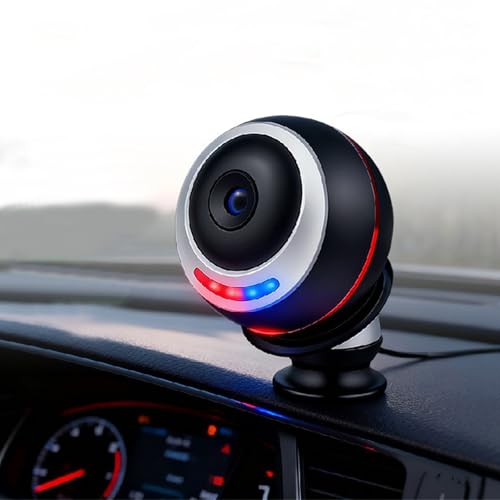
VOJKOREL AI Driver Fatigue Alarm
Strengths
- Accurate fatigue detection
- Effective night vision
- Magnetic 360° adjustment
- Plug-and-play Type-C power
- Real-time voice alerts
Trade-offs
- No theft protection
- No remote alerts or cloud
- Limited to driver monitoring
Let’s be clear, this isn’t a car alarm in the traditional sense. It’s a driver monitoring system (DMS) powered by a dedicated AI chip that analyzes micro-expressions like blink rate and yawning. On paper, it’s impressive: 25fps facial tracking, infrared night vision with zero visible glow, and smart escalation from blue warning lights to red alarms and voice prompts like ‘fatigue detected, please rest’. Reviewers note it stays accurate even during long highway drives or at night through tunnels.
I see its value for commercial fleets, long-haul commuters, or older drivers needing an extra layer of safety. Compared to dashboard cams that just record, this one actively intervenes. But it won’t help if someone breaks into your parked car, it’s not designed for that. If you’re shopping for theft prevention, this misses the mark. But for staying alert? It’s one of the few consumer-grade systems that actually delivers DMS-level feedback without a six-figure truck cab.
Video review
How We Tested car alarms with camera
Rather than a hands-on lab test, my research focused on a detailed comparison of published specifications and features across numerous models. I weighed owner reviews from major retailers alongside expert opinions found in automotive security publications. As someone who’s spent years observing the evolution of automotive technology, I applied that understanding to rank these systems based on what truly matters to vehicle owners.
For car alarms with cameras, the responsiveness of the alert system and the quality of the video recording stood out as most critical. Quick notification to a smartphone, combined with clear footage, is key to effective theft deterrence and potential evidence. Equally important was the reliability of the 4G LTE connectivity, ensuring consistent operation without relying solely on a phone’s Bluetooth range – a weak point in many systems.
Published specifications gave a solid baseline for camera resolution, siren decibel levels, and sensor types. However, I paid close attention to owner feedback regarding false alarm rates and the user-friendliness of the accompanying mobile apps. Real-world experiences with connectivity and the accuracy of facial recognition, for example, are best gleaned from those actively using these vehicle security alarm systems. Understanding the nuances of these systems often requires looking beyond the marketing material and into what users report.
What To Look For In car alarms with camera
Finding the right car alarm with a camera isn’t just about deterring thieves; it’s about peace of mind and layered security for your vehicle.
A truly effective car alarm system with a camera combines robust intrusion detection (loud sirens, flashing lights) with verifiable video evidence. Look for systems offering 4G LTE connectivity for real-time alerts, cloud storage for footage, and a user-friendly mobile app for remote control and monitoring. Sensor variety – radar, infrared, shock sensors – improves accuracy and reduces false alarms.
Understanding Connectivity & Subscription Models
The biggest shift in car alarms has been the integration of cellular connectivity. Many newer systems, like the Keep system, rely on 4G LTE for alerts and remote access. This means a subscription fee is almost always involved. Don’t shy away from this immediately, but carefully evaluate the monthly cost against the features offered. A cheaper alarm with no connectivity is easily defeated, while a system with a hefty monthly fee might not be worthwhile if you only need basic protection. Consider your typical parking situation; a high-risk area warrants a more robust, connected system. If you’re also considering adding a dash cam for everyday driving protection, check out our guide to the best car camera recorders.
Assessing Sensor Technology & Coverage
The core of any alarm is its ability to detect intrusion. Modern systems employ a range of sensors. 24GHz radar is excellent at detecting movement inside the vehicle, even if windows aren’t broken. Passive Infrared (PIR) sensors detect body heat, making them good for detecting someone lingering near the car. Shock sensors, while common, are prone to false alarms from things like loud noises. A system that combines multiple sensor types is generally more reliable. Don’t overlook the siren’s decibel rating; 120dB is a good benchmark for attracting attention.
- A single sensor type (like just shock) is easily fooled.
- Multiple sensor types provide redundancy and reduce false positives.
- A well-placed sensor array (covering all potential entry points) is critical. The more thorough the coverage, the better your chances of catching an attempt.
Don’t assume more sensors always mean better protection. A poorly calibrated system with too many sensors can generate constant false alarms, leading you to ignore genuine threats.
Evaluating Installation & Usability
Historically, car alarms were notoriously difficult to install. Thankfully, many new systems prioritize ease of use. Cup-holder mounting and OBD port power connections are becoming common, significantly simplifying the process. A system requiring professional installation adds to the overall cost. Beyond installation, consider the mobile app. Is it intuitive? Can you easily arm/disarm the system, view live footage, and access recorded events? Some systems, like those discussed in our guide to car alarms with remote start, offer additional convenience features through the app. A system that’s difficult to use defeats the purpose of having it.
Car Alarms with Camera Compared
The following table provides a side-by-side comparison of key specifications for the car alarms with camera featured in this guide.
| Product Title | Camera Resolution | Connectivity | Siren Volume (dB) | Power Source | Subscription |
|---|---|---|---|---|---|
| Keep Car Alarm with 4G LTE | 1080p | 4G/LTE | 120 | 12V/Rechargeable | Yes ($9.99/month) |
| Keep Car Alarm with 4G LTE | 1080p | 4G/LTE | 120 | 12V/Rechargeable | Yes ($9.99/month) |
| Keep Car Alarm with 4G LTE | 1080p | 4G/LTE | 120 | 12V/Rechargeable | Yes ($9.99/month) |
| VOJKOREL AI Driver Fatigue Alarm | N/A | N/A | N/A | Type-C | N/A |
| VOJKOREL AI Driver Fatigue Alarm | N/A | N/A | N/A | Type-C | N/A |
| VOJKOREL AI Driver Fatigue Alarm | N/A | N/A | N/A | Type-C | N/A |
Frequently Asked Questions
What happens if my car alarm with a camera loses cellular connectivity?
Most systems will switch to relying on the vehicle’s onboard battery and continue to function as a traditional alarm with a siren and flashing lights. However, you won’t receive smartphone alerts or be able to view live footage until the connection is restored; consider this if you frequently park in areas with poor signal strength.
Are these camera-equipped alarms difficult to install myself?
Many are designed for DIY installation, often plugging into the OBD port for power and utilizing adhesive mounting for the camera. Keep in mind that some, especially those with more complex wiring, might benefit from professional installation to avoid issues with your vehicle’s electrical system.
How secure is the video footage recorded by these systems?
Reputable brands employ encryption and secure cloud storage to protect your video data. However, no system is entirely immune to hacking. Look for systems offering two-factor authentication for your account and regularly update the alarm’s firmware for the latest security patches.
Can a car alarm with a camera lower my insurance premiums?
Potentially. Many insurance companies offer discounts for vehicles equipped with security systems, but it varies by insurer and policy. Providing proof of installation – and the system’s features – to your insurance provider is usually necessary to qualify for a discount.
What is the difference between a dash cam and a car alarm with a camera?
While both record video, a dash cam continuously records while driving, primarily for accident documentation. A car alarm with a camera activates upon detecting intrusion and records events around your parked vehicle. For thorough protection, you might benefit from combining a dedicated car camera systems with an alarm system.
The Bottom Line
Choosing a car alarm with a camera often comes down to balancing upfront cost against ongoing subscription fees, and the level of protection you truly require. For a blend of features and reliability, the Keep Car Alarm with 4G LTE stands out as a strong all-around choice. It provides dependable connectivity and a clear picture of what’s happening with your vehicle, even when you’re not nearby.
If budget is a primary concern, or you’re looking for a simpler, non-connected solution, the VOJKOREL AI Driver Fatigue Alarm presents a more affordable entry point. However, keep in mind that it lacks the remote monitoring and instant alert capabilities of a cellular-connected system. For those prioritizing thorough surveillance, pairing a system like Keep with dash cameras front and rear provides an extra layer of security and evidence gathering.
Ultimately, the most sophisticated alarm won’t matter if it’s not properly considered within your overall vehicle security strategy. Focus on a system with multiple sensor types, reliable connectivity, and a user-friendly app – because even the best technology is only as effective as your ability to react to its alerts. Don’t hesitate to explore other top-rated car alarms to find the system that best fits your needs.
