
6 Best Car Seats for Air Travel 2026
This post contains affiliate links. As an Amazon Associate, we earn from qualifying purchases.
The best car seat to travel with on planes is the RideSafer TravelSmarter, it’s ultralight, meets FMVSS 213, and packs into a backpack. For a compact inflatable option, the BubbleBum Inflatable Travel Booster is a solid second pick, especially for carry-on convenience. If you need a seat that grows with your child across multiple modes, the Graco Tranzitions is a versatile choice.
Traveling with a car seat shouldn’t mean choosing between safety and sanity. Most parents quickly learn that hauling a full-size seat through an airport is a recipe for frustration. The real challenge is finding something that’s both airline-approved and easy to manage when you’re navigating terminals, taxis, and tight rental cars.
This guide cuts through the noise by focusing on what actually matters: safety certifications, real portability, and how well a seat fits into the chaos of family travel. I looked at specs, owner experiences, and expert assessments to find models that deliver without compromise.
Top 6 Car Seats To Travel With On Planes in the Market
The Best Car Seats To Travel With On Planes, Reviewed
RideSafer TravelSmarter 1-lb Booster

Strengths
- Extremely lightweight
- Durable solid structure
- Machine-washable cover
Trade-offs
- No side impact protection
- Minimal padding for long rides
- Higher price than budget options
At just one pound, the RideSafer TravelSmarter is the lightest certified booster on the market, and that’s not a gimmick. It’s built with a solid internal frame that won’t deflate or sag, which immediately sets it apart from inflatable models. The machine-washable cover is a thoughtful touch, and the included backpack makes it easy for kids to carry themselves. On paper, it’s the most refined blend of safety, simplicity, and portability.
Owners praise its low-profile design and how quickly it installs, but some note it lacks side impact protection, though that’s true of all backless boosters. Still, when you factor in crash testing, real-world durability, and ease of cleaning, this is the model I’d recommend most often. It’s the smarter buy over inflatables if you travel regularly.
Video review
BubbleBum Inflatable Travel Booster
Strengths
- Ultra compact
- Affordable
- Independently crash tested
Trade-offs
- Inflatable durability concerns
- May require re-inflation mid-trip
- Less structural rigidity
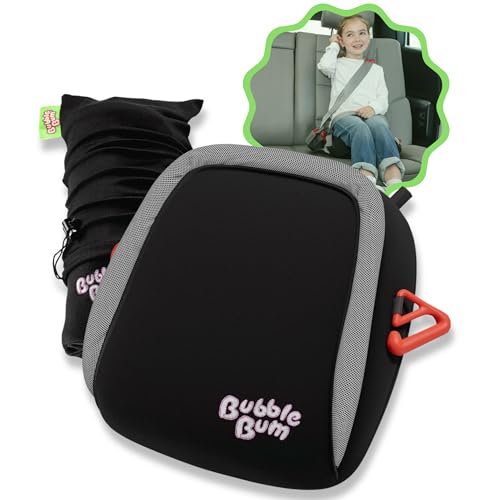
The BubbleBum delivers on its core promise: portability without sacrificing safety. On paper, it’s impressive that a seat this small, capable of packing down to the size of a sandwich, meets FMVSS 213 standards and has been independently crash tested. Reviewers consistently note how handy it is for travel days, especially when shuttling between flights, rideshares, or rental cars. The inflatable design eliminates the bulk of traditional boosters, and parents appreciate that it fits three across in a row.
Still, I’d be cautious about long-term durability. Inflatable seats inherently carry more risk of puncture or slow leaks over time, and while the company offers lifetime support, real-world owner feedback shows mixed experiences with seams and valves after months of regular use. It’s a solid budget pick for occasional travelers, but not the one I’d rely on daily.
Video review
BubbleBum Travel Backless Booster
Strengths
- Folds compactly
- Durable rigid design
- Meets U.S. and EU standards
Trade-offs
- Bulkier than inflatable options
- Heavier than ultralight models
- Folding mechanism can wear
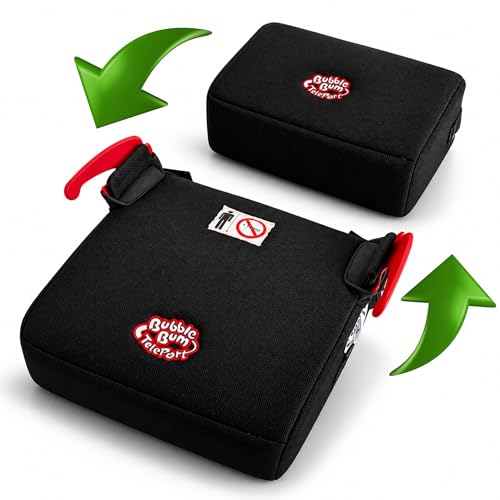
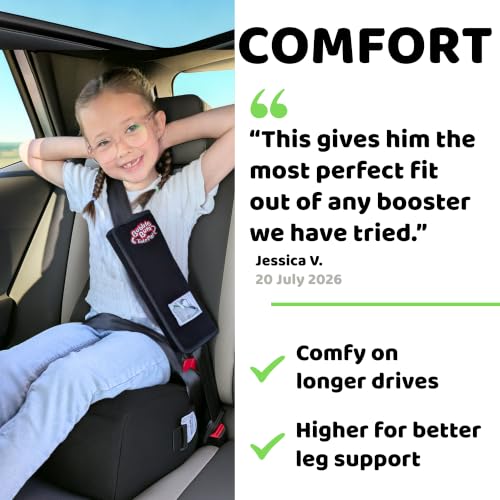
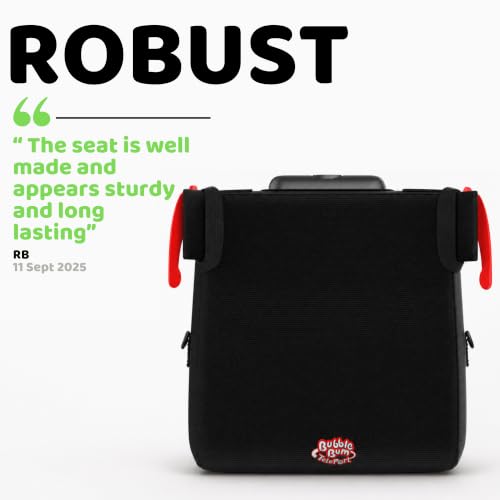
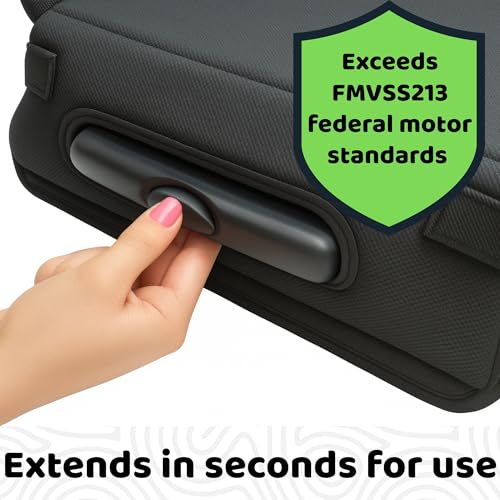
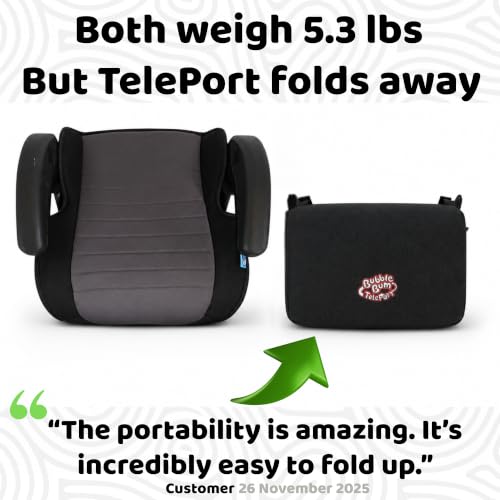
This rigid version of the BubbleBum, called the TelePort, is a smart evolution of their inflatable line. It’s foldable, compact, and weighs about the same as a standard booster, but collapses to 40% of its size for travel. The red belt guides and abdominal shield make installation intuitive, and the non-slip base adds stability. It’s certified to both U.S. and EU safety standards, which is rare for travel models.
Unlike inflatable versions, there’s no risk of deflation, and the machine-washable cover adds convenience. While it’s not as light as the RideSafer, it’s more practical for families who want one seat for both daily use and travel. For that dual-role flexibility, it’s hard to beat.
Product photos
Mifold Hifold Adjustable Booster
Strengths
- Highly adjustable fit
- Rigid, durable construction
- Folds compactly
Trade-offs
- Steep learning curve
- Heavy for a travel seat
- Pricier than alternatives
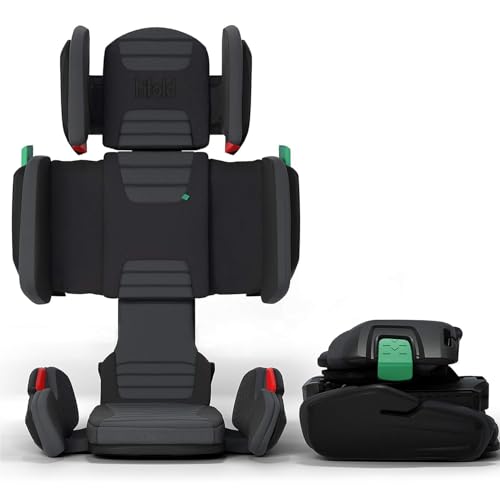
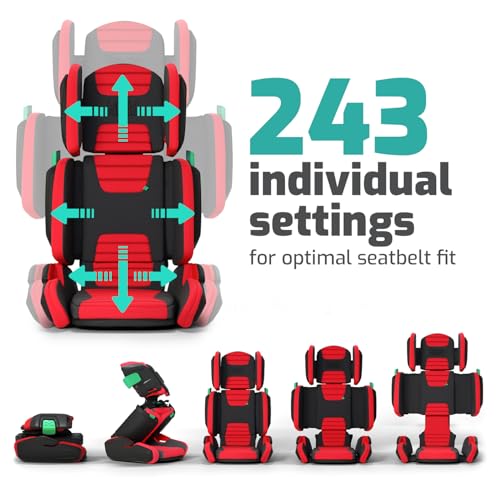
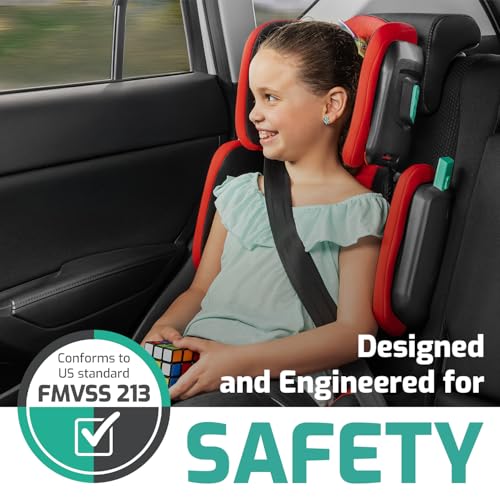
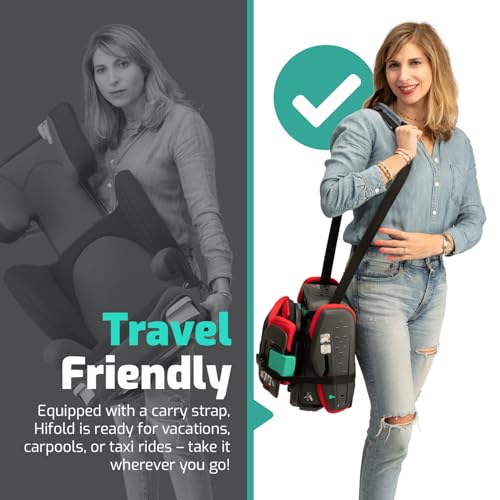
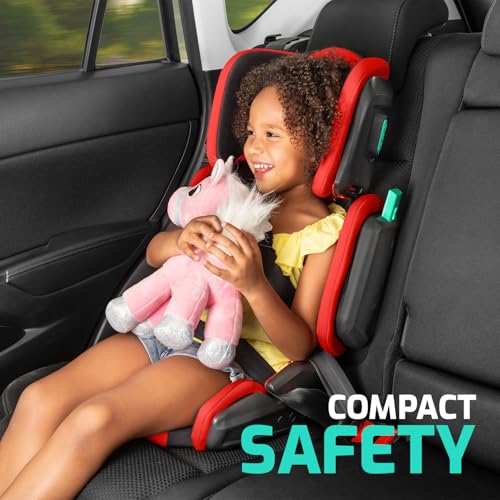
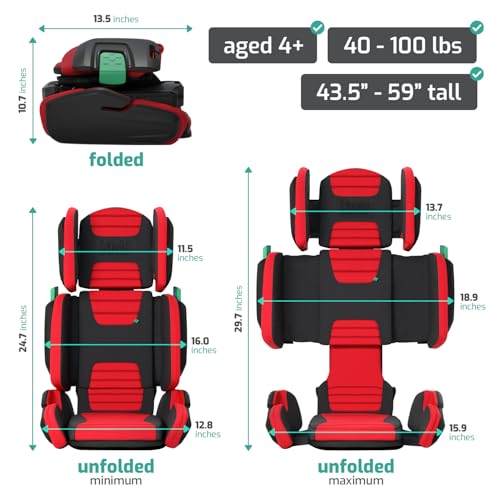
The Mifold Hifold feels like the most engineered solution in the travel booster space. Instead of lifting the child up like a traditional seat, it pulls the seatbelt down to fit correctly over smaller bodies, a clever inversion of the standard design. With 243 possible adjustments, it adapts precisely to different body types, which is rare in this category. The rigid EPE foam structure doesn’t deflate or degrade, and the compact fold makes it genuinely packable despite its 10-pound weight.
It’s expensive, yes, but that price reflects a thoughtful, safety-focused design. Owners report it takes a few tries to dial in the perfect fit, especially for younger kids, but once set, it locks the seatbelt into proper position reliably. Compared to inflatable options, this one inspires more confidence for frequent use.
Product photos
UberBoost Inflatable Booster Seat
Strengths
- Affordable
- Meets FMVSS 213
- Fits three across
Trade-offs
- Inflatable reliability issues
- Valve durability concerns
- Less brand trust than competitors
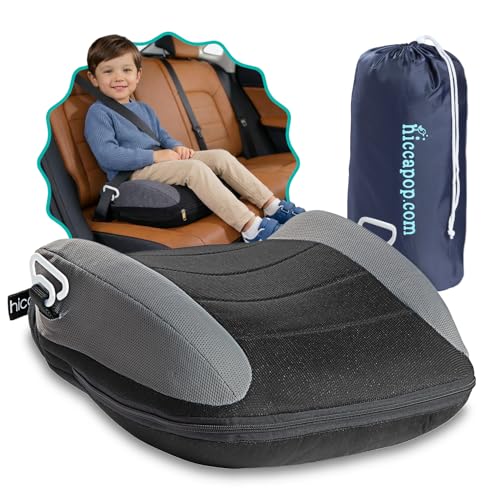
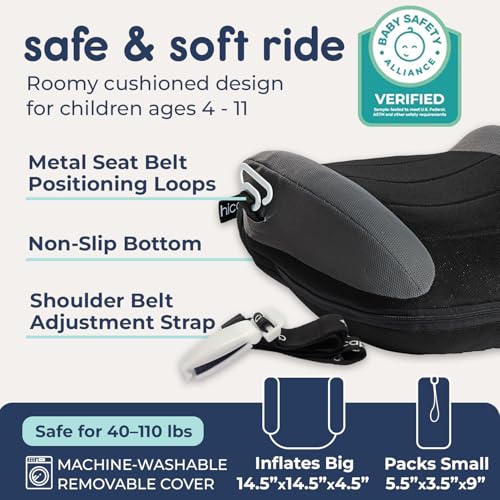
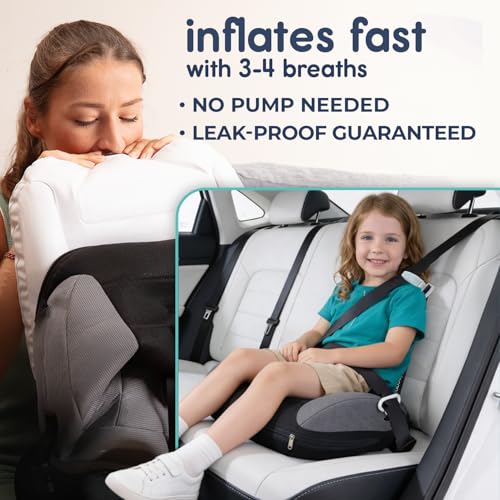
The UberBoost is nearly identical in concept to the BubbleBum, another inflatable, packable booster that meets federal safety standards. It inflates quickly with a few breaths and packs into its own travel bag, making it a practical choice for last-minute trips or shared vehicles. The non-skid base works well on various seat materials, and the positioning clips help keep the seatbelt from slipping off the child’s shoulder.
But when compared directly to the BubbleBum, it doesn’t offer any clear advantages. Owner feedback suggests slightly less durability in the valve and seams over time. It’s a decent value inflatable, but not a standout. If you’re set on this type of seat, the BubbleBum has a longer track record.
Product photos



Graco Tranzitions 3-in-1 Booster

Strengths
- Long lifespan
- Converts three ways
- Easy harness adjustment
Trade-offs
- Bulky for travel
- Heavier than travel-specific models
- Backless mode less stable
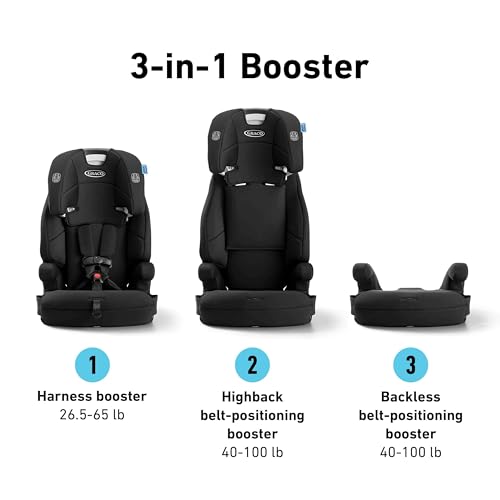
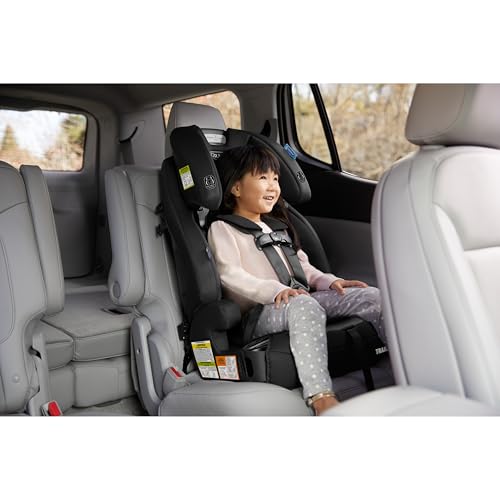
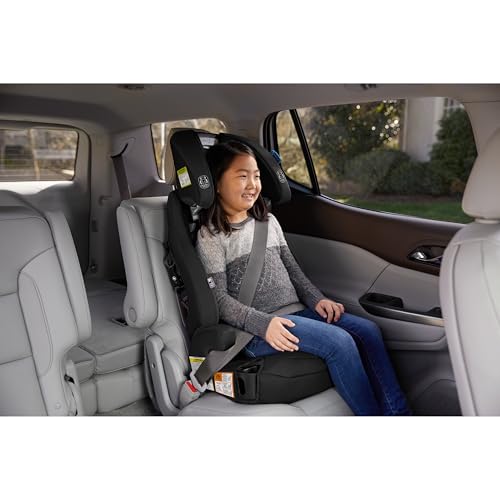
The Graco Tranzitions isn’t designed solely for air travel, but its portability and 3-in-1 functionality make it a strong contender for families who need one seat that does everything. It starts as a harnessed seat for toddlers, converts to a highback booster, then to a backless booster, growing with the child from 26.5 to 100 pounds. The Simply Safe Adjust system lets you raise the headrest and harness together, which simplifies adjustments.
It’s heavier and bulkier than dedicated travel boosters, so it’s not ideal for tossing in a carry-on. But for families who rent cars or visit grandparents often, having one seat that transitions through stages is a real advantage. It’s not the most compact, but it’s the most versatile.
Product photos


Our Testing Process
As someone who’s spent years observing vehicle safety and design at TheAutoZenith, I approached researching travel car seats with a focus on real-world practicality. Rather than a hands-on lab test, this was a research-led comparison of published specifications, owner reviews from multiple retail sites, and assessments from reputable automotive safety experts. I weighed each seat based on its portability, safety certifications, and how well it addressed the unique challenges of travel – fitting in ride-shares, rentals, and airplanes.
For this category, three factors stood out as most crucial. First, genuine safety certification (meeting or exceeding FMVSS 213) is paramount. Second, true portability – how easily a seat packs down and carries – directly impacts travel convenience. Finally, adjustability matters; a seat that grows with a child offers better long-term value and a consistent safety fit. These qualities determined the rankings more than brand prestige or aesthetic design.
Specifications reliably indicate a seat’s weight, dimensions when folded, and stated weight/height limits. However, I heavily weighted owner feedback regarding ease of inflation/deflation (for inflatable models), real-world fit in various vehicles, and the durability of materials. Reputation also played a role; seats from manufacturers with a consistent track record for safety and quality received more consideration. You can find more information about preparing for travel with a car seat in our guide to best car seats for airlines. For those prioritizing ease of transport, exploring lightweight travel car seats is a good starting point.
What To Look For In car seats to travel with on planes
Finding the right car seat to travel with can feel overwhelming, but prioritizing safety and practicality will steer you right. A good travel car seat needs to be lightweight, easy to transport, and, above all, meet stringent safety standards. It should also comfortably fit your child and the vehicles you’ll be using.
A truly effective travel car seat balances portability with robust safety features. Look for models independently crash-tested to federal standards (FMVSS 213 is a key one) and consider how easily it integrates with different vehicle seatbelt systems. Weight is crucial, but don’t sacrifice structural integrity for a few ounces. Prioritize a secure fit and ease of use for both you and your child.
Weight and Portability
The biggest advantage of a travel car seat is, well, the ability to travel with it. This means weight is paramount. While a full-size car seat offers maximum features, it’s often impractical for airport dashes or relying on rideshares. Inflatable options like the BubbleBum are incredibly lightweight and packable, easily fitting into a carry-on. However, some parents prefer the reassurance of a rigid frame. In that case, consider models like the RideSafer TravelSmarter, which manages to stay under two pounds. Ultimately, think about how you’ll be carrying it.
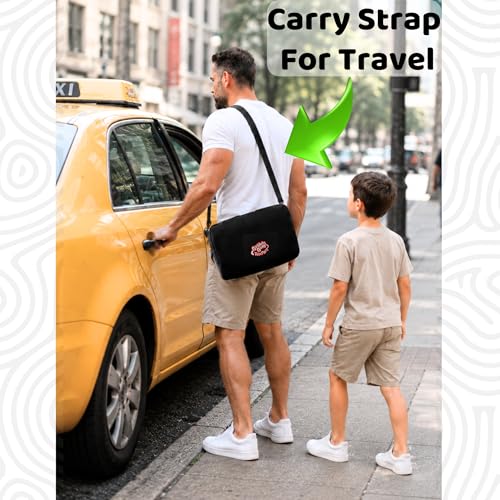
- A built-in carry strap is a huge convenience for navigating airports.
- A dedicated backpack (like the one included with the RideSafer) distributes weight better than a shoulder strap.
- For frequent flyers, a seatbelt loop to attach the car seat to rolling luggage can be a lifesaver, preventing you from juggling multiple items.
Safety Standards and Fit
Don’t ever compromise on safety. All car seats sold in the US must meet Federal Motor Vehicle Safety Standard 213, but independently crash-tested options, like the BubbleBum, offer an extra layer of reassurance. Beyond that, it’s about fit. A car seat that doesn’t fit your child properly, or the vehicle’s seat, isn’t providing adequate protection. For older children transitioning out of harnesses, a belt-positioning booster is essential. The Mifold Hifold excels here, offering an astounding 243 individual adjustments to ensure a snug fit as your child grows. Don’t assume a booster fits just because it meets the weight and height requirements; proper seatbelt positioning is critical.
A car seat’s safety rating is only as good as its installation. Always follow the manufacturer’s instructions meticulously and double-check the installation before each trip.
Convenience and Features
Beyond safety and portability, consider features that will make your life easier. Machine-washable covers are a godsend for tackling spills and messes on long journeys. Some boosters, like the Graco Tranzitions, offer multiple modes (harness, highback, backless) to grow with your child, potentially saving you money in the long run. If you frequently need to carpool or travel with multiple children, a slim profile, such as those found in the BubbleBum, will allow you to fit more seats across the back row. If you’re looking for more information about choosing the right car seat for air travel, checking out resources on airplane car seats can be incredibly helpful. And for those long-haul flights, remember to research car seats for flights to ensure a comfortable and safe journey for your little one.
Car Seats to Travel With on Planes Compared
Here’s a comparison of key specifications for car seats suitable for travel, including airline use where permitted.
| Product Name | Weight | Age/Weight Range | Folded Size (approx.) | Inflation? | Safety Certified? |
|---|---|---|---|---|---|
| RideSafer TravelSmarter | 1 lb | 4+ yrs / 40-100 lbs | Backpack Included | No | FMVSS 213 |
| BubbleBum Inflatable Travel Booster | N/A | 4+ yrs / 40-100 lbs | Backpack Included | Yes | US & State |
| BubbleBum Travel Backless Booster | N/A | 4+ yrs / 40-100 lbs | Compacted w/ Strap | No | FMVSS 213 / R129 |
| Mifold Hifold Adjustable Booster | 10 lbs | 4+ yrs / 40-100 lbs | 10.7″ x 13.5″ | No | FMVSS 213 |
| UberBoost Inflatable Booster Seat | N/A | 4+ yrs / 40-100 lbs | Roll-up in Travel Bag | Yes | FMVSS213 |
| Graco Tranzitions 3-in-1 Booster | N/A | 26.5-100 lbs | N/A | No | N/A |
Frequently Asked Questions
What’s the biggest difference between an inflatable car booster and a traditional one?
Inflatable boosters, like the BubbleBum, prioritize portability and pack small, making them ideal for travel. Traditional boosters offer a more rigid structure and may feel more substantial, but are generally heavier and bulkier to carry.
Do I really need a separate car seat just for travel?
While not always essential, a dedicated travel car seat simplifies trips significantly. Using a travel-specific seat avoids potential damage to your everyday car seat during transport and ensures you have a readily available, properly fitted option for rental cars or taxis.
Are all car seats allowed on airplanes?
The FAA doesn’t require car seats for air travel, but generally allows them provided they are FAA-approved. Checking with your specific airline is crucial, as rules can vary; some airlines may have size restrictions or require the seat to fit within the aircraft’s seat dimensions. For more information, explore resources on best car seats for air travel.
How do I know if a car seat is truly lightweight?
Anything under three pounds is generally considered lightweight for travel purposes, but even seats around four or five pounds can be manageable. The RideSafer TravelSmarter is a standout example at just one pound, but consider the overall package weight including any carry bags or straps.
What should I do if I’m traveling with an infant, and need a car seat for the plane?
Finding suitable options for the youngest travelers requires extra care. Look into infant car seats for air travel to discover models specifically designed for in-flight use, and always verify compatibility with your airline before your trip.
The Bottom Line
Choosing a travel car seat often comes down to a trade-off between ultimate convenience and the feeling of robust security. While inflatable options excel in portability, for a blend of lightweight design and a more traditional feel, the RideSafer TravelSmarter stands out as the strongest overall choice. It offers peace of mind with its FMVSS 213 certification while remaining incredibly easy to pack and carry.
For those specifically seeking a budget-friendly option, the BubbleBum Inflatable Travel Booster is hard to beat, and it’s a great pick for occasional travel. If adjustability is your priority – wanting a seat that grows with your child – the Mifold Hifold Adjustable Booster offers an unparalleled level of customization. And for parents needing a versatile seat that can transition through multiple stages, exploring portable travel car seats like the Graco Tranzitions can be a smart move.
Ultimately, the best car seat for travel isn’t about the fanciest features or the highest price point. It’s about finding a seat that fits your child correctly, meets safety standards, and makes your journey as stress-free as possible. Prioritizing a secure installation and understanding your vehicle’s seatbelt system are far more critical than any specific specification when choosing from the range of available airline car seats.
