
8 Best Car Seats for Airline Travel 2026
This post contains affiliate links. As an Amazon Associate, we earn from qualifying purchases.
The best car seat for airline travel is the WAYB Pico, a lightweight, FAA-approved all-in-one that packs down small and meets rigorous safety standards. For budget-conscious travelers, the BubbleBum Inflatable Booster offers solid performance and portability at a lower price, though it’s only for older kids. If you’re after versatility beyond the flight, consider the Safety 1st Ellaris 3-in-1 for its long-term use, even if it’s less travel-focused.
Traveling with a child shouldn’t mean choosing between safety and sanity. Hauling bulky gear through terminals is exhausting, and cutting corners on safety isn’t an option. The real challenge is finding a seat that’s light enough to carry, compact enough to stow, and certified to protect your child in a crash.
This guide cuts through the noise by focusing on what actually matters: FAA approval, weight, packability, and real-world usability. I compared top models based on specs, owner experiences, and expert analysis to highlight the ones that deliver where it counts, because a good travel car seat should make your trip easier, not harder.
Top 5 Car Seats For Airline Travel in the Market
The Best Car Seats For Airline Travel, Reviewed
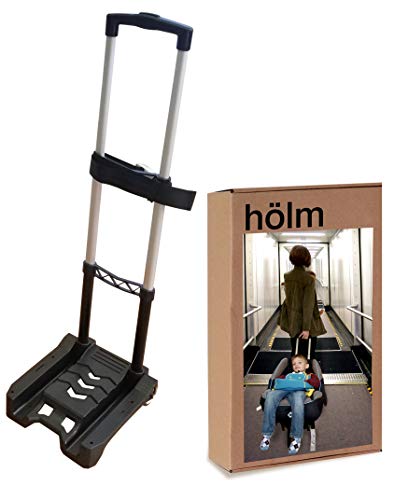
Holm Airport Car Seat Stroller
Strengths
- Ultra lightweight
- Smooth-rolling wheels
- Folds extremely small
- Turns car seat into stroller
Trade-offs
- Limited car seat compatibility
- No safety function
- Adds bulk when folded
Let me be clear: this isn’t a car seat. But as someone who’s navigated crowded terminals with a sleeping toddler, I appreciate what the Holm cart does. It turns your existing car seat into a wheeled stroller, letting you roll your child through the airport instead of carrying them. The silicone gel wheels glide smoothly, and the aluminum frame keeps it light at just 3 pounds. Setup takes seconds, strap the seat on, secure the belt, and go.
Owners love how compact it folds, fitting under seats or in overhead bins. However, compatibility is spotty. It doesn’t work with many popular brands like Britax IsoFix or Graco Smart Seat models, so double-check your seat before buying. If you already own a travel-ready car seat and hate lugging kids through airports, this is a smart add-on. But it won’t help if you don’t have a compatible seat.
Video review
Safety 1st Ellaris 3-in-1 Car Seat

Strengths
- Long lifespan
- Slim fit
- Machine-washable cover
- LATCH installation
Trade-offs
- Too large for carry-on
- Heavy for portability
- Not FAA approved
For families wanting one seat that grows with their child, the Ellaris checks a lot of boxes. It transitions from rear-facing infant all the way to forward-facing up to 65 lbs, which means years of use. Its slim profile is a big win, it fits in smaller cars where wider seats struggle, and reviewers note it’s surprisingly comfortable even on longer drives. The machine-washable pad is a practical touch most parents will appreciate after inevitable spills.
But here’s the catch: while it’s labeled ‘airplane ready’, it’s bulky compared to true travel seats. You’ll likely have to check it unless the airline allows larger carry-ons. And unlike the WAYB Pico, it doesn’t fold or collapse. Still, for road trips or destination rentals where you’re checking luggage anyway, having a single seat that covers multiple stages makes sense. I’d recommend this as a versatile base seat, not a dedicated travel booster.
Video review
WAYB Pico Travel Car Seat

Strengths
- FAA approved
- Full harness system
- Folds compactly
- Lightweight build
Trade-offs
- High price point
- Only for forward-facing kids
- Limited weight range
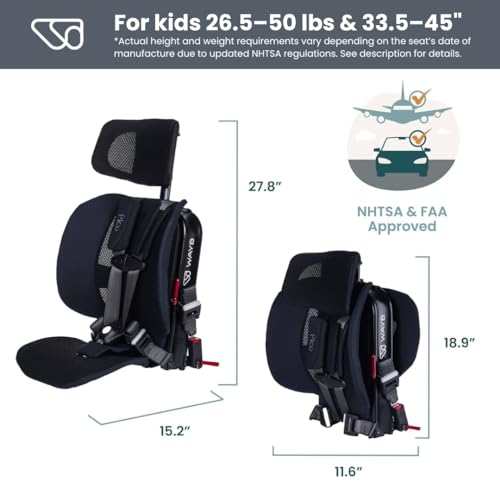
This is the only travel seat I’d confidently recommend for airplane use, and not just because it folds small. The fact that it’s FAA-approved means parents can install it on flights using the aircraft seatbelt, which is rare in this category. At just 8 pounds and folding down to fit in an overhead bin, it’s built for real-world travel chaos. The aerospace-grade aluminum frame gives it durability without adding weight, and owners praise how easy it is to move through terminals.
It’s also one of the few portable seats that functions as a full forward-facing harness seat, not just a booster. That makes it safer for kids between 26.5–50 lbs who still need upper body restraint. Yes, it costs significantly more than inflatable options, but when you consider it replaces the need for gate-checking a stroller or relying on airline-provided seats, the value becomes clearer. I’d pick this over any inflatable booster for frequent flyers.
Product photos


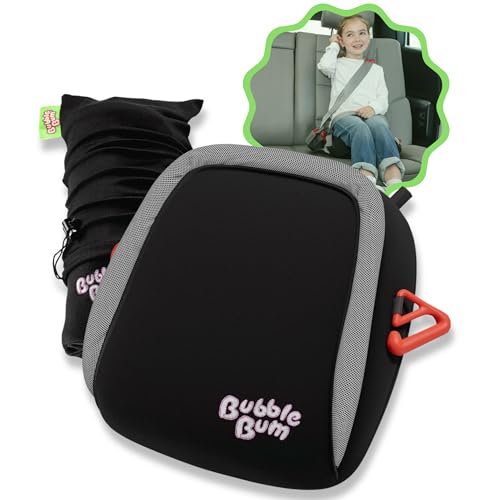
BubbleBum Crash-Tested Booster
Strengths
- Extremely compact
- Crash tested
- Comfortable cushion
- Fits three across
Trade-offs
- Not FAA approved
- Backless = limited protection
- Inflation requires breath
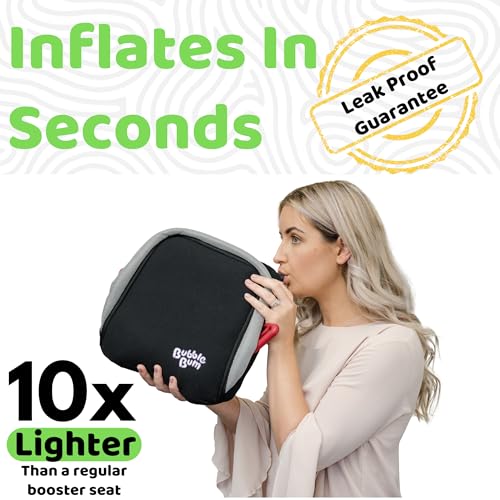
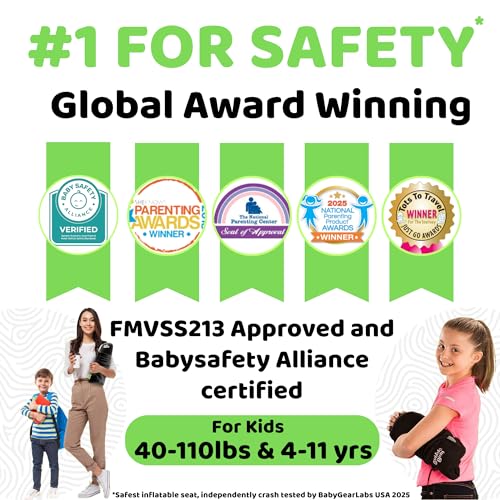
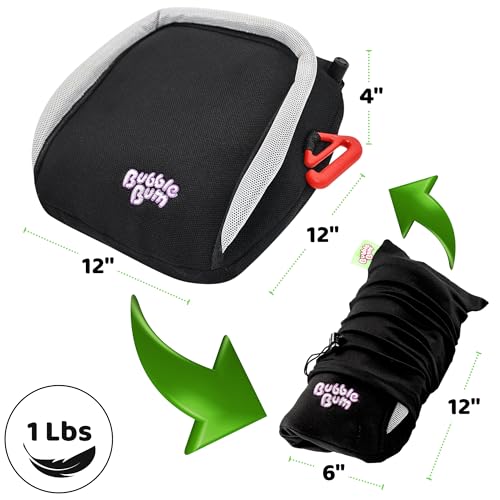
If portability is your top priority, the BubbleBum delivers. It inflates in seconds and packs down smaller than a shoebox, easily slipping into a backpack or diaper bag. What sets it apart from other inflatables is its independent crash testing, exceeding federal standards for kids 40–100 lbs. That kind of validation gives me confidence in its structural integrity, especially since some inflatable boosters cut corners.
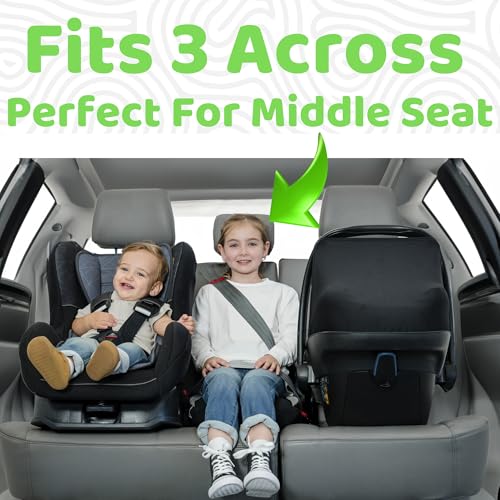
Owners say kids find it more comfortable than rigid plastic seats, thanks to the soft cushioning. It also fits three across in tighter vehicles, making it ideal for carpools or SUVs with multiple kids. But like all backless boosters, it offers zero side or head protection. And despite being travel-friendly, it’s not FAA-approved. So while I respect its safety credentials, I see it as a secondary option, not a replacement for a full harness seat on flights.
Product photos

UberBoost Inflatable Booster Seat
Strengths
- Ultra compact
- Easy inflation
- Affordable price
Trade-offs
- No head support
- Not FAA approved
- Backless design limits safety
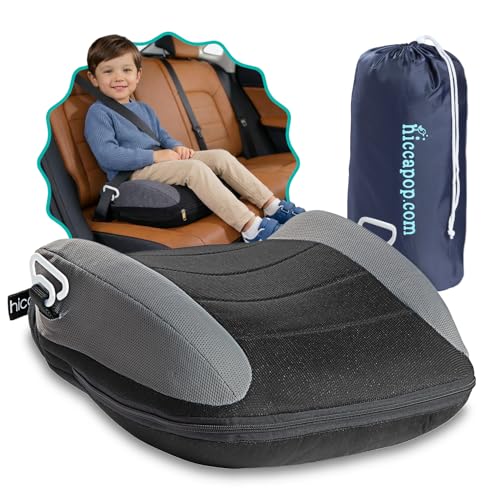
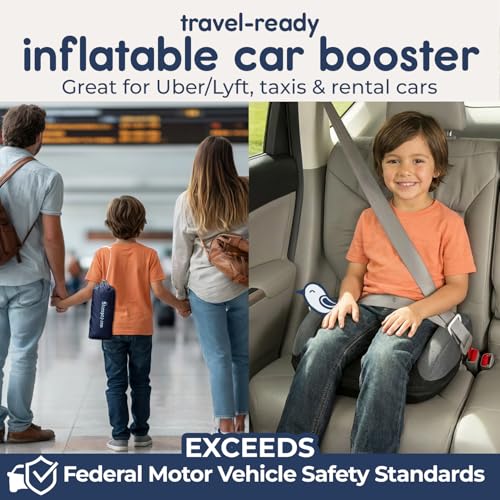
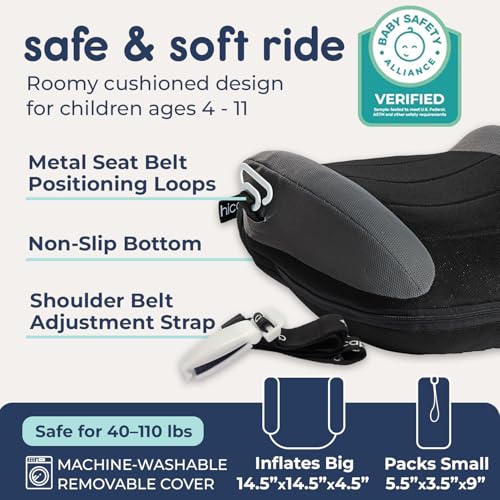
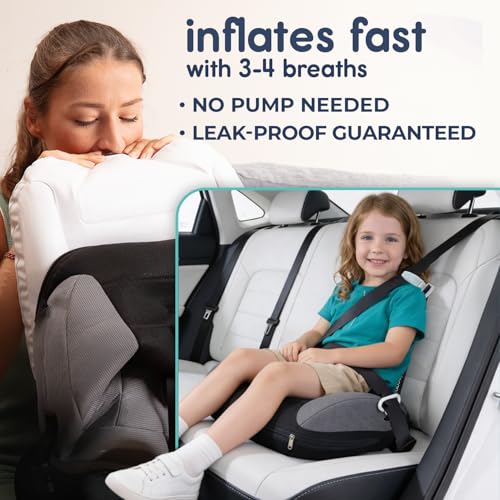
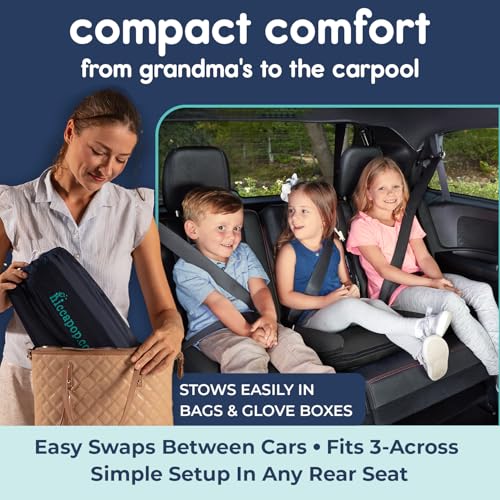
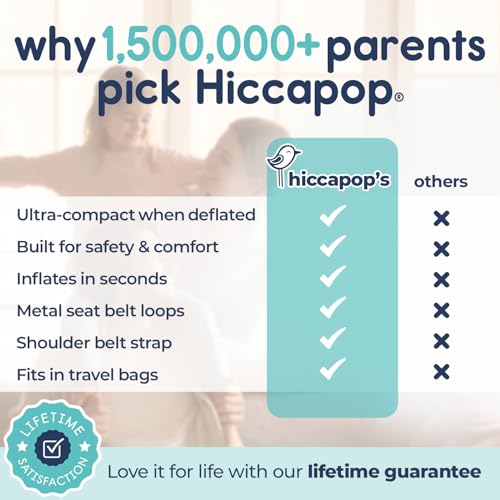
I’ve seen a lot of travel gear come and go, and inflatable boosters like the UberBoost stand out for one reason: space. On paper, it’s hard to beat a seat that deflates into a carry-on bag and reinflates in under 20 seconds. Owners consistently report it’s stable once inflated, with a non-skid base that holds firm on rental car seats or rideshare upholstery. The positioning clips help keep the seatbelt properly aligned across the lap, which is critical for safety during sudden stops.
Still, I’d be cautious about long-term use. This is strictly a backless booster, so it lacks head and side impact protection. Compared to something like the WAYB Pico, it doesn’t offer full harness support or FAA approval, so while it’s great for quick trips, I wouldn’t rely on it as a primary seat for young kids. My recommendation? Keep this in your suitcase if you’re constantly hopping between rental cars or Ubers.
Product photos
How We Picked These car seats for airline travel
As someone deeply involved in all things automotive – from restorations to road trips – I understand the challenges of traveling with children. My aim at TheAutoZenith is to provide practical guidance, and selecting the right car seat for air travel is a key part of that. Rather than a hands-on lab test, this evaluation is a research-led comparison of published specifications, owner reviews, and expert assessments. I considered a wide range of options, weighing features and performance to identify those that best address the unique demands of travel.
For car seats intended for airline use, portability and safety were paramount. A lightweight design is crucial for navigating airports, and the ability to fit into overhead bins or easily carry the seat is a significant advantage. Equally important is FAA approval; a seat must be certified for use on aircraft. I prioritized models that excelled in both these areas, ensuring they meet the rigorous standards needed for in-flight safety and ease of use. You can find more information on selecting the right option in our guide to seats for air travel.
Specifications give a clear picture of weight, dimensions, and safety certifications, but owner feedback provided invaluable insight into real-world usability. I focused on comments regarding ease of inflation/deflation (for inflatable models), installation in various vehicles, and overall comfort for children. Reputable expert reviews from sources like Consumer Reports and parenting publications were also considered, helping to validate claims and identify potential drawbacks. Understanding which seats are truly FAA-certified car seats is crucial for peace of mind.
What To Look For In car seats for airline travel
Choosing the right car seat for airline travel requires a bit more thought than a standard model. We need to consider portability, FAA compliance, and how well it integrates with the constraints of air travel, not just overall safety.
A good travel car seat balances safety certifications (NHTSA and FAA), lightweight design (under 10 pounds is ideal), compact foldability for overhead bin storage, and ease of inflation/deflation for quick setup in ride-shares or rental vehicles. Prioritize models with clear weight and height restrictions and a proven track record of independent crash testing.
Weight and Portability
Weight is a huge factor. Lugging a heavy car seat and a child through an airport is no fun for anyone. Look for seats under 10 pounds, ideally closer to 8. The WAYB Pico, for example, is designed with an aerospace-grade aluminum frame to minimize weight. But don’t assume a lighter seat is automatically less safe; proper certification is key. Beyond the weight of the seat itself, consider how easily it packs down. Inflatable options like the UberBoost and BubbleBum are incredibly space-saving, but you need to be comfortable with the (quick!) inflation process.
Safety and FAA Compliance
Don’t compromise on safety. Ensure the car seat meets all U.S. federal safety standards, and crucially, is explicitly FAA-approved for use on aircraft. This isn’t just about a sticker; look for documentation confirming independent crash testing. Many seats claim FAA compliance, but the BubbleBum, for instance, stands out with its independently crash-tested certification, exceeding standard requirements. If you’re looking into FAA-approved seats for peace of mind, that’s a smart move.
- FAA Sticker: Always verify the FAA approval sticker is present on the seat.
- Crash Test Results: Seek out models with publicly available crash test data (beyond basic certification).
- Weight/Height Ranges: Pay very close attention to the height and weight limits. These can change based on the seat’s manufacturing date, so always refer to the manual.
A car seat is only as safe as its installation. Practice installing the seat in a vehicle before your trip to ensure you’re comfortable and confident with the process.
Versatility and Practical Features
Think about how you’ll use the seat beyond the airplane. Will it primarily be for occasional trips, or do you need something adaptable for frequent travel? The Safety 1st Ellaris 3-in-1 offers versatility as a convertible seat, growing with your child, but it’s less focused on ultra-portability. If you’re often relying on rideshares or rental cars, an inflatable option might be ideal. For families needing to fit multiple car seats across a row, the slim design of the BubbleBum or UberBoost is a real advantage. For those needing something for longer trips, consider looking at travel seats for plane that will provide comfort for longer rides.
Car Seats for Airline Travel Compared
Here’s a comparison of key specifications to help you choose the right car seat for air travel.
| Product Name | Weight (lbs) | Age/Weight Range | Folded Size (approx.) | FAA Approved | Type |
|---|---|---|---|---|---|
| WAYB Pico Travel Car Seat | 8 | 2+ / 26.5-50 lbs | 11.6″ x 14.5″ x 18.9″ | Yes | All-in-One |
| UberBoost Inflatable Booster Seat | N/A | N/A | N/A | N/A | Booster |
| BubbleBum Inflatable Travel Booster | N/A | 40-100 lbs | Backpack/Suitcase Size | N/A | Booster |
| Holm Airport Car Seat Stroller | 3 | N/A | 13″ x 10″ x 4″ | N/A | Dolly/Transporter |
| Safety 1st Ellaris 3-in-1 Car Seat | N/A | 5-65 lbs | N/A | Yes | Convertible |
| WAYB Pico with Carry Bag | 8 | 2+ / 26.5-50 lbs | 11.6″ x 14.5″ x 18.9″ | Yes | All-in-One |
| BubbleBum Crash-Tested Booster | N/A | 40-100 lbs | Backpack/Suitcase Size | N/A | Booster |
| UberBoost Compact Inflatable Seat | N/A | N/A | N/A | N/A | Booster |
Frequently Asked Questions
What is the maximum weight for a car seat allowed on most airlines?
Generally, car seats must not exceed 18 pounds when used on an aircraft, but always verify with your specific airline as policies vary. Some airlines may allow heavier seats if they can be safely secured in an adjacent seat purchased for that purpose.
Can I check a car seat at the gate or baggage claim?
You can typically gate-check a car seat for free, providing a protective bag is used. However, checking it with standard baggage isn’t advised due to potential damage, and airlines aren’t liable for damage to items checked as baggage.
Are inflatable car seats as safe as traditional hard-shell models?
While concerns exist, many inflatable car seats, like the BubbleBum, are independently crash-tested and FAA-approved. Choosing a model that meets these standards and properly using it according to the manufacturer’s instructions is key for comparable safety.
What’s the difference between an FAA-approved car seat and an FAA-compatible car seat?
FAA-approved means the seat has been specifically tested and certified for use on aircraft. FAA-compatible simply means the seat meets the size requirements to fit on an airplane seat, but hasn’t undergone the same rigorous testing. For safety, always choose an FAA-approved option.
Where can I find more information about portable car seats that are easy to carry and install?
My research shows that the WAYB Pico and similar lightweight models are popular choices, but also consider inflatable boosters for maximum portability. For very young children, exploring options for infant seats for air travel is crucial to find a safe and convenient solution.
The Bottom Line
Choosing a car seat for airline travel often comes down to balancing convenience with peace of mind. While many options exist, the WAYB Pico Travel Car Seat strikes an excellent balance between lightweight design, FAA approval, and robust safety features, making it our overall recommendation. It’s not the cheapest option, but the investment feels justified when considering the ease of travel and documented safety standards.
For families prioritizing budget-friendliness or needing a booster for older children, the BubbleBum Inflatable Travel Booster is a strong contender. It’s incredibly portable and easily stows in a backpack, and while it’s a booster rather than a full car seat, it’s a well-regarded and independently tested option. If you’re searching for lightweight seats for planes, the UberBoost Compact Inflatable Seat is a good alternative.
Ultimately, the best car seat is the one you’ll confidently use correctly. Don’t get lost in the details of weight savings or fancy features if it means sacrificing proper installation or FAA compliance. Prioritize a seat that fits your child’s current size and weight, meets all safety standards, and allows you to travel with assurance, because knowing your little one is safe is what truly matters, whether you’re on the road or in the air.
