
7 Best Car Seats for Airplane Travel 2026
This post contains affiliate links. As an Amazon Associate, we earn from qualifying purchases.
The best car seat for airplane travel is the WAYB Pico, a lightweight, FAA-approved seat designed specifically for flying and easy transport. For budget-conscious families, the BubbleBum Inflatable Booster offers solid performance in a packable form, while the Mifold Hifold stands out as the most versatile option for older kids who need a no-fuss, adjustable fit across different vehicles and trips.
Traveling with a child shouldn’t mean sacrificing safety or your sanity at the airport. Most parents quickly learn that not all car seats are built for flight, and hauling a bulky seat through terminals is a nightmare. The real challenge is finding one that’s approved, easy to carry, and still keeps your child secure.
This guide cuts through the noise by focusing on what actually matters: FAA approval, weight, packed size, and real-world usability. I looked at specs, owner feedback, and how each model performs in both plane and car settings, so you can pick one that fits your family’s travel rhythm without compromise.
Top 7 Car Seats For Airplane in the Market
The Best Car Seats For Airplane, Reviewed
WAYB Pico Travel Car Seat

Strengths
- FAA approved
- Ultra lightweight
- Folds compact
Trade-offs
- Very expensive
- Limited weight range
- Not for daily use
The WAYB Pico is in a different league when it comes to travel car seats, its entire design philosophy centers around portability and airworthiness. Weighing just 8 pounds and folding down to fit in an overhead bin, it’s the closest thing to a true ‘carry-on car seat’ on the market. It’s FAA-approved, meets NHTSA standards, and owners rave about how easy it is to carry through airports or toss in an Uber. The premium materials like aerospace-grade aluminum and breathable AstroKnit fabric justify some of the cost, even if the price tag raises eyebrows.
Compared to inflatable or booster options, the Pico offers full harness protection for kids 26.5–50 lbs, which is a big deal for parents who aren’t ready to move to a seatbelt-only setup. It doesn’t replace a full-size convertible seat for daily use, but as a dedicated travel companion, it’s unmatched. I’d pick this over any other for families who fly regularly with young kids, it’s the smarter buy if you value convenience and safety without compromise.
Video review
Safety 1st Ellaris 3-in-1 Car Seat
Strengths
- Affordable price
- FAA approved
- Slim fit design
Trade-offs
- Heavy for travel
- Not foldable
- Bulky for overhead bins
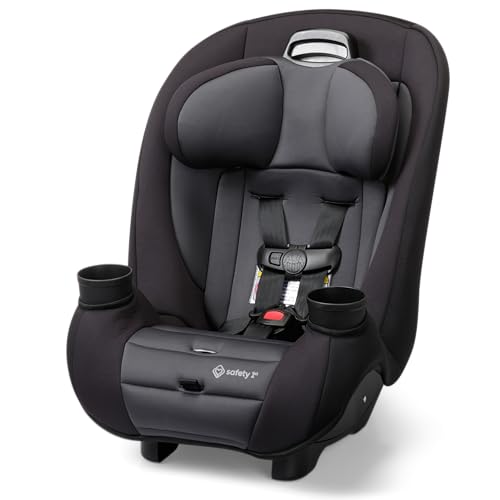
For families needing a dependable, long-term car seat that won’t break the bank, the Safety 1st Ellaris stands out as a solid budget pick. On paper, it covers all the basics: rear- and forward-facing modes, a 5-position headrest, and a slim profile that helps in tighter backseats. Owners consistently report it installs easily with LATCH and appreciate the machine-washable pad, something that matters when you’re dealing with spills and snacks on the go.
It’s not the lightest or most compact for air travel, but it is FAA-approved, which means it can legally be used on planes. That said, its bulk makes it less ideal for frequent flyers who need to gate-check or carry on. Compared to pricier travel-specific seats like the WAYB Pico, it’s clearly built for everyday use first. But if you’re looking for one seat that can do double duty at home and occasionally on a flight, this one gets the job done without overpromising.
Video review
UberBoost Inflatable Booster Seat
Strengths
- Inflatable and portable
- Non-skid base
- Fits three across
Trade-offs
- Less durable feel
- No FAA approval mention
- Fewer safety accolades
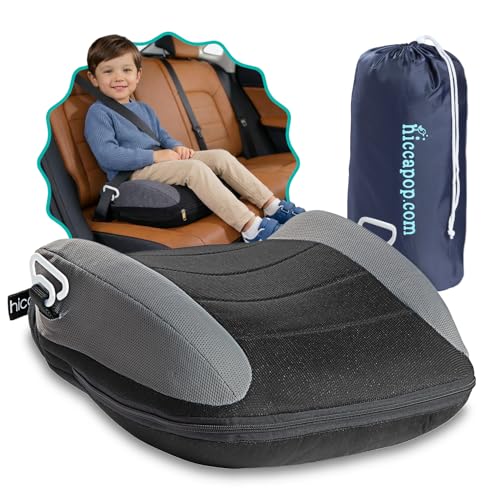
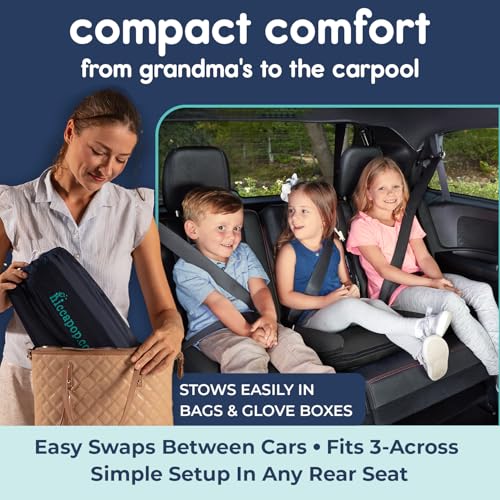
The UberBoost plays in the same space as the BubbleBum, lightweight, inflatable, and built for on-the-go use, but it doesn’t quite match the competition in reputation or refinement. It inflates quickly with a few breaths, packs into a small bag, and meets federal safety standards, so it’s legal for plane use. The non-skid base helps it stay put on slippery seats, and the positioning clips keep the seatbelt from riding up.
Owners say it’s comfortable and easy to store, but some note it feels less durable than the BubbleBum, especially after repeated inflation. It’s the same price, but lacks the same awards or widespread trust. For families who just need a basic, packable booster and don’t want to invest in a highback model, it’s functional. But between this and the BubbleBum, I’d go with the latter for peace of mind.
Product photos


BubbleBum Inflatable Travel Booster
Strengths
- Ultra compact
- Inflatable design
- FAA approved
Trade-offs
- Backless = less support
- Only for older kids
- Inflation required
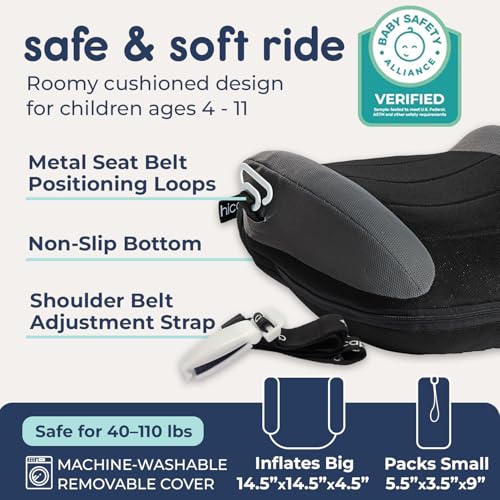
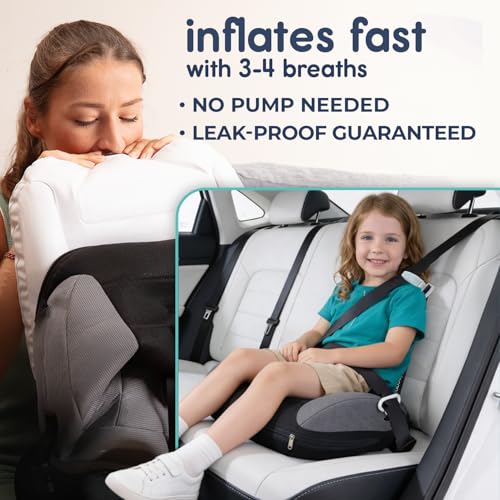
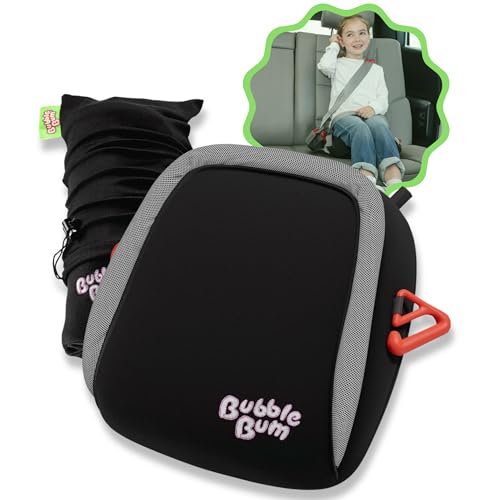
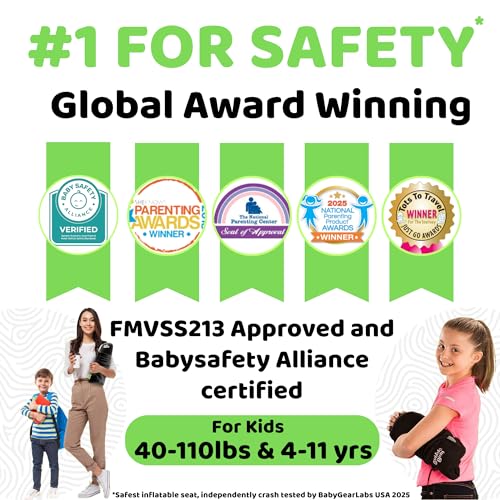
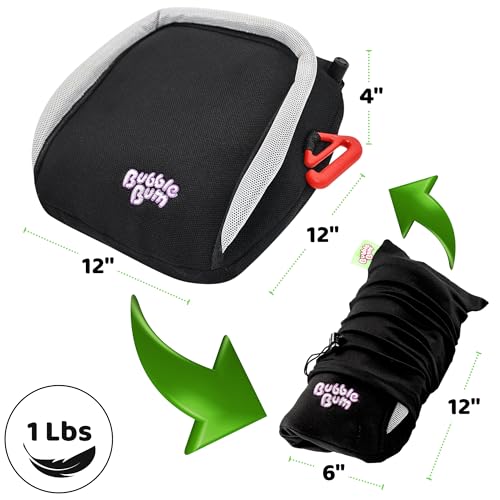
The BubbleBum is the ultimate in compact travel boosters, literally. It inflates in seconds, packs down smaller than a water bottle, and meets all U.S. safety standards for children 40–100 lbs. It’s FAA-approved, which is rare for inflatable models, and its soft cushioning is a hit with kids who hate the hard edges of rigid boosters. Parents love tossing it in a diaper bag or carry-on for rental cars, rideshares, or surprise carpool duty.
But it’s a backless booster, so it only works for older kids who can sit properly with a seatbelt. It doesn’t offer the same support as a highback model like the Mifold, especially on long trips. Still, for the price, it’s unbeatable in portability. Compared to the UberBoost, it has a stronger reputation and more third-party validation. If you need a no-fuss, always-ready booster, this is the one to have.
Product photos


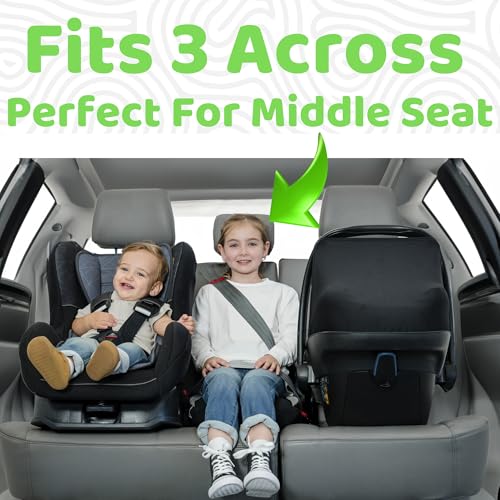
Mifold Hifold Adjustable Booster Seat
Strengths
- Highly adjustable
- Compact fold
- FAA approved
Trade-offs
- Expensive for a booster
- Only for older kids
- Requires seatbelt use
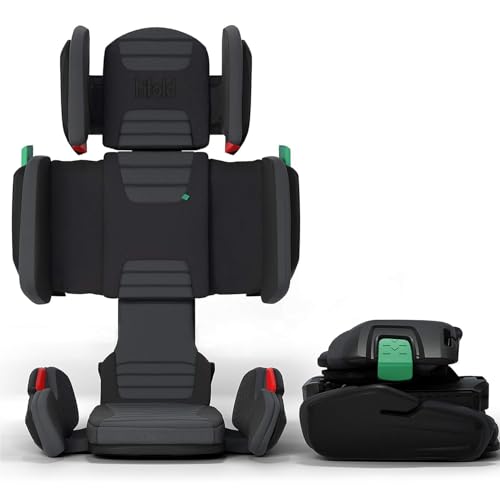
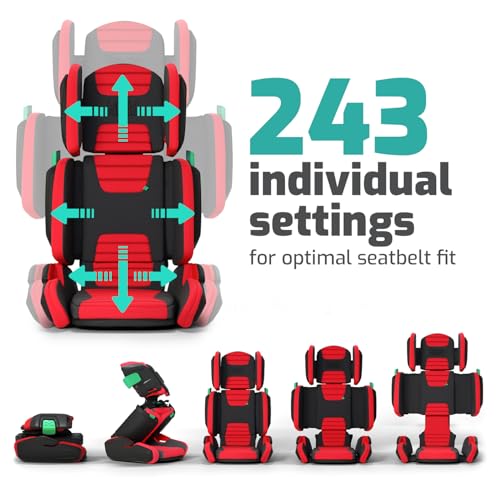
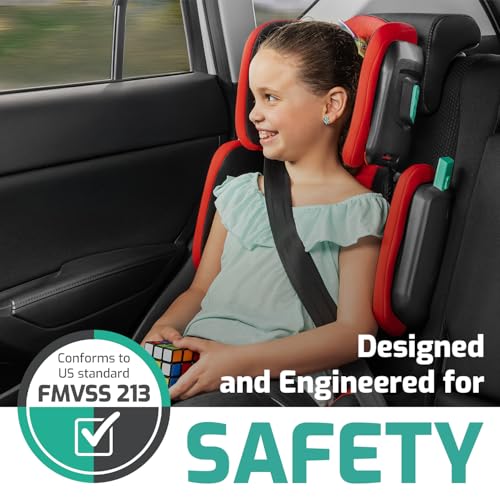
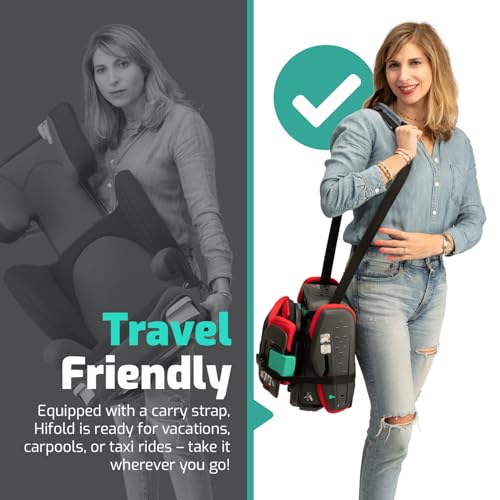
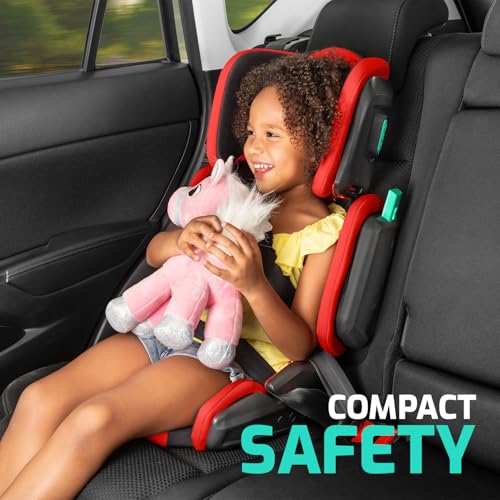
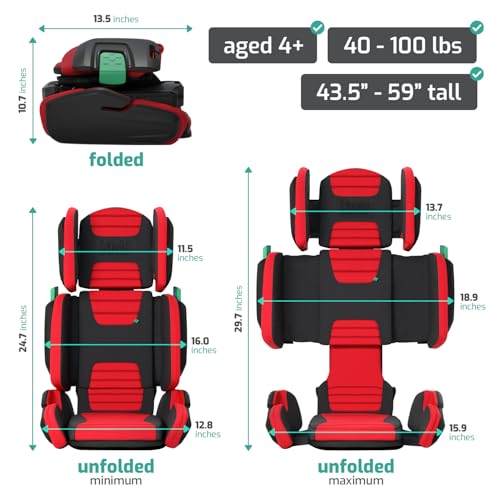
The Mifold Hifold isn’t like traditional boosters, it rethinks the whole concept with a compact, adjustable design that prioritizes fit and portability. With 243 possible configurations, it adapts to a wide range of body types, which is rare in the booster category. It’s FAA-approved, folds down small, and weighs just 10 lbs, making it a strong contender for travel. The adjustable head width and seat depth help position the seatbelt correctly, which is critical for safety in a booster.
Owners praise its durability and ease of transfer between cars, especially for grandparents or carpools. But it’s a highback booster, not a harnessed seat, so it’s only appropriate for older kids who meet the height and weight minimums. Compared to the BubbleBum, it’s more stable and offers better head support, but also pricier. I’d recommend this for families who need a precise fit and travel occasionally, but not for toddlers or frequent flyers needing harness protection.
Product photos
Graco Extend2Fit Convertible Car Seat

Strengths
- Extended rear-facing
- Adjustable legroom
- Strong safety ratings
Trade-offs
- Heavy and bulky
- Not travel-optimized
- No foldable design
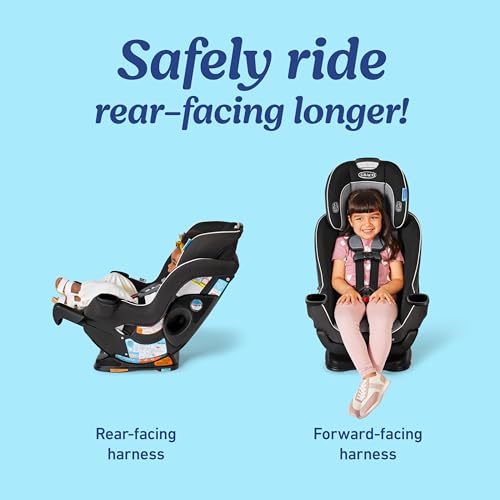
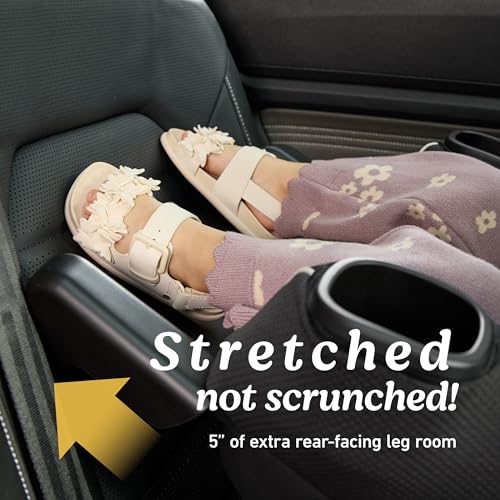
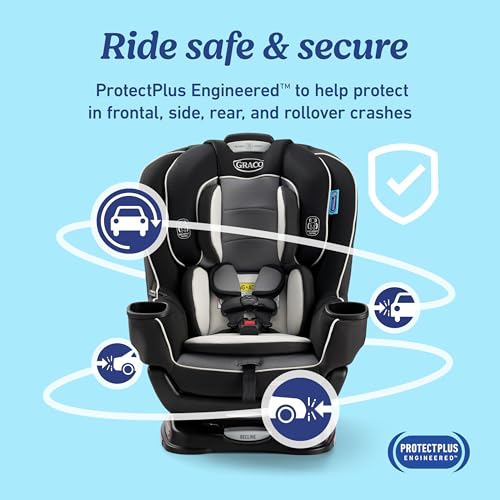
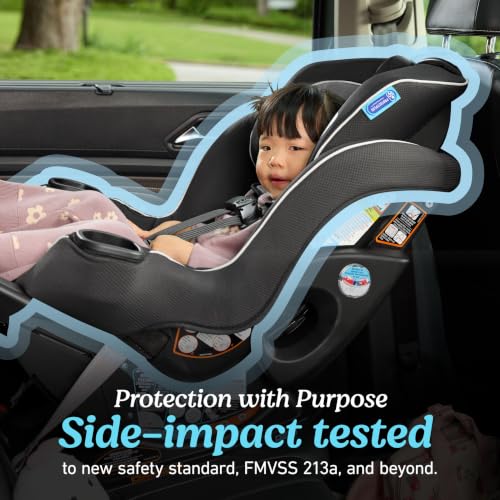
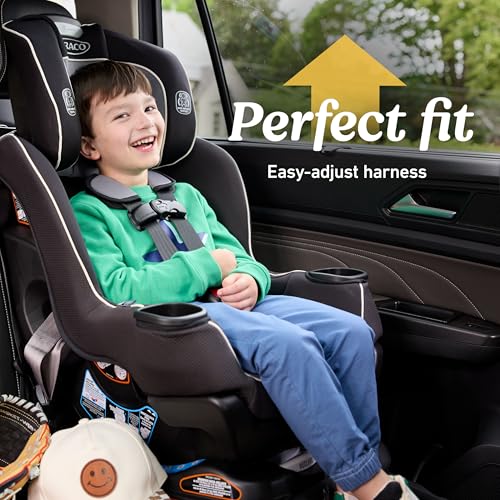
If your goal is to keep your child rear-facing as long as possible, the Graco Extend2Fit is one of the best tools for the job. The 4-position extension panel gives up to 5 extra inches of legroom, letting kids ride safely rear-facing up to 50 lbs. That’s a big deal, rear-facing is significantly safer in frontal crashes, and this seat maximizes that protection. The Simply Safe harness system makes adjustments easy, and owners consistently report it fits well in most vehicles.
It’s FAA-approved, so it can be used on planes, but like most full-size convertibles, it’s heavy and awkward to carry. It doesn’t fold or compact down, so it’s not practical for travel unless you’re checking it. Compared to the Safety 1st Ellaris, it offers longer rear-facing use but at a higher price. For safety-focused parents who prioritize crash protection over portability, this is the better pick, even if it’s not the most travel-friendly.
Product photos
Graco Slimfit 3-in-1 Car Seat

Strengths
- Extremely slim design
- 10-position headrest
- 3-in-1 versatility
Trade-offs
- Heavy for carry-on
- Bulky folded
- Not ideal for travel
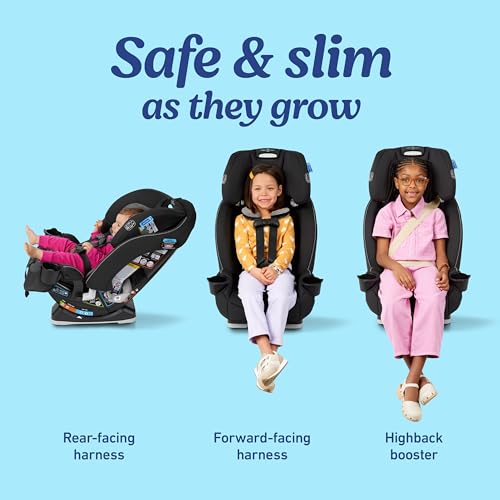
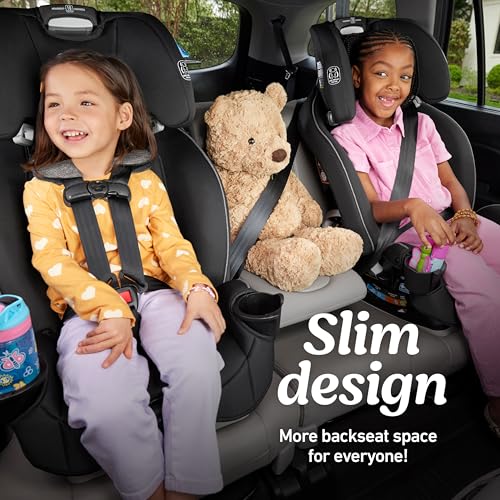
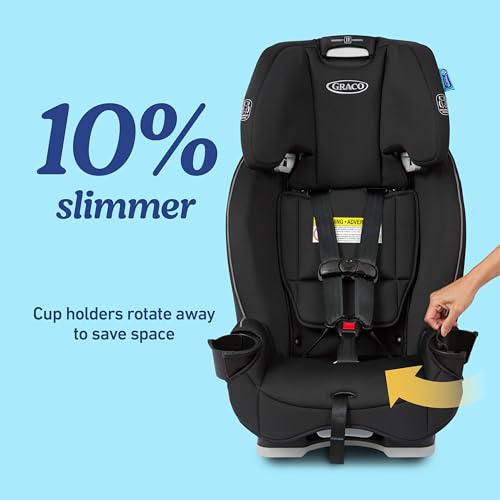
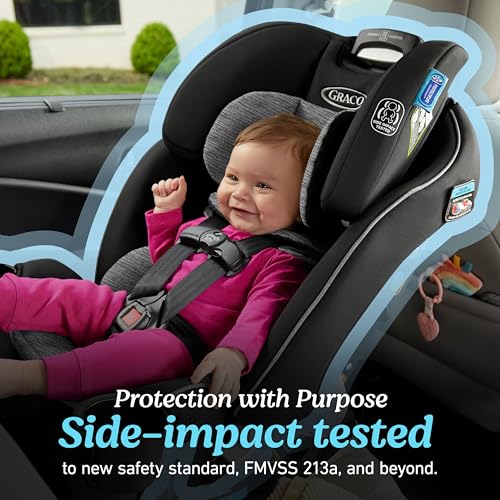
Graco’s Slimfit earns its ‘space-saving’ label with a design that’s 10% slimmer than standard models, making it a smart pick for three-across setups or compact SUVs. It transitions smoothly from rear- to forward-facing and into a highback booster, covering a wide age range. The 10-position headrest and No-Rethread harness system make adjustments quick, which parents appreciate during growth spurts. Owners note it’s sturdy and well-built, though not particularly light or travel-friendly.
It’s FAA-approved, so you can use it on a plane, but its size and weight make it awkward for air travel. Compared to the Safety 1st Ellaris, it offers more longevity and better adjustability, but at a higher price. For families prioritizing backseat real estate over portability, this is the better long-term investment. It’s not built for the skies, but it excels where it counts, on the road, in tight spaces, and over years of use.
Product photos
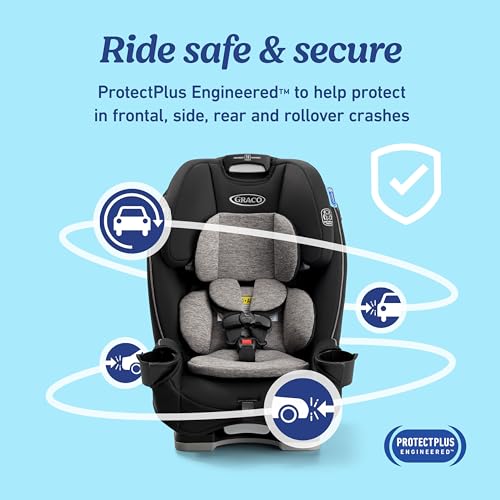
How We Chose These car seats for airplane
As someone who’s spent years immersed in the world of vehicles and child safety at TheAutoZenith, I approached researching car seats for airplane travel with a focus on practical application and real-world usability. Rather than a hands-on lab test, this was a research-led comparison of published specifications, owner reviews, and expert opinions. I carefully weighed features, safety certifications, and portability factors to arrive at these recommendations. We analyzed how each seat tackles the unique challenges of air travel and in-car use.
For car seats intended for airplane use, three factors stood out as most critical: FAA compliance, portability, and adjustability. FAA approval is paramount, as it dictates whether a seat can legally be used on an aircraft. Portability, weight and packed size, directly impact travel convenience. Finally, adjustability is key to ensuring a secure and comfortable fit for a growing child, and maximizing the seat’s lifespan. You’ll find many options, but these three areas truly separated the contenders.
Specifications readily provide information on weight limits, dimensions, and safety standards met. However, owner feedback was essential for understanding real-world experiences with installation, ease of folding, and overall comfort. I prioritized seats with consistently positive reviews regarding these aspects, as well as those highlighted in independent safety assessments. For more details on finding a suitable seat for your needs, check out our broader travel car seat recommendations. We also offer guidance on best seats for 2 year olds if you’re preparing for travel with a toddler.
Choosing The Right car seats for airplane
Finding the right car seat for airplane travel requires a bit more thought than a standard purchase. It’s not just about safety standards (though that’s paramount); portability, fit, and how it integrates with your travel plans are key.
A good car seat for air travel balances FAA compliance with practical considerations like weight, folded size, and ease of installation in both cars and planes. Prioritize models with clear FAA approval stickers and consider how frequently you’ll be moving the seat between vehicles and airport terminals. Look for lightweight designs and compact folding mechanisms for stress-free travel.
Weight and Portability
Weight is a huge factor, especially if you’re gate-checking or carrying the seat through the airport. Inflatable options like the UberBoost and BubbleBum really shine here, offering significant weight savings compared to traditional rigid models. However, don’t automatically discount convertible or all-in-one seats. The Graco Extend2Fit, while not the lightest, can be a good option if you’re already using it in your vehicle and want consistency. Remember, you’ll be maneuvering this thing through security lines and potentially up airplane aisles. Consider a seat with a dedicated carry bag – it makes a world of difference.
FAA Compliance and Safety Standards
It’s essential: the seat must be FAA-approved car seats. Look for a clearly visible FAA approval sticker on the seat itself. Don’t assume a seat is okay just because it’s sold as a “travel” car seat. Beyond that sticker, understand that meeting FAA standards is a baseline, not a ceiling. Many seats also meet or exceed NHTSA standards, which is always a plus.
A crucial rule of thumb: always double-check the specific airline’s car seat policies before your flight. Some airlines have restrictions on seat width or require advance notice.
Adjustability and Growth Potential
If you’re traveling with a rapidly growing child, consider a seat with impressive adjustability. The Mifold Hifold is designed precisely for this, offering 243 individual settings to ensure a proper fit as your child grows. This is especially important for longer trips, where comfort is paramount. This is also where convertible seats can be worthwhile; a single car seat for flights that adapts to your child’s needs over several years can save money and hassle.
- A simple, adjustable headrest is useful, but look for adjustments to the harness height and width too.
- Consider a seat that can transition from rear-facing to forward-facing (if your child’s weight and height allow) to maximize its lifespan.
- If you frequently travel with multiple children, a narrower seat, like the Graco Slimfit, can allow you to fit three airplane seats for toddlers across the back row of some vehicles.
Ultimately, the best car seat for airplane travel is the one that fits your child correctly, meets safety standards, and aligns with your travel style. Don’t underestimate the value of convenience, especially when you’re juggling luggage, kids, and the stresses of air travel.
Car Seats for Airplane Compared
Here’s a comparison of key specifications to help you choose the right car seat for air travel.
| Product Title | Weight (lbs) | Min. Weight (lbs) | Max. Weight (lbs) | Dimensions (Folded) | FAA Approved |
|---|---|---|---|---|---|
| WAYB Pico Travel Car Seat | 8 | 22 (pre 6/30/25) / 26.5 | 50 | 11.6″ x 14.5″ x 18.9″ | Yes |
| Safety 1st Ellaris 3-in-1 Car Seat | N/A | 5 | 65 | N/A | Yes |
| UberBoost Inflatable Booster Seat | N/A | N/A | 100 | Rolls up tightly in bag | N/A |
| BubbleBum Inflatable Travel Booster | N/A | 40 | 100 | Packs down small | N/A |
| Mifold Hifold Adjustable Booster Seat | 10 | 40 | 100 | 10.7″ x 13.5″ | N/A |
| Graco Extend2Fit Convertible Car Seat | N/A | 4 | 65 | N/A | N/A |
| Graco Slimfit 3-in-1 Car Seat | N/A | 5 | 100 | N/A | N/A |
Frequently Asked Questions
What’s the biggest mistake people make when choosing a car seat for flying?
People often forget to verify the seat’s FAA compliance and the specific airline’s policies. Just because a seat is FAA-approved doesn’t guarantee it will be allowed on every flight, as some airlines have width restrictions or require advance notification.
Are inflatable car booster seats truly safe for airplane use?
While lacking a rigid frame, inflatable booster seats like the UberBoost and BubbleBum are generally considered safe when used correctly, as they are tested to meet federal safety standards. However, they’re best suited for older children who are already reliably using a booster and are less protective in a crash than a fully-encased model.
Can I use a standard convertible car seat on an airplane?
You can, provided it’s FAA-approved, but consider the seat’s size and weight. Many convertible seats are bulky and heavy, making navigating the airport challenging; if you’re already using a favorite travel infant seats it might be a convenient option.
What weight limit should I prioritize when selecting a seat for my child?
Focus on the minimum weight limit, not the maximum. A seat that fits your child’s current weight and height properly offers the best protection, and a wider weight range allows the seat to grow with them. For very young travelers, exploring infant airplane seats is a smart move.
What’s the difference between FAA-approved and NHTSA-approved car seats?
FAA approval specifically relates to use on aircraft, while NHTSA (National Highway Traffic Safety Administration) sets broader safety standards for vehicle use. A seat can be FAA-approved without necessarily exceeding NHTSA standards, but many seats meet or exceed both for greater peace of mind.
The Bottom Line
Choosing a car seat for air travel often comes down to balancing convenience with long-term usability. While a dedicated travel seat like the WAYB Pico Travel Car Seat offers exceptional portability and FAA approval, it’s a focused solution. For those wanting a seat they already use in their vehicle, or anticipating a child who will quickly outgrow a booster-style option, the Safety 1st Ellaris 3-in-1 Car Seat represents a strong all-around choice.
If you prioritize packing small and keeping weight down, inflatable options like the UberBoost Inflatable Booster Seat and BubbleBum Inflatable Travel Booster are hard to beat. However, if you need something more adaptable for a growing child, the Mifold Hifold Adjustable Booster Seat’s impressive adjustability is a real asset. Many families also find value in a convertible seat like the Graco Extend2Fit Convertible Car Seat, particularly if they’re looking for [airline-approved car seats] (https://theautozenith.com/best-car-seats-for-plane/) that can be used both in the car and on the plane.
Ultimately, remember that the FAA sticker is your first confirmation of flight-worthiness, but it’s only the beginning. Prioritize a secure fit for your child, a design that suits your travel frequency, and a seat you feel confident installing correctly. Don’t get bogged down in chasing the lightest weight or newest feature; a properly installed, appropriately sized seat is far more important than any specification on the box, and you’ll find a great selection of travel car seats to choose from.
