
7 Best Balance Bikes for 3-Year-Olds 2026
This post contains affiliate links. As an Amazon Associate, we earn from qualifying purchases.
The best balance bike for most 3 year olds is the Strider 14x Classic, it’s durable, lightweight enough, and built to last through years of use. For a tighter budget, the Strider 12 Sport delivers the same trusted design at a lower price, while the Ridego 14 Inch Balance Bike stands out if you want air tires and a smoother ride on rougher terrain.
At this age, the wrong bike can frustrate a child before they even get started. Too heavy, and they’ll struggle to move it. Poorly adjusted, and they won’t feel stable. I’ve spent years studying how kids interact with their first vehicles, and I know how crucial that early confidence is.
This guide cuts through the noise, focusing on what really matters: weight, adjustability, tire type, and long-term fit. These picks are based on specs, owner experiences, and design principles that support real-world use, not just marketing claims.
Top 7 Balance Bikes For 3 Year Old in the Market
The Best Balance Bikes For 3 Year Old, Reviewed
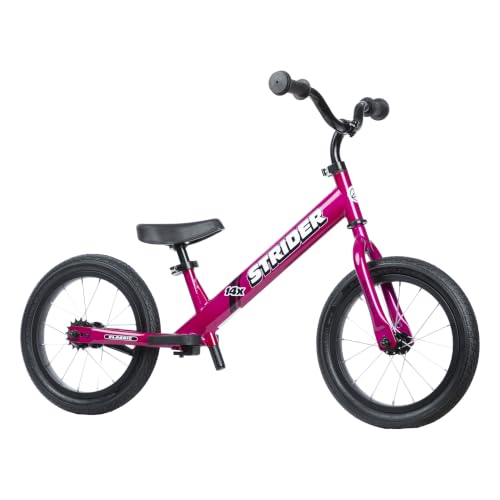
Strider 14x Classic Balance Bike
Strengths
- Converts to pedal bike
- Long adjustability range
- Durable steel frame
- Smooth steering geometry
- High resale value
Trade-offs
- Higher price point
- Foam tires less grippy than air
- Pedal kit sold separately
This is the longest-lasting balance bike in the lineup, and for families who want one bike to carry their child from age 3 to 6, it’s worth the investment. The steel frame is just over 12 lbs, still manageable, and the seat adjusts up to 22 inches, fitting inseams up to 23 inches. What really sets it apart is the upgrade path to a pedal bike with the optional pedal kit. That’s a rare feature and a smart way to extend the bike’s life. Owners love that their kids can transition without fear or relearning.
On pavement and smooth trails, it handles beautifully, and the build quality is consistent with Strider’s reputation. Compared to the Ridego 14-inch, it lacks air tires but makes up for it in brand reliability and resale value. It’s not the cheapest, but if you’re looking for a single bike that grows with your child and skips training wheels entirely, this is the one I’d choose.
Video review
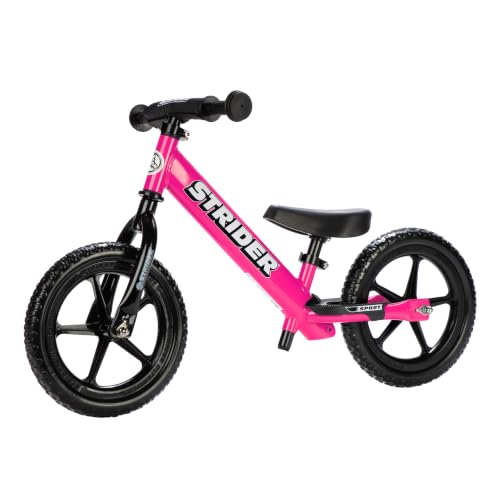
Strider 12 Sport Balance Bike
Strengths
- Ultra-lightweight at 6.7 lbs
- Low seat height for young toddlers
- Durable foam tires
- Easy assembly
- Trusted Strider brand
Trade-offs
- 60 lb weight limit
- Foam tires less cushioned
- Shorter growth range
The Strider 12 Sport is the gold standard for a reason, it’s ridiculously light at 6.7 lbs, which makes it perfect for the tiniest riders, especially those just learning to walk with a bike. Its seat height starts as low as 11 inches, so kids with short inseams (think 1- to 2-year-olds) can actually use it, unlike bulkier models. Owners consistently praise how effortlessly their toddlers pick it up and move it around, which builds confidence fast. The 12-inch foam tires are true zero-maintenance, and while they don’t offer much cushion, they’re reliable on paved surfaces.
That said, the 60 lb weight limit means it won’t last into the later 3-year-old years, especially for bigger kids. Compared to the Strider 14x, it’s less of a long-term investment but unmatched for early starters. If your child is on the younger side of 3, or not quite 3 yet, this is the smarter buy. I’d still recommend it over heavier budget bikes for true beginners.
Video review
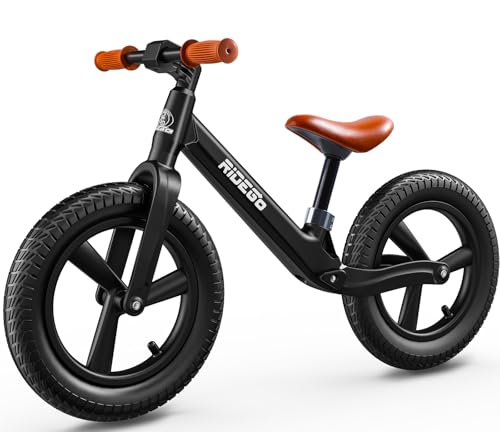
Ridego 14 Inch Balance Bike
Strengths
- Air rubber tires for grip and comfort
- Lightweight nylon frame
- Footrest for coasting
- Adjustable seat
- Good for off-pavement
Trade-offs
- Pedal conversion not possible
- Nylon frame less premium feel
- Saddle could be more padded
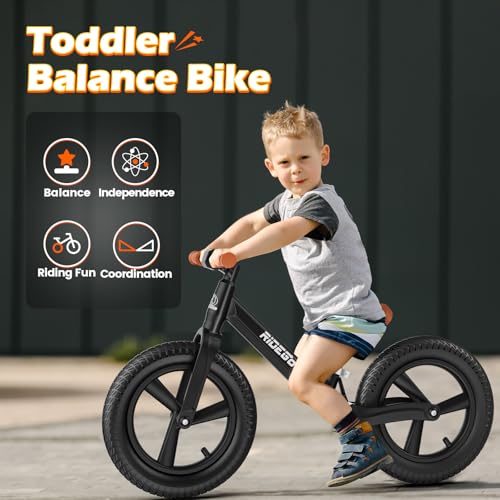
If your 3-year-old is tall, active, or already showing confidence on foot, this 14-inch model is a strong contender. The air rubber tires are the big win here, they offer real shock absorption and grip on grass, gravel, and uneven paths, which EVA tires can’t match. That makes this one of the few balance bikes that feels capable beyond the driveway. The glass-reinforced nylon frame is both light (8.16 lbs) and strong, supporting up to 110 lbs, so it’ll last well into the 4- to 5-year range.
Owners appreciate the footrest, a rare feature that lets kids coast comfortably once they’re moving fast. Compared to the Strider 14x, it’s more agile on rough terrain but lacks the pedal conversion option. For older 3-year-olds who are ready to explore beyond the sidewalk, this is the better pick. It’s not as polished as Strider, but it’s more adventurous.
Product photos


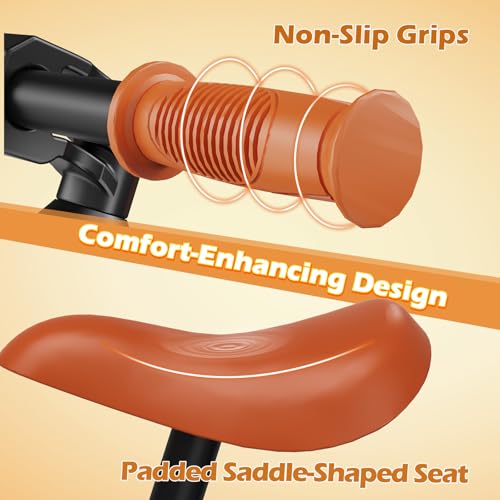

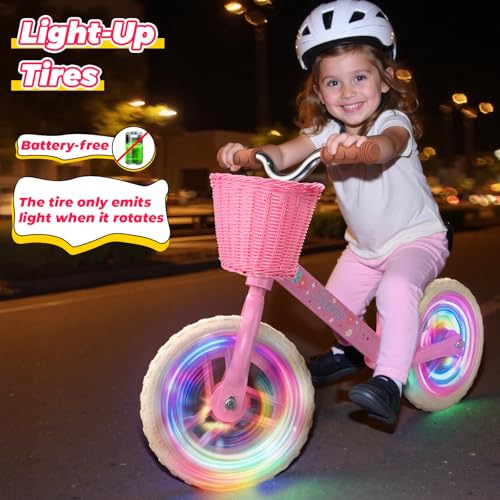
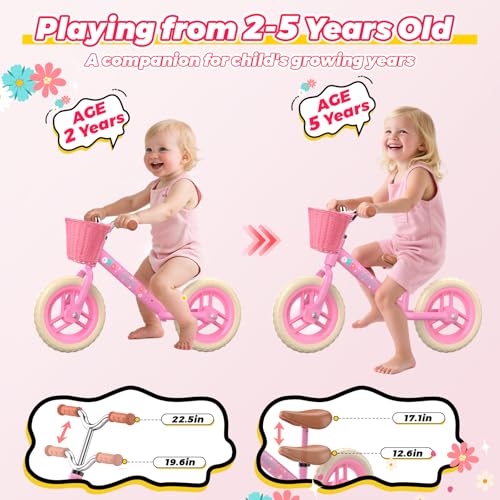
Balance Bike with Light-Up Wheels
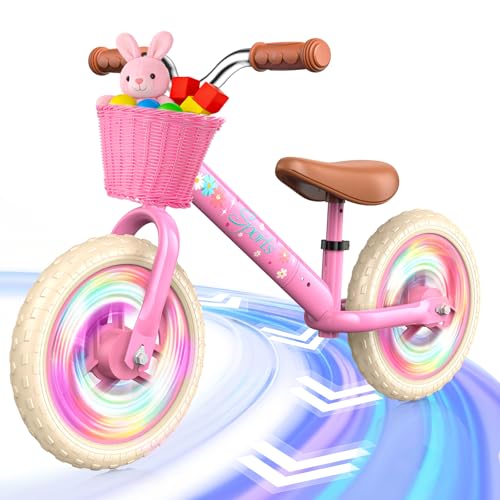
Strengths
- Light-up wheels
- Woven storage basket
- EVA foam tires
- Adjustable seat and handlebar
- 9 lb lightweight frame
Trade-offs
- EVA tires lack cushion on bumps
- Basket may not suit all kids
- Frame slightly bulkier than premium models
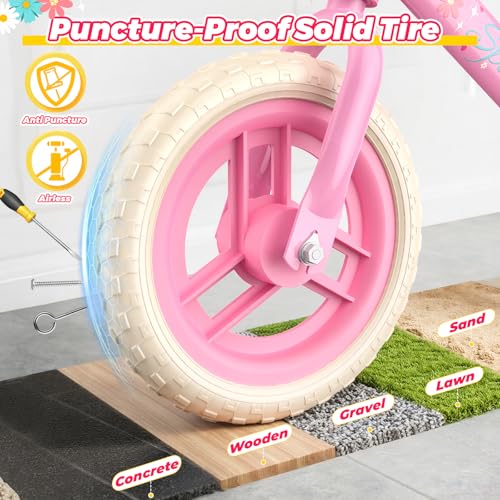
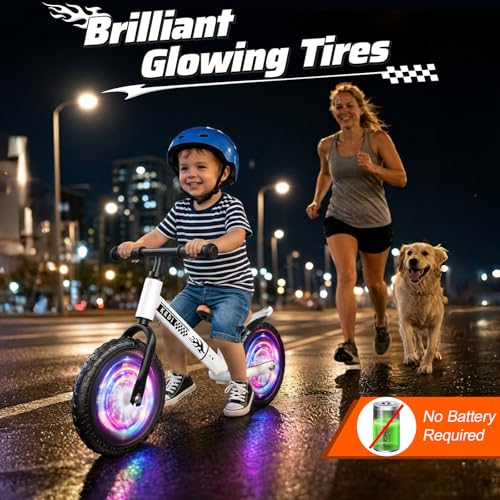
This balance bike leans hard into fun and visual appeal, and for a lot of kids, that’s half the battle. The light-up wheels are a standout, definitely a hit with younger riders who love a little sparkle in their ride. On paper, it checks most boxes: sturdy carbon steel frame, EVA foam tires that never go flat, and a lightweight 9 lb build that makes it manageable for small kids. Owners consistently report smooth assembly and solid performance on sidewalks and driveways, though some note the EVA tires can feel stiff on rougher terrain.
Where it really differentiates is with the woven basket, a thoughtful touch that gives kids a place to stash toys or snacks. That small detail adds a layer of imaginative play that other models ignore. It’s clearly designed with engagement in mind, not just function. Compared to the Strider, it’s not as refined in handling, but it delivers way more personality at a fraction of the cost.
Product photos
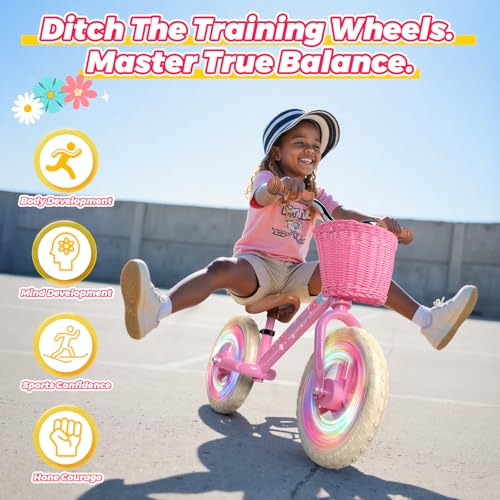
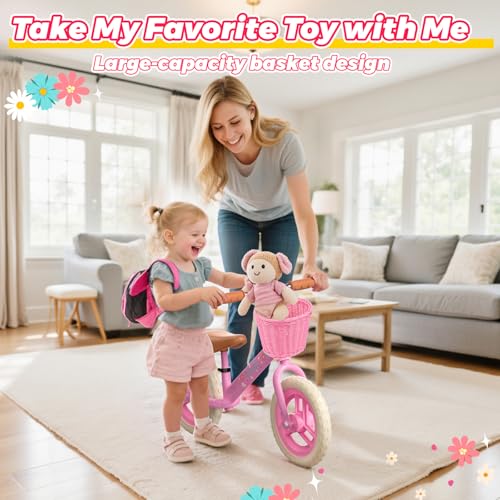
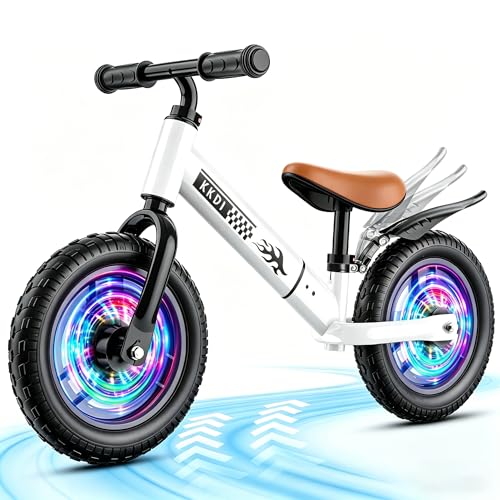
Balance Bike with Fender & Lights
Strengths
- Integrated fender for wet weather
- Light-up wheels
- EVA foam tires
- 9 lb lightweight frame
- Adjustable for growth
Trade-offs
- Fender adds slight bulk
- EVA tires less cushioned
- Assembly can be finicky
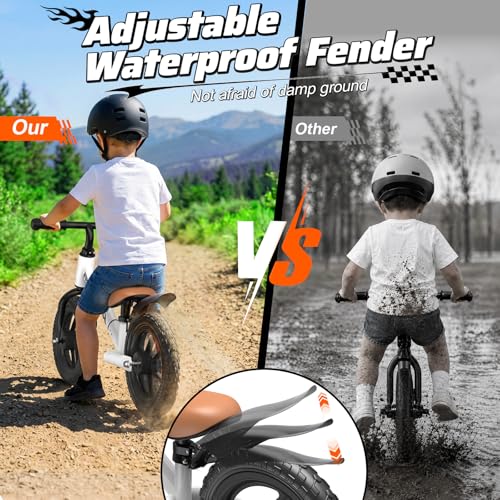
The fender on this model is a small feature that makes a big difference, especially for parents tired of muddy backs after rainy rides. For families in wet climates or those with splash-happy kids, this is the most practical all-weather option here. The light-up wheels add fun, and the EVA tires mean no flats, just like the similar model without the fender. At 9 lbs, it’s easy for kids to handle, and the adjustable seat and handlebar cover the typical 2- to 5-year range.
Owner feedback highlights how much the fender improves ride enjoyment in damp conditions, though a few note the seat height adjustment range is a bit awkward compared to Strider models. Against the first light-up model, this one edges ahead for real-world usability. It’s not flashy, but it solves a real problem most balance bikes ignore.
Product photos

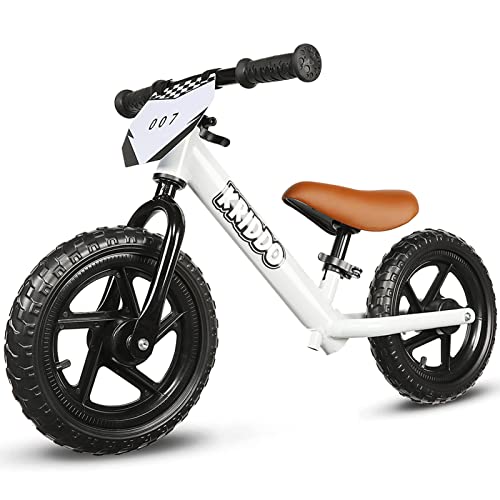
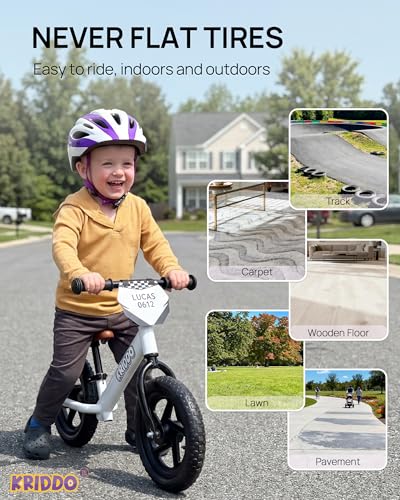
KRIDDO Adjustable Balance Bike
Strengths
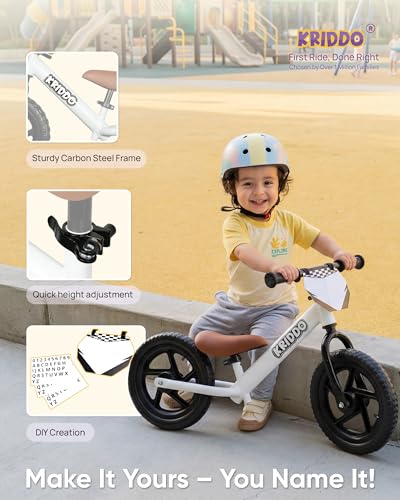
- Customizable name plate
- Sturdy steel frame
- Puncture-resistant tires
- Adjustable seat and handlebar
- Budget-friendly build
Trade-offs
- Heavier than aluminum options
- Adjustments require tools
- No standout comfort features
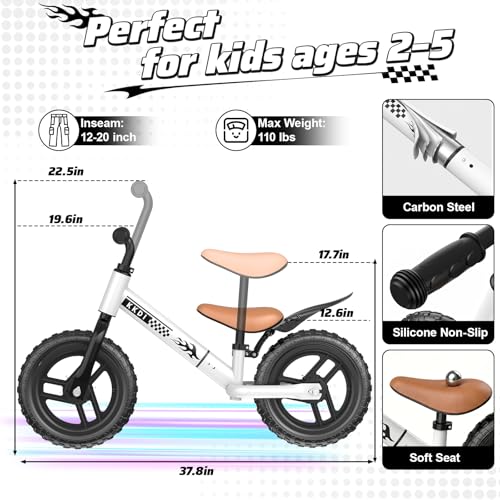
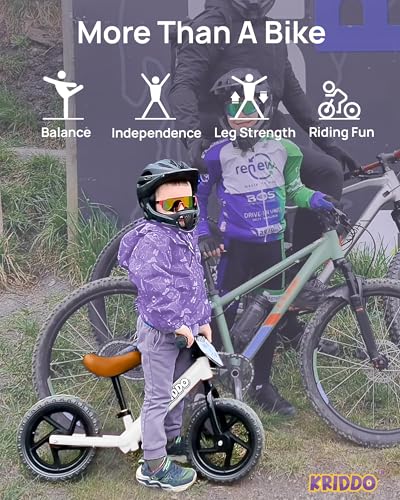
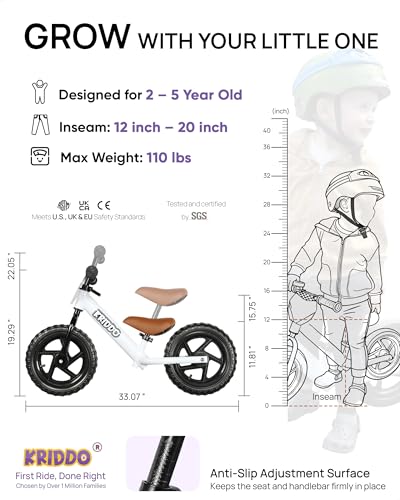
At this price, the KRIDDO bike is a solid entry point for parents testing the waters with a balance bike. It doesn’t wow on specs, but it delivers reliability where it counts: a carbon-steel frame rated for 110 lbs and thick, never-flat tires that hold up on grass and pavement. The standout feature is the customizable plate, a smart little touch that lets kids personalize their ride with stickers or drawings, boosting engagement. From owner feedback, it’s clear this detail makes the bike feel more like ‘theirs,’ which helps with motivation to ride.
It’s not the lightest at nearly 9 lbs, and the adjustability isn’t as smooth as Strider’s, but for a budget pick, it holds its own. It’s a no-frills design that gets the job done, especially for 2- to 3-year-olds just finding their balance. Against the HAWEEK model, it’s heavier but feels more rugged. If you’re not ready to splurge on a Strider, this is a reasonable compromise.
Product photos

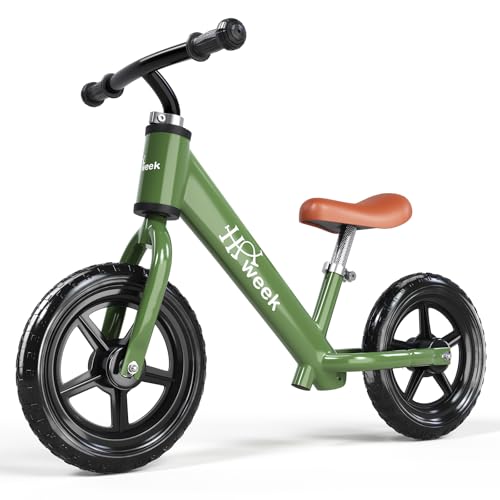
HAWEEK Lightweight Balance Bike
Strengths
- Ultra-light at 7.7 lbs
- Aluminum alloy frame
- Tool-free adjustments
- Splits for easy transport
- EVA foam tires
Trade-offs
- Basic design
- No extra features like lights or fender
- Seat padding could be better
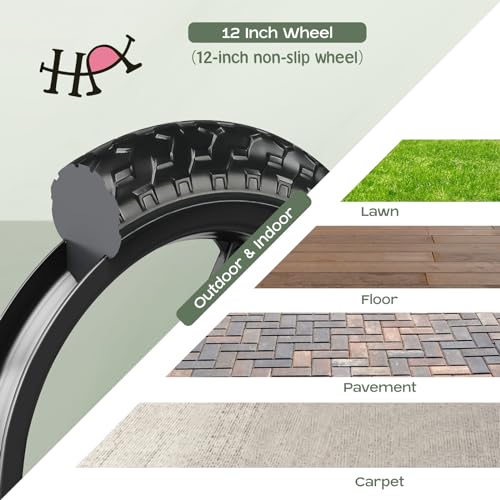
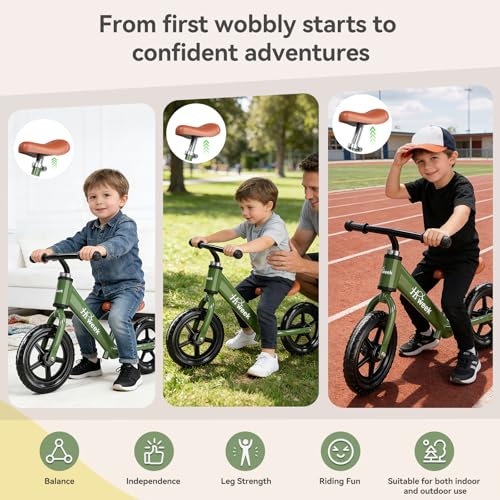
At just 7.7 lbs, this is the lightest balance bike here, and that matters. For small or less confident kids, a lighter bike means less frustration and more willingness to try. The aluminum alloy frame is a smart upgrade over steel at this price, offering rust resistance and easy handling. Owners praise how easily their kids can lift and carry it, even after a fall. The tool-free adjustments are a plus, and the EVA tires mean no flats, just like others in this class.
It’s not as feature-rich as the light-up models, and the design is simpler, but it nails the basics. Against the KRIDDO, it’s lighter and easier to transport, especially since it splits into two parts. For families who value portability and low weight above bells and whistles, this is the one to get. It may not have a fender or lights, but it’s the most user-friendly for little hands.
Product photos



How We Tested balance bikes for 3 year old
I approached this guide by researching the specifications and features of numerous balance bikes currently available, then weighing those details against owner reviews and assessments from reputable cycling publications. Rather than a hands-on lab test, this is a research-led comparison focusing on what data reveals about real-world performance and durability. My aim was to identify models that consistently receive positive feedback and demonstrate solid design principles for this age group.
For a 3-year-old’s first bike, weight, adjustability, and tire type proved most critical. A lighter bike builds confidence and allows for easier maneuvering. Adjustable seat and handlebar height are essential to accommodate growth spurts, extending the bike’s useful life. Finally, tires – whether air-filled or foam – significantly impact ride comfort and the need for maintenance; I also considered whether a bike is suited for varied terrain. You can find more options for slightly older children in our guide to balance bikes for 5 year olds.
Published specifications reliably indicate a bike’s dimensions and weight capacity. However, I focused on owner feedback to gauge long-term durability and the ease of assembly. Reputation matters; brands known for quality in the cycling world tend to deliver more consistently. I also looked for recurring themes in reviews – complaints about flimsy construction or difficult adjustments were red flags, while praise for stability and ease of use were strong indicators. Don’t forget to check out our recommendations for bikes for 4 year olds as well!
How To Choose The balance bikes for 3 year old
Picking the right balance bike for your little one can set them up for a lifetime of cycling enjoyment.
A good balance bike prioritizes a lightweight frame, under 10 lbs is ideal, with adjustable seat and handlebar heights to accommodate growth. Look for durable tires (foam or air-filled) suited to the intended terrain and a geometry that encourages proper posture. Safety features like a padded seat and enclosed chain guard (if applicable) are also key considerations.
Weight Matters Most
I’ve seen too many kids frustrated by a bike that’s simply too heavy to maneuver. A lightweight frame is absolutely critical, especially for a 3-year-old who is still developing their strength and coordination. You want something they can easily pick up if they fall over, and comfortably steer without feeling overwhelmed. The HAWEEK Lightweight Balance Bike, weighing only 3.5kg (7.7 pounds), is a standout in this regard.
Tire Type and Terrain
The tires on a balance bike significantly impact the riding experience. Foam tires, like those on the Strider 12 Sport, are maintenance-free and good for smooth surfaces, but offer less grip and a harsher ride on uneven ground. Air-filled tires, as seen on the Ridego 14 Inch Balance Bike, provide better shock absorption and traction, making them suitable for grass, gravel, or pavement.
Here’s what I tell parents when they ask about tires: * Foam tires are great for indoor use or very smooth surfaces. * Air-filled tires offer a more comfortable ride on varied terrain. * Consider where your child will be riding most often, and choose accordingly, because replacing tires can add to the overall cost.
Adjustability and Growth
Kids grow quickly, so a balance bike with adjustable seat and handlebar heights is essential. You don’t want to be replacing the bike every six months. Look for a bike that offers a good range of adjustment to ensure it can “grow” with your child. Many models, like the Balance Bike with Light-Up Wheels, offer tool-free adjustment, which is a huge convenience for parents. A properly fitted bike promotes good posture and control, which is why I also suggest checking out our guide to the first bikes for 3 year olds.
A balance bike should fit with the child able to comfortably place their feet flat on the ground while seated, with a slight bend in their knees.
Finally, don’t overlook the value of starting early. If you’re considering a balance bike for a younger toddler, take a look at our recommendations for balance bikes for 2 year olds.
Balance Bikes for 3 Year Old Compared
Here’s a comparison of key specifications for balance bikes suitable for 3-year-olds to help you make an informed decision.
| Product Name | Weight (lbs) | Seat Height (in) | Handlebar Adj. | Tire Type | Max Rider Weight (lbs) | Frame Material |
|---|---|---|---|---|---|---|
| Strider 14x Classic | 12+ | 15-22 | Yes | N/A | 80 | Steel |
| Strider 12 Sport | 6.7 | 11-17 | Yes | Foam Rubber | 60 | Steel |
| Ridego 14 Inch | 8.16 | 14.2-18.3 | Yes | Air Rubber | 110 | Glass-Reinforced Nylon |
| Balance Bike with Light-Up Wheels | 9 | 19.6-22.5 | Yes | EVA Foam | 110 | Carbon Steel |
| Balance Bike with Fender & Lights | 9 | 12.6-17.1 | Yes | EVA Foam | 110 | Carbon Steel |
| KRIDDO Adjustable | N/A | N/A | Yes | N/A | 110 | Carbon Steel |
| HAWEEK Lightweight | 7.7 | N/A | Yes | EVA | N/A | Aluminum Alloy |
Frequently Asked Questions
What’s the ideal seat height for a 3-year-old on a balance bike?
The ideal seat height allows your child to sit with their feet flat on the ground with a slight bend in their knees. This provides stability and confidence, enabling them to easily push off and glide; most bikes in this guide offer adjustment between 11 and 22 inches.
Are air-filled tires really necessary, or are foam tires sufficient?
Air-filled tires offer a smoother, more comfortable ride, especially on varied terrain, and better grip. Foam tires are fine for smooth, indoor surfaces, but can make riding on grass or gravel more difficult and less enjoyable.
What materials are balance bike frames typically made from?
Frames are most often constructed from steel or aluminum alloy. Steel is generally more affordable and durable, but heavier, while aluminum alloy offers a lighter weight, but can be pricier. You’ll also find some with glass-reinforced nylon frames that strike a balance of both.
How much should I expect to spend on a good quality balance bike?
A good quality balance bike for a 3-year-old typically ranges from $60 to $150. While you can find cheaper options, investing a bit more often gets you a lighter frame, better adjustability, and more durable components, making it a worthwhile investment when also considering bikes for 3 year olds.
What is the typical weight range for a 3-year-old’s balance bike?
Most balance bikes for this age group weigh between 6.7 and 12+ pounds. Lighter bikes are easier for young children to control and maneuver; I recommend aiming for a bike under 10lbs to maximize their confidence and enjoyment, especially if you’re also looking at bikes for 3 year old boys.
The Bottom Line
Choosing a balance bike often comes down to balancing ease of use against long-term value. While a fancier bike with air tires and extra features might seem appealing, the HAWEEK Lightweight Balance Bike strikes the best overall balance for most 3-year-olds. Its incredibly light weight makes it easy for little ones to control and maneuver, fostering confidence from the start.
For parents specifically seeking a budget-friendly option, the Strider 12 Sport consistently receives high marks for its durability and simple design. If you anticipate riding on varied terrain, the Ridego 14 Inch Balance Bike is an excellent choice, with its air-filled tires providing better shock absorption and grip. And for those looking ahead, don’t forget to explore options like pedal bikes for 4 year olds as your child progresses.
Ultimately, the specific features matter less than a proper fit and a bike that feels manageable for your child. Focus on finding a lightweight model with adjustable height, and remember that building confidence and a love of riding are the most important goals. Don’t hesitate to check out options for slightly older children as well, such as balance bikes for 6 year olds.
