
7 Best Bikes for 3-Year-Olds 2026
This post contains affiliate links. As an Amazon Associate, we earn from qualifying purchases.
The Ridego 14 Inch Balance Bike stands out as the best overall choice for 3-year-olds, thanks to its lightweight design and broad adjustability. For budget-minded families, the SEREED Adjustable Balance Bike delivers strong value without sacrificing key features, while the WEIZE 14 Inch Kids Bike offers a solid first pedal option with dual braking.
Parents often struggle to find a bike that’s not too heavy, actually fits their growing child, and keeps them safe while learning. Too many kids’ bikes are bulky, poorly adjusted, or built more for looks than function.
This guide cuts through the noise by focusing on real-world usability, drawing from specs, owner experiences, and what actually matters when a child is finding their balance and confidence on two (or three) wheels.
Top 7 Bikes For 3 Year Old in the Market
The Best Bikes For 3 Year Old, Reviewed
Ridego 14 Inch Balance Bike
Strengths
- Air rubber tires
- Lightweight frame
- Adjustable seat and footrest
Trade-offs
- No character design
- Higher price point
- Plastic frame may dent
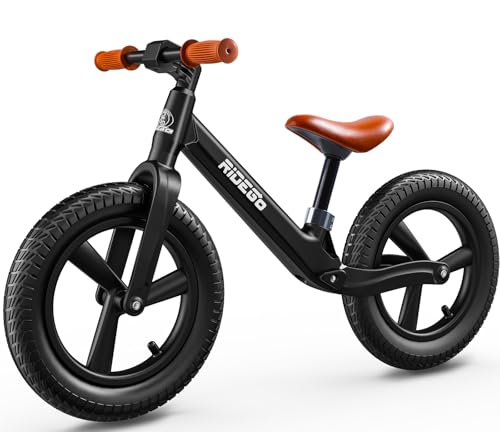
This is the bike I’d recommend to most parents of 3-year-olds who are serious about building real riding skills. The Ridego balance bike uses air-filled rubber tires, a rare and valuable feature at this level, that absorb bumps on gravel, grass, or cracked pavement, giving a far smoother ride than foam or EVA tires. The glass-reinforced nylon frame is both strong and incredibly light at just over 8 pounds, making it easy for small kids to maneuver and parents to toss in the trunk.
Owners consistently praise how long their kids stay engaged with it, thanks to the wide seat range and footrest that lets them coast comfortably. Compared to heavier steel bikes or trikes, this one promotes agility and confidence. It doesn’t have flashy lights or character graphics, but it excels where it counts: teaching balance, control, and independence. My pick for families who value skill development over gimmicks.
Video review
WEIZE 14 Inch Kids Bike

Strengths
- Affordable build
- Hand and coaster brakes
- Full chain guard
Trade-offs
- Heavy steel frame
- Training wheels delay balance
- Limited adjustability
The WEIZE 14-inch pedal bike hits a sweet spot for families who want an affordable, no-frills starter bike with training wheels. It’s built with a high-carbon steel frame that holds up to daily bumps, and the wide 2.125-inch tires offer decent shock absorption for a rigid frame. The hand brake is simple to operate, a plus for small hands, and the full chain guard adds a layer of safety that parents appreciate.
Still, it’s heavier than balance bikes, and training wheels can create a false sense of stability that delays real balance learning. Owners report it’s easy to assemble and rides smoothly on flat paths, but it doesn’t grow much with the child. Compared to the Ridego balance bike, it’s a more traditional approach, one that works, but less efficiently. For budget-focused buyers who want a classic pedal bike, it’s a solid choice.
Video review
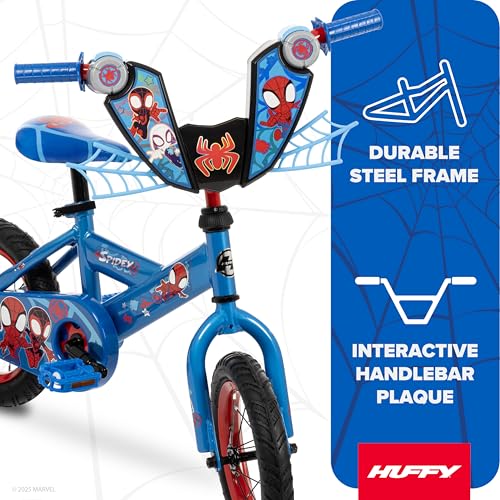
Huffy Marvel Spidey 12 Inch Bike
Strengths
- Superhero graphics
- Coaster brake
- Easy assembly
Trade-offs
- Limited adjustability
- Heavy steel frame
- Short growth span
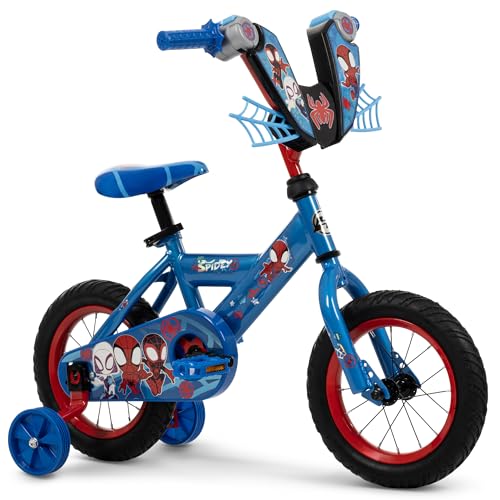
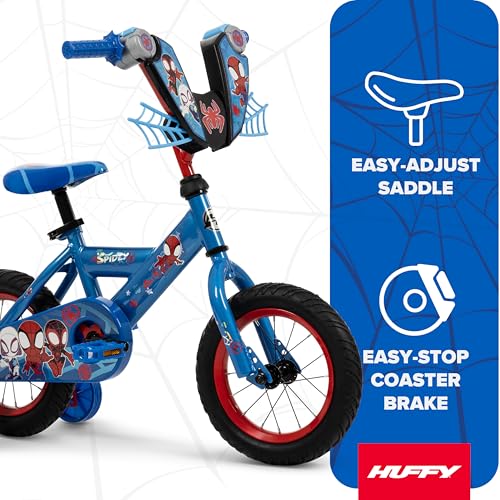
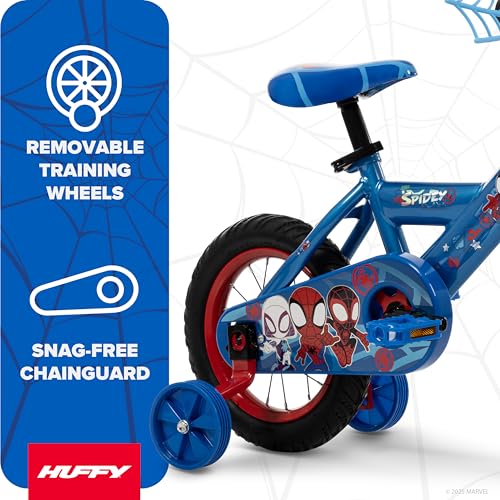
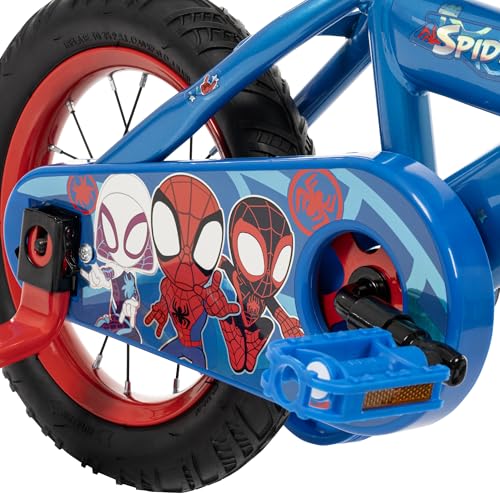
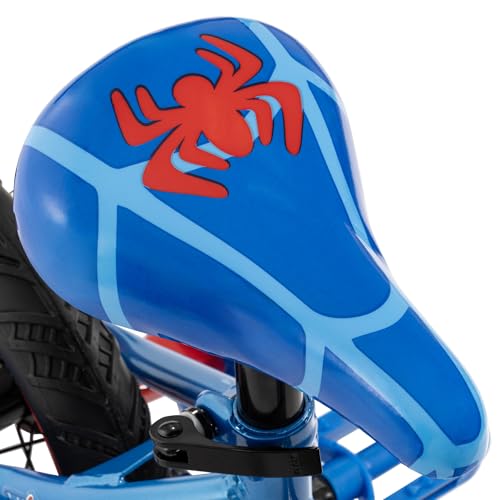
This Huffy Spidey bike leans hard into the fun factor, and for kids who live and breathe superhero stories, that’s a big win. The bright colors, bold decals, and red rims make it feel like a real ride for a little web-slinger, and that kind of excitement can be the difference between a bike that gets used and one that gathers dust. On paper, it’s a standard steel-frame starter bike with a coaster brake and training wheels, nothing flashy mechanically, but owners consistently report it’s sturdy enough for sidewalk adventures and easy to assemble.
Where it falls short is in long-term versatility. At 12 inches, it’s sized for younger riders, and the fixed geometry means it won’t grow much with the child. Compared to balance bikes or adjustable models, this one’s more of a phase-specific pick. But if your 3-year-old can’t stop quoting Spidey, the emotional buy-in might outweigh the mechanical limitations.
Product photos
Umatoll Tricycle for Toddlers

Strengths
- Stable wide base
- Light-up wheels
- Dual storage baskets
Trade-offs
- Heavy steel build
- Fixed seat height
- Trike limits balance development
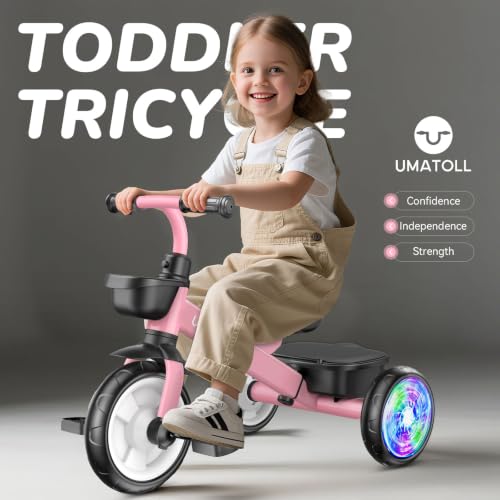
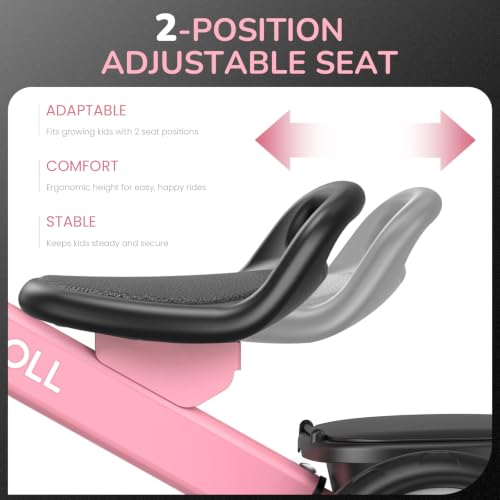
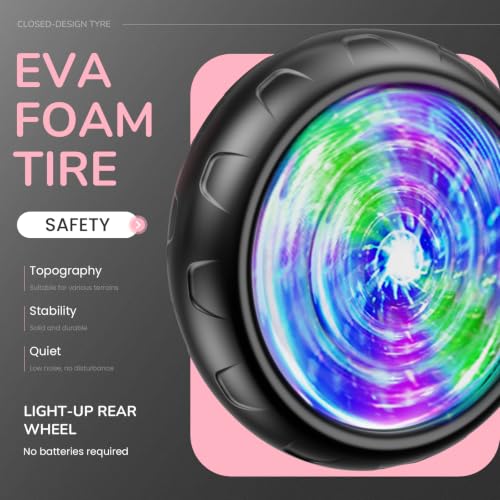
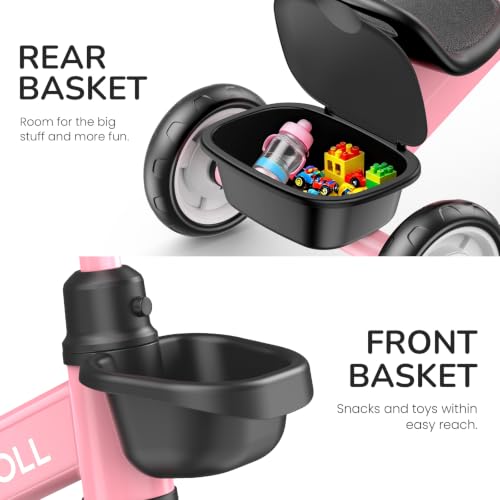
Tricycles have their place, and the Umatoll model makes a strong case for stability and fun in a low-risk package. With a wide wheelbase and extended rear wheels, it resists tipping, something parents of cautious or energetic 3-year-olds will appreciate. The light-up wheels are a hit, generating spontaneous joy without needing batteries, and the dual baskets add imaginative play value for kids who like to haul their stuffed animals or sidewalk treasures.
It’s built from carbon steel, which means it’s tough but not light, and the fixed seat limits long-term use. Still, for kids who aren’t ready to balance on two wheels, this trike offers a confidence-building alternative. Compared to balance bikes, it doesn’t teach the same skills, but it’s a safer bet for very young or hesitant riders. If you want low-pressure outdoor time, this delivers.
Product photos

SEREED Adjustable Balance Bike
Strengths
- Tool-free adjustments
- Lightweight for steel
- EVA never-flat tires
Trade-offs
- Foam tires lack cushion
- No air suspension
- Limited outdoor grip
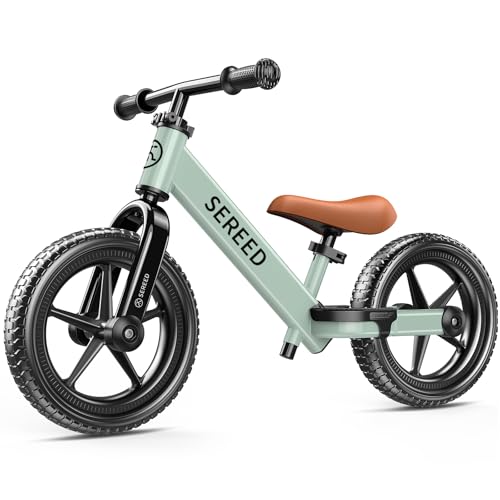
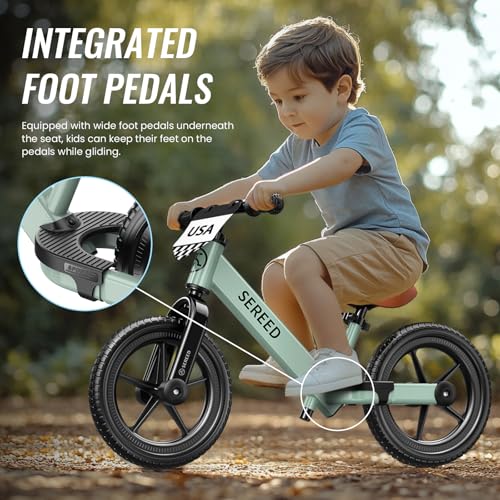
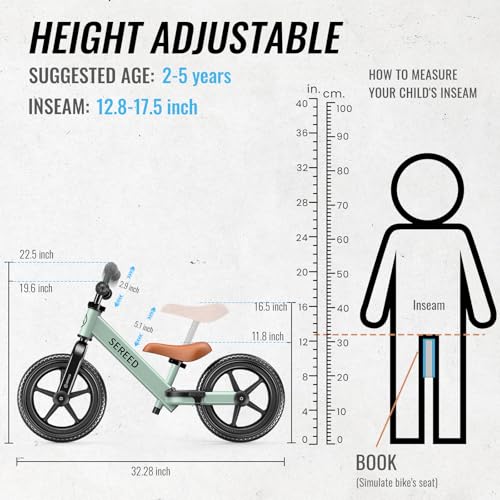
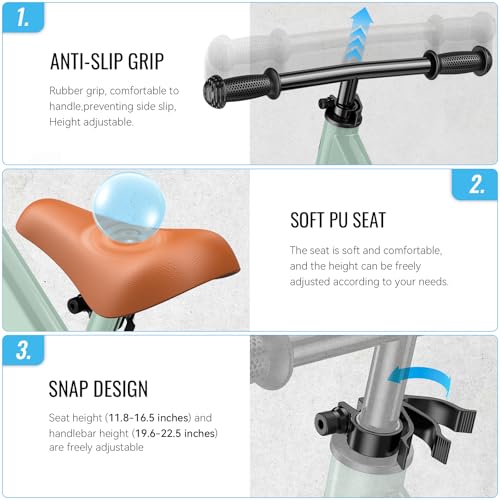
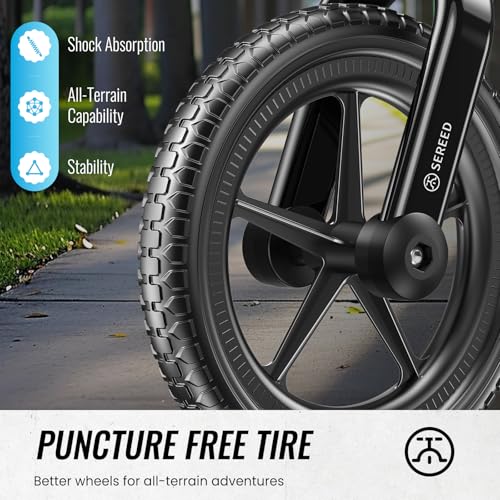
The SEREED balance bike is built for practicality, with a thoughtful range of adjustability that makes it usable from age 2 well into 5. The seat and handlebars both adjust tool-free via quick-release levers, a feature parents highlight for hassle-free tuning as kids grow. At just 7.8 pounds, it’s one of the lighter steel-frame balance bikes, and owners say their kids can carry it themselves, no small feat for toddlers.
The EVA foam tires are a trade-off: they’re maintenance-free and quiet indoors, but they don’t cushion bumps like air tires. On rough sidewalks or gravel, the ride gets jarring. Still, for indoor use or smooth pavement, it’s a reliable performer. Compared to the Ridego, it’s less capable off-road but easier to store and transport. If you value adjustability and portability over all-terrain ride quality, this is a smart pick.
Product photos
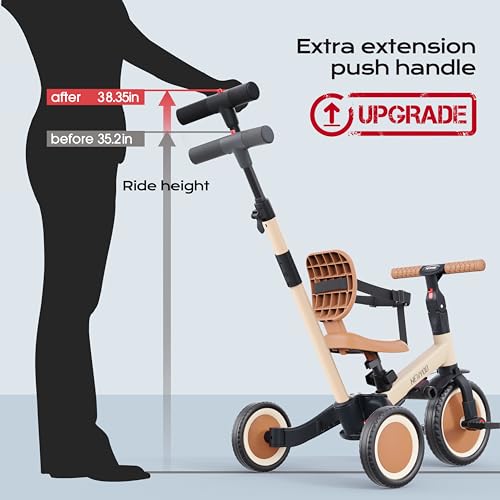
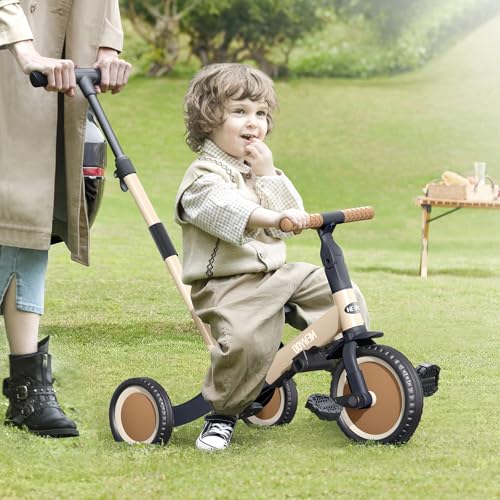
newyoo 5-in-1 Tricycle

Strengths
- 5-stage transformation
- Parent steering handle
- Durable carbon steel frame
Trade-offs
- Bulky in later stages
- Conversion can be fiddly
- Heavier than dedicated bikes
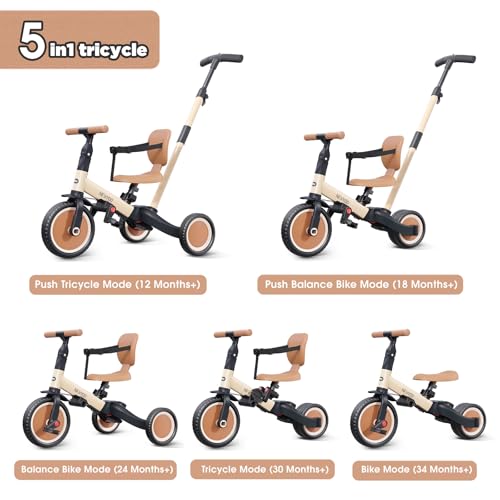
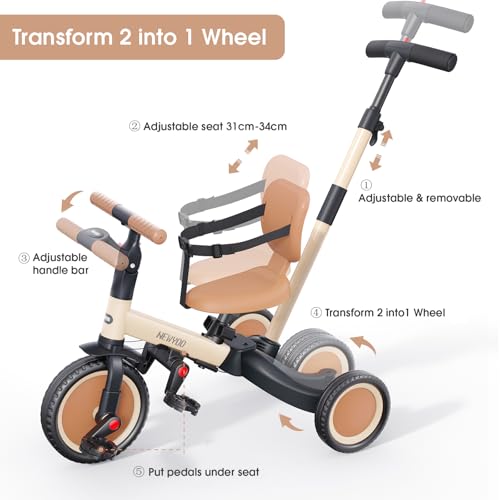
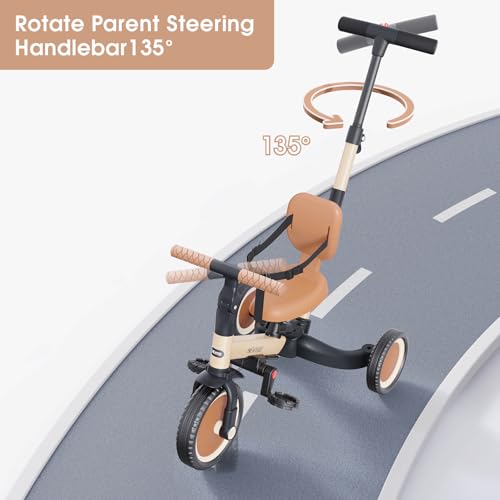
The newyoo 5-in-1 tricycle is a clever concept, starting as a parent-push trike and evolving into a balance bike and finally a pedal bike. That multi-stage design means it can grow with the child from as young as 1 year old, which is rare in this category. The adjustable handlebar and seat, plus the ability to switch pedal positions, give it real longevity. Parents like the steering control bar for early use, and the EVA shock-absorbing wheels help on bumpy driveways.
But complexity comes at a cost. The multiple parts and conversion steps mean more things can go wrong, and some owners note the ride feels less stable than dedicated balance bikes once in two-wheel mode. It’s also heavier than pure balance bikes. Still, for families who want one product to cover multiple phases, it’s a compelling value. I’d recommend it for first-time parents who want to avoid buying several bikes over a few years.
Product photos
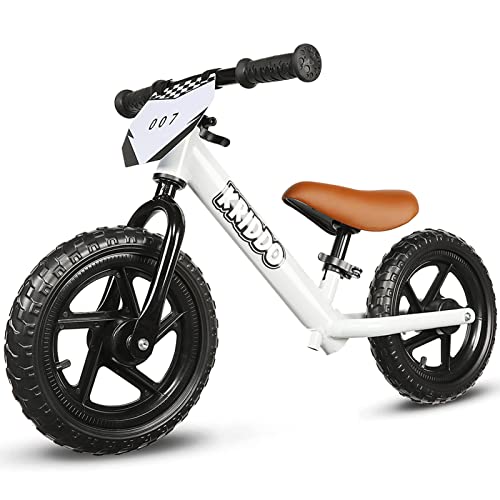
KRIDDO Toddler Balance Bike
Strengths
- Customizable plate
- Adjustable seat and bars
- Durable carbon-steel frame
Trade-offs
- Heavier than some balance bikes
- EVA tires lack air cushioning
- Limited grip texture on bars
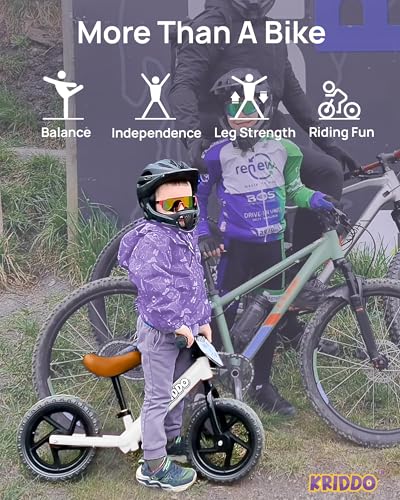
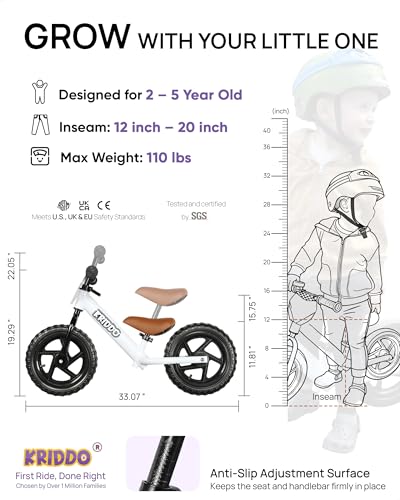
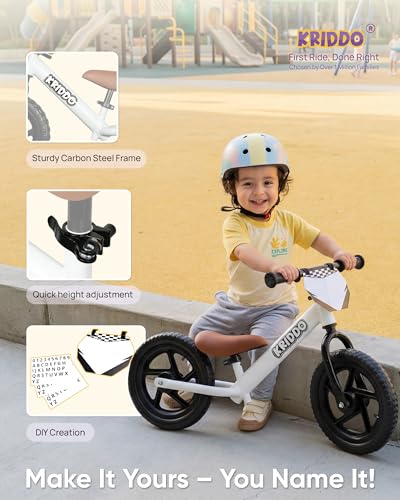
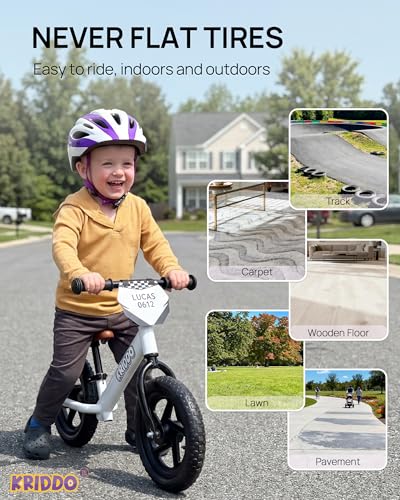
Balance bikes are the smart way to teach real riding skills early, and the KRIDDO model stands out for letting kids personalize their ride with a customizable plate. That small touch gives ownership and pride, which parents say keeps kids coming back to it day after day. The steel frame is rugged, supports up to 110 lbs, and the never-flat tires handle grass and pavement without drama, key for wobbly beginners who need stability.
Adjustability is solid here: both seat and handlebars can be tweaked as the child grows, stretching its usability from age 2 well into 5. It’s not the lightest in class, but owners note it’s manageable for little riders. Compared to pedal bikes with training wheels, this one teaches balance faster and leads to a smoother transition later. I’d pick this over a clunky starter pedal bike any day for a 3-year-old just starting out.
Product photos

How We Evaluated bikes for 3 year old
My approach to recommending bikes for this age group wasn’t about lengthy personal testing, but rather a research-led comparison of published specifications, features, and, crucially, owner and expert feedback. I sifted through details on frame materials, adjustability, tire types, and braking systems, then weighed those against what parents and reviewers actually report about ease of use, durability, and how well each bike supports a young child’s development. This process helped me build a ranking based on real-world suitability.
For bikes aimed at three-year-olds, a few factors stood out as most impactful. Adjustability is paramount; a bike that grows with the child offers better value and continued use. Equally important is stability – whether through a tricycle design or the balanced geometry of a balance bike. Finally, weight plays a huge role; a lighter bike is easier for a small rider to control and for parents to manage.
Specifications reliably indicate build quality and potential weight capacity, but owner feedback provides insight into practical considerations. I paid close attention to comments about assembly difficulty, tire performance on various surfaces, and the longevity of components. Reputation also mattered; brands known for safety and quality received greater consideration, while reviews mentioning frequent repairs or safety concerns were heavily discounted. You can find more options when considering first bikes for 3 year olds.
How To Choose The bikes for 3 year old
Picking the right first bike for a three-year-old is about more than just bright colors and fun characters. It’s about setting them up for success and fostering a lifelong love of riding.
A good bike for this age prioritizes lightweight construction, adjustable features to grow with the child, and a focus on building balance and coordination. Look for durable frames, easily accessible brakes (or coaster brakes for simplicity), and tires suited to the surfaces they’ll be riding on. Safety features like chainguards and padded saddles are also critical considerations.
Weight and Maneuverability
One of the biggest mistakes I see parents make is getting a bike that’s simply too heavy. A three-year-old doesn’t have the strength to wrestle with a bulky machine. You want something they can easily manage on their own, both when riding and when picking it up after a fall. Glass-reinforced nylon frames, like the one featured on the Ridego, offer a good strength-to-weight ratio, but even steel frames can work if kept relatively light. Don’t underestimate the impact of weight on confidence – a lighter bike is a happier bike.
Brake System and Control
The debate between coaster brakes (pedal backwards to stop) and hand brakes is a common one. For a three-year-old, a coaster brake is often the easier and more intuitive option. Their hands are still developing the strength and coordination needed for reliable hand braking. However, some bikes, like the WEIZE, include both, giving them exposure to hand brakes early on. If you opt for hand brakes, make absolutely sure they are easily reachable and require minimal effort to squeeze.
Here’s what to consider when evaluating brake systems: * Coaster brakes: Simple, but require practice and can be tricky on hills. * Hand brakes: Develop coordination, but can be difficult for small hands. * Dual Brake Systems: Offers a transition option, but adds complexity and potential maintenance.
A useful rule of thumb is to ensure your child can comfortably touch the ground with their feet while seated on the bike, even with the seat adjusted for optimal pedaling (or gliding).
Growth and Adjustability
Kids grow fast. What fits today might be too small in six months. That’s why adjustability is key. Look for bikes with adjustable seat posts and, ideally, adjustable handlebars. The SEREED Adjustable Balance Bike really shines here, letting you tweak both height settings without tools. This extends the useful life of the bike and saves you money in the long run. If you’re considering a transition to a pedal bike, exploring pedal bikes for 3 year olds might be a good next step, but remember to prioritize fit and adjustability there as well. And if you’re leaning towards a balance bike to start, checking out some balance bikes for 3 year olds will give you a solid overview of the market.
Bikes for 3 Year Old Compared
Here’s a comparison of key specifications for bikes designed for 3-year-olds to help you choose the right one.
| Product Name | Age Range | Wheel Size (in) | Adjustable Seat Height (in) | Frame Material | Brakes | Weight (lbs) |
|---|---|---|---|---|---|---|
| Ridego 14 Inch Balance Bike | 3-6 | 14 | 14.2–18.3 | Glass-Reinforced Nylon | N/A | 8.16 |
| WEIZE 14 Inch Kids Bike | 3-5 | 14 | N/A | High Carbon Steel | Handbrake/Coaster | N/A |
| Huffy Marvel Spidey 12 Inch Bike | 3-5 | 12 | N/A | Steel | Coaster | N/A |
| Umatoll Tricycle for Toddlers | 2-5 | N/A | 2-Position | Carbon Steel | N/A | N/A |
| SEREED Adjustable Balance Bike | 3-6 | N/A | 11.8-16.5 | Carbon Steel | N/A | 7.8 |
| newyoo 5-in-1 Tricycle | 1-3 | N/A | Adjustable | Carbon Steel | N/A | N/A |
| KRIDDO Toddler Balance Bike | 2-5 | N/A | Adjustable | Carbon Steel | N/A | N/A |
Frequently Asked Questions
What’s the ideal wheel size for a 3-year-old’s first bike?
A 12-inch wheel is generally best for a 3-year-old, though some may fit a 14-inch wheel depending on their height and inseam. Smaller wheels allow for easier control and a lower center of gravity, boosting confidence.
Are balance bikes truly better than bikes with training wheels?
Yes, balance bikes are often preferable as they teach children balance and coordination without the need for pedals or training wheels. This skill translates directly to riding a pedal bike later on, often shortening the learning curve.
How much should I expect to spend on a quality bike for a 3-year-old?
You can find decent options starting around $80, but expect to spend $120 to $200 for a bike with better adjustability and build quality. Investing a bit more upfront often means a bike that lasts longer and offers a safer, more enjoyable experience.
What materials are used for bike frames, and which is best for this age group?
Frames are commonly made from steel, aluminum, or glass-reinforced nylon. Glass-reinforced nylon offers a good balance of strength and low weight, making it a popular choice, but lightweight steel is also perfectly suitable and often more affordable. You can find more bike options for girls if you’re looking for something specific.
What safety features should I look for when choosing a bike for my child?
A chainguard is essential to prevent clothing from getting caught, and a padded saddle adds comfort and protection. Consider a helmet, knee, and elbow pads as well. For a broader view of what’s available, check out some best bikes for kids to see a wider range of options.
The Bottom Line
Choosing a bike for a three-year-old often comes down to balancing your budget with the desire for a bike that truly grows with them. While there are plenty of affordable options, the Ridego 14 Inch Balance Bike strikes the best overall balance of lightweight construction, adjustability, and features that promote early balance skills – making it a solid choice for most families.
For parents prioritizing a low price point, the Huffy Marvel Spidey 12 Inch Bike is a dependable option, and if you’re looking for versatility, the WEIZE 14 Inch Kids Bike offers both coaster and hand brakes to introduce your child to different control methods. But if you’re looking for alternative ways to get your toddler moving, consider exploring some scooters for 3 year olds as well.
Ultimately, remember that the “best” bike is the one that fits your child and encourages them to enjoy riding. Prioritize a manageable weight, a comfortable fit, and features that build confidence. Don’t get too caught up in fancy specifications; a simple, well-built bike is far more valuable than a complex one that’s difficult for a little one to handle, or check out bikes for 3 year old boys if you’re searching for specific options.
