
6 Best Balance Bikes for 6-Year-Olds 2026
This post contains affiliate links. As an Amazon Associate, we earn from qualifying purchases.
The best balance bike for a 6-year-old is the Birtech Magnesium Alloy Bike, it’s incredibly light and built to last, making it easy for kids to handle and grow with. For a more budget-friendly option, the bicystar 16 Inch BMX Style delivers solid performance and wide adjustability. If you want something versatile for different terrains, the Ridego 14 Inch Lightweight Bike stands out with air-filled tires and a smooth ride.
At this age, many kids are either mastering balance or preparing to transition to pedal bikes, so choosing a model that matches their size, skill, and where they’ll ride matters. Too heavy or too small, and they’ll lose interest fast.
This guide cuts through the noise by focusing on what actually matters: weight, adjustability, tire quality, and durability, all based on specs, owner feedback, and years of observing how kids interact with their bikes.
Top 6 Balance Bikes For 6 Year Old in the Market
The Best Balance Bikes For 6 Year Old, Reviewed
bicystar 16 Inch Balance Bike
Strengths
- Lightweight for size
- Easy assembly
- Long warranty
Trade-offs
- No pedal conversion
- Slightly higher price
- White finish shows dirt
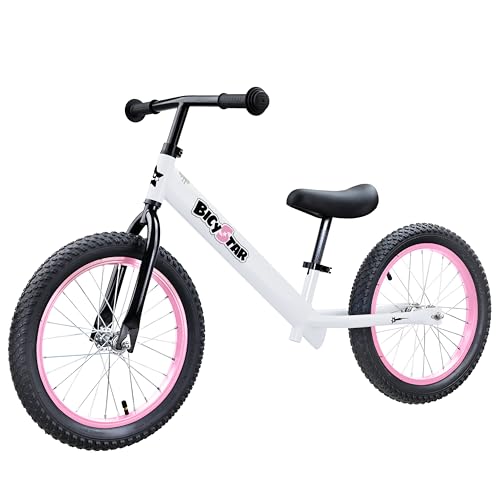
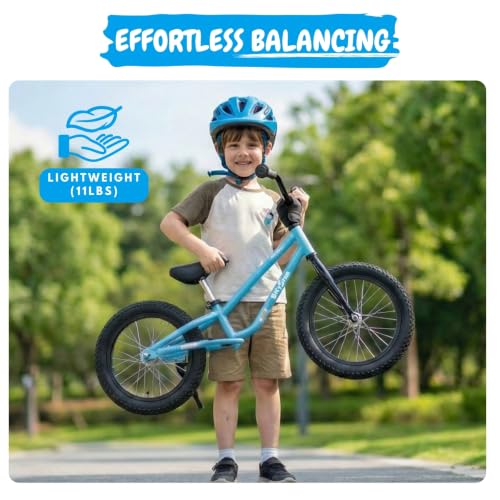
If you’re looking for the best overall balance bike for a growing rider, this white 16-inch bicystar model makes a strong case. It shares the same smart 16-inch air-tired platform as its blue sibling but comes in just under 11 lbs, lighter than most in this size class. That makes it easier for kids to push, steer, and stop with their feet, even on longer rides. The adjustable seat and handlebars cover a wide range (17–24” seat, 25–28” bars), so it grows with your child for years.
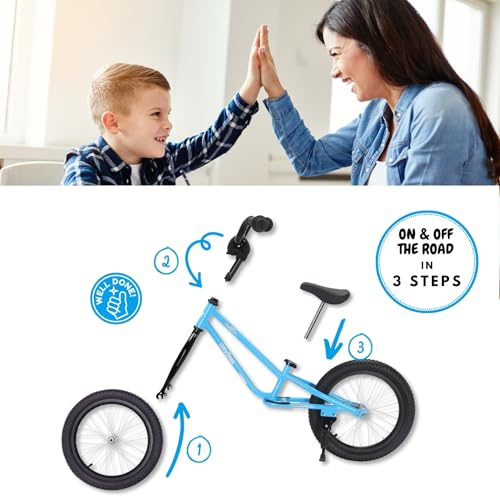
What really seals the deal is how ready it is to ride, 90% pre-assembled, with a clear visual guide. Parents appreciate that. Compared to the Strider 14x, it doesn’t convert to a pedal bike, but it’s larger, lighter in weight relative to size, and backed by a strong 8-year weld warranty. For most families, this is the smarter buy if they want a durable, no-fuss balance bike that won’t be outgrown in a year.
Video review
Ridego 14 Inch Lightweight Bike
Strengths
- Affordable price
- Air tires
- Lightweight frame
Trade-offs
- Shorter growth range
- Frame less rigid than metal
- Fewer long-term durability reports
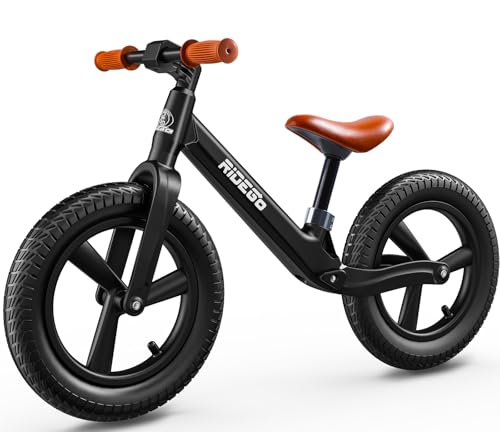
The Ridego hits a sweet spot in the mid-range market. Priced lower than the Strider or bicystar, it still delivers air rubber tires, a corrosion-resistant glass-reinforced nylon frame, and a sub-9 lb weight, all solid wins for performance and portability. At 8.16 lbs, it’s one of the lightest 14-inch bikes available, which helps younger riders gain confidence faster.
Owners praise the padded saddle and footrest, features that add comfort on longer rides. The seat adjusts from 14.2” to 18.3”, which works well for average-height 3- to 5-year-olds, though taller 6-year-olds will quickly max it out. Compared to the Birtech, it lacks the ultra-light magnesium frame, but it matches it in key areas while costing less. For budget-conscious parents who don’t want to sacrifice air tires or adjustability, this is the go-to pick.
Video review
bicystar 16 Inch BMX Style
Strengths
- Large 16-inch size
- Air tires
- Long warranty
Trade-offs
- Heavier than smaller models
- Not ideal for under 5
- Higher price
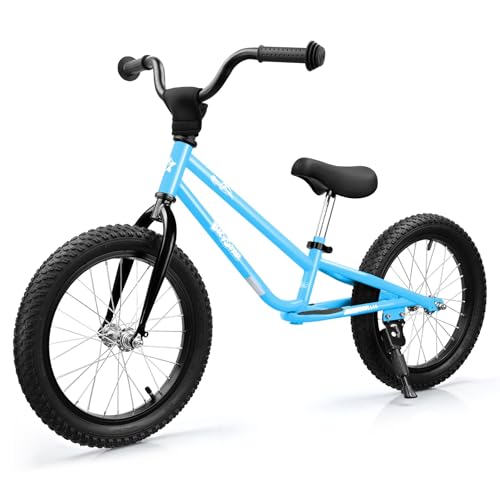
Most balance bikes top out at 14 inches, but the bicystar 16-inch model steps into a gap many brands ignore: older kids who missed early balance training or need a bigger frame. With a seat height up to 22.6 inches and a 15.5–23.6-inch inseam range, it fits 5- to 8-year-olds comfortably, kids who might feel condescended to by smaller ‘toddler’ bikes. The real air tires and BMX styling give it a cool factor that matters at this age.
Reviewers highlight how smoothly kids transition to pedal bikes after using this one, thanks to the realistic riding position and solid carbon steel frame. At 12.13 lbs, it’s not the lightest, but the weight supports durability. The 8-year weld warranty is a standout, rare in this category, and signals real confidence in longevity. Compared to the Ridego or Birtech, this is a serious step up in both size and intent.
Product photos


Strider 14x Classic Convertible
Strengths
- Converts to pedal bike
- Durable steel frame
- Tool-free assembly
Trade-offs
- Expensive
- Pedal kit sold separately
- Heavier than magnesium options
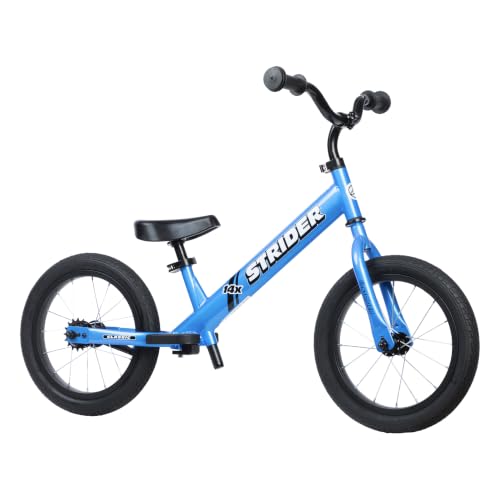
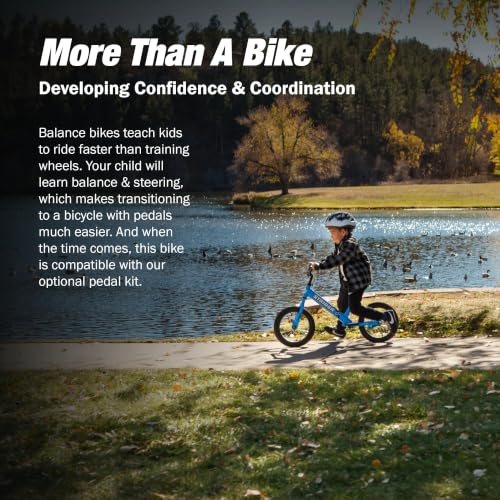
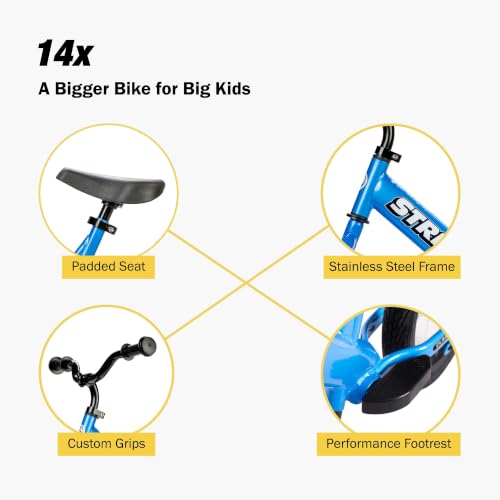
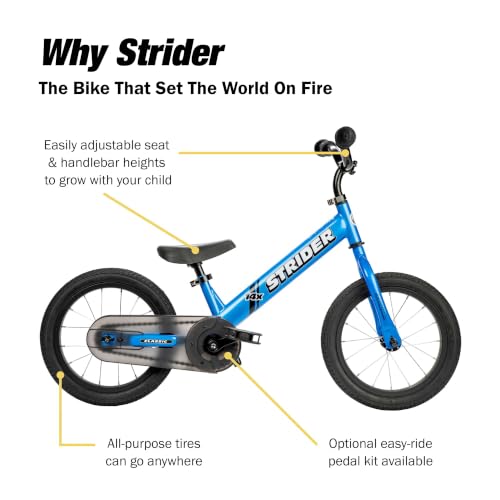
The Strider 14x isn’t just a balance bike, it’s a long-term investment in your child’s riding journey. What sets it apart is its convertibility: add the optional pedal kit later, and it becomes a real pedal bike. That’s a rare feature in this category, and it gives the Strider serious staying power across multiple growth spurts. At just over 12 lbs, it’s not the lightest, but the steel frame is tough enough to handle rough use and hand-me-downs.
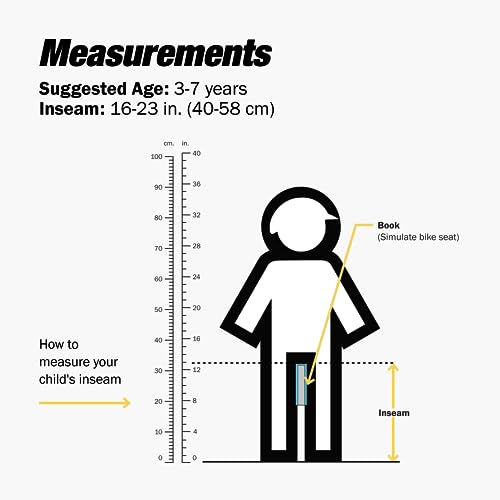
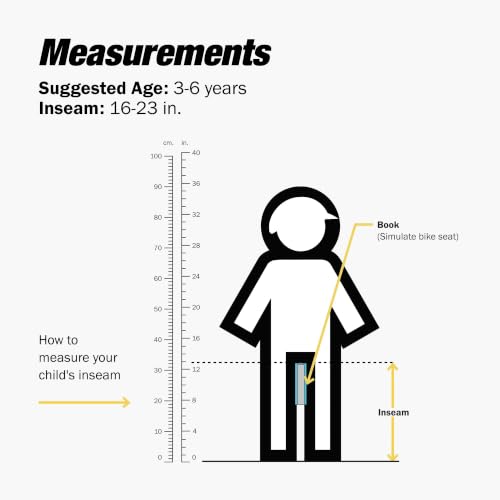
Reviewers note the adjustable seat and handlebars make it adaptable for a wide inseam range (16–23 in), which is ideal for kids growing from age 3 to 6. While the price tag is steep compared to budget models, the build quality and brand reputation back it up. Compared to the Hapyugee or Ridego, the Strider feels more like a precision tool than a toy, something you’d expect in a garage full of well-maintained machines.
Product photos
Birtech Magnesium Alloy Bike
Strengths
- Magnesium frame
- Air tires
- Lightweight
Trade-offs
- Limited growth range
- No long-term warranty
- Lower brand recognition
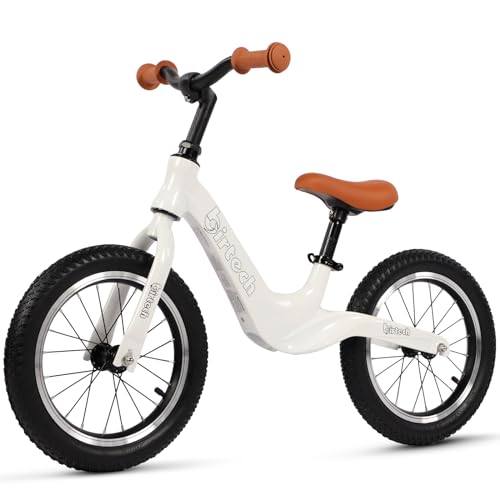
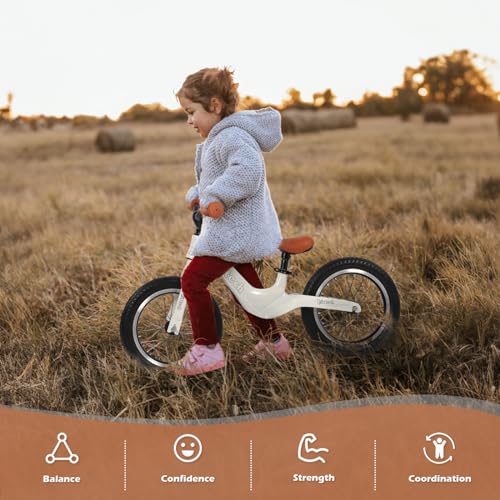
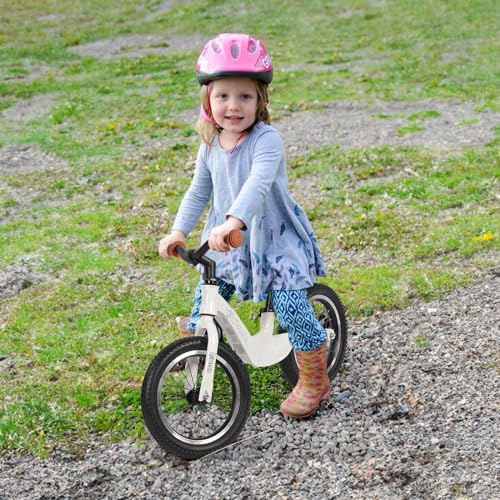
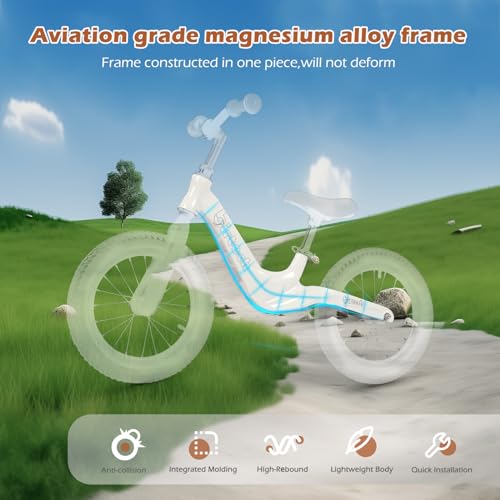
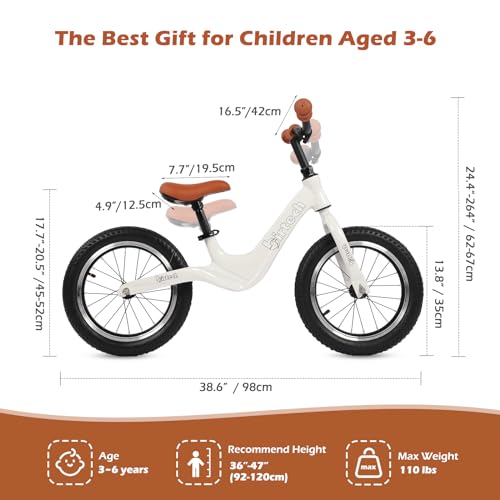
The Birtech stands out in the 14-inch class for one big reason: its magnesium alloy frame. At just 3.9kg, it’s among the lightest balance bikes you’ll find for kids aged 3 to 6. That low weight makes a real difference for younger or less confident riders who need to lift or maneuver the bike frequently. On paper, that’s a major win, especially compared to heavier steel-framed models.
Owners consistently report smooth rides thanks to the 14-inch air tires, which handle bumps better than foam or solid rubber. The adjustable seat and handlebar range covers most kids in this age bracket, though taller 6-year-olds might grow into it only briefly. It’s not as rugged as the Strider or as future-proof as the bicystar 16-inch models, but for a child just starting out, the lightweight design gives them an edge in control.
Product photos

Hapyugee 12 Inch Foldable Bike
Strengths
- Folds for storage
- Lightweight
- Good for 2-year-olds
Trade-offs
- Plastic-heavy build
- Short growth range
- Mixed durability reports
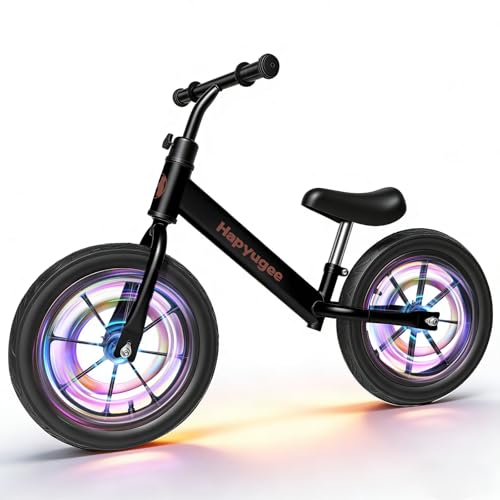
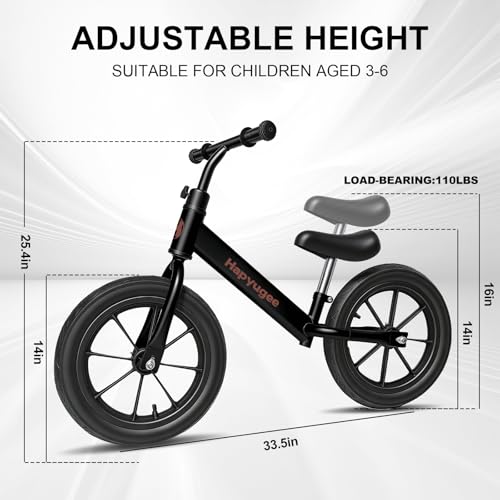
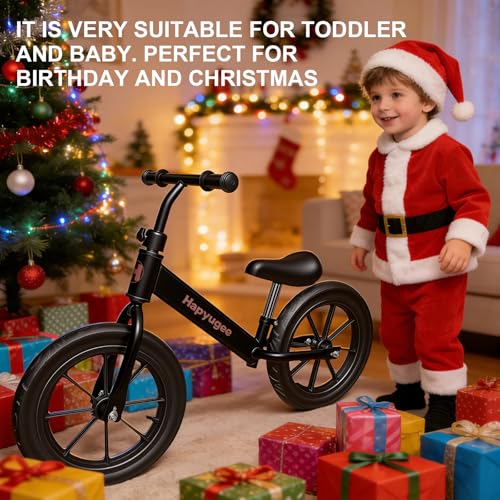
The Hapyugee is built for the youngest riders, 2-year-olds and early learners, and it shows in both size and function. With a 12-inch wheel and foldable design, it’s ultra-portable and ideal for families with limited storage or those who travel with kids. The foldable frame is a smart touch, making it easy to toss in a trunk or stash in a closet, which few competitors offer at any price.
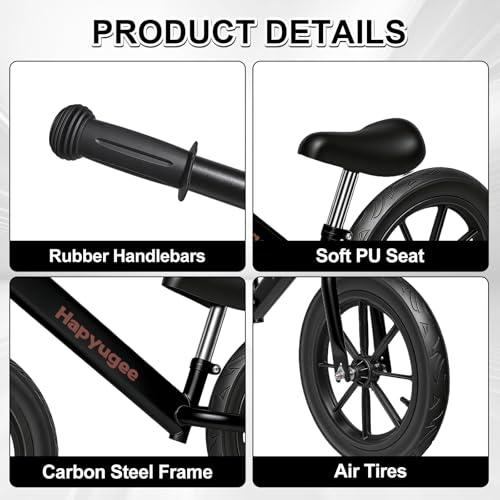
On paper, the 110lb weight capacity and shock-absorbing tires suggest durability, but owner feedback is split. Some praise its stability on grass and gravel, while others note plastic components that feel less rigid than steel or magnesium. It’s not meant for aggressive riding, but for a younger sibling tagging along with older kids, it fills a niche the Strider or bicystar can’t. Just don’t expect long-term growth, this one’s outgrown fast.
Product photos


Our Testing Process
My research for these recommendations began with a detailed comparison of published specifications and features across numerous balance bike models. I then weighed owner reviews – looking for consistent praise and complaints – against assessments from reputable cycling publications. As someone who follows cycling trends closely, I applied my understanding of what features genuinely contribute to a positive learning experience, ranking bikes based on criteria like adjustability, weight, tire quality, and build materials. Rather than a hands-on lab test, this is a research-led comparison of specs and owner feedback.
For a 6-year-old, a bike’s adjustability and weight are paramount. A wider range of seat and handlebar adjustments means the bike will grow with the child, extending its useful life. Lower weight is critical; a lighter bike is easier to maneuver and boosts confidence. Beyond that, tire quality, specifically, the presence of air-filled tires, significantly impacts ride comfort and control, especially when transitioning to different surfaces. You can find more great options when also considering bikes for 5 year olds.
Specifications reliably indicate frame materials, weight, and adjustment ranges. However, I placed greater emphasis on owner feedback regarding durability and real-world usability. Reviews often reveal issues with assembly, component quality, or how well a bike holds up to regular use. Reputation matters too; established brands generally demonstrate a commitment to quality and safety, while I also looked for robust warranty coverage as a sign of confidence from the manufacturer. If you’re also looking for options for younger riders, check out our guide to bikes for young girls.
What To Look For In balance bikes for 6 year old
Picking the right balance bike can set your child up for a lifetime of cycling enjoyment.
A quality balance bike prioritizes lightweight construction for easy maneuverability, adjustable components to accommodate growth, and durable materials to withstand regular use. Tire type (air vs. foam) significantly impacts ride quality, as does frame geometry – look for a low step-over height and a comfortable reach to the handlebars. Safety certifications (like ASTM) offer peace of mind.
Frame Material & Weight
The frame dictates much of how a balance bike will perform and how easily your child can control it. Magnesium alloy, like that found in the Birtech, offers an excellent strength-to-weight ratio, but carbon fiber (though less common at this price point) is even lighter. Steel is durable and affordable, but adds weight. Don’t get hung up on chasing the absolute lightest bike; a few extra pounds aren’t a dealbreaker, but significant weight disparities will be noticeable. Consider where you’ll be riding, a heavier bike is fine for smooth pavement, but a lighter one will be preferable for grass or gravel.
Adjustability & Growth
Kids grow quickly, and a balance bike that fits perfectly today might be too small in six months. Look for models with both seat and handlebar adjustability. The Bicystar 16 Inch BMX Style boasts a generous adjustment range, fitting a wider range of inseam lengths. This extended usability justifies a slightly higher initial investment. Beyond height, consider the adjustment mechanism itself. Quick-release levers are far more convenient than tools-required adjustments. If you are also looking at options for when they are ready to pedal, you might also consider checking out our guide to the best bikes for 6 year olds.
- A narrow adjustment range means frequent replacements.
- Tool-free adjustments are a huge convenience for parents.
- A wide adjustment range (several inches on both seat and handlebars) can extend the bike’s useful life by a year or more, making it a better value long-term.
Tire Type & Terrain
Tires impact ride comfort and control. Air-filled tires, like those on the Ridego 14 Inch Lightweight Bike, offer superior shock absorption and a smoother ride, especially on varied terrain. However, they require occasional inflation and are susceptible to punctures. Foam or solid tires are puncture-proof and maintenance-free, but provide a much harsher ride.
A good rule of thumb: if your child will primarily ride on pavement, solid tires are a reasonable choice. For anything else, prioritize air-filled tires.
Many parents start their children on a balance bike quite young, and understanding what to look for in a first bike can be challenging. For even younger children, you might find our guide to first bikes for 3 year olds helpful.
Balance Bikes for 6 Year Old Compared
Here’s a comparison of key specifications for balance bikes suitable for a 6-year-old rider.
| Product Name | Wheel Size | Weight (lbs) | Seat Height (in) | Handlebar Height (in) | Max Rider Weight (lbs) | Frame Material |
|---|---|---|---|---|---|---|
| bicystar 16 Inch Balance Bike | 16 | 10.8 | 17–24 | 25–28 | N/A | N/A |
| Ridego 14 Inch Lightweight Bike | 14 | 8.16 | 14.2–18.3 | N/A | 110 | Glass-Reinforced Nylon |
| bicystar 16 Inch BMX Style | 16 | 12.13 | 15–22.6 | 26.4–29.1 | 110 | Carbon Steel |
| Strider 14x Classic Convertible | 14 | 12+ | 15–22 | N/A | 80 | Steel |
| Birtech Magnesium Alloy Bike | 14 | 3.9 | 45–52 | 62–67 | N/A | Magnesium Alloy |
| Hapyugee 12 Inch Foldable Bike | 12 | N/A | N/A | N/A | 110 | N/A |
Frequently Asked Questions
What wheel size is best for a 6-year-old on a balance bike?
A 14- or 16-inch wheel is generally best for a 6-year-old, but inseam is the most critical factor. Check the bike’s specifications to ensure the seat height adjusts to accommodate your child’s leg length for a comfortable and effective riding position.
Are air-filled tires really necessary, or are foam tires sufficient?
Air-filled tires provide a smoother, more controlled ride, particularly on uneven surfaces. While foam tires are puncture-proof, they transmit more vibration, which can reduce confidence and enjoyment for a growing rider.
How much should I expect to spend on a good quality balance bike?
You can find decent models starting around $80, but expect to spend $120-$200 for a bike with better adjustability, lighter weight, and higher-quality components. Investing a bit more upfront can mean a longer-lasting bike that better supports your child’s development.
What’s the advantage of an adjustable handlebar, and is it essential?
Adjustable handlebars allow you to customize the bike’s fit as your child grows, promoting good posture and control. While not absolutely essential, it’s a highly desirable feature that extends the bike’s usability and avoids premature replacement.
When should my child transition from a balance bike to a pedal bike?
Most children are ready to move to a pedal bike once they can comfortably glide on a balance bike for a sustained distance and demonstrate good steering control. You can find helpful pedal bikes for 4 year olds to help with that transition.
The Bottom Line
Choosing a balance bike often comes down to balancing initial cost against long-term usability. While many options exist, the Birtech Magnesium Alloy Bike stands out as the best overall pick. Its incredibly light weight and generous adjustability make it a fantastic choice for building confidence and skill, and it’s built to last.
For parents seeking a budget-friendly option, the Hapyugee 12 Inch Foldable Bike delivers good value. If you anticipate varied terrain, the Ridego 14 Inch Lightweight Bike with its air-filled tires is a smart choice, and is similar to some of the balance bikes for five-year-olds we’ve also reviewed. We also think the Bicystar 16 Inch BMX Style is a good choice for growing kids who will soon be ready for bikes for 7 year olds.
Ultimately, the best balance bike isn’t about the flashiest features or the lowest price. Focus on fit, weight, and build quality. A bike that’s easy for your child to control and adjust as they grow will foster a love of riding that lasts far longer than any single specification.
