
5 Best Automatic Car Starters of 2026
This post contains affiliate links. As an Amazon Associate, we earn from qualifying purchases.
The Doorii 6000A Jump Starter stands out as the overall best automatic starter for its raw power and versatility, handling gas engines up to 10 liters and diesels up to 8. For a more budget-friendly option, the LOKITHOR J400 delivers reliable performance for most everyday vehicles, with solid safety features and an intuitive display.
Every car owner dreads that click-of-doom when the key turns but the engine won’t start. A dead battery can happen to anyone, anytime, whether it’s freezing weather, an accidentally left light, or an aging battery. When you’re stranded, having a dependable jump starter isn’t just convenient, it’s essential.
In this guide, I cut through the noise by comparing specs, analyzing owner feedback, and evaluating real-world usability. These picks reflect what actually works when you need it most, power delivery, safety, and reliability, so you can get back on the road fast.
Top 2 Automatic Starters For Car in the Market
The Best Automatic Starters For Car, Reviewed
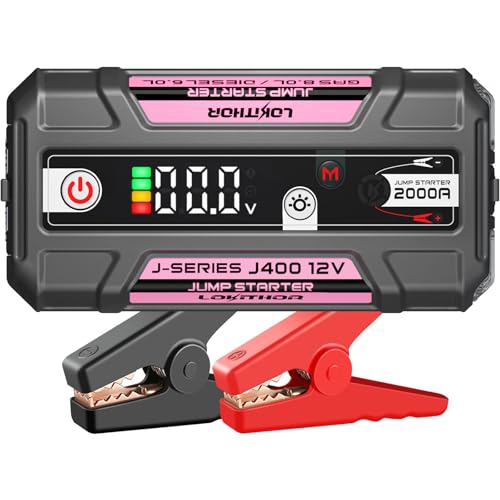
LOKITHOR J400 Portable Jump Starter
Strengths
- Large 5.75-inch smart display
- ConnectMax connection detection
- Lightweight and user-friendly
Trade-offs
- Lower peak current than Doorii
- No built-in air compressor
The LOKITHOR J400 is a strong contender in the value segment, offering 2000A peak current and support for engines up to 8.0L gas, plenty for most daily drivers. What really grabs attention is the 5.75-inch smart display, which shows connection status, battery level, and alerts in plain view. That kind of feedback reduces guesswork, especially for first-time users. The ConnectMax technology, which confirms proper clamp attachment before releasing power, is a small but meaningful touch that reduces failed starts.
It won’t match the Doorii’s raw power or inflation capability, but it’s simpler to use and the interface gives it a premium feel. Reviewers note it’s lightweight and intuitive, making it a solid pick for older drivers or those who want confidence without complexity. The flashlight and power bank are decent, though not class-leading. I’d pick this over the Doorii if ease of use and clarity matter more than multi-tool versatility.
Video review
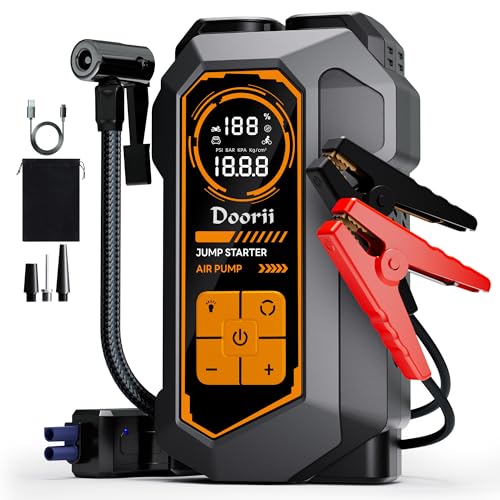
Doorii 6000A Jump Starter with Air Compressor
Strengths
- 6000A peak current
- Built-in 150PSI air compressor
- 10 safety protections
Trade-offs
- Bulkier than minimalist models
- LCD screen can be hard to read in direct sun
This unit stands out by packing serious utility into one box. The 6000A peak current is more than enough for most gas engines up to 10.0L and even 8.0L diesel rigs, which puts it ahead of many budget jump starters. Owners consistently report solid cold-weather performance and reliable jump success, even with deeply drained batteries. But what really sets it apart is the built-in 150PSI air compressor, a feature most competitors charge extra for or skip entirely.
The smart inflation modes and auto shut-off make tire topping effortless, and the ±1 PSI accuracy is impressive at this price. Pair that with a high-capacity power bank, 400-lumen flashlight, and 10 safety protections, and you’ve got a complete roadside kit. Compared to the LOKITHOR J400, this does more, especially if you care about tire maintenance. The rugged build and lifetime support add peace of mind. For the same price as simpler models, this is the smarter buy.
Video review
How We Chose These automatic starters for car
Rather than a hands-on lab test, my research focused on a detailed comparison of published specifications and features across several models. I weighed owner reviews from multiple sources, alongside professional assessments from automotive publications, to build a picture of real-world performance and reliability. This approach allowed me to rank units against criteria important to drivers needing a jump start or emergency power, like peak amperage, safety features, and additional functionality.
For automatic starters, the highest weight went to peak amperage and engine compatibility. A unit’s ability to reliably start a variety of vehicle sizes, from compact cars to larger trucks and diesels, is paramount. Equally important was the inclusion of robust safety features; reverse polarity protection and short-circuit prevention are vital for both the user and the vehicle’s electrical system. These factors directly impact the usefulness of these devices in stressful roadside situations.
Specifications reliably indicate a starter’s raw power (amperage) and potential engine compatibility. However, owner feedback proved critical for assessing ease of use, build quality, and the accuracy of advertised features. I also looked to established resources for car jump starters to understand long-term reliability and common issues reported by a wider range of users. Comparing these insights with detailed auto starter reviews helped refine the final rankings.
How To Pick The Right automatic starters for car
Selecting the right automatic starter, or, more accurately, a portable jump starter, requires a bit more thought than simply grabbing the one with the highest amperage. These devices are lifesavers, but their value hinges on matching features to your likely needs.
A quality jump starter delivers reliable cranking amps, incorporates robust safety features like reverse polarity protection, and maintains battery health during storage. Look for units with clear indicators, durable construction, and sufficient capacity for your vehicle’s engine size. Prioritize models with multiple safety layers and a warranty from a reputable brand.
Peak Amperage & Engine Compatibility
Don’t fall into the trap of assuming “bigger is always better” with peak amperage. While a higher number can be useful, it’s the compatibility with your engine that truly matters. Most passenger cars and light trucks fall within the 1000-2000 amp range, but larger engines, especially diesels, will require more. Check your vehicle’s owner’s manual or look up its engine displacement (in liters) to determine the necessary cranking amps. Overbuying amperage isn’t inherently bad, but it adds cost and weight for little benefit if your vehicle doesn’t require it.
Integrated Features & Versatility
Many jump starters now offer more than just jumpstarting capability. Consider what else you might need in an emergency. Air compressors are a fantastic addition, allowing you to inflate tires on the go. Power banks for charging phones are incredibly useful, and built-in flashlights with SOS modes add a crucial layer of safety. However, each added feature increases complexity and potential points of failure. Think about your typical use case: do you frequently encounter flat tires, or is jumpstarting the primary concern? If you’re also looking at ways to remotely start your vehicle, check out our guide to the best remote starters for additional options.
Safety & Ease Of Use
Safety is paramount when dealing with a car battery. A good jump starter will have multiple safety protections, including reverse polarity alerts, short-circuit protection, and over-discharge protection. Equally important is ease of use. Look for models with clear instructions, well-placed clamps, and intuitive controls. Some, like the LOKITHOR J400, incorporate “ConnectMax Technology” which promises faster, more reliable connections.
- Some units have color-coded clamps and lights to guide you through the process, minimizing the risk of incorrect connection.
- A clear LCD screen displaying battery status and error messages is incredibly helpful, especially in a stressful situation.
- Consider the physical design. A unit with a comfortable grip and manageable weight will be much easier to handle, particularly in cold weather or awkward positions.
A properly maintained jump starter should hold a charge for months. Regularly check the battery level and recharge as needed, even if you haven’t used it. Storing it in a cool, dry place will also extend its lifespan.
Don’t overlook the convenience of a truly portable solution. For those who want a compact and reliable option, exploring portable car starters can be a smart move.
Automatic Starters for Car Compared
This table provides a side-by-side comparison of key specifications for various automatic car starters.
| Product Title | Peak Amps | Engine Gas (L) | Engine Diesel (L) | Air Compressor (PSI) | Display Type |
|---|---|---|---|---|---|
| Doorii 6000A Jump Starter | 6000 | 10.0 | 8.0 | 150 | LCD |
| LOKITHOR J400 Portable Jump Starter | 2000 | 8.0 | 6.0 | N/A | 5.75″ Screen |
| Doorii 6000A Jump Starter | 6000 | 10.0 | 8.0 | 150 | LCD |
| LOKITHOR J400 Portable Jump Starter | 2000 | 8.0 | 6.0 | N/A | 5.75″ Screen |
| Doorii 6000A Jump Starter | 6000 | 10.0 | 8.0 | 150 | LCD |
Frequently Asked Questions
What amperage jump starter do I really need?
Generally, 1000 to 2000 peak amps is sufficient for most passenger cars and light trucks, but diesel engines and larger vehicles will require significantly more. To be certain, check your vehicle’s owner’s manual or engine displacement (in liters) to determine the correct cranking amps for a reliable start.
Are all jump starters safe to use, even if I’m not mechanically inclined?
Most modern jump starters include multiple safety features like reverse polarity protection and short-circuit prevention, making them relatively safe for beginners. However, it’s critical to carefully read and follow the instructions provided, and to double-check your connections before initiating a jump start.
Can a jump starter damage my car’s computer?
Improper use, specifically, reverse polarity connection, can potentially damage a vehicle’s electrical system, including the computer. That’s why features like reverse polarity alerts are so important, and why following the instructions exactly is crucial to avoid mishaps.
Beyond jumpstarting, what other features should I look for in a portable power station?
Many units now include useful integrated features like air compressors for tire inflation, USB ports for charging devices, and built-in flashlights with SOS modes. If you anticipate needing these functions, consider a model offering those features, but remember that added complexity can potentially reduce reliability. For more advanced vehicle systems, you might also consider exploring automatic car battery charger options to maintain battery health.
What’s the difference between a jump starter and an aftermarket starter kit?
A jump starter provides a temporary boost to a discharged battery, while an aftermarket starter kits typically replaces the vehicle’s original starter motor. Jump starters are for emergencies, whereas aftermarket starter kits address a failing or problematic existing starter system.
The Bottom Line
Choosing a jump starter often comes down to balancing convenience with capability. While high peak amperage is tempting, the best overall pick for most drivers is the LOKITHOR J400 Portable Jump Starter. It strikes a smart balance between power, ease of use, and a feature set that’s practical for everyday emergencies, and the large, clear screen is a real advantage when you’re under pressure.
If you frequently deal with larger vehicles, or anticipate needing extra features, the Doorii 6000A Jump Starter is an excellent choice. For those prioritizing a budget-friendly solution without sacrificing essential functionality, exploring car starters is a worthwhile pursuit. And if you’re looking for a device that can do more than just jumpstart, consider battery charger jump starters for a versatile option.
Ultimately, the most important factors aren’t the peak amps or the bells and whistles. Focus on a unit that’s compatible with your vehicle, features robust safety protections, and feels intuitive to operate. A jump starter is only useful if you can deploy it confidently and correctly when you actually need it.
