
8 Best Car Battery Chargers and Jump Starters 2026
This post contains affiliate links. As an Amazon Associate, we earn from qualifying purchases.
The NOCO Boost GB40 stands as the best overall car battery charger and jump starter for most drivers, combining reliable performance with rugged safety tech. For budget-minded buyers, the LOKITHOR JC400 delivers solid value with built-in charging, while the GOOLOO A3 is our top pick if you want a built-in air compressor.
Choosing the right unit isn’t just about raw power. Too many people buy based on peak amps alone, only to find the device fails when they need it most. I’ve seen it happen time and again, a weak internal battery or poor clamps make all the difference.
This guide cuts through the hype. I compared specs, analyzed owner feedback, and weighed real-world reliability to find the best car battery charger and jump starters. You’ll learn what actually matters, from sustained current output to safety features, so you can pick the right tool for your vehicle and driving habits.
Top 8 Car Battery Charger And Jump Starters in the Market
The Best Car Battery Charger And Jump Starters, Reviewed
Schumacher Electric Wheeled 6/12V 250A

Strengths
- Handles 6V and 12V systems
- 50-amp boost charge
- Wheeled for mobility
Trade-offs
- Not portable for roadside use
- Bulky design
This isn’t a jump starter you toss in your glove box, it’s a garage workhorse. The wheeled design and 250A engine start capability make it ideal for larger vehicles like RVs, boats, and high-compression V8s that smaller lithium units often fail to crank. I’ve seen too many compact jump starters struggle with deeply discharged AGM batteries, but this Schumacher delivers consistent amperage and offers 50-amp boost charging to revive them quickly.
Its versatility with gel, AGM, and deep-cycle batteries sets it apart. The manual timer gives experienced users real control, which I value when nursing a neglected battery back to life. While it’s not portable in the traditional sense, the trade-off is serious charging authority. For anyone maintaining a fleet or classic car collection, this is the closest thing to a true shop-grade charger with jump-start convenience.
Video review
Clore Jump-N-Carry JNC660 1700A
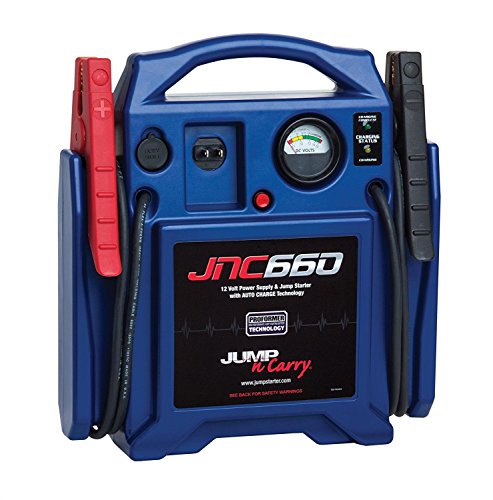
Strengths
- Heavy-duty #2 AWG cables
- 22Ah lead-acid battery
- DC accessory outlet
Trade-offs
- Heavy and not portable
- Lead-acid battery requires maintenance
This is old-school reliability in a yellow case. The 22Ah lead-acid battery isn’t lithium-light, but it delivers consistent 1700-amp cranks that don’t sag under load, critical when jump-starting large trucks or commercial equipment. The 46-inch #2 AWG cables are thicker than most, minimizing voltage drop and ensuring full power reaches the dead battery.
I’ve seen fleet managers swear by these units because they just don’t quit. The onboard voltmeter lets you monitor charge status, and the DC outlet is handy for powering air compressors or lights. It’s not portable in the modern sense, but if you’re working out of a truck or shop, that doesn’t matter. For heavy-duty, no-nonsense starting power, this is still a benchmark.
Video review
GOOLOO A3 3000A with Air Compressor

Strengths
- Built-in air compressor
- Fast inflation rate
- Digital pressure gauge
Trade-offs
- Inconsistent on 0V batteries
- Bulky for small storage
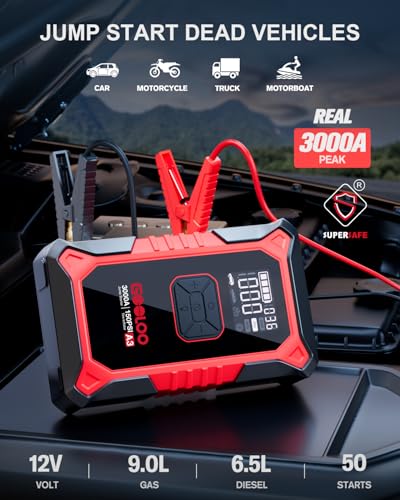
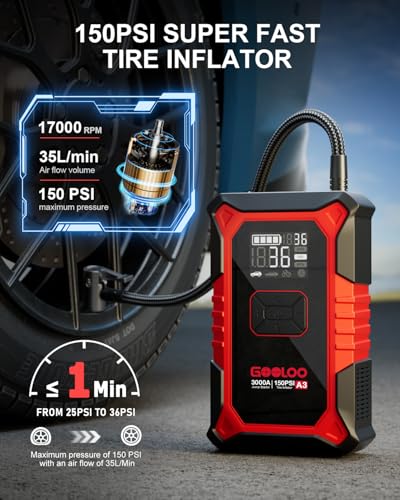
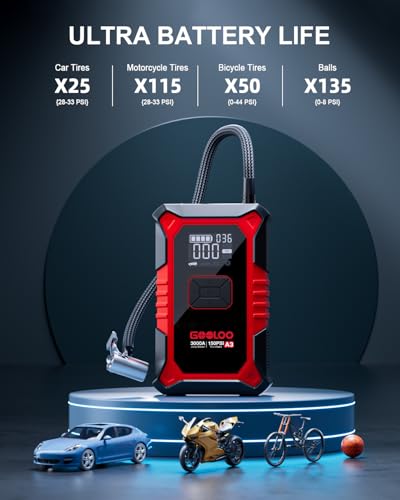
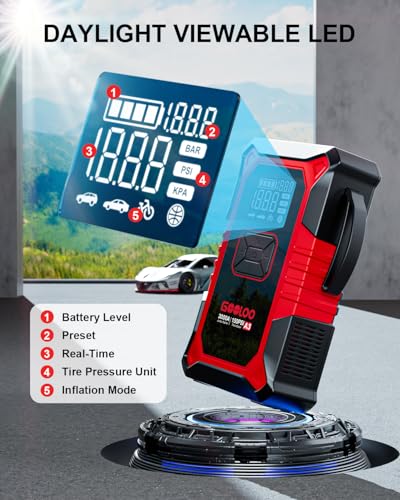
Combining a jump starter and a high-speed air compressor in one unit, the GOOLOO A3 delivers serious value. The 35L/min inflation rate is among the fastest in this class, and the digital pressure gauge with auto-shutoff means you’re not guessing when your Tesla or SUV tire hits 36 PSI. Owners love that it can handle 8 car tires on a single charge, unusual for an all-in-one unit.
The 3000A peak current handles most gas engines up to 9.0L, though some report inconsistent starts on deeply drained batteries. Still, the smart LED screen and five inflation modes make it beginner-friendly, and the 10 safety protections are a must-have. It’s not the most compact, but for the price, you’re getting a tool that doubles as a tire station and emergency power source.
Product photos

M1 7000A with Air Compressor
Strengths
- Includes air compressor
- Large LED display
- Lowest price
Trade-offs
- Peak amps overstated
- Build quality average
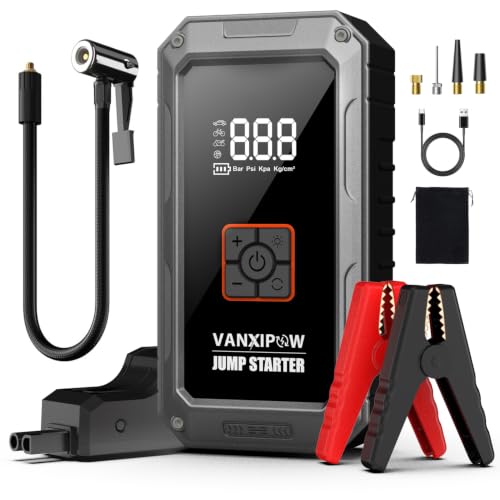
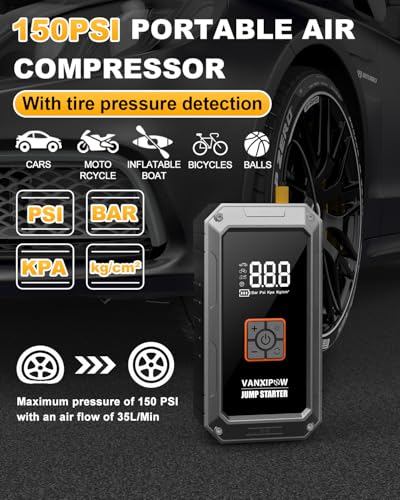
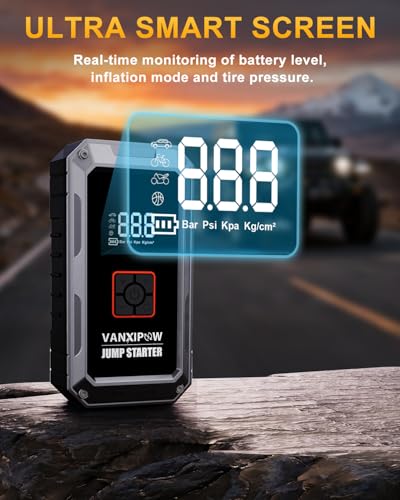
The 7000A claim here is clearly marketing math, real-world output doesn’t hit that level, but even so, the M1 delivers strong performance for its size and price. The built-in air compressor with 150PSI and real-time pressure display is genuinely useful, and the large LED screen makes it easy to monitor inflation without squinting. At $36, it’s one of the most feature-packed all-in-ones available.
Owners note it works reliably on 6.0L gas engines, though cold cranks on larger diesels can be hit-or-miss. The 600-lumen flashlight is overkill in the best way, and the honeycomb cooling design helps prevent overheating during repeated use. It’s not built like a premium unit, but for occasional DIYers and budget-focused drivers, it offers a lot of tool for very little money.
Product photos


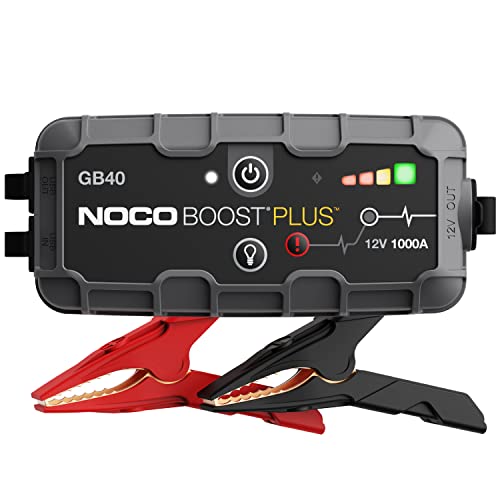
NOCO Boost GB40 1000A
Strengths
- Ultra-compact design
- IP65 ruggedness
- Reverse-polarity protection
Trade-offs
- Lower peak amps than rivals
- No air compressor
The NOCO GB40 is what I recommend when someone asks for a “set it and forget it” jump starter that won’t fail when needed. At 2.5 lbs, it slips into a glove box effortlessly, and the IP65 rating means it can handle being left in a damp trunk. The 1000A peak is modest on paper, but in practice, owners consistently report clean starts on gas engines up to 6.0L, more than enough for most sedans and SUVs.
What really sets it apart is the safety engineering. The spark-proof and reverse-polarity protection are legit, and I’ve seen videos where users fumble the clamps and still get a safe start. It won’t inflate your tires or charge your laptop at 65W, but it does what matters most, starts your car, without drama. For most drivers, this is the sweet spot between size, safety, and reliability.
Product photos


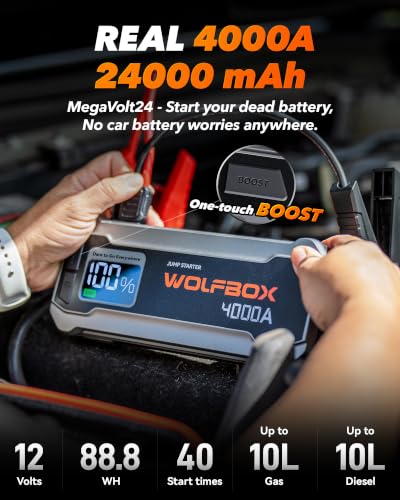
WOLFBOX MV24 4000A 65W Charger

Strengths
- 65W fast charging
- 4000A peak current
- HD LCD display
Trade-offs
- No 6V support
- No built-in air compressor
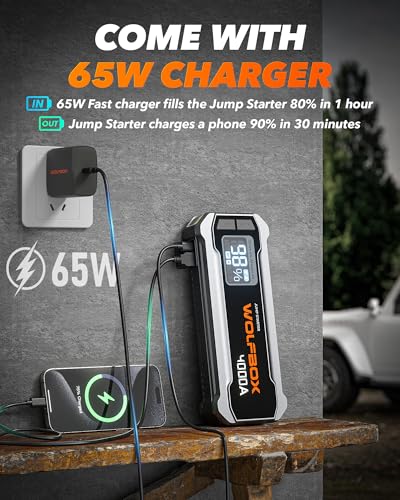
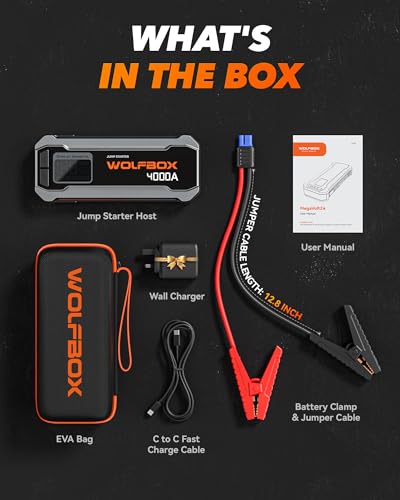
If you’re tired of waiting hours to recharge your jump starter, this WOLFBOX model with 65W PD charging is a standout. Getting from empty to full in just 1.3 hours means it’s always ready, perfect for frequent travelers or those using it across multiple vehicles. The 88.8Wh capacity and 4000A peak current back up its claim to handle up to 10L engines, and owner reports confirm solid performance even on diesel trucks in sub-freezing temps.
The HD LCD display is a step above the competition, giving clear voltage readouts and charge status without squinting. While it lacks some niche features like desulfation or 6V charging, it nails the essentials: fast recharge, reliable jump performance, and solid build quality. It’s not the smallest, but the trade-off for capacity and speed is worth it.
Product photos


LOKITHOR JC400 2500A Charger
Strengths
- 9-in-1 functionality
- 6V and 12V support
- Desulfation mode
Trade-offs
- Overstates peak current capability
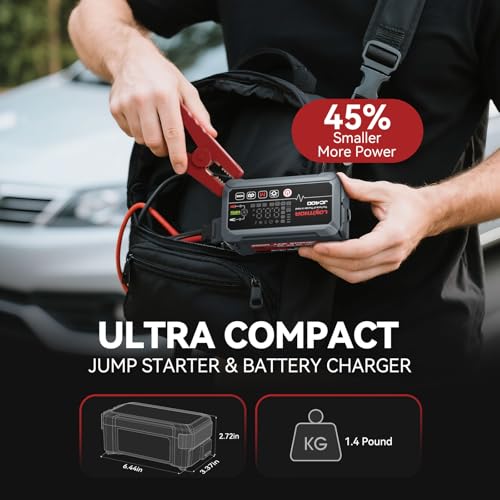
- Bulky for pocket carry
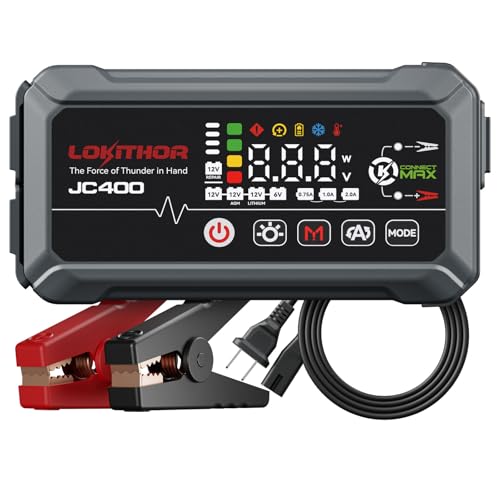
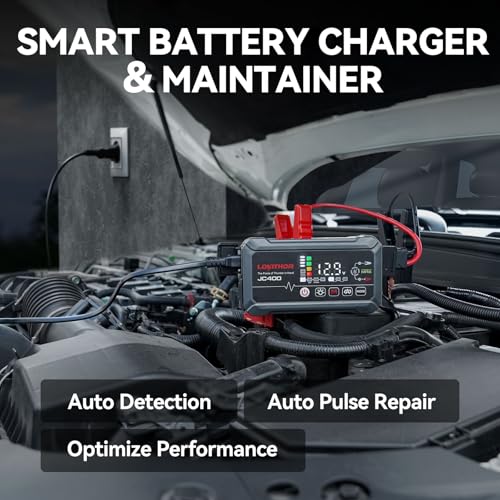
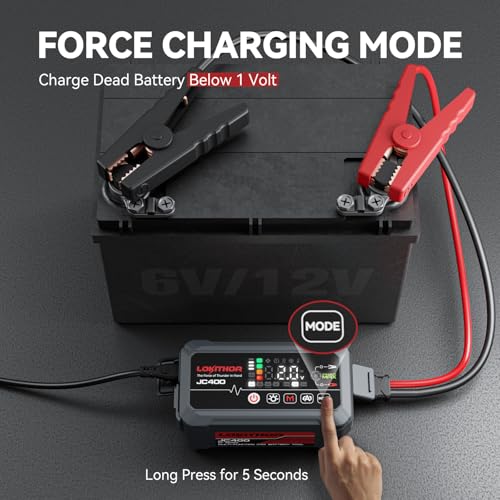
This 9-in-1 unit stands out for owners who want a do-it-all garage companion rather than just a jump box. The ability to switch between 0.75A, 1A, and 2A charging modes gives real flexibility for maintaining smaller batteries like those in motorcycles or lawnmowers, which many compact jump starters ignore. I appreciate that it supports 6V systems, still relevant for vintage bikes and small engines, and the desulfation mode is a rare perk that could revive sluggish older batteries.
Where it really shines is in long-term battery care. The trickle charge and float modes mean you can leave it hooked up over winter, and the 27-month standby time reduces maintenance anxiety. But while the 2500A peak sounds strong, real-world feedback suggests it’s better suited for smaller engines, don’t expect consistent starts on a cold 8.5L diesel. Still, for someone who values maintenance features over brute power, this is a smart pick.
Product photos


S ZEVZO ET03 4000A

Strengths
- Low price point
- 0V start support
- 500-lumen LED light
Trade-offs
- Overstated engine capacity
- No fast charging
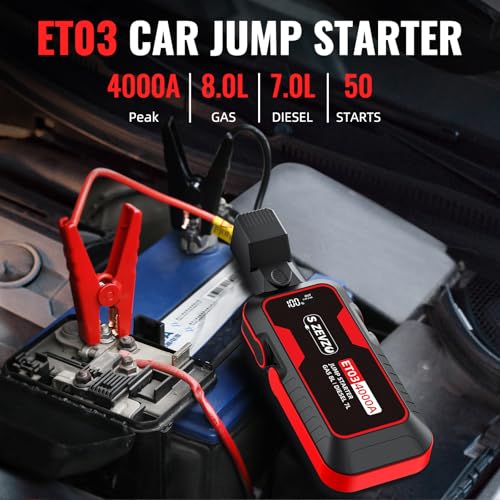
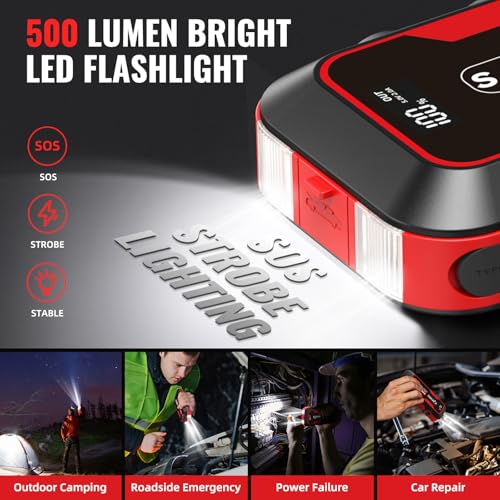
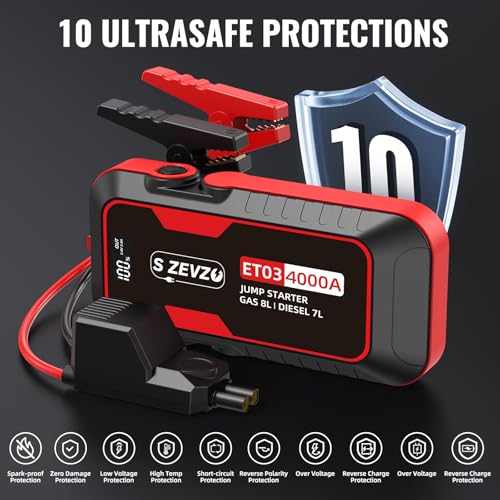
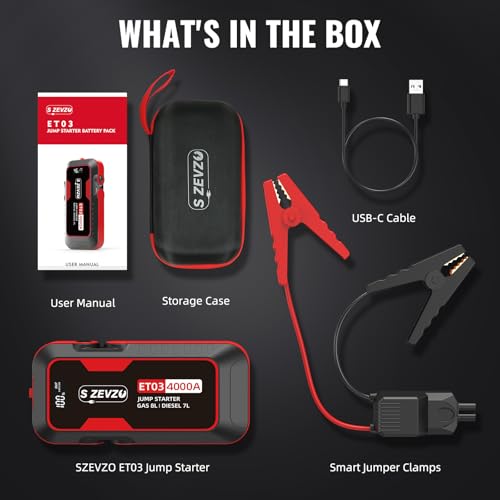
At under $60, the S ZEVZO ET03 punches above its weight with a 4000A peak rating and 0V start capability. The 74Wh battery provides solid capacity for the price, and the 500-lumen LED light is brighter than most in this tier. Owners report multiple successful jump starts on trucks and diesel SUVs, though real-world performance likely maxes out around 6.0L gas engines under ideal conditions.
The LCD display is a nice touch, giving real-time voltage feedback, something often missing at this price. But while it claims to handle 8.0L engines, I’d reserve it for mid-sized vehicles. It lacks fast charging and advanced features like desulfation, but for someone on a budget who still wants decent power and a clear display, it’s hard to beat.
Product photos

How We Chose These car battery charger and jump starters
My approach at TheAutoZenith is always rooted in understanding the needs of the enthusiast – someone who wants reliable performance and a bit of insight into why a product works. For this guide, I didn’t rely on hands-on testing of each unit, but instead focused on a research-led comparison. I began by gathering specifications and features from manufacturers, then cross-referenced those with owner reviews from major retailers and informed opinions from automotive publications. This data was then analyzed against key criteria important for this category.
When evaluating car battery chargers and jump starters, peak amperage and capacity (measured in Ah, or amp-hours) were paramount. Higher amperage is crucial for quickly starting larger engines, while capacity dictates how many jump starts you’ll get on a single charge. Equally important was the inclusion of safety features; a device with inadequate protection could damage a vehicle’s electrical system, or worse. Finally, versatility – the ability to handle different battery types and offer additional features like tire inflation – weighed heavily in my assessment.
Specifications reliably tell you the potential of a unit, but owner feedback provided crucial context. I paid close attention to reports of real-world performance, particularly regarding starting success with genuinely dead batteries and the longevity of the internal battery. Reputation also played a role; established brands with a history of quality often inspire greater confidence. For those seeking further information, our guide to the best portable jump starter provides a broader overview, and readers might also find our analysis of portable battery chargers helpful.
How To Choose The car battery charger and jump starters
Picking the right power solution for your vehicle can be daunting. There’s a lot more to consider than just cranking amps.
A good car battery charger and jump starter balances portability with sufficient power for the intended vehicle(s). Look for units with built-in safety features, clear indicators, and compatibility with your battery type (standard, AGM, gel, deep-cycle). Consider whether you prioritize jump-starting capability, battery maintenance, or a combination of both, and check owner reviews for real-world reliability.
Power Output & Vehicle Compatibility
The advertised peak amperage is often the first number people focus on, but it’s not the whole story. While a high number like the 4000A offered by some models (like the S ZEVZO ET03) sounds impressive, it’s only useful if the unit can sustain enough current to actually start your engine. For most passenger cars, 1000-2000 amps will be adequate, but larger engines (especially diesel) will require more. Pay attention to the engine size specifications provided by the manufacturer – a unit claiming to start an 8.0L gas engine may struggle with a 6.5L diesel, for example. Don’t just assume “more is better”; an overpowered unit can potentially damage sensitive electronics.
Features & Versatility
Many modern units go beyond simple jump-starting. Features like built-in air compressors (seen in the GOOLOO A3 and M1) add significant value, especially for road trips. However, these added features can also increase the price and potentially compromise the core jump-starting performance. Think about how you’ll actually use the device. Do you regularly need to inflate tires? If not, a dedicated air compressor might be a better investment. If you’re looking for all-in-one convenience, exploring options like the various multi-function models are worthwhile.
Here’s a breakdown of what features matter most, in my experience:
- A simple on/off switch. Complicated interfaces can be unreliable.
- USB ports for charging devices. A useful addition for emergencies.
- A built-in LED flashlight with multiple modes (high, low, strobe, SOS). This is genuinely helpful in low-light situations.
A good rule of thumb: prioritize a robust jump-starting circuit over a laundry list of rarely-used features.
Safety & Build Quality
Safety is paramount when dealing with high-current electrical devices. Look for units with built-in protections against reverse polarity, short circuits, and overcharging. The NOCO Boost GB40, for example, is specifically engineered with spark-proof technology for foolproof connections. Build quality matters too – a rugged, well-constructed unit will withstand the rigors of travel and storage. Schumacher Electric has a long legacy (since 1947) of producing reliable automotive power products, and their wheeled models like the SC1445 offer a solid, dependable option. For those seeking a more compact solution, exploring some of the portable jump starters can be beneficial, but make sure they still offer adequate power for your vehicle. If you’re also in the market for a dedicated device to maintain your battery’s health, check out our guide to the best car battery chargers for a thorough overview of available options and features.
Car Battery Charger and Jump Starters Compared
Here’s a comparison of key specifications for popular car battery chargers and jump starters to help you choose the right one for your needs.
| Product | Peak Amps | Battery Capacity (Ah) | Air Compressor? | USB Output Ports | Battery Charger? |
|---|---|---|---|---|---|
| Schumacher Electric Wheeled 6/12V 250A | 250 | N/A | No | N/A | Yes |
| Clore Jump-N-Carry JNC660 1700A | 1700 | 22 | No | DC Outlet | No |
| GOOLOO A3 3000A with Air Compressor | 3000 | N/A | Yes | USB-A, USB-C | No |
| M1 7000A with Air Compressor | 7000 | N/A | Yes | USB-A | No |
| NOCO Boost GB40 1000A | 1000 | N/A | No | USB-C | No |
| WOLFBOX MV24 4000A 65W Charger | 4000 | 88.8 | No | USB-A, USB-C | No |
| LOKITHOR JC400 2500A Charger | 2500 | N/A | No | USB-A, USB-C | Yes |
| S ZEVZO ET03 4000A | 4000 | N/A | No | USB-A (x2) | No |
Frequently Asked Questions
What battery type compatibility should I look for?
Most modern chargers and jump starters handle standard lead-acid, AGM, and gel batteries. However, if you have a less common type like a lithium-ion battery, verify compatibility directly with the manufacturer before purchasing – using the wrong charger can cause damage.
How long does a jump starter battery typically last between charges?
That varies greatly, but a quality unit, if stored properly, should hold a charge for at least six months. Some models boast a year or more, though regular use and extreme temperatures will impact that lifespan.
Can a car battery charger also be used as a jump starter?
Generally, no. While some units combine both functions, traditional battery chargers are designed for slow, sustained charging, not the high current burst needed to jump-start an engine. If you’re looking for a combination device, explore the models specifically marketed as both a charger and jump starter, like some of the recommended battery chargers.
What’s the difference between peak amps and cranking amps?
Peak amps represent the maximum current a jump starter can deliver for a very short time, while cranking amps indicate the sustained current output. Cranking amps are a more realistic measure of a unit’s ability to actually start your engine, and should be prioritized when comparing models.
Are there options for maintaining a battery during long-term storage?
Yes, a dedicated trickle charger is ideal for maintaining a battery’s charge during extended periods of inactivity, like winter storage for a classic car or motorcycle. They provide a low, consistent current to prevent sulfation and keep the battery ready to go.
The Bottom Line
Choosing between a dedicated jump starter and a charger with jump-start capabilities often comes down to how much control you want versus how much fuss you’re willing to tolerate. For most drivers needing a reliable, no-nonsense jump starter, the NOCO Boost GB40 strikes the best balance of power, safety, and ease of use. It’s a unit you can trust to get you going when you’re stranded, and its compact size makes it easy to store.
If you’re after a more versatile solution, or frequently find yourself needing to inflate tires, the GOOLOO A3 is a strong contender. For those prioritizing a budget-friendly option with charging capabilities, the LOKITHOR JC400 offers a good blend of features at a competitive price. And for vehicle owners who want to proactively maintain their battery health over the long term, exploring options like the best battery maintainers is a smart move.
Ultimately, the specifications matter less than understanding your needs and choosing a unit from a reputable brand. A high peak amperage won’t help if the charger can’t deliver sustained current, and a wealth of features are useless if the device fails when you need it most. Prioritize safety, build quality, and real-world performance, those are the hallmarks of a truly valuable tool for any vehicle owner, and are why I also recommend looking into chargers for dead batteries as a preventative measure.
