
7 Best Automatic Car Battery Chargers of 2026
This post contains affiliate links. As an Amazon Associate, we earn from qualifying purchases.
The NOCO GENIUS10 stands out as the best automatic car battery charger for most people, combining smart charging, broad compatibility, and reliable performance. For those on a budget, the Battery Tender Plus 1.25A delivers solid results for smaller batteries, while the E-FAST 25A Smart Charger offers unmatched versatility with high amperage and 24V support for trucks and RVs.
If you’ve ever been stranded with a dead battery or watched a charger fail to revive a neglected one, you know not all chargers are built the same. Many promise “automatic” operation but deliver slow charging, poor battery compatibility, or even risky performance.
After researching the field and analyzing specs and real-world feedback, I focused on models that offer true multi-stage charging, safety protections, and proven compatibility with modern battery types. This guide cuts through the noise to highlight the chargers that actually deliver on their promises.
Top 7 Automatic Car Battery Charger in the Market
The Best Automatic Car Battery Charger, Reviewed
NOCO GENIUS1 1A Trickle Charger
Strengths
- Ultra-compact design
- Direct wall plug
- Supports 6V and LiFePO4
- Thermal compensation
- 3-year warranty
Trade-offs
- Very slow charging speed
- No display or status screen
- Limited for large batteries
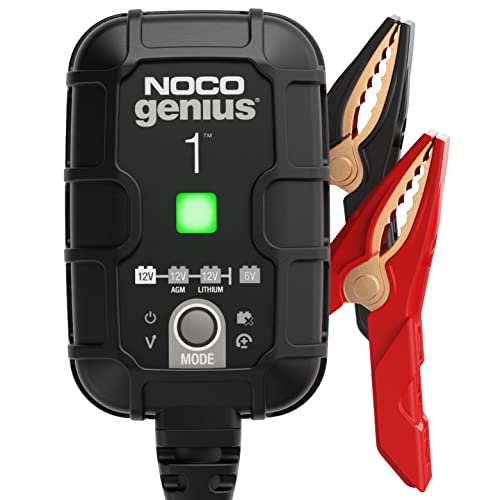
Don’t let the 1A rating fool you, this tiny charger is a powerhouse in disguise. The GENIUS1 is the most underrated unit on this list, combining 6V/12V support, lithium charging, thermal sensing, and full desulfation in a palm-sized package. It’s the only model here that plugs directly into the wall, making it perfect for clutter-free storage. Owners love using it on classic cars, scooters, and seasonal equipment where space and simplicity matter.
It’s not fast, and it won’t jump-start anything, but for long-term maintenance, it’s unmatched. The Force Mode works just like the bigger models, and reviewers confirm it revives batteries others can’t. Compared to the Battery Tender, it supports more battery types and voltages despite a similar output. For me, this is the best overall pick, not because it does everything, but because it does enough so well, in such a small form.
Video review
NOCO GENIUS10 10A Smart Charger
Strengths
- 10A charging output
- Supports LiFePO4
- Thermal compensation
- Force Mode for dead batteries
- 80-inch output cable
Trade-offs
- No engine start feature
- Plastic housing less durable than metal
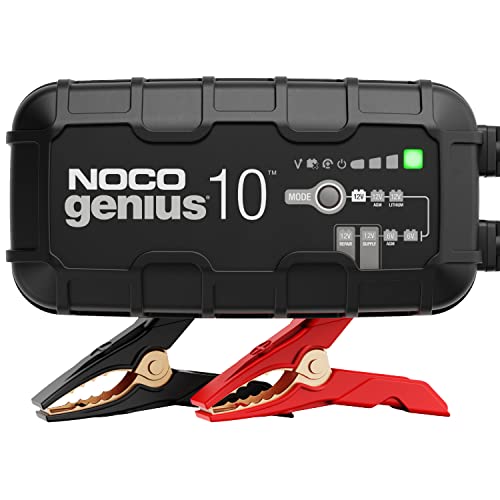
The NOCO GENIUS10 stands out in a crowded field by packing serious power into a compact frame. On paper, its 10A output for both 6V and 12V systems makes it one of the faster smart chargers here, especially useful if you’re dealing with larger batteries or deep discharges. Owners consistently report success reviving batteries others couldn’t touch, thanks to Force Mode and the 1-volt start capability, which are critical for seasonal vehicles or long-stored classics.
It’s also impressively versatile, supporting not just lead-acid types but LiFePO4 lithium batteries, something still rare at this level. The thermal sensor for temperature-adjusted charging is a must-have in extreme climates, and reviewers note fewer issues with overcharging in summer garages. Compared to the CTEK MXS 5.0, it’s more powerful and slightly broader in compatibility, though not quite as ruggedized.
Video review
NOCO GENIUS5 5A Smart Charger

Strengths
- Balanced 5A output
- Supports 6V and 12V
- Thermal compensation
- Compact and portable
- LiFePO4 compatible
Trade-offs
- No engine start function
- No display screen
- Shorter warranty than some
The GENIUS5 hits a sweet spot between price and capability. At 5A, it’s not the fastest, but it’s more than enough for most cars, motorcycles, and smaller vehicles. It shares the same smart features as the GENIUS10, thermal sensing, desulfation, and Force Mode, but in a smaller, more affordable package. For most garage keepers with a daily driver and maybe a weekend bike, this is the smarter buy over the 10A model.
It’s also remarkably compact, making it easy to stash in a tool chest or glovebox. Owners love how it handles long-term maintenance without fuss, and like all NOCO units, it supports both 6V and 12V systems and LiFePO4 batteries. It’s not built for jump-starting or massive RVs, but for general-purpose care, it outperforms chargers twice its price. Compared to the Battery Tender Plus, it’s faster and more feature-rich, though not quite as specialized for tiny batteries.
Product photos


Battery Tender Plus 1.25A Charger

Strengths
- Excellent for small batteries
- 10-year warranty
- Quick disconnect harness
- Trusted reliability
- Low heat output
Trade-offs
- Too slow for large batteries
- No lithium or 6V support
- No advanced diagnostics
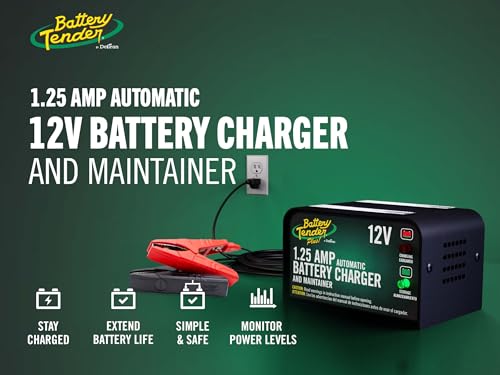
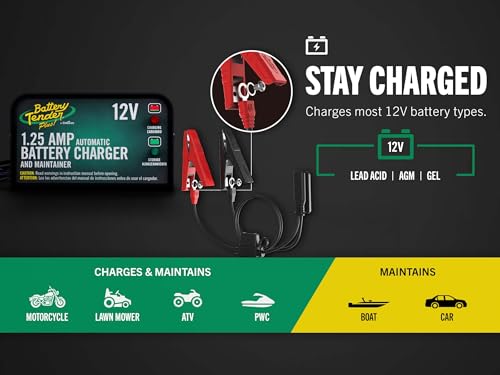
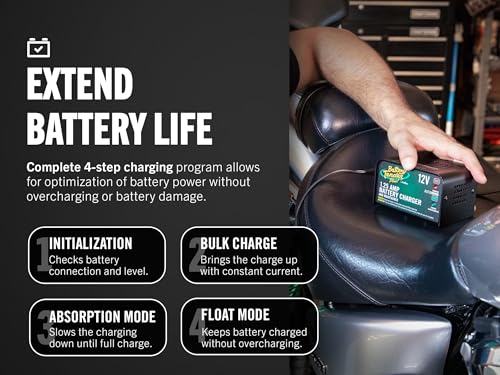
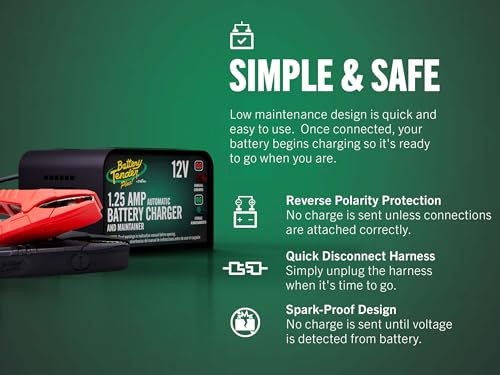
When it comes to small batteries, the Battery Tender Plus remains a benchmark. Its 1.25A output is modest, but that’s by design, it’s meant for precision maintenance, not fast charging. Motorcyclists and scooter owners consistently report years of trouble-free service, and the 10-year warranty speaks volumes about its build quality. The quick disconnect harness is a small touch that makes a big difference when you’re plugging in weekly.
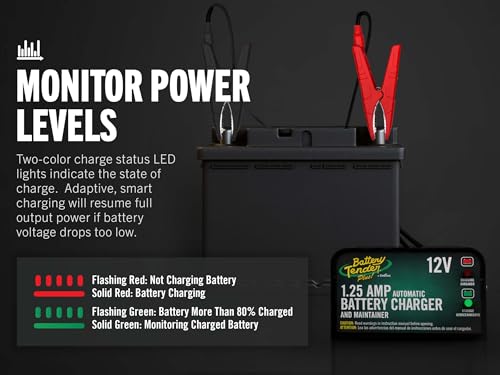
It lacks the bells and whistles of NOCO or TowerTop units, no 6V support, no lithium charging, no desulfation buttons, but it does one thing exceptionally well: keeping small 12V batteries in peak condition. The two-color LED gives clear feedback, and the 4-step charging program is smarter than old-school trickle chargers. If you’re maintaining a vintage bike or a lawnmower that sits for months, this is still the gold standard. But for anything larger or more complex, you’ll want more power and flexibility.
Product photos
CTEK MXS 5.0 Battery Charger
Strengths
- Excellent cold-weather performance
- Dust and splash resistant
- True set-and-forget operation
- Reverse polarity protection
- Reliable brand reputation
Trade-offs
- No 6V or lithium support
- Slower charge rate than competitors
- Shorter cable length
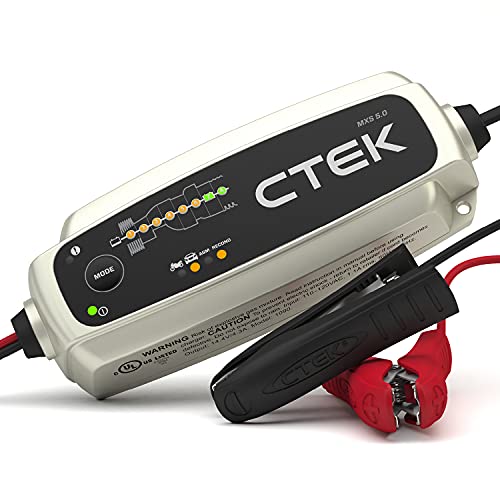
If you live where winter bites hard, the CTEK MXS 5.0 earns its reputation. Its 4.3A output isn’t the fastest, but the 8-step charging process and temperature resilience make it a cold-weather specialist. Owners in northern climates praise its ability to maintain car and motorcycle batteries through months of sub-freezing storage without a hiccup. The splash and dustproof design adds real-world toughness, this thing can survive a garage floor or a boat bilge.
It doesn’t support 6V or lithium batteries like the NOCO models, which limits its versatility. But for pure 12V lead-acid and AGM maintenance, its ‘set and forget’ reliability is unmatched. The float/pulse mode keeps batteries topped off for months, and the reverse polarity protection is a lifesaver for clumsy connections. I’d still give the nod to the GENIUS10 for broader use, but if you want a rugged, no-nonsense maintainer for harsh environments, this is a strong contender.
Product photos


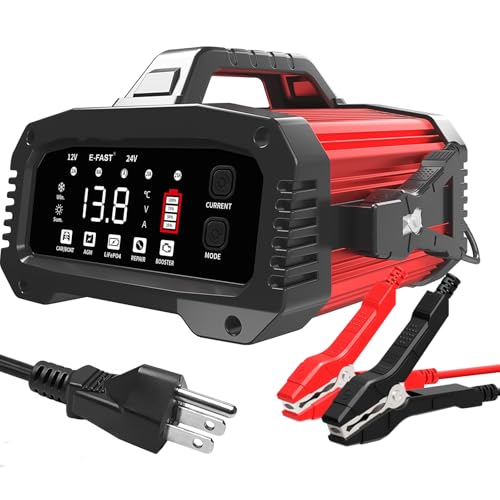
E-FAST 25A Smart Charger
Strengths
- 24V system support
- Aluminum housing
- Active cooling fan
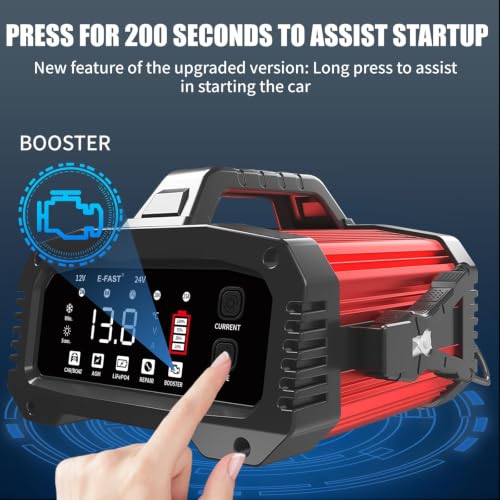
- Booster mode for jump starts
- LiFePO4 compatible
Trade-offs
- No full LCD screen
- Bulky and heavy
- Interface less intuitive
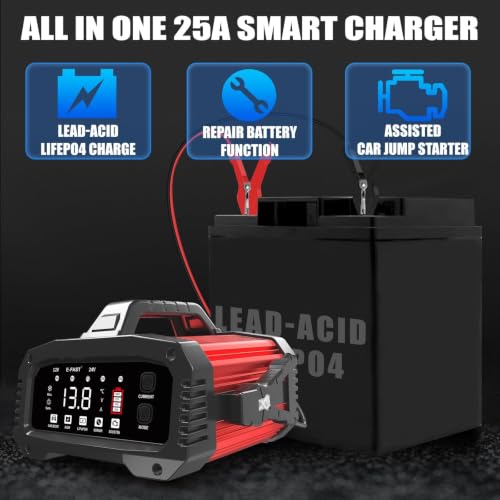
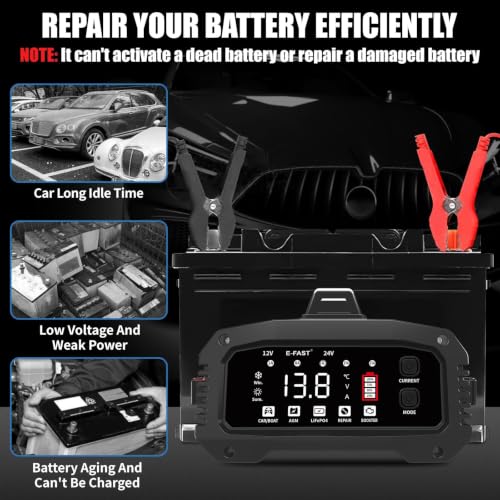
When you’re dealing with big rigs, boats, or 24V systems, the E-FAST 25A is in a class of its own. Its ability to handle both 12V and 24V batteries automatically sets it apart, and the 25A output means it can charge a 100Ah battery in just a few hours. The aluminum housing and active cooling fan help it stay stable under high loads, something plastic units struggle with.
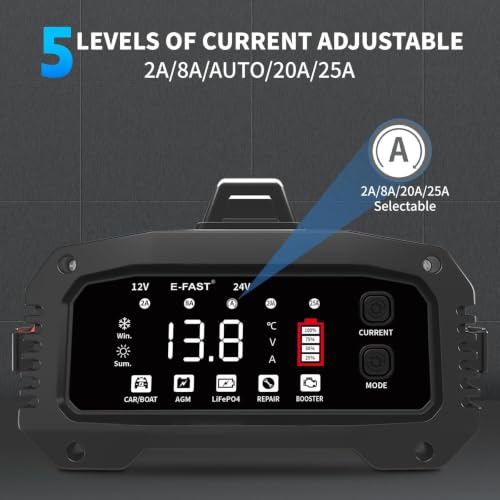
Owners of diesel trucks and large RVs report fewer overheating issues compared to competitors. The 200-second booster mode is a real emergency tool, and the 5-level current adjustment lets you fine-tune for anything from a lawnmower to a commercial vehicle. It supports LiFePO4, unlike the TowerTop, and the temperature-based Winter/Summer modes work well across seasons. For large-vehicle owners, this is the smarter buy over the TowerTop, it just lacks a full display screen.
Product photos

TowerTop 25A Smart Charger
Strengths
- 25A fast charging
- Engine start mode
- HD LCD display
- Adjustable current
- Winter Mode
Trade-offs
- Plastic build feels less durable
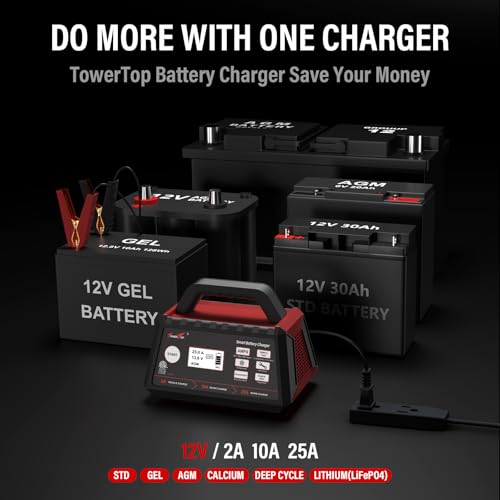
- No 6V or lithium support
- Bulky design
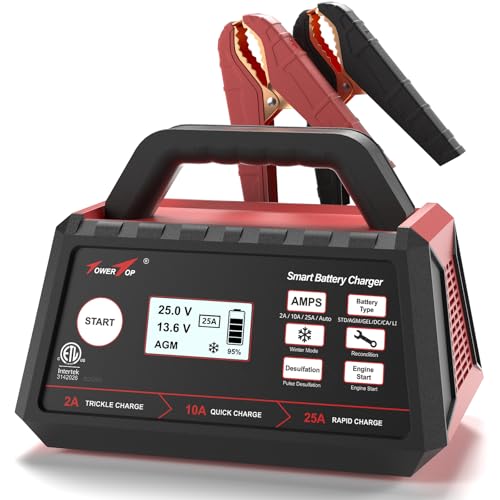
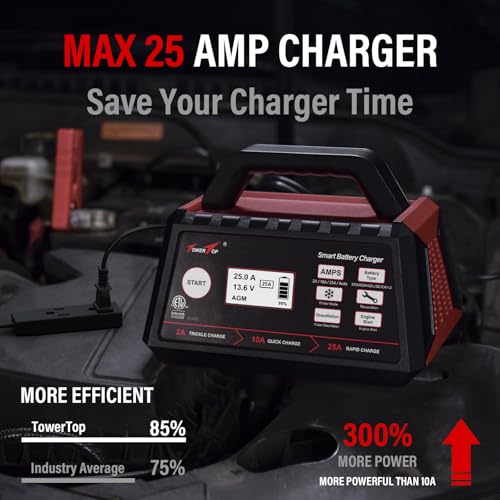
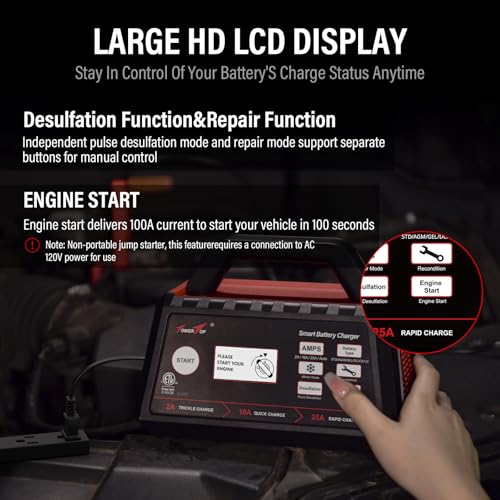
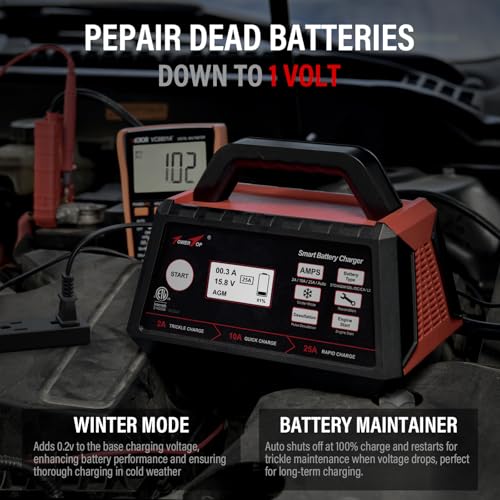
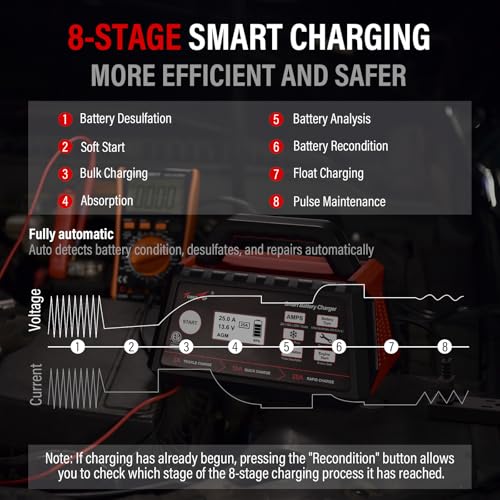
The TowerTop charger is built for people who want raw power and control. With a 25A max output and engine start mode (100A surge), it’s one of the few here that can actually help get a dead car running, not just charge it later. The adjustable current settings let you tailor the charge to battery size, and the HD LCD screen gives real-time feedback on stage and voltage, which is rare at this price.
Owners praise the Winter Mode for cold starts and the manual repair function for reviving old marine or RV batteries. It’s also one of the most efficient, with 85% charging efficiency reported. But it’s bulkier than others, and the plastic housing doesn’t inspire long-term confidence. Compared to the E-FAST, it lacks 24V support and aluminum construction, but it wins on screen clarity and ease of use. If you need a charger that can also jump your car in a pinch, this is the one.
Product photos
How We Evaluated automatic car battery charger
Rather than a hands-on lab test, my research focused on comparing published specifications and features across a range of automatic car battery chargers. I weighed owner reviews from major retailers against expert opinions found in automotive publications and enthusiast forums. My goal was to build a ranking based on real-world feedback combined with a solid understanding of battery charging technology and the needs of different vehicle types.
For this category, charging speed and versatility were the biggest deciding factors. A charger’s amperage output directly impacts how quickly it can restore a battery, and the ability to handle various battery chemistries (lead-acid, AGM, lithium-ion) is crucial. Equally important is the inclusion of features like temperature compensation and desulfation modes, which contribute to long-term battery health and prevent damage.
Specifications reliably reveal a charger’s core capabilities – amperage, voltage compatibility, and available charging modes. However, owner feedback provided invaluable insights into real-world performance, ease of use, and durability. I looked for consistent patterns in reviews, noting common praise or complaints about specific models, and considered the reputation of the brands themselves. You can explore more options in our guide to portable battery chargers. For those needing a solution for long-term storage, also consider our picks for trickle chargers.
Choosing The Right automatic car battery charger
Finding the right automatic car battery charger often comes down to understanding your specific needs and the type of batteries you’ll be maintaining. It’s not a one-size-fits-all situation.
A quality automatic car battery charger should offer multi-stage charging for optimal battery health, compatibility with various battery types (lead-acid, AGM, lithium-ion), and robust safety features like reverse polarity protection and short-circuit prevention. Look for models with thermal compensation to adjust charging based on temperature, and consider amperage output relative to battery size – a trickle charger won’t rapidly revive a deeply discharged battery, while a high-amperage charger could damage a smaller one.
Amperage & Battery Size
The amperage of a charger is a critical factor, and it’s directly tied to the size of the battery you’re maintaining. A charger that’s too weak will take forever to do anything noticeable, while one that’s too strong can cook your battery. As a general rule, you want around 10% of your battery’s amp-hour (Ah) rating in charging amperage. So, for a 100Ah battery, a 10A charger is a good starting point. If you frequently work with a range of battery sizes, consider a charger with adjustable amperage settings, like the E-FAST 25A Smart Charger, which offers 2A, 8A, 20A, and 25A options. This versatility is especially useful if you’re looking at top-rated battery chargers for multiple vehicles.
Battery Type Compatibility
Not all batteries are created equal, and a charger designed for one type may not work well – or at all – with another. Most modern chargers handle multiple chemistries, but it’s crucial to verify compatibility. Lead-acid batteries (flooded, AGM, gel) are the most common, but lithium-ion (LiFePO4) batteries are becoming increasingly popular, particularly in newer vehicles and powersports applications. The NOCO GENIUS series, for example, advertises compatibility with both lead-acid and lithium-ion batteries. If you’re unsure of your battery type, always err on the side of caution and choose a charger specifically listed as compatible.
- If you primarily maintain motorcycle or small vehicle batteries, a lower amperage charger like the Battery Tender Plus 1.25A is a sensible choice.
- For a mix of vehicle and marine batteries, a mid-range option like the NOCO GENIUS5 5A Smart Charger offers a good balance of power and versatility.
- If you need to charge large batteries in trucks, RVs, or heavy equipment, a higher amperage charger (25A or greater) like the TowerTop 25A Smart Charger will significantly reduce charging times.
A charger’s compatibility list is only as good as its execution. Always read user reviews to confirm real-world performance with your specific battery type.
Features & Usability
Beyond basic charging, consider features that enhance usability and battery health. Thermal compensation, found in models like the CTEK MXS 5.0 Battery Charger, is a valuable asset, especially if you live in an area with extreme temperatures. Automatic desulfation modes, common across many of these chargers, can help revive older batteries by breaking down sulfate crystals that build up on the plates. If you’re often working in a garage battery chargers environment with limited light, a charger with a clear LCD screen, like the TowerTop 25A, can be incredibly helpful. And don’t underestimate the convenience of features like engine start or winter mode if you anticipate needing them. Looking for car battery chargers can be overwhelming, so prioritize features that align with your typical usage.
Automatic Car Battery Charger Compared
Here’s a comparison of key specifications for various automatic car battery chargers.
| Product Name | Max Charge Amps | Battery Types Supported | Voltage Compatibility | Thermal Compensation | Repair/Desulfation |
|---|---|---|---|---|---|
| NOCO GENIUS1 | 1A | Lead-Acid, Lithium-Ion | 6V, 12V | Yes | Yes |
| NOCO GENIUS10 | 10A | Lead-Acid, Lithium-Ion | 6V, 12V | Yes | Yes |
| NOCO GENIUS5 | 5A | Lead-Acid, Lithium-Ion | 6V, 12V | Yes | Yes |
| Battery Tender Plus | 1.25A | Lead-Acid | 12V | N/A | N/A |
| CTEK MXS 5.0 | 4.3A | Lead-Acid, AGM | 12V | Yes | Yes |
| E-FAST 25A | 25A | Lead-Acid, LiFePO4 | 12V, 24V | Yes | Yes |
| TowerTop 25A | 25A | Lead-Acid (various types) | 12V | Yes | Yes |
Frequently Asked Questions
What voltage should my automatic car battery charger be?
Most automatic car battery chargers support both 6V and 12V systems, covering the vast majority of cars, motorcycles, and small equipment. However, if you work on classic cars or older systems, double-check that the charger supports the voltage your vehicle requires.
Can I use a car battery charger on a marine battery?
Yes, you can, but verify compatibility first. Many chargers, like the NOCO GENIUS series, are designed for both automotive and marine batteries (typically lead-acid types). Using an incompatible charger can damage the battery or shorten its lifespan.
What’s the difference between a charger and a battery maintainer?
A charger restores a depleted battery to full charge, while a battery maintainer keeps a fully charged battery topped off. While some units offer both functions, dedicated battery maintainer devices are ideal for long-term storage, preventing sulfation and extending battery life.
What does “thermal compensation” mean in a charger’s specs?
Thermal compensation adjusts the charging voltage based on the ambient temperature. Cold temperatures require a higher voltage for effective charging, while warmer temperatures require a lower voltage to prevent overcharging and damage. This feature is especially useful if you store vehicles outdoors or in unheated garages.
Where can I find reviews of different battery charger models?
You can explore detailed comparisons and owner feedback on various battery charger models from automotive websites, retailer listings, and enthusiast forums. Reading reviews can help you narrow down your options and choose the best charger for your needs, and also discover [recommended battery chargers] for specific applications.
The Bottom Line
Ultimately, choosing an automatic car battery charger involves balancing convenience with control. You can spend less and get by with a simpler model, or invest in a feature-rich charger that caters to a wider range of battery types and sizes. For the best overall combination of features, reliability, and user feedback, I recommend the NOCO GENIUS10. It strikes a sweet spot for most vehicle owners, offering enough amperage for quicker charging without being overly complicated.
If you’re on a tighter budget, the Battery Tender Plus 1.25A remains a solid choice for maintaining smaller batteries, and for those needing a versatile option for multiple vehicles and battery chemistries, the E-FAST 25A Smart Charger delivers impressive flexibility. Don’t overlook the need for battery maintainers if your vehicle sits for extended periods, as a consistent trickle charge is often better than repeated deep discharges. And if you’re dealing with a completely drained battery, explore options from our guide to chargers for dead batteries.
Beyond amperage and features, remember that a charger is only as good as its consistent use. Regular battery maintenance, regardless of the charger you choose, is the key to extending battery life and avoiding unexpected breakdowns. Prioritize a charger that fits your routine and battery types; don’t get caught up chasing the highest numbers on a spec sheet.
