
5 Best Adventure Motorcycle GPS of 2026
This post contains affiliate links. As an Amazon Associate, we earn from qualifying purchases.
The Garmin zūmo XT3 6” stands out as the best overall adventure motorcycle GPS, balancing rugged build, intuitive interface, and detailed off-road mapping. For budget-focused riders, the WonVon 7” Wireless GPS offers strong smart integration and a large, bright screen at a lower price, though with less refined off-road features.
Adventure riding demands more than basic turn-by-turn directions. You need a GPS that won’t quit when the pavement ends, one that stays readable in full sun and works when you’re wearing gloves. A flimsy or poorly designed unit can become a liability on long, remote rides.
This guide cuts through the noise by focusing on real-world needs, what specs actually matter, what owners report after months in the field, and which features truly enhance your ride. These picks reflect a deep look at durability, usability, and navigation intelligence across the current market.
Top 5 Adventure Motorcycle Gps in the Market
The Best Adventure Motorcycle Gps, Reviewed
WonVon 5″ Motorcycle CarPlay GPS

Strengths
- Affordable price
- Wireless CarPlay/Android Auto
- Easy installation
Trade-offs
- Basic navigation only
- Lower screen resolution
- No adventure-specific features
At this price, the WonVon 5-inch unit is a jaw-dropper, not because it’s flawless, but because it brings smartphone integration to riders who can’t justify a $600 Garmin. It runs wireless CarPlay and Android Auto smoothly, according to owners, and the 5-inch IPS screen is decently bright for daytime use. The build feels utilitarian, but the IP-rated housing holds up in rain, and the plug-and-play harness makes installation straightforward.
Where it falls short is in dedicated motorcycle intelligence. It doesn’t offer lean-aware navigation, off-road topographic layers, or group ride tracking like Garmin’s ecosystem. But if you’re a daily rider or weekend tourer who just wants Google Maps or Waze with voice control and solid audio pass-through, this does the job. I’d consider it a solid plan B for riders already married to their phone apps.
Video review
Garmin zūmo XT3 6″ Motorcycle GPS
Strengths
- 6” HD glove-friendly display
- Lean angle and track data
- Adventurous Routing
Trade-offs
- Premium price tag
- No built-in satellite comms
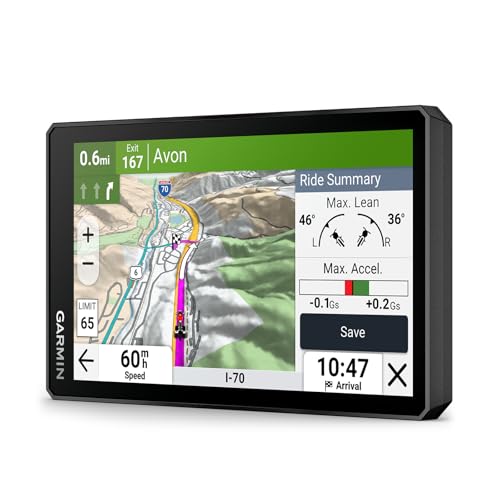
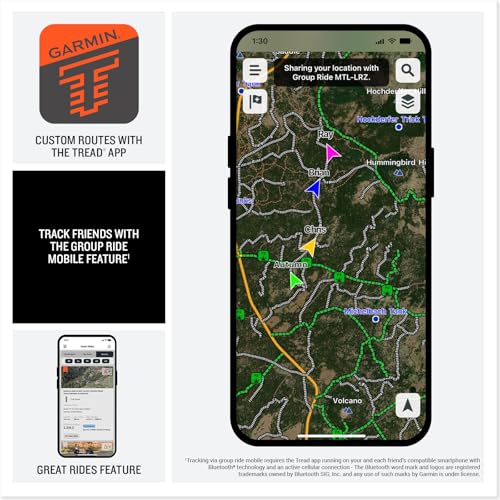
This 6” Garmin zūmo XT3 is the flagship of Garmin’s current motorcycle GPS lineup, and for good reason. It packs every feature you’d want, large ultrabright display, IP67 durability, lean angle tracking, Adventurous Routing, and deep Tread app integration. Reviewers note the screen is easy to read even at high noon, and the routing engine consistently finds engaging, twisty roads that feel hand-curated.
Compared to the 4.7” XT3, it’s easier to read at a glance and feels more at home on big adventure bikes. While it doesn’t include satellite comms out of the box, pairing with inReach devices unlocks that capability. My recommendation? If you’re riding long distances or chasing mountain passes and want the clearest, most feature-rich navigation experience, this is the one to get. It’s expensive, but for serious riders, the smarter buy over the smaller models.
Video review
Garmin zūmo XT3 4.7″ Motorcycle GPS
Strengths
- Compact design
- IP67 rugged rating
- Adventurous Routing
Trade-offs
- Smaller display
- No built-in satellite comms
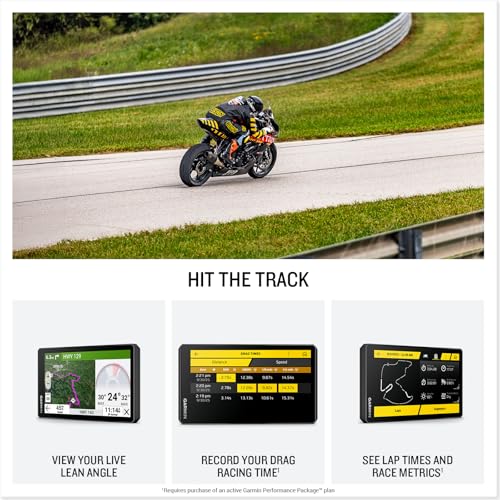
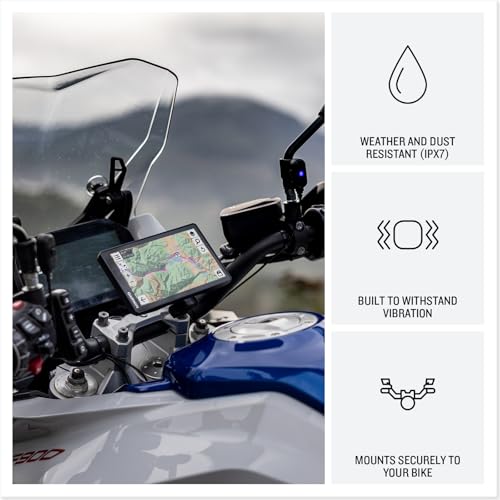
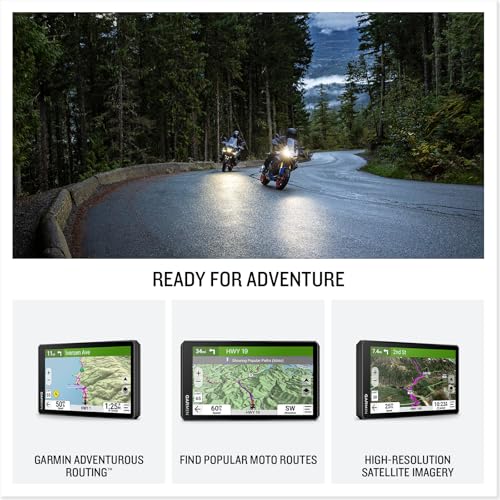
The Garmin zūmo XT3 with its 4.7” display is a compact powerhouse built for riders who want premium features without the bulk. On paper, it’s impressively rugged with an IP67 rating, and owners consistently report confidence using it in heavy rain and on rough terrain. The Adventurous Routing feature stands out, it actually pushes you toward twisty, scenic roads instead of the fastest highway route, which is exactly what adventure riders crave.
It shares most high-end features with the larger XT3 model, including live lean angle data and integration with the Tread app for detailed ride analytics. While the screen is smaller, it’s still bright and glove-friendly, making it usable in full sun. I’d pick this over the 6” model if you’re on a tighter budget or have limited handlebar space, especially since both run the same software and offer identical routing intelligence.
Product photos
WonVon 7″ Wireless CarPlay GPS

Strengths
- 7” large display
- Magnetic anti-theft mount
- IP68 weather resistance
Trade-offs
- Phone-dependent features
- Mediocre low-light contrast
- No offline adventure routing
The 7-inch WonVon model trades some ruggedness for screen real estate and a clever magnetic quick-release mount, a feature many riders actually praise in reviews. The larger display makes navigating maps far easier, and the wireless CarPlay/Android Auto performance is generally stable. The IP68 rating suggests it’s even more weather-resistant than the 5-inch model, though long-term durability under vibration is still a question mark compared to Garmins.
The standout here is convenience. Being able to yank the unit off the mount in one second and take it with you is huge for theft prevention. But like its smaller sibling, it’s only as smart as your phone. No topographic maps, no route adventure scoring, no lean data. For riders who treat their bike like a mobile phone dock, this is the most practical cheap option with a big screen.
Product photos


Garmin zūmo XT2 6″ All-Terrain GPS

Strengths
- 6” sunlight-readable display
- inReach compatibility
- Expandable with accessories
Trade-offs
- Dated feature set vs XT3
- No lean angle sensor
- Higher price than 4.7” XT3
The zūmo XT2 brings a bright 6” display and solid all-terrain capability, but it sits in a tricky spot price-wise when compared to the newer XT3 models. It lacks the live lean angle gauge and some of the track-focused data that the XT3 delivers, even though it shares similar routing tools and Tread app integration. Owners do appreciate its compatibility with the inReach Mini 2, which adds real satellite communication, a big plus for remote riders who don’t want to rely on cell signals.
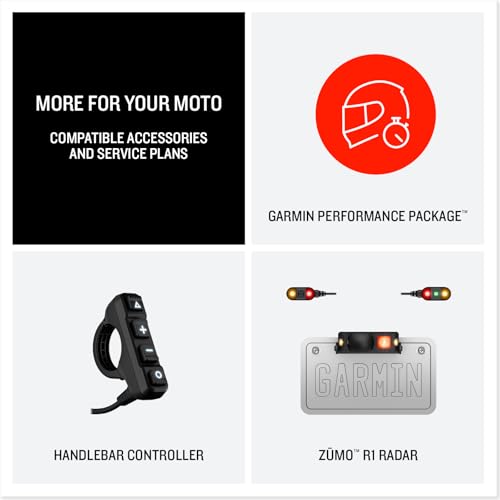
Where it shines is in expandability. The ability to integrate with Garmin’s PowerSwitch and backup camera gives it an edge for highly customized adventure builds. But for most riders, the XT3 offers better value with more real-time ride data and a more modern sensor suite. The XT2 still works well, but it feels like the previous generation wearing a new coat.
Product photos


How We Evaluated adventure motorcycle gps
Rather than a hands-on lab test, my research for these adventure motorcycle GPS units involved a detailed comparison of published specifications and features. I weighed owner reviews from multiple sources – looking for consistent praise and complaints – alongside expert opinions from motorcycle publications. This process allowed me to rank each unit against criteria important for adventure riders, factoring in map quality, durability, and smart integration.
For adventure touring, reliability and ease of use are paramount. I prioritized units offering robust waterproofing and vibration resistance, knowing these systems face harsh conditions. Equally important was the quality of pre-loaded maps and the ability to download additional topographical data for off-road exploration. Finding a unit that integrates well with smartphone apps for route planning and sharing was also heavily weighted.
Specifications reliably indicate screen resolution, waterproofing ratings (like IP67 or IPX7), and connectivity options. However, real-world performance – particularly glove-friendly touchscreen responsiveness and the accuracy of route guidance – required careful review of owner feedback. Reputation for long-term durability and customer support also played a key role, and I looked for consistent trends across numerous reviews. You’ll find more about choosing the right adventure motorcycle gear on my site as well.
Finally, explore our broader guide to ADV motorcycle GPS to learn more about the features that matter most for your next ride.
Choosing The Right adventure motorcycle gps
Finding the right adventure motorcycle GPS can make or break a long ride. It’s not simply about getting from point A to point B; it’s about having a reliable, informative companion that enhances your experience, keeps you safe, and lets you focus on the road.
A quality adventure motorcycle GPS prioritizes ruggedness, sunlight readability, glove-friendly operation, and seamless integration with communication systems. Look for units with preloaded maps (including topographic options), Bluetooth connectivity for calls and music, and features tailored to motorcycle use like lean angle gauges or route sharing. Consider the screen size relative to your visibility needs and mounting options for your specific bike.
Screen Size and Visibility
The screen is your window to the route, so size and clarity matter. A larger screen (6” or 7”) is easier to read at a glance, particularly when glancing between the road and the device. However, bigger isn’t always better. A massive screen can be distracting and may not fit comfortably on all handlebars. I’ve seen riders struggle with oversized units that block their instruments or require excessive head movement. Consider your riding style and the complexity of the terrain you usually tackle. For mostly on-road touring, a 5” screen might suffice. For serious off-road exploration, a 6” or even 7” display can be invaluable.
Mapping and Features
Don’t assume all GPS units come equally equipped. Preloaded maps are a huge benefit, and topographic maps are essential if you plan on venturing off the pavement. Beyond basic navigation, look for features like Adventurous Routing (found in Garmin units), which prioritizes winding, scenic roads. The ability to download satellite imagery, as offered by Garmin, can be a lifesaver when exploring truly remote areas. Many units now offer community-sourced route databases, allowing you to discover rides recommended by other riders. If you’re seeking more information about broader options, exploring a guide to the best motorcycle GPS can be incredibly helpful.
Smart Integration and Ruggedness
Modern adventure riding often involves staying connected. Wireless CarPlay and Android Auto are becoming increasingly common, allowing you to access navigation, music, and communication apps directly through the GPS unit. However, remember that relying solely on smartphone integration has drawbacks. Battery drain on your phone is a major concern, and smartphone connectivity can be unreliable in remote areas.
Here’s what I recommend considering with ruggedness:
- Water Resistance: IP67 or IP68 is a must. Don’t settle for anything less.
- Vibration Resistance: Motorcycle engines create a lot of vibration. A unit built to withstand it will last longer.
- Screen Durability: Look for screens specifically designed for outdoor use, with anti-glare coatings and scratch resistance.
Don’t skimp on build quality. A cheap GPS that fails mid-trip is worse than no GPS at all. Invest in a unit designed to withstand the elements and the rigors of adventure riding.
Ultimately, choosing the right adventure motorcycle GPS depends on your individual needs and riding style. If you’re still unsure, researching various options for an adventure bike GPS is a great starting point.
Adventure Motorcycle GPS Compared
Here’s a comparison of key specifications for popular adventure motorcycle GPS units.
| Product Name | Screen Size | Waterproof Rating | CarPlay/Android Auto | Map Preloading | Connectivity |
|---|---|---|---|---|---|
| WonVon 5″ Motorcycle GPS | 5″ | IP Rated | Yes | N/A | Bluetooth |
| Garmin zūmo XT3 6″ | 6″ | IP67 | No | Yes | Bluetooth |
| Garmin zūmo XT3 4.7″ | 4.7″ | IP67 | No | Yes | Bluetooth |
| WonVon 7″ Wireless GPS | 7″ | IP68 | Yes | N/A | Bluetooth |
| Garmin zūmo XT2 6″ | 6″ | IPX7 | No | Yes | Bluetooth |
Frequently Asked Questions
What waterproof rating is truly sufficient for adventure riding?
IP67 is the minimum you should accept; it guarantees dust-tight operation and protection against immersion in water up to 1 meter for 30 minutes. However, IP68 offers greater protection, surviving longer immersion, and is preferable if you anticipate consistently harsh conditions or water crossings.
Are wireless CarPlay/Android Auto GPS units reliable enough for remote travel?
While convenient, relying solely on smartphone integration introduces risks. Battery drain on your phone is a significant concern, and connectivity can be spotty in areas without cell service – consider a unit with robust offline mapping capabilities as your primary navigation source.
How important is glove-friendly touchscreen responsiveness?
It’s exceptionally important. Many riders report frustration with unresponsive touchscreens while wearing gloves, making route adjustments difficult and dangerous. Look for units specifically advertising glove-friendly operation and read owner reviews to confirm real-world performance.
Beyond pre-loaded maps, what other mapping features should I look for?
The ability to download satellite imagery is a huge benefit for off-road exploration, giving you a visual reference when detailed maps aren’t available. Also, consider units offering community-sourced route databases or the ability to create and import custom routes, expanding your options beyond pre-programmed paths.
Where can I find more information about essential safety gear to complement my new GPS?
Choosing the right adventure motorcycle helmets is just as critical as a good GPS. A quality helmet, combined with appropriate riding apparel, will significantly enhance your safety and comfort on the road. You can also find more about other options for rugged motorcycle GPS on my site.
The Bottom Line
Ultimately, choosing an adventure motorcycle GPS comes down to balancing control and convenience. Do you want a dedicated, rugged unit with thorough mapping, or are you comfortable relying more on smartphone integration? For the best overall experience, I believe the Garmin zūmo XT3 6″ strikes that balance perfectly – it offers robust mapping, a clear display, and proven durability without the complexities of wireless smartphone mirroring.
If budget is a primary concern, the WonVon 5″ Motorcycle GPS offers a surprising amount of functionality for the price. Those prioritizing wireless connectivity and a larger screen will appreciate the WonVon 7″ Wireless GPS. However, for riders tackling truly challenging terrain, or who want the most established mapping and feature set, the Garmin zūmo XT3 6″ remains the strongest choice. For those looking for more options, exploring different motorcycle GPS navigation devices will help refine your search.
At the end of the day, the most sophisticated GPS won’t compensate for careful route planning, a reliable mount, and a healthy respect for the road. Prioritize a unit that’s easily readable, built to withstand the elements, and compatible with secure phone mounts if you choose to integrate smartphone features. Remember, the best GPS is the one that lets you focus on the ride, not on fighting with the technology.
