
6 Best Adventure Motorcycle Helmets of 2026
This post contains affiliate links. As an Amazon Associate, we earn from qualifying purchases.
The ScorpionEXO AT960 Modular stands out as the best overall adventure motorcycle helmet, combining solid protection with practical features, while the ILM Dual Sport Adventure Helmet WS902 offers strong performance at a more accessible price point.
Choosing the right helmet for adventure riding isn’t just about looks or brand loyalty. It’s about finding reliable protection, clear vision in all conditions, and enough comfort to stay focused mile after mile, whether you’re crossing deserts or carving mountain passes. In this guide, I break down the top contenders based on safety specs, real-world feedback, and the features that actually matter when you’re off the beaten path.
Top 6 Adventure Motorcycle Helmets in the Market
The Best Adventure Motorcycle Helmets, Reviewed
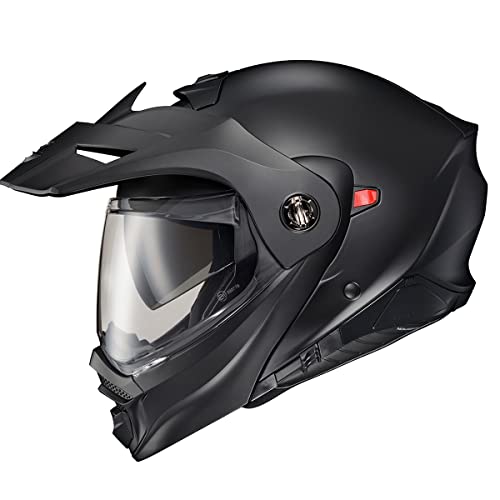
ScorpionEXO AT960 Modular Adventure Helmet
Strengths
- Lightweight shell
- Excellent ventilation
- Wide eye port
- Removable washable liner
- ECE 22.06 certified
Trade-offs
- No MIPS
- Heavier than some full-face rivals
- Flip-up mechanism adds complexity
The ScorpionEXO AT960 stands out in the adventure helmet game by blending modular convenience with serious off-road-ready protection. On paper, it’s loaded: ECE 22.06 certification, a multi-layer EPS system, and a polycarbonate shell that keeps weight in check at just over 4 pounds. Owners consistently report it’s quiet at highway speeds, thanks to its aero-tuned vents and chin curtain, and the dual-position mouth vent is a thoughtful touch for managing fog and airflow. The retractable SpeedView sun visor works smoothly, and having a wide eye port that accepts goggles is a real plus for mixed terrain riders.
Where it really pulls ahead is versatility. The flip-up chin bar operates reliably with one hand, and the Bluetooth-ready speaker pockets are perfectly sized. Compared to the Bell MX-9, it lacks MIPS, but makes up for it with a more refined modular mechanism and broader feature set. For riders who split time between pavement and trail and want the convenience of a flip-up without sacrificing safety, this helmet delivers.
Video review
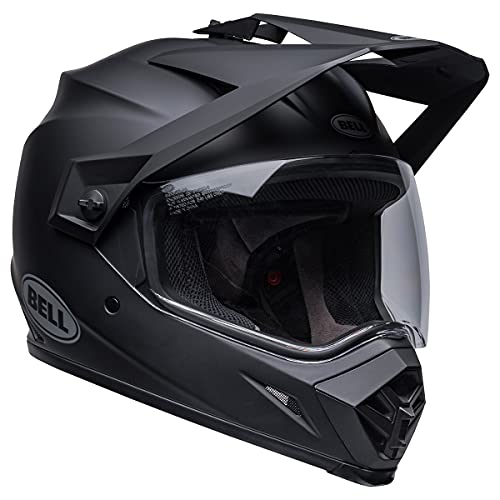
BELL MX-9 Adventure MIPS Helmet
Strengths
- MIPS safety system
- ECE 22.06 certified
- Three shell sizes
- Odor-resistant padding
- Bluetooth ready
Trade-offs
- No modular chin bar
- Slightly bulkier profile
- Higher price point
If safety tech is your top priority, the Bell MX-9 is the one to beat. It’s one of the few adventure helmets in this list with MIPS, which adds a slip-plane layer to reduce rotational forces in angled impacts, a real advantage on loose gravel or off-camber trails. It also meets both DOT and ECE 22.06, and uses three shell sizes for a better fit across head shapes. The IONIC+ padding fights odor and wicks sweat well, a small but appreciated detail on long summer rides.
Owners report it fits snug out of the box and the speaker pockets work well with most Bluetooth kits. It’s not a flip-up, so you lose convenience, but gain structural rigidity. Against the Scorpion AT960, it’s safer on paper but less adaptable. If you’re pushing technical terrain or ride aggressively off-road, the MX-9’s protection edge makes it the smarter pick.
Video review
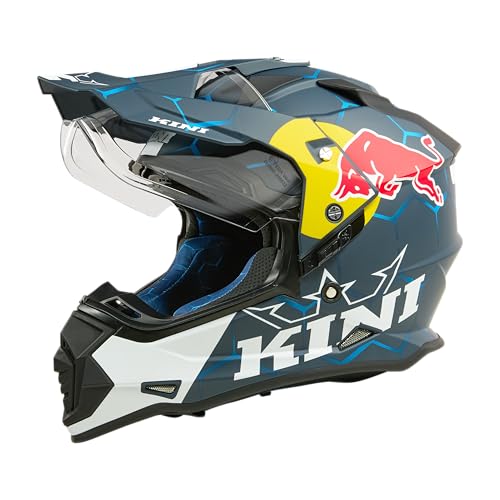
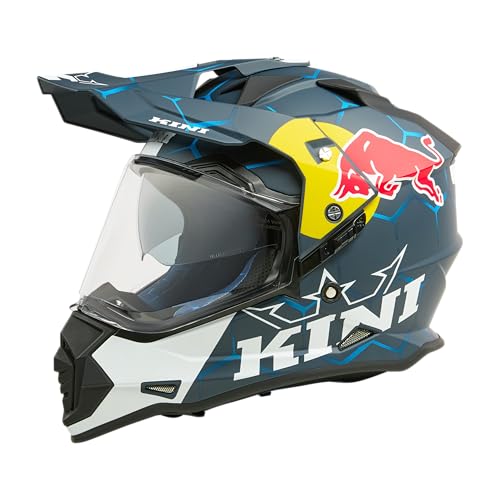
Kini ADV Adventure Helmet Red Bull
Strengths
- Lightweight at 1.6kg
- ECE 22.06 certified
- Pinlock lens included
- Integrated sun visor
Trade-offs
- No speaker pockets
- Basic ventilation
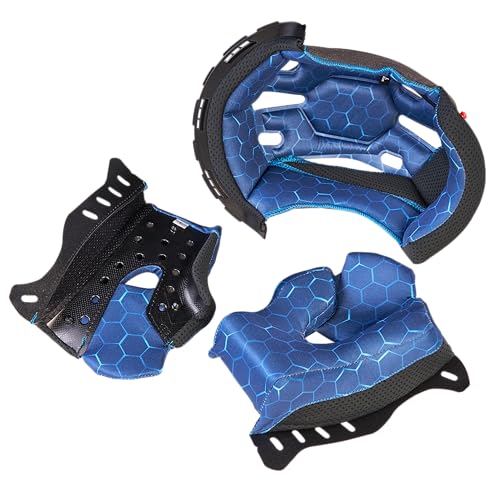
- Minimal liner detail
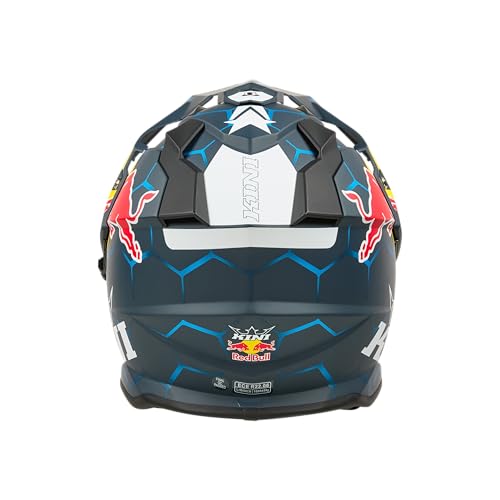
The Kini ADV Red Bull 1.0 is a sleeper pick that balances premium features at a mid-tier price. It hits both DOT and ECE 22.06 standards, which is rare in this range, and comes with a Pinlock 30 lens, critical for riders in damp or cold climates where fogging ruins a ride. At around 1.6kg, it’s genuinely lightweight, and that translates to less neck strain on longer trips. The integrated sun visor is smooth and doesn’t rattle, a common complaint with cheaper dual visors.
What’s missing is detail: no speaker pockets, no advanced ventilation specs, and the microlock buckle, while secure, isn’t as quick as a double D-ring for gloved hands. Compared to the ILM WS902, it’s lighter and better certified, but not as ventilated. For riders who want ECE+Pinlock without paying Scorpion or Bell prices, this is a smart middle ground.
Product photos

Orthrus Dual Sport Adventure Helmet

Strengths
- Dual visor system
- Affordable price
- Comfortable plush liner
- Intercom-ready pockets
- Ventilation ports
Trade-offs
- No ECE certification
- Fit can run slightly loose
- Build quality inconsistent
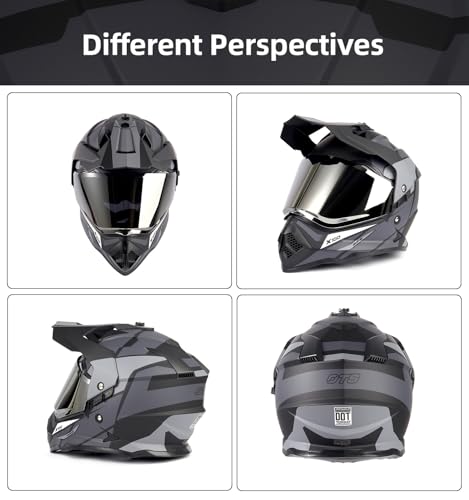
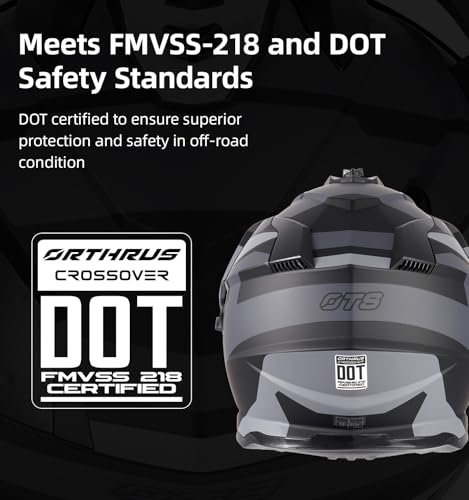
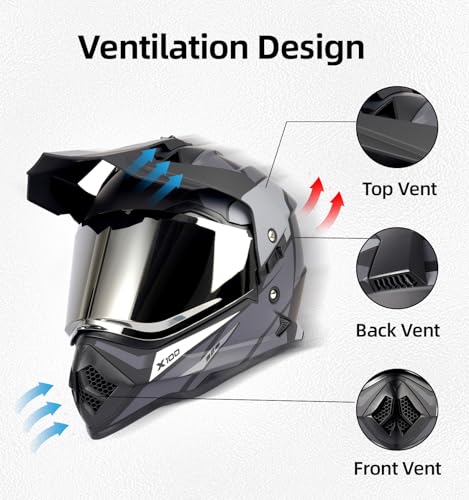
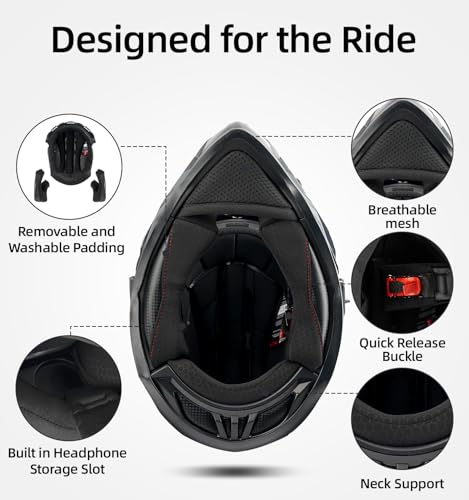
At this price, the Orthrus X100 punches above its weight with a dual visor system and intercom-ready liner that rival more expensive models. The outer shield handles debris and wind, while the internal sun visor deploys quickly and blocks glare effectively, owners say it’s especially useful on flat desert trails or snowmobile runs. The 3-point ventilation holds up well in hot conditions, and the plush liner earns praise for comfort on long rides. It’s DOT certified, but lacks ECE 22.06, which is a gap compared to the Scorpion or Bell.
Still, for budget-focused buyers who ride ATVs, UTVs, or entry-level adventure bikes, this helmet covers the essentials. It’s not as refined in fit or finish as premium options, and some reviewers note minor rattling at speed, but for occasional trail riders or those outfitting a second bike, it’s hard to beat the value.
Product photos

1Storm Dual Sport Motorcycle Helmet
Strengths
- Very low cost
- Dual visor setup
- Lightweight shell
- Washable liner
Trade-offs
- No ECE certification
- No Bluetooth prep
- Visor mechanism feels cheap
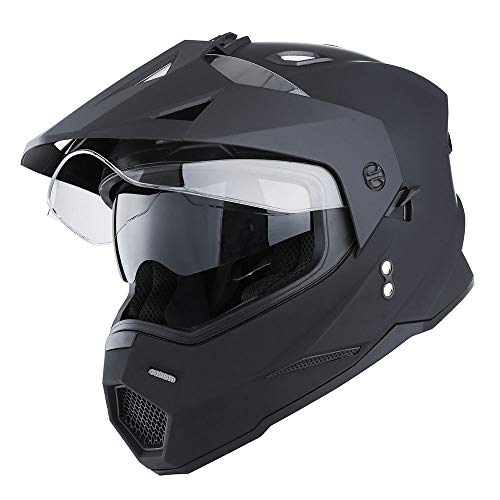
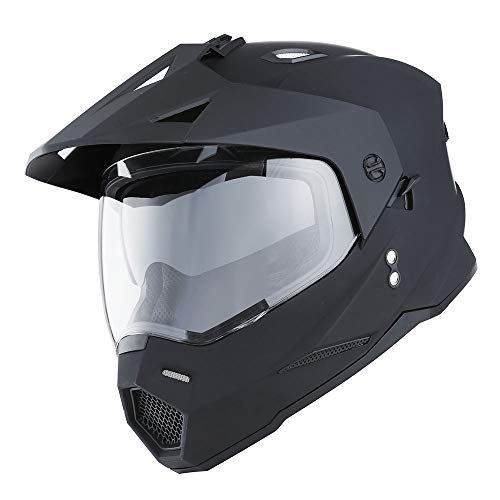
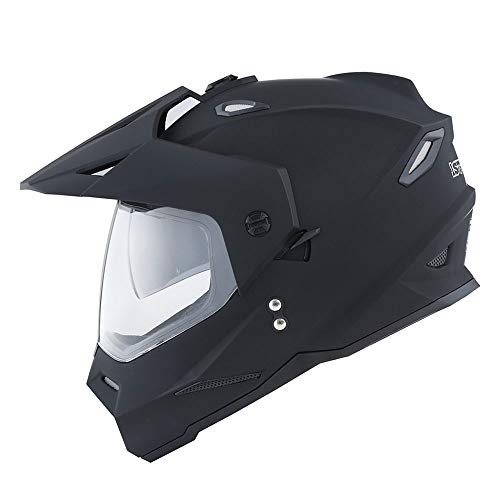
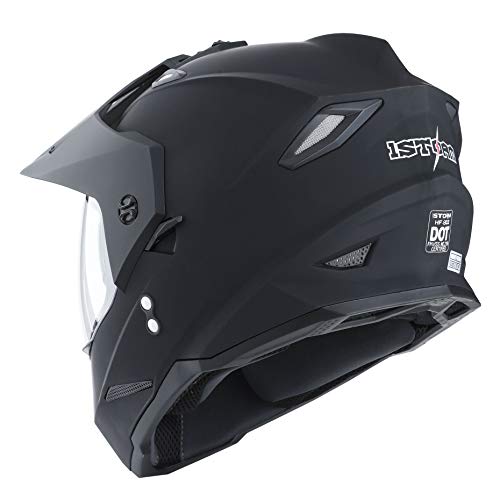
The 1Storm Dual Sport helmet is about as basic as it gets, but for new riders or occasional trail users, it gets the job done. It’s DOT approved, has a dual visor setup with a smoked inner shield, and uses a lightweight thermoplastic shell that keeps it from feeling like a burden. The interior is heavily padded and washable, which helps with long-term hygiene. At this price, you won’t find ECE certification, speaker pockets, or advanced ventilation, but for strapping on and hitting a fire road, it’s functional.
Owners note it fits tight at first, but breaks in after a few rides. The visor mechanism is simple but can feel flimsy compared to the Orthrus or ILM. It’s the most no-frills option here, but that’s the point. If you’re on a strict budget and need a helmet for infrequent off-road use, it works. But don’t expect refinement.
Product photos
ILM Dual Sport Adventure Helmet WS902

Strengths
- Wide eye port
- Seven vent positions
- Removable chin curtain
- Comfortable low-seam liner
- Dual visor system
Trade-offs
- ABS shell (lower impact resistance)
- Pinlock lens not included
- No ECE certification
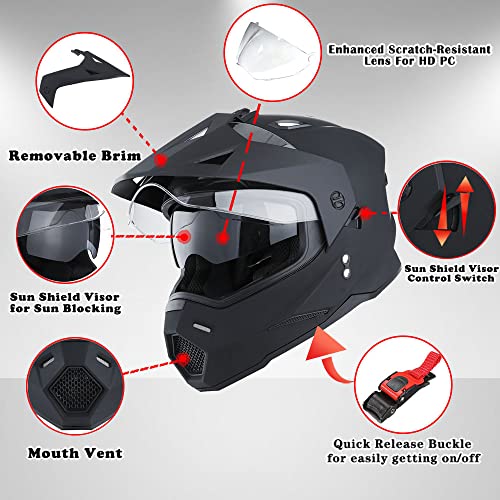
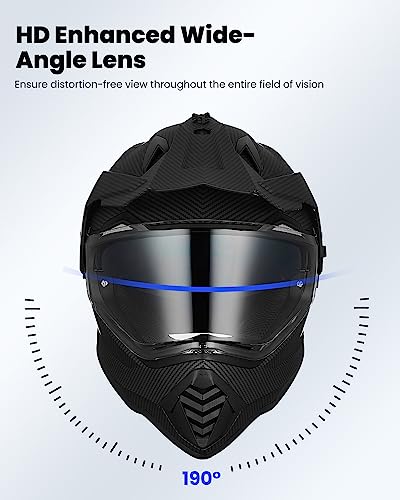
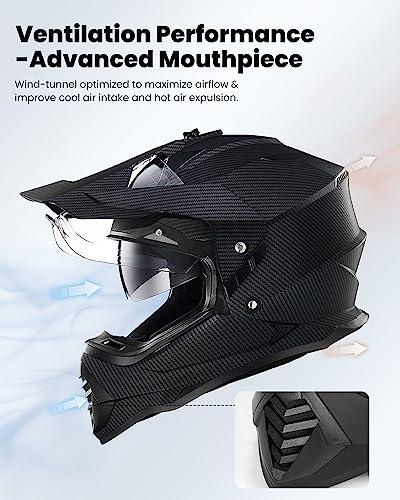
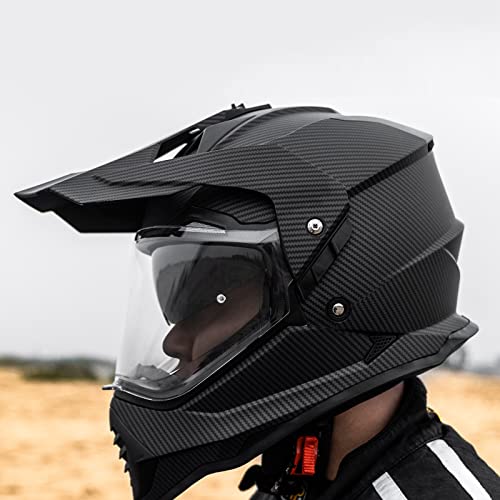
The ILM WS902 makes its case with a strong dual visor system and a wide eye port that boosts peripheral vision, something many adventure riders care about when scanning rough trails. The outer visor is removable, and the internal sunshield slides smoothly, while the seven-position vent offers solid airflow control. It’s DOT approved with an ABS shell and EPS foam, but ABS isn’t as impact-resistant as polycarbonate or composite, which holds it back in safety compared to the Scorpion or Bell.
It includes a removable chin curtain and quick-release strap, and the liner is comfortable with fewer seams to irritate the scalp. However, it doesn’t come with a Pinlock lens despite marketing suggesting it, owners have to buy one separately. That’s a letdown. Still, for riders who want wide visibility and good ventilation without spending top dollar, it’s a solid runner-up to the Orthrus.
Product photos


How We Evaluated adventure motorcycle helmets
My approach to evaluating adventure motorcycle helmets centers on a research-led comparison. Rather than a hands-on lab test, I’ve meticulously compared published specifications and features across numerous models. I’ve also weighed owner reviews from a variety of sources – looking for consistent praise and complaints – alongside expert opinions from respected motorcycle publications. This allows me to build a picture of real-world performance and reliability, applying my experience with vehicle safety systems to the results.
For adventure helmets, impact protection, ventilation, and field of vision consistently decide the outcome. A robust shell and modern safety tech like MIPS are paramount, as these helmets are often used in demanding conditions. Equally important is a well-designed ventilation system; long days in the saddle demand a helmet that keeps you cool and comfortable. Finally, a wide field of vision, especially downward, is crucial for off-road riding.
Specifications reliably show shell construction, weight, and certification standards (DOT and ECE 22.06 being key). However, owner feedback proved critical for assessing comfort, liner quality, and the effectiveness of ventilation systems. Reputation also played a role, helping me identify brands consistently praised for build quality and customer support, and I often cross-referenced these findings with reviews of best full-face helmets to understand a brand’s overall commitment to rider safety. Don’t forget to pair your new helmet with quality adventure boots for a complete ride.
What To Look For In adventure motorcycle helmets
Finding the right adventure motorcycle helmet is about balancing protection, visibility, and comfort for varied terrain.
A good adventure helmet prioritizes impact protection (DOT and ECE 22.06 certifications are key), offers a wide field of vision for off-road riding, and features a ventilation system capable of handling both hot and cold conditions. Consider modular designs for versatility, and look for features like integrated sun visors and communication system compatibility.
Shell Material & Safety Standards
The shell is your first line of defense. Polycarbonate shells, like those found in the ScorpionEXO AT960, are lighter and more affordable, but composite or fiberglass shells generally offer superior impact absorption. Don’t skimp on safety certifications; ECE 22.06 is the current gold standard, providing a more rigorous testing protocol than the older ECE 22.05. While DOT certification is a minimum requirement in the US, seeking a helmet that also meets ECE standards demonstrates a manufacturer’s commitment to safety.
Visor & Ventilation Systems
Adventure riding throws a lot at your vision – sun, dust, mud, and low light. A dual visor system (internal sun shield plus external clear shield) is almost essential, as seen in models like the ILM Dual Sport Adventure Helmet WS902. Pinlock compatibility is a huge plus, preventing fogging in challenging conditions. Equally important is a well-designed ventilation system. You want airflow that keeps you cool on scorching days, but also doesn’t create excessive wind noise or let in rain.
- A simple, single-point chin vent might be sufficient for mild temperatures.
- Multiple intake and exhaust vents, like those on the Orthrus Dual Sport Adventure Helmet, offer more granular control over airflow.
- A well-integrated aero skirt (chin curtain) is a often overlooked feature that significantly reduces wind noise and buffeting, contributing to longer, more comfortable rides.
Features & Overall Value
Beyond the basics, consider features that enhance your riding experience. Modular designs, like the ScorpionEXO AT960, offer the convenience of an open-face helmet for slower speeds and the protection of a full-face helmet for highway travel. Integrated communication system compatibility is also valuable if you plan on using Bluetooth for navigation or communication. Don’t forget about weight; a lighter helmet will reduce neck fatigue on long rides. Speaking of preparation, ensure you have the right adventure gear before you hit the trail.
A properly fitted helmet is more important than any brand name or fancy feature. Spend the time to try on different sizes and shapes to find a helmet that feels secure and comfortable.
Finally, remember to regularly inspect your helmet for damage and replace it after any significant impact, or according to the manufacturer’s recommendations. Finding the right one of the many motorcycle helmets available is an investment in your safety and enjoyment on the road.
Adventure Motorcycle Helmets Compared
Here’s a comparison of key specifications for popular adventure motorcycle helmets.
| Product Title | Shell Material | Weight (approx.) | Safety Standard | Visor Type | MIPS |
|---|---|---|---|---|---|
| ScorpionEXO AT960 Modular | Polycarbonate | 1858g (Med) | DOT/ECE 22.06 | Everclear, Drop-down | No |
| BELL MX-9 Adventure MIPS | N/A | N/A | DOT/ECE22.06 | N/A | Yes |
| Kini ADV Red Bull | N/A | 1600g (Med) | ECE 22.06/DOT | Dual Visor | No |
| Orthrus Dual Sport Adventure | N/A | N/A | DOT | Dual Visor | No |
| 1Storm Dual Sport Motorcycle | Thermoplastic | N/A | DOT | Dual Visor (Smoked Inner) | No |
| ILM Dual Sport Adventure WS902 | ABS | N/A | DOT | Dual Visor, Drop-down | No |
Frequently Asked Questions
What’s the lifespan of an adventure motorcycle helmet?
Generally, you should replace your helmet every five years, even if it hasn’t been involved in an accident. The materials degrade over time due to UV exposure and normal wear, compromising its protective capabilities.
Are modular adventure helmets as safe as full-face models?
Modern modular helmets meeting both DOT and ECE 22.06 standards offer a comparable level of protection to traditional full-face designs. However, the moving parts in a modular helmet introduce a potential weak point, so prioritize models from reputable brands known for quality control.
Can I install my own Bluetooth communication system in any adventure helmet?
Many adventure helmets are designed with recessed spaces for speaker pockets and antenna routing, making Bluetooth integration easier. However, compatibility varies, so check the helmet’s specifications or the communication system’s documentation for confirmation before purchasing; some systems work better with certain helmet shapes.
What’s the benefit of a Pinlock-ready visor?
A Pinlock-ready visor accepts a Pinlock insert, which creates a double-pane system to prevent fogging, a crucial feature for adventure riders facing varying conditions. This is a significant advantage over simple anti-fog coatings, which often lose effectiveness over time, and ensures clear vision regardless of humidity or temperature.
Should I consider touring helmets if I do a lot of road riding alongside off-road?
While adventure helmets excel in varied terrain, a touring helmet might be preferable if your rides are primarily on pavement. Touring helmets often prioritize aerodynamics, noise reduction, and long-distance comfort, and some offer best helmets for touring features like integrated communication systems and enhanced ventilated helmets for optimal airflow.
The Bottom Line
Choosing an adventure motorcycle helmet often comes down to how much you value convenience versus ultimate protection. While a lighter, more affordable option might seem appealing, the ScorpionEXO AT960 Modular stands out as a well-rounded choice, offering a strong balance of features, safety certifications, and value. It’s a helmet that won’t break the bank but still provides the essential protection and comfort needed for a variety of riding conditions.
For those prioritizing specific needs, we can narrow down the field. Riders on a tight budget should consider the ILM Dual Sport Adventure WS902, while those wanting a modular helmet with integrated communication should explore modular Bluetooth helmets. And for those demanding maximum impact protection, the BELL MX-9 Adventure MIPS incorporates MIPS technology – a valuable addition when venturing into more challenging terrain.
Ultimately, remember that no single specification defines the “best” helmet. A proper fit, a clear field of vision, and a reliable ventilation system are the fundamentals that will contribute most to your comfort and safety, regardless of price point. Don’t forget to pair your new helmet with quality adventure jackets to complete your setup.
