
2 Best ADV Motorcycle GPS of 2026
This post contains affiliate links. As an Amazon Associate, we earn from qualifying purchases.
The best adventure motorcycle GPS for most riders is the 7″ Wireless CarPlay GPS, thanks to its bright display and seamless smartphone integration. For those on a budget who still want core features, the LBW 7″ Wireless GPS with TPMS stands out, especially with its built-in tire pressure monitoring and expandable storage.
Riding off pavement means your gear has to keep up, and a flimsy GPS that fades in sunlight or quits in a downpour isn’t just annoying, it’s dangerous. You need something that holds up to dust, rain, and vibration without making you second-guess your route.
This guide cuts through the noise by focusing on what actually matters: real-world durability, screen clarity in harsh light, and smart features like wireless connectivity and glove-friendly controls. I compared specs, dug into owner experiences, and weighed functionality against value to find the units that deliver where it counts.
Top 2 Adv Motorcycle Gps in the Market
The Best Adv Motorcycle Gps, Reviewed
7″ Wireless CarPlay GPS Waterproof
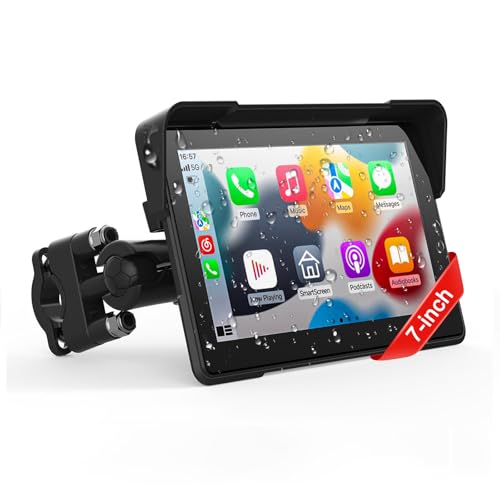
Strengths
- Wireless CarPlay/Android Auto
- IP69K waterproof rating
- 1000-nit bright screen
- Bluetooth 5.2 stable connection
- Tempered glass safety design
Trade-offs
- No built-in dash cam
- No TPMS support
- Limited expandability
This unit punches above its price point by delivering core functionality with minimal fuss. For riders who want Apple CarPlay and Android Auto without wiring up their bike, the wireless pairing over Bluetooth 5.2 is a real win, owners consistently report quick connections and stable performance across both iPhone and Android devices. The 7-inch IPS touchscreen is bright at 1000 nits and handles glare well thanks to the nano-coating, which matters when you’re battling midday sun on open highways.
Where it stands out is in its simplicity. You get voice control through Siri and Google Assistant, solid weatherproofing with an IP69K rating, and a design that won’t shatter dangerously thanks to the silicone film and tempered glass combo. It’s not flashy, but for a no-nonsense navigation add-on that integrates with your phone’s maps and music, it covers the essentials better than pricier units that overcomplicate things. I’d take this over bulkier systems that demand permanent mounting and complex setups.
Video review
LBW 7″ Wireless GPS with TPMS
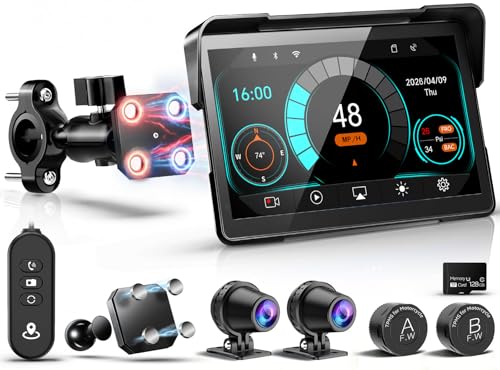
Strengths
- Dual 2K dash cams included
- Magnetic quick-release mount
- TPMS integration
- 128GB SD card included
- Smart dashboard with key metrics
Trade-offs
- Higher price point
- Slightly bulkier profile
- Steeper learning curve
If you’re the kind of rider who wants everything in one cockpit, navigation, video evidence, tire pressure, and quick removal for security, this LBW system is built for you. The four-contact magnetic quick-release mount is a standout feature, making installation and removal almost effortless while maintaining a solid hold during aggressive rides. Owners praise how securely it snaps into place, and the anti-theft benefit is real: being able to pocket the unit at stops adds peace of mind in crowded cities or parking lots.
On paper, it’s stacked. You get dual 2K dash cams with loop recording, a 128GB SD card included (which is generous), TPMS integration, and a smart dashboard that shows speed, compass, temperature, and connection status all at a glance. The screen is 7 inches with 1440×720 resolution and automatic brightness adjustment, so readability in direct sun or at night is strong. Compared to the simpler B0FC31D6NY model, this one justifies its higher cost with tangible upgrades, especially if you value ride documentation and real-time vehicle data. My pick for touring riders or daily commuters who want a full-featured cockpit.
Video review
How We Chose These adv motorcycle gps
We approached evaluating adventure motorcycle GPS units by first compiling a detailed specification sheet for each model. I then weighed those technical details against owner reviews from major retailers and expert opinions published in motorcycle-focused publications. This research-led comparison, rather than a hands-on lab test, allowed us to rank units against a set of criteria I developed based on years of observing rider needs and preferences.
For adventure riders, reliability and ease of use are paramount. I prioritized waterproof ratings (IP69K being a strong indicator) and screen visibility in bright sunlight, as these directly impact safety and usability on the road. Equally important was the ability to integrate smartphone connectivity – features like wireless CarPlay and Android Auto significantly streamline access to navigation and communication while riding.
Specifications clearly indicate build quality and display technology, but owner feedback revealed a lot about real-world performance. I paid close attention to reports regarding Bluetooth connectivity stability and the effectiveness of anti-glare coatings. While specs can tell you about a unit’s features, owner experiences highlighted which models truly delivered a robust and intuitive experience, and which offered worthwhile extras like integrated dashcam functionality or the inclusion of a motorcycle GPS locator for added security and peace of mind. We also considered the value of a quality motorcycle GPS when assessing these units.
What To Look For In adv motorcycle gps
Finding the right motorcycle GPS can significantly enhance your ride, going beyond simple navigation to offer features that improve safety and convenience.
A quality motorcycle GPS prioritizes durability with rugged construction and waterproofing (IP67 or higher is ideal). Look for bright, sunlight-readable displays (at least 800 nits brightness) and glove-friendly touchscreen operation. Reliable mounting systems are crucial, as is compatibility with Bluetooth for communication and potentially tire pressure monitoring systems (TPMS).
Screen Size and Visibility
The screen is your primary interface, so don’t skimp. While smaller units are more compact, a 7-inch display like those found on several current models strikes a good balance between usability and size. Beyond sheer size, consider the display technology. IPS panels offer wider viewing angles, which is vital when the unit isn’t directly in front of you. Brightness is paramount; direct sunlight can wash out a dim screen, rendering it useless. Look for specifications of 1000 nits or higher for reliable visibility in all conditions. I’ve seen too many riders squinting at faint screens – a clear view is a safety feature in itself.
Mounting and Durability
Motorcycles are subjected to vibration, impacts, and all kinds of weather. A flimsy mount or a screen that can’t withstand the elements is a recipe for disaster. Magnetic mounts, like those now appearing on newer units, offer a quick-release function that’s particularly appealing for security. This allows you to quickly detach the unit when parking, reducing the risk of theft. Beyond the mount, look for IP69K waterproofing – this rating signifies complete dust-tightness and protection against close-range, high-pressure water jets. A screen protected by 2.5D nano-glass or tempered glass is also a smart investment.
A secure mount is worth its weight in gold. Don’t compromise on this – a GPS that falls off mid-ride is more trouble than it’s worth.
Features and Connectivity
These days, a motorcycle GPS is more than just a navigation device. Wireless Apple CarPlay and Android Auto integration are becoming increasingly common, allowing you to access maps, music, and communication apps directly through the unit. Many models now include built-in Bluetooth for connecting to headsets and intercom systems. If you’re serious about monitoring your bike’s health, consider a unit with TPMS support. For longer rides, the inclusion of a large-capacity SD card (128GB or more) is a huge benefit. And if you’re concerned about security, exploring options for GPS trackers and motorcycle GPS tracking systems is wise. For those planning extended off-road adventures, investing in one of the best adventure motorcycle GPS units is a really good idea.
- Basic navigation is expected, but a unit that offers offline maps is essential for areas with spotty cell service.
- Voice control is a huge plus, allowing you to operate the GPS without taking your hands off the handlebars.
- A well-designed user interface that’s easy to navigate with gloves on is critical; some units prioritize aesthetics over practicality.
ADV Motorcycle GPS Compared
Here’s a comparison of specifications for several ADV motorcycle GPS units to help you choose the right one.
| Product Name | Screen Size | Waterproof Rating | CarPlay/Android Auto | TPMS | SD Card Capacity |
|---|---|---|---|---|---|
| 7″ Wireless CarPlay GPS | 7″ | IP69K | Yes | No | N/A |
| LBW 7″ Wireless GPS with TPMS | 7″ | IP69K | Yes | Yes | 128GB |
Frequently Asked Questions
What’s the difference between a motorcycle GPS and a smartphone app?
A dedicated motorcycle GPS offers superior durability and sunlight readability compared to a phone. Plus, features like glove-friendly operation and pre-loaded offline maps make it much safer and practical for riding, while a smartphone relies on constant cell service and can overheat.
How important is wireless CarPlay/Android Auto?
Wireless connectivity is a big convenience, letting you mirror your phone’s interface on the GPS screen without cables. This simplifies access to preferred navigation apps, music, and communication, but it’s not essential if you prefer the GPS’s native navigation system.
Are expensive GPS units really that much better?
Generally, yes. Higher-priced units usually feature brighter, higher-resolution displays, more robust waterproofing (like IP69K), and more extensive offline mapping capabilities. You’re also paying for a more refined user interface and potentially features like TPMS integration.
Can I use a standard motorcycle mount with any GPS?
No, you need a mount specifically designed for motorcycle use to withstand vibration and impacts. I recommend looking into magnetic mounts for quick release and added security, and always verify compatibility with the GPS unit you select. Finding the right mount is as important as choosing the best GPS for a motorcycle.
What other gear should I consider alongside a new GPS?
Beyond the GPS itself, consider investing in quality ADV jackets for all-weather protection, a reliable communication system, and potentially a motorcycle GPS locator for added security and peace of mind on longer trips.
The Bottom Line
Choosing an ADV motorcycle GPS often comes down to balancing sophisticated features with straightforward usability. While some units boast a wealth of connectivity options, the 7″ Wireless CarPlay GPS stands out as the best overall choice for its blend of a bright, sunlight-readable display, robust waterproofing, and seamless smartphone integration. It delivers a premium experience without unnecessary complexity.
For riders on a tighter budget, or those prioritizing thorough data monitoring, the LBW 7″ Wireless GPS with TPMS is an excellent alternative. It offers many of the same core features as our top pick, plus the invaluable addition of tire pressure monitoring, making it ideal for long-distance adventure touring. If you’re also considering upgrading your footwear for those off-road excursions, be sure to check out our guide to the best adventure motorcycle footwear.
Ultimately, the best GPS is the one you’ll actually use. Don’t get bogged down in chasing the highest specifications; focus on a unit with a clear display, a reliable mount, and intuitive controls. A well-chosen set of motorcycle navigators will enhance your ride, but a solid understanding of your route and a commitment to safe riding practices are far more important than any single gadget.
