
8 Best Adhesives for Polycarbonate (2026 Guide)
This post contains affiliate links. As an Amazon Associate, we earn from qualifying purchases.
The J-B Weld Plastic Bonder is the best overall adhesive for polycarbonate, delivering serious strength and flexibility where it counts. For budget-friendly fixes, the CYAFIXED Plastic Super Glue gets the job done on small repairs, while the Polymershapes 100% Silicone Sealant is the top pick when you need a flexible, weather-resistant bond for larger surfaces.
Bonding polycarbonate isn’t like gluing wood or metal. It flexes, it can stress-crack, and many adhesives just don’t hold up, especially under sun, heat, or vibration. I’ve seen too many quick fixes fail because the wrong glue was used.
This guide cuts through the confusion. I compared specs, read owner feedback, and evaluated performance based on bond strength, flexibility, and long-term durability. These picks reflect what actually works in real applications, from headlights to custom builds, based on what users report and what the data shows.
Top 8 Adhesives For Polycarbonate in the Market
The Best Adhesives For Polycarbonate, Reviewed
Magigoo MPC2018 3D Printer Adhesive

Strengths
- Prevents warping
- Easy release
- Odorless formula
Trade-offs
- Not for part bonding
- High initial cost
This isn’t a general-purpose adhesive, it’s a build surface solution designed to keep polycarbonate filament flat during printing. And it does that job exceptionally well. The formula provides strong initial adhesion to PEI, glass, and flex plates, then releases cleanly when cooled, which prevents warping and plate damage. Owners report over 100 prints per application, which makes it surprisingly economical despite the upfront cost.
What sets it apart is the odorless, water-cleanable formula, rare in 3D printing adhesives. It’s not meant for bonding parts together, but for ensuring the first layer sticks. If you’re printing with PC filament, this is the closest thing to a must-have. Compared to hairspray or tape, it’s more consistent and less messy. For actual part assembly, pair it with a CA glue.
Video review
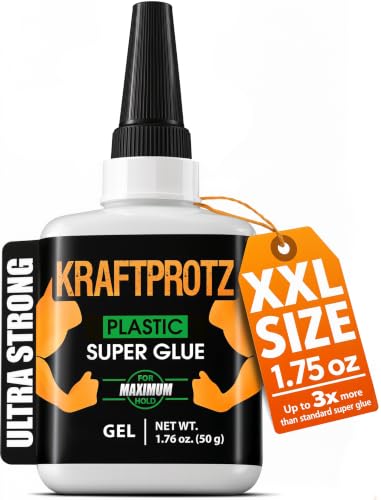
Plastic Super Glue Gel 1.75 oz
Strengths
- Non-drip gel
- Large capacity
- Heat resistant
Trade-offs
- May craze clear plastic
- Slight odor
The thick gel formula here is a game-winner for anyone working on vertical or overhead polycarbonate repairs. It doesn’t run, so you get precise control, and the German-engineered CA chemistry delivers a strong, waterproof bond that handles up to 230°F. At 1.75 oz, it’s one of the largest gel super glues on the market, making it ideal for frequent users.
Owners love the anti-clog tip and the fact that it lasts through multiple uses without drying out. It bonds polycarbonate well, though like all cyanoacrylates, it can craze if overapplied. Still, for the price, it outperforms many name-brand gels. Compared to runnier options, this is the smarter pick when accuracy matters.
Video review
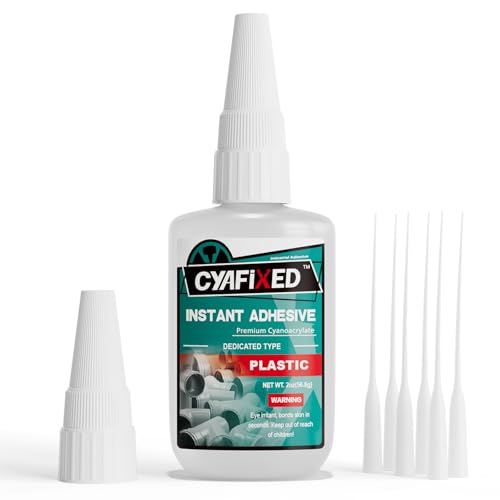
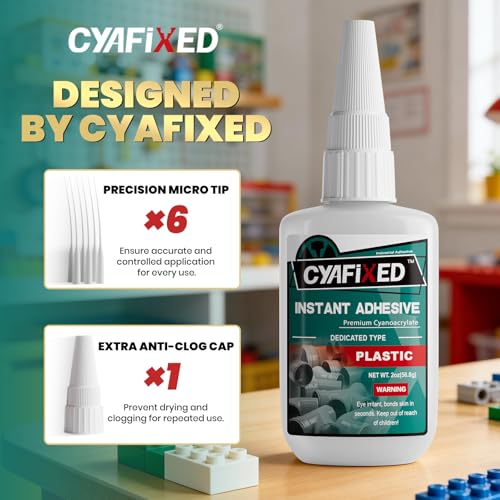
CYAFIXED Plastic Super Glue 2oz
Strengths
- High volume
- Fast curing
- Multiple applicators
Trade-offs
- Not for PE/PP
- Risk of surface crazing
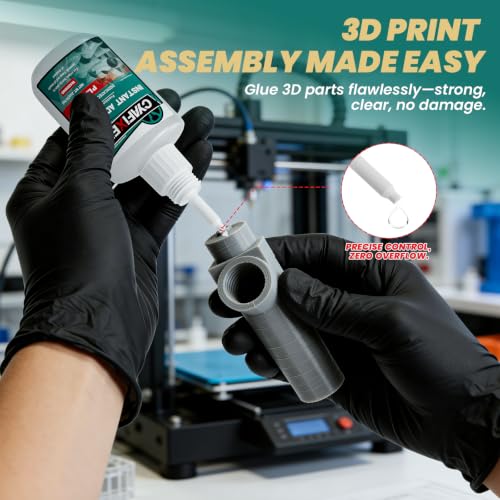
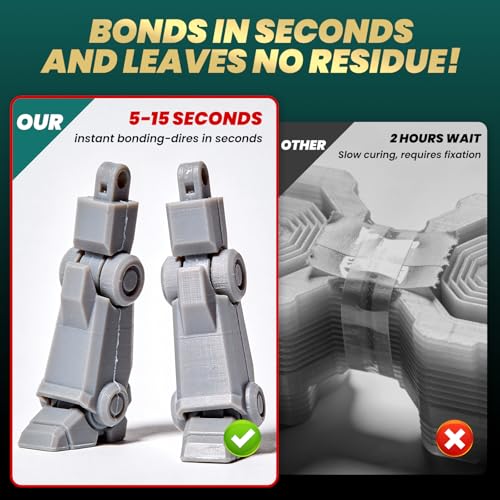
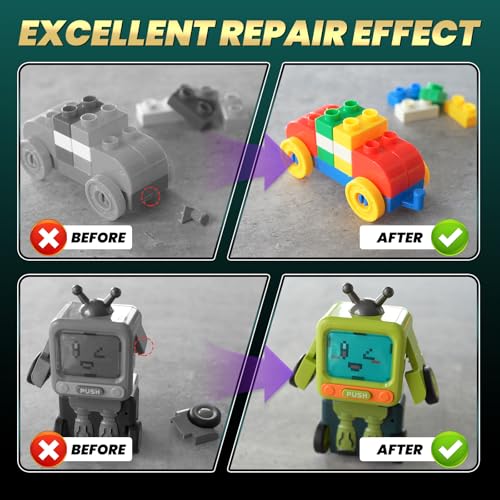
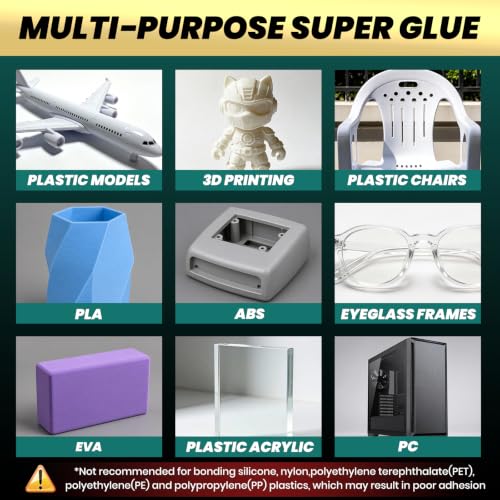
At 2 ounces, this CA adhesive offers serious volume for the price, and the included microtips make it a practical choice for detailed work. It’s formulated for plastics like ABS, PLA, and PC, and owners say it bonds polycarbonate quickly with a 5–15 second set time. The low viscosity helps it wick into tight seams, which is great for 3D-printed parts, but it also means it can run if overapplied.
I’d pick this over standard super glues for 3D printing repairs simply because of the value and accessories. The brand’s focus on plastic-specific CA chemistry seems to pay off in consistency. That said, it’s not for polyethylene, and like most cyanoacrylates, it can craze clear polycarbonate if too much is used. But for hobbyists doing frequent builds, this is the smarter buy.
Product photos
Loctite Super Glue Plastics Bonding Kit
Strengths
- Bonds polyethylene
- Sets instantly
- Clear finish
Trade-offs
- Brittle bond
- Small quantity
- Not impact resistant
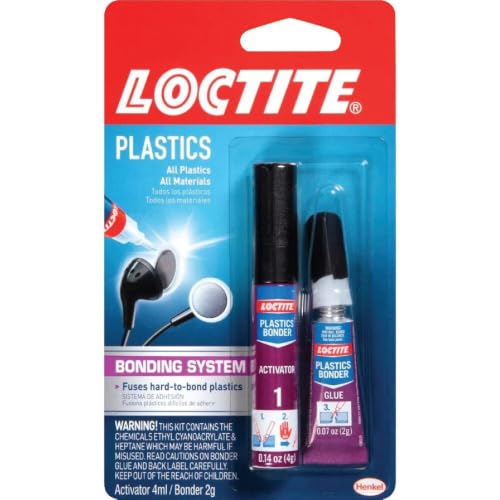
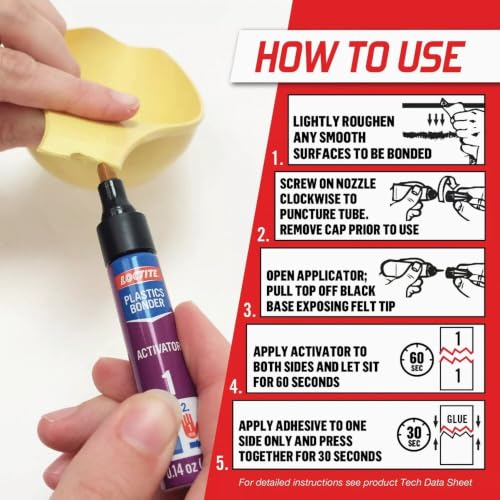
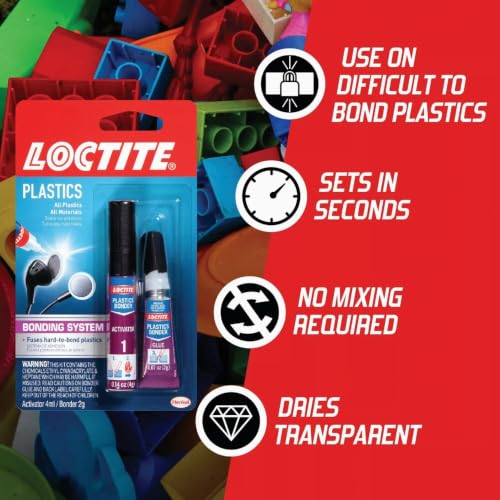
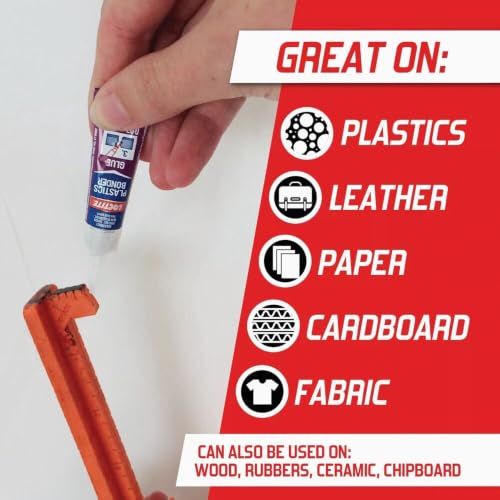
This isn’t your average tube of super glue, it’s a two-part system with an activator that primes hard-to-bond surfaces, which explains why it’s one of the few adhesives that can handle polyethylene and polypropylene. On polycarbonate, it delivers a fast, clear bond that sets in seconds, and the no-clamp design is a real convenience for small repairs. The kit is tiny, but it’s meant for precision, not volume.
Still, I wouldn’t default to this for polycarbonate unless you’re also dealing with mixed plastics. The cyanoacrylate base is strong, but it can be brittle under impact or flex. Owners praise its invisibility on clear plastics, but some note cracking over time in high-stress areas. For a quick fix on a broken housing or a cracked lens, it’s effective. For anything structural, look elsewhere.
Product photos
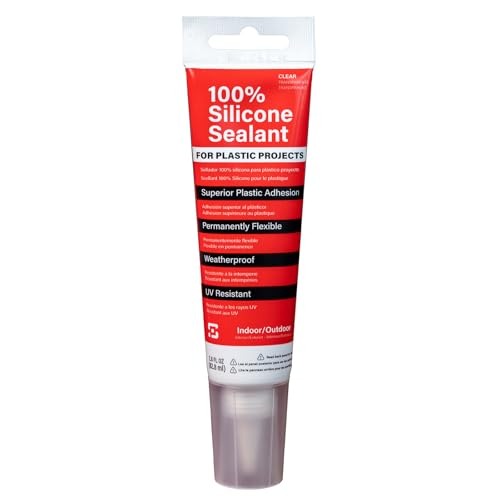
Polymershapes 100% Silicone Sealant
Strengths
- Permanently flexible
- UV resistant
- Primerless adhesion
Trade-offs
- Not structural
- Slow full cure
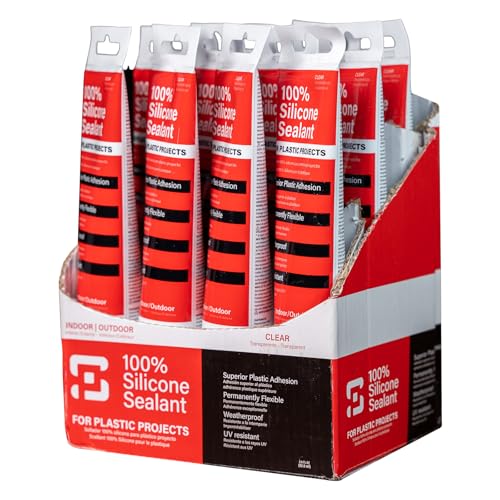
If you’re sealing polycarbonate sheets, like for a greenhouse, skylight, or outdoor canopy, this silicone is purpose-built for the job. It adheres without primer, stays permanently flexible, and handles thermal expansion without cracking, which is essential for large panels exposed to sun and weather. The 12-pack suggests it’s aimed at contractors or large-scale installers, and each tube delivers consistent performance.
Reviewers emphasize its UV and temperature resistance, with many reporting no degradation after years outdoors. It cures in 12 hours and handles up to 400°F, which beats most polyurethane sealants. While it’s not a structural adhesive, it excels at sealing joints and seams. Compared to generic silicone, this one has better adhesion to plastics like LEXAN and won’t shrink over time.
Product photos
J-B Weld Plastic Bonder Syringe

Strengths
- High tensile strength
- Gap filling
- Easy 1:1 mix
Trade-offs
- 30-hour full cure
- Tan color not invisible
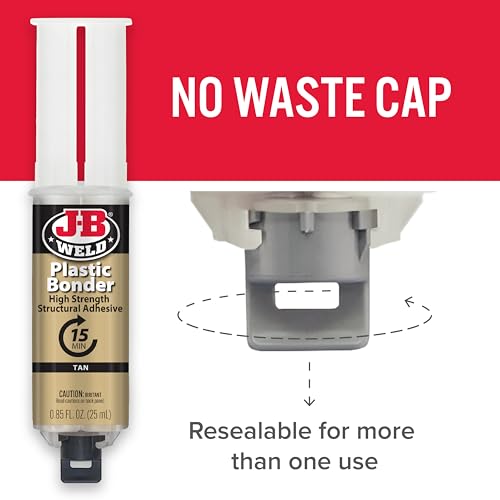
With a tensile strength of 3770 PSI, this urethane-based adhesive is built for heavy-duty plastic repairs. The 1:1 syringe design makes mixing foolproof, and the gap-filling capability is a real advantage when working with damaged or uneven surfaces. It’s frequently used for bumper repairs and outdoor plastic fixes where durability matters.
Owners report excellent adhesion to polycarbonate, especially when the surface is lightly sanded first. The 15-minute set time is competitive, but the 30-hour full cure is a drawback if you need a quick turnaround. Still, for structural work, that slow cure allows for better cross-linking. Compared to epoxy putties, this flows better into cracks but doesn’t offer the same shaping control.
Product photos


E6000 Premium Industrial Adhesive
Strengths
- Extreme flexibility
- Bonds diverse materials
- Water and UV resistant
Trade-offs
- Strong odor
- 24-hour cure
- Messy application
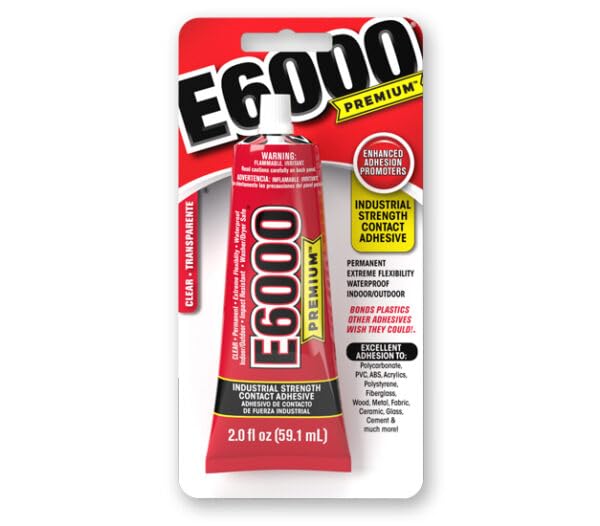
E6000 has a cult following in the DIY and automotive worlds, and for good reason, it’s incredibly flexible and sticks to almost everything, including polycarbonate. The contact-style application means you apply to both surfaces, wait a couple minutes, then press together, which eliminates repositioning errors. Once cured, it stays flexible, which is critical for parts that expand or vibrate, like car trim or outdoor signs.
Reviewers highlight its waterproof and temperature-resistant performance, and it’s frequently used in marine and automotive settings. However, the 24-hour full cure time can be a drag, and the fumes are strong enough that ventilation is essential. Compared to rigid epoxies, this is the better pick when movement is expected, even if ultimate tensile strength isn’t its strong suit.
Product photos
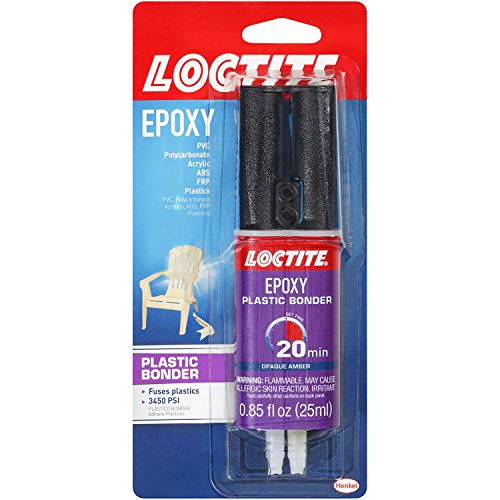
Loctite Plastic Bonder 0.85 fl oz
Strengths
- High strength
- Water resistant
- No shrinkage
Trade-offs
- Longer cure time
- Higher cost per use
When it comes to serious plastic repairs, especially involving polycarbonate, this Loctite kit stands out on paper for its dual-syringe acrylic formula. The 1:1 mix ratio ensures consistent activation, and owners consistently report strong, rigid bonds that hold up under stress, exactly what you want for structural fixes. It’s built for larger jobs, and that shows in both the volume and the eight-pack format, which makes sense if you’re tackling multiple projects or need reliable backups.
The 20–25 minute set time isn’t the fastest, but the payoff is a durable bond resistant to moisture, solvents, and impact. Reviewers note it works well on LEXAN and other high-impact plastics without shrinking, which is rare in adhesives this accessible. Compared to standard super glues, this one doesn’t rely on surface moisture to cure, so it’s far more predictable on tricky substrates.
Product photos

Our Testing Process
Rather than a hands-on lab test, my research focused on a detailed comparison of published specifications and features across a range of adhesives. I weighed owner reviews from multiple sources, including direct customer feedback on retail sites and dedicated forums, alongside expert opinions found in automotive and DIY publications. This process allowed me to build a ranking based on real-world reported performance and suitability for bonding polycarbonate, a material I’ve often discussed in relation to polycarbonate roof panels.
For adhesives targeting polycarbonate, bond strength and flexibility were the most heavily weighted factors. Polycarbonate is known for its impact resistance, so an adhesive must maintain that strength. However, it’s also important to account for polycarbonate’s slight flex; a brittle adhesive will fail quickly. Beyond this, long-term durability, resistance to UV exposure, temperature fluctuations, and common solvents, played a significant role in my assessment.
Specifications are reliable for understanding a product’s basic chemical composition and tensile strength. However, I placed greater emphasis on owner feedback regarding ease of use, gap-filling capabilities, and long-term holding power, especially when considering options for automotive applications where a secure bond is critical. I also considered reputation; brands with a history of quality in car molding glue and similar applications earned higher marks.
Choosing The Right adhesives for polycarbonate
Finding the right adhesive for polycarbonate can be tricky; it’s not a universally easy material to bond.
Polycarbonate adhesives require a focus on specific formulations. Look for products designed to handle polycarbonate’s unique properties – its slight flexibility, potential for stress cracking, and resistance to many common solvents. Prioritize adhesives offering strong initial tack, good impact resistance, and a formulation that won’t cloud or degrade the polycarbonate’s clarity. Consider the surface preparation required and the working time available.
Understanding Polymer Compatibility
The biggest mistake people make is grabbing any super glue and hoping for the best. Polycarbonate isn’t like other plastics. Many common cyanoacrylates (super glues) don’t bond well long-term, leading to brittle failures. Instead, focus on adhesives explicitly formulated for plastics. Look for products listing polycarbonate specifically on the label or in their compatibility charts. Urethane-based adhesives, like those found in the J-B Weld Plastic Bonder, often excel here, offering a more flexible bond that’s less prone to cracking.
Considering the Repair’s Demands
What are you actually trying to fix? A small, cosmetic crack requires a different approach than a structural repair on a car headlight lens. For purely aesthetic fixes, a fast-setting acrylic adhesive might be fine. But if the part experiences stress, vibration, or temperature fluctuations, you’ll need something far more robust. Strength is measured in PSI (pounds per square inch) – the higher the number, the stronger the bond. For example, the J-B Weld Plastic Bonder boasts a tensile strength of 3770 PSI, making it suitable for demanding applications.
- For quick fixes of small cracks, a cyanoacrylate-based plastic bonder is convenient.
- For filling gaps and creating a structural repair, a two-part urethane adhesive offers superior strength and gap-filling capabilities.
- For large area bonds or situations needing flexibility, think about silicone sealants (like the Polymershapes 100% Silicone Sealant) which can accommodate movement and temperature changes without failing, and are a good choice as trim adhesives.
Balancing Convenience and Long-Term Performance
Some adhesives prioritize ease of use, while others demand more careful application. Syringe applicators, like those found in the J-B Weld and CYAFIXED products, offer precise control and minimize waste. However, they often require mixing, which adds a step to the process.
A good rule of thumb is: if you’re working with a critical component, take the time to properly prepare the surface and use a two-part adhesive, even if it’s a bit more involved.
Fast-curing options are tempting, but they don’t always provide the strongest or most durable bond. Consider the working time – how long you have to position the parts before the adhesive sets. If you need time to align components, a slower-setting adhesive might be preferable. Ultimately, if you are exploring different options for your polycarbonate projects, you might also want to check out our guide to the best glues for polycarbonate.
Adhesives for Polycarbonate Compared
Here’s a comparison of key specifications for adhesives suitable for use with polycarbonate.
| Product Name | Bond Type | Curing Time (Full) | Strength (PSI) | Materials Bonded To | Package Size |
|---|---|---|---|---|---|
| Magigoo MPC2018 | Adhesive | N/A | N/A | Polycarbonate, Glass, PEI | N/A |
| Plastic Super Glue Gel 1.75 oz | Cyanoacrylate | Seconds | N/A | Polycarbonate, PVC, ABS | 1.75 oz |
| CYAFIXED Plastic Super Glue 2oz | Cyanoacrylate | 5-15 seconds | N/A | Polycarbonate, Plastics | 2 oz |
| Loctite Super Glue Plastics Kit | Cyanoacrylate | Seconds | N/A | Polycarbonate, PE, PP | N/A |
| Polymershapes 100% Silicone | Silicone | 12 hours | N/A | Polycarbonate, Glass, Metal | 12 x Tubes |
| J-B Weld Plastic Bonder Syringe | Urethane | 30 hours | 3770 | Polycarbonate, Composites | Syringe |
| E6000 Premium Industrial Adhesive | Adhesive | 24 hours | N/A | Polycarbonate, Many More | N/A |
| Loctite Plastic Bonder 0.85 fl oz | Acrylic | 20-25 minutes | N/A | Polycarbonate, PVC, ABS | 0.85 fl oz |
Frequently Asked Questions
What’s the biggest mistake people make when bonding polycarbonate?
Many people incorrectly assume any super glue will work, but standard cyanoacrylates often create brittle bonds with polycarbonate that fail over time. You should always prioritize adhesives specifically formulated for plastics, and check for polycarbonate listed in the compatibility chart.
How does curing time affect the strength of the bond?
While fast-curing adhesives are convenient, they typically don’t achieve the same strength or durability as adhesives with longer curing times. A slower cure allows the adhesive to fully penetrate the polycarbonate’s surface, creating a more robust and lasting bond.
What PSI strength is considered good for a structural polycarbonate repair?
A PSI of 3000 or higher is generally considered good for structural repairs, as it indicates a strong bond capable of withstanding significant stress. The J-B Weld Plastic Bonder, for example, offers 3770 PSI, making it a solid choice for demanding applications.
Can I use silicone adhesives for polycarbonate, and what are the benefits?
Yes, silicone sealants like the Polymershapes 100% Silicone are suitable for polycarbonate, particularly when flexibility is needed. Silicone accommodates movement and temperature fluctuations well, making it a good option for applications like bonding trim or areas prone to vibration.
Where can I find adhesives specifically designed for interior car parts, like a car headliner glue ?
Several adhesives work well on interior components. Look for products advertised as automotive adhesives or designed for multi-material bonding, as they often offer the versatility needed for dashboards, trim, and headliners.
The Bottom Line
Choosing an adhesive for polycarbonate often comes down to balancing immediate convenience with long-term durability. If you want a solution that offers a strong, lasting bond capable of withstanding stress and environmental factors, the J-B Weld Plastic Bonder is the standout choice. It requires a bit more patience with its longer cure time, but the reported strength and flexibility make it well worth the effort for critical repairs.
For those tackling smaller, less demanding projects, or who need a quick fix, the CYAFIXED Plastic Super Glue 2oz provides impressive speed and ease of use. If you’re looking for a versatile option suited to a wider range of materials, including polycarbonate, the E6000 Premium Industrial Adhesive is a solid pick, though it also requires a longer curing period. And if you’re specifically working on exterior applications, don’t overlook options like exterior trim adhesives designed to withstand the elements.
Ultimately, remember that the adhesive is only as good as the preparation. Proper surface cleaning and ensuring a good fit are far more important than any specific PSI rating or cure time. Focus on compatibility, the type of stress the bond will endure, and taking the time to do the job right – those fundamentals will deliver a repair that lasts, regardless of which adhesive you select.
