
7 Best Adhesives for Exterior Car Trim 2026
This post contains affiliate links. As an Amazon Associate, we earn from qualifying purchases.
The 3M Black Super Weatherstrip Adhesive stands out as the overall best choice for exterior car trim, delivering a durable, weatherproof bond that holds up over time. For a simpler, no-mess application, the 3M Super-Strength Molding Tape is a strong budget-friendly alternative. If you’re working with plastic or need precision, the LIKFCBOND Car Trim Glue 50ml offers solid versatility.
Fixing loose exterior trim isn’t just about looks, it’s about stopping water intrusion, preventing rust, and keeping your vehicle sealed against the elements. Many adhesives claim to work, but only a few deliver lasting results under real-world conditions.
I compared these picks based on specs, owner feedback, and automotive repair insights, focusing on weather resistance, flexibility, and compatibility with materials like rubber, plastic, and metal. This guide cuts through the noise to help you choose the right adhesive for a repair that lasts.
Top 7 Adhesives For Exterior Car Trim in the Market
The Best Adhesives For Exterior Car Trim, Reviewed
3M Black Super Weatherstrip Adhesive

Strengths
- OEM-level durability
- Dries black for invisibility
- Resists oil and solvents
Trade-offs
- Higher price point
- Strong odor during application
- Limited gap-filling ability
This is the one I’d reach for if I were restoring a classic or sealing a driver-quality daily. It’s been a staple in body shops for decades for good reason, the bond is strong, flexible, and it dries black, so it disappears into rubber seals. The formula resists not just weather but oils and detergents, which means it won’t break down when you wash your car or park under a leaky valve cover.
Reviewers consistently praise how it holds door and trunk seals without slipping, even on vertical surfaces. Unlike tapes or silicone sealants, it grabs quickly and doesn’t need clamping. Compared to the LIKFCBOND or generic silicones, this has better long-term integrity. It’s not the cheapest, but it’s the smartest buy if you want a repair that lasts and looks OEM. For anything involving rubber-to-metal sealing, this is my top pick.
Video review
3M Super-Strength Molding Tape

Strengths
- No mess application
- Excellent temperature range
- Strong conformability
Trade-offs
- Requires perfect surface prep
- Less effective on uneven gaps
- Not repositionable after full contact
If you’re tired of glue squeeze-out and clamps, this 3M VHB-style tape is a smarter path to clean, lasting trim attachment. The double-sided adhesive is engineered to handle extreme temps and impacts, and owners confirm it holds firm even on long-haul trucks and daily drivers in harsh climates. It conforms well to curved body lines, which makes it ideal for side moldings that follow fender contours.
What sets it apart from liquid adhesives is the zero-mess application, just cut, stick, and press. Compared to the black 3M weatherstrip adhesive, this tape doesn’t require drying time or perfect alignment on the first try. However, it demands a spotless, grease-free surface to work right. I’d pick this over liquid options for flat or gently curved trim where contact area is consistent. For complex 3D shapes, you might still need a flexible glue.
Video review
3M Auto Exterior Attachment Tape

Strengths
- Ultra low cost
- Easy cut and apply
- Good for small emblems
Trade-offs
- Limited size and strength
- Poor gap filling
- Not for large trim
At this price, it’s hard to ignore. This narrow tape is clearly aimed at small jobs, badges, tiny emblems, or thin trim strips where you don’t need industrial strength. The listing mentions noise and vibration damping, but owners note the real benefit is convenience. It’s thin, cuts easily, and sticks fast with no cure time.
But it’s not a substitute for VHB or proper adhesive. Compared to the 3M Super-Strength Molding Tape, it’s narrower, shorter, and lacks the conformability for body contours. I’d use it for quick touch-ups or temporary holds, not anything structural. Still, for the price, it’s a decent grab-and-go option for minor fixes.
Product photos


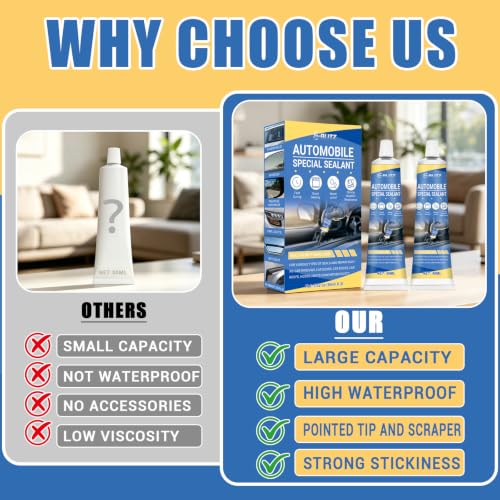
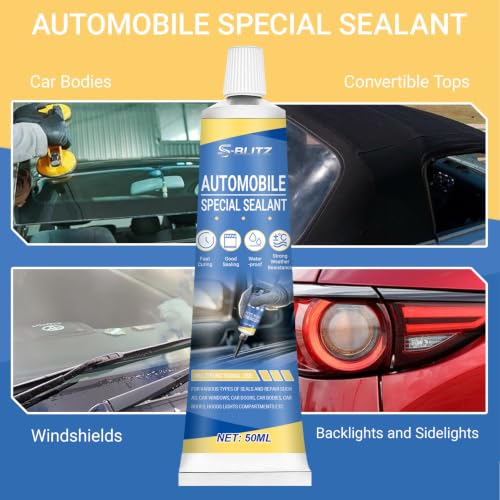
Automotive Body Adhesive Sealant
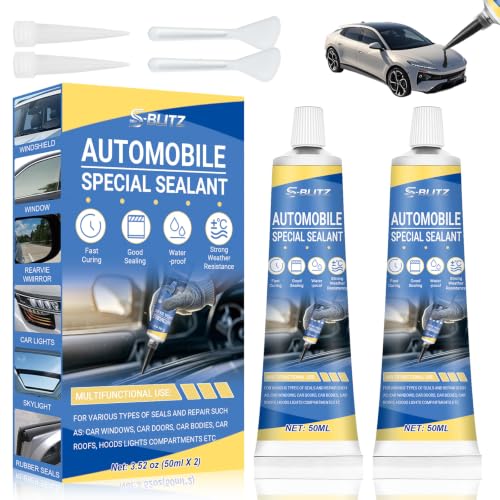
Strengths
- Fast initial cure
- Weather resistant
- Works on multiple materials
Trade-offs
- Limited long-term durability
- Messy application
- Weak on vertical bonds
This silicone-based sealant hits the basics well for casual users tackling small exterior trim fixes. On paper, it looks like a solid budget option, flexible bond, fast initial set, and decent weather resistance down to freezing temps. Owners consistently report it works fine for reattaching loose moldings or sealing rubber gaskets, especially when you need something that won’t crack after a few temperature swings.
That said, it doesn’t match the holding power of 3M’s professional formulas. While it claims strong adhesion to metal, plastic, and rubber, reviewers note it can pull away under sustained vibration or on vertical surfaces if not prepped perfectly. I’d consider it a temporary fix for non-critical trim, not something I’d trust on a high-speed hood molding or fender edge. Compared to the 3M Super-Strength Molding Tape, it’s messier and demands more surface prep for similar results.
Product photos
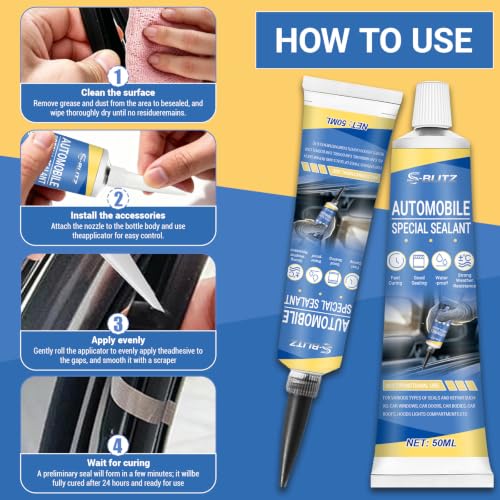
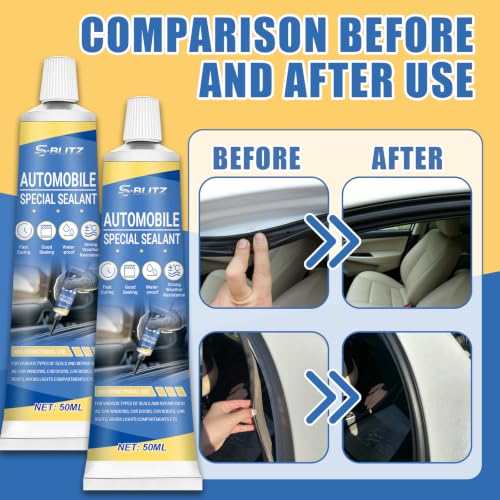
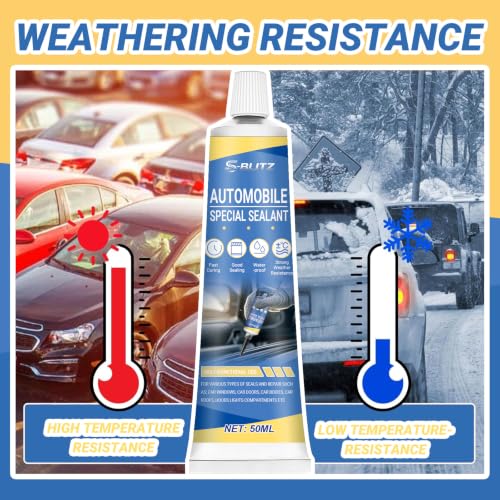
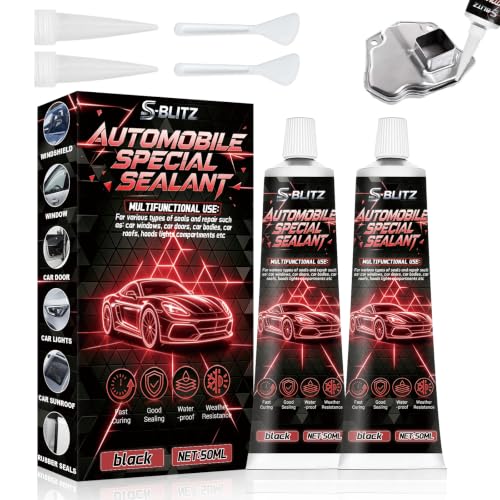
Black Automotive Body Adhesive
Strengths
- Black color blends with trim
- Fast curing
- Good flexibility
Trade-offs
- Not oil resistant
- Less durable than 3M formula
- May degrade under UV over time
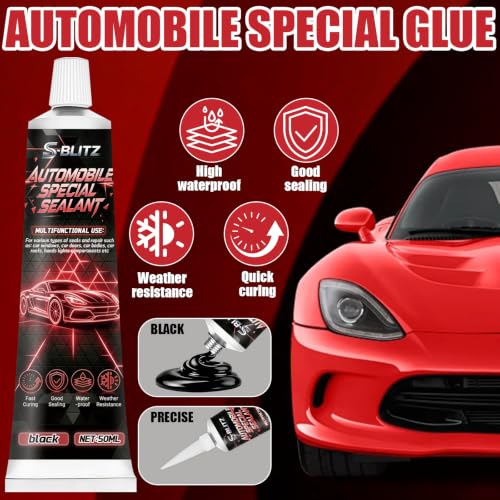
This black silicone sealant is nearly identical to the first product on the list, but with one key advantage: the dark tint blends better with black trim and rubber seals. That makes it a more discreet choice for door gaskets or rear hatch weatherstripping where visible glue lines matter. The specs match the clear version, fast initial set, good flexibility, and resistance to cracking.
Owners using it on window channels and sunroof seals say it holds up better than generic hardware store silicones. But again, it falls short of 3M’s specialty adhesives when it comes to long-term vibration resistance. I see it as a middle ground, better than basic sealants, not quite pro-grade. Compared to the 3M Black Super Weatherstrip Adhesive, it lacks the oil and solvent resistance that matters in high-exposure areas like underhood gaskets.
Product photos
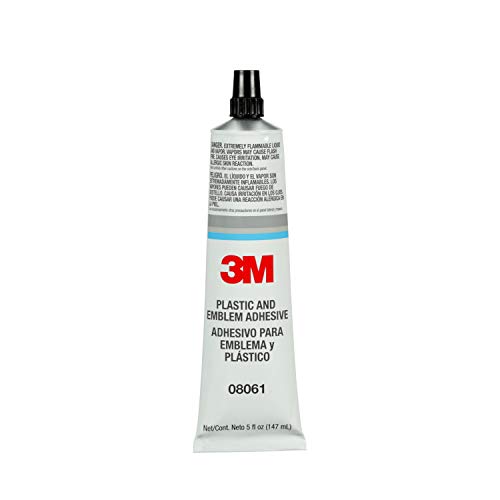
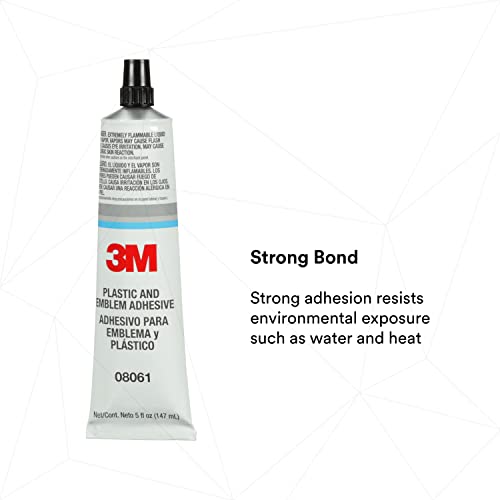
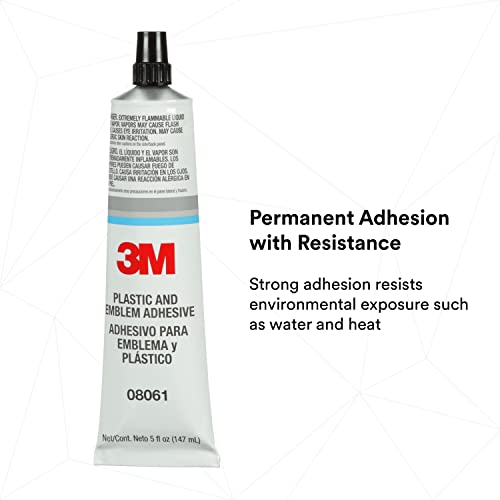
3M Plastic and Emblem Adhesive
Strengths
- Dries clear
- Strong plastic adhesion
- Resists heat and water
Trade-offs
- Not for rubber or metal-to-metal
- Long cure for full strength
- Expensive upfront
When it comes to bonding plastic trim, especially painted or textured pieces, this 3M adhesive stands out. It’s formulated specifically for automotive plastics and cures to a clear finish, so it won’t discolor or cloud transparent lenses or chrome-style overlays. The 5 oz tube is generous, and owners report it lasts through multiple projects, from fixing broken grilles to reattaching side markers.
It sets in about 15 minutes, which helps when holding parts in place, and fully cures in 24 hours. Compared to silicone sealants, it offers better shear strength and doesn’t creep over time. But it’s overkill for rubber seals, save it for plastic. I’d choose this over the generic silicones any day for emblem work, especially on modern cars with large plastic cladding. Just make sure surfaces are clean and fully cured before applying.
Product photos
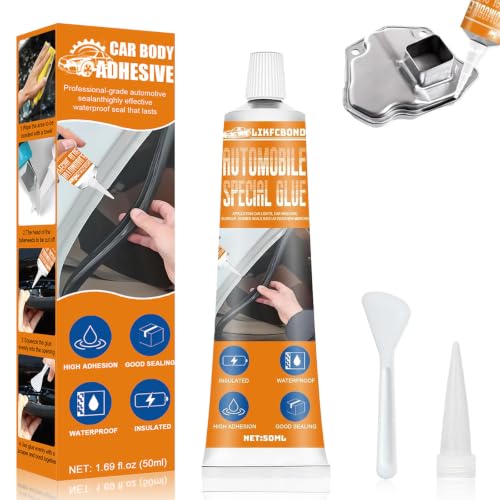
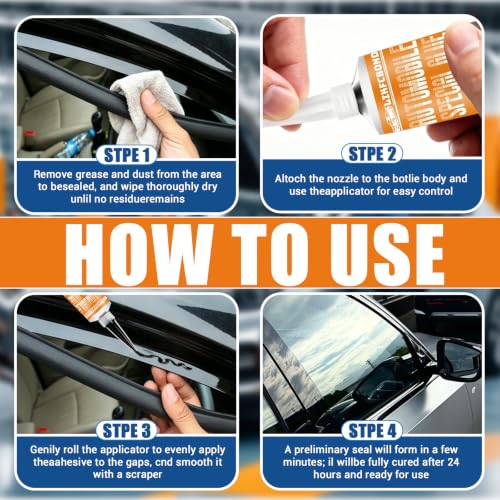
LIKFCBOND Car Trim Glue 50ml
Strengths
- Precision nozzle
- Compact size
- Affordable per unit
Trade-offs
- Small capacity
- Short working life
- Inferior long-term hold
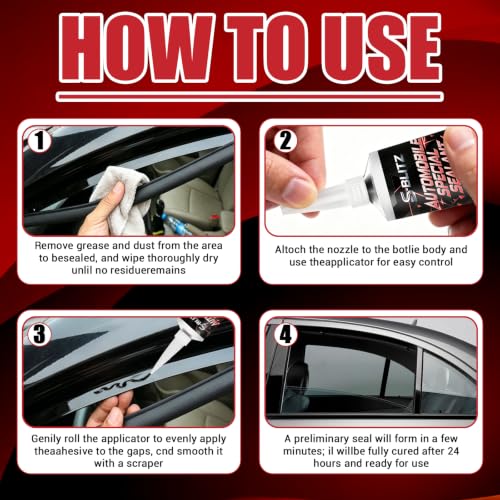
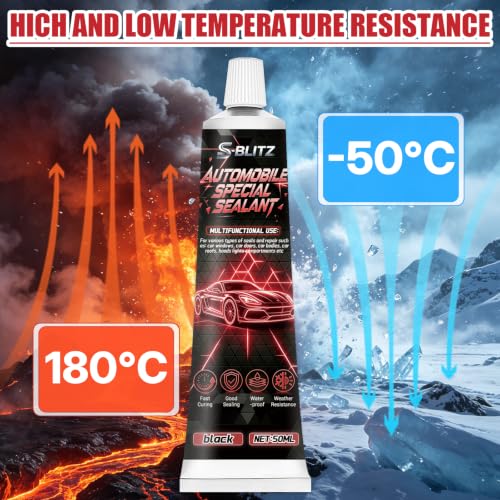
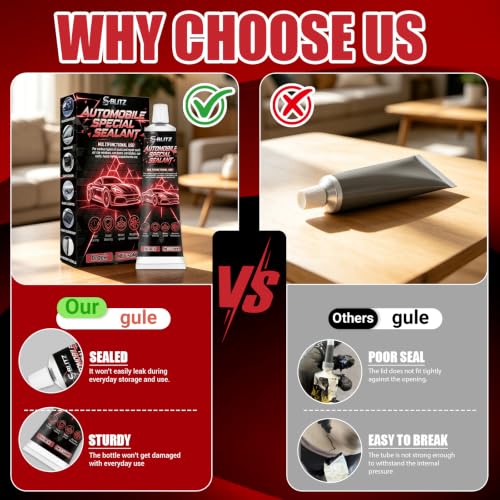
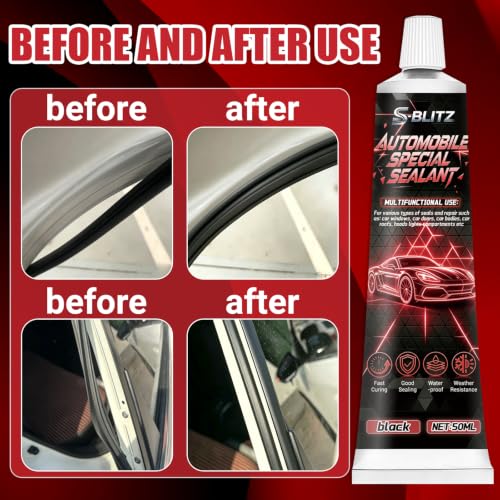
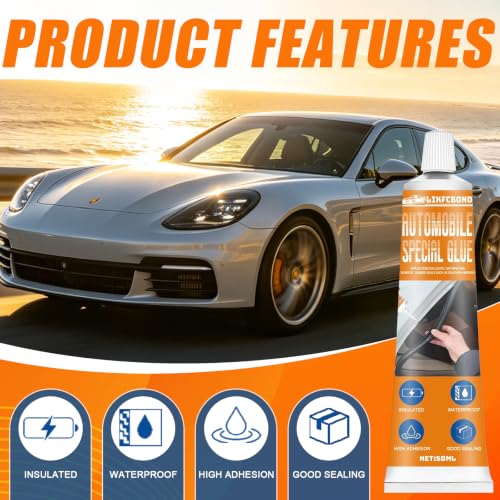
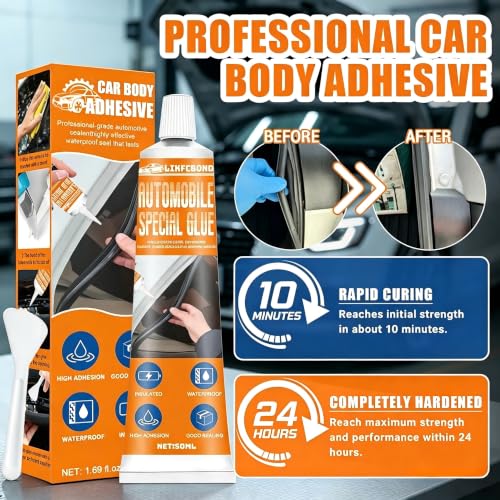
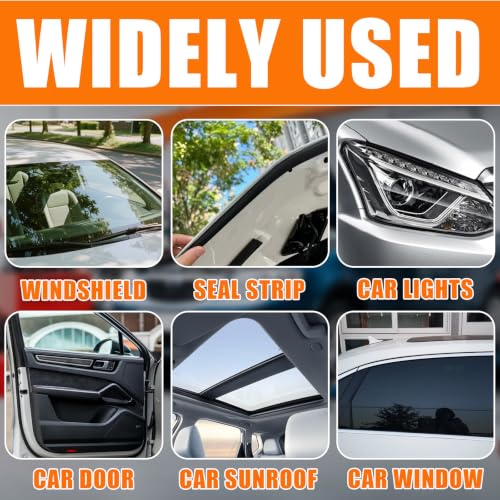
Priced low and sold in a value pack, this adhesive promises a lot for little. It’s a compact 50ml tube of black silicone with a fine nozzle for precision work, ideal for spot repairs on weatherstripping or small trim clips. Owners say it cures fast and holds reasonably well in mild conditions, and the small size means less waste if you only need a dab.
But volume is its limitation. At half the size of the 100ml options, it’s not economical for larger jobs like full door seals. Compared to the 3M Black Super Weatherstrip Adhesive, it lacks the reputation and proven durability. I’d consider it a trial option if you’re unsure about the job, but not a primary choice for anything mission-critical.
Product photos

How We Picked These adhesives for exterior car trim
Rather than a hands-on lab test, my research focused on a detailed comparison of published specifications and features across numerous adhesive products. I weighed owner reviews from various online retailers alongside assessments from automotive repair sources, looking for consistent patterns in performance and durability. This allowed me to build a ranking based on real-world feedback and established product characteristics.
For exterior car trim, a strong initial tack and long-term weather resistance are paramount. I prioritized adhesives demonstrating a proven ability to bond dissimilar materials (like rubber to metal) and withstand temperature fluctuations, vibration, and UV exposure. The ability to create a lasting, waterproof seal was also heavily weighted, as failures in this area quickly lead to rust and further damage. Knowing where to find the right adhesive for exterior molding is crucial.
Product specifications reliably indicate bonding strength, temperature ranges, and material compatibility. However, I found owner feedback invaluable for understanding real-world application ease and long-term reliability. Reputation played a role too; established brands like 3M consistently appeared as top performers. Protecting your investment with quality trim protectants is also something to consider alongside adhesive choice.
How To Choose The adhesives for exterior car trim
Choosing the right adhesive for your car’s exterior trim is crucial for a lasting repair. It’s not simply about sticking things back on; it’s about weather resistance, flexibility, and a bond that won’t fail when exposed to the elements.
Automotive adhesives require a balance of initial tack, long-term durability, and material compatibility. Look for products specifically formulated for automotive use, considering the surfaces being bonded (metal, plastic, rubber). Temperature resistance is key, as is flexibility to accommodate vibrations and expansion/contraction. Check for UV resistance to prevent degradation from sunlight exposure, and ensure the adhesive won’t damage the existing paint or trim finish.
Understanding Adhesive Types
The world of automotive adhesives is broader than many realize. You’ll find everything from traditional brush-on sealants to pressure-sensitive tapes, each with its strengths and weaknesses. For rubber weatherstripping, a dedicated weatherstrip adhesive like the 3M Black Super Weatherstrip Adhesive is often the best route. However, if you’re dealing with plastic trim, you might want to investigate options designed for plastic car adhesives. Don’t assume a single product will solve all your needs; tailoring the adhesive to the material is paramount.
Flexibility and Temperature Range
Automobiles experience significant temperature swings and constant vibrations. A rigid adhesive will likely crack and fail over time. Look for adhesives specifically labeled as “flexible” or those based on silicone or polyurethane. Pay close attention to the temperature range specified by the manufacturer. A product rated for -40°F to 250°F, like the 3M Super-Strength Molding Tape, provides a much wider margin of safety than one with a limited range.
Here’s what to consider when evaluating temperature resistance: * Low-Temperature Performance: Essential if you live in a cold climate; ensures the adhesive remains pliable and doesn’t become brittle. * High-Temperature Stability: Prevents softening or degradation in hot weather. * Thermal Cycling: The ability to withstand repeated expansion and contraction without losing adhesion. This is particularly important for trim pieces exposed to direct sunlight.
A good rule of thumb: if your car sees both freezing temperatures and scorching summers, prioritize an adhesive with a wide operating temperature range.
Application Method and Value
The ease of application can drastically impact your project’s success. Liquid adhesives require more skill to apply neatly, while tapes offer a cleaner, simpler process. Consider your experience level and the complexity of the repair. For smaller jobs or intricate trim, a precision applicator nozzle (found on products like the LIKFCBOND Car Trim Glue 50ml) is a huge benefit. Don’t automatically gravitate toward the cheapest option; sometimes, spending a little more for a user-friendly product and a higher-quality bond will save you time and money in the long run. If you’re looking for a versatile solution, explore options that work well with a variety of materials and are easy to find, like these car trim adhesives.
Adhesives for Exterior Car Trim Compared
This table summarizes key specifications to help you compare adhesives designed for exterior car trim applications.
| Product Name | Bond Type | Curing Time (Initial) | Temp. Range | Key Feature | Volume |
|---|---|---|---|---|---|
| 3M Black Super Weatherstrip Adhesive | Liquid | Minutes | N/A | Weatherproof Seal | N/A |
| 3M Super-Strength Molding Tape | Tape | N/A | -40F to 250F | Permanent Attachment | N/A |
| 3M Auto Exterior Attachment Tape | Tape | N/A | N/A | Noise/Vibration Dampening | N/A |
| Automotive Body Adhesive Sealant | Silicone | 5-10 minutes | N/A | Shock Absorption | N/A |
| Black Automotive Body Adhesive | Silicone | 5-10 minutes | N/A | Weather Resistance | N/A |
| 3M Plastic and Emblem Adhesive | Liquid | 15 minutes | N/A | Bonds Plastic | N/A |
| LIKFCBOND Car Trim Glue 50ml | Liquid | 5-10 minutes | N/A | Versatile Application | 50 ml |
Frequently Asked Questions
What adhesive type holds up best in freezing and hot temperatures?
Polyurethane adhesives generally offer the broadest temperature resistance, often handling ranges from -40°F to over 200°F. This makes them ideal for automotive applications where significant temperature fluctuations are common, unlike some silicone formulas which can become brittle in extreme cold.
Can I use super glue on exterior car trim?
No, standard cyanoacrylate (super glue) isn’t suitable for exterior car trim. It lacks the flexibility and UV resistance necessary to withstand weather exposure and vibrations, leading to a brittle failure over time. Look instead for automotive adhesives designed to handle these conditions.
Is there an adhesive that works on both plastic and metal trim?
Yes, many versatile automotive adhesives are formulated to bond dissimilar materials like plastic and metal. Products like the LIKFCBOND Car Trim Glue 50ml, are often designed for this purpose, but always check the manufacturer’s compatibility list.
How long does it typically take for an exterior car trim adhesive to fully cure?
Full cure times vary, but most exterior adhesives require at least 24 to 72 hours to reach maximum bond strength. Initial tack happens quickly (minutes for some liquids), but allowing sufficient time for complete curing is essential for a lasting repair, especially before exposing the trim to weather.
Will using an adhesive damage my car’s paint?
Some adhesives can potentially damage paint, so testing in an inconspicuous area is always recommended. Using a product specifically made for automotive use reduces this risk, and applying plastic trim restorers after the adhesive has cured can help protect the surrounding surfaces.
The Bottom Line
Choosing an adhesive for exterior car trim always involves balancing immediate convenience with long-term durability. While a quick fix might seem appealing, a product like the 3M Super-Strength Molding Tape offers a reliably robust hold that will likely outlast cheaper alternatives. It’s an investment in avoiding repeat repairs and potential damage from failing trim.
For those tackling specific needs, we can narrow down the options. If you’re primarily working with weatherstripping, the 3M Black Super Weatherstrip Adhesive remains the gold standard. And if you need something versatile for a range of materials and applications, the LIKFCBOND Car Trim Glue 50ml provides a precise and effective solution. Don’t forget to consider trim restorers to maintain the appearance of your trim after repairs.
Ultimately, the specifications matter, but they aren’t everything. Prioritize a product formulated for automotive use, with a temperature range that matches your climate, and always focus on proper surface preparation. A strong bond begins with a clean, dry surface and the right glue for car trim for the job – don’t let a fancy feature list distract you from these fundamentals.
