
7 Best 6.5 Car Speakers for Bass 2026
This post contains affiliate links. As an Amazon Associate, we earn from qualifying purchases.
The Pioneer TS-A1681F stands out as the best overall 6.5 car speaker for bass, with its deep 35Hz response and solid build. For those on a budget, the JVC CS-J620 delivers strong low-end for the price, while the Pioneer TS-M651PRO offers excellent versatility for mixed listening.
Most factory speakers just can’t deliver the kind of bass that makes your chest vibrate, and upgrading to a dedicated 6.5-inch model can transform your car’s sound without needing a subwoofer right away. As someone who’s spent years dissecting audio setups across all kinds of vehicles, I know how important it is to balance specs, real-world performance, and value.
This guide cuts through the marketing noise by focusing on what actually moves air and holds up over time, based on power handling, frequency range, sensitivity, and owner feedback across forums, reviews, and technical data.
Top 7 6.5 Car Speakers For Bass in the Market
The Best 6.5 Car Speakers For Bass, Reviewed
Pioneer P.R.O. TS-M651PRO 6.5″ Component

Strengths
- High sensitivity
- Wide frequency range
- Component design with crossovers
Trade-offs
- Higher price point
- Requires more complex installation
- Crossover wiring adds setup time
The Pioneer TS-M651PRO stands out as a true component set built for accuracy and volume, not just bass hype. With a 50 Hz – 18 kHz frequency response and 94 dB sensitivity, these deliver both depth and air, making them one of the most balanced performers in this group. The lightweight pulp cone reduces distortion, and reviewers frequently praise the crisp vocal reproduction and tight low-mid punch when properly amplified.
When stacked against coaxial models like the Kenwood or JVC, the TS-M651PRO’s separate tweeters and crossovers give it a clear advantage in sound staging and detail. While not marketed as a bass monster, its ability to integrate with subwoofers and maintain tonal consistency makes it my pick for the best overall 6.5″ setup.
Video review
BOSS Audio CH6530 6.5″ 3-Way

Strengths
- Very low cost
- 3-way design on paper
- 3-year warranty
Trade-offs
- Harsh high frequencies
- Weak bass response
- Low sensitivity
The BOSS CH6530 is the definition of entry-level, 300 watts peak sounds impressive on the box, but with only 90 dB sensitivity and a 100 Hz bass cutoff, the real-world performance is modest. The 3-way design includes a piezo tweeter and polyimide midrange, but owner feedback consistently points to a harsh top end and weak bass reproduction. It’s one of the few in this group that feels like a step up only from the cheapest factory speakers.
Still, at under $30, it’s hard to ignore if you’re on a strict budget. Compared to the JVC or Kenwood, it falls short in materials and sound quality, but BOSS’s 3-year warranty adds some peace of mind. I’d only recommend these as a temporary fix or for rear-fill applications.
Video review
Pioneer A-Series Plus TS-A1681F

Strengths
- Very wide frequency range
- 4-way driver design
- Good bass extension
Trade-offs
- Lower sensitivity than rivals
- 4-way design can muddy sound at high volume
- Not ideal for high-power systems
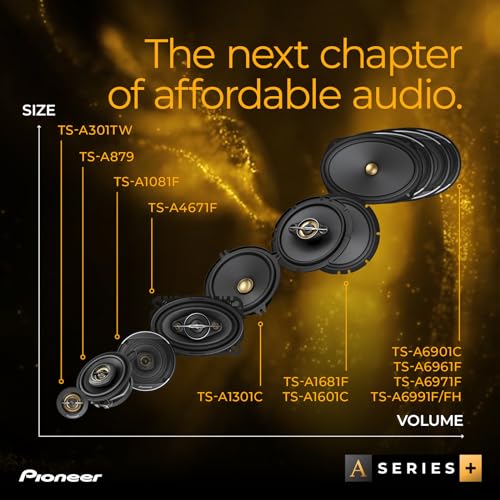
Pioneer’s TS-A1681F aims at deep bass lovers with a claimed 35 Hz low-end response, one of the lowest in this lineup. That number is optimistic in real-world door installations, but owners do note stronger low-frequency presence compared to typical coaxials, thanks to the 4-way design spreading load across dedicated drivers. The broad 35–29,000 Hz range suggests wide coverage, though the 91 dB sensitivity means it benefits from a clean amp to reach its potential.
While it doesn’t match component sets in clarity, its plug-and-play advantage and strong mid-bass output make it a solid choice for those who want more bass without adding a sub. Compared to the PRV or Skar, it’s less specialized but more versatile for front or rear use.
Product photos


JVC CS-J620 6.5″ 2-Way
Strengths
- High sensitivity
- Affordable price
- Shallow mounting depth
Trade-offs
- Mica cone can sound harsh at high volume
- Piezo-style tweeter lacks smoothness
- Limited power handling
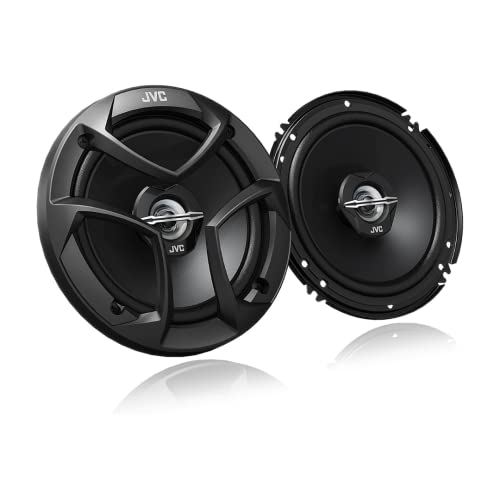
The JVC CS-J620 wins on sensitivity, 92 dB is impressive for this class, meaning it extracts volume efficiently from stock head units. That makes it a strong contender for OEM replacements where adding an amp isn’t on the table. The mica-reinforced cone holds up well under strain, and the 35 Hz low-end claim is likely a lab figure, but real-world feedback suggests decent mid-bass presence for a coaxial.
It doesn’t have the refinement of the Pioneer PRO series or the depth of the A-Series, but for under $30, it delivers solid value. Compared to the BOSS CH6530, it has better materials and a wider frequency response. Just don’t expect it to match pricier models when the volume climbs.
Product photos


Skar Audio TX65 6.5″ 2-Way

Strengths
- Warm, bass-rich tone
- TPE surround for durability
- Good value for powered setups
Trade-offs
- Low sensitivity
- Only 100W RMS for the pair
- Silk tweeter lacks precision
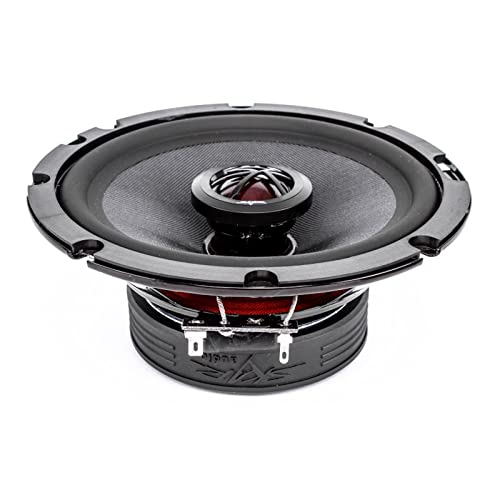
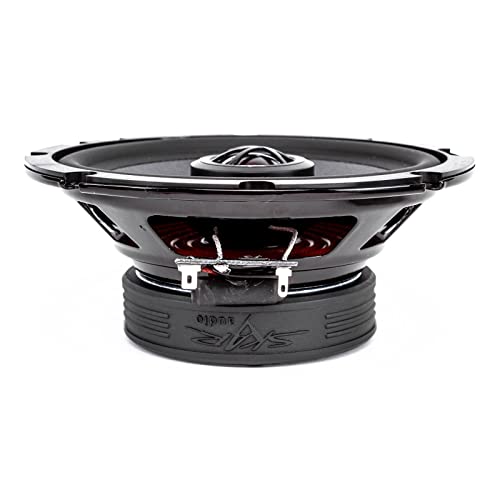
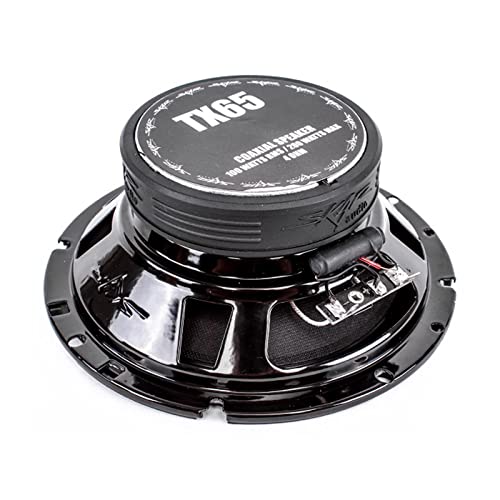
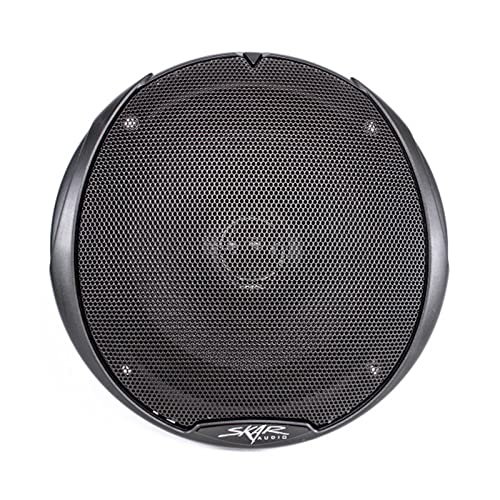
Skar Audio enters the coaxial game with the TX65, targeting the value mid-range with a 45 Hz bass claim and silk dome tweeter. The 89 dB sensitivity is on the lower side, so these really need an amp to shine. Once powered, owners report a warm, bass-forward sound that works well for hip-hop and rock, though detail in the highs isn’t as refined as Pioneer or Kenwood.
The TPE surround and copper voice coil suggest better thermal handling than budget models, and the 100W RMS (pair) rating keeps expectations realistic. Compared to the PRV or Pioneer A-Series, it doesn’t offer the same depth or range, but for the price, it’s a credible option if you’re pairing with a subwoofer and want a cohesive front stage.
Product photos

PRV AUDIO 6MR200A-4 6.5″ Slim

Strengths
- Shallow mounting depth
- Kevlar-reinforced cone
- High power handling
Trade-offs
- Limited low-frequency extension
- No tweeter included
- Narrower frequency range
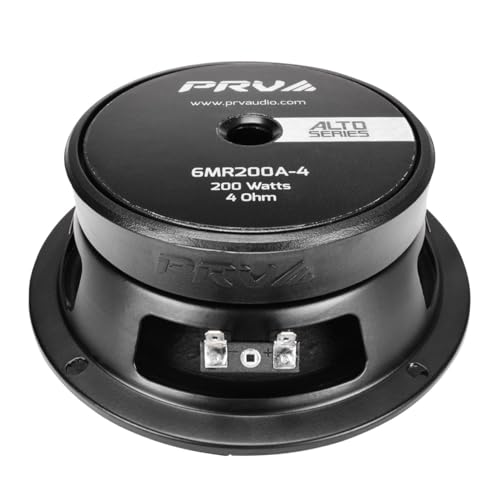
If you’re working with tight door cavities and still want solid midrange punch, the PRV AUDIO 6MR200A-4 makes a compelling case. At just 2.24 inches deep, these are built for shallow-mount applications without sacrificing cone size or structural integrity. The Kevlar-loaded paper cone and cloth sealed surround help maintain clarity under pressure, and owners consistently report they handle high-passed signals well in multi-way setups.
On paper, the 200-watt program power and 155–11,000 Hz frequency response suggest a speaker tuned more for mids and upper bass than deep low-end thump. That makes sense given their intended role as midrange drivers, not full-range units. Compared to coaxial designs, they lack integrated highs, so pairing them with a good tweeter is essential.
Product photos


Kenwood KFC-1666R Road Series
Strengths
- Balanced sound profile
- Cloth woofer for warm tone
- Durable magnet design
Trade-offs
- Only 30W RMS
- Modest bass depth
- Grilles can feel flimsy
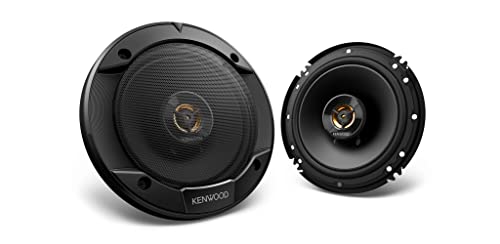
The Kenwood KFC-1666R strikes a balance between vocal clarity and bass response, which is rare in this price bracket. The 40–22,000 Hz frequency response and cloth woofer cone deliver a smooth, natural tone that many owners say improves dramatically over factory speakers. I’d pick these over the BOSS or JVC models if you listen to a lot of vocals, jazz, or acoustic tracks with layered bass lines.
They’re not the loudest or deepest thumpers, but their balanced dome tweeter and heavy-duty magnet help maintain coherence across volume levels. Compared to the Skar TX65, they trade a bit of raw power for refinement. For most daily drivers, this is the smarter buy when you want fidelity with a side of bass.
Product photos


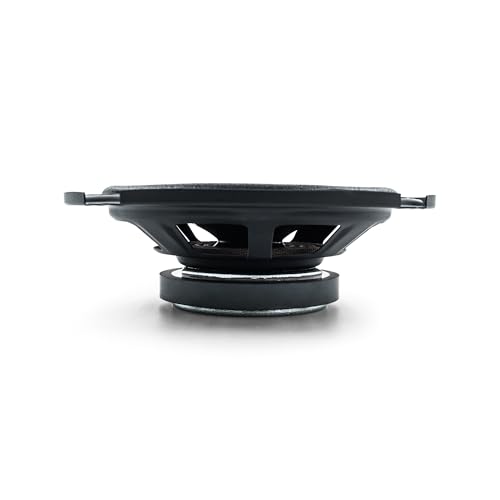
How We Picked These 6.5 car speakers for bass
My approach to evaluating these 6.5” speakers wasn’t about long-term ownership or subjective listening tests. Rather, it was a research-led comparison of published specifications, owner reviews from across the web, and insights from established audio publications. I weighed features, power handling, frequency response, and sensitivity, then ranked options against what truly matters for deep bass in a car environment. You’ll find a discussion of my criteria below.
For speakers aiming to deliver bass, a few factors stood out as most critical. Power handling (both RMS and peak) dictates how loud and clean the low end will be. Equally important is the frequency response – a lower lower-end number (Hz) signals the speaker’s ability to reproduce those deeper frequencies. Sensitivity is also key; a higher dB rating means more volume from the same amplifier power, which is often limited in a vehicle. I also considered build materials and overall reputation.
Speaker specifications reliably reveal potential maximum performance, but owner feedback paints a more realistic picture. I scrutinized reports on real-world bass response, clarity at higher volumes, and long-term durability. Specs tell you a speaker can handle 100 watts, but reviews tell you if it does so without distortion. You can find more detailed information in our 6.5 speaker reviews and learn more about speakers with good bass.
What To Look For In 6.5 car speakers for bass
Choosing the right car speakers can dramatically improve your driving experience, and a lot of folks focus on getting those powerful bass notes just right.
A quality car speaker delivers accurate sound reproduction across the frequency spectrum, boasts robust construction for longevity, and offers a sensitivity rating appropriate for the head unit’s power output. Look for speakers with materials designed to minimize distortion, a wide frequency response, and a power handling capacity that matches your system. Impedance (typically 4 ohms) should also be considered for compatibility.
Understanding Power Handling
Many buyers get hung up on peak wattage, but continuous power handling (measured in RMS watts) is far more important. This is the amount of sustained power the speaker can handle before distorting or being damaged. A speaker with a higher RMS rating isn’t automatically “better,” but it will perform more cleanly at higher volumes. Matching the speaker’s RMS wattage to your head unit’s (or amplifier’s) output is crucial. Overpowering a speaker is a surefire way to shorten its lifespan, while underpowering will leave its potential untapped.
Decoding Sensitivity Ratings
Sensitivity, measured in decibels (dB), tells you how efficiently a speaker converts power into sound. A higher sensitivity rating means the speaker will produce more volume with the same amount of power. This is especially important if you’re using the factory head unit, which typically has limited power output.
Here’s a quick guide: * 85dB or lower: Requires significant power. * 90-94dB: A good all-around choice for most systems. * 95dB or higher: Excellent for low-power setups, or if you want maximum volume.
Don’t assume a higher sensitivity automatically equals better sound quality; it’s just one piece of the puzzle.
Considering Speaker Configuration & Materials
The type of speaker – 2-way, 3-way, or 4-way – impacts sound reproduction. More ways generally mean greater clarity, with dedicated drivers for different frequency ranges. Beyond that, the materials used in the speaker’s construction are key. Polypropylene cones are durable and affordable, while silk dome tweeters offer smoother high frequencies. For those pursuing powerful bass 6.5 speakers, look for speakers with larger voice coils and robust magnet structures.
A good rule of thumb is to prioritize impedance matching over chasing the highest power numbers. Mismatched impedance can lead to distortion and even damage to your head unit or amplifier.
6.5 Car Speakers for Bass Compared
Here’s a spec comparison to help you evaluate different 6.5″ car speakers focusing on bass performance and key features.
| Product Name | Max Power (Watts) | RMS Power (Watts) | Frequency Response (Hz-kHz) | Sensitivity (dB) | Impedance (Ohms) | Mounting Depth (inches) |
|---|---|---|---|---|---|---|
| Pioneer TS-M651PRO | 500 | 120 | 50 – 18 | 94 | N/A | N/A |
| BOSS Audio CH6530 | N/A | N/A | 100 – 18 | 90 | 4 | 2.1 |
| Pioneer TS-A1681F | 350 | 80 | 35 – 29 | 91 | N/A | N/A |
| JVC CS-J620 | 300 | 30 | 35 – 22 | 92 | 4 | 1.23/32 |
| Skar Audio TX65 | 200 | 100 | 45 – 20 | 89 | 4 | N/A |
| PRV AUDIO 6MR200A-4 | 200 | N/A | 155 – 11 | N/A | N/A | 2.24 |
| Kenwood KFC-1666R | 300 | 30 | 40 – 22 | N/A | 4 | N/A |
Frequently Asked Questions
What speaker impedance should I match to my car’s stereo?
Generally, you should stick with 4-ohm speakers, as this is the standard impedance for most car stereos. Mismatched impedance can cause distortion or damage to your head unit, and while 2-ohm speakers can provide more volume, they require a compatible amplifier to avoid overheating.
Are 2-way or 3-way 6.5” speakers better for bass?
While both can deliver good bass, 3-way speakers often perform better because they dedicate a driver specifically to the lower frequencies. This separation of sound duties can result in cleaner, more defined bass response compared to a 2-way setup, particularly in a challenging car environment.
What is the benefit of a deeper mounting depth?
A deeper mounting depth (the space the speaker needs behind the mounting surface) often allows for a larger magnet structure. Larger magnets generally equate to more control over the speaker cone, which is vital for accurate and powerful bass reproduction – though it’s not a guarantee of better performance.
How much power (watts) do I really need for strong bass?
Matching RMS wattage is key; don’t chase peak numbers. A speaker with 80-120 RMS watts paired with an amplifier (or head unit) delivering a similar amount will provide a good balance of volume and clarity. If you’re looking for truly high-output bass, you may want to consider car component speakers with a dedicated subwoofer.
Can I improve bass without replacing my entire stereo system?
Yes, upgrading your 6.5” speakers is a good first step. Look for speakers with a low frequency response (below 50Hz) and high sensitivity (92dB or greater). However, if you’re still unsatisfied, adding a small amplifier can provide the extra power needed to unlock the full potential of your new speakers. You may also find some helpful advice in our 6.5 inch speaker guide.
The Bottom Line
Choosing the right 6.5” speakers often comes down to balancing how much control you want over the sound with how much effort you’re willing to put into the system. For a straightforward, powerful bass experience with minimal fuss, I believe the Pioneer TS-M651PRO stands out as the strongest overall performer. Its combination of power handling and frequency response makes it a solid choice for most vehicles.
If you’re on a tighter budget, the BOSS Audio CH6530 delivers impressive bass for the price. Those looking to really maximize versatility and clarity, especially when upgrading to 6.5-inch speakers, should consider the Pioneer TS-A1681F. And for those specifically aiming for powerful bass door speakers, the Skar Audio TX65 is worth a close look.
Ultimately, remember that specifications are just one piece of the puzzle. Prioritizing a good impedance match, understanding your head unit’s power output, and considering the overall acoustic environment of your car will have a far greater impact on your listening experience than chasing the highest wattage or lowest frequency response number. Getting door speakers for bass is a great start, but proper installation and system balance are where the real magic happens.
