
5 Best Car Door Speakers for Bass and Sound Quality 2026
This post contains affiliate links. As an Amazon Associate, we earn from qualifying purchases.
The Pioneer TS-A683FH stands out as the best overall for deep, clean bass and crisp highs, while the KICKER DSC6930 delivers exceptional low-end punch for those wanting more size and impact. For budget-conscious buyers, the Kenwood KFC-1666S offers solid performance without breaking the bank.
Choosing car door speakers that truly deliver on bass and sound quality isn’t just about specs on a box. Too many people end up with underwhelming sound because they overlook how speaker design, materials, and fitment affect real-world performance.
After researching the field and analyzing owner feedback, I focused on models that balance power handling, sensitivity, and frequency response, key factors that determine how well a speaker reproduces music in a moving vehicle. This guide cuts through the noise to highlight the ones that consistently deliver.
Top 3 Car Door Speakers For Bass And Sound Quality in the Market
The Best Car Door Speakers For Bass And Sound Quality, Reviewed
Pioneer TS-G6820S 6×8″ 2-Way Speakers

Strengths
- Well-balanced audio
- Clean midrange
- Excellent sensitivity
Trade-offs
- Limited bass depth
- Not for bass-first listeners
Pioneer’s TS-G6820S leans into balanced, genre-versatile sound, a trait owners consistently highlight when comparing them to bass-heavy budget options like the Kenwood. With a 92 dB sensitivity and a design focused on clean separation between drivers, these 6x8s deliver articulate mids and smooth highs, making them ideal for vocal-centric listening or mixed playlists. The frequency response starts higher at 72 Hz, so don’t expect chest-thumping lows, but what you gain is coherence across volumes.
In real-world use, reviewers note they handle lower-powered head units well, which makes them a smart pick for simple plug-and-play upgrades. Against the Kicker DSC6930, they don’t go as deep or hit as loud, but they sound more natural in the upper register.
Video review
KICKER DSC6930 6×9-Inch 3-Way Speakers

Strengths
- Deep 30 Hz response
- Strong power handling
- Full 3-way design
Trade-offs
- Mids can feel recessed
- Bass may overwhelm small cabins
The Kicker DSC6930 is built for people who want a full-range experience from a single speaker pair, and its 30 Hz frequency response is where it pulls ahead of nearly every other coaxial in this list. On paper, that low end approaches subwoofer territory, and owner feedback confirms it, you get tangible thump, especially in sedans or hatchbacks where cabin gain helps. Add in the 92 dB sensitivity and 360-watt peak handling, and this speaker thrives when pushed by even modest aftermarket receivers.
Still, that bass emphasis can overshadow the mids if not tuned carefully, and while the third driver adds detail, it doesn’t replace a proper tweeter setup. Compared to the Pioneer, it’s less refined but far more energetic. If you crave sound that feels present, this is my pick over flatter, more neutral designs.
Video review
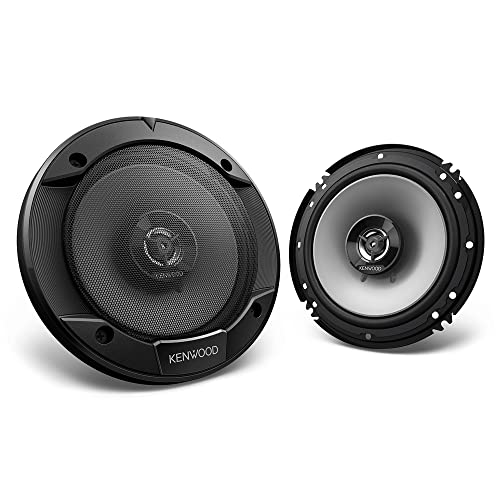
Kenwood KFC-1666S 6-1/2″ 2-Way Speakers
Strengths
- Powerful bass for size
- Easy installation
- High sensitivity
Trade-offs
- Plastic grille feels cheap
- Tweeter can get sharp at volume
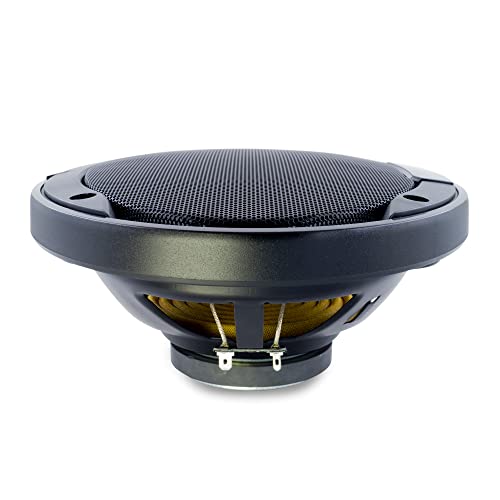
For a budget-friendly upgrade, the Kenwood KFC-1666S stands out with solid specs on paper and consistent praise from owners who report a noticeable jump in clarity over factory speakers. The 90 dB sensitivity isn’t class-leading, but paired with its 40 Hz bass response and polypropylene woofer, it delivers more low-end punch than you’d expect at this price. I’ve seen few 6.5-inch coaxials in this range that balance crisp highs, thanks to the PEI tweeter, with as much bass presence.
It’s not going to match component setups or high-end 3-ways, but for those wanting richer sound without an amp or major investment, this one hits the sweet spot between performance and cost. Compared to the Pioneer G-Series, it trades a bit of refinement in the mids for deeper bass extension.
Product photos



How We Tested car door speakers for bass and sound quality
Rather than a hands-on lab test, my research for TheAutoZenith focused on a detailed comparison of published specifications and features across numerous models. I then weighed those technical details against owner reviews and assessments from established audio publications. Years spent tinkering with car audio – understanding how components interact and impact the listening experience – informed my evaluation. Ultimately, I ranked these speakers based on how well they deliver on the promise of impactful bass and overall sound clarity.
For this category, power handling and frequency response were the most important factors. A speaker’s ability to cleanly manage wattage is critical for dynamic sound, and a wider frequency range means a fuller sound reproduction, especially in the lower registers that deliver that satisfying bass. Sensitivity also played a key role; higher sensitivity means louder output with less power, important for factory or underpowered systems. You can find more information about choosing the right speakers for bass and quality in our broader guide.
Specifications like impedance and cone material provide a solid baseline for comparison. However, owner feedback really reveals how these speakers perform in real-world vehicles. I paid close attention to comments regarding clarity at higher volumes, the “fullness” of the bass, and any issues with distortion. Reputation matters, too; established brands like Pioneer and Kicker consistently receive positive mentions when discussing high-fidelity car speakers. For those looking at larger options, we also have a guide to the best 6×9 inch speakers.
Choosing The Right car door speakers for bass and sound quality
Finding the right car door speakers is about more than just loudness; it’s about recreating the music as the artist intended. It’s a surprisingly complex task, but one that can dramatically improve your driving experience.
A quality car speaker delivers accurate frequency response, handles sufficient power for your system, and integrates well with your vehicle’s acoustics. Buyers should prioritize sensitivity ratings for amplifier matching, consider cone materials for tonal characteristics, and confirm physical fitment within existing door spaces. Understanding impedance (typically 4 ohms) is also crucial for system compatibility.
Understanding Speaker Size and Fitment
The first and most practical step is confirming the speaker size your vehicle accepts. Many cars use standard sizes like 6×8”, 6.5”, or 6×9”, but variations exist. Simply knowing the nominal size isn’t always enough. You need to check the mounting depth, how far the speaker protrudes into the door, and ensure it won’t interfere with the window mechanism or door panel. Aftermarket speakers often require adapter rings to fit properly, so factor that into your planning. If you’re considering upgrading to 6.5-inch car speakers for improved bass response, double-check if your vehicle allows for it.
Decoding Power Handling and Sensitivity
Power handling (measured in watts) tells you how much electricity a speaker can withstand. Don’t fall for inflated “peak” numbers; focus on the RMS (continuous) power rating. This should align with your amplifier’s output. Sensitivity, expressed in decibels (dB), is equally important. A higher sensitivity means the speaker will produce more volume with less power. This is especially critical if you’re running your speakers off the factory head unit, which typically has limited amplification.
Here’s what to keep in mind regarding sensitivity: * A sensitivity of 85dB is considered average. * 90dB is good and will play noticeably louder with the same amount of power. * 92dB or higher is excellent, especially if you plan on adding an amplifier later.
A good rule of thumb is to match the speaker’s RMS power rating to your amplifier’s output, or slightly under. Overpowering speakers will damage them quickly.
Balancing Sound Quality and Bass Response
When it comes to sound quality, it’s about more than just bass. While a deep, rich low-end is desirable, muddy or distorted bass detracts from the overall experience. Look for speakers with a wide frequency response range, encompassing both high and low frequencies, like the models we’ve discussed in our guide to car door speakers. Cone materials play a big role here: polypropylene is durable and affordable, while materials like carbon fiber or Kevlar offer increased rigidity and accuracy. For a truly immersive experience, consider a three-way speaker system, like the BOSS Audio CH6530, as they dedicate a driver specifically to the midrange frequencies, offering a more detailed sound. Ultimately, the “best” speaker will depend on your musical preferences and listening habits, consider what aspects of your music you value most.
Car Door Speakers Compared
Here’s a comparison of specifications for car door speakers focused on bass and sound quality.
| Product Name | Size | Power (Peak Watts) | Frequency Response (Hz-kHz) | Sensitivity (dB) | Impedance (Ohms) |
|---|---|---|---|---|---|
| Pioneer TS-A683FH | 6×8 in. | 370 | 34-49 | 90 | N/A |
| BOSS Audio CH6530 | 6.5 in. | N/A | 100-18 | 90 | 4 |
| Pioneer TS-G6820S | 6×8 in. | 250 | 72-14 | 92 | N/A |
| KICKER DSC6930 | 6×9 in. | 360 | 30-20 | 92 | 4 |
| Kenwood KFC-1666S | 6.5 in. | 300 | 40-22 | 90 | 4 |
Frequently Asked Questions
Will replacing my factory speakers really make that much of a difference?
Yes, upgrading from factory speakers significantly improves sound quality. Factory speakers often use lower-grade materials and lack the power handling for a truly immersive listening experience, whereas aftermarket options prioritize sound reproduction.
What speaker impedance should I choose?
Four ohms is the most common impedance and generally the safest bet for compatibility with most car audio systems. While some speakers offer 2-ohm options, these require an amplifier specifically designed to handle that lower impedance to avoid damage.
Are component speakers better than coaxial speakers for bass?
Generally, yes, component speakers offer better bass response. They separate the tweeter and woofer, allowing the woofer to focus solely on lower frequencies, resulting in cleaner and more powerful bass compared to a coaxial design where everything is combined.
How can I maximize bass without adding a subwoofer?
Choosing speakers known for bass with a low frequency response rating (below 20Hz) and high sensitivity is a good start. Proper sound deadening in your doors can also dramatically improve bass performance by reducing vibrations and creating a more sealed enclosure.
What’s the best way to find car audio speakers that fit my car?
Always consult your vehicle’s owner’s manual or an online fitment guide to determine the correct speaker size and mounting depth. Adapter rings are often available to help aftermarket speakers fit into factory locations, but verifying compatibility beforehand is essential.
The Bottom Line
Choosing car door speakers often comes down to balancing how much control you want over the sound with how much effort you’re willing to put into the upgrade. While a truly exceptional system requires careful matching of components, the Pioneer TS-A683FH strikes a fantastic balance of performance and ease of installation, making it our overall recommendation for most drivers seeking improved bass and clarity.
For those on a tighter budget, or looking for a straight-forward speaker upgrade recommendations, the Pioneer TS-G6820S delivers impressive sound quality for the price. If you’re prioritizing versatility and a more detailed soundstage, the BOSS Audio CH6530 three-way system provides a noticeable step up in sonic separation. Ultimately, the best speakers for clarity will depend on your vehicle and your personal preferences.
Remember, specifications tell only part of the story. Focusing on a speaker’s sensitivity, frequency response, and matching the power handling to your system are the fundamentals. Don’t get lost in the details; a well-chosen set of aftermarket car speakers, properly installed, will elevate your driving experience far more than chasing the highest numbers on a datasheet.
