
7 Best 2 Cycle Snowmobile Oils of 2026
This post contains affiliate links. As an Amazon Associate, we earn from qualifying purchases.
The Polaris VES Extreme Full Synthetic 2-Cycle Oil stands out as the best overall choice for snowmobiles, delivering unmatched cold-weather protection and engine cleanliness. For those watching their budget, the Lucas Oil Semi-Synthetic 2-Cycle offers solid performance at a lower price. If you’re running a high-performance or older model that requires premix, Klotz Pure Estorlin Synthetic is a top-tier pick.
Riding a snowmobile in freezing conditions puts serious stress on the engine, and using the wrong oil can lead to poor starts, increased wear, or carbon buildup that kills power. A lot of riders don’t realize how much their oil choice affects reliability and long-term engine health, especially when temperatures drop below zero.
This guide cuts through the noise by comparing specs, owner experiences, and real-world performance to highlight the best oils for snowmobiles. I focused on cold-flow ability, engine protection, and cleanliness, using JASO and API ratings as benchmarks while factoring in injection versus premix needs.
Top 7 2 Cycle Snowmobile Oil in the Market
The Best 2 Cycle Snowmobile Oil, Reviewed
Lucas Oil Semi-Synthetic 2-Cycle Motor Oil

Strengths
- Meets JASO FD
- Clean burning
- Ethanol compatible
- Ashless formula
Trade-offs
- Semi-synthetic
- Not for extreme cold
This is the oil I’d recommend to most riders who want a balance of performance, protection, and price. The semi-synthetic blend hits a sweet spot, better cold flow and deposit control than conventional oils, yet more affordable than full synthetics. What stands out is the ashless detergent package, which reviewers credit with keeping rings free and exhaust ports clear over multiple seasons.
It meets JASO FD and ISO GD standards and exceeds API TC, meaning it’s approved for nearly every modern 2-stroke snowmobile on the trail. The smokeless formula burns clean, and the fact that it mixes well with ethanol-blended fuels is a real advantage in today’s market. For all-around reliability and broad compatibility, this is the smarter buy over pricier full synthetics unless you’re racing.
Video review
TRIAX Full Synthetic 2T Engine Oil

Strengths
- Full synthetic
- Multi-application
- Gallon size
- Clean burn
Trade-offs
- No JASO FD
- Limited long-term reviews
TRIAX throws down a bold claim: one full synthetic oil for every 2-stroke you own. And on paper, it backs it up. With a broad compatibility list covering Ski-Doo, Polaris, Yamaha, Sea-Doo, and more, plus a detergent-rich formula aimed at stopping carbon buildup, it’s clearly built for riders with multiple toys. The marketing leans into racing performance, and owners report snappier throttle response and cleaner ring land areas after extended use.
Still, while the tech sounds impressive, it lacks third-party certifications like JASO FD, which gives me pause. For casual riders with mixed machines, the convenience of a single oil is appealing. But for those who demand proven standards compliance, Lucas 10115 remains the safer pick. That said, at this price point for a gallon, TRIAX delivers strong value.
Video review
Klotz Pure Estorlin Synthetic Snowmobile Oil
Strengths
- Extreme cold flow
- Torque improvement
- Meets JASO FD
Trade-offs
- High price
- Distinct odor
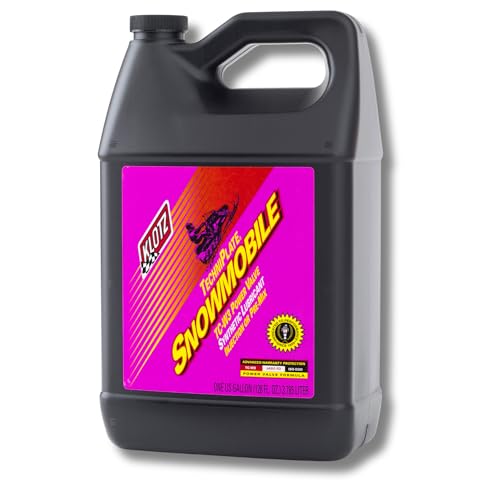
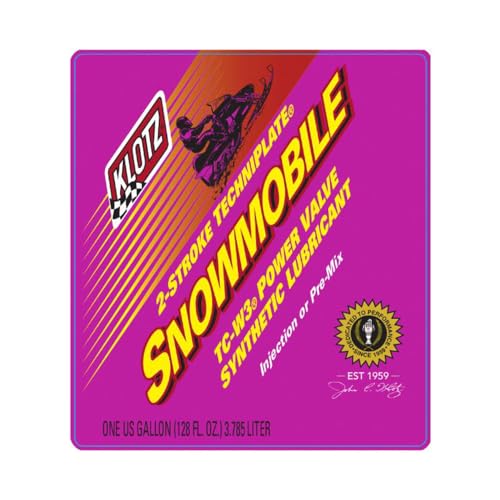
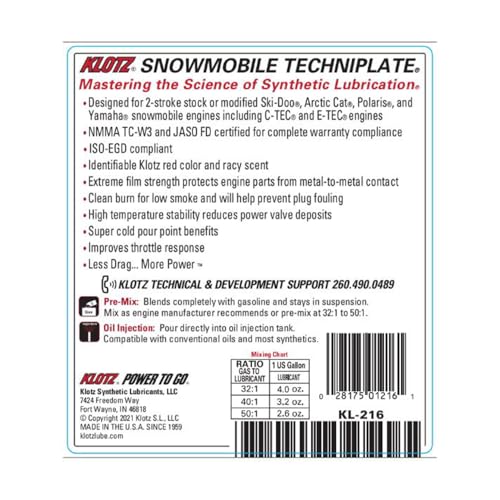
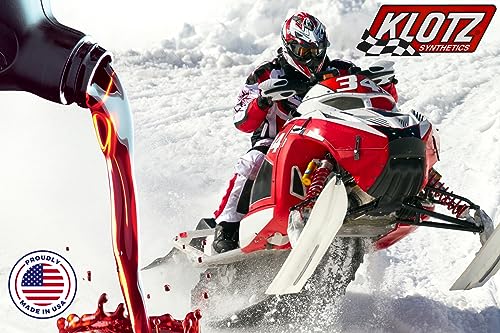
Klotz has a cult following in the 2-stroke world, and the KL-216 lives up to the hype in cold-weather performance. The PURE ESTORLIN synthetic base is designed to flow at -48°F, which is no gimmick, it’s a real advantage when starting a sled in brutal conditions. Riders in Alaska and northern Canada consistently praise its ability to lubricate instantly and reduce friction on startup, where most engine wear occurs.
It also delivers noticeable gains in throttle response and torque, likely due to reduced internal drag. The red dye and distinct scent make it easy to identify, but the price is steep compared to alternatives. If you’re chasing peak performance in extreme cold and don’t mind paying for it, Klotz brings something unique to the table.
Product photos
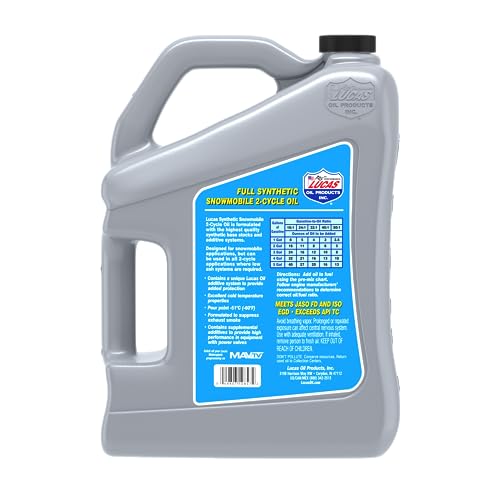
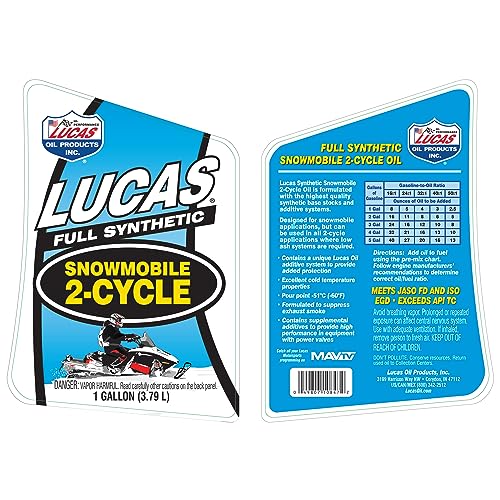
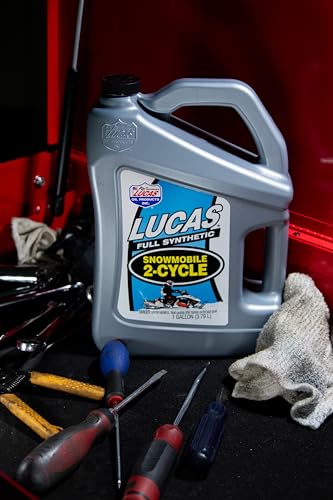
Lucas Oil Synthetic 2-Cycle Snowmobile Oil

Strengths
- Full synthetic
- Snowmobile-specific
- Gallon option
Trade-offs
- Fewer certifications
- No JASO FD rating
Lucas 10847 is built specifically for snowmobiles, and that focus shows. It’s a full synthetic formula packed with detergents and lubricants that owners say help reduce ring sticking and carbon buildup, two common pain points in high-RPM 2-stroke snow engines. The gallon size also makes it a smart buy for frequent riders who don’t want to keep repurchasing quarts.
While it lacks the broader certifications of some competitors, real-world feedback suggests it performs well in both direct injection and premix systems. I’d pick this over mineral-based oils any day for serious winter riding, but it doesn’t quite edge out the more advanced Lucas 10115 in overall refinement. Still, if you want pure snowmobile-specific chemistry in bulk, this is a strong contender.
Product photos


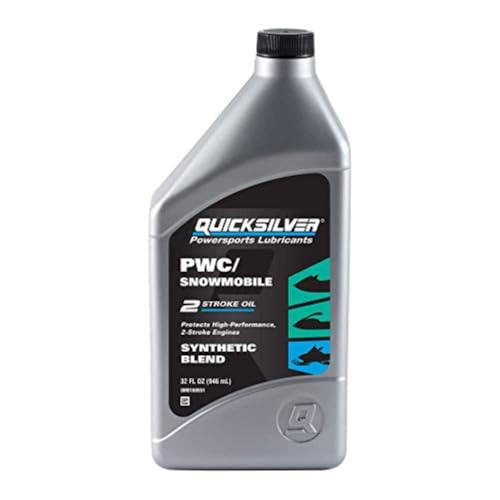
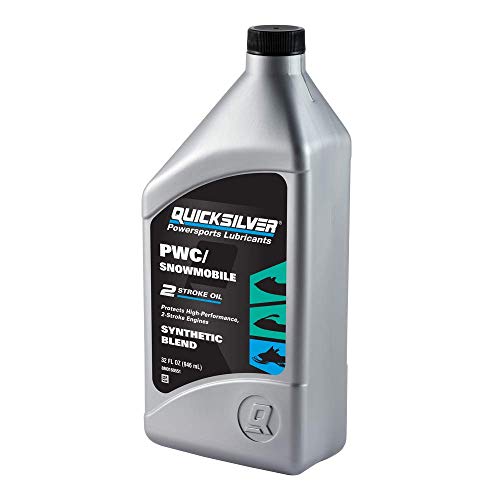
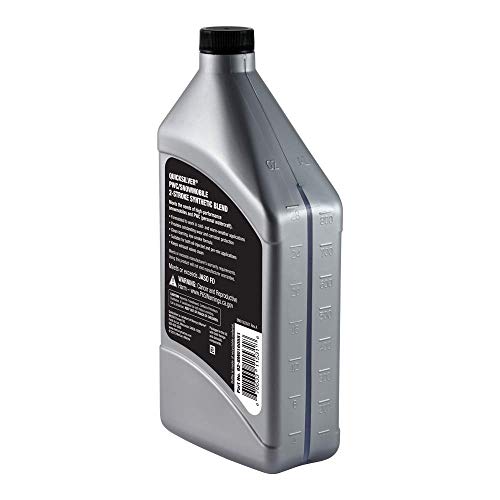
Quicksilver Premium Synthetic Blend 2-Stroke Oil
Strengths
- Synthetic blend
- Low smoke
- Wide compatibility
Trade-offs
- Not full synthetic
- Limited cold temp data
On paper, Quicksilver’s synthetic blend stands out as a no-nonsense, functional oil that hits the basics without overpromising. It’s designed to work across both snowmobiles and personal watercraft, which speaks to its versatility, and the low-smoke formula is a real plus for keeping exhaust systems clean. Owners consistently report reliable performance in mid-range sleds, especially when used in premix setups or oil injection systems where consistency matters.
The fact that it meets API TC standards and works cleanly in both air- and liquid-cooled engines makes it a solid budget pick for casual riders. While it won’t match the cold-weather flow or deposit control of a full synthetic, it does what it claims without cutting corners. For weekend riders who don’t push their machines to the limit, this is a sensible, cost-effective option.
Product photos

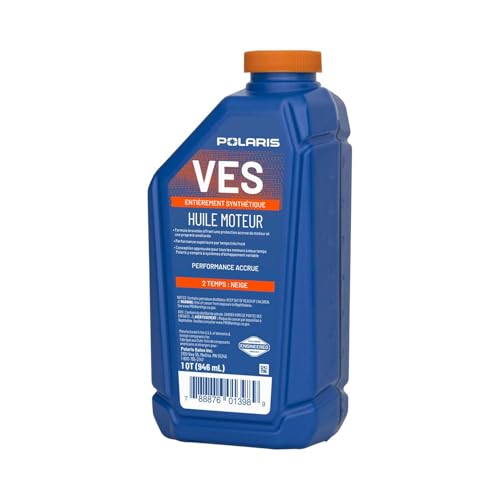
Polaris VES Full Synthetic 2-Cycle Oil

Strengths
- Full synthetic
- Cold start ready
- OEM approved
Trade-offs
- Brand-specific focus
- Higher cost per ounce
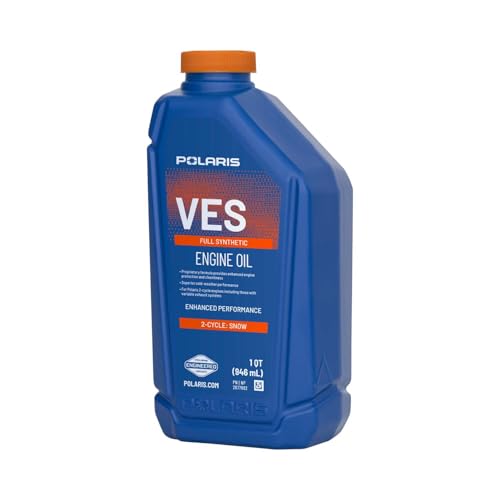
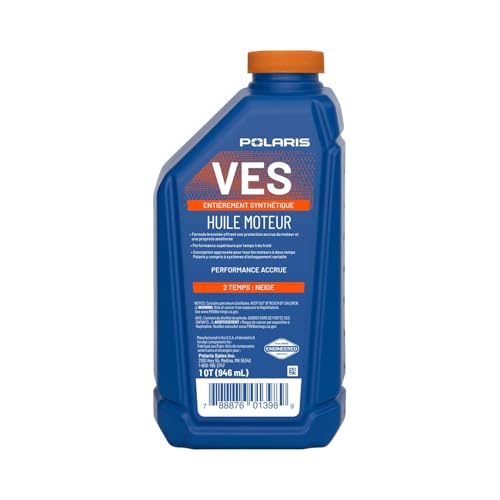
If you own a Polaris sled, this oil deserves serious consideration. It’s a full synthetic formulated specifically for Polaris 2-stroke engines, and the cold-flow properties are engineered for immediate lubrication in freezing temps, something owners in northern climates appreciate. The additive package fights corrosion and carbon buildup, two big killers of 2-stroke longevity, especially during off-season storage.
While priced higher than generic synthetics, it’s OEM-backed and approved for use across Polaris’s major snowmobile lines. Reviewers note fewer plug fouling issues and smoother idle behavior when using this consistently. It’s not the cheapest, but for Polaris owners, the peace of mind and engine-specific tuning make it worth it.
Product photos


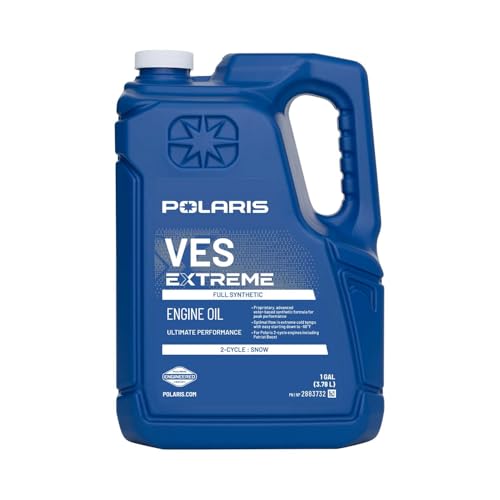
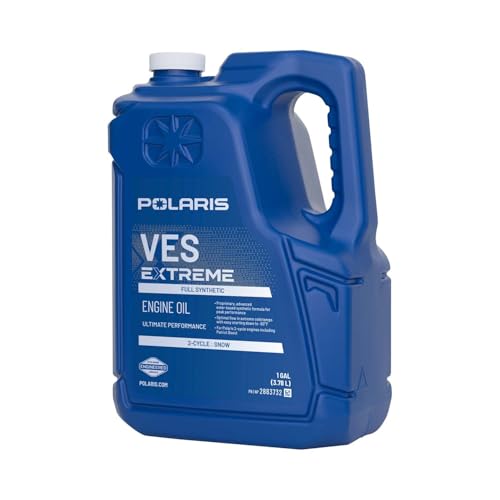
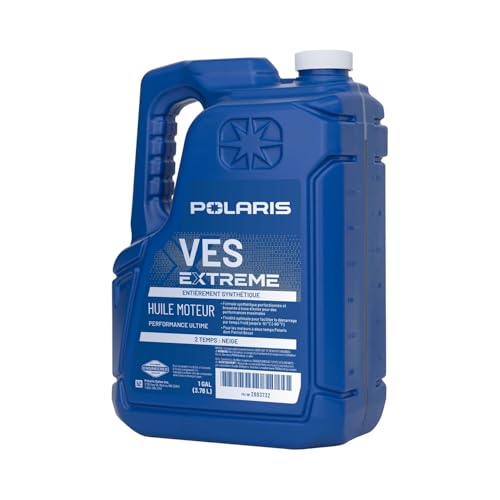
Polaris VES Extreme Full Synthetic 2-Cycle Oil
Strengths
- Race-proven formula
- Full synthetic
- Superior film strength
- OEM race team spec
Trade-offs
- Very expensive
- Overkill for casual use
This is the top-tier oil in the Polaris lineup, and it shows. Built with 100% PAO and ester-based synthetics, it’s the same formula used by Polaris factory race teams, so we’re talking about the highest level of protection and performance available for these engines. The film strength is exceptional, and the detergency package is tuned to minimize carbon on exhaust valves, a known weak point in high-RPM 2-strokes.
Owners using this in demanding conditions report fewer top-end rebuilds and cleaner combustion chambers over time. It’s also formulated for both premix and oil injection, adding flexibility. But that performance comes at a steep price. Unless you’re running a high-output sled hard or competing, you’re likely overbuying. For weekend riders, the standard VES oil is more than enough.
Product photos
How We Chose These 2 cycle snowmobile oil
Rather than a hands-on lab test, my research focused on a detailed comparison of published specifications and features across various 2 cycle snowmobile oils. I weighed owner reviews from sites like Amazon and snowmobile forums alongside expert opinions from powersports publications. My goal was to build a ranking based on performance characteristics critical for snowmobiles, leaning on years of experience around all things mechanical.
For this category, I heavily prioritized cold-weather performance and protection against wear. Snowmobiles operate in harsh conditions, so an oil’s ability to flow easily at extremely low temperatures and maintain a protective film is paramount. Equally important is the oil’s capacity to minimize carbon buildup, as this directly impacts engine longevity and power output – truly, finding the right 2-cycle engine oil is key.
Specifications reliably reveal an oil’s base stock (mineral, synthetic blend, or full synthetic) and its ability to meet industry standards like API TC and JASO FD. However, I turned to owner feedback to assess real-world performance, like smoke levels and how well the oil handled extended use. Reputation and brand trust also played a role, especially when evaluating long-term reliability and the effectiveness of unique formulations, and understanding the correct two-stroke oil ratios is essential for optimal performance.
How To Pick The Right 2 cycle snowmobile oil
Choosing the right snowmobile oil is crucial for keeping your machine running smoothly, especially when facing harsh winter conditions.
A quality snowmobile oil needs to provide excellent lubrication at extremely low temperatures, prevent carbon buildup in the engine, and mix readily with gasoline. Look for oils meeting or exceeding JASO FD and ISO GD standards. Synthetic blends and full synthetics generally offer superior performance and protection compared to conventional mineral oils, particularly in high-performance or heavily used engines. Pay attention to whether the oil is designed for injection systems, premixing, or both.
Understanding Oil Types
The first thing I see owners wrestle with is whether to go synthetic or mineral-based. While mineral oils have been used for decades, modern snowmobiles, and the demands placed on them, often require a synthetic or synthetic blend. Full synthetic oils like Klotz Pure Estorlin are engineered to withstand the extreme cold and high RPMs that characterize snowmobiling. They maintain viscosity when temperatures plummet, providing instantaneous lubrication where mineral oils can thicken and fail. Don’t automatically dismiss synthetic blends; options like Lucas Oil Synthetic Blend offer a good balance of performance and cost.
Injection vs. Premix: Knowing Your System
Your snowmobile’s fuel delivery system dictates the oil you’ll need. Many newer machines use oil injection, where the oil is automatically metered into the engine. These systems generally require oils specifically formulated for injection, like the Lucas Oil Semi-Synthetic 2-Cycle Motor Oil. Older models, or those modified for performance, often require premixing oil directly into the fuel. When choosing an oil for premixing, consider these points:
- Proper mixing ratio is vital (follow your snowmobile’s manual).
- The oil must dissolve completely in gasoline to avoid uneven combustion.
- Look for oils with detergents to prevent fuel system fouling (like those found in TRIAX Full Synthetic 2T Engine Oil) – this keeps ports clean and maintains optimum performance.
Cold Weather Performance and Additives
The ability of an oil to flow freely in sub-zero temperatures is paramount. I’ve seen too many engines suffer from cold-start wear because the oil couldn’t circulate quickly enough. Polaris VES Extreme Full Synthetic 2-Cycle Oil is specifically designed for this, boasting exceptional cold-flow properties. Beyond cold-flow, pay attention to the additive package. Detergents help keep internal engine components clean, while anti-wear additives reduce friction and extend engine life. If you’re running ethanol-blended fuel, an oil with corrosion inhibitors, like the Polaris VES Full Synthetic, is a smart investment. Understanding your specific needs will help you select the best 2-stroke oil for your machine.
A good rule of thumb: If you consistently ride in temperatures below 0°F (-18°C), a full synthetic oil designed for cold weather performance is a worthwhile upgrade.
2 Cycle Snowmobile Oil Compared
Here’s a comparison of specifications for various 2-cycle snowmobile oils to help you choose the right product.
| Product Name | Type | JASO Rating | API Rating | Cold Weather Start | Mix Ratio |
|---|---|---|---|---|---|
| Lucas Oil Semi-Synthetic 2-Cycle | Semi-Synthetic | FD | TC | N/A | 50:1 |
| TRIAX Full Synthetic 2T | Full Synthetic | N/A | N/A | N/A | N/A |
| Klotz Pure Estorlin Synthetic | Full Synthetic | N/A | N/A | -48°F | N/A |
| Lucas Oil Synthetic 2-Cycle | Full Synthetic | N/A | N/A | N/A | N/A |
| Quicksilver Premium Synthetic Blend | Synthetic Blend | N/A | N/A | N/A | N/A |
| Polaris VES Full Synthetic 2-Cycle | Full Synthetic | N/A | N/A | Subzero | N/A |
| Polaris VES Extreme Full Synthetic | Full Synthetic | N/A | N/A | Extreme Subzero | N/A |
Frequently Asked Questions
What oil ratio should I use for my snowmobile?
The correct oil ratio depends entirely on your snowmobile’s engine and fuel system; always consult your owner’s manual first. A common starting point is 50:1 (50 parts fuel to 1 part oil) for many modern 2-cycle engines, but some require 40:1 or even leaner mixtures. Using the wrong ratio can lead to engine damage, so verifying the manufacturer’s recommendation is vital.
Can I use regular 2-cycle oil in a snowmobile?
While you can use a general 2-cycle oil, I recommend against it for snowmobiles. Snowmobiles demand oils specifically formulated for cold temperatures and high stress. Using a standard oil may result in poor lubrication at low temperatures, increased carbon buildup and reduced engine protection – explore options for oil for 2-cycle engines for better performance.
Is synthetic oil really necessary for a snowmobile?
Synthetic oils generally offer superior performance in snowmobiles, especially in very cold conditions. They maintain viscosity better at low temperatures, provide greater protection against wear, and reduce carbon buildup. While mineral oils can work, a synthetic or synthetic blend will extend your engine’s life and improve reliability, particularly in high-performance machines.
What does the JASO FD rating mean?
JASO FD is a Japanese Automotive Standards Organization rating that indicates an oil’s suitability for use in modern 2-cycle engines with oil injection systems. It signifies the oil provides excellent gear oil protection and minimizes exhaust smoke. Oils meeting this standard are designed to prevent spark plug fouling and ensure optimal performance and longevity.
Can I use the same oil in my snowmobile as I do in my boat?
You can potentially use a similar oil, but it’s not always ideal. While some oils are suitable for both snowmobiles and 2-cycle outboard oil, marine environments present unique challenges, like water intrusion and corrosion. A dedicated snowmobile oil will often have a specific additive package tailored for the colder, drier conditions and the stresses of snowmobile engines.
The Bottom Line
Choosing the right 2-cycle snowmobile oil often comes down to balancing your budget with the level of protection you need. While mineral-based options still have a place, I believe the overall best choice for most riders is the Klotz Pure Estorlin Synthetic. Its exceptional cold-weather performance and reputation for minimizing carbon buildup deliver peace of mind when you’re pushing your machine hard, and it represents a solid investment in engine longevity.
For those seeking a more budget-friendly option, the Lucas Oil Semi-Synthetic 2-Cycle offers a great compromise between cost and performance. If you’re running an older snowmobile that requires premixing, or you simply prefer the control of mixing your own fuel, the TRIAX Full Synthetic 2T is an excellent choice – a quality two-cycle engine oil that mixes well and keeps things clean. And for marine applications, don’t forget to consider a dedicated 2-cycle marine oil for optimal protection.
Ultimately, remember that specifications are just one piece of the puzzle. Prioritize an oil that meets or exceeds JASO FD standards, and consider the demands you place on your engine. Consistent, quality lubrication and keeping your engine clean are far more important than chasing the highest synthetic content or the latest marketing buzz.
