
8 Best 2 Cycle Oil Mixes of 2026
This post contains affiliate links. As an Amazon Associate, we earn from qualifying purchases.
The best 2 cycle oil mix is STIHL Ultra Fully Synthetic, hands down for high-performance tools. For budget-minded users, the Briggs & Stratton Easy Mix offers solid protection with foolproof measuring. If you need versatility across brands and tools, Pennzoil Premium Multi-Purpose is a strong all-rounder.
Choosing the wrong 2 cycle oil mix can lead to poor performance, fouled plugs, or even engine damage, especially when you’re juggling different equipment with varying requirements. As someone who’s spent years deep in small engine mechanics, I know how confusing the options can be.
This guide cuts through the noise. I compared top oils based on specs, owner feedback, and real-world reliability, focusing on lubrication quality, smoke output, and ease of use to help you pick the right mix for your gear.
Top 8 2 Cycle Oil Mixes in the Market
The Best 2 Cycle Oil Mixes, Reviewed
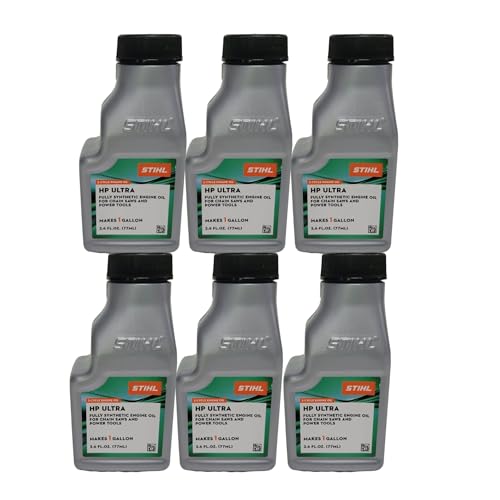
STIHL Ultra Fully Synthetic 2-Cycle Oil
Strengths
- Full synthetic formula
- Highly biodegradable
- Excellent cleaning action
Trade-offs
- Highest price point
- Overkill for light-duty users
This is the oil I’d pick if I were running high-RPM, air-cooled engines hard and often. As a full synthetic, it delivers superior lubrication at high temps, and owners of professional-grade chainsaws and brush cutters consistently praise its ability to prevent piston damage and keep ports clean. The biodegradability is a bonus in trail or forest work where environmental impact matters.
It meets the highest JASO FD standards, and its cleaning properties stand out, fewer clogged exhausts, fewer spark plug issues. Yes, it’s the most expensive here, but for anyone pushing equipment to its limits, the protection justifies the cost. It’s also safe at both 50:1 and 40:1 ratios, adding flexibility.
Video review
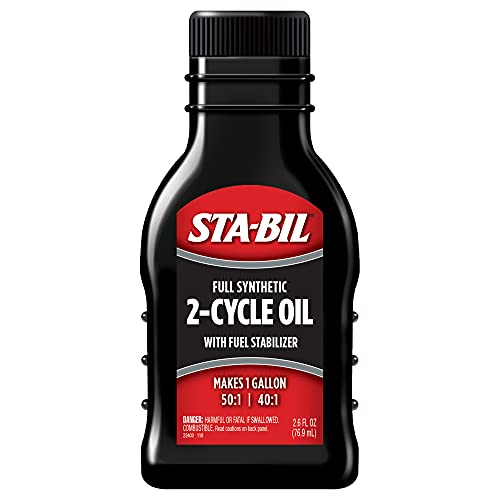
STA-BIL Full Synthetic 2-Cycle Oil
Strengths
- Full synthetic at low cost
- Includes fuel stabilizer
- Low smoke formula
Trade-offs
- Single-use only
- Not cost-effective for multiple tools
At this price, a full synthetic oil feels like a steal. STA-BIL packs full synthetic performance into a single 2.6 oz dose, and it includes a fuel stabilizer that keeps gas fresh for up to a year, perfect for seasonal gear like leaf blowers or snow throwers. The low-smoke formula also means cleaner startups after months in storage.
It uses multi-mix technology, so it’s safe at both 40:1 and 50:1, adding flexibility. However, because it’s a single-use bottle, it’s not economical for frequent users. And while the oil performs well, the tiny volume means you’ll go through multiple bottles fast if you’ve got more than one tool.
Video review
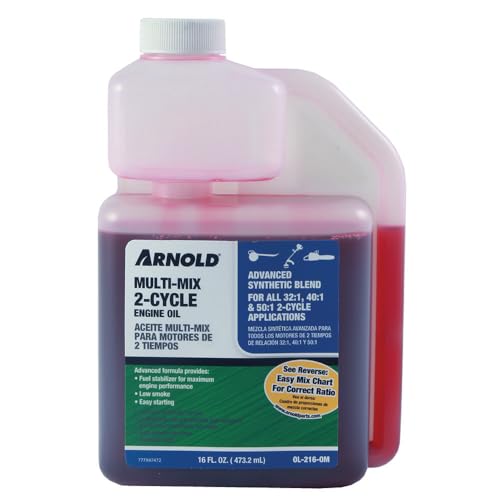
Arnold 2-Cycle Engine Oil 16 oz
Strengths
- Large 16 oz volume
- Multiple mix ratios
- Affordable per ounce
Trade-offs
- Basic mineral oil
- Fewer performance additives
This 16 oz bottle offers serious value, especially if you’re mixing fuel regularly across multiple tools. The Tip N Measure spout is practical, no more guessing with funnels or separate measuring cups. It handles 32:1, 40:1, and 50:1 ratios, which covers nearly every two-stroke engine on the market.
Owners report solid performance in everyday gear like trimmers and blowers, though it’s not marketed as high-performance or fully synthetic. It lacks the cleaning additives found in premium oils, so it’s not the best choice for high-output engines. But for basic maintenance and casual use, it gets the job done without breaking the bank.
Product photos
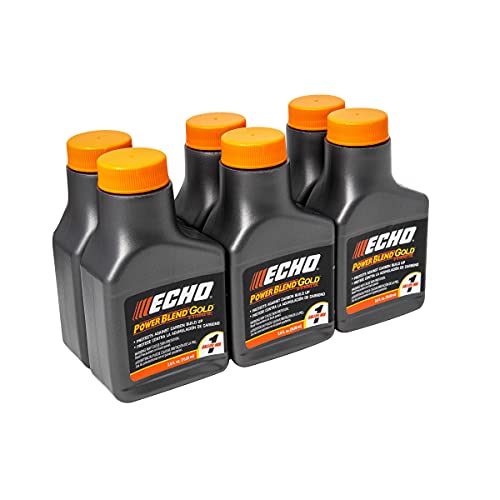
Echo Power Blend Gold Semi-Synthetic Oil
Strengths
- Semi-synthetic blend
- Fuel stabilizer included
- Low smoke formula
Trade-offs
- Not fully synthetic
- Slightly higher price than budget picks
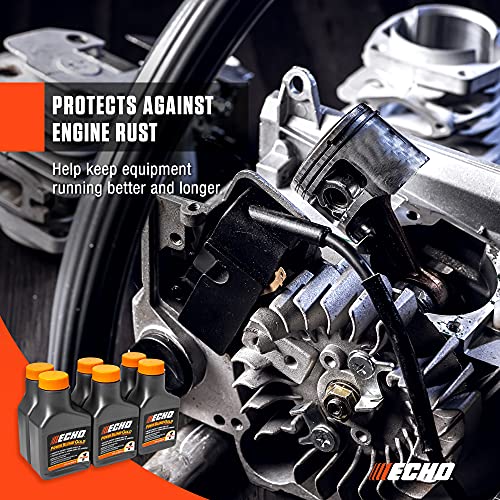
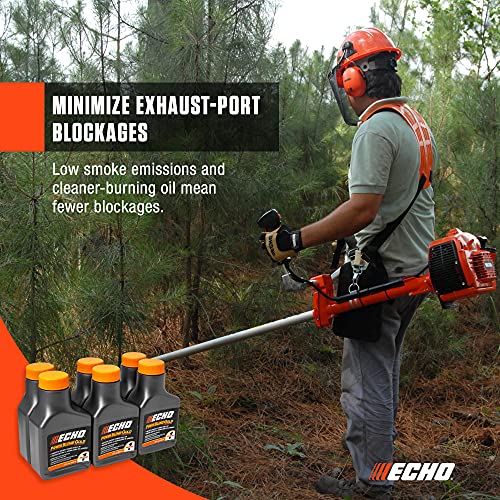
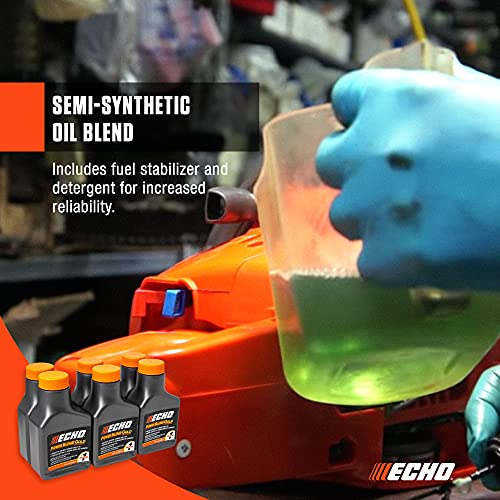
This semi-synthetic oil checks the right boxes for riders and operators who want clean-running performance without stepping up to full synthetic. The 50:1 ratio is standard across most modern two-stroke gear, and owners consistently report fewer carbon deposits and smoother startups, especially in colder conditions. Its inclusion of a fuel stabilizer is a real plus for seasonal equipment users.
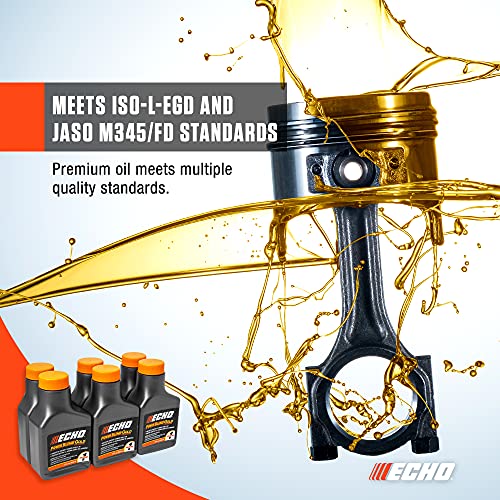
On paper, it meets ISO-L-EGD and JASO M345/FD standards, which means it’s been third-party vetted for detergency and piston cleanliness, critical for avoiding scuffing in high-RPM engines. It’s not the priciest, but it’s formulated to outperform basic mineral oils, particularly in preventing rust during storage.
Product photos
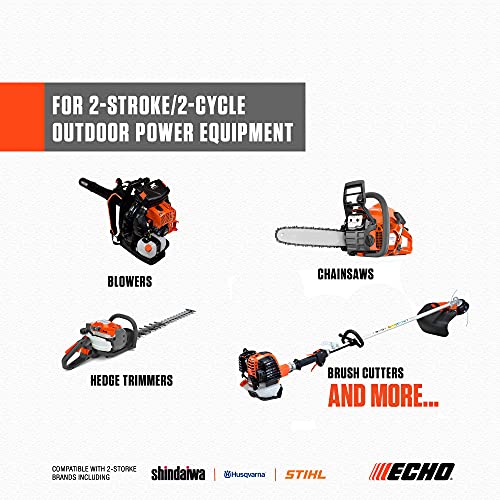
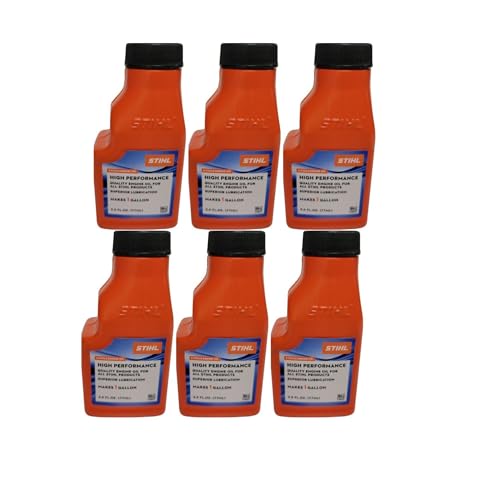
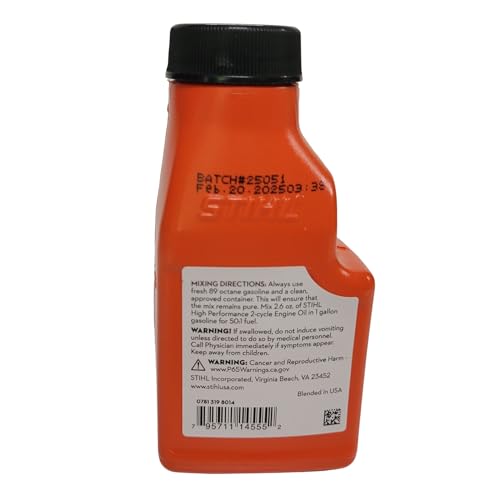
STIHL High Performance 2-Cycle Oil 2.6 oz
Strengths
- Trusted by Stihl users
- Reliable under load
- Clean combustion
Trade-offs
- Mineral-based formula
- No biodegradability
- Smaller volume per pack
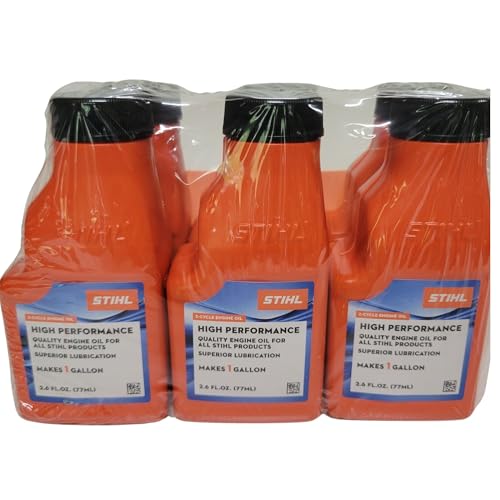
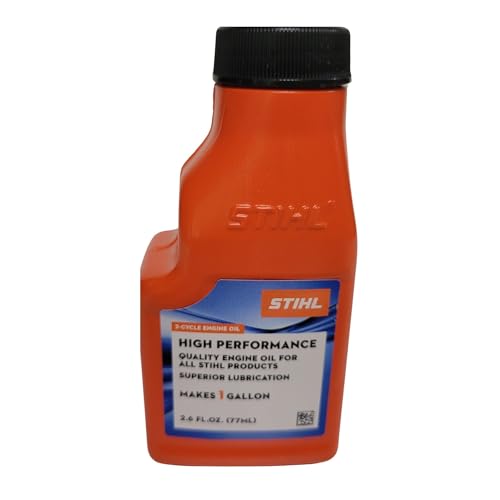
Stihl’s standard high-performance oil is a solid match for their own gear, especially chainsaws used in frequent or heavy cutting. It’s mineral-based with performance additives, and reviewers commonly note dependable lubrication and consistent engine response under load. It’s not biodegradable like their Ultra version, but it’s proven in real-world forestry and land-clearing work.
While it’s labeled for all Stihl products, it works well in other brands too. The 2.6 oz single-gallon dose is convenient, but if you’re maintaining multiple tools, the lack of a larger container option adds cost over time. It doesn’t clean as aggressively as full synthetics, so it’s better for routine use than deep maintenance cycles.
Product photos
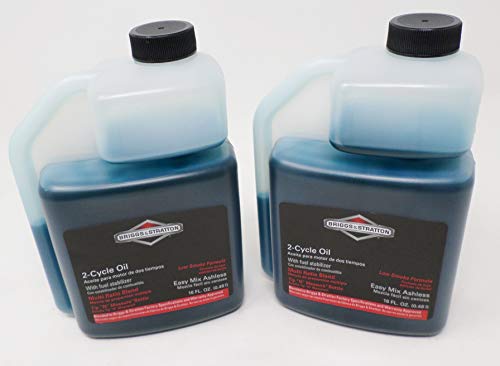
Briggs & Stratton Easy Mix 2-Cycle Oil
Strengths
- Trusted brand for lawn gear
- Two 16 oz bottles
- Easy-pour spout
Trade-offs
- Mineral-based formula
- Limited to lawn equipment use
This twin-pack of 16 oz bottles is a no-frills, reliable option for lawn-focused two-stroke engines. The tip-and-measure spout works well, and Briggs has a long history with small engines, so there’s trust in the formulation. It’s designed for brands like Toro and Lawn-Boy, and owners report smooth operation and no plug fouling with regular use.
It’s a mineral-based oil, so it doesn’t offer the high-temp protection of synthetics, but for mowers, trimmers, and blowers used in moderate conditions, that’s usually enough. The two-pack helps stretch value, though it lacks the eco-credentials or cleaning power of premium synthetics.
Product photos
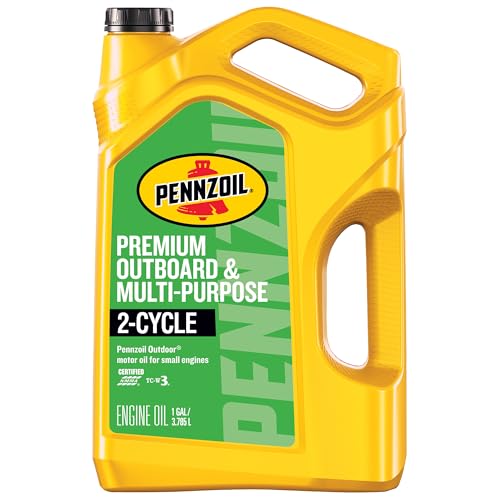
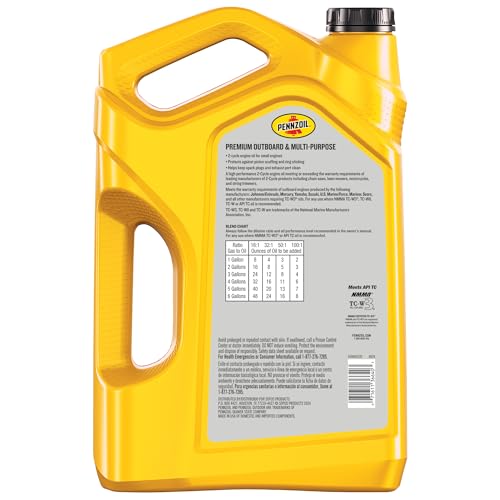
Pennzoil Premium Multi-Purpose 2-Cycle Oil
Strengths
- Multi-application use
- Large 1-gallon size
- Excellent flow for oil injection
Trade-offs
- Not eco-labeled
- Bulky for occasional users
If you’ve got a garage full of different two-stroke gear, from a string trimmer to a dirt bike to a small outboard, this gallon jug makes life easier. It’s formulated to cover a broad range of applications, and owners report it works reliably across the board, especially in oil-injected systems where consistent flow is critical.
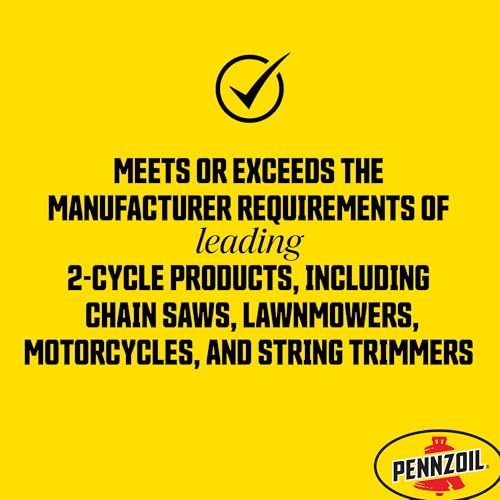
The fact that it meets or exceeds specs for big brands means you’re not gambling on compatibility. It helps prevent ring sticking and piston scuffing, which are common failure points in air-cooled engines. At a gallon, it’s also cost-effective over time. Just note it’s not specifically labeled as biodegradable, so avoid using it in sensitive waterway areas.
Product photos

Power Performance Premium 2-Cycle Oil 16oz

Strengths
- Excellent measuring markings
- Semi-synthetic blend
- Clear dosage indicators
Trade-offs
- No fuel stabilizer
- Limited brand recognition
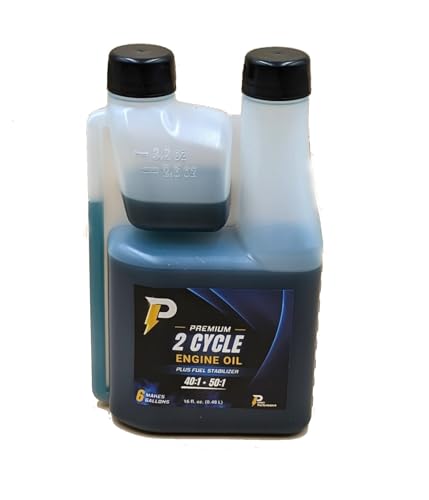
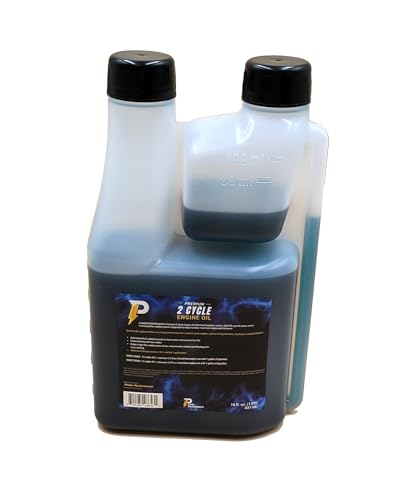
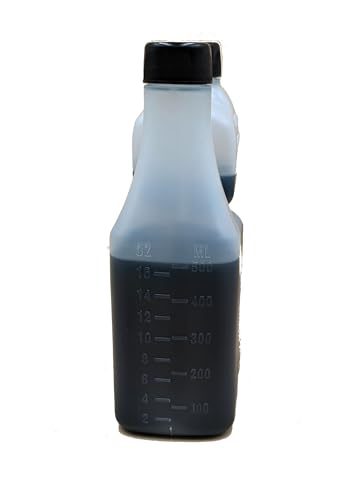
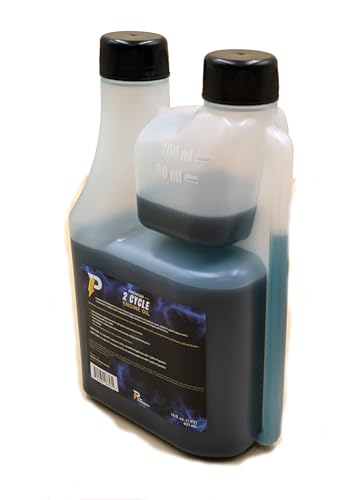
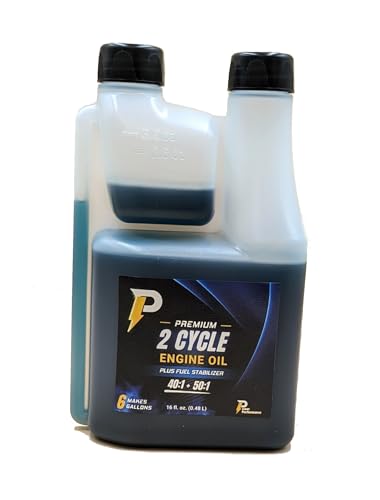
The standout here is the bottle design, clear, precise markings for both 2.6 oz (50:1) and 3.2 oz (40:1), plus mL indicators, make it nearly foolproof. For anyone tired of messy pours or miscalculated ratios, this is a small but meaningful win. It meets JASO FD specs, so it’s not just about convenience, it delivers real performance with decent detergency and lubrication.
It’s a semi-synthetic formula, so it runs cleaner than basic oils, and users report fewer plug fouling issues. The 16 oz size offers decent longevity, though it doesn’t include fuel stabilizer like some competitors. Still, the measuring clarity alone makes it a smart pick for beginners or anyone managing multiple tools with different ratio requirements.
Product photos
How We Chose These 2 cycle oil mixes
Rather than a hands-on lab test, my research focused on a detailed comparison of published specifications and features across numerous 2-cycle oil mixes. I weighed owner reviews from various sources, alongside assessments from reputable automotive and outdoor power equipment publications. This allowed me to build a ranking based on real-world feedback and established performance metrics, applying my experience with small engine mechanics to interpret the data.
For this category, I prioritized lubrication quality and smoke reduction most heavily. Superior lubrication directly impacts engine longevity and performance, especially in demanding applications. Low smoke formulations benefit both the operator’s experience and the environment, and indicate a cleaner-burning, more efficiently formulated product. Finally, ease of mixing – a reliable fuel-to-oil ratio and convenient packaging – played a significant role.
Specifications reliably indicate a product’s base oil type (mineral, synthetic, or semi-synthetic) and its adherence to industry standards like JASO FD. However, I looked to owner feedback to gauge real-world performance characteristics – how well an oil minimizes fouling, maintains consistent power, and handles extended use. Reputation and brand trust, built over time, also heavily influenced my assessment of long-term reliability. You can find more information about choosing the right 2-cycle engine oil on my site.
How To Choose The 2 cycle oil mixes
Picking the right two-stroke oil is crucial for keeping your power equipment running smoothly.
A quality 2-cycle oil isn’t just about lubrication. It’s about the right blend of base oils (mineral, synthetic, or a mix), additives for deposit control and rust prevention, and a formulation designed for the specific engine type and operating conditions. Look for oils meeting JASO FD standards for low smoke and deposit control, and consider synthetic options for high-performance or frequently used tools.
Understanding Oil Types
The first thing I see owners struggle with is understanding the difference between oil types. Mineral oil is the most affordable, but it breaks down faster and doesn’t offer the same protection as synthetic blends or full synthetics. Synthetics provide superior lubrication, especially in high-heat or high-RPM applications, and often include detergents to keep the engine cleaner. Don’t automatically assume “synthetic” is always best, though. For occasional use or older equipment, a good quality mineral oil might be perfectly adequate and save you money.
Mix Ratio and Application
Getting the oil-to-fuel ratio right is paramount. Too little oil and you risk seizing the engine; too much and you’ll foul the spark plug and create excessive smoke. Most engines will specify a 50:1 ratio (50 parts fuel to 1 part oil), but some require 40:1 or even 32:1. Always consult your equipment’s manual for the correct ratio.
Here’s what to consider when matching oil to the task: * Light Duty: Basic trimmers and blowers can often run well on mineral oils. * Moderate Use: Chainsaws and more powerful blowers benefit from a semi-synthetic blend. * Heavy Use/High Performance: Professional chainsaws or equipment used frequently demands a full synthetic oil for maximum protection and longevity.
Convenience and Value
While performance is key, convenience matters too. I’ve found that pre-mixed oils or bottles with built-in measurement systems, like the Briggs & Stratton Easy Mix, can save a lot of hassle and reduce the risk of incorrect ratios. If you maintain a variety of tools, a best 2-cycle oil designed for multi-use applications, such as the Pennzoil Premium Multi-Purpose 2-Cycle Oil, might be the most practical choice.
A good rule of thumb: if you’re storing equipment for the off-season, always add a fuel stabilizer to the mix to prevent fuel degradation and gumming up the carburetor.
For those focused on lawn care, exploring options specifically formulated for oil for lawn equipment can provide additional benefits.
2 Cycle Oil Mixes Compared
Here’s a comparison of specifications for various 2-cycle oil mixes to help you choose the right product.
| Product Name | Capacity | Mix Ratio(s) | Synthetic/Semi-Synthetic | Fuel Stabilizer | Key Features |
|---|---|---|---|---|---|
| STIHL Ultra Fully Synthetic 2-Cycle Oil | N/A | N/A | Fully Synthetic | No | Superior lubrication, biodegradable |
| STA-BIL Full Synthetic 2-Cycle Oil | 2.6 oz | 50:1, 40:1 | Fully Synthetic | Yes | Low smoke, one-shot pour |
| Arnold 2-Cycle Engine Oil 16 oz | 16 oz | 32:1, 40:1, 50:1 | N/A | Yes | Convenient Tip “n” Measure |
| Echo Power Blend Gold Semi-Synthetic Oil | 2.6 oz x 6 | 50:1 | Semi-Synthetic | Yes | Low smoke, rust protection |
| STIHL High Performance 2-Cycle Oil 2.6 oz | 2.6 oz | N/A | N/A | No | Developed for STIHL products |
| Briggs & Stratton Easy Mix 2-Cycle Oil | 16 oz x 2 | N/A | N/A | No | Oil tip and measure |
| Pennzoil Premium Multi-Purpose 2-Cycle Oil | N/A | N/A | N/A | No | Multi-purpose, anti-scuffing |
| Power Performance Premium 2-Cycle Oil 16oz | 16oz | 50:1, 40:1 | N/A | No | Easy measure markings |
Frequently Asked Questions
What oil mix ratio should I use if I can’t find the information in my owner’s manual?
A 50:1 ratio (50 parts fuel to 1 part oil) is a safe starting point for many 2-cycle engines, but always err on the side of more oil if unsure. Using too little oil can cause serious engine damage, while a slightly richer mix is less problematic.
Are synthetic 2-cycle oils really that much better than mineral oils?
Yes, synthetic oils offer notably better lubrication and heat resistance, leading to reduced engine wear and deposit buildup. They’re especially beneficial for high-performance equipment or engines operated in demanding conditions, though a good mineral oil is sufficient for light use.
Can I use automotive oil in a 2-cycle engine?
Absolutely not. Automotive oils contain additives that will quickly foul a 2-cycle engine, leading to poor performance and potential damage. You must use oil specifically formulated for 2-cycle engines, as they lack those detrimental additives and include those necessary for proper combustion.
What does the JASO FD rating signify on a 2-cycle oil?
The JASO FD rating indicates the oil meets Japanese Automotive Standards Organization standards for low smoke and reduced exhaust port deposits. This ensures cleaner operation and helps maintain engine performance over time, and is a good indicator of a quality oil for 2-cycle engines.
Is a pre-mixed 2-cycle oil a good option for occasional users?
Yes, pre-mixed fuels are incredibly convenient, eliminating the need to measure and mix oil yourself. They’re ideal if you only use your equipment sporadically, or if you want to avoid the hassle of mixing, and can be a good alternative to a separate dirt bike pre-mix oil if you have multiple 2-stroke engines.
The Bottom Line
Choosing the right 2-cycle oil mix often comes down to balancing upfront cost with long-term engine health. While mineral oils can save you money now, a higher-quality synthetic like the STIHL Ultra Fully Synthetic 2-Cycle Oil provides a level of protection that ultimately pays for itself in reduced repairs and extended equipment life. It’s a smart investment for anyone who relies on their tools regularly.
For specific needs, we have clear recommendations. If you’re looking for maximum convenience, the Briggs & Stratton Easy Mix 2-Cycle Oil simplifies the process significantly. For those needing a versatile option for a variety of tasks, the Pennzoil Premium Multi-Purpose 2-Cycle Oil is a solid choice, and for dedicated dirt bike enthusiasts, exploring premium dirt bike oil options is key.
Ultimately, the specifications on the bottle matter less than consistently using a quality best two-cycle oil and maintaining the correct fuel-to-oil ratio. Prioritize proper maintenance, and remember that a little extra care upfront will save you headaches – and expense – down the road.
