
9 Best Balance Bikes for Kids 2026
This post contains affiliate links. As an Amazon Associate, we earn from qualifying purchases.
The Ridego 14 Inch Balance Bike is our top pick for most families, offering a smart mix of lightweight design and air-filled tires for a smooth ride. For younger toddlers, the Umatoll Baby Balance Bike stands out with its ultra-light build and simple design, making it our go-to budget-friendly choice.
Parents often struggle to find a balance bike that’s light enough for small kids to handle yet sturdy enough to last through months of daily use. Too many options are either too heavy or lack the adjustability needed as children grow.
This guide cuts through the noise by focusing on what really matters: weight, adjustability, and safety. I looked at specs, owner feedback, and brand reputation to find models that deliver real-world performance and reliability.
Top 9 Childrens Balance Bikes in the Market
The Best Childrens Balance Bikes, Reviewed
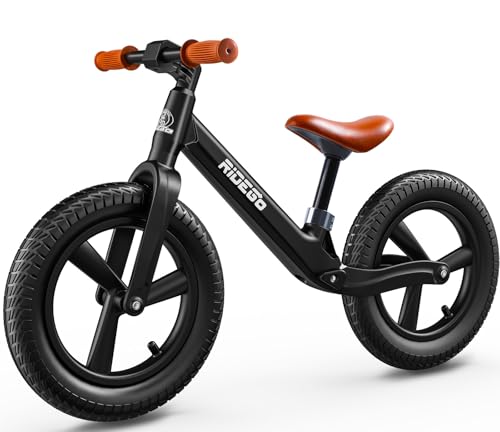
Ridego 14 Inch Balance Bike
Strengths
- Air rubber tires for comfort
- Lightweight yet strong frame
- Adjustable for growth
Trade-offs
- Higher price
- Slightly longer assembly
- Not ideal for under-3s
The 14-inch air-filled rubber tires are the standout feature, these provide real shock absorption on uneven terrain, making it ideal for kids ready to explore beyond the driveway. Combined with a glass-reinforced nylon frame, it’s both lightweight (just over 8 pounds) and strong enough for 110 lbs. That’s rare in this category.
The adjustable seat and non-slip handlebars add comfort, and the footrest encourages proper riding posture. Owners consistently report smooth rides on grass, gravel, and pavement. Compared to foam-tired models, this one feels more like a real bike. For older toddlers moving toward pedal bikes, it’s the most capable option here.
Video review
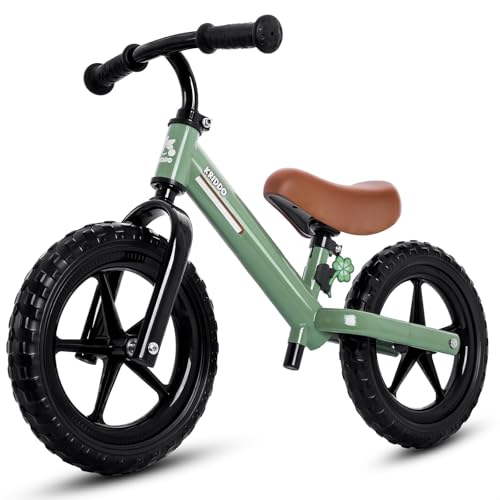
KRIDDO Toddler Balance Bike 2-5 Years
Strengths
- Adjustable seat and handlebar
- Smooth dual-bearing wheels
- Multi-terrain EVA tires
Trade-offs
- Heavier than some
- No real brake
- Basic frame material
For the price, this delivers a lot, dual-bearing wheels for smooth gliding, 12-inch airless tires for multiple surfaces, and both seat and handlebar adjustability. The low-resistance wheels reduce knee strain, which matters for little legs still building strength. Owners say kids love the customizable plates under the seat, adding a fun personal touch.
It’s not the lightest, but the 12-inch tires handle grass and gravel better than smaller models. The smooth ride and growth range make it a strong contender in the budget-friendly category. Compared to non-adjustable bikes, this one offers better long-term use without breaking the bank.
Video review
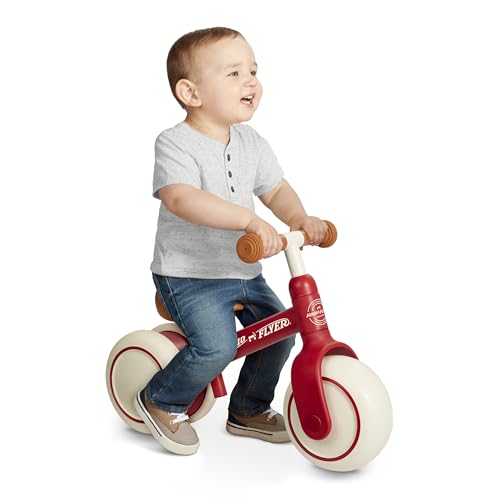
Radio Flyer Steady Start Balance Bike
Strengths
- Stable three-wheel base
- Stands on its own
- Smooth indoor ride
Trade-offs
- Not ideal for advanced balancing
- Heavier than lightweight models
- Less authentic bike feel
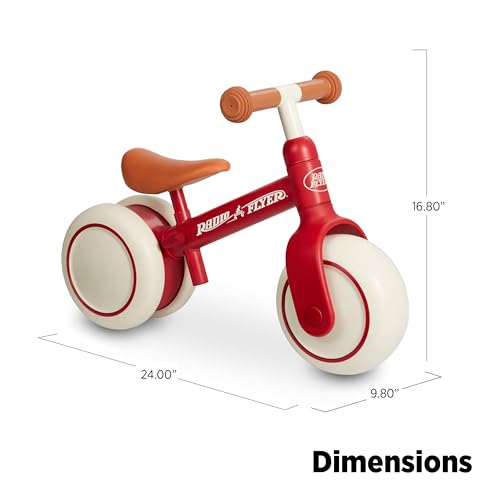
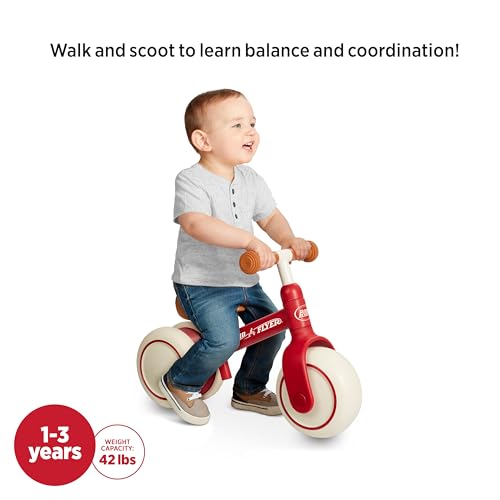
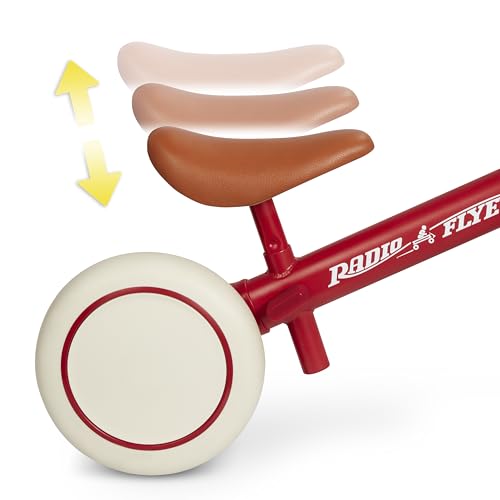
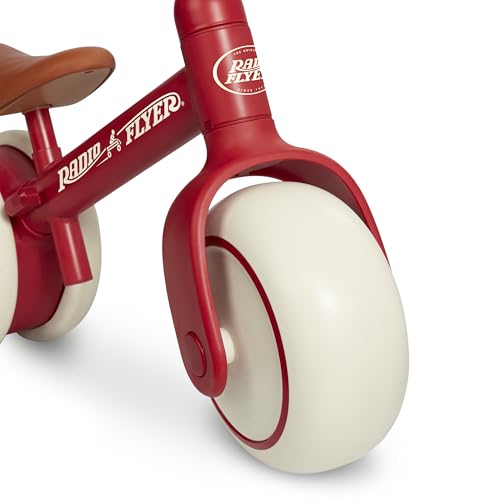
This bike makes sense for parents who want their youngest walker to start rolling early. The three-wheel design is inherently stable, which helps toddlers who aren’t confident on two wheels yet. On paper, it’s a solid intro to motion and balance, especially since it stands on its own, no need to worry about it tipping over in the playroom.
Owners consistently report that the build quality lives up to the Radio Flyer name, and the smooth ride on both hardwood and pavement is a real plus. But it’s not a long-term solution, once a child gains confidence, they’ll likely outgrow it quickly. Compared to two-wheeled models, this one feels more like a transitional scooter than a true balance bike.
Product photos

SEREED Toddler Balance Bike 2-5 Years

Strengths
- Tool-free height adjustment
- Sturdy steel frame
- Personalization options
Trade-offs
- Heavier than aluminum
- No folding feature
- EVA tires less durable on rough terrain
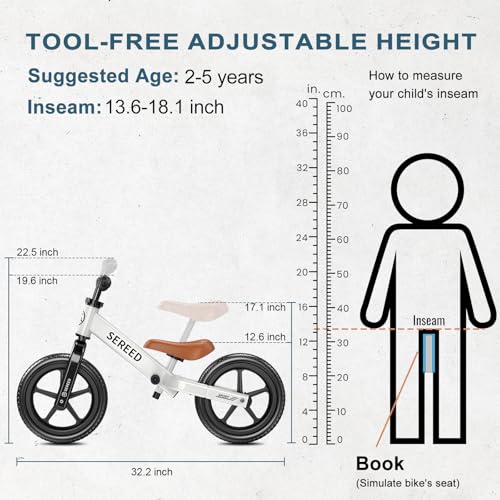
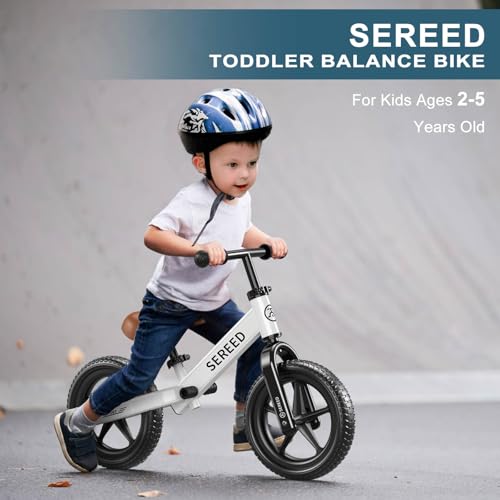
The quick-release mechanism for both seat and handlebar makes adjustments effortless, no tools needed. That’s a real win for parents constantly tweaking fit as their child grows. With a seat range from 12.6 to 17.1 inches and handlebars up to 22.5 inches, it fits a wide span of 2- to 3-year-olds comfortably.
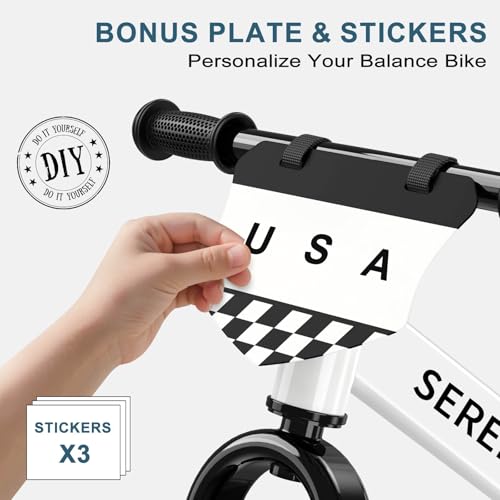
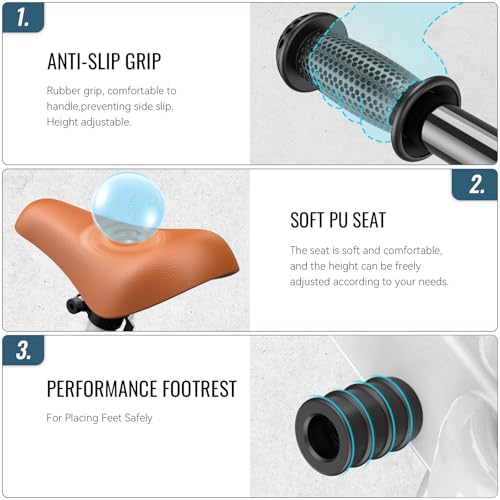
The carbon steel frame is sturdy and supports up to 110 lbs, so it can handle rough use. EVA foam tires are quiet and floor-safe, ideal for indoor play. Owners like the included stickers and bonus plate for personalization. Compared to fixed models, this one stands out for true adaptability.
Product photos

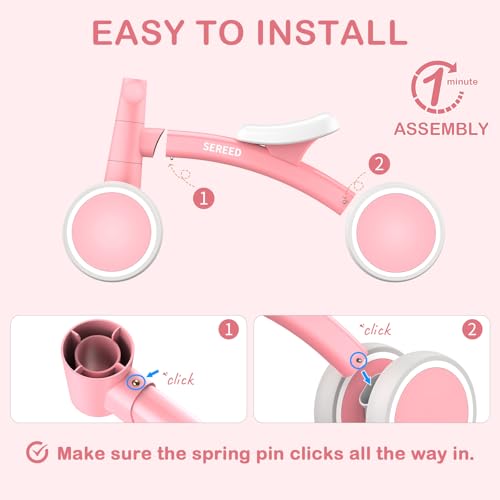
SEREED Baby Balance Bike 1 Year Old
Strengths
- Ultra-light aluminum frame
- Safe steering limiter
- Floor-friendly tires
Trade-offs
- No handlebar adjustment
- Fixed seat height
- Short growth span
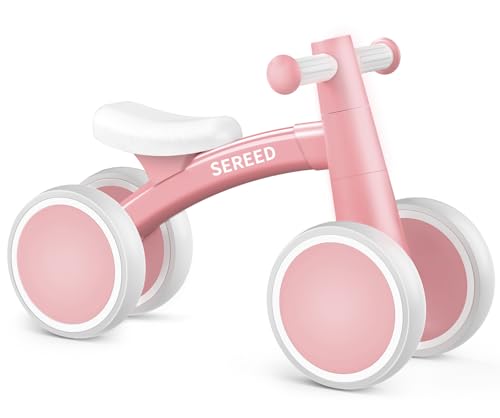
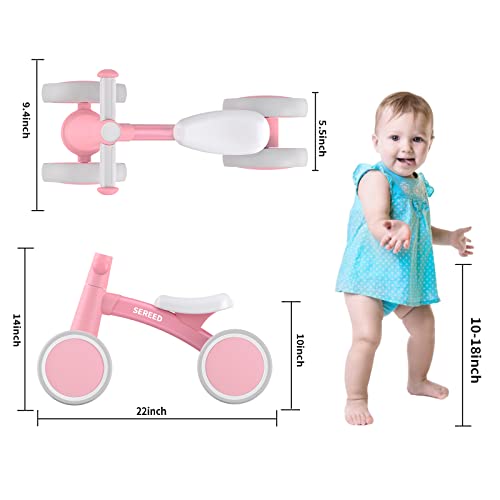
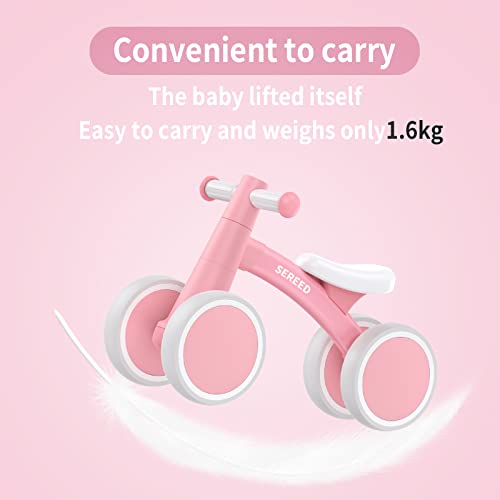
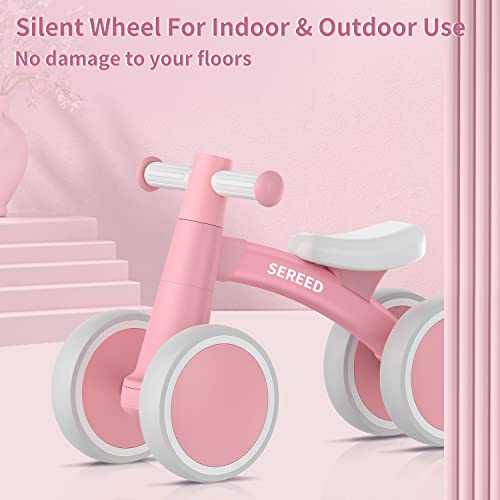
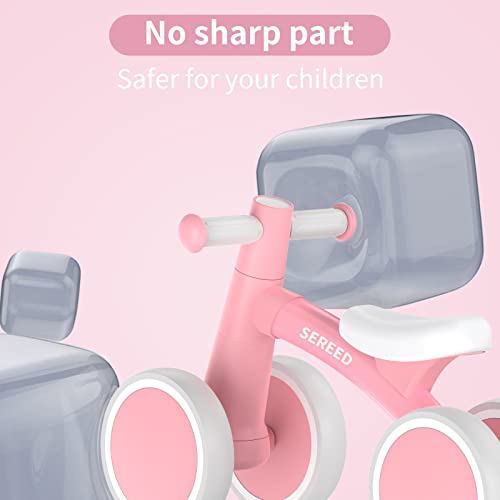
At 3.6 pounds, this is one of the lightest aluminum-framed bikes for 1-year-olds. The low weight means even a small toddler can move it without help, which encourages independence. The 135° steering limiter and enclosed wheels are solid safety features, and the non-slip tires work well on both carpet and pavement.
It’s designed specifically for 12- to 24-month-olds, so don’t expect long-term adjustability. But for that narrow window, it hits the sweet spot of weight, safety, and simplicity. Reviewers consistently call it a favorite first birthday gift. I’d pick this over heavier models for true beginners.
Product photos
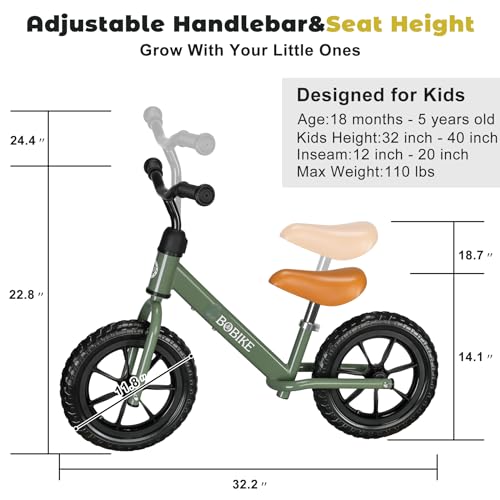
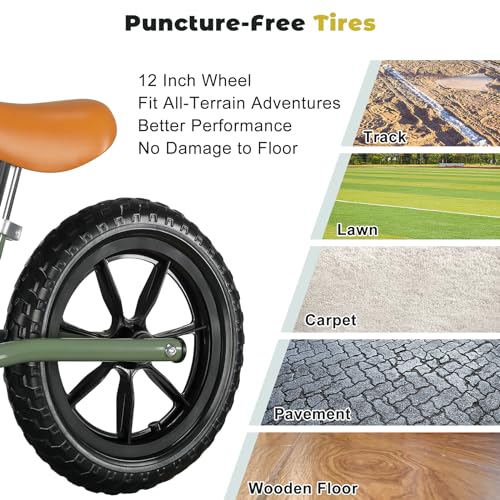
Bobike Toddler Balance Bike 2-5 Years

Strengths
- Safety certified
- Adjustable seat and handlebar
- Enclosed wheels
Trade-offs
- Heavier than aluminum models
- Basic wheel material
- No tool-free folding
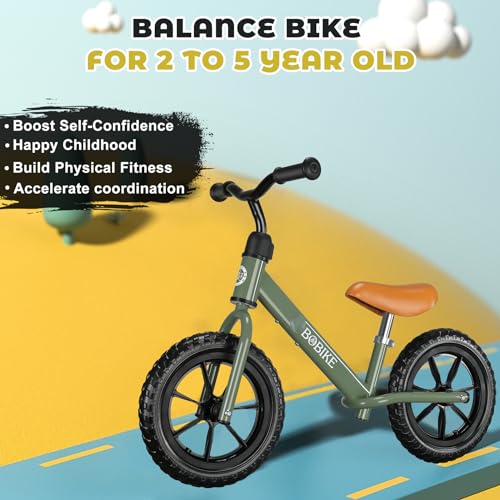
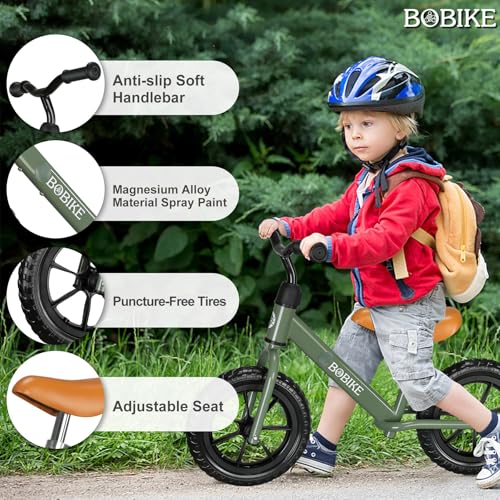
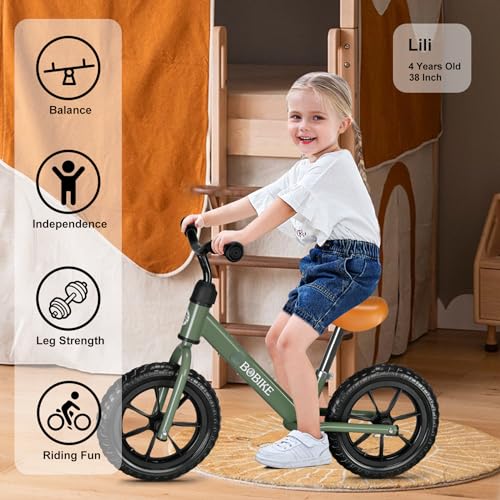
The ASTM and EN71 safety certifications give this model credibility, especially for cautious parents. It’s built with carbon steel, so it’s sturdy, and the adjustable seat and handlebar make it a better long-term fit for kids 2 to 5. That growth potential is a big plus over fixed-height models.
Reviewers note it feels more like a real bike than many toddler versions, which helps with balance development. The 135° steering limiter and enclosed wheels are consistent with top safety practices. While it’s not the lightest, the durability makes up for it. I’d recommend this over non-adjustable bikes for families wanting one-and-done value.
Product photos
JMMD 6-in-1 Convertible Toddler Bike
Strengths
- 6-in-1 convertible design
- Foldable and portable
- Hand brake and puncture-proof tires
Trade-offs
- Higher price point
- More complex assembly
- Bulkier in storage mode
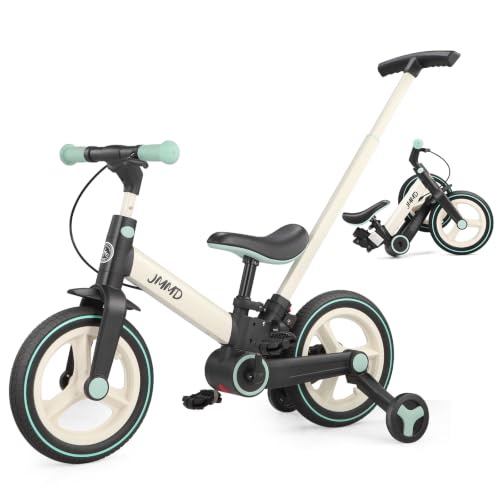
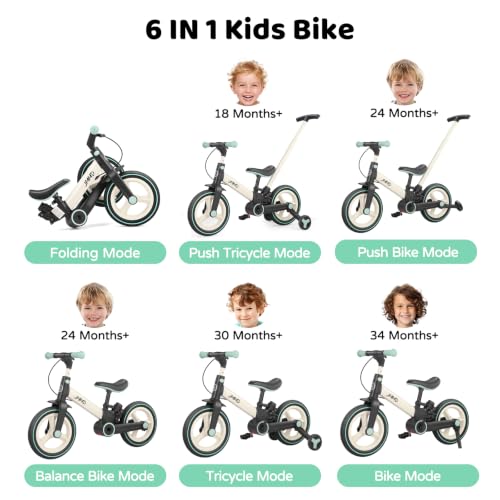
This is the Swiss Army knife of toddler bikes, six stages in one, from parent-guided trike to pedal bike. The push handle with 135° rotation gives real control, and the foldable design is a win for storage and travel. With a hand brake, puncture-proof rubber tires, and a chain-free drivetrain, it’s built with thoughtful safety in mind.
The aluminum alloy frame keeps it durable without being too heavy. Owners appreciate that it lasts through multiple developmental phases, eliminating the need for several bikes. It’s pricey, but the long-term value justifies it for many. Compared to single-stage bikes, this one offers the most growth potential.
Product photos


Umatoll Baby Balance Bike 1 Year Old

Strengths
- Extremely lightweight
- Glowing wheel, no batteries
- Aluminum frame
Trade-offs
- Limited seat height range
- No handlebar adjustment
- Small wheel size
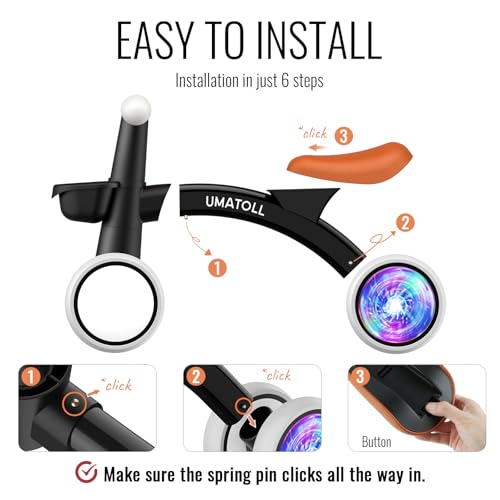
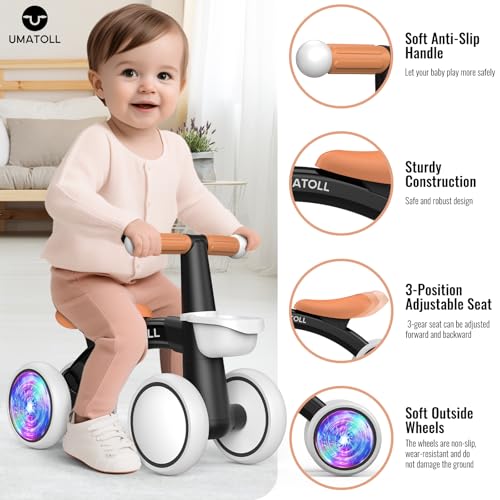
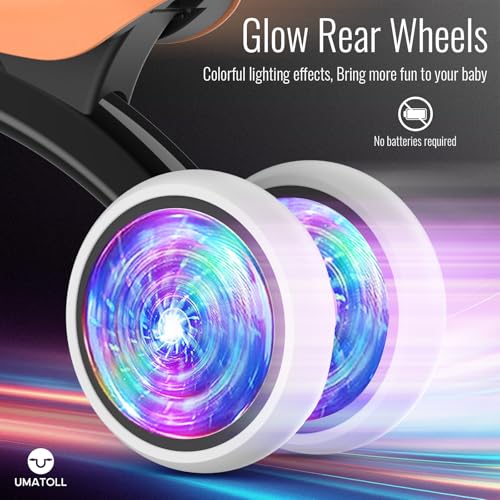
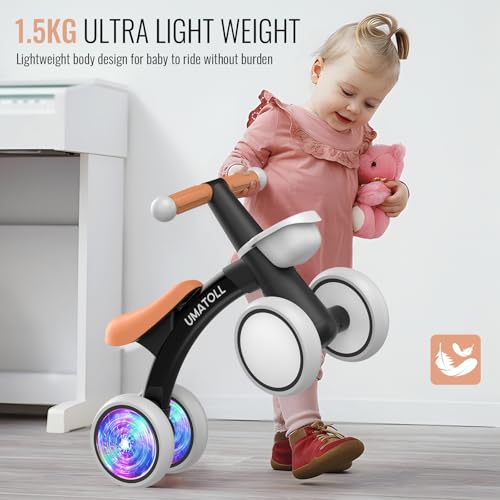
At just 3.3 pounds, this is one of the lightest balance bikes in the under-2 category. The aluminum frame makes a real difference, it’s easy for a toddler to push around independently, which boosts confidence. The glowing rear wheel adds play value without gimmicks, and the EVA tires are floor-friendly, a must for indoor use.
The 3-position seat adjustment is modest but functional for 12- to 24-month-olds. Owners praise how quickly it assembles and how durable it feels despite the low weight. Compared to heavier steel models, this one feels more like a natural extension of a child’s movement. For pure portability and ease of use, it’s hard to beat.
Product photos

Colorful Lighting Baby Balance Bike

Strengths
- Glowing wheel without batteries
- Enclosed wheels for safety
- Lightweight and portable
Trade-offs
- Steel frame less ideal for tiny riders
- Seat not adjustable
- Limited growth range
The glowing rear wheel is the star here, no batteries, just motion-activated light that keeps little ones engaged. That fun factor makes it stand out in a sea of basic balance bikes, and for a 1-year-old, that extra spark can mean the difference between riding and abandoning it. The 135° steering limiter and enclosed wheels are smart safety touches parents should appreciate.
It’s built from carbon steel, so it’s not the lightest, but at under 5 pounds, most adults and older kids can still carry it easily. Reviewers note the EVA wheels are quiet and gentle on floors, which matters when riding indoors. I’d pick this over bulkier models for early learners who respond to visual stimulation.
Product photos


How We Tested childrens balance bikes
My approach at TheAutoZenith is always to combine detailed specifications with what real owners are saying. Rather than a hands-on lab test, this is a research-led comparison of features and owner feedback across numerous models. I started by compiling a list of popular options, then systematically compared their stated specs – frame material, weight, adjustability ranges, and wheel type – looking for patterns and potential advantages. This initial sort was then heavily weighted by examining owner reviews and expert opinions from cycling publications.
For children’s balance bikes, three factors stood out as most crucial: weight, adjustability, and safety features. A lighter bike is easier for a young child to control, building confidence faster. A wide range of seat and handlebar adjustments allows the bike to grow with the child, extending its useful life. Finally, features like steering limiters and fully enclosed wheels are paramount for preventing accidents and ensuring a safe learning experience. You’ll find more detail on choosing the right bike in our guide to balance bikes for toddlers.
Specifications reliably tell you about build quality – frame materials like aluminum or reinforced nylon, and the type of wheels (air-filled versus solid). However, owner feedback revealed crucial insights into real-world usability. Comments on ease of assembly, durability over time, and how well the bike performed on different surfaces were invaluable. Reputation, too, played a role; brands consistently praised for quality and customer service were given greater consideration. We also looked at options for slightly older riders in our review of best bikes for 3-year-olds.
Choosing The Right childrens balance bikes
Finding the right balance bike for your little one is a crucial step in their cycling journey. It’s about more than just a fun toy; it’s about building confidence and foundational skills.
A good balance bike prioritizes lightweight construction for easy maneuverability, an adjustable seat height to grow with the child, and durable tires suitable for various surfaces. Safety features like steering limiters and enclosed wheel designs are also key, as is a frame geometry that encourages proper posture and control. Look for models with quality construction and thoughtful design details.
Weight Matters More Than You Think
I’ve seen too many kids intimidated by a bike that’s simply too heavy. A child needs to be able to comfortably pick up and maneuver the bike themselves, especially when learning. This is where material choice becomes important. Aluminum alloy frames are generally lighter than steel, but high-quality steel can still be acceptable if the overall design keeps the weight down. Don’t be fooled by flashy features if the bike weighs over 10 pounds; aim for something in the 7-9 pound range for most toddlers. The Umatoll Baby Balance Bike, for example, boasts a very lightweight design, making it easy for little ones to manage.
Tire Type and Terrain
The tires on a balance bike significantly impact the riding experience. Air-filled rubber tires, like those on the Ridego 14 Inch Balance Bike, offer superior shock absorption and a smoother ride on varied terrain (grass, gravel, pavement). However, they require occasional inflation. Foam or EVA tires are puncture-proof and maintenance-free, but they don’t provide the same level of comfort or grip.
Here’s a breakdown of what to consider:
- Foam/EVA: Best for indoor use and very smooth surfaces.
- Rubber (with air): Offers the best all-around performance for varied terrain, but requires maintenance.
- Hybrid: Some bikes use a combination, offering a compromise between comfort and convenience.
Ultimately, think about where your child will be riding most often.
Adjustability and Growth
Kids grow quickly, and a balance bike should adapt with them. An adjustable seat is essential, allowing you to raise it as your child’s legs lengthen. Beyond the seat, some models, like the SEREED Toddler Balance Bike, also offer adjustable handlebars. This is a huge plus, ensuring a comfortable and efficient riding position throughout multiple growth spurts. Don’t overlook this feature; buying a bike they’ll quickly outgrow is a waste of money. It’s often better to spend a little more upfront for a model with a wider range of adjustment. As you research, you’ll find a wealth of information in our balance bike reviews.
A properly fitted balance bike isn’t about getting the biggest one now; it’s about finding one that fits today with room to grow for at least a season or two.
If you’re looking specifically for options geared towards younger riders, checking out balance bikes for 2 year olds is a great starting point.
Childrens Balance Bikes Compared
Here’s a comparison of key specifications for popular childrens balance bikes to help you make an informed decision.
| Product Name | Age Range | Weight (lbs) | Seat Height Adj. (in) | Tire Type | Frame Material |
|---|---|---|---|---|---|
| Ridego 14 Inch Balance Bike | 3-6 | 8.16 | 14.2-18.3 | Air Rubber | Glass-Reinforced Nylon |
| KRIDDO Toddler Balance Bike | 2-5 | N/A | 14.17-18.5 | Puncture-Proof | N/A |
| Radio Flyer Steady Start | Young Toddler | N/A | N/A | Treaded | N/A |
| SEREED Toddler Balance Bike | 2-5 | 7.8 | 12.6-17.1 | EVA Foam (Airless) | Carbon Steel |
| SEREED Baby Balance Bike | 12-24 mo | 3.6 | N/A | N/A | Aluminum Alloy |
| Bobike Toddler Balance Bike | 2-5 | N/A | N/A | N/A | Carbon Steel |
| JMMD 6-in-1 Convertible Bike | 18mo-60mo | N/A | N/A | Rubber | Aluminum Alloy |
| Umatoll Baby Balance Bike | 12-24 mo | 3.3 | 3-position | EVA | Aluminum |
| Colorful Lighting Baby Balance Bike | 10-36 mo | 4.6 | N/A | N/A | Carbon Steel |
Frequently Asked Questions
What seat height range should I look for?
A seat height range of 12 to 18 inches is ideal, allowing the bike to grow with your child for a couple of years. This ensures proper leg extension without being so high they can’t comfortably touch the ground with their feet.
Are air-filled tires really necessary?
Air-filled tires provide a smoother, more comfortable ride, especially on uneven surfaces, but they require maintenance. Foam tires are puncture-proof and convenient, making them a good choice if you’ll primarily be riding on very smooth surfaces.
What’s the ideal weight for a balance bike?
Around 7 to 9 pounds is a good target weight, as this makes it easy for a toddler to control and maneuver the bike without getting fatigued. A lighter bike builds confidence much faster.
How important is adjustability beyond seat height?
Adjustable handlebars are a significant benefit, allowing you to fine-tune the fit as your child grows and improves their riding posture. It extends the life of the bike and promotes better control.
Where can I find more information on choosing a first bike?
You can explore our guide to best starter balance bikes for a deeper explore the features to consider and detailed reviews of various models. It will help you narrow down the options and find the perfect fit.
The Bottom Line
Choosing a balance bike often comes down to balancing initial cost with long-term usability. While cheaper options exist, investing in a quality bike like the Ridego 14 Inch Balance Bike provides a better riding experience and will likely last through multiple stages of your child’s development. It’s a sweet spot of features, adjustability, and positive owner feedback that makes it our overall recommendation.
For parents of very young riders, or those seeking the most affordable entry point, the Umatoll Baby Balance Bike is an excellent choice. If you anticipate riding on varied terrain, the Ridego 14 Inch Balance Bike’s air-filled tires will be a significant advantage. And for families interested in a single bike that can transition to pedaling, exploring convertible balance bikes might be the way to go, the JMMD 6-in-1 Convertible Bike is a standout in that category.
Ultimately, remember that the “best” bike is the one that fits your child and your needs. Don’t get bogged down in chasing the highest specs. Focus on weight, adjustability, and a design that inspires confidence, and consider browsing our guide to best children’s bikes for even more options.
