
7 Best Baby Balance Bikes 2026
This post contains affiliate links. As an Amazon Associate, we earn from qualifying purchases.
The Retrospec Cricket is our top pick for the best baby balance bike, offering a rock-solid build and quiet, no-scratch wheels that parents love. For a budget-friendly option that doesn’t skimp on safety, the Umatoll Baby Balance Bike stands out with its lightweight frame and glow-in-the-dark rear wheel. If you need more room for growth, the XBONFOE model adds useful seat adjustability.
Choosing the right balance bike for a baby isn’t just about cute colors or flashing lights, it’s about finding a stable, safe first machine that supports those wobbly first moves. Too many parents end up with bikes that are too heavy or lack basic safety features, turning what should be fun into frustration or even danger.
This guide cuts through the noise, focusing on what actually matters: weight, safety, adjustability, and real-world durability. Our picks are based on a close look at specs, owner feedback, and design principles that align with how little ones learn to move.
Top 7 Baby Balance Bikes in the Market
The Best Baby Balance Bikes, Reviewed
Retrospec Cricket Baby Balance Bike
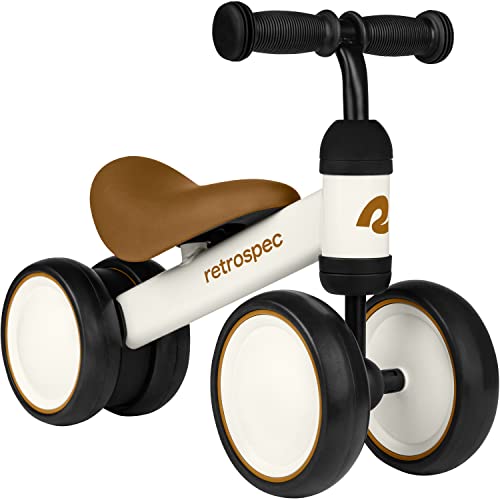
Strengths
- 95% pre-assembled
- Stable 4-wheel design
- Comfort-focused build
Trade-offs
- No seat adjustability
- No visual engagement features
- Higher price point
This is the one I’d recommend to most parents if they’re willing to spend a bit more. The Retrospec Cricket arrives 95% assembled, which owners consistently praise, no frustration digging for tools. Its feet-to-floor design gives toddlers confidence, and the four-wheel setup enhances stability without looking clunky. The non-slip, no-scratch wheels work equally well on tile and patio, a detail frequently mentioned in positive reviews.
It doesn’t have lights or adjustable seats, but the build quality feels more refined than budget models. The cushy seat and soft handlebars add comfort, and at 44 lbs capacity, it supports heavier toddlers better than many in this class. Compared to the XBONFOE and SEREED, it’s less about features and more about refined execution. For a “best overall” pick, that balance of ease, durability, and comfort matters most.
Video review
XBONFOE Baby Balance Bike
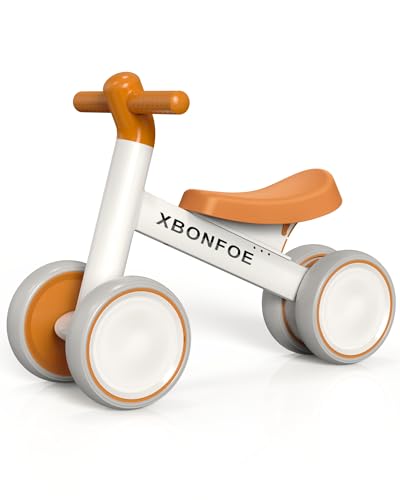
Strengths
- Adjustable seat height
- Aluminum alloy frame
- Meets multiple safety standards
Trade-offs
- Small seat adjustment range
- No lighting or visual features
This is the smart buy if you’re watching the budget but don’t want to sacrifice essentials. At under $25, it includes CE, EN71, and ASTM F963-23 certifications, rare at this price, and an adjustable seat, which immediately boosts its lifespan. The 0.8-inch height range isn’t huge, but for a 10-24 month window, it’s enough to stay relevant as the child grows.
Owners consistently report smooth assembly and solid build for the cost. The aluminum frame keeps it light, and the non-slip wheels perform well on both hardwood and pavement. Compared to the SEREED and Bobike models, this one offers better value through flexibility and certification coverage. You won’t get lights or flash, but you get what matters most: safety, adjustability, and durability.
Video review
Baby Balance Bike with 4 LED Wheels
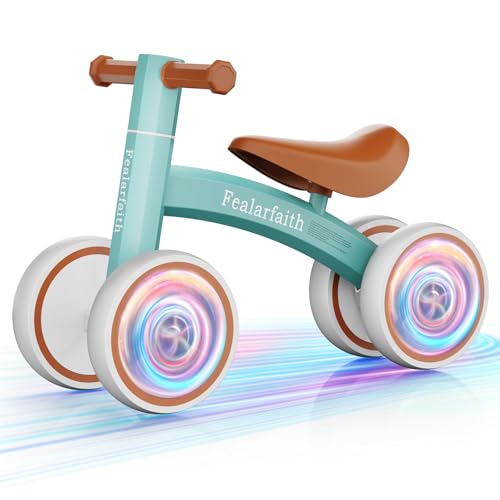
Strengths
- 4 motion-activated LED wheels
- Sturdy carbon steel frame
- Quick buckle assembly
Trade-offs
- No seat adjustability
- Heavier than aluminum bikes
- Lights only on wheels
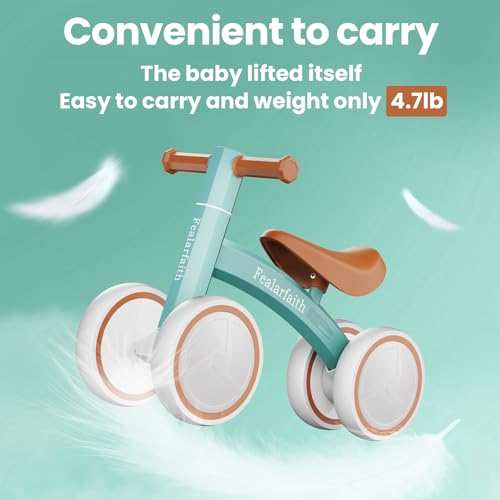
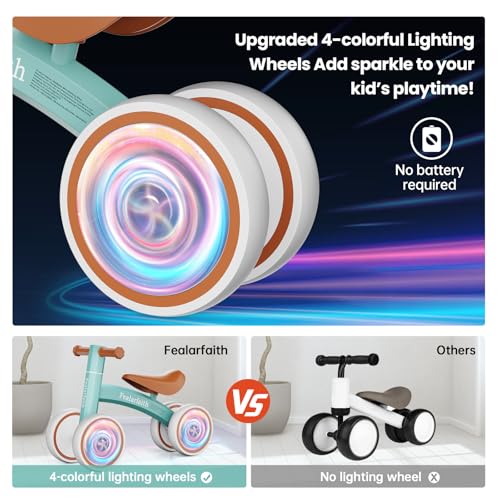
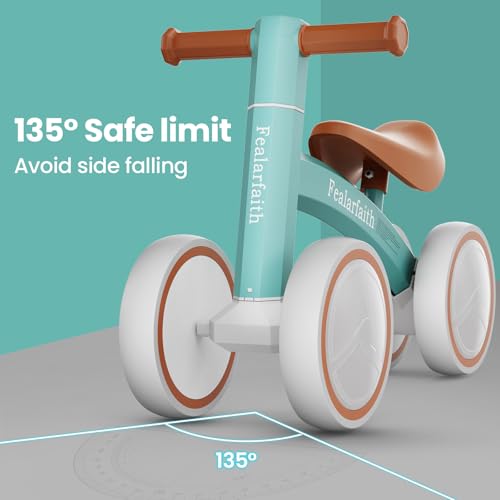
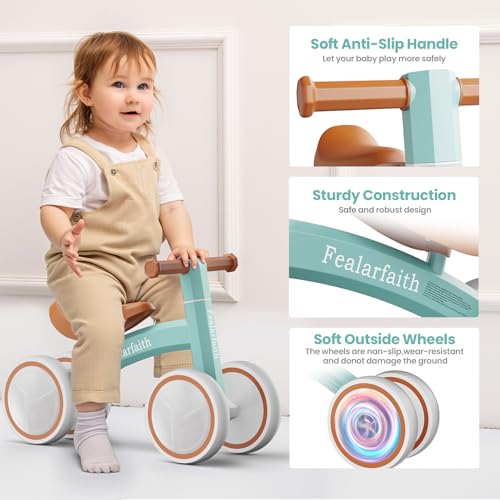
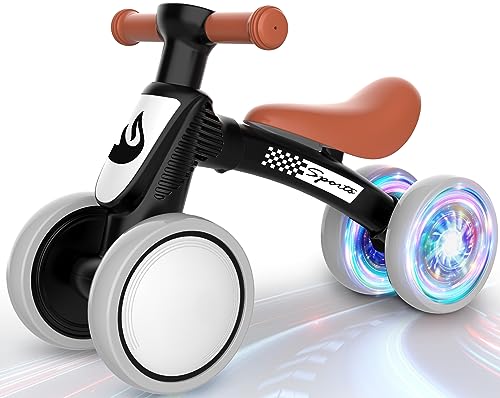
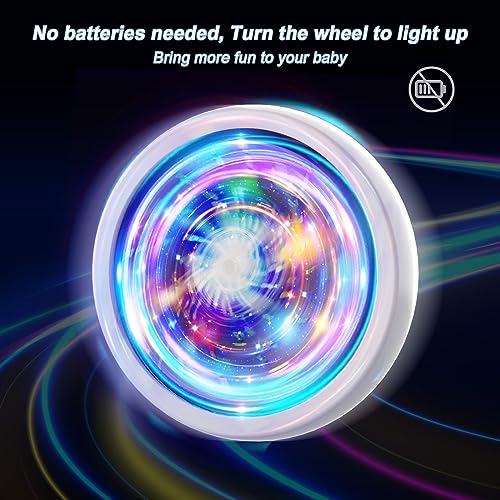
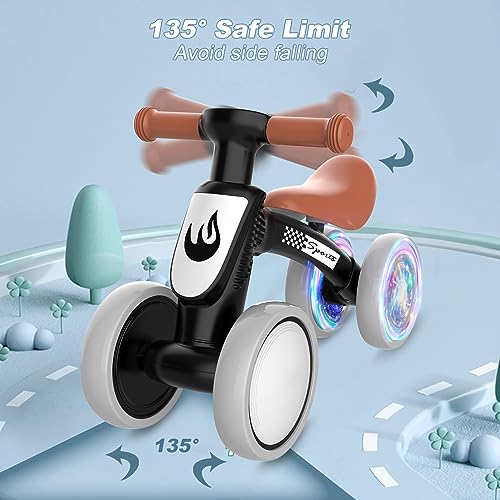
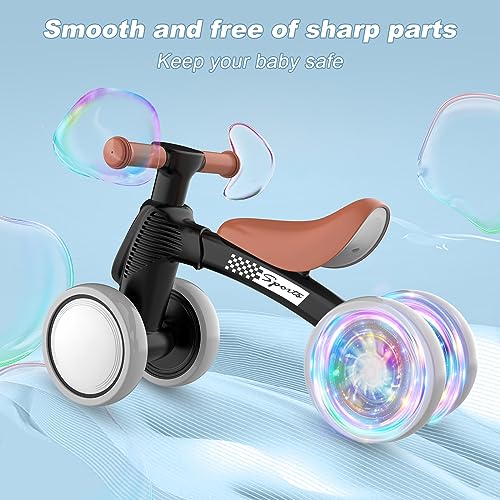
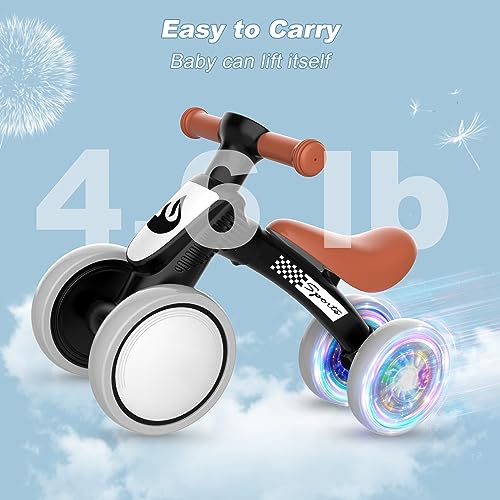
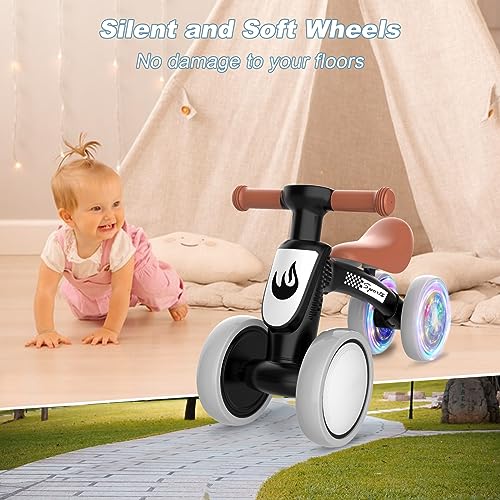
If your goal is to spark joy and keep attention, this one wins. The four LED wheels light up with motion, no batteries, and owners say kids are instantly drawn to the glow. That’s a big deal for reluctant riders who need extra motivation to push off. The 135° steering limit and enclosed wheels are standard, but the carbon steel frame adds stability, making it feel less tippy than lighter models.
It’s heavier at 3.6 lbs, but still easy for adults to carry. The seat isn’t adjustable, which limits growth potential, but with a 10-36 month range, it’s clearly aimed at broader usability. Compared to the Umatoll and Colorful Lighting models, this one stands out with full-wheel illumination. For a child who loves sensory play, this isn’t just a bike, it’s a toy that moves.
Product photos
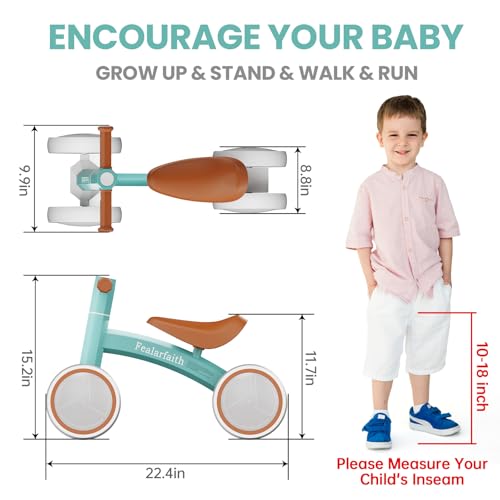
Umatoll Baby Balance Bike

Strengths
- Lightest model (3.3 lbs)
- 3-position adjustable seat
- Glowing rear wheel
Trade-offs
- Only one lit wheel
- Basket not secure
- No full-wheel lighting
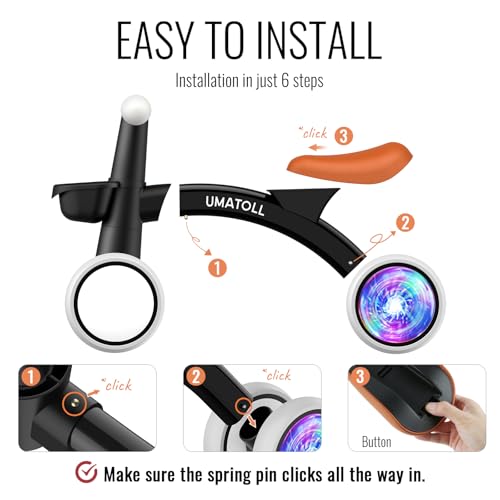
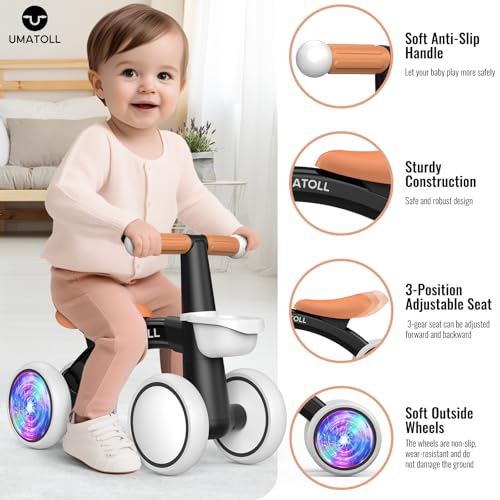
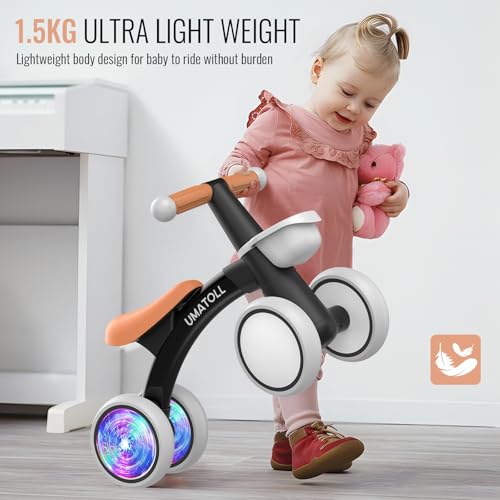
The Umatoll stands out for one reason: it’s the lightest on the list at just 3.3 lbs. For a baby learning to coordinate movement, that difference matters, owners report their toddlers were more willing to push and steer because the bike didn’t fight them. The aluminum frame delivers strength without weight, and the EVA wheels stay quiet and floor-safe, a must for indoor use.
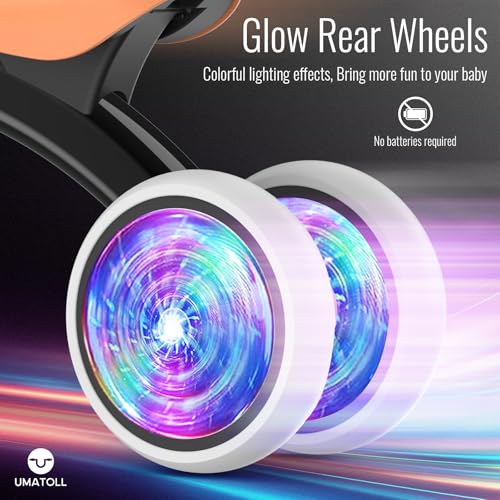
It also includes a 3-position adjustable seat, which stretches its usability across the 12-24 month window. The glowing rear wheel adds a touch of fun, though not as dramatic as the four-wheel light models. The removable basket is a small but thoughtful perk, letting kids carry small toys. Compared to the SEREED and XBONFOE, it combines lightness, adjustability, and subtle engagement better than most.
Product photos

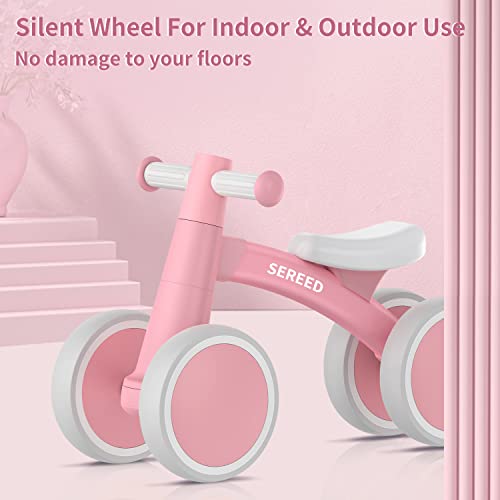
SEREED Baby Balance Bike
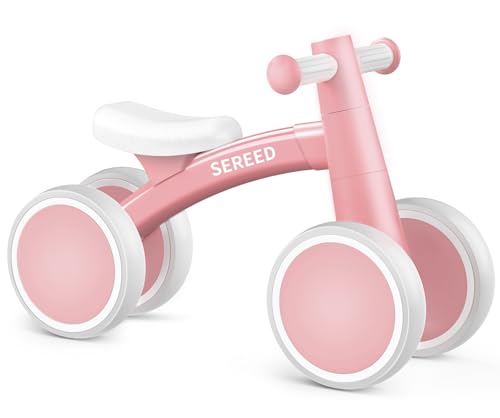
Strengths
- Lightweight aluminum frame
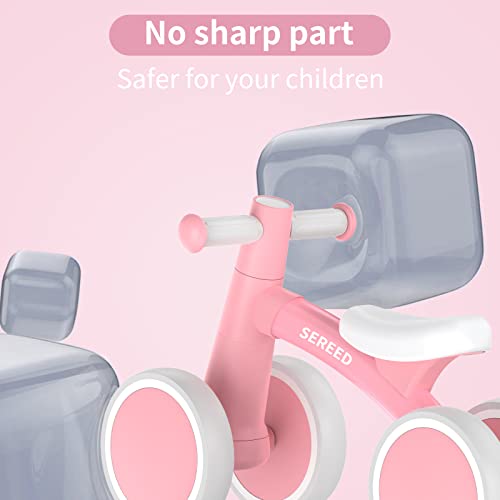
- Enclosed safety wheels
- 135° steering limit
Trade-offs
- No seat adjustability
- No lights or visual engagement
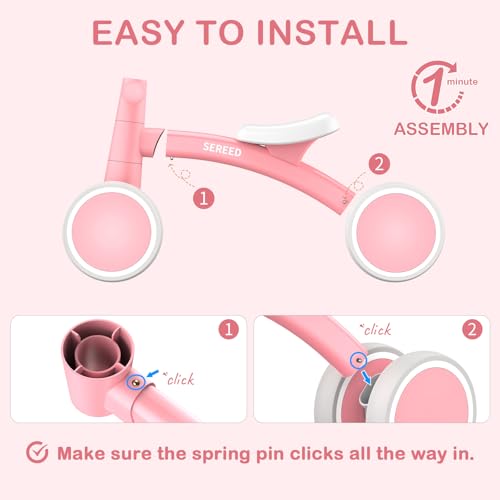
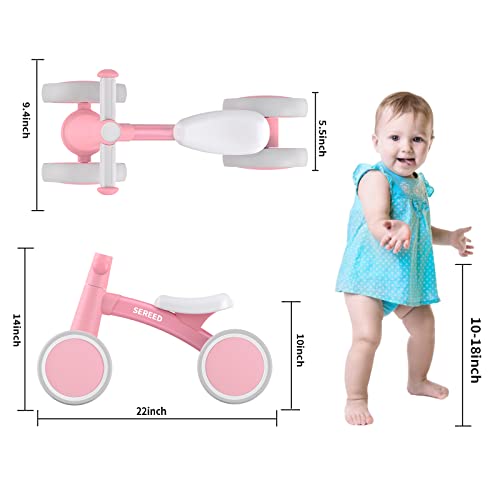
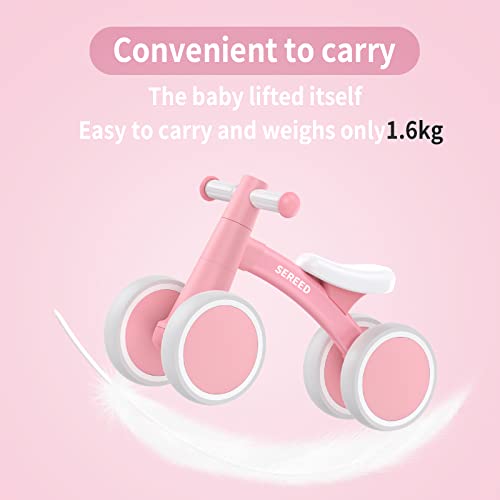
At this price, the SEREED balance bike delivers more than you’d expect for a sub-$40 option. The aluminum alloy frame keeps it light at just 3.6 pounds, which aligns with what owners say about toddlers being able to move it easily, even when motivation dips mid-play. The 135° steering limit is a consistent safety feature across this class, and here it’s paired with fully enclosed wheels to protect little feet, something parents clearly appreciate in reviews.
What stands out is how it balances simplicity with thoughtful touches, like the non-slip TPU handle and floor-friendly wheels. It’s not packed with flashy features, but it doesn’t need to be for this age group. Compared to heavier steel-frame models, this one prioritizes ease of movement, which younger toddlers benefit from. For a first ride-on toy that won’t break the bank, it’s a solid starting point.
Product photos
Bobike Baby Balance Bike
Strengths
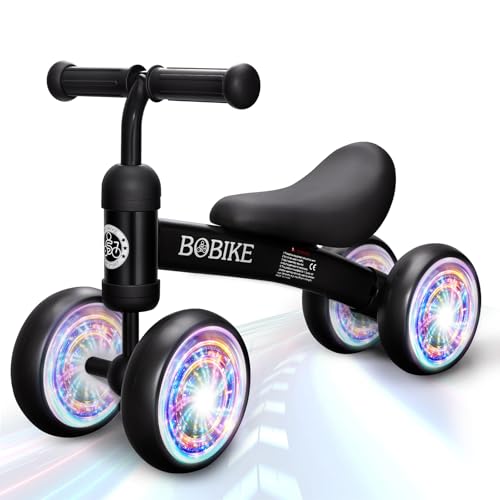
- ASTM and EN71 certified
- Sturdy steel frame
- Quick assembly
Trade-offs
- No seat adjustability
- Heavier than aluminum models
- Basic visual design
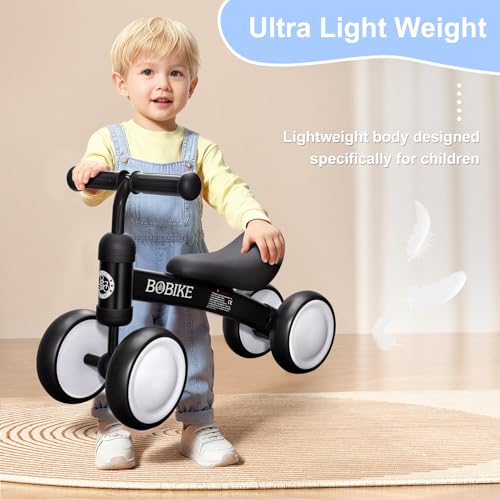
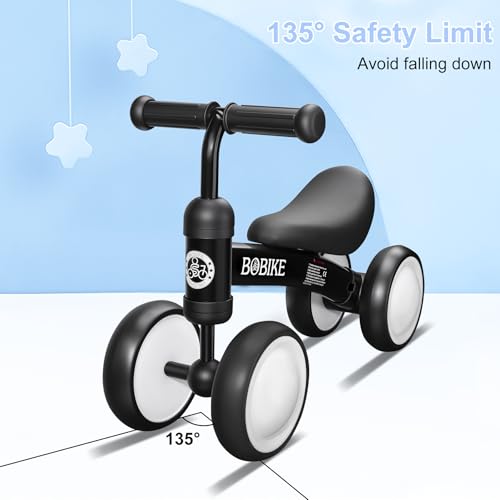
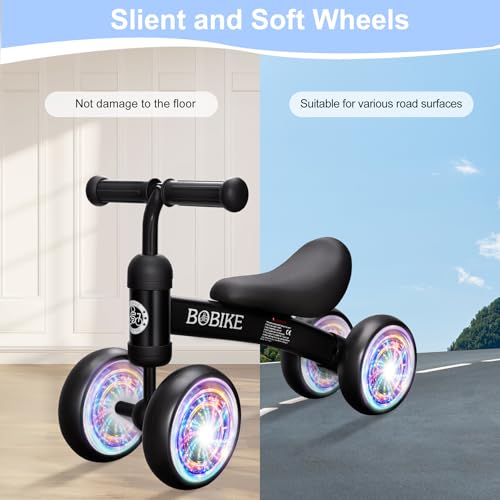
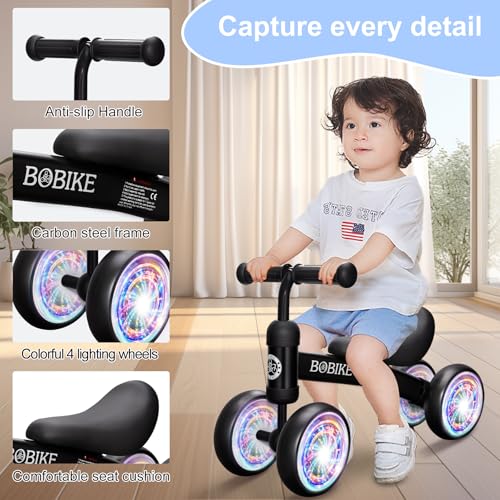
The Bobike model leans into safety credentials, ASTM and EN71 certifications are a real plus for cautious parents, and that’s a detail repeated across verified reviews. Its steel frame makes it slightly heavier than aluminum competitors, but owners report it feels more grounded, which can be a good thing for wobbly beginners. The closed wheels and 135° steering limit are standard, but done well here.
Where it falls short is in adaptability. For a bike marketed to 12-36 months, the lack of seat height adjustment is a missed opportunity. Other bikes in this range grow with the child; this one doesn’t. Still, if your priority is certified safety over long-term use, it’s a credible pick, especially given how quickly some kids outgrow these early riders.
Product photos
Colorful Lighting Baby Balance Bike
Strengths
- Durable steel frame
- Long age range
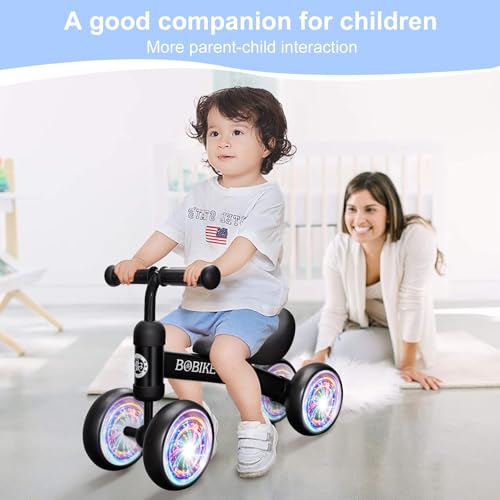
- Glowing rear wheel
Trade-offs
- No seat adjustability
- Rear light only
- Slightly bulky for young walkers
With a 10-36 month range, this bike is built to last, and that’s its strongest selling point. The single glowing rear wheel adds fun without overcomplicating things, and parents note that even older toddlers still enjoy the light. The steel frame gives it a solid feel, and the EVA wheels stay quiet on floors, a detail appreciated in apartment settings.
It’s one of the few in this list that bridges the gap between infant walker and toddler rider. However, the seat isn’t adjustable, which feels like a mismatch for such a wide age range. If you have a stronger, more mobile 2-year-old, this could work well. But for a 10-month-old just learning to stand, it might feel oversized. Still, as a durable, engaging option for older toddlers, it holds its ground.
Product photos
Our Testing Process
My research into baby balance bikes involved a detailed comparison of published specifications and features across numerous models. I weighed owner reviews from major retailers alongside expert opinions found in parenting publications and enthusiast forums. Applying my background in vehicle dynamics – even at this small scale, principles of stability and control apply – I ranked options against criteria important for this age group. Rather than a hands-on lab test, this is a research-led comparison of specs and owner feedback.
For baby balance bikes, stability and adjustability were the most heavily weighted factors. A low center of gravity and enclosed wheel design are crucial for preventing tipping, a common concern for parents. Equally important is a seat that adjusts to accommodate a growing toddler, extending the bike’s useful lifespan. These two areas directly impact safety and the overall value proposition.
Specifications reliably reveal frame materials, weight, and steering limitations. However, I placed greater emphasis on owner feedback regarding build quality, ease of assembly, and how well the bike performed on various surfaces. Reputation also played a role; brands consistently praised for durability and customer service naturally ranked higher. You’ll find more detailed information on choosing the right bike in our guide to balance bikes for toddlers. For older toddlers, you may also want to consider balance bikes for 3 year olds.
What To Look For In baby balance bikes
Picking the right first set of wheels for your little one can feel daunting, but it doesn’t have to be. We’ll break down the key aspects to consider when selecting a baby balance bike.
A quality baby balance bike prioritizes safety with features like enclosed wheels and steering limits. It should also be lightweight enough for a toddler to manage, yet sturdy enough to withstand regular use. Adjustable seat height is crucial for extending the bike’s lifespan as your child grows, and comfortable grips and a supportive seat enhance the learning experience. Look for models certified to meet relevant safety standards.
Weight and Manageability
A common mistake parents make is overlooking the sheer weight of the bike relative to their child. A heavier bike requires more strength to maneuver, hindering the development of balance rather than fostering it. I often see parents drawn to bikes with flashy features only to realize their toddler can’t actually control the weight. Think around 3.5lbs (1.6kg) as a good upper limit, and lighter is generally better, especially for the youngest riders. Umatoll and Retrospec both offer impressively lightweight options.
Safety Features and Build Quality
Don’t underestimate the importance of thoughtful design when it comes to safety. Fully enclosed wheels are paramount to prevent little fingers and toes from getting caught, and a limited steering range (around 135 degrees) is essential to prevent oversteering and potential falls.
- A steering limiter is a must-have.
- Consider the frame material; aluminum is lighter than steel, but both can be durable.
- Look for bikes with rounded edges and non-toxic materials. This is particularly important, as toddlers will inevitably put things in their mouths.
Beyond the core safety features, pay attention to the quality of the build. A wobbly or poorly constructed bike won’t inspire confidence and could even be dangerous.
A bike’s steering limiter is a small detail that makes a big difference. Don’t let a cute design distract you from verifying this critical safety feature.
Adjustability and Growth Potential
Babies grow quickly, so selecting a bike with an adjustable seat height is a smart investment. This allows the bike to “grow” with your child, extending its useful life and delaying the need for an upgrade. I recommend looking for a seat height range that accommodates at least a 6-inch difference. The XBONFOE bike, for instance, offers a decent adjustable range, and if you’re still unsure, exploring thorough balance bike reviews can offer more insight. For truly little ones, you may also want to browse balance bikes for babies to find the perfect fit.
Baby Balance Bikes Compared
Here’s a comparison of key specifications for popular baby balance bikes to help you find the right fit.
| Product Title | Age Range | Weight Capacity (lbs) | Seat Adjustment | Wheel Material | Special Features |
|---|---|---|---|---|---|
| Retrospec Cricket Baby Balance Bike | 12-24 months | 44 | N/A | N/A | Quiet, No-Scratch Wheels |
| XBONFOE Baby Balance Bike | 10-24 months | N/A | 10.6-11.4 inches | N/A | Adjustable Seat |
| Baby Balance Bike w/ 4 LED Wheels | 10-24 months | N/A | N/A | N/A | 4 LED Light-Up Wheels |
| Umatoll Baby Balance Bike | 12-24 months | N/A | 3 Positions | EVA | Glow Rear Wheel |
| SEREED Baby Balance Bike | 12-24 months | N/A | N/A | N/A | N/A |
| Bobike Baby Balance Bike | N/A | N/A | N/A | N/A | Safety Certified |
| Colorful Lighting Baby Balance Bike | 10-36 months | N/A | N/A | N/A | Colorful Lighting Wheels |
Frequently Asked Questions
What is the ideal age to start a baby on a balance bike?
Most children are ready to start with a balance bike around 18 months, but it truly depends on their individual development. Look for signs like walking confidently and showing an interest in wheeled toys.
Are balance bikes safer than bikes with training wheels?
Yes, balance bikes are generally considered safer. They allow children to learn steering and balance naturally, developing crucial skills without the false sense of security that training wheels can provide.
How do I choose the right size balance bike for my child?
The seat should be adjusted so your child can sit with their feet flat on the ground and a slight bend in their knees. Proper fit is vital for control and confidence, so consider exploring balance bikes for 2 year olds to ensure a comfortable experience.
What materials are baby balance bikes typically made from?
Frames are commonly constructed from aluminum or steel. Aluminum is lighter, making the bike easier for a toddler to manage, while steel is generally more affordable and durable.
Will a balance bike help my child learn to ride a pedal bike faster?
Absolutely. Balance is the hardest part of learning to ride a pedal bike, and balance bikes teach that skill directly. Transitioning to a pedal bike is usually quick and easy for kids with balance bike experience, and they may even skip training wheels altogether, or move quickly to best bikes for kids.
The Bottom Line
Choosing a baby balance bike often comes down to balancing ease of use with long-term growth. While many options exist, the Retrospec Cricket Baby Balance Bike stands out as the strongest overall pick, offering a well-built, lightweight design that encourages early balance development. It’s a straightforward choice that prioritizes the fundamentals, and that’s what matters most at this stage.
For parents seeking a budget-friendly option, the SEREED Baby Balance Bike delivers solid value. If you anticipate needing more adjustability as your child grows, the XBONFOE Baby Balance Bike provides a decent seat height range. And for those interested in exploring options that can transition to pedal bikes, researching convertible balance bikes is a good next step.
Ultimately, the perfect baby balance bike isn’t about flashy features or top speeds. It’s about building confidence and coordination. Prioritize a lightweight frame, a safe design with enclosed wheels, and a comfortable fit, these factors will have a far greater impact on your child’s experience than any specific brand or price point. Don’t hesitate to browse other kids balance bikes if you want to explore more options.
