
7 Best Balance Bikes for Kids 2026
This post contains affiliate links. As an Amazon Associate, we earn from qualifying purchases.
The Strider 12 Sport stands out as the best overall balance bike, thanks to its featherlight frame, wide adjustability, and proven durability. For younger riders, the SEREED Baby Balance Bike 1 Year offers a smart, safe entry point with its limited steering and ultra-light build. If you’re after more versatility for varied terrain, the Ridego 14 Inch steps up with air tires and a longer growth range.
Choosing the right balance bike isn’t just about size, it’s about setting a child up for confidence, control, and real progress. Too many parents end up with bikes that are too heavy, too stiff, or too limited to last beyond a few months. This guide cuts through the noise, focusing on what actually matters: weight, adjustability, tire performance, and real-world feedback from owners who’ve lived with these bikes. I looked at specs, design intent, and long-term usability across age groups to find models that deliver where it counts.
Top 7 Balance Bikes in the Market
The Best Balance Bikes, Reviewed
Strider 12 Sport Balance Bike
Strengths
- Extremely lightweight
- True 1–4 year fit
- Never-flat foam tires
- Easy assembly
Trade-offs
- Higher price
- Foam tires less grippy on wet surfaces
- Limited color options
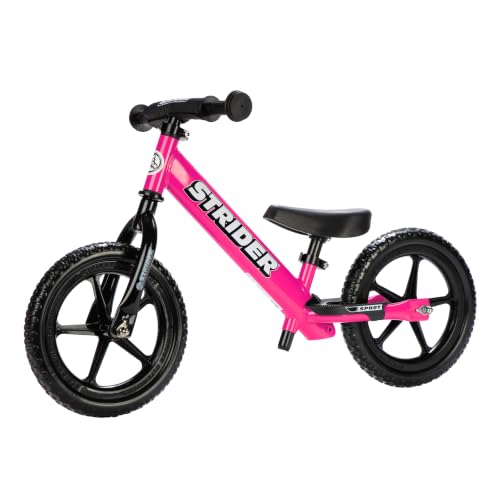
The Strider 12 Sport is the gold standard for a reason. At nearly $150, it’s the most expensive option here, but on paper and in owner feedback, it justifies the cost. Weighing only 6.7 lbs with a featherlight steel frame, it’s easy for even the smallest riders to maneuver, critical for building confidence. The seat adjusts down to 11 inches, making it one of the few balance bikes that truly fits 1-year-olds with a 12-inch inseam.
Its 12-inch foam rubber tires are never-flat and require zero maintenance, a big win over air tires that need inflation or EVA tires that wear out. While the KRIDDO and Ridego offer more adjustability in height, the Strider’s low weight and proven design make it the smarter buy for parents serious about teaching real bike skills fast.
Video review
Ridego 14 Inch Balance Bike
Strengths
- Air rubber all-terrain tires
- Lightweight yet strong frame
- Footrest for coasting
- High weight capacity
Trade-offs
- Requires tire inflation
- Not for under 3 years
- Slightly bulkier design
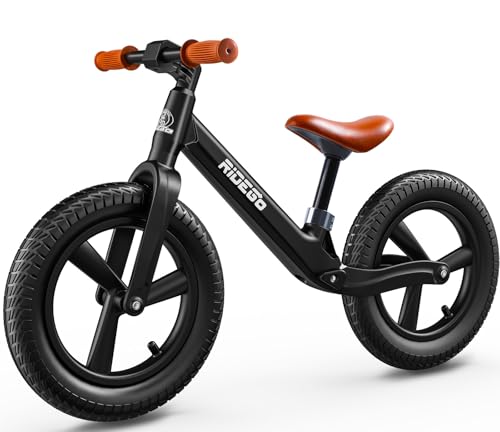
The Ridego is built for older kids who are ready to graduate from toddler models. At 14 inches with air-filled rubber tires, it handles bumps, gravel, and grass far better than EVA or foam tires. The glass-reinforced nylon frame is lightweight at 8.16 lbs yet supports up to 110 lbs, making it durable enough to last into early grade school.
The adjustable seat (14.2–18.3 in) and footrest are thoughtful touches for longer rides. While the Strider dominates the 1–4 age bracket, the Ridego is the better pick for 4+ year olds who want real bike feel before transitioning to pedals. Owners report smooth rolling and excellent grip, though air tires do require occasional maintenance, something foam-tire fans will notice.
Video review
SEREED Baby Balance Bike 1 Year
Strengths
- Ultra-light aluminum frame
- 135° steering limiter
- Non-marking indoor/outdoor wheels
- Safe closed-wheel design
Trade-offs
- Limited growth range
- No seat padding
- Basic aesthetics
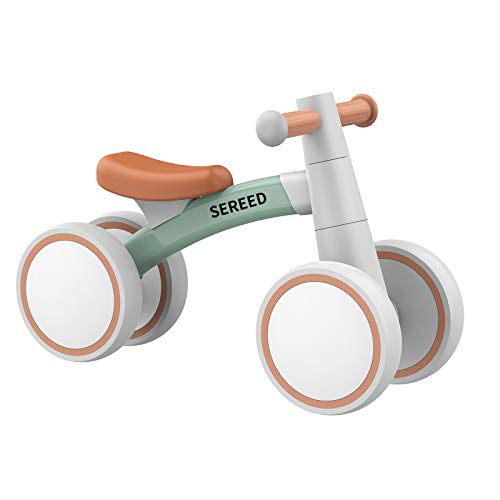
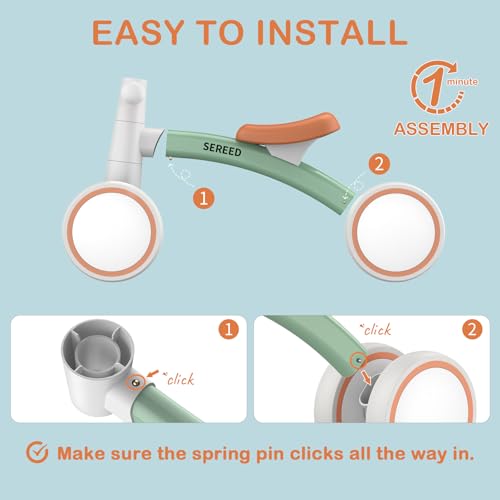
This bike is purpose-built for the youngest riders, 12 to 24 months, and gets the fundamentals right. The aluminum alloy frame keeps it light at just 3.6 lbs, which matters when a toddler is learning to walk and push simultaneously. The 135° turning limit and ground-contact steering are smart safety features that prevent tipping, a common concern with oversteering at this age.
Owners praise how easily babies can use it indoors, thanks to non-marking TPU wheels. While it lacks the long adjustability of the Strider, it fills a niche: a safe, stable first mover for babies just gaining confidence on their feet. Compared to the Umatoll, it’s slightly more minimalist but equally safe.
Product photos


Youthkkee Toddler Balance Bike
Strengths
- Very affordable
- Tool-free seat adjustment
- Non-slip handlebar grips
- Puncture-resistant tires
Trade-offs
- No steering limiter
- Heavier steel frame
- Less refined ride quality
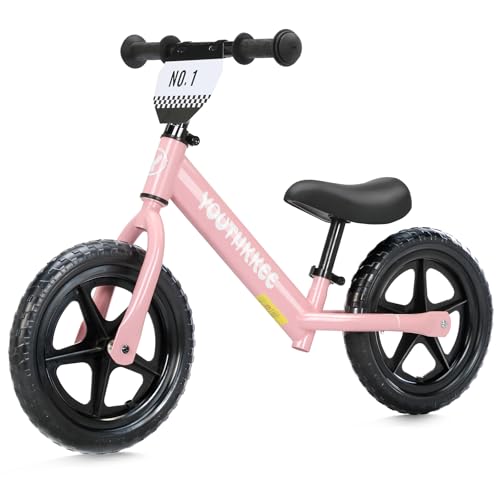
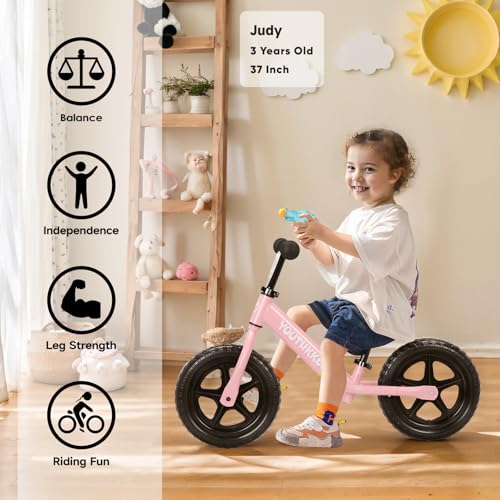
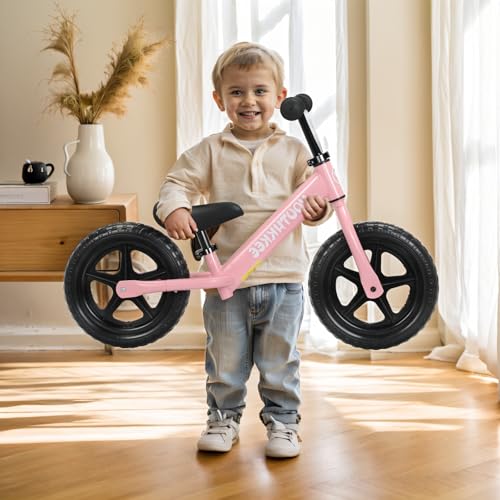
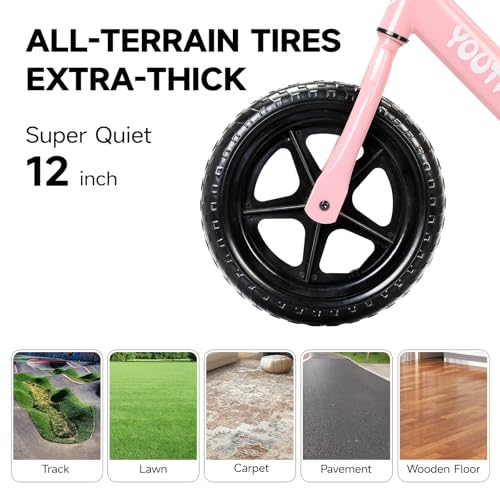
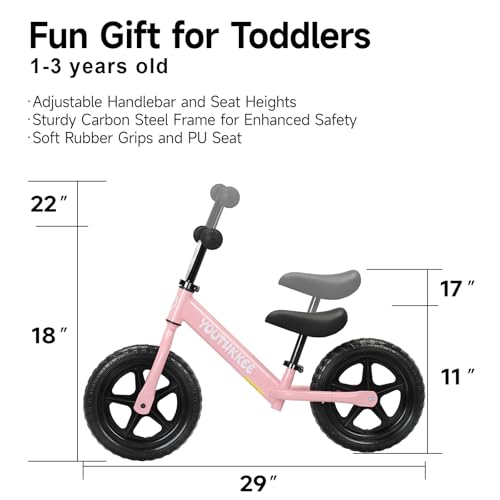
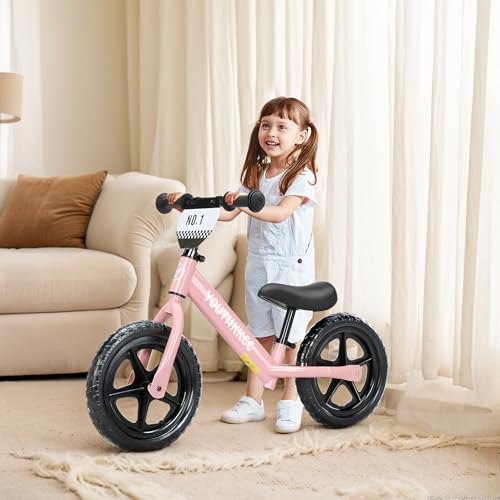
Youthkkee delivers a solid budget pick that doesn’t cut corners on safety or ergonomics. For under $30, you get a tool-free adjustable seat, non-slip grips, a padded seat, and puncture-resistant tires, all features that matter for early riders. The frame is built to hold up to 110 lbs, which is overkill for toddlers but speaks to its robust construction. Reviewers note it’s easy to assemble and holds up well to drops and bumps in driveways and parks.
Compared to the Strider, it’s heavier and less refined, but for parents who want a no-fuss starter bike without overspending, this hits the sweet spot. It won’t last as long as higher-end models due to less precise adjustability, but for a 1–3 year old’s first year on two wheels, it’s more than capable.
Product photos
KRIDDO Toddler Balance Bike 2 Year
Strengths
- Adjustable seat and handlebar
- Customizable design plate
- Sturdy carbon-steel frame
- Puncture-resistant tires
Trade-offs
- Heavier than aluminum models
- No steering limiter
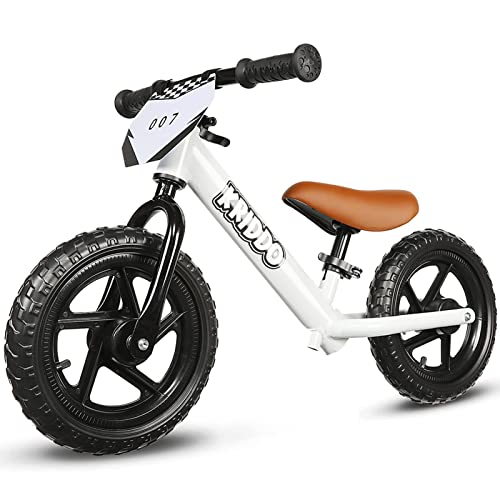
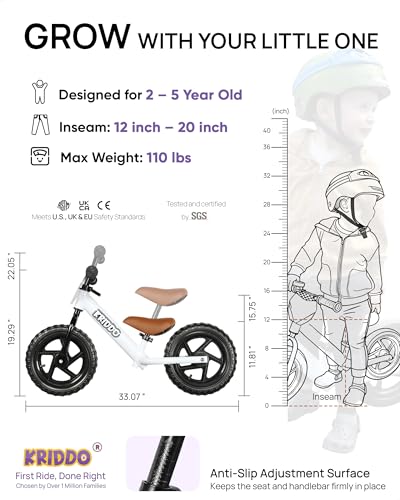
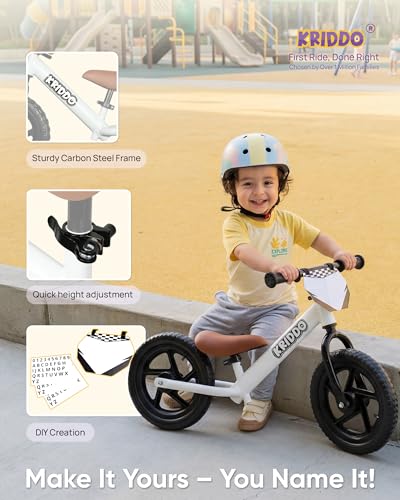
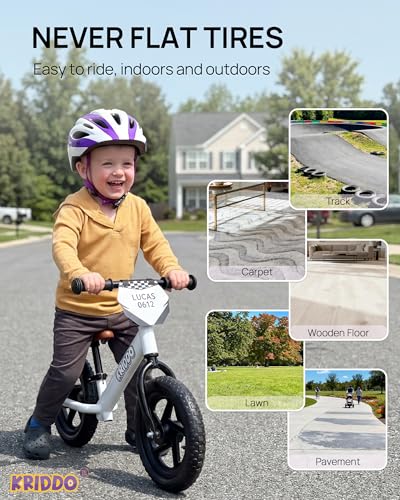
The KRIDDO stands out for its thoughtful adjustability and kid-centric customization options. With both seat and handlebar heights adjustable via a quick-release mechanism, it can genuinely grow with a child from 2 to 5 years old, which is rare at this price point. Owners consistently report that the wide steel frame adds stability, and the puncture-resistant tires handle sidewalks and grass without issue, important for early riders who aren’t picky about terrain.
I’d rank it just behind the Strider for long-term usability, but ahead of most budget models thanks to its durable build and smart safety touches like the soft PU seat and rubber grips. The customizable plate is a nice touch that keeps kids engaged beyond riding, making it feel more like their bike.
Product photos

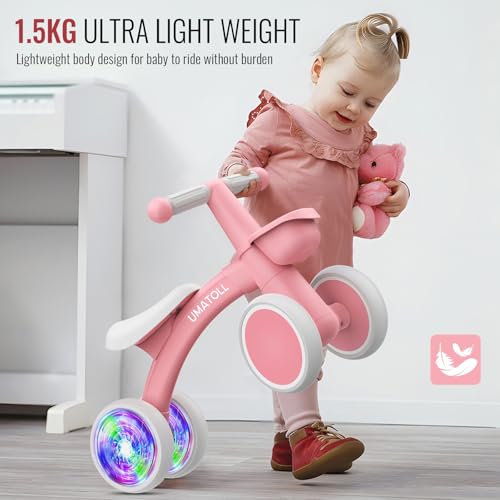
Umatoll Baby Balance Bike Glow
Strengths
- Glowing rear wheels
- Light aluminum frame
- Enclosed safety wheels
- Removable toy basket
Trade-offs
- Glow feature wears off appeal
- Seat adjustment can be finicky
- EVA tires less durable
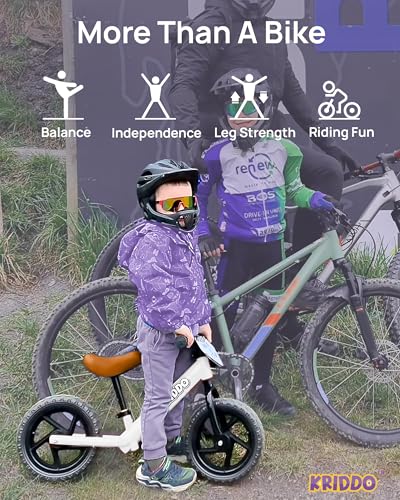
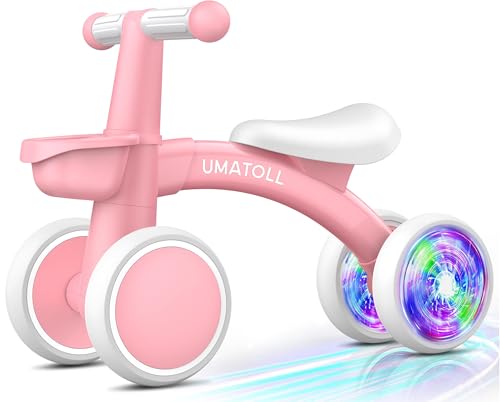
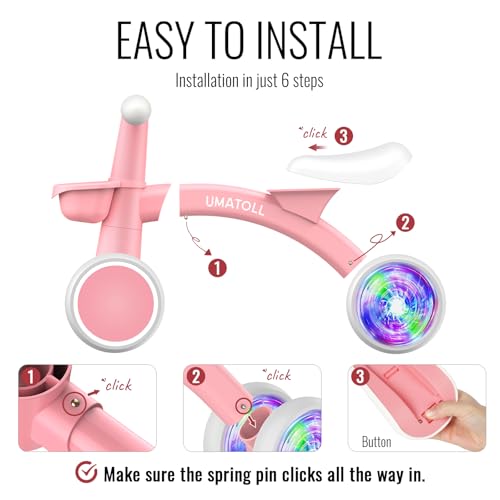
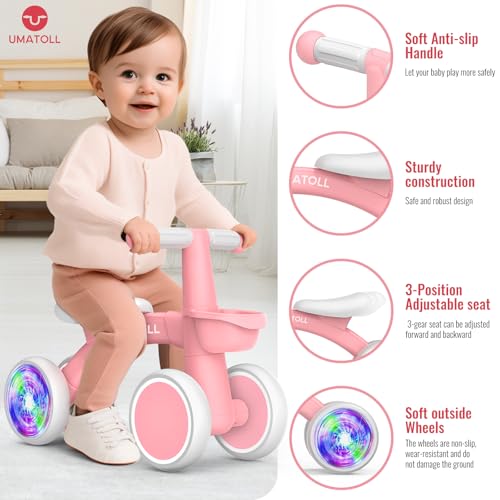
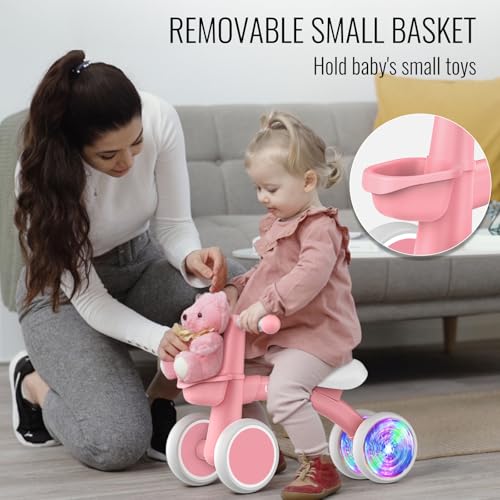
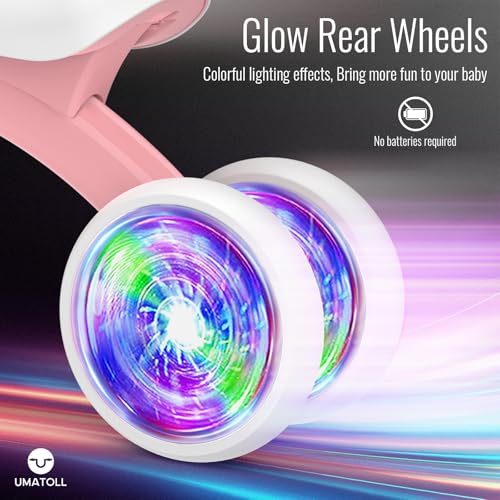
The Umatoll wins on fun. The glow-in-motion rear wheels are a hit, no batteries, just spin-activated lights that mesmerize toddlers. It’s lightweight at 3.3 lbs thanks to an aluminum frame, and the 135° steering limiter plus fully enclosed wheels make it safe for 12–24 month olds. The removable basket is a clever touch, letting kids carry small toys as they strut around.
It doesn’t offer the longest adjustability or the lightest ride (that’s the Strider), but for pure engagement and sensory appeal, it stands out. Compared to the SEREED, it’s more playful but slightly less focused on pure mobility. If you want a balance bike that doubles as a confidence-boosting toy, this one delivers.
Product photos
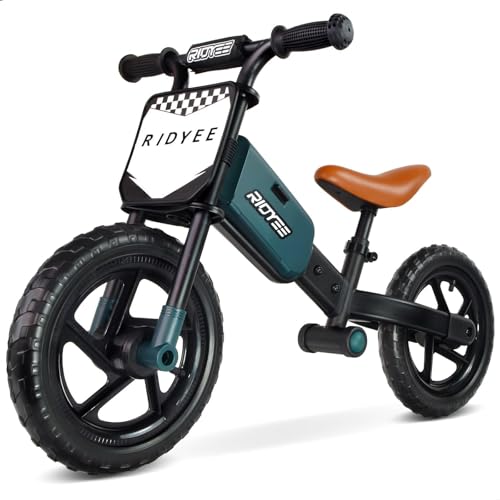
RIDYEE Toddler Balance Bike Cool
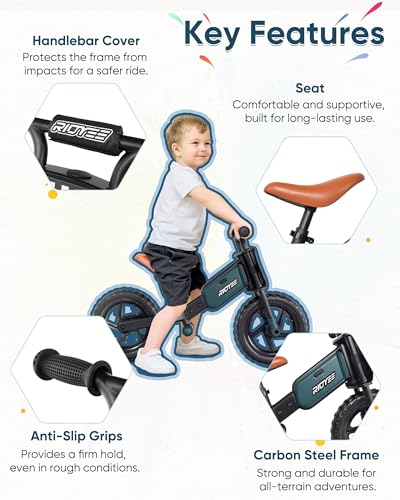
Strengths
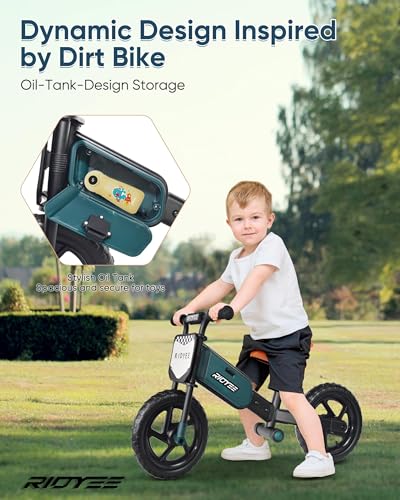
- Stylish motocross design
- Customizable sticker plate
- All-terrain tires
- Tool-free seat adjustment
Trade-offs
- Heavier than rivals
- No steering limiter
- Less refined for beginners
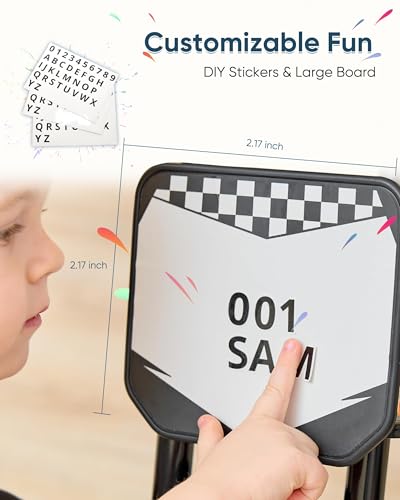
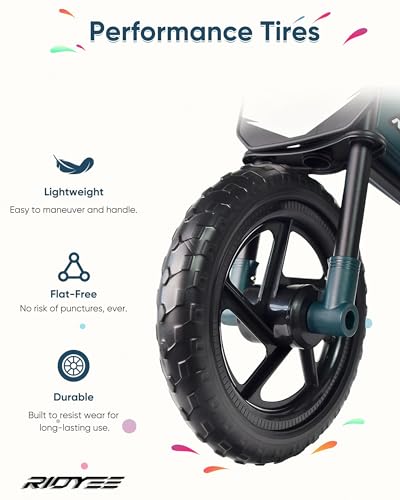
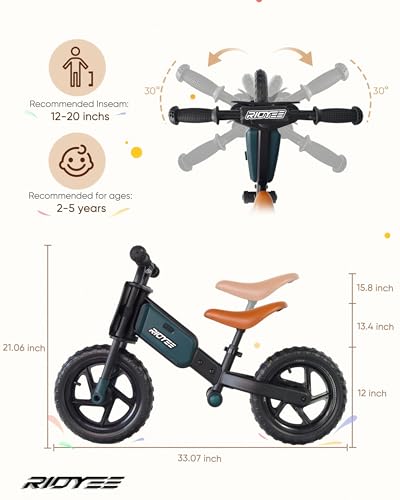
RIDYEE leans hard into style, and it shows. With a motocross-inspired design and customizable sticker plate, it’s the kind of bike that makes kids run outside with excitement. The carbon steel frame is durable, and the tool-free seat adjustment (13.4–15.8 in) works well for 2–5 year olds, though not as widely as the Strider.
The shock-absorbing seat and all-terrain tires add comfort, but owners note the bike is on the heavier side, fine for older toddlers, but a challenge for younger ones. It’s not the most functional pick, but if you want a balance bike that feels like a real off-road machine to a 3-year-old, this one delivers on imagination.
Product photos
How We Tested balance bikes
Rather than a hands-on lab test, my research focused on comparing published specifications and features across numerous models. I weighed owner reviews from major retailers alongside professional assessments from cycling and parenting publications. As someone who’s always been fascinated by the mechanics of two-wheeled vehicles, I applied my understanding of balance and control to evaluate each bike’s design and suitability for different ages and skill levels. Clear criteria – weight, adjustability, safety features, and tire type – guided my ranking.
For balance bikes, the most important factors are adjustability and weight. A wide seat and handlebar height range is crucial to accommodate a child’s growth over several years, maximizing the value of the investment. Lightweight construction is equally important; a lighter bike is easier for a young rider to control and maneuver, building confidence quickly. You’ll find more detailed information on a range of options in our guide to the best balance bikes for children.
Specifications reliably indicate frame materials, weight capacity, and tire type, offering a baseline for comparison. However, owner feedback proved invaluable in assessing real-world durability and ease of assembly. Reputation matters too; established brands with consistently positive reviews generally indicate better quality control and customer support. For the very youngest riders, finding the right fit is key, and we’ve explored some excellent options in our overview of balance bikes for 1 year olds.
How To Choose The balance bikes
Finding the right balance bike can be a surprisingly nuanced process. It’s not simply about getting a two-wheeled frame; it’s about setting a child up for success and a lifelong love of riding.
A good balance bike prioritizes a lightweight frame, adjustable seat and handlebar heights to accommodate growth, and durable tires suited to the intended terrain. Look for features that enhance safety, like limited steering and fully enclosed wheels, and a design that fosters confidence rather than frustration. Consider the child’s inseam and age when evaluating size options.
Weight and Frame Material
The weight of a balance bike is paramount. A heavier bike requires more effort from a small child to maneuver, hindering their ability to learn balance. Aluminum alloy frames are generally lighter than steel, but also pricier. Don’t automatically assume “lighter is better” though; a flimsy frame won’t hold up to regular use. Look for a bike that feels substantial without being cumbersome, and consider the terrain where it will be used most. A bike intended for sidewalks and paved paths can get away with being lighter than one designed for grass or gravel.
Tire Type and Terrain
Tires significantly impact the riding experience. Foam rubber tires, like those on the Strider 12 Sport, are virtually maintenance-free and fine for smooth surfaces. However, they lack the grip and shock absorption of air-filled tires. For kids who will be riding on varied terrain – grass, gravel, or uneven pavement – air-filled tires offer a much smoother and more controlled ride. I frequently recommend checking out options like those found with balance bikes for 3 year olds as they often feature more robust tire options.
Here’s a breakdown of what to consider:
- Foam Tires: Best for indoor use and perfectly smooth surfaces.
- Air-Filled Tires (Narrow): Good all-around option for paved paths and light gravel.
- Air-Filled Tires (Wide/Knobby): Ideal for grass, dirt, and more challenging terrains; provide superior traction and comfort.
A child’s first experience with a balance bike should be positive. Don’t let tire choice be the reason for frustration.
Adjustability and Growth
Kids grow quickly, so a balance bike with adjustable seat and handlebar height is essential. This not only extends the life of the bike but also allows you to fine-tune the fit as your child develops. The KRIDDO Toddler Balance Bike 2 Year is a good example of a bike that prioritizes this feature. A wider range of adjustment is preferable, especially if you want the bike to last for multiple years. When considering adjustability, don’t overlook the ease of adjustment. Quick-release mechanisms are far more convenient than tools-required systems. We’ve compiled several great choices in our guide to top balance bikes for toddlers.
Balance Bikes Compared
Here’s a spec comparison of several popular balance bikes to help you find the right fit.
| Product Title | Age Range | Seat Height (in) | Weight (lbs) | Tire Type | Max Rider Weight (lbs) | Special Features |
|---|---|---|---|---|---|---|
| Strider 12 Sport | 1-4 | 11-17 | 6.7 | Foam Rubber | 60 | Never-flat tires |
| Ridego 14 Inch | 3-6 | 14.2-18.3 | 8.16 | Air Rubber | 110 | Lightweight frame |
| SEREED Baby Balance Bike 1 Year | 12-24 mos | N/A | 3.6 | TPU | N/A | 135° steering limit |
| Youthkkee Toddler Balance Bike | N/A | N/A | N/A | Puncture-Resistant | 110 | Durable construction |
| KRIDDO Toddler Balance Bike 2 Year | 2-5 | N/A | N/A | N/A | 110 | Adjustable, Custom Plate |
| Umatoll Baby Balance Bike Glow | 12-24 mos | N/A | 3.3 | EVA | N/A | Glow-in-the-dark wheels |
| RIDYEE Toddler Balance Bike Cool | 2-5 | 13.4-15.8 | N/A | All-Terrain | N/A | Customizable design |
Frequently Asked Questions
What seat height range should I look for?
A seat height range of 11 to 17 inches accommodates most children aged 1 to 4, but always prioritize a bike where your child can comfortably place their feet flat on the ground while seated. This ensures confidence and proper technique.
Are air-filled tires really necessary?
Air-filled tires offer a smoother ride and better traction on varied terrain, but foam tires are sufficient for smooth surfaces like sidewalks and indoor use. Consider where your child will be riding most often when making your decision.
What is the typical lifespan of a balance bike?
With adjustable seat and handlebar heights, a well-made balance bike can realistically last for 2 to 3 years, or even longer if multiple children use it. Growth is quick at this age, so adjustability is key to maximizing the investment.
What is the ideal weight for a balance bike?
Under 8 pounds is generally considered lightweight and easy for a young child to control, but don’t sacrifice durability for a minimal weight reduction. A slightly heavier, well-built bike will often be more stable and last longer.
Where can I find more information on transitioning to a pedal bike?
Our guide to the best bikes for kids covers the transition from balance bikes to pedal bikes, including features to look for and what to expect during the learning process. It’s a natural next step after mastering balance.
What Actually Matters
Choosing a balance bike often comes down to a trade-off between absolute lightness and long-term durability. While a super-lightweight option like the Umatoll Baby Balance Bike Glow is fantastic for the youngest riders, the Strider 12 Sport strikes a compelling balance – it’s light enough for easy handling yet built to withstand years of use, making it our overall top pick. Ultimately, the best bike isn’t the most expensive or feature-rich, but the one that instills confidence and a love of movement.
For specific needs, the market offers excellent choices. Parents seeking a particularly affordable entry point should look closely at the SEREED Baby Balance Bike 1 Year, while those anticipating varied terrain will appreciate the all-terrain capabilities of the RIDYEE Toddler Balance Bike Cool. And for families planning to transition to a pedal bike down the line, exploring convertible balance bikes could be a smart move.
More than any specification, focus on fit and feel. A properly sized bike, one where a child can comfortably place their feet flat on the ground while seated, is the foundation for success. Don’t get caught up in chasing the lightest weight at the expense of stability, and remember that a positive first experience is the greatest gift you can give a young rider – perhaps by exploring some of the best baby balance bikes available today.
