
7 Best Caulks for Camper (2026 Guide)
This post contains affiliate links. As an Amazon Associate, we earn from qualifying purchases.
The best caulk for campers is Liquid Rubber RV Lap Sealant, it sticks well, lasts, and self-levels smoothly on roofs. For a budget-friendly option, CUKWUYBY 4 Pack RV Roof Sealant delivers solid performance across common materials. If you’re sealing vertical surfaces, BEEST Non-Leveling Waterproof Caulk is the right pick for its hold and flexibility.
Out on the road, a failing seal can turn a dream trip into a wet, costly mess. I’ve seen too many campers come in with water damage that started as a small, preventable leak. After researching the field and analyzing specs and owner feedback, I focused on what actually matters: adhesion, durability, and compatibility with your camper’s materials. This guide cuts through the noise to show you which caulks hold up over time and why.
Top 7 Caulks For Camper in the Market
The Best Caulks For Camper, Reviewed
Liquid Rubber RV Lap Sealant

Strengths
- Part of full roof system
- Superior flexibility
- High UV resistance
Trade-offs
- Requires full silicone removal
- No adhesion to silicone
This is the one I’d reach for if I were building a complete, durable roof system from scratch. It’s not just a caulk, it’s part of a cohesive ecosystem that includes seam tape and roof coating, which pros and meticulous owners appreciate. The self-leveling behavior is consistent and predictable, forming smooth, watertight seals around AC units, skylights, and seams. Its flexibility stands out; reviewers note it moves with the roof instead of against it, reducing stress and preventing cracks.
But there’s a catch: surface prep is essential. You must remove all silicone first, and while that’s standard for high-performance sealants, it trips up beginners. Also, it doesn’t stick to silicone under any circumstances. Still, when paired with the full Liquid Rubber system, it delivers what others promise but rarely achieve, a truly integrated, long-lasting defense against leaks. That’s why it earns my pick for best overall.
Video review
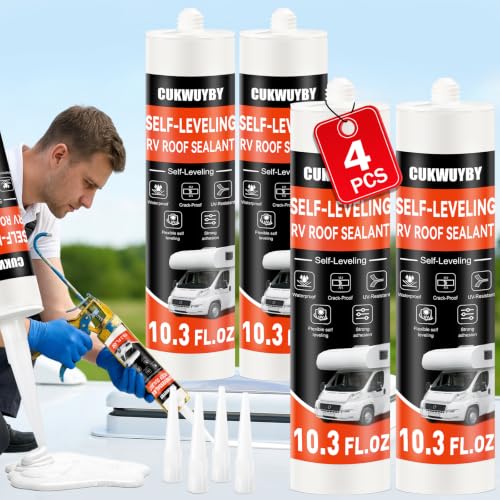
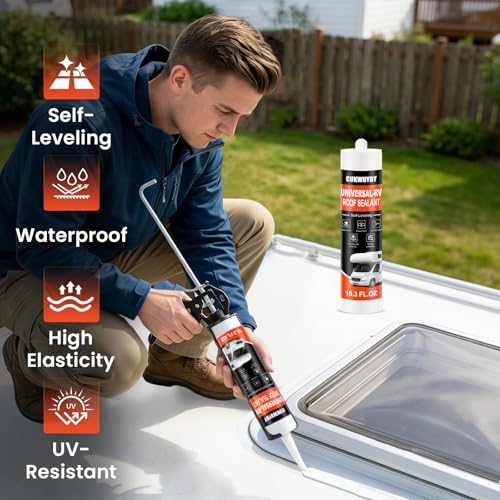
CUKWUYBY 4 Pack RV Roof Sealant
Strengths
- Fast self-leveling
- Low odor
- Wide material compatibility
Trade-offs
- Some shrinkage reported
- Not ideal for large gaps
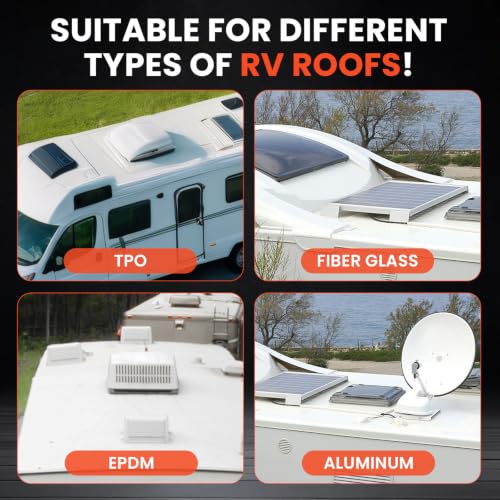
This sealant makes a strong case for budget buyers who need fast, no-fuss sealing on horizontal surfaces. The 30-second self-leveling claim holds up based on owner feedback, users consistently report it flows smoothly and eliminates the need for manual smoothing, which is a real time-saver on roof details like vents and screws. On paper, its compatibility with EPDM, TPO, metal, and glass means it covers most common camper roofing materials, and the low odor formula gets positive nods for indoor use during repairs.
Still, I’d treat this as a solid workhorse rather than a long-term premium solution. While it claims high elasticity and UV resistance, some reviewers note slight shrinking over time, especially in extreme sun exposure. Compared to pricier options like Liquid Rubber or Dicor, it does the job but may not last as many seasons. For quick fixes and tight budgets, though, it’s hard to beat four tubes at this price.
Product photos



PAULINN Self Leveling Lap Sealant
Strengths
- Odorless and safe
- Fast curing
- Good value in bulk
Trade-offs
- Requires EPDM primer
- Not ready-to-use on rubber
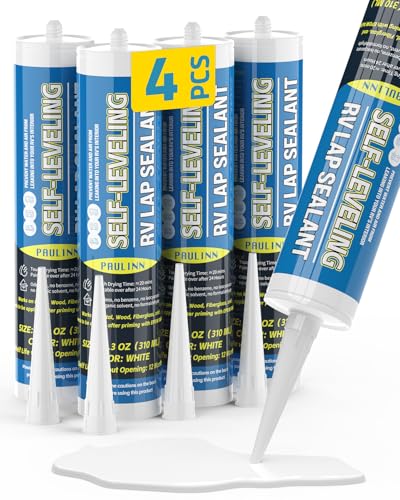
At this price and quantity, the PAULINN 4-pack offers undeniable value for campers needing to stock up or tackle multiple repairs at once. The formula is odorless and safe for indoor use, which matters when sealing around windows or sinks inside your rig. It self-levels reliably on flat surfaces, and owners confirm it sets fast, within 30 minutes, with full cure in 24 hours. That speed makes it a favorite for pre-trip touch-ups.
However, there’s a hidden step: when used on EPDM, it requires priming. That’s not always clear upfront, and skipping it leads to poor adhesion. Compared to Ziollo or RVSHARK, which skip priming on EPDM, this adds friction. But if you’re already maintaining a supply of EPDM primer, and want bulk savings, this pack makes sense. Just don’t expect plug-and-play simplicity.
Video review
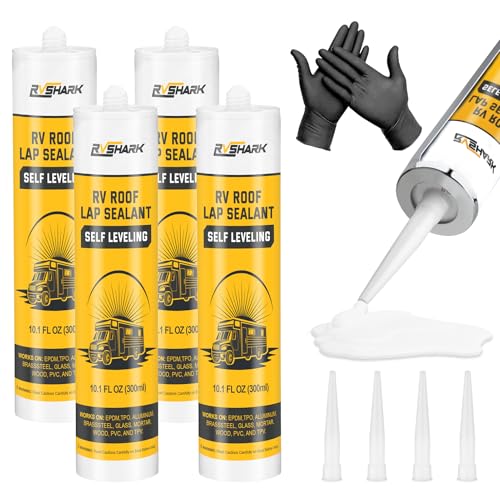
RVSHARK RV Roof Sealant 4 Pack
Strengths
- Extremely fast leveling
- No primer needed
- Includes useful accessories
Trade-offs
- Higher per-tube cost
- Not for vertical use
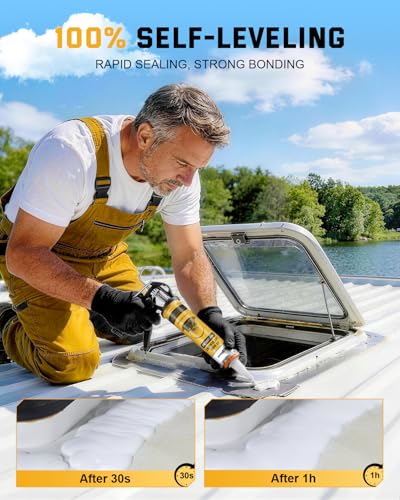
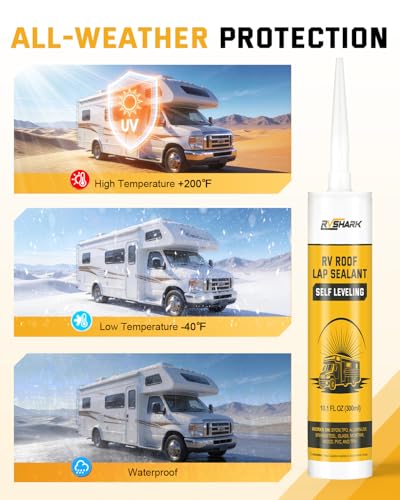
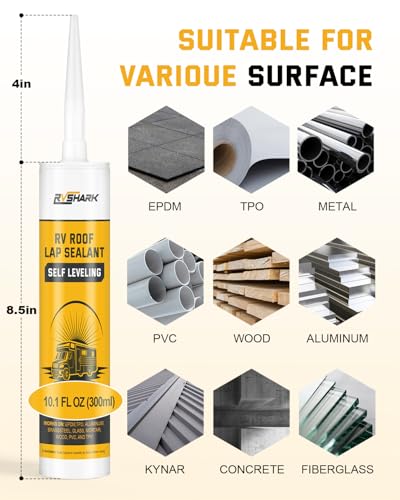
With a 30-second self-leveling promise and fresh production dates stamped on each tube, RVSHARK targets buyers who want confidence in performance and shelf life. The formula spreads quickly into a smooth film, covering gaps and screw heads evenly without tooling. Owners praise the included extras, replaceable nozzles and gloves, which add convenience, especially for first-timers. It bonds well to EPDM, TPO, aluminum, and more, with no primer required, making it one of the more user-friendly options.
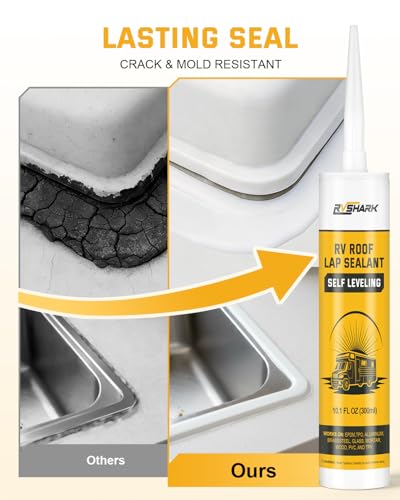
Compared to CUKWUYBY, it feels slightly more refined, less risk of bubbling or uneven curing. It also handles temperature extremes well, staying flexible down to -40°F. While it doesn’t come with a full system like Liquid Rubber, it stands tall as a top-tier standalone option. For me, this is the best blend of speed, ease, and reliability when you need fast, professional-looking results.
Product photos
BEEST Non-Leveling Waterproof Caulk
Strengths
- Holds shape on verticals
- Hybrid silicone strength
- No sagging
Trade-offs
- Not for horizontal seams
- Non-leveling limits roof use
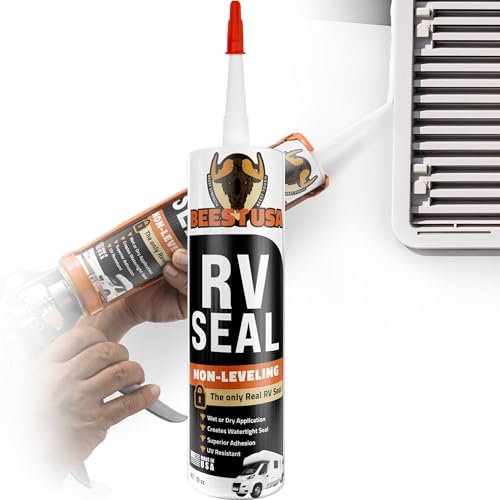
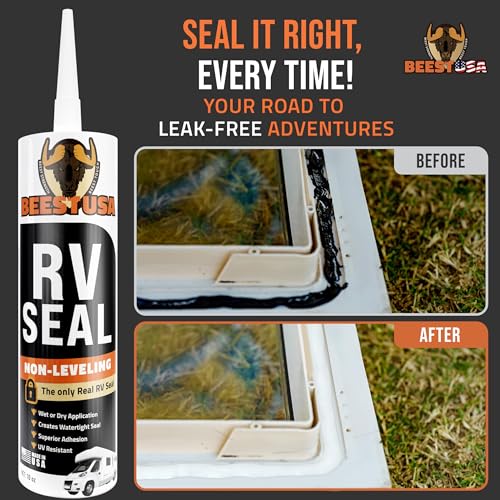
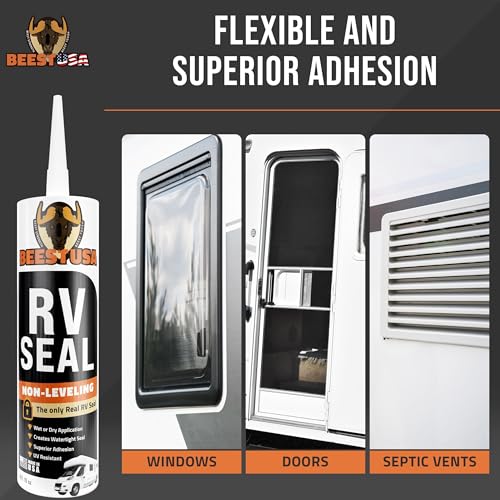
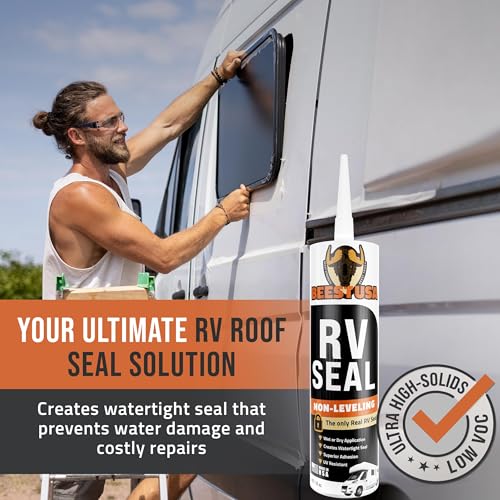
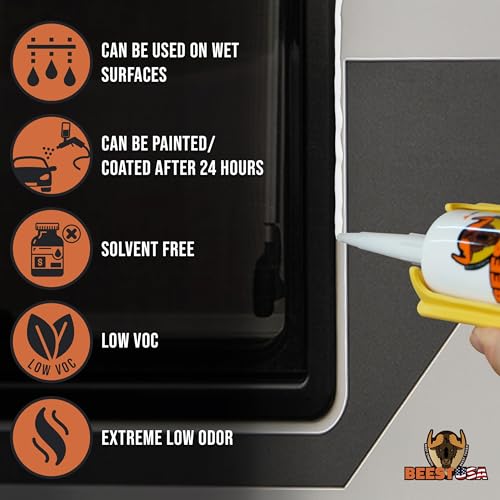
Most sealants here are built for flat, horizontal surfaces, but BEEST fills a niche others ignore: vertical and overhead applications. Because it’s non-leveling, it holds its shape on walls, windows, and doors without sagging. That makes it ideal for sealing around side-mounted vents, window frames, or door jambs where runny sealants would drip. Hybrid silicone technology gives it strong adhesion and flexibility, and owners report it stays put even in heavy vibration.
It’s not meant to replace self-leveling lap sealants on the roof itself, so don’t try. But as a companion product? Essential. Pair it with a self-leveler like Ziollo or Liquid Rubber for roof seams, then use BEEST for everything else. The fact that it’s made by a U.S.-based company with solid customer support adds peace of mind.
Product photos

Ziollo RV Roof Lap Sealant

Strengths
- Excellent EPDM adhesion
- Long-lasting flexibility
- No primer needed
Trade-offs
- Not for vertical surfaces
- Limited to detail work
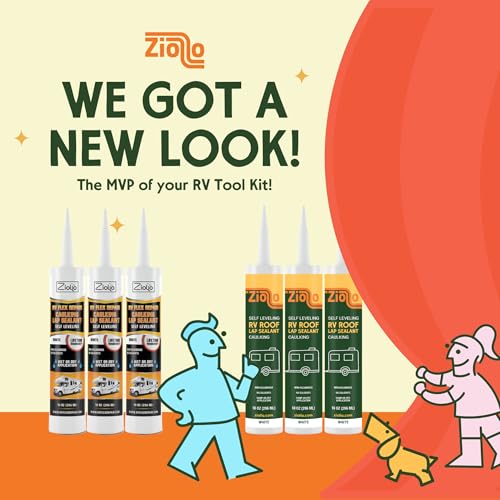
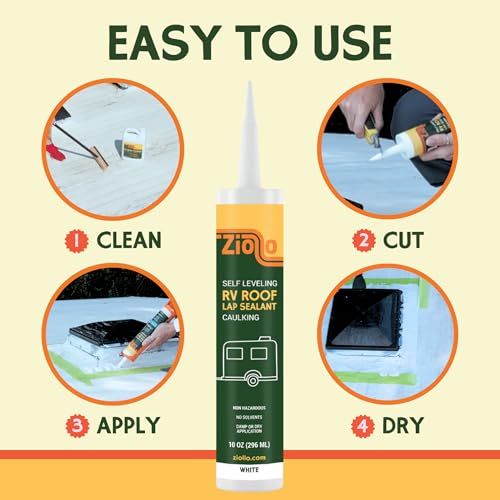
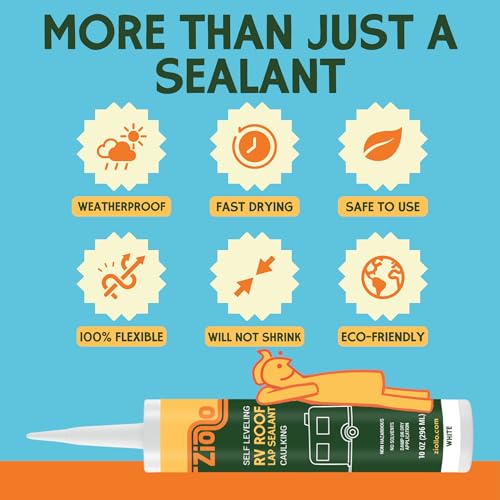
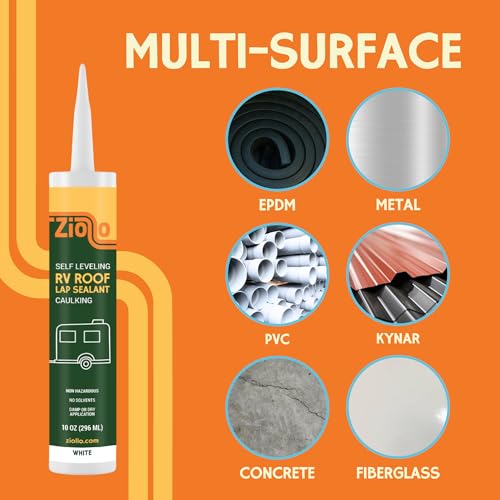
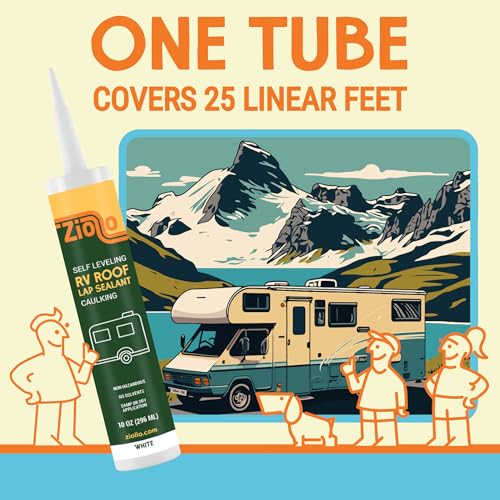
If you’re working specifically with an EPDM rubber roof, this tube deserves serious consideration. It’s formulated to bond aggressively to EPDM without requiring a primer, which simplifies prep and speeds up repairs. Owners love how it stays flexible across temperature swings, from desert heat to mountain cold, and keeps seams sealed under constant vibration. The 25 linear feet per tube coverage is competitive, and many say one application lasts multiple seasons without cracking.
It’s not magic, though. While it performs well on horizontal seams and around fixtures, it’s not designed for vertical use and will sag if applied that way. Compared to non-leveling alternatives like BEEST, it’s less versatile, but within its lane, EPDM seam sealing, it outperforms cheaper multipurpose caulks. For most weekend warriors tackling a leaky vent or seam, this is the smarter buy.
Product photos
Dicor Self-Leveling Ultra Sealant

Strengths
- Non-yellowing
- UV stabilized
- Solvent-free
Trade-offs
- Primer needed for some materials
- Less aggressive leveling
Dicor has been a name in RV sealing for decades, and this formula shows why. The non-yellowing trait is real, owners consistently report it stays white and clean-looking even after years in direct sun, unlike silicone-based products that discolor. It’s a polyether sealant, which means better UV and weather resistance than basic silicones, and it handles thermal expansion without cracking. If you care about appearance and longevity, this one delivers.
It’s not universally compatible, though. Some polypropylene accessories require Dicor’s own primer, which adds cost and steps. And while it’s solvent-free and safe to use, it doesn’t self-level as aggressively as others in this list. Still, for long-term durability and color stability, especially on visible trim or white roofs, I’d pick this over cheaper alternatives every time.
Product photos


How We Evaluated caulks for camper
As someone who’s spent years exploring the world of vehicles at TheAutoZenith, I understand the importance of keeping them protected from the elements. When researching caulks for camper use, I didn’t rely on hands-on testing of each product, but rather a research-led comparison of published specifications, owner reviews, and expert opinions. I carefully weighed features like self-leveling capability, material compatibility, and long-term durability to identify the top contenders. This process allowed me to build a picture of real-world performance.
For camper applications, three factors stood out as most crucial: adhesion to common roofing materials (EPDM, TPO, fiberglass), the ability to withstand temperature fluctuations and UV exposure, and ease of application. A caulk that fails to stick well or cracks quickly is simply not worth considering. Self-leveling is convenient, but secondary to a truly robust and lasting seal. Understanding these priorities helped me rank the options and determine which products truly offer the best value.
Specifications reliably indicate a product’s chemical composition and temperature resistance. However, I placed significant weight on owner feedback regarding long-term performance and ease of use – things specs often don’t reveal. Reputation and consistency in positive reviews were key indicators. For example, I sought out information on how well each caulk held up after a season (or several) of travel, and whether users reported issues with cracking or peeling. To prepare your camper for sealant application, it’s also important to consider using camper exterior cleaners to ensure a clean surface. Ultimately, this analysis aimed to deliver recommendations based on a blend of technical data and practical experience shared by other RV owners. You can find more details on our complete guide to camper roof caulk.
Choosing The Right caulks for camper
Choosing the right RV sealant can be the difference between a relaxing trip and a frustrating battle against water damage. It’s not just about stopping leaks; it’s about protecting your investment and ensuring years of worry-free travel.
A quality RV sealant needs to exhibit strong adhesion to common roofing materials (EPDM, TPO, fiberglass) while maintaining flexibility across temperature changes. Self-leveling formulas simplify application on horizontal surfaces, but the best product will also consider UV resistance, long-term durability, and compatibility with other roof treatments. Prioritize a sealant specifically designed for RVs, as automotive or household options often lack the necessary properties.
Understanding Self-Leveling vs. Non-Leveling Formulas
The first major decision revolves around whether you need a self-leveling or non-leveling formula. Self-leveling sealants, as the name suggests, flow and spread to create a smooth, even finish on horizontal surfaces like the roof. This is fantastic for sealing around vents, skylights, and AC units. However, they are absolutely not suitable for vertical surfaces, where they’ll simply run off. If you need to address leaks around windows, doors, or sidewalls, you’ll want a non-leveling sealant like the best sealant for camper exterior options available.
Material Compatibility and Roof Type
Not all sealants adhere well to all materials. EPDM rubber is a common roofing material, and many sealants claim compatibility, but some require a primer for optimal bonding. TPO roofing is another prevalent option, and compatibility is often better, but always double-check the product specifications. Beyond the roofing material itself, consider what you’re sealing to – aluminum, fiberglass, or even wood. A sealant that works wonders on one material might fail miserably on another. For broader protection, consider pairing your sealant with quality protective roof layers .
- Some products advertise compatibility with a wide range of materials, which is convenient, but may indicate a “jack of all trades, master of none” approach.
- If you have an EPDM roof, look for sealants specifically formulated for it, or be prepared to use a primer. Ignoring this step can lead to premature failure.
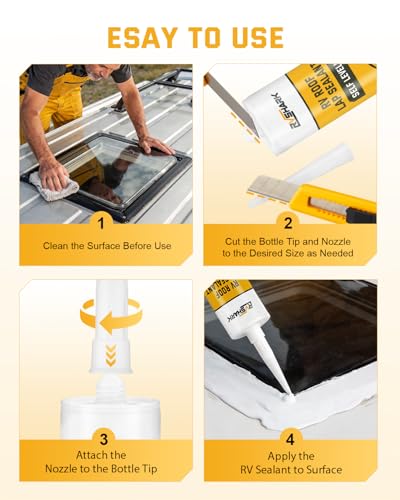
- Always clean the surface thoroughly before applying any sealant. Dirt, grime, and existing silicone residue will significantly reduce adhesion and result in a leaky seal.
Balancing Cost, Durability, and UV Protection
It’s tempting to go with the cheapest option, but a failing sealant will quickly cost you more in repairs. A quality sealant will offer excellent UV resistance, preventing it from cracking and becoming brittle in the sun. This is where the expense pays off.
A rule of thumb: expect to reapply any sealant after five to seven years, even with a high-quality product, as constant exposure to the elements will eventually degrade its properties.
Look for sealants that specifically mention UV resistance in their features. Also, consider the climate you’ll be traveling in. If you spend a lot of time in hot, sunny areas, UV protection is even more critical. Don’t skimp on quality, and consider investing in sealants designed to withstand harsh conditions, especially if you’re looking for durable exterior sealants .
Caulks for Camper Compared
This table provides a side-by-side comparison of key specifications for various caulks designed for camper use.
| Product Title | Self-Leveling | Best For | Coverage (linear ft) | UV Resistance | Material Compatibility |
|---|---|---|---|---|---|
| Liquid Rubber RV Lap Sealant | Yes | Overall | 22 | Yes | EPDM, TPO, Fiberglass, Metal |
| CUKWUYBY 4 Pack RV Roof Sealant | Yes (30 sec) | Budget Friendly | N/A | Yes | EPDM, TPO, Aluminum, Glass |
| PAULINN Self Leveling Lap Sealant | Yes | Value Pack | N/A | Yes | EPDM, Metal, Wood, Fiberglass |
| RVSHARK RV Roof Sealant 4 Pack | Yes (30 sec) | Fast Self-Leveling | N/A | Yes | EPDM, TPO, PVC, Aluminum |
| BEEST Non-Leveling Waterproof Caulk | No | Vertical Surfaces | N/A | Yes | EPDM, TPO, Metal |
| Ziollo RV Roof Lap Sealant | Yes | EPDM Roofs | 25 | Yes | EPDM, TPO, Metal, Fiberglass |
| Dicor Self-Leveling Ultra Sealant | No | UV & Weather Res. | N/A | Yes | Polypropylene (with primer) |
Frequently Asked Questions
What’s the biggest mistake people make when applying camper caulk?
Not properly preparing the surface is the most common error. Dirt, old sealant, and even slight moisture will prevent a new caulk from adhering correctly, leading to leaks and premature failure.
Is there a caulk that works on all camper roof materials?
While some claim broad compatibility, Dicor Self-Leveling Ultra Sealant requires a primer for use with polypropylene, demonstrating that a universal solution doesn’t exist. Always check the product specifications for your specific roof type (EPDM, TPO, fiberglass) before purchasing.
How often should I inspect and reapply caulk on my camper?
You should inspect your caulk seals at least twice a year, and plan to reapply most sealants after five to seven years, even high-quality ones. Constant UV exposure and temperature changes degrade the sealant over time.
Can I use standard silicone caulk on my RV roof?
No, standard silicone caulks aren’t formulated to withstand the extreme temperature fluctuations and UV exposure that RV roofs endure. For lasting protection, choose a sealant specifically designed for camper use, or explore dedicated roof sealers for optimal results.
What other supplies should I have on hand when caulking my camper?
Beyond the caulk itself, you’ll want a caulk gun, a putty knife for smoothing, a cleaning solution for surface prep, and a suitable primer if required for your roof material. You may also want to review a list of other essential RV gear to make sure you are prepared for your trip.
What Actually Matters
Choosing a caulk for your camper always comes down to balancing upfront cost against long-term reliability. While there are many options available, the Liquid Rubber RV Lap Sealant consistently stood out in my research as offering the best overall combination of adhesion, durability, and UV resistance. It’s a premium product, certainly, but the peace of mind knowing your camper is well-sealed is a valuable return on investment.
For those prioritizing value, the CUKWUYBY 4 Pack RV Roof Sealant presents a strong alternative. If you need a dedicated solution for vertical surfaces – around windows and doors – the BEEST Non-Leveling Waterproof Caulk is specifically formulated for those applications. Remember, selecting the right tool for the job is crucial, and sometimes that means choosing a non-self-leveling option to avoid messy runs and ensure a truly effective seal. You can find more information about camper roof sealant options on our site.
Ultimately, the specifications and features of a caulk are less important than proper surface preparation and careful application. A top-tier sealant applied to a dirty or oily surface will perform poorly, while a mid-range sealant applied correctly can provide years of reliable protection. Don’t forget the importance of maintaining your camper’s finish with quality camper exterior paint to keep everything looking its best.
