
9 Best Car Speakers of 2026
This post contains affiliate links. As an Amazon Associate, we earn from qualifying purchases.
The Pioneer TS-A6971F stands as the overall best car speaker for its balanced sound and high 92dB sensitivity, making it ideal for most setups. For those on a tighter budget, the BOSS Audio CH6530 delivers decent performance at a low cost, while the KICKER DSC6930 offers strong versatility with solid specs and wide compatibility across vehicles.
Upgrading your car speakers shouldn’t mean guessing what works. Factory systems often lack clarity and depth, leaving music flat and uninspiring no matter how good the source. I’ve seen too many enthusiasts overspend on raw power without considering how sensitivity, fit, and design affect real-world sound.
This guide cuts through the noise. Based on specs and owner feedback, I compared top models to find ones that deliver noticeable improvements in clarity, volume, and durability. Whether you’re keeping your factory head unit or planning a full audio upgrade, these picks are chosen for performance that matches their claims.
Top 6 Car Speakers in the Market
The Best Car Speakers, Reviewed
Pioneer A-Series Plus TS-A6971F
Strengths
- 4-way driver separation
- High sensitivity
- Wide frequency range
Trade-offs
- Not ideal for heavy bass focus
- Adapters may not fit all cars
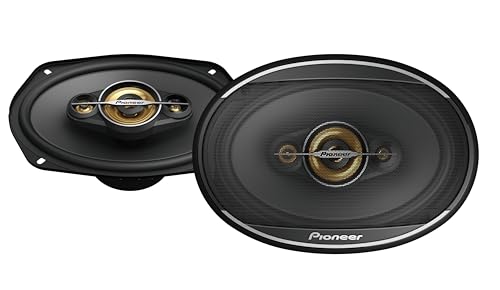
This is the speaker I’d recommend to most people shopping for a meaningful audio upgrade without stepping into component territory. The 4-way design, with dedicated midrange, tweeter, and super tweeter, delivers a level of clarity and tonal balance that 3-way models often miss. At 92 dB sensitivity, it plays loud and clean even on a factory head unit, and the 29 Hz–33 kHz frequency response covers more ground than most ears can detect.
Owners praise its ability to handle everything from classical to EDM without breaking a sweat, and the included multi-fit adapters solve fitment headaches in many GM, Ford, and Toyota models. Against the Kenwood 6966S, it’s simply more refined. It’s not the loudest or deepest-bass option, but for overall musicality and real-world usability, this is my pick for ‘best overall’, a rare blend of spec smarts and driver cohesion.
Video review
BOSS Audio CH6530 6.5 Inch

Strengths
- Extremely affordable
- Decent sensitivity
- Long warranty
Trade-offs
- Harsh high end
- Weak bass response
- Piezo tweeter limitations
Let’s be honest: the BOSS CH6530 exists to fill the “under $30” void, and it does that job with minimal shame. You get a 3-way layout, 90 dB sensitivity, and a piezo tweeter, which tells you everything about its intended role. These will make your music louder and slightly fuller than OEM trash speakers, and the 3-year warranty adds peace of mind.
But on closer listen, the frequency response cuts off below 100 Hz, so bass feels thin, and the piezo tweeter can get shrill fast. Owners report they work fine for background listening or in older trucks where sound quality isn’t the priority. Still, for just a bit more, you can land the Pioneer F-Series or even step up to the TS-501M and gain real fidelity. This one’s purely for budget survival mode.
Video review
Rockford Fosgate P1683 Punch 6×8
Strengths
- Excellent build quality
- FlexFit mounting system
- Accurate frequency response
Trade-offs
- Lower sensitivity than rivals
- Heavier than average
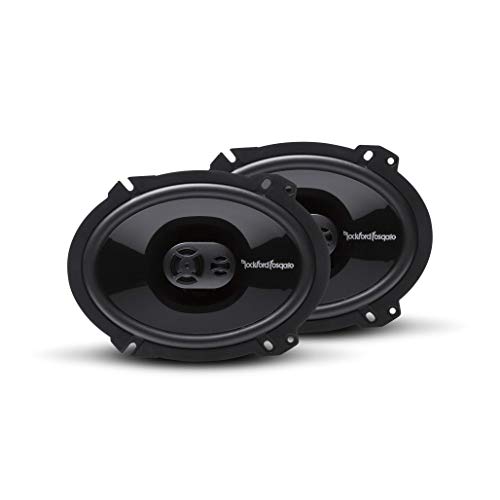
If build quality and materials matter to you, the Rockford Fosgate P1683 stands out in a sea of budget plastic speakers. The injection-molded mineral-filled polypropylene cone, butyl rubber surround, and PEI dome tweeter aren’t just marketing fluff, they’re components that owners say hold up under daily abuse while delivering consistent sound. The FlexFit basket is a smart touch, making alignment with oddball factory mounting points far less frustrating.
RMS power is only 65 watts, but paired with a decent head unit or small amp, these speakers stay clean and balanced across rock, hip-hop, and spoken word. They won’t match the frequency spread of a true component set, but for a drop-in replacement in a truck or older sedan with 6×8 openings, they’re one of the more trustworthy choices. I’d take their durability and smooth tuning over the raw specs of cheaper brands any day.
Product photos


Pioneer TS-501M 5.25 Inch 4-Way
Strengths
- Compact 4-way design
- Warm midrange clarity
- Good high-frequency extension
Trade-offs
- Requires careful break-in
- Lower output on weak amps
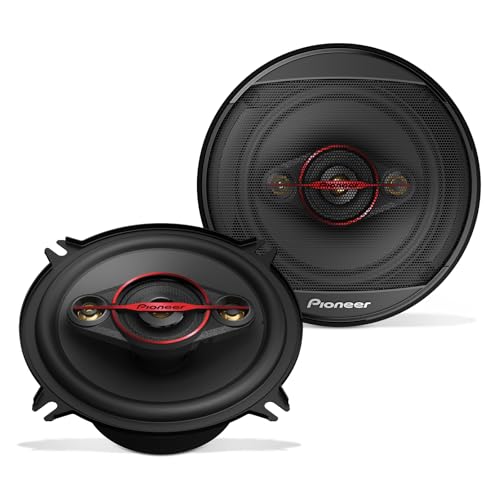
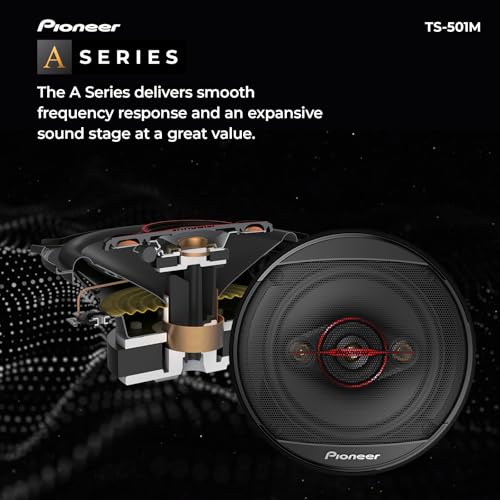
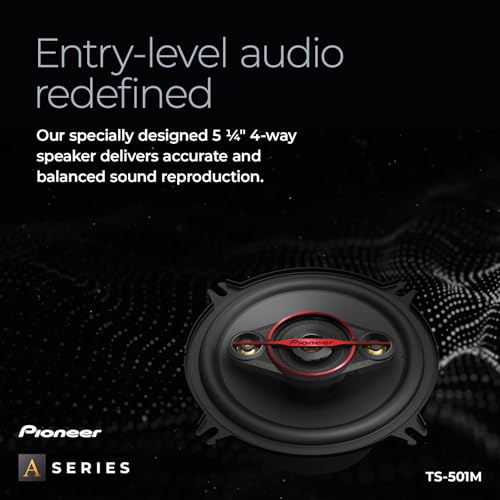
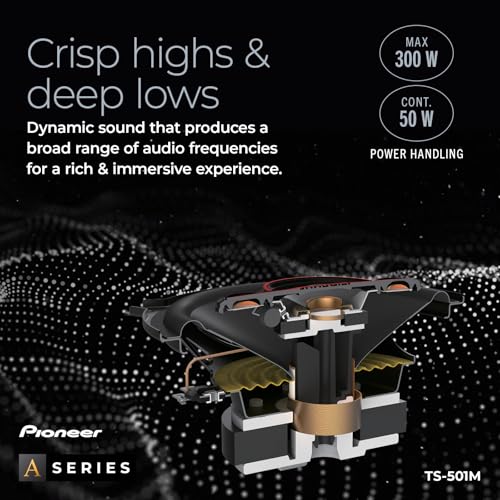
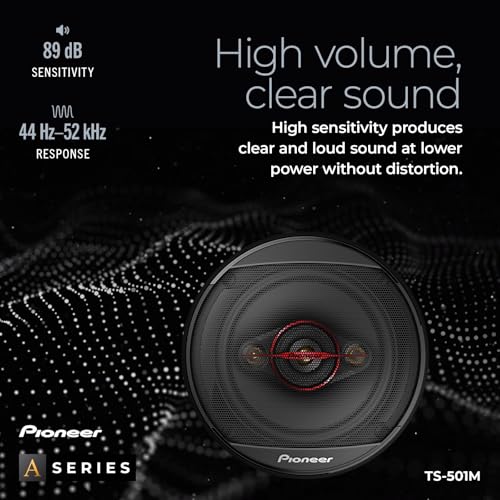
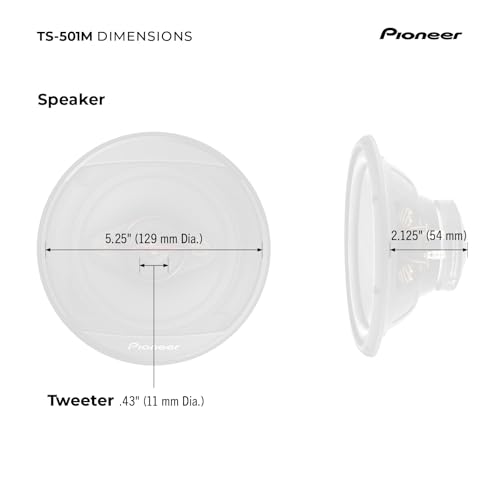
Small doors demand compact speakers, and the Pioneer TS-501M delivers strong performance in a tight footprint. Its 4-way layout in a 5.25-inch frame is impressive, having both a tweeter and super tweeter helps maintain airiness and detail, especially with compressed digital files. The 89 dB sensitivity isn’t class-leading, but it’s enough to keep things clear when powered by a stock deck.
Reviewers note the cellulose fiber cone gives a warm, natural tone to vocals and acoustic instruments, which sets it apart from harsher-sounding budget options. When compared to the BOSS CH6530, it’s clearly more refined, though it asks for a bit more power to shine. If your car has cramped front doors or you’re upgrading a hatchback, this is the smarter buy over cutting corners with cheaper alternatives.
Product photos
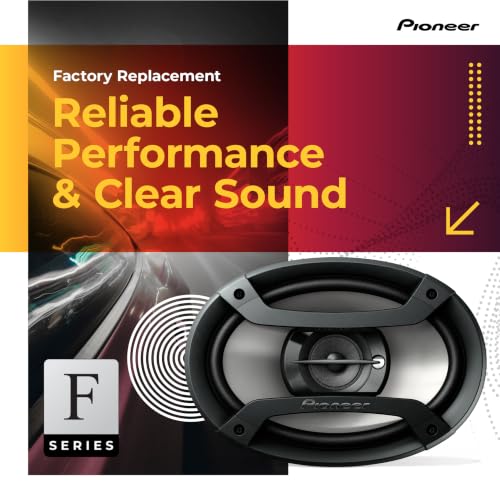
Pioneer TS-F1634R 6.5 Inch 2-Way

Strengths
- Reliable everyday sound
- Standard 6.5-inch fit
- Clean factory look
Trade-offs
- Basic 2-way design
- Modest power handling
- Uninspired tweeter
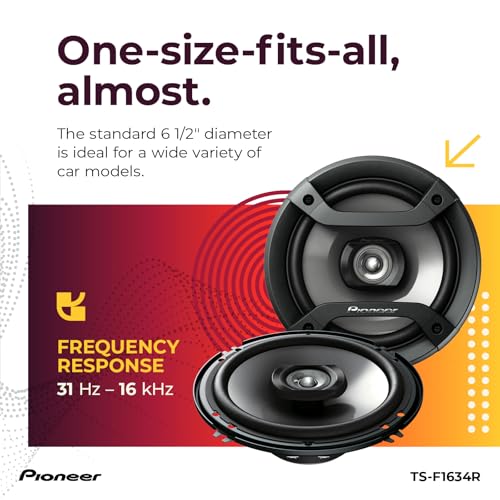
The TS-F1634R doesn’t wow with specs, 88 dB sensitivity, 25W nominal power, basic 2-way design, but it wins where it counts: consistency and fit. It’s a textbook example of “good enough” done well. The stamped basket and standard sizing mean it drops into countless vehicles without drama, and the black finish blends in cleanly.
Compared to the BOSS CH6530, it’s more balanced and less fatiguing at highway volumes. While it lacks the layered highs of a 4-way like the TS-501M, it’s more efficient and forgiving on weak decks. I see this as the sensible middle ground for someone upgrading a commuter car without inviting distortion into their life. Not exciting, but dependable.
Product photos



Kenwood KFC-6966S 6×9 Inch 3-Way
Strengths
- Strong bass performance
- Easy installation
- Durable cone material
Trade-offs
- Basic tweeter quality
- Limited high-frequency detail
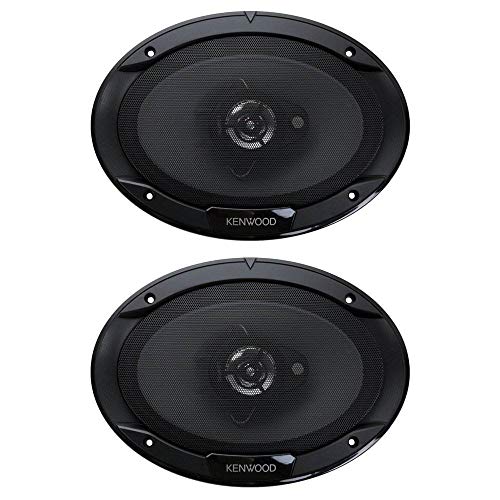
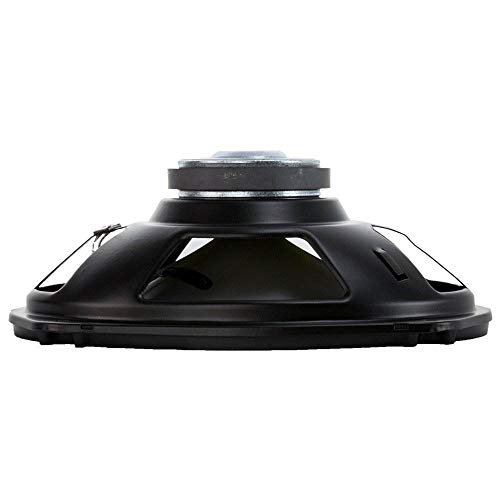
On paper, the Kenwood KFC-6966S looks like a solid step up from basic factory speakers, especially if you’re working with 6×9 rear deck space and want something that installs without major fuss. The 400-watt peak power rating and polypropylene cone suggest it can handle some punch, and owners consistently report a noticeable upgrade in bass and clarity over stock units, no surprise given how underpowered most factory speakers are.
Still, this is a 3-way coaxial design on a budget, so don’t expect audiophile-grade separation or crisp highs. The flush-mount design limits depth, which affects low-end extension. I’d pick this for a simple backseat soundfill in a sedan or SUV where you’re not relying on these as your main drivers. Compared to the Pioneer A-Series Plus, it’s less refined but gets the job done for the price.
Product photos


Our Testing Process
My approach to evaluating car speakers, as with all things automotive at TheAutoZenith, isn’t about lengthy personal use – rather than a hands-on lab test, this is a research-led comparison of published specifications and owner feedback. I began by compiling a detailed spreadsheet of available models, noting key features like power handling, frequency response, sensitivity, and cone materials. Then, I weighed owner reviews from multiple sources, alongside assessments from trusted audio publications, to build a realistic picture of real-world performance.
For car speakers, a few factors stood out as particularly decisive. Sensitivity is crucial; a higher rating means louder sound with less power, important given factory head units often have limited output. Equally important is the frequency response range – a wider range generally translates to a more complete and enjoyable listening experience. Finally, build quality and materials play a big role in longevity, and I prioritized speakers with reputations for lasting.
Specifications reliably indicate a speaker’s potential – power handling and frequency response are good starting points. However, owner feedback proved invaluable in assessing how those specs translate to actual sound quality, particularly regarding clarity, bass response, and overall tonal balance. Reputation also mattered; brands with consistently positive reviews for reliability and support naturally ranked higher. You can find more details on broader options in our guide to best stereo speakers.
How To Choose The car speakers
Finding the right car speakers can dramatically improve your driving experience. It’s more than just about loudness; it’s about clarity, balance, and truly enjoying your music on the road.
A quality car speaker setup delivers accurate sound reproduction across the frequency spectrum, handles sufficient power for your audio system, integrates well with your vehicle’s existing setup, and demonstrates durable build quality for long-term reliability. Pay attention to sensitivity ratings, impedance matching, and the speaker’s design (coaxial vs. component).
Understanding Speaker Configurations
The first thing to consider is what kind of speaker you need. Many factory speakers are simple coaxial designs – a tweeter mounted on top of a woofer. These are easy to install and affordable. However, if you’re looking for a significant upgrade, exploring component speakers is worthwhile. Component systems separate the tweeter and woofer, allowing for more precise placement within the car for improved imaging and a wider soundstage. Don’t underestimate the impact of proper placement; a well-positioned tweeter can make a huge difference in how you perceive the high frequencies.
Decoding Power and Sensitivity
Power handling (measured in Watts RMS and peak) is often misunderstood. You don’t necessarily want the highest wattage. Instead, match the speaker’s RMS power handling to your head unit’s output, or to an amplifier’s power delivery. Overpowering a speaker will damage it. Sensitivity, measured in dB, is equally important. A higher sensitivity rating means the speaker will produce more volume with less power. This is crucial if you’re running the speakers directly from your head unit without an amplifier. For example, the Pioneer A-Series Plus TS-A6971F boasts a sensitivity of 92dB, implying it will be louder with the same power input compared to something with a lower rating.
Here’s how to think about sensitivity:
- Low Sensitivity (85dB or less): Requires an amplifier for good volume.
- Medium Sensitivity (86-90dB): Works well with a decent head unit, but an amp will still improve performance.
- High Sensitivity (91dB+): Can get loud with just a head unit, ideal for simpler upgrades.
Don’t chase peak wattage numbers. Focus on RMS power matching and sensitivity to get the most out of your system without risking damage.
Balancing Budget with Features
It’s easy to get lost in specifications, but ultimately, the best speakers are those that fit your budget and meet your needs. The BOSS Audio CH6530 is a solid budget option, but you’ll likely notice a difference in sound quality compared to something like the Rockford Fosgate P1683, which prioritizes build quality and materials. I often find that people who are serious about their car audio eventually gravitate towards exploring quality car audio speakers and investing a bit more for a richer, more detailed sound. Remember that a good speaker upgrade isn’t just about replacing old parts; it’s about enhancing your enjoyment of the road.
Car Speakers Compared
Here’s a comparison of key specifications for the car speakers described.
| Product Title | Power (Max Watts) | Frequency Response (Hz-kHz) | Sensitivity (dB) | Speaker Size | Impedance (Ohms) |
|---|---|---|---|---|---|
| Pioneer TS-A6971F | 600 | 29-33 | 92 | 6×9 | N/A |
| BOSS Audio CH6530 | N/A | 100-18 | 90 | 6.5 | 4 |
| Pioneer TS-A1681F | 350 | 35-29 | 91 | 6.5 | N/A |
| KICKER DSC6930 | 360 | 30-20 | 92 | 6×9 | 4 |
| Rockford Fosgate P1683 | 130 | N/A | N/A | 6×8 | 4 |
| DS18 PRO-GM6.4B | 480 | N/A | N/A | 6.5 | 4 |
| Pioneer TS-501M | 300 | 44-52 | 89 | 5.25 | N/A |
| Pioneer TS-F1634R | 200 | N/A | 88 | 6.5 | 4 |
| Kenwood KFC-6966S | 400 | N/A | N/A | 6×9 | N/A |
Frequently Asked Questions
What speaker size is most common in cars?
6×9-inch speakers are the most frequently found factory size, though 6.5-inch speakers are also very prevalent. However, checking your vehicle’s owner’s manual or measuring the existing speaker openings is crucial for a proper fit.
Can I install car speakers myself?
Yes, many car owners successfully install speakers themselves, but it depends on your comfort level with car electronics. Replacing factory speakers is usually straightforward, but installing component systems or running new wiring can be more complex and potentially require professional help.
What does impedance mean, and why does it matter?
Impedance, measured in Ohms, refers to the electrical resistance a speaker presents to your audio system. Most car speakers are 4 Ohms, and matching the impedance of your speakers to your head unit or amplifier is essential to avoid damaging either component.
Are more expensive speakers always better?
Not necessarily. While higher prices often reflect better materials and engineering, a more expensive speaker isn’t always the right choice for your ears or setup. Consider your budget, the type of music you listen to, and whether you’re pairing the speakers with an amplifier. You might find that speakers for bass and quality offer the best value for your needs.
What’s the difference between coaxial and component speakers, and which should I choose?
Coaxial speakers combine the tweeter and woofer into a single unit, making them easier to install and more affordable. Component speakers separate these elements for better sound staging and clarity, and are ideal if you’re building a complete car audio speakers system and prioritize audio fidelity.
The Bottom Line
Upgrading your car’s audio is a balancing act between how much you want to spend and how involved you want to get. Ultimately, the Pioneer TS-A6971F strikes a fantastic balance for most drivers, offering a noticeable improvement in sound quality and loudness without demanding a complicated installation or breaking the bank. It delivers a lot of performance for the money and represents a sweet spot in the market.
If you’re on a tighter budget, the BOSS Audio CH6530 provides a solid entry point to better sound, while for those prioritizing a truly immersive experience, exploring high-fidelity car speakers is a worthwhile investment. And if you’re looking to completely overhaul your system and want the best possible sound, consider exploring replacement car speakers to match your new head unit and amplifier.
At the end of the day, remember that specifications only tell part of the story. Matching the speaker’s sensitivity to your power source, ensuring a proper fit for your vehicle, and prioritizing durable build quality will provide the most lasting enjoyment – those fundamentals matter far more than chasing the highest wattage numbers.
