
Can You Rent Winter Tires? The Answer and Safer Options
This post contains affiliate links. As an Amazon Associate, we earn from qualifying purchases.
You cannot rent winter tires for your personal vehicle because the labor cost, liability, and storage logistics make it a non-viable business. However, you can rent a vehicle already equipped with winter tires through some specialty rental tiers or peer-to-peer apps, and must meet specific tread depth and certification mandates in provinces like British Columbia and Québec.
The friction point is mechanical, not regulatory. A shop would need to remove your all-season tires, mount and balance the winters, then reverse the process at the end of the rental season. That’s two full service appointments for one rental fee, and each mounting cycle risks damaging the tire bead or your car’s TPMS sensor. The liability for a failed rented tire on the highway dwarfs any profit.
What follows: the specific, often overlooked reasons tire shops won’t touch this business model, the fine print on “winter-ready” rental cars, and a clear math breakdown for when buying your own set stops being a luxury and starts being the smarter financial move.
Key Takeaways
- Renting winter tires for your personal car isn’t offered because the double labor cost and high liability from potential bead or TPMS damage make it unprofitable for shops.
- Your practical option is to rent a vehicle specifically advertised as having winter tires, but you must verify it has the 3-peak mountain snowflake (3PMSF) symbol, not just M+S all-seasons.
- In provinces like British Columbia and Québec, winter tires are legally defined by specific symbols and tread depths (e.g., 3.5 mm minimum in B.C.), and rental vehicles must comply.
- If you drive in winter conditions for more than two weeks cumulatively over two years, purchasing your own set of winter tires is cheaper than paying daily “winter premium” fees on rental cars.
- Always keep tire chains or socks in your trunk when using a non-winterized rental car as a legal backup for unexpected severe conditions.
The Short Answer: You Can’t Rent Them for Your Car
Forget the ski rack model. Renting a set of four winter tires for your Honda or Ford isn’t a service you’ll find at Canadian Tire or Kal Tire. The barrier isn’t demand; it’s mechanics and money.
A technician must remove your current tires from the wheels, mount the winter set, and balance each wheel. This takes about an hour. At the season’s end, they repeat the entire process to reinstall your all-seasons. Two service appointments for the price of one rental doesn’t cover shop overhead.
The repeated mounting and unmounting process stresses the tire bead, the inner lip that seals against the wheel, and can compromise the seal. It also risks damaging the fragile Tire Pressure Monitoring System (TPMS) sensors inside the valve stems, a repair that often costs more than the rental fee.
Then there’s storage. Tires are bulky, sensitive to temperature and ozone, and come in hundreds of sizes. A shop would need a small warehouse to stock even a basic rental fleet, an impossible cost for a local garage. The final blocker is liability. If a rented tire fails at highway speed, the shop faces a lawsuit that a few hundred dollars in rental fees cannot offset. These three factors, labor, storage, liability, kill the business model before it starts.
Your Real-World Options
Since you can’t rent the rubber, you rent the whole package. A few paths exist for getting a winter-ready vehicle, but the devil is in the tire-sidewall details.
Book a Specialty Winter Rental Car. Some major agencies offer winter-equipped vehicles in key markets like the Rockies or Québec. Enterprise may advertise an “AWD vs. Winter Tire” distinction for its regional fleets. Hertz has offered “Winterization” packages in the past. The critical step is to call the specific rental location and ask: “Does this vehicle have tires with the three-peak mountain snowflake symbol?” Many fleet vehicles roll on M+S (Mud and Snow) all-season tires, which meet bare-minimum legal requirements in some areas but lack the soft, cold-flexible rubber compound of a true winter tire.
Use a Peer-to-Peer Car-Sharing App. Platforms like Turo have filters for “Winter Tires.” You’re renting from a local owner who likely maintains their own vehicle properly. This is often the most reliable way to secure a vehicle with verified winter rubber, as enthusiasts list their gear accurately. Scrutinize the photos for the 3PMSF symbol on the tire sidewall.
Understand the Legal Minimums. If you’re driving in British Columbia or Québec, the rental vehicle must comply with provincial law. In B.C., a legal winter tire must have at least 3.5 mm of tread depth and carry either the M+S marking or the 3PMSF symbol. Québec mandates winter tires on all registered vehicles from December 1 to March 15. Rental cars fall under this rule regardless of where they’re registered. Knowing these specifics lets you verify the rental company is providing a legally compliant vehicle, not just an AWD SUV with mediocre all-seasons.
The Math: When Buying Beats Renting
For a one-week ski trip, renting a winter-ready car is the simple answer. But if winter driving is a recurring part of your year, ownership quickly wins. The break-even point is about two weeks of cumulative use over two years.
| Cost Factor | Renting a Winter Car | Buying Winter Tires |
|---|---|---|
| Upfront Cost | Daily “winter premium” fee ($20–$40/day) | Set of 4 tires + rims: $800 – $1,500 |
| Long-Term Cost | Sunk cost; no residual value | Tires last 4–5 seasons; used sets retain ~30–50% value |
| Hidden Benefit | None | Extends the life of your summer tires by 2–3 seasons |
| Best For | Occasional travelers (≤ 14 days of winter driving in 2 yrs) | Residents, frequent winter travelers, multi-vehicle owners |
The math is straightforward. Two one-week trips per year at a $30 daily premium costs $420 annually. In two years, you’ve spent $840. A $1,000 set of winter tires, used for five seasons, costs $200 per year. Sell them for $400 when you’re done, and your net cost drops to $120 per season. Ownership also protects your investment in your vehicle’s other tires. Swapping seasonally means your all-seasons or summer tires last years longer.
The Provincial Rulebook: BC and Québec
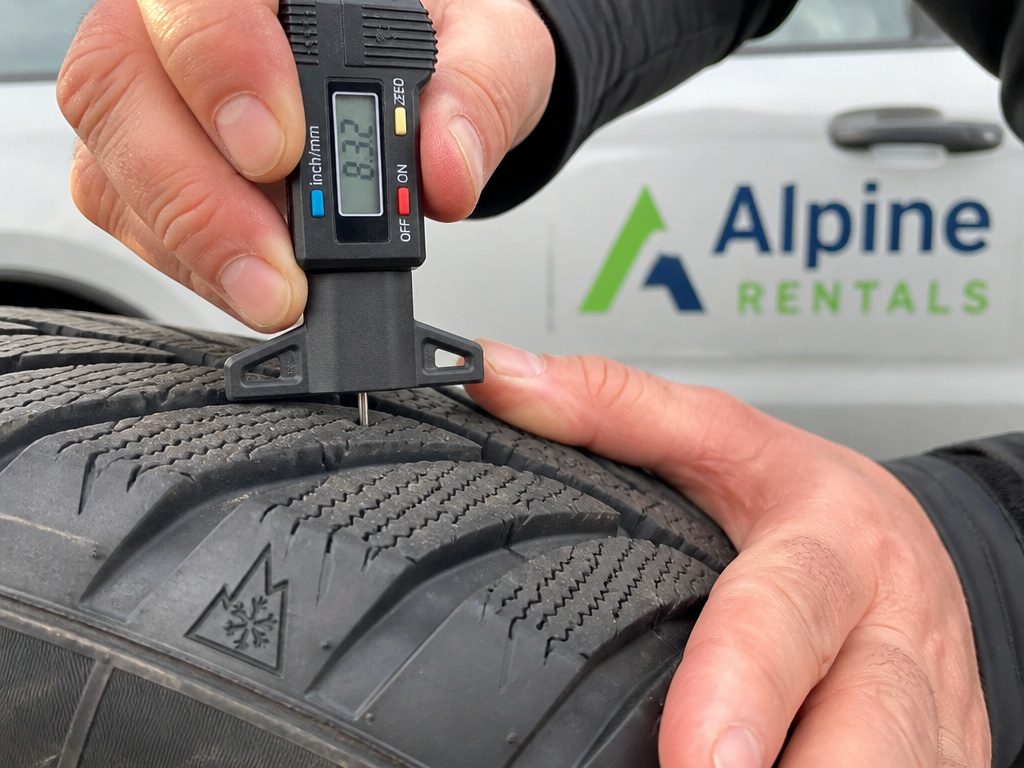 Winter tire laws aren’t suggestions. They’re specific, numbered regulations with real fines for violations. If you’re renting a car to drive in these provinces, you are responsible for compliance.
British Columbia publishes its official tire and chain requirements online. The 3.5 mm tread depth minimum is a hard floor. The province recommends the 3PMSF symbol over the basic M+S marking for actual snow and ice traction. Studded tires are permitted only from October 1 to April 30, and studs must not protrude more than 2 mm. The rule also states you must have at least two matching winter tires on the drive axle, even on a 4WD vehicle.
Québec’s mandate is broader. From December 1 to March 15, every motorized road vehicle registered in Québec must have winter tires. This includes rental vehicles. The law defines a winter tire as one “specifically designed for winter driving,” which in practice means the M+S or 3PMSF symbol. There’s a narrow 7-day exemption for newly purchased vehicles, but that doesn’t apply to rentals. Driving without them in that window risks a fine and, more importantly, invalidates your insurance in an accident.
Tools and Temporary Solutions
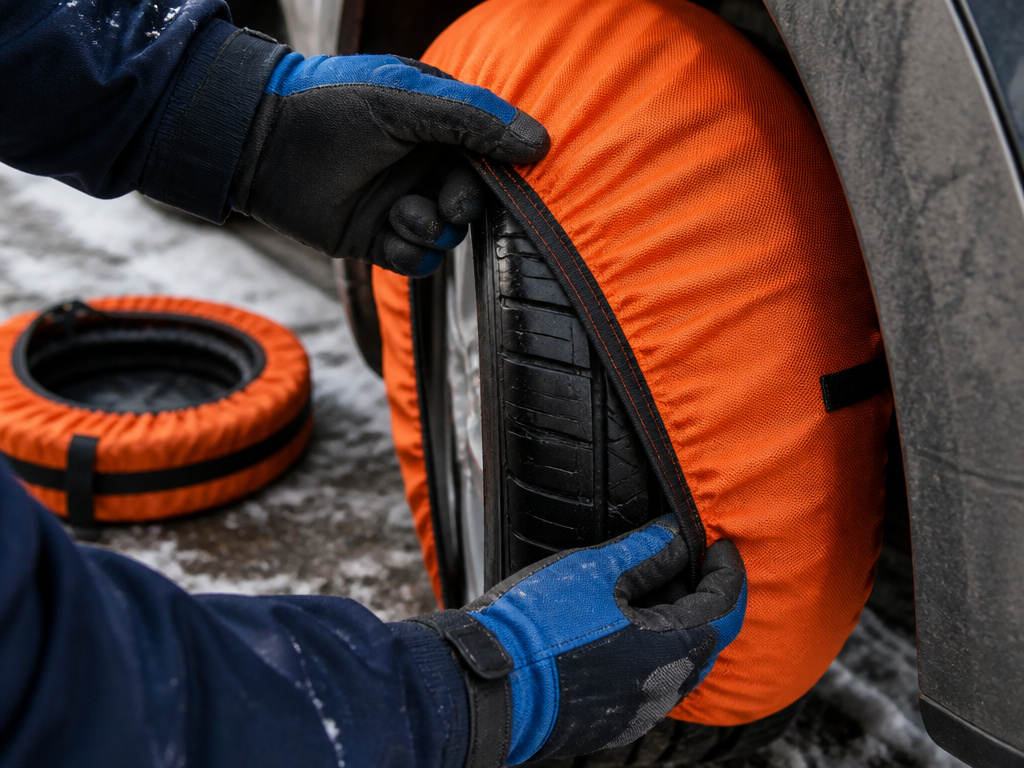 Sometimes you’re stuck with a rental that has mediocre tires. Maybe the promised “winter package” was just an ice scraper and washer fluid. Your move isn’t to panic; it’s to pack a backup.
Tire Chains or “Socks”. These are your legal get-out-of-jail-free card. Textile tire socks slip over the drive wheels and provide dramatic traction gain on snow and ice. They are approved for use in most provinces where winter tires are mandated. The trade-off is lifespan, they degrade quickly if driven on bare asphalt. Keep them in the trunk and practice putting them on once in your driveway. Fumbling with chains in a blizzard on the side of the Coquihalla Highway is a special kind of misery.
All-Weather Tires. This is a purchase consideration, not a rental fix. If you own your vehicle and face mild winters, modern all-weather tires carry the 3PMSF symbol and are designed for year-round use. They bridge the gap between dedicated winter and all-season tires. Brands like Nokian (the inventor of the winter tire), Michelin, and Bridgestone offer strong options. They won’t outperform a dedicated winter tire on sheer ice, but they eliminate the seasonal swap and are far superior to standard all-seasons.
Frequently Asked Questions
Are rental car companies required to provide winter tires?
In provinces with winter tire laws like Québec and British Columbia, yes. Any rental car offered during the mandated period must be equipped with legally compliant winter tires. However, the definition of “winter tire” may be met by the older M+S (Mud and Snow) all-season tire, which offers less cold-weather traction than a modern 3PMSF-rated tire. Always verify the specific tire on the vehicle.
What’s the difference between M+S and the three-peak mountain snowflake symbol?
The M+S marking is a self-certified designation by tire manufacturers indicating a tread pattern for mud and snow. The three-peak mountain snowflake (3PMSF) symbol is a regulated industry standard. To earn it, a tire must pass specific traction tests on packed snow and ice. A 3PMSF tire uses a softer rubber compound that stays flexible in sub-freezing temperatures. For actual winter security, look for the snowflake.
Can I just put winter tires on the drive wheels?
Technically, in B.C., you can legally run with only two matching winter tires on the drive axle. Practically, it’s a terrible idea. Mixing tire types between axles compromises stability, braking, and handling. A car with grippy winter tires in the rear and slick all-seasons in the front will oversteer unpredictably in a corner. Always use four matched winter tires.
How do I know if my rental has proper winter tires?
Look at the tire sidewall. You’re searching for the 3-peak mountain/snowflake symbol. It’s a stylized snowflake inside a three-peaked mountain, usually located near the tire size information. If you only see “M+S,” you have the bare-minimum legal tire. If you see no special markings, you have summer or standard all-season tires and should reconsider driving in winter conditions.
Are winter tires bad for summer driving?
Yes. Winter tires in summer wear out rapidly because their soft rubber compound overheats on hot pavement. The tread blocks squirm, reducing handling precision and increasing stopping distances. They also become dangerously soft, increasing the risk of blowouts at high speeds. You should never use dedicated winter tires in warm weather. This is why the seasonal swap exists.
Before You Go
You can’t rent winter tires because the business model collapses under the weight of mechanics and liability. Your real choice is between renting a vehicle that someone else has already winterized, and verifying they did it right, or investing in your own set.
For the occasional winter traveler, the rental car route is straightforward. Just know the provincial rules and inspect the tires. For anyone who sees more than two weeks of snow a year, buying is the smarter financial play. It’s safer, cheaper over the long run, and turns a seasonal chore into a predictable routine.
Keep a set of chains in the trunk regardless. They’re the final layer between you and a stranded rental car on a snowy pass.
