
Are Winter Tires Good for Summer Driving? The Real Risks
This post contains affiliate links. As an Amazon Associate, we earn from qualifying purchases.
Winter tires are not good for summer. A 2026 peer-reviewed study of fatal Swedish accidents found cars with at least one winter tire in summer had a 106% increased relative risk for a fatal grip-related accident compared to cars on summer tires. Beyond this stark safety deficit, winter tires wear up to 60% faster on warm asphalt, deliver poorer handling, and reduce fuel economy.
That 106% figure isn’t a model or an estimate. It’s the center of a statistical confidence interval pulled from a decade of real fatal collisions. The risk jumps to 236% for cars less than ten years old, with modern stability control systems. This means the wrong tire for the season isn’t just inefficient; it directly increases your chance of a fatal outcome in an emergency.
What follows is the data, the physics, and the manufacturer warnings that explain why that risk exists. We’ll look at the specific temperatures where summer tires become brittle and winter tires turn to mush, the alternatives that actually work, and the one scenario where leaving winter tires on all year is legally, but not safely, permissible.
Key Takeaways
- Using winter tires in summer increases the risk of a fatal grip-related accident by 106%, according to a Swedish study analyzing data from 2012–2021.
- The softer rubber compound of a winter tire wears up to 60% faster on warm asphalt and provides less responsive steering and longer braking distances.
- Summer tires can develop permanent surface cracks and lose flexibility if driven or stored below 20°F (-7°C), as per a General Motors service bulletin.
- All-weather tires marked with the Three-Peak Mountain Snowflake (3PMSF) symbol are a legitimate year-round compromise for mild climates, unlike dedicated winter tires.
- The 7°C (45°F) threshold is the critical switch point; below it, use winter tires, above it, use summer or all-season tires.
How Do Winter and Summer Tires Actually Work? (The Physics)
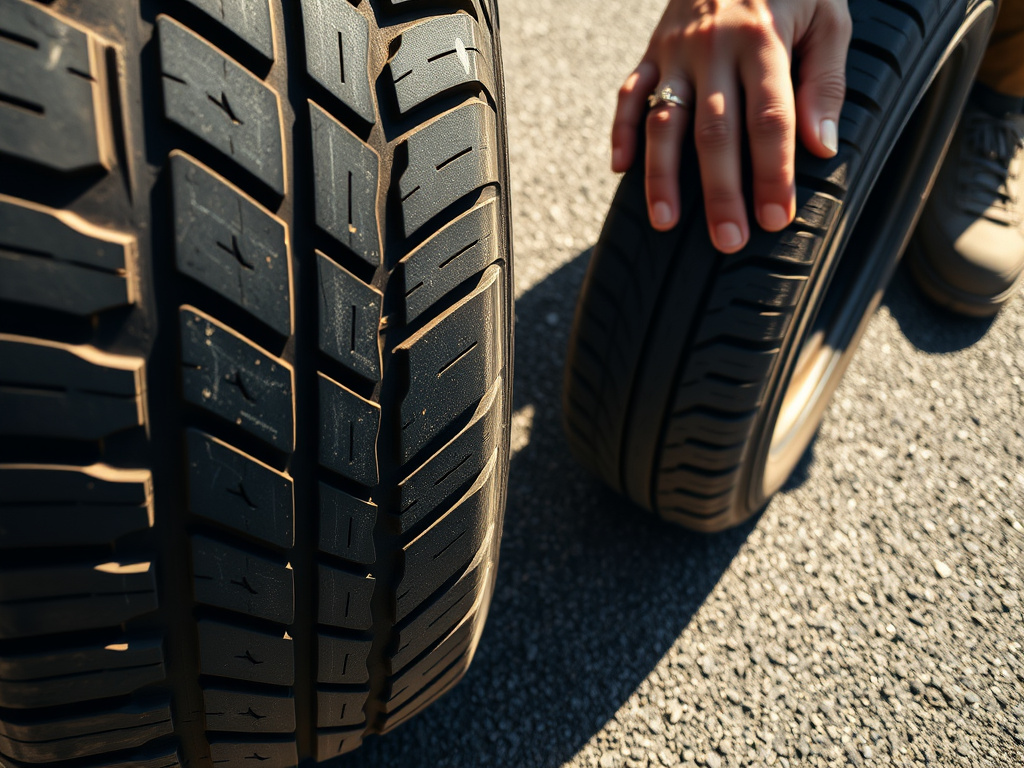
The difference is in the chemistry of the rubber and the geometry of the tread. A winter tire uses a compound blended with higher concentrations of natural rubber and silica to stay flexible and grippy as temperatures plummet. Its tread blocks are separated by deep, wide grooves and thousands of tiny slits called sipes that bite into snow and evacuate slush. This design sacrifices rigidity for pliability.
A summer tire uses a harder, stickier compound optimized for warm pavement. Its tread pattern is shallower with larger, solid contact patches to maximize grip on dry and wet roads. In cold weather, this compound hardens into something resembling a hockey puck. In heat, the winter tire’s soft compound over-flexes.
Tests by the Swedish National Road and Transport Research Institute (VTI) show new Nordic winter tires can have braking distances 15–45% longer than new summer tires on wet or dry summer asphalt. The gap widens as the temperature rises.
This isn’t a minor performance gap. It’s the difference between stopping in time and a collision. The winter tire’s sipes and blocky tread squirm under hard braking on hot pavement, reducing the effective contact patch. The same flexibility that lets it conform to ice becomes a handling liability, causing vague steering and increased lateral flex. You’ll feel the car wander in a straight line on a hot highway, requiring constant small corrections.
The part nobody mentions: This performance decay accelerates as the tire wears. A worn winter tire in summer rain is a known hazard; tests show it can still be traveling 25 mph when a new summer tire has already stopped.
The Documented Risks: Accident Data and Manufacturer Warnings
The academic case against using winter tires in summer is built on hard statistics, not theory. An induced-exposure analysis of fatal passenger car accidents in Sweden from 2012–2021 isolated grip-related crashes, those where loss of traction was the primary cause. Comparing cars with at least one winter tire to those with four summer tires revealed the 106% increased relative risk.
The study’s stratified data is more revealing. For vehicles equipped with Electronic Stability Control (ESC), a standard feature on most cars built in the last decade, the estimated risk increase was 116%. For newer cars (0-10 years old), it soared to 236%. This counters the argument that modern safety systems can compensate for the wrong tire. They can’t.
Automakers spell out the dangers in their technical documents. A General Motors service bulletin (13-03-10-001K) states that high-performance summer tires suffer reduced traction below 40°F (5°C) and can develop permanent surface cracks in the tread if driven below 20°F (-7°C). The reverse is true for winter tires in heat. Ford’s manual advises against using summer tires below about 45°F (7°C) and notes the same cracking risk below -7°C.
| Tire Type | Optimal Temp Range | Key Risk Outside Range | Primary Wear Mechanism |
|---|---|---|---|
| Winter Tire | Below 7°C (45°F) | Poor grip, long braking distance, vague steering | Rapid, uneven wear on hot pavement |
| Summer Tire | Above 7°C (45°F) | Hardened compound, loss of traction, tread cracking | Cracked rubber from cold exposure |
| All-Season Tire | Mild climates year-round | Compromised performance in extreme heat or deep snow | Gradual, even wear |
Where this goes sideways: Believing tread depth is the only safety metric. A winter tire with 8/32″ of tread in July is still a winter tire. Its fundamental compound and tread design are wrong for the season, regardless of remaining rubber.
Winter Tires vs. All-Weather Tires: The Critical Difference
This is the most common point of confusion. All-weather tires are not winter tires left on for summer. They are a distinct, hybrid category designed to meet the Three-Peak Mountain Snowflake (3PMSF) severe snow service standard while remaining durable in summer heat. Models like the Michelin CrossClimate 2 or Nokian WR G4 use advanced compound technology to bridge the temperature gap.
The distinction matters because all-weather tires are a legitimate, certified year-round option for drivers in regions with moderate winters and warm summers. A dedicated winter tire is not.
- Winter Tire (e.g., Bridgestone Blizzak): Soft compound, aggressive siping. Unsafe and wasteful in summer.
- All-Weather Tire (3PMSF-rated): Firmer compound, asymmetric tread. A conscious compromise for all seasons.
- All-Season Tire (M+S rated): Generalist design. Not certified for severe snow, but fine for rain and light frost.
If you want a single set of tires and face real winter, the only safe choice is an all-weather tire with the 3PMSF symbol. It is a compromise on both ends, it won’t match a dedicated winter tire on ice, nor a summer tire on a hot track, but it avoids the catastrophic performance cliff of a true winter tire in July.
What About Summer Tires in Cold Weather?
The danger is symmetrical but different in nature. Where a winter tire gets mushy and slow, a summer tire gets hard and brittle. Below 45°F, the summer tire’s grippy compound begins to lose plasticity. Traction drops on every surface, dry, wet, or icy.
Before you start: Never drive high-performance summer tires on snow or ice. The braking distance can double compared to a winter tire. Avoid moving a car equipped with them below 20°F (-7°C) to prevent tread cracking.
The GM bulletin is explicit: the special tread compounds on summer tires “will cause a decrease in performance in cold climates.” This isn’t a gentle decline. It’s a step-function loss of grip. For owners of performance cars, this means parking the car for the winter or installing a dedicated winter set. Storing summer tires in an unheated garage in a cold climate can also damage them; manufacturers recommend keeping them above 20°F.
The takeaway is that tire technology is highly specialized. Using a tool outside its design parameters fails in predictable, often dangerous ways.
Frequently Asked Questions
Is it illegal to drive with winter tires in the summer?
In most jurisdictions, including the United States and the United Kingdom, there is no law prohibiting the use of winter tires in summer. The choice is governed by safety, not legality. However, some Canadian provinces have mandated winter tire periods, but these do not restrict summer use.
Can I use winter tires in summer if I drive slowly and carefully?
No. The increased risk documented in the Swedish study accounts for normal driving. The compromised braking performance and unstable handling exist regardless of driver caution. An emergency maneuver or sudden stop will expose the tire’s limitations when it’s too late.
How much faster do winter tires wear in the summer?
Manufacturer and tester data indicates wear rates can be up to 60% higher. The soft rubber compound abrades quickly on hot, rough asphalt. This often leads to uneven, scalloped wear patterns that create noise and vibration, further degrading the driving experience and potentially harming suspension components.
What’s the difference between M+S and 3PMSF ratings?
The M+S (Mud and Snow) marking is a self-certified label with no standardized performance test. Many all-season tires carry it. The Three-Peak Mountain Snowflake (3PMSF) symbol is an official severe snow service certification earned via a standardized test. For winter capability, look for the 3PMSF symbol.
Are all-terrain tires okay for summer use?
Yes, all-terrain tires (e.g., BFGoodrich KO2) are designed for year-round use, including summer. They are heavier and noisier than highway tires but use compounds and tread patterns intended for a wide temperature range. They are not winter tires and should not be confused with them, though some models also carry the 3PMSF rating for light snow duty.
The Bottom Line
The question isn’t about getting by or saving the hassle of a seasonal change. It’s about accepting a quantified, significant increase in your risk of a fatal accident, 106%, for the convenience of not swapping tires. The physics are unforgiving: winter tires in summer are unsafe, expensive, and inefficient.
The safe path is binary. Below 7°C (45°F), fit dedicated winter tires for their superior traction and safety. Above that threshold, switch to summer or high-performance all-season tires. If you must have one set year-round, invest in a premium 3PMSF-rated all-weather tire, understanding it is a compromise. Your car’s only contact with the road is four palm-sized patches of rubber. Don’t compromise on what fills them.
