
Do All Weather Tires Work in Snow? The 40% Gap Explained
This post contains affiliate links. As an Amazon Associate, we earn from qualifying purchases.
Yes, 3PMSF-marked all-weather tires work in snow. They are certified for winter use, offering better grip and shorter braking distances than traditional all-season tires. Their specialized rubber compounds and aggressive tread designs are engineered to handle snow, but their performance on sheer ice remains a significant step behind dedicated winter tires.
The “work in snow” answer pivots on a single symbol: the Three-Peak Mountain Snowflake (3PMSF). This isn’t marketing. It’s a certification tied to a specific snow grip test standard. An all-season tire with a Mud and Snow (M+S) marking can look aggressive but isn’t required to pass that test. The difference isn’t academic. A Transport Canada study found M+S tires without the 3PMSF symbol had 40% longer stopping distances than similar tires with it.
What follows is a breakdown of the certification, the physics of the rubber compound, the real-world spread in performance from recent peer-reviewed testing, and the specific conditions where an all-weather tire will leave you wanting. By the end, you’ll know exactly what the 3PMSF symbol promises, what it quietly concedes, and whether it fits the winters you actually drive through.
Key Takeaways
- The 3PMSF symbol is a regulated certification for minimum snow traction; the older M+S marking is a manufacturer declaration with no performance guarantee.
- All-weather tires use a softer, more flexible rubber compound designed to stay pliable below 45°F (7°C), where traditional all-season tire compounds harden and lose grip.
- On packed snow, a good 3PMSF tire performs close to a dedicated winter tire. On glare ice, the performance gap widens dramatically—some all-weather tires in a Swedish study performed as poorly as summer tires.
- Tread depth is critical: while tires are legally worn at 2/32″, consider replacing all-weather tires at 4/32″ for maintained winter safety.
- For most drivers in regions with occasional to moderate snowfall that is plowed, a top-tier all-weather tire is a legitimate year-round solution. For persistent sub-freezing temperatures, black ice, and unplowed roads, dedicated winter tires still reign.
The Technical Snapshot: 3PMSF vs. M+S
Forget the tread pattern for a second. The first thing to check on a tire’s sidewall is its markings. This is where the legal and performance definitions live.
The Three-Peak Mountain Snowflake (3PMSF) symbol is governed by regulation. In the EU, it’s defined under Regulation 661/2009. In North America, it references the ASTM F1805 standard for snow traction testing. To earn this badge, a tire must demonstrate a minimum threshold of snow grip in a controlled, repeatable test. It’s a performance benchmark.
The Mud and Snow (M+S) marking is a different animal. It’s a manufacturer designation based on tread pattern. There is no required performance test. A manufacturer can stamp M+S on a tire if they believe its open tread design suits mud and snow. This is why you’ll find aggressive-looking all-terrain tires with M+S markings that are downright dangerous on ice—they were never tested for it.
The ASTM F1805 snow traction test measures forward (driving) traction on a snow surface, normalized against a control tire. It’s a pass/fail gate for the 3PMSF certification and does not assess lateral grip (cornering) or braking performance specifically.
This distinction has real-world consequences. Research from Transport Canada highlighted a staggering gap: all-terrain tires with only an M+S marking required 40% longer stopping distances on snow than similar M+S tires that also carried the 3PMSF symbol. The certification isn’t just a sticker; it’s a verified safety margin.
So when you ask if all-weather tires work in snow, the accurate answer is: “3PMSF-marked all-weather tires do.” A tire claiming to be “all-weather” without that symbol is just an all-season tire with marketing ambition. Look for the symbol molded into the sidewall.
Why Rubber Chemistry Matters More Than Tread
Tread patterns channel slush and bite into snow. That’s important. But the rubber compound is what actually transfers force between your car and the road. Below 45°F (7°C), this becomes the whole game.
Traditional all-season tire compounds are formulated for longevity and warm-weather performance. They harden as temperatures drop. By the time you hit freezing, the rubber has the approximate grip of a hockey puck. An aggressive tread pattern on hard rubber just skates.
All-weather tires use a different compound blend. It’s softer and stays flexible in the cold. This flexibility allows the tread blocks to conform to the microscopic imperfections in snow and ice, generating friction. The trade-off is faster wear in summer heat, though modern silica-infused compounds have narrowed that gap.
The chemistry explains a common owner observation: “My old all-seasons slid on the first dusting; these new ones grip.” It’s not magic. It’s a material engineered for a specific temperature range. This is also why a worn all-weather tire fails in winter even if the tread looks okay. As the tread wears down, the compound ages and loses its pliability. The Nokian Tyres WRG5 includes a clever wear indicator—a snowflake molded into the tread that disappears when the tire is too worn for safe winter use.
Where this goes sideways: Assuming a deep tread guarantees snow performance. A worn winter tire with soft compound often outperforms a brand-new all-season with a deep, hard tread. The rubber is the star; the tread is the supporting actor.
The Real-World Performance Spread
The “all-weather” category isn’t monolithic. Performance varies wildly between models, especially when you move from snow to ice. A 2024 peer-reviewed study in Sweden put 14 all-season (including all-weather) tires through braking tests on ice, snow, and asphalt.
The results were illuminating. On snow, the best-performing all-weather tires came close to the performance of dedicated winter tires. The Vredestein Quatrac Pro, for example, posted an excellent snow-braking distance of 27 meters in a 2024 test. But on ice, the story changed. The ice grip of all-weather tires was “without exception much worse” than traditional winter tires. One all-weather tire in the Swedish study performed as poorly as a summer tire on ice.
| Surface | All-Weather Tire Performance | Dedicated Winter Tire Performance |
|---|---|---|
| Dry/Wet Asphalt | Excellent, with longer tread life than winter tires. | Good, but tread wears faster in warm conditions. |
| Packed Snow | Very Good to Excellent (close to winter tires). | Excellent. |
| Glare Ice | Fair to Poor (wide spread between models). | Very Good to Excellent. |
| Cold Pavement (<45°F/7°C) | Good, maintains flexibility. | Excellent, specifically optimized. |
This spread matters for your decision. If your winters involve plowed roads and occasional snowstorms, a top-tier all-weather tire like the Michelin CrossClimate2 or Bridgestone Weatherpeak will feel confident. If you regularly encounter black ice, unplowed back roads, or persistent sub-freezing temperatures, that ice-performance gap becomes a safety chasm. In those conditions, a dedicated winter all-season tire or a full winter tire is the only responsible choice.
The study’s authors noted a large performance spread, with some all-weather tires prioritizing asphalt comfort and others leaning into snow traction. This is why you must look at specific test data, not just the category name.
All-Weather vs. Dedicated Winter Tires: The Head-to-Head
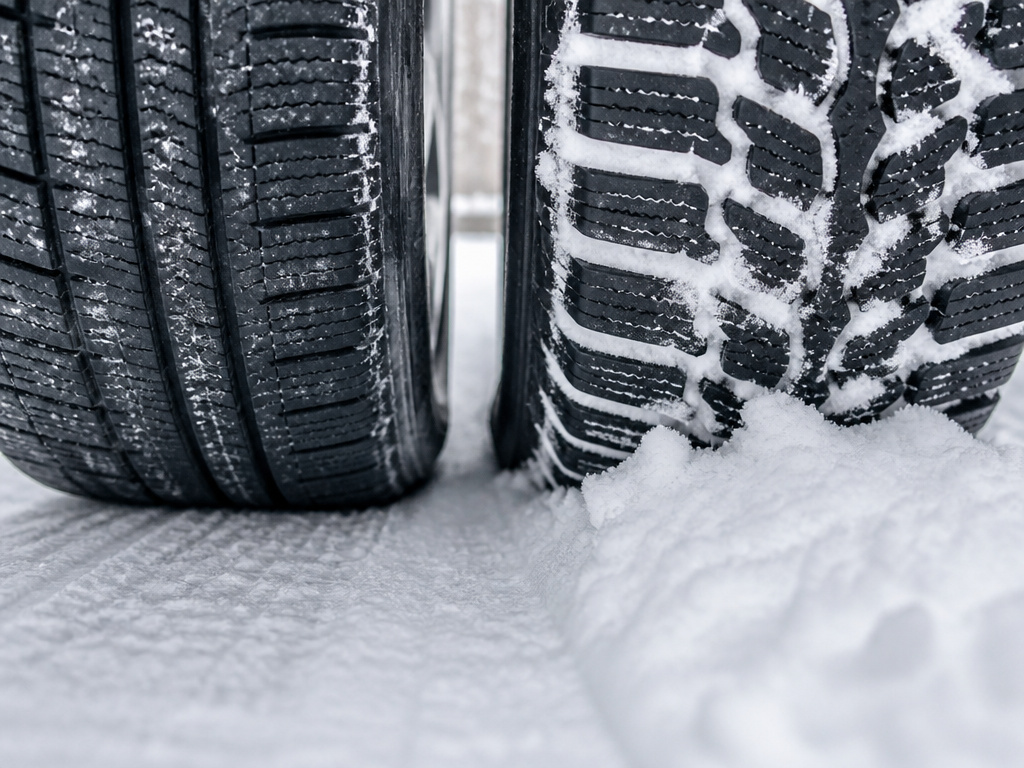
This is the core comparison every buyer needs. Let’s match them directly.
All-Weather Tires (3PMSF Certified)
- Best For: Drivers in regions with defined, plowed winters, occasional snowfall, and temperatures that hover around freezing. They eliminate seasonal changeovers.
- Snow Performance: Good to very good on packed and loose snow. They meet a certified minimum.
- Ice Performance: The category’s weak spot. Performance drops significantly, with large variations between models.
- Year-Round Compromise: They sacrifice some ultimate dry/wet summer performance and tread life compared to grand-touring all-seasons, and they sacrifice ice traction compared to winter tires. They are the definition of a compromise.
Dedicated Winter Tires
- Best For: Drivers in the snow belt, mountainous regions, or anywhere with prolonged sub-freezing temperatures, black ice, and unplowed roads.
- Snow Performance: Excellent. Deeper, more aggressive siping and tread blocks.
- Ice Performance: Excellent. Softer compounds and specialized ice-biting technologies (like embedded glass fibers or multi-cell tread).
- Year-Round Compromise: They are unsafe and wear extremely fast in warm weather. They require a second set of wheels/tires or biannual mounting costs.
The part nobody mentions: The legal context. Some jurisdictions, like Quebec, mandate winter tires (defined as 3PMSF or studded) during winter months. In these places, a 3PMSF all-weather tire satisfies the law. A non-3PMSF M+S tire does not. Know your local regulations.
The choice hinges on your worst common condition. Is it a 4-inch snowfall that’s cleared by noon? Or is it a month of refreezing slush and morning black ice? For the former, all-weather tires are a smart, convenient solution. For the latter, the convenience isn’t worth the risk. This is similar to the trade-off between all-terrain tires in snow and true winter tires—the dedicated tool is always superior in its specific environment.
When All-Weather Tires Are the Right (and Wrong) Choice
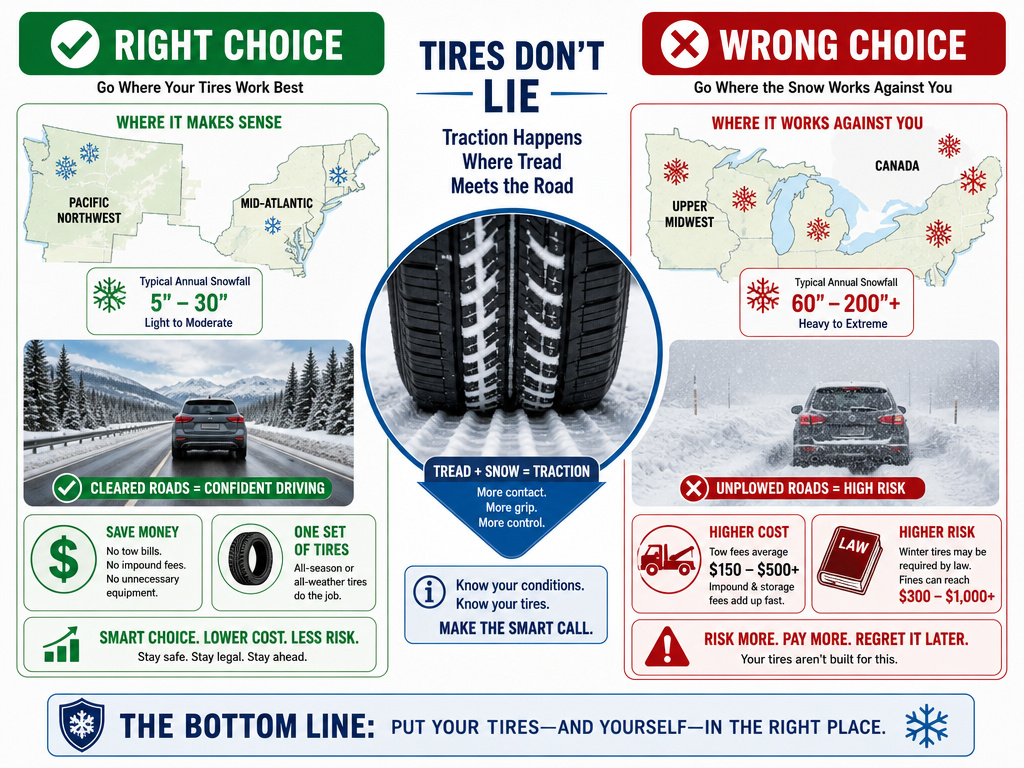
Let’s translate the specs into driving scenarios.
Choose All-Weather Tires If:
- You live in the Mid-Atlantic, Pacific Northwest, or parts of New England where winter brings intermittent snow that melts within days.
- Your commute is primarily on treated highways and main roads.
- You want to avoid the cost and hassle of storing and swapping a second set of tires.
- Your vehicle is a passenger car or crossover, and you prioritize year-round quietness and fuel efficiency over extreme winter capability.
Avoid All-Weather Tires If:
- You live in the Upper Midwest, Canada, or mountainous areas where snow and ice persist for months.
- You routinely drive on unplowed rural roads or encounter frequent black ice.
- You own a performance vehicle or a light truck used for winter towing; you need the highest possible margin of safety.
- Your local laws define a “winter tire” and you are subject to inspections or penalties.
Remember, tires are a safety system. They are the only part of your car touching the road. An all-wheel-drive system (AWD in snow) helps you go; tires determine how well you stop and turn. AWD with all-season tires is a common, overconfident combination that leads to longer stopping distances than a front-wheel-drive car with proper winter tires.
The Wear Factor: When a “Winter” Tire Stops Being One
A 3PMSF symbol on a new tire is a promise. On a half-worn tire, it’s a memory. Tread depth is the second-most critical factor after the rubber compound.
The legal minimum tread depth in most states is 2/32″. At this depth, a tire’s ability to evacuate water is severely compromised, leading to hydroplaning. For winter conditions, the threshold is higher. Industry experts, including Consumer Reports, recommend replacing tires when they reach 4/32″ of remaining tread for maintained snow traction. The channels and sipes that bite into snow become shallower and less effective as the tire wears.
This wear affects all tires, but it’s a more acute safety cliff for all-weather tires. Their winter performance is a careful balance. As they wear, they lose their snow-and-ice edge faster than they lose their dry-pavement manners. Don’t push an all-weather tire to its legal limit if you rely on it for winter driving. Budget for replacement at 4/32″.
Common mistake: Judging tire life by the wear bars. The wear bars indicate 2/32″—the absolute end of life. For winter, you should have replaced the tire long before those bars are flush with the tread.
Frequently Asked Questions
What’s the difference between all-weather and all-terrain tires in snow?
All-weather tires are a sub-category of passenger tires designed for year-round use with a 3PMSF winter certification. All-terrain tires are light-truck/SUV tires focused on off-road durability with aggressive tread. Many all-terrain tires carry only an M+S rating, not the 3PMSF. While some all-terrain tires for snow do achieve the 3PMSF rating, their stiffer, heavier construction often means they don’t perform as well on ice as a dedicated passenger winter or all-weather tire.
Do I need winter tires if I have all-wheel drive?
Yes, often. All-wheel drive only helps with acceleration and climbing hills. It provides zero benefit for braking or cornering—the two maneuvers that most often lead to loss of control. Winter tires improve braking and cornering on snow and ice for any drivetrain. The capabilities of all-wheel drive in snow are frequently overestimated by drivers who then find themselves in a ditch.
Can I use all-weather tires year-round without damaging them?
Yes, that’s their purpose. Unlike dedicated winter tires, whose soft compounds can degrade rapidly in summer heat, all-weather tires use compounds designed for year-round temperatures. You will sacrifice some ultimate tread life and possibly some summer dry-grip compared to a grand-touring all-season, but you will not ruin them by leaving them on in July.
How do all-weather tires handle rain?
Generally, very well. Their tread patterns are often derived from high-performance all-season designs with deep circumferential grooves for water evacuation. They typically outperform dedicated winter tires in heavy rain, as snow tire wet performance can be compromised by their very soft, blocky tread.
Are wider all-weather tires better?
Not necessarily for snow. A narrower tire cuts through snow down to the pavement more effectively. A wider tire can “float” on top of deeper snow. For most on-road winter driving, especially with slush and packed snow, following the vehicle manufacturer’s recommended tire size is best. The impact of tire width on snow traction is complex and often misunderstood.
The Bottom Line
All-weather tires with the Three-Peak Mountain Snowflake symbol work in snow. They are a legitimate, regulated upgrade over traditional all-season tires, providing a crucial safety margin for millions of drivers. Their value lies in convenience and capable performance across three seasons and a mild-to-moderate fourth.
But they are not a silver bullet. The 40% braking distance gap between an M+S and a 3PMSF tire is a stark reminder that certification matters. The wide performance spread on ice, documented in studies like the Springer Nature study on all-season tires, is a warning that not all compromises are equal.
For one answer: if your winter involves cleared roads and occasional storms, a top-tier all-weather tire like the Michelin CrossClimate2 is a brilliant year-round solution. If your winter is defined by ice, deep cold, and unplowed paths, the convenience isn’t worth the risk. Keep two sets.
