
The Truth: Can You Drive Snow Tires All Year Without Ruin?
This post contains affiliate links. As an Amazon Associate, we earn from qualifying purchases.
You can drive snow tires all year, but you’ll ruin their traction, wear them down twice as fast, and pay more for replacements in the long run. Winter tires are engineered with a soft rubber compound that stays flexible below 45°F; above that temperature, the tread literally squirms on hot asphalt. It gets worse with pressure. Kia manuals tell you to add 4 psi in winter, but if you forget to drop that pressure in summer, the extra heat buildup shreds the rubber. The only safe, legal way to use snow tires year-round is to move to a region with a permanent winter climate.
That 4-psi specification isn’t a suggestion, it’s printed in the Kia LQ2AH owner’s manual for a reason. Inflating winter tires to the standard pressure at freezing temperatures leaves them too soft for optimal contact patch; the extra air keeps the sidewall stable under load on slick roads. The problem starts when spring arrives and you don’t bleed that pressure back down. A summer sun heats pavement past 100°F, and the now-overinflated tire runs hotter still. The tread blocks, already too soft for the season, start to melt away. You can track this by measuring tread depth every 1,000 miles, you’ll lose twice the rubber compared to a proper all-season tire.
What follows are three specs, two certifications, and the one real-world test from a major automotive association that says even a cheap winter tire beats any “winter-approved” all-season model hands down. By the end, you’ll be able to read your own tire’s sidewall, know whether it’s legal in your province, and understand exactly why swapping them seasonally isn’t just for show.
Key Takeaways
- Winter tires wear out twice as fast on hot pavement because their soft rubber compound overheats and melts away, not just abrades.
- The Kia LQ2AH manual’s 4-psi (28 kPa) winter overpressure rule is critical, but leaving that extra air in for summer accelerates heat damage and tread squirm.
- “Winter-approved” all-season tires with the mountain snowflake symbol are legal in Quebec, but CAA-Quebec’s Mobility Advisory Services explicitly do not recommend them for safety.
- Summer tires crack permanently below 45°F (7°C), the rubber loses elasticity and can fracture, a failure mode not covered by most warranties.
- Driving on snow tires year-round is a false economy; the cost of replacing them early exceeds the cost and hassle of seasonal tire changes.
The Tire-Maker’s Stance
Tire manufacturers design products for specific temperature bands. A winter tire’s job is to stay flexible when the thermometer drops. The compound uses more natural rubber and silica, which resist hardening in the cold.
Winter tires are specially designed for cold temperatures and winter precipitation. Once it gets warm, you won’t need deep tread depths to handle snow or biting edges for traction on ice.
The analogy holds. You can wear a snow boot on a beach, but your foot will sweat, the tread will clog with sand, and the boot will fall apart by August. Your car feels the same strain. The deeper tread patterns and siping that channel slush become noise-generating drag on dry summer asphalt. Those same tread blocks flex excessively under cornering loads when warm, giving you a vague, mushy steering feel.
The wear isn’t linear. On a 70°F spring day, the rate might be 10% higher than an all-season tire. By mid-summer, with asphalt temperatures hitting 130°F, that wear rate can double. The softer rubber literally abrades faster, and the internal heat buildup can start to degrade the tire’s internal belts over time.
Common mistake: Assuming tread wear is just about mileage. Heat accelerates chemical aging in the rubber compound itself, independent of road friction. A winter tire stored for five summers in a hot garage ages nearly as much as one driven.
Why Experts Warn Against Year-Round Snow Tires
The downsides aren’t theoretical. They translate directly to longer stopping distances, increased fuel consumption, and a higher risk of blowouts on long, hot highway drives.
| Summer Condition | Effect on Snow Tires | Driver Experience |
|---|---|---|
| Hot, dry pavement (>80°F / 27°C) | Tread rubber overheats, becomes gummy | Vague steering, longer braking distance, increased road noise |
| Heavy rain / standing water | Sipes and grooves not optimized for water evacuation | Higher risk of hydroplaning compared to a summer tire |
| High-speed cruising | Excessive flex generates internal heat, can damage belts | Reduced stability, potential for sudden tread separation |
| Spirited cornering | Sidewall rolls over excessively | Delayed response, feeling of “rolling” in turns |
CAA-Quebec’s Mobility Advisory Services put a fine point on it. They tested “winter-approved” all-season tires, the ones with the mountain snowflake symbol meant for year-round use, against traditional winter tires.
“No. CAA-Quebec’s Mobility Advisory Services do not recommend winter-approved all-season tires in Canada, especially in cold weather. Even a low-end winter tire will always outperform any winter-approved all-season tire.”
Their research analyst noted the certification is based on deep snow performance, not ice. Braking distances are significantly longer, and grip drops on wet roads. If a dedicated all-weather tire earns that warning, a true winter tire used in summer is a step further in the wrong direction.
For pure winter performance, our guide on the best snow tires for trucks covers the heavy-duty models that set the standard.
The 4-PSI Rule and Pressure Management
This is where owner’s manuals get specific, and where most owners stop reading. The Kia LQ2AH manual doesn’t just say to inflate snow tires. It gives a number.
Snow tires should carry 4 psi (28 kPa) more air pressure than the pressure recommended for standard tires on the tire label, or up to the maximum pressure shown on the tire sidewall, whichever is less.
The logic is mechanical. Colder, denser air provides less support inside the tire. A tire inflated to 35 psi at 70°F will drop to roughly 32 psi at 20°F. The 4-psi bump compensates for that loss, ensuring the tire’s shape and contact patch remain correct under load. It also stiffens the sidewall slightly, improving response on slushy surfaces.
Where this goes sideways: You install your snow tires in November, bump the pressure, and forget. Come June, that same tire is now overinflated by about 6 psi relative to its ideal summer pressure. On a hot road, the overinflated tire has a smaller, more convex contact patch. The center of the tread bears all the load, overheating and wearing into a smooth strip while the shoulders look new. You’ll see this wear pattern within 5,000 miles of summer driving.
| Season | Target Pressure (from door jamb) | Adjusted Pressure for Snow Tires | Risks if Not Adjusted |
|---|---|---|---|
| Winter | 35 psi | 39 psi | Underinflation, poor handling, increased rolling resistance |
| Summer | 35 psi | 35 psi | Overinflation, center tread wear, harsh ride, reduced traction |
Pressure management is non-negotiable. Check it monthly with a reliable gauge, and always adjust for the season. The performance and safety difference between a proper snow tire in rain and an overinflated one is a matter of several car lengths in a panic stop.
What About “Winter-Approved” All-Season Tires?
This category exists to meet legal mandates like Quebec’s, which require the mountain snowflake symbol from December 1 to March 15. They are not snow tires. They are all-season tires that pass a specific deep-snow traction test.
Think of them as a compromise that does nothing excellently. Their rubber is harder than a winter tire’s for summer durability, which means less grip on ice. Their tread pattern is less aggressive than a true winter tire’s, which means longer stopping distances in packed snow.
Worth knowing before you start: The mountain snowflake symbol certifies performance in deep snow, not on ice. A tire can earn the symbol and still be dangerously poor on black ice.
CAA-Quebec’s testing confirms the gap. They are legal, but not recommended. For drivers who log few winter miles on mostly cleared city streets, they are an acceptable risk. For anyone facing unplowed roads, freezing rain, or mountain passes, they are a safety downgrade.
If you’re considering this route, our review of the best winter all-season tires details which models perform best within the category’s limits. It’s a different world from dedicated studded snow tires, which are built for ice but come with their own legal and noise trade-offs.
The Legal and Safety Fine Print
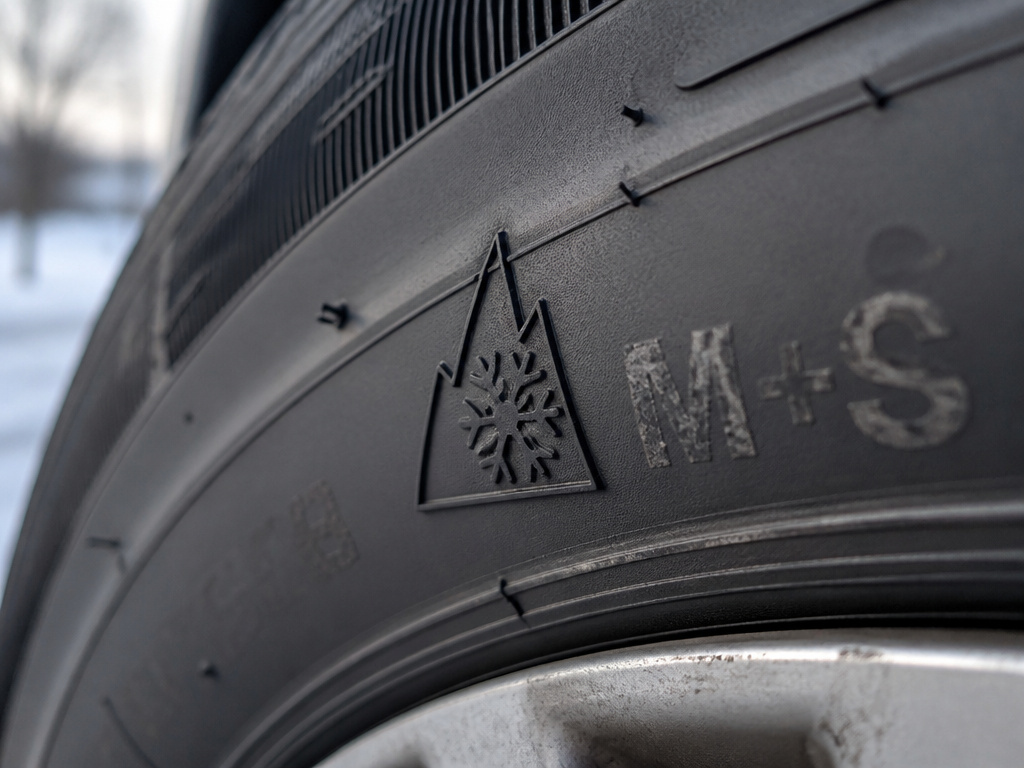 Driving on snow tires year-round isn’t just a performance issue. It touches legality and voided warranties.
Speed Rating: Snow tires often have a lower speed rating (e.g., T-rated for 118 mph) than the summer tires that came on your performance sedan (e.g., Y-rated for 186 mph). Driving above the snow tire’s speed rating, especially when overheated in summer, risks catastrophic failure. The Kia manual explicitly states: “Do not drive at speeds above 75 mph (120 km/h) when your vehicle is equipped with snow tires.”
Summer Tire Warning: Conversely, using summer tires in winter is destructively stupid. The Kia manual is blunt: “Do not use summer tires at temperatures below 45 °F (7 °C) or when driving on snow or ice… Using summer tires at very cold temperatures could cause cracks to form and permanently damage the tires.” That damage is not a wear item; it’s a structural failure, and no warranty will cover it.
Regional Laws: In Quebec, the law mandates winter-rated tires during winter months. The definition tightened on December 15, 2014, before that, a “Snow” marking sufficed; now, only the mountain snowflake symbol is accepted. Know your local rules. Some regions restrict studded winter tires to specific months due to road wear concerns.
The Practical Alternative: Dedicated Winter Wheels
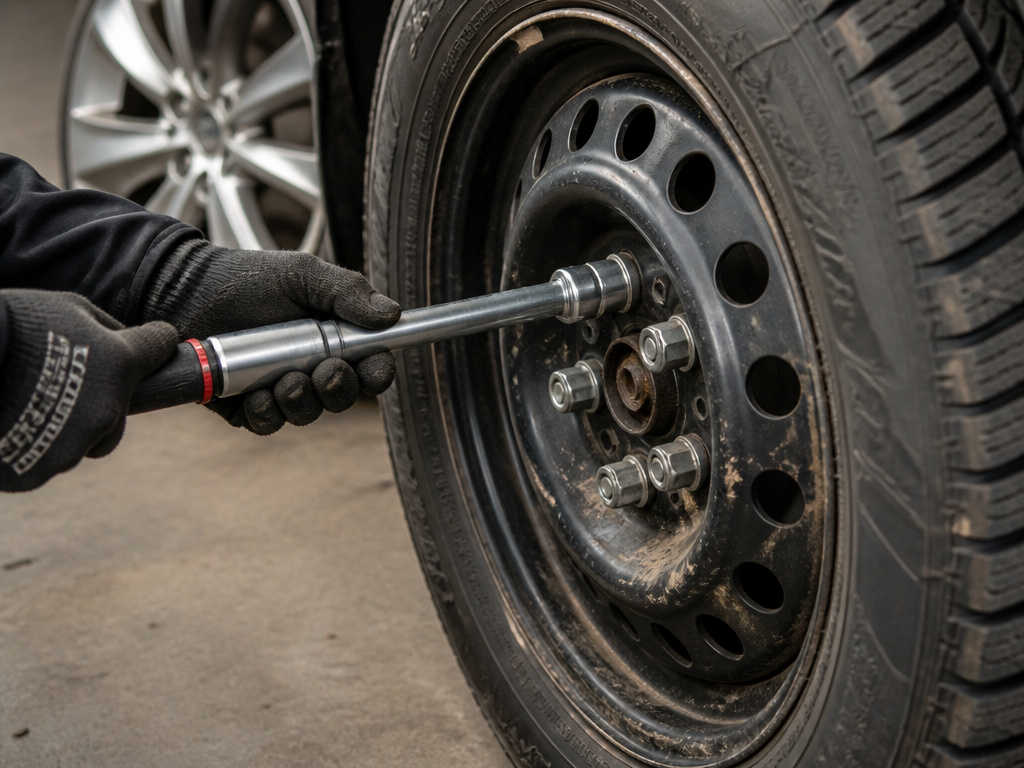 The real barrier to seasonal changes is cost and hassle. The solution is a second set of wheels.
Buy inexpensive steel rims or factory take-off alloys that match your car’s bolt pattern and offset. Mount your winter tires on them once. Now, changing seasons is a 20-minute job with a jack and a torque wrench, or a quick trip to any shop for a wheel swap, which is cheaper than mounting and balancing tires twice a year.
Benefits:
- Preserves your alloy wheels from winter road salt and curb damage.
- Saves money long-term by eliminating biannual mounting/balancing fees.
- Extends the life of both tire sets because each only accumulates mileage half the year.
- Gives you a functional spare, if you get a flat, you have a full-size replacement ready.
This is the setup used by most enthusiasts and anyone in serious snow country. It turns a seasonal chore into a simple, quick task. For vehicles like minivans where safety is paramount, choosing dedicated snow tires for minivans mounted on their own rims is the gold standard.
Frequently Asked Questions
Can I use snow tires in summer if I drive slowly?
You can, but you shouldn’t. Speed isn’t the primary enemy; heat is. Even slow, stop-and-go city driving on a 90°F day will overheat the soft rubber, accelerating wear and degrading handling. The tire’s performance envelope is built for cold.
How much faster do snow tires wear in summer?
Expect at least 50% faster wear, often double, compared to a proper all-season or summer tire. The exact rate depends on driving style, climate, and how overinflated the tires are. You might get 20,000 miles out of a winter tire used year-round, versus 40,000+ from a seasonal all-season tire.
Are all-weather tires a good year-round compromise?
They are a compromise, not a panacea. Modern all-weather tires like the Nokian WR G4 or Michelin CrossClimate2 carry the mountain snowflake symbol and are better in winter than traditional all-seasons. They still can’t match a dedicated winter tire’s ice grip, and they sacrifice some summer dry handling and tread life compared to a touring all-season. They work best for mild winters and drivers unwilling to swap.
What’s the difference between “all-season” and “all-weather” tires?
“All-season” (M+S marked) is the traditional North American tire designed for three-season use with light snow capability. “All-weather” is a newer category that meets the stricter snowflake symbol standard for winter traction and is meant for true year-round use. The latter uses a more thermally stable compound to bridge the temperature gap.
Is it bad to mix tire types?
Yes, and it can be dangerous. Mixing snow tires with all-season tires, especially on the same axle, creates a traction mismatch that can destabilize the vehicle, particularly during braking or cornering. Always install winter tires in sets of four. The same principle applies when choosing wider tires in snow, keep the same size and type on all four corners for predictable handling.
The Bottom Line
Driving snow tires all year is a shortcut that costs you more in the long run, in rubber, fuel, and potentially safety. The engineering is specific: soft for cold, hard for hot. Defy that and the tires tell you quickly.
If you live where winter is a real season, invest in a dedicated set of winter tires mounted on their own wheels. Store them when the daffodils bloom. Your summer driving will be crisper, quieter, and cheaper per mile. Your winter driving will be safer, with shorter stops on ice. For the other six months, rely on a proper set of all-season tires or summer tires. That’s the split that makes sense for your wallet and your well-being. Anything else is just wearing a snow boot to the beach because you couldn’t be bothered to change your shoes.
