
Are All Tire Caps the Same Size? Corrosion Risks Explained
This post contains affiliate links. As an Amazon Associate, we earn from qualifying purchases.
No, not all tire valve caps are the same size. There is no single universal size, but a defined range exists. Your job is to match two things: the thread pitch and diameter of your specific valve stem, and the environmental conditions you drive in. On TPMS-equipped vehicles driven in salt-belt states, aluminum caps corrode and seize within one or two winters, requiring a full valve stem replacement.
That last point about corrosion is the definite reason Honda issued a Product Improvement Campaign in 2006, telling dealers to swap aluminum caps for plastic ones on specific models. The rest of the industry kept shipping aluminum.So the answer you need is about chemical compatibility with road salt and moisture, not just physical size.
What follows: the ISO standard dimensions that prove caps aren’t universal, the exact failure mode for aluminum caps in salty states, and a clear breakdown of what to buy for your car, truck, or motorcycle. By the end, you’ll know which cap to grab and why a three-dollar part can prevent a hundred-dollar repair.
Key Takeaways
- Tire valve caps are not one-size-fits-all. The ISO 9413:2019 standard lists three specific cap designations (I 01, I 02, I 03), proving there’s a defined range.
- Aluminum caps corrode and seize on Tire Pressure Monitoring System (TPMS) valve stems in salt-belt states (22 states + D.C.). Honda’s 2006 service bulletin mandates plastic replacements.
- The valve stem diameter differs: passenger cars typically use 0.9-inch (23mm) stems, while trucks/SUVs often use 1.1-inch (28mm) stems. A mismatched cap won’t seal.
- Driving without a cap lets dirt and moisture foul the valve core, leading to slow air loss and inaccurate TPMS readings within weeks.
- For most vehicles, a simple black plastic cap with a rubber O-ring seal is the reliable default. Skip the fancy metal ones unless you live in a desert climate.
The Two Things That Actually Matter: Fit and Material
You can ignore ninety percent of the chatter online. The valve cap conversation boils down to two measurable facts: will it thread on, and will it chemically bond to the stem.
First, fit. The International Organization for Standardization (ISO) publishes the rulebook for this stuff. ISO 9413:2019, “Tyre valves. Dimensions and designation,” is the global reference. It doesn’t say there’s one cap. It lists specific designations for caps (I 01, I 02, I 03) and cores (H 01), acknowledging a range exists for different valve assemblies. The thread inside the cap must match the thread on your valve stem. Most passenger car stems use a standardized thread pitch, but the stem’s outer diameter is the real variable.
The ISO 9413:2019 standard provides nominal dimensions and designations for tube and tubeless valve components, including caps. This document establishes that interchangeability relies on matching the designated valve type, not on a single universal measurement.
Second, and more critically, material. Valve stems are typically brass with a chrome or nickel plating. The cap threads onto this metal post. If the cap is also metal, especially aluminum, you’ve created a galvanic pair. Add an electrolyte like road salt slurry, and you’ve built a tiny battery that corrodes the threads shut. This is the precise failure mode documented in the Honda service bulletin.
| Cap Material | Best For | Risk If Used In Salt States |
|---|---|---|
| Plastic (Nylon/ABS) | All climates, especially salt-belt states | Minimal. Can become brittle after 5+ years of UV exposure. |
| Aluminum (Anodized) | Dry, non-coastal climates | High. Corrodes and seizes on TPMS stems within 1-2 winters. |
| Brass/Chrome-Plated | Show cars, dry climates | Moderate. Can still gall or seize if overtightened. |
| Stainless Steel | Coastal or humid areas | Low. Resists salt corrosion but is more expensive. |
Your tire valve caps are a seal, not jewelry. A plastic cap with a soft rubber O-ring inside (like the Pacific Industrial PVC25 model) creates a better seal than a hard metal-on-metal thread. The O-ring compensates for minor thread wear and keeps moisture out. Metal caps, even anodized ones, rely solely on precise threading.
What Happens When You Pick the Wrong One?
 The consequences are slow, predictable, and expensive if you ignore them.
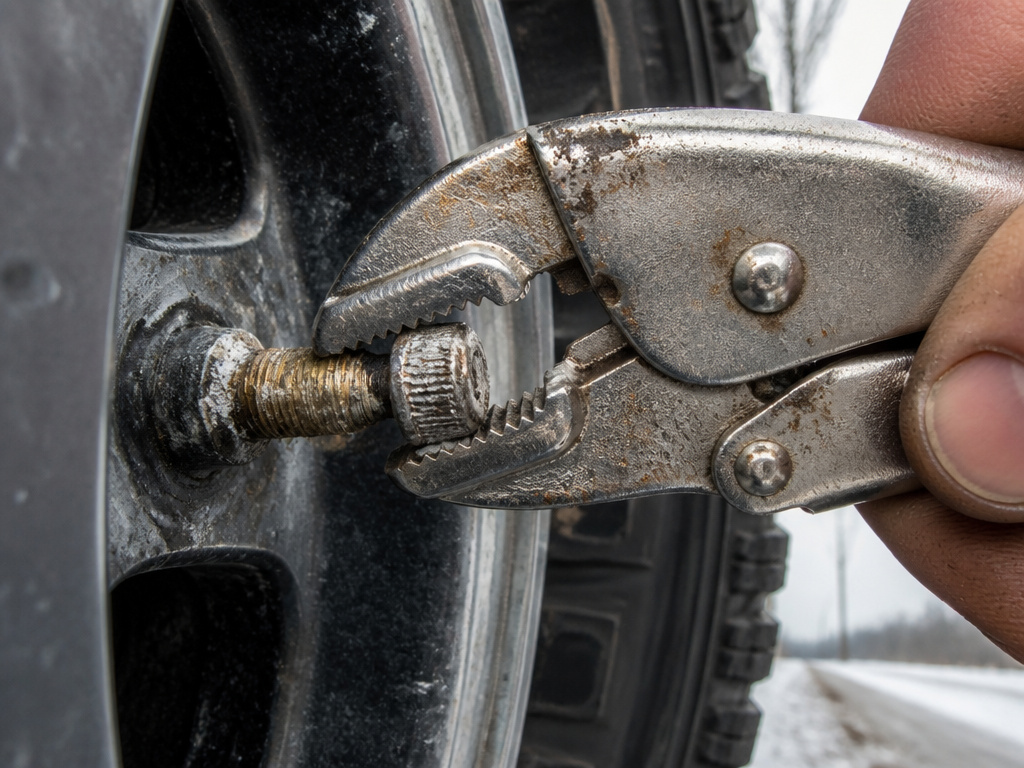
A cap that’s too large in diameter might thread on loosely. It’ll vibrate off on the highway. You’ll lose a cap. A cap that’s too small simply won’t fit. The real danger is a cap that almost fits, the threads engage but cross-thread or bind. You’ll force it, damaging the soft brass threads on the valve stem. The next time you need air, you won’t get the cap off without pliers, and you might strip the stem.
Common mistake: Using decorative aluminum caps on a daily driver in the Midwest or Northeast. The aluminum oxidizes and welds itself to the brass stem. By the second winter, you need vice grips to remove it, and the stem often twists off, requiring a full tire dismount to replace.
But what about running with no cap at all? It’s a slow bleed. Dirt and road grime pack into the valve core. The core’s tiny moving part, the pin, gets jammed with grit. It can no longer seal perfectly. You’ll start losing a pound or two of pressure a week. Your Tire Pressure Monitoring System light might flicker on and off as the sensor gets a false low reading from a slowly leaking valve. For the cost of a four-pack of plastic caps, it’s a pointless risk. If you’re currently driving without valve caps, stop at any auto parts store on your way home.
The stakes are higher with TPMS. These valve stems have an integrated pressure sensor. They’re more complex and far more expensive to replace than a standard rubber snap-in stem. Corroding a cap onto a $50 TPMS stem is a hundred-dollar lesson in chemistry.
The Salt Belt Corrosion Alert
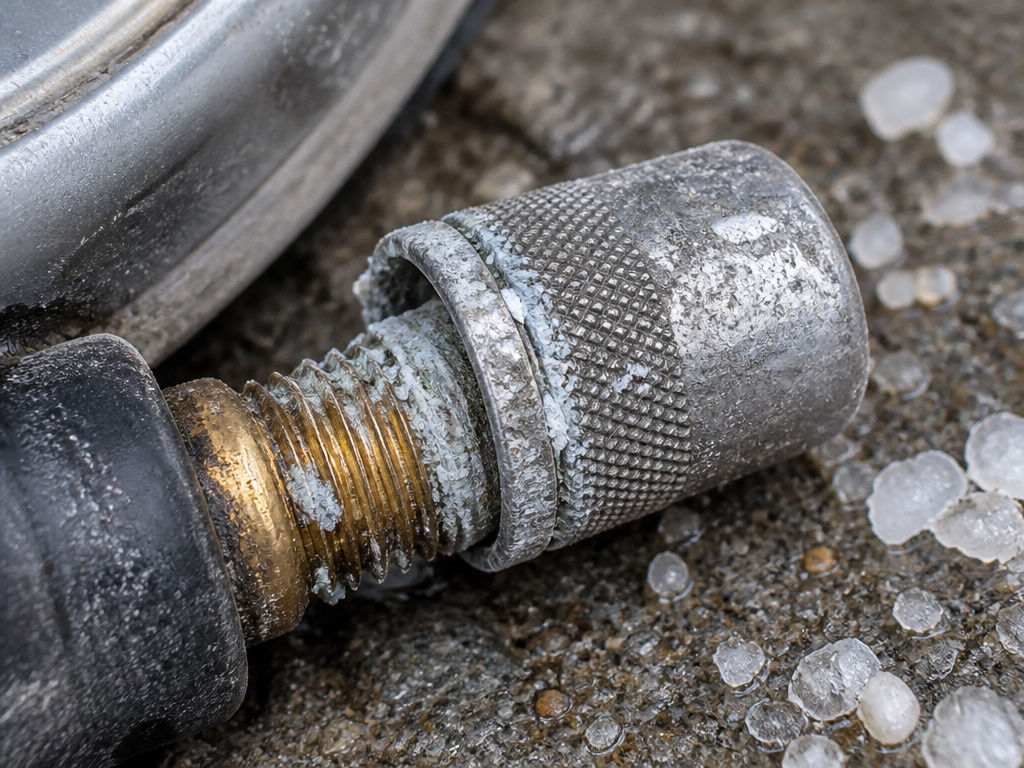 . It’s not in most generic guides. In 2006, Honda issued Service Bulletin A05-068, “Product Improvement Campaign: Tire Valve Cap Replacement.” It applied to 2005-2006 Odyssey, Pilot, and Ridgeline models with TPMS. The bulletin states, verbatim: “The tire valve caps on vehicles with a tire pressure monitoring system (TPMS) are made of aluminum. These caps can corrode and become difficult to remove, especially in the salt belt.”
Honda defined the “salt belt” as 22 states plus Washington D.C.: Connecticut, Delaware, Illinois, Indiana, Iowa, Kentucky, Maine, Maryland, Massachusetts, Michigan, Minnesota, Missouri, New Hampshire, New Jersey, New York, Ohio, Pennsylvania, Rhode Island, Vermont, Virginia, West Virginia, and Wisconsin. If you live in or frequently drive through any of these areas, aluminum caps are a guaranteed problem.
The bulletin’s corrective action was simple: replace aluminum caps with supplied plastic ones. The campaign wasn’t a recall; it was a silent admission that the factory part was wrong for the environment. Yet, two decades later, you can still buy shiny aluminum caps at every auto store. They’re sold as upgrades. For salt-belt drivers, they’re downgrades.
The mechanism is basic galvanic corrosion. The aluminum cap acts as the anode, the brass stem as the cathode. Road salt solution is the electrolyte. The aluminum sacrifices itself, but the corrosion product expands and locks the threads. You can’t untwist it. You must cut it off, often damaging the stem. This is why understanding the purpose of tire caps is about preventing a chemical reaction, not just keeping dirt out.
Passenger Car vs. Truck: The Diameter Divide
While thread pitch is often standard, valve stem diameter is not. This is the second reason caps aren’t universal. A stem’s girth matters.
Passenger cars and light crossovers typically use what the industry calls “standard” or “snap-in” rubber valve stems. The stem diameter at the threading is about 0.9 inches (23mm). The caps for these are smaller in internal diameter.
Trucks, SUVs, and vehicles with higher load ratings often use larger, “bolt-in” or “metal” valve stems. These are more robust to handle the weight and heat. Their threaded portion is thicker, around 1.1 inches (28mm) in diameter. A cap meant for a passenger car will not fit over a truck stem. It will either not thread on at all or will sit loosely on top of the threads without engaging.
How do you know which you have? Look at the stem itself. A rubber stem that seems to “squeeze” through the wheel hole is a snap-in. A stem with a hexagonal base that bolts through the wheel is a bolt-in metal stem. The cap that comes stock on your vehicle is your best guide. If you need to replace a lost one, match the physical size of the remaining caps. Don’t guess.
This diameter difference is a perfect example of why tire size is a foundational spec. A vehicle’s tire size determines its load and speed rating, which influences the type of valve stem used. Changing your tire width or moving to a larger diameter, like wondering if 295 tires are the same as 35-inch tires, often means you also need to confirm your valve stems, and thus your caps, are still appropriate.
A Simple Guide to Choosing Your Caps
Forget the chrome. Ignore the LED lights. Follow this decision tree.
- Identify Your Stem Type. Look at one cap. Is it small (roughly the size of a pencil eraser) or large (closer to a dime)? Rubber stem = small cap. Metal bolt-in stem = large cap.
- Check Your Location. Do you live in Honda’s defined salt-belt states, or anywhere roads are salted in winter? If yes, plastic is mandatory. If no, metal is an option, but plastic is still smarter.
- Look for an O-Ring. The best caps have a small rubber O-ring seated inside the top. This creates a positive seal against the tip of the valve stem, blocking moisture even if the threads aren’t perfect.
- Buy a Known Quantity. For a dead-reliable, no-fuss option, the standard black plastic caps with the O-ring are sold under many brands. They’re the OEM part for most of the industry. For a more secure fit on metal stems, consider a brand like Gorilla or Dorman that offers heavy-duty plastic caps in the larger size.
Your goal is a cap that screws on with finger tightness, no tools. You should feel smooth, light resistance for the last half-turn as the O-ring compresses. If you’re cranking on it, it’s cross-threaded or the wrong size.
For owners of ATVs, UTVs, or trailers, the same rules apply, but stem sizes can vary more widely. Always match the cap to the stem on the vehicle, not the towing vehicle. A dedicated guide to ATV tire sizing will cover the valve stems used in those applications. A cheap pack of universal caps is fine here, as long as they thread on smoothly.
Are Expensive Caps Worth It?
Not really. A cap’s job is to seal and protect. A 50-cent plastic cap with an O-ring does that as well as a $10 anodized aluminum cap. In many cases, it does it better because it can’t corrode.
The money spent on fancy caps is for appearance, not function. If you’re detailing a show car and the shiny cap completes the look, go for it. Just be prepared to remove them with a small wrench before winter if you’re in a corrosive climate, and never overtighten. For a daily driver, put that money toward a good tire gauge or air compressor instead. The real investment is in maintaining correct pressure, which the cap merely preserves.
This principle extends to all tire components. Understanding the cost of a single tire puts the role of a tiny cap in perspective. It’s a consumable, like a fuse. Its failure can lead to a larger problem, but the part itself is trivial.
When browsing for recommended tire caps, prioritize reviews that mention long-term fit and durability over short-term shine. The best cap is the one you forget about because it never causes trouble.
Frequently Asked Questions
Are tire valve caps a standard size?
No, there is no single standard size that fits all vehicles universally. However, most passenger cars share a common thread pitch and stem diameter, making many caps interchangeable within that category. Trucks and SUVs with larger, bolt-in valve stems require caps with a larger internal diameter. The ISO 9413:2019 standard lists specific cap designations (I 01, I 02, I 03), confirming there is a defined range, not a single size.
Can I use any cap I find at the auto parts store?
You can use any cap that threads on smoothly by hand and fits the diameter of your valve stem. For most passenger cars, the standard black plastic caps sold in bulk will work. Always test-fit one before buying a set. Avoid forcing a cap on, if it doesn’t thread easily, it’s the wrong size or cross-threaded.
Why did my metal valve cap get stuck?
It’s almost certainly galvanic corrosion. Dissimilar metals (aluminum cap, brass stem) in the presence of an electrolyte (road salt, moisture) create a weak electrical current that causes corrosion. The corrosion products expand, locking the threads. This is a documented issue, particularly with TPMS stems, as noted in the 2006 Honda service bulletin. The fix is to replace stuck metal caps with plastic ones.
Is it okay to drive without valve caps?
You can drive without them, but you shouldn’t. Without a cap, the valve core is exposed to dirt, moisture, and road chemicals. This can lead to a clogged or damaged core, resulting in a slow air leak. It also leaves the Schrader valve (the pin you depress to add air) unprotected, which can lead to accidental pressure loss. A set of four plastic caps costs less than a dollar, there’s no reason to run without them.
Do tire valve caps affect tire pressure?
Proper valve cap does not directly affect tire pressure. Its job is to form a secondary seal and keep contaminants out of the valve core, which does maintain pressure. A missing or faulty cap allows the valve core to foul, which can lead to slow leaks. It does not cause rapid pressure loss on its own.
The Bottom Line
The question “are all tire caps the same size” misses the point. They’re not, but the difference that matters is chemistry and climate, not just millimeters.
Forget universal. Match the cap to your valve stem’s diameter: small for passenger cars, large for trucks. Then, choose the material based on your zip code. If you see road salt more than three times a winter, plastic is your only rational choice. The factory installed aluminum caps on millions of cars because they look nicer on the showroom floor, not because they’re better for the road.
Screw on a set of plastic caps with O-rings. Do it finger-tight. Then move on to something that actually impacts how your car drives, like checking the pressure they’re now sealed to protect.
