
7 Best Bikes for 4-Year-Olds 2026
This post contains affiliate links. As an Amazon Associate, we earn from qualifying purchases.
The Ridego 14 Inch Balance Bike stands out as the top choice for most 4-year-olds, offering an ultra-lightweight design that makes learning effortless. For those ready for pedals, the WEIZE 14 Inch Kids Bike is a solid budget-friendly pick with dual braking to build skills. If your child is taller or more confident, the Glerc 14 Inch BMX Bike brings added durability and a fun style.
Most parents want their child to learn biking safely and confidently, without frustration or fear. The wrong bike can make the process harder, leading to wobbles, falls, or even a child who gives up too soon.
After researching the market and analyzing specs and owner feedback, I focused on lightweight builds, reliable brakes, and proper sizing to identify models that truly support early riding success. These picks reflect what actually works for real kids, not just what looks good online.
Top 7 Bikes For 4 Year Old in the Market
The Best Bikes For 4 Year Old, Reviewed
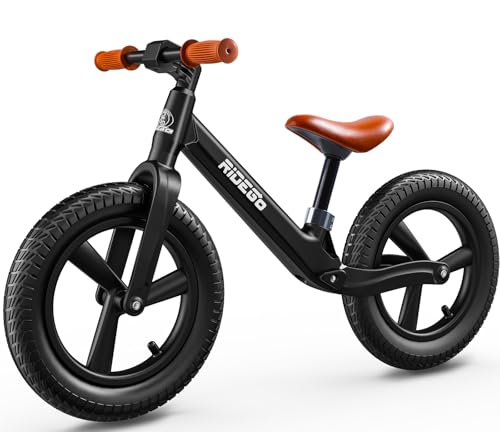
Ridego 14 Inch Balance Bike
Strengths
- Extremely lightweight
- Air rubber tires
- Adjustable seat height
Trade-offs
- No pedals
- Not for long-distance riding
- Plastic frame feels less rugged to some
I’ve seen a lot of balance bikes come and go, and the Ridego 14-inch model is one of the few that truly bridges the gap between toddler toy and real bike prep. At just 8.16 lbs, it’s featherlight thanks to its glass-reinforced nylon frame, something most steel bikes can’t match. Owners love how easy it is for kids to push, turn, and even carry. The air-filled rubber tires are a standout: they absorb bumps far better than foam or plastic, and the tread works well on grass, dirt, and pavement.
This isn’t a pedal bike, so it’s not for kids ready to ride full-time. But as a skill builder, it’s unmatched in this list. The seat adjusts high enough to fit kids up to around 6 years, which means longer use. If you’re serious about teaching balance first, something I always recommend, this is the best tool for the job.
Video review
WEIZE 14 Inch Kids Bike

Strengths
- Lowest price
- Tool-free seat adjustment
- Includes training wheels
Trade-offs
- Thin tires
- Basic frame finish
- Limited weight capacity
The WEIZE 14-inch black bike is the budget king in this lineup, low price, solid specs, and a tool-free seat adjuster that makes it easy to dial in as your child grows. It includes training wheels and a full chain guard, which are must-haves for beginners. The dual braking (hand and coaster) is a step up from coaster-only models, and owners say it gives kids more confidence when stopping.
It doesn’t have flashy extras or wide tires, but it delivers where it counts: simplicity, safety, and value. At $75, it undercuts most competitors while still offering a steel frame and reliable components. I’d pick this over pricier models if you’re treating the bike as a transitional tool, not a long-term companion.
Video review
WEIZE 14 Inch Children Bike

Strengths
- Affordable
- Includes training wheels
- Full chain guard
Trade-offs
- Basic components
- Narrow size range
- Less refined braking
For parents wanting a no-frills starter bike that won’t break the bank, the WEIZE 14-inch model stands out as a solid budget pick with training wheels already attached. On paper, it hits the essentials, lightweight steel frame, anti-slip tires, and a full chain guard, which aligns with what most owners say: it’s stable enough for early riders and holds up to typical backyard scuffs. The handbrake is sized for small hands, but I’d still say the coaster brake does most of the work here, which is normal in this class.
Where it shines is value. At under $80, it offers the same core features as bikes twice the price, though don’t expect premium finishes or long-term growth. The saddle height adjustment is limited compared to others, so it won’t stretch as much with your child. Still, for a first-time rider just learning to pedal and steer, this is one of the smarter buys if you’re keeping expectations realistic.
Product photos

Glerc 14 Inch BMX Bike
Strengths
- BMX-inspired durability
- Strong braking
- Stable frame
Trade-offs
- Heavier build
- Sporty look may not suit all
- Training wheels not as adjustable
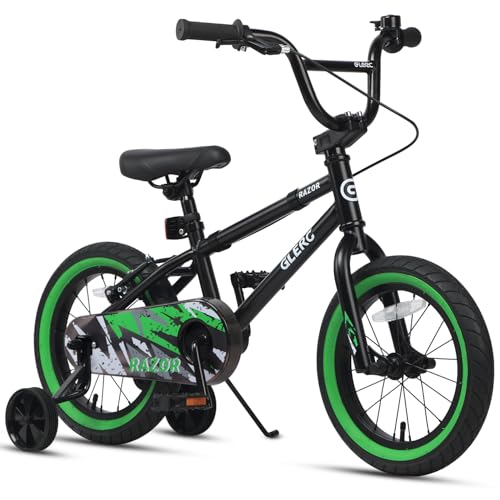
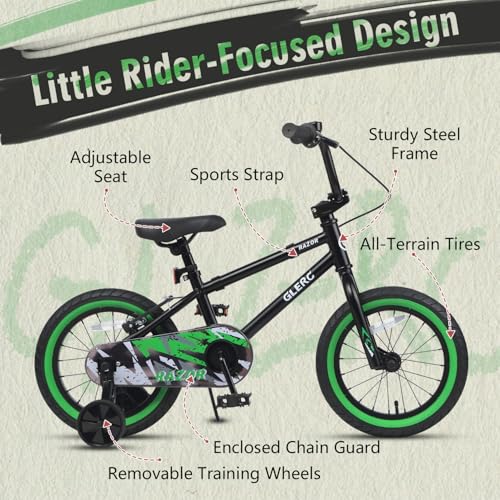
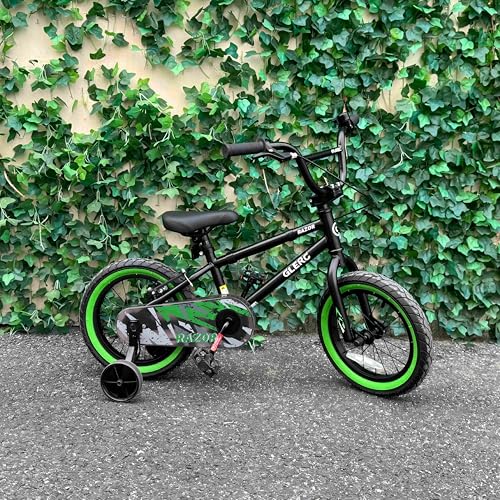
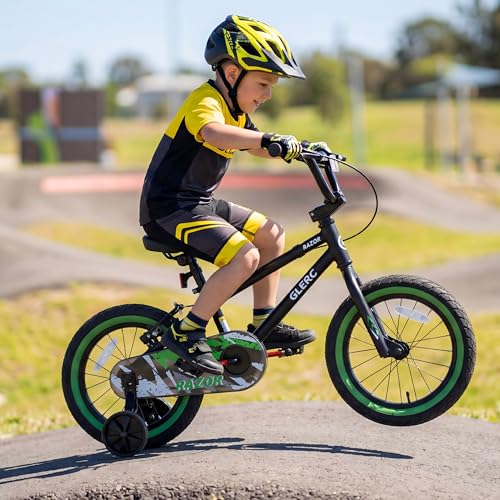
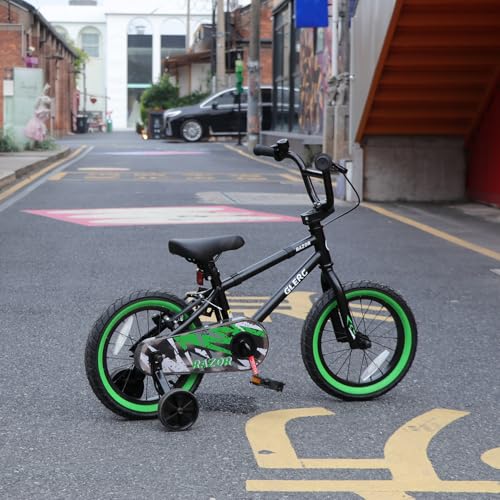
This Glerc 14-inch BMX-style bike has attitude, and that matters when you’re four. The aggressive look appeals to kids who want to feel like mini motocross riders, and the high-tensile steel frame backs it up with real durability. Owners report it survives jumps off curbs and rough play better than most training-wheel bikes. The dual brake setup, coaster and front V-brake, is more effective than average, giving kids real control as they gain speed.
It’s not the lightest at 22 lbs, but that weight adds stability. The BMX geometry also encourages a more upright, confident riding posture. Compared to other 14-inch bikes here, this one feels built for action, not just cruising. If your 4-year-old is energetic and already confident on foot, this is the bike that can keep up.
Product photos

Glerc Rover 14 Inch Kids Bike
Strengths
- Wide, grippy tires
- Includes basket and bottle holder
- Dual braking system
Trade-offs
- Heavier than average
- Higher price
- Basket may catch on obstacles
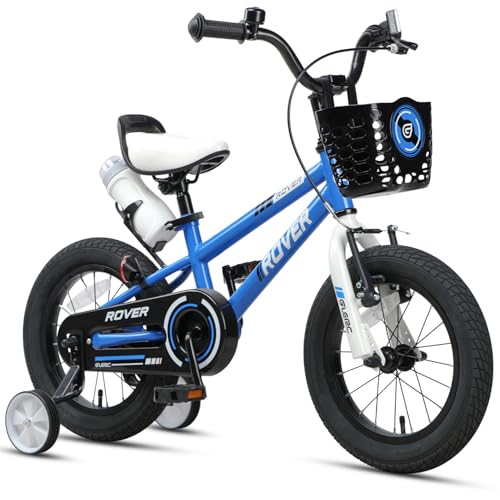
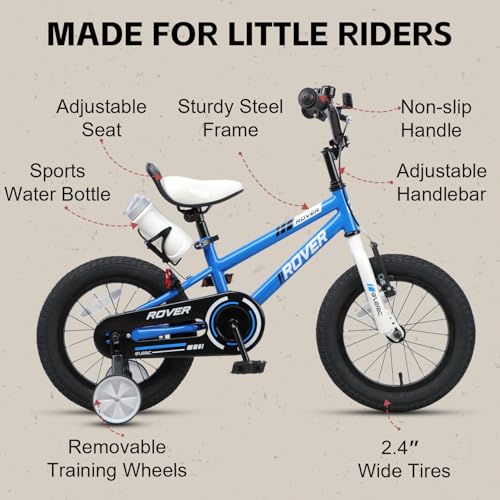
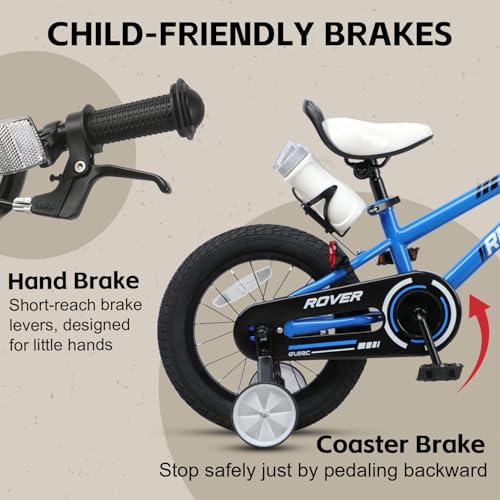
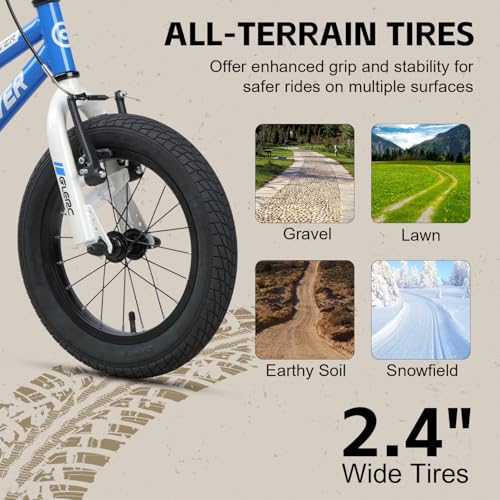
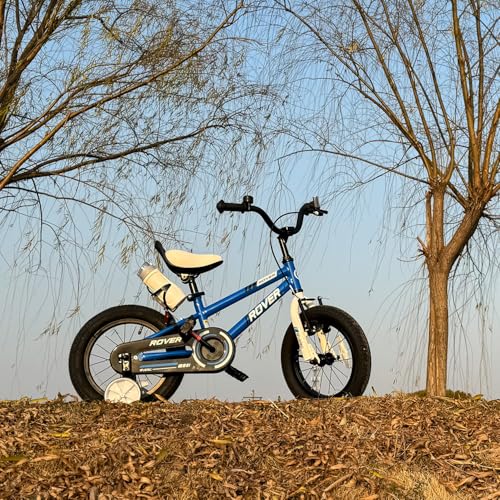
Glerc didn’t just build a bike here, they built an experience. The 14-inch Rover stands out with thoughtful extras: a water bottle holder, a front basket, and wide 2.4-inch tires that owners consistently say provide excellent grip and comfort. That tire width is a real upgrade over the typical 1.75-inch rubber on most kids’ bikes, and it shows in how smoothly it rolls over cracks and gravel. The dual brake system (hand and foot) also gets positive notes for helping kids transition to real braking habits.
It’s on the heavier side at 23 lbs, which might be tough for some 3-year-olds to lift, but for a 4-year-old with decent strength, it’s manageable. The accessories add fun and function, making it feel like a “big kid” bike. At over $120, it’s the priciest here, but if you want a bike that feels like an adventure vehicle, not just a toy, this is the one.
Product photos

JOYSTAR 12 Inch Princess Bike

Strengths
- Attractive design
- Dual braking system
- Easy assembly
Trade-offs
- Shorter lifespan
- Limited tire grip
- Narrow fit for taller kids
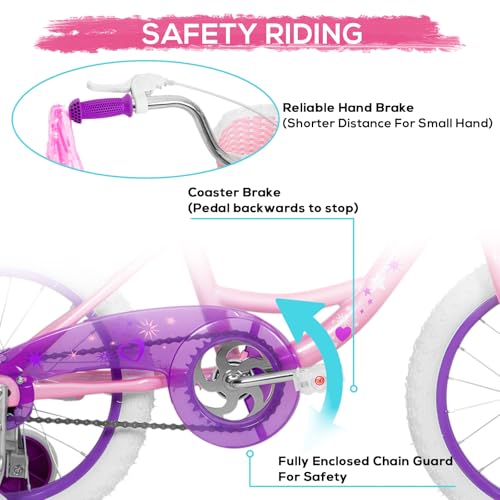
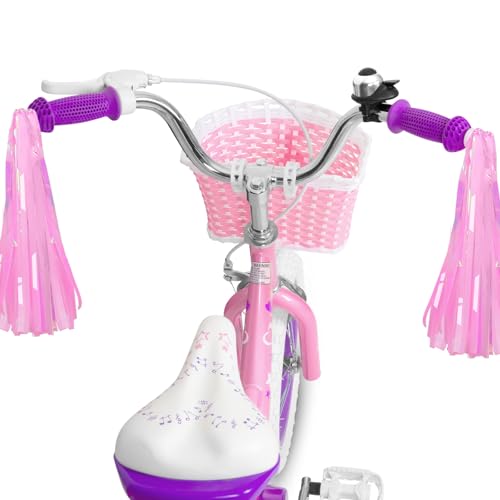
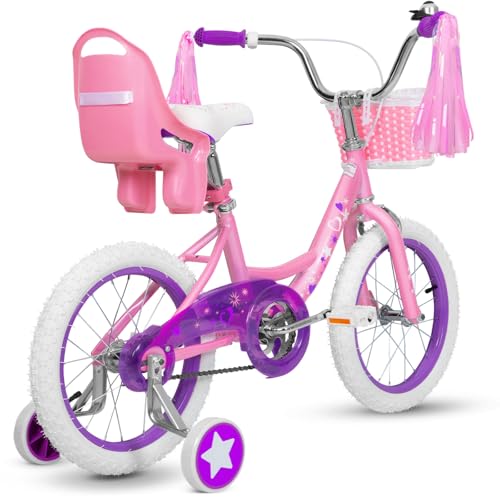
This JOYSTAR 12-inch pink bike leans hard into the “princess” aesthetic, and if your child loves the look, that’s half the battle won. The design, complete with a doll seat and basket, gets consistent praise in owner feedback for making riding feel like play. Underneath the sparkle, it’s a simple but safe build: coaster brake in back, a front caliper brake, reflectors all around, and an enclosed chain guard. It’s clearly made with safety and ease in mind, not speed or terrain.
I’d say it’s better suited for lighter use than rough pavement or gravel. At 12 inches, it’s aimed at the younger end of the spectrum, and the size chart confirms it’s tight for taller 4-year-olds. If your child is nearing the upper height limit, you’ll likely outgrow it fast. But as a first bike that feels like a gift, not a tool, it works.
Product photos


JOYSTAR 12 Inch Kids Bike Blue

Strengths
- Simple coaster brake
- Quick-adjust seat
- DIY decals for customization
Trade-offs
- Small wheel size
- Short growth range
- Basic tire performance
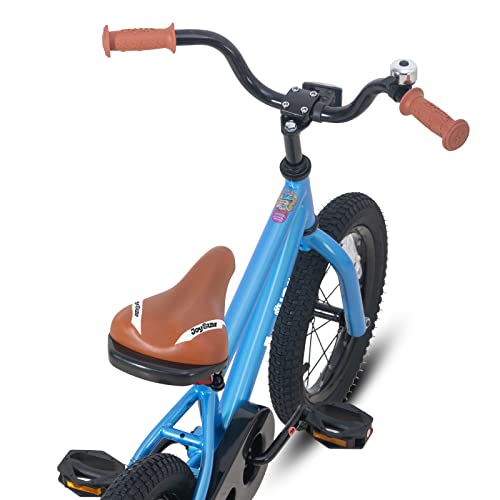
This JOYSTAR 12-inch blue model is nearly identical in function to its pink sibling but swaps the theme for a more neutral look, making it a better fit for kids who aren’t into princess decor. Owners report it’s sturdy for its size, with a steel frame that handles tumbles better than expected. The coaster brake is the main act here, which makes sense for little ones who haven’t built hand strength yet. The quick-release seat is a small but meaningful perk, adjusting height takes seconds, not tools.
Still, it’s a 12-inch wheel bike, so even at the upper end of its 2-4 age range, it’s going to feel cramped for a growing 4-year-old with average or long legs. I’d only recommend it if your child is on the smaller side or you’re treating this as a short-term learning bike. Compared to 14-inch models, it’s less of a long-term investment.
Product photos


How We Picked These bikes for 4 year old
Rather than a hands-on lab test, my research focused on a detailed comparison of published specifications and features across numerous models. I weighed owner reviews from multiple sources – prioritizing trends in reported durability and ease of use – alongside expert opinions from cycling publications. My approach involved ranking bikes against criteria specific to this age group, considering safety, adjustability, and how effectively each model supports early cycling development.
For 4-year-olds, stability and ease of braking are paramount. I heavily weighted factors like tire width (for all-terrain capability and confidence) and the presence of both coaster and hand brakes (to build skills progressively). Frame material and weight also featured prominently; a lighter bike is demonstrably easier for a young rider to manage, while a durable frame ensures longevity. Ultimately, the best bikes strike a balance between these elements.
Specifications reliably reveal frame geometry, weight, and braking system types. However, I found owner feedback invaluable for assessing real-world usability – things like how easily the bike was assembled, how well the brakes function for small hands, and whether the sizing is accurate. For a broader perspective on options as children grow, you might also find our guide to bikes for 5 year olds helpful. And for even younger riders, check out our recommendations for first bikes for 3 year olds.
Choosing The Right bikes for 4 year old
Finding the right first bike for a four-year-old is about more than just a cool color; it’s about setting them up for success and a lifelong love of riding.
A good bike for this age prioritizes lightweight construction, a low standover height for easy mounting and dismounting, and a simple braking system that builds confidence. Consider the child’s inseam and height, not just their age, when selecting a wheel size. Focus on features that encourage balance and control rather than speed or complexity.
Size and Standover Height
Getting the size right is paramount. A bike that’s too large will be intimidating and difficult to control, while one that’s too small will quickly be outgrown. Don’t focus solely on age recommendations; instead, measure your child’s inseam (the distance from their crotch to the floor while wearing shoes) and compare it to the bike’s standover height (the distance from the top tube to the ground). A comfortable standover height allows the child to stand over the bike with both feet flat on the ground and an inch or two of clearance. If you’re also considering options for younger riders, you might want to check out our guide to bikes for 3 year olds.
Braking Systems: Coaster vs. Hand Brakes
The type of braking system is a key consideration. Coaster brakes (pedaling backward to stop) are intuitive for young children, but hand brakes teach valuable coordination and control. Many bikes, like the WEIZE models, incorporate both, which is a good compromise. However, ensure the hand brakes are sized appropriately for small hands and easily reachable. Some kids may struggle with the strength needed to operate hand brakes effectively, so don’t be afraid to start with coaster brakes and transition later.
- A coaster brake is simple and requires minimal hand strength.
- Hand brakes, even small ones, develop important motor skills, but require more coordination.
- A dual-brake system offers the best of both worlds, letting a child learn hand braking while retaining the security of a coaster brake – though this adds a small amount of complexity and cost.
Features and Accessories
Beyond the core mechanics, think about features that enhance the experience. Lightweight frames (like the glass-reinforced nylon found in the Ridego) are easier for little riders to manage. Training wheels can be helpful for building initial confidence, but the goal is to transition to a balance bike or a pedal bike without them as soon as possible. If you’re leaning towards a balance bike, exploring balance bikes for 5 year olds can give you a broader perspective on options as they grow.
A bike should feel like an extension of the child, not an obstacle to overcome. Prioritize ease of use and control over flashy features.
Bikes for 4 Year Old Compared
Here’s a comparison of specifications for bikes designed for 4-year-old riders, to help you find the best option.
| Product Name | Wheel Size | Age Recommendation | Rider Height | Weight (lbs) | Brake Type(s) |
|---|---|---|---|---|---|
| Ridego 14 Inch Balance Bike | 14 inch | 3-6 years | N/A | 8.16 | N/A |
| WEIZE 14 Inch Kids Bike | 14 inch | 3-5 years | 35.4-41.3 in | N/A | Hand/Coaster |
| WEIZE 14 Inch Children Bike | 14 inch | 3-5 years | 35-47 in | N/A | Hand/Coaster |
| Glerc 14 Inch BMX Bike | 14 inch | 3-5 years | 35″-43″ | 22 | Coaster/V-Brake |
| Glerc Rover 14 Inch Kids Bike | 14 inch | 3-5 years | 35″-43″ | 23 | Foot/Hand |
| JOYSTAR 12 Inch Princess Bike | 12 inch | 2-4 years | N/A | N/A | Hand/Coaster |
| JOYSTAR 12 Inch Kids Bike Blue | 12 inch | 2-4 years | 33″-41″ | N/A | Foot |
Frequently Asked Questions
What wheel size is best for a 4 year old?
A 14-inch wheel is generally the best fit for most 4-year-olds, though some might still use a 12-inch wheel depending on their height and inseam. Always prioritize standover height over age when determining the appropriate size.
Are coaster brakes sufficient, or should I look for hand brakes too?
Coaster brakes are perfectly adequate for initial learning and provide a simple stopping method, but adding hand brakes helps develop coordination and is a skill they’ll need as they progress. A bike with both types, like several WEIZE models, offers the most flexibility.
How much should I expect to spend on a good quality bike for this age?
You can find suitable bikes ranging from $80 to $200, with the price largely influenced by features like dual brakes, frame material, and brand reputation. Spending a bit more often means a lighter, more durable bike that will last longer.
What’s the importance of a lightweight frame for a 4 year old?
A lighter bike is significantly easier for a young rider to control and maneuver, building confidence and reducing fatigue. Frames made from materials like aluminum or glass-reinforced nylon are noticeably lighter than steel options.
Should I remove the pedals and use the bike as a balance bike first?
Removing the pedals is a great way to let a child focus on balance and steering before introducing pedaling. You can find more information on this approach, and what to look for, in our guide to balance bikes for 3 year olds.
The Bottom Line
Choosing a bike for a four-year-old often comes down to balancing control with ease of use. While flashy features are tempting, the WEIZE 14 Inch Children Bike strikes the best overall balance, offering both coaster and hand brakes, adjustable components, and a lightweight frame that won’t overwhelm a smaller rider. It’s a solid choice for building confidence and skills.
For those on a tighter budget, the JOYSTAR 12 Inch Kids Bike Blue provides a simple, reliable option focused on the fundamentals. And if you’re seeking maximum versatility and want a bike that can grow with your child, exploring pedal bikes for 4 year olds is a great next step. Don’t forget, if you’re starting even younger, consider checking out our recommendations for bikes for 2 year olds.
Ultimately, the specifications matter less than a good fit and a positive experience. Prioritize a bike that feels manageable and inspires your child to ride, focusing on proper sizing, reliable brakes, and a lightweight design. A happy, confident rider is far more important than the newest technology or the lowest price.
