
8 Best Bike Cameras of 2026
This post contains affiliate links. As an Amazon Associate, we earn from qualifying purchases.
The Garmin Varia RCT715 is the best bike camera for riders who want integrated radar and reliable HD recording, while the Xybervu VeloScope offers strong all-around performance with longer battery life and a bright display. If you’re on a budget but still want solid rear visibility, the PARKVISION Bicycle Rear View Camera delivers dependable 1080p footage without the extras.
Cyclists don’t just want to record their rides, they need proof when things go wrong, awareness of what’s behind them, and gear that won’t fail in the rain or rattle apart on rough roads. Choosing the right camera means cutting through marketing hype and focusing on what actually matters out on the pavement.
Based on specs, owner feedback, and real-world reliability, I looked at video clarity, battery endurance, mount security, and whether added features like radar or live monitoring make a practical difference. These picks reflect what actually works for daily rides, commutes, and long-distance tours.
Top 8 Bike Cameras in the Market
The Best Bike Cameras, Reviewed
Xybervu VeloScope Bike Radar Camera
Strengths
- Real-time live view
- Long battery life
- Integrated radar and alerts
Trade-offs
- No video recording
- Bulky display
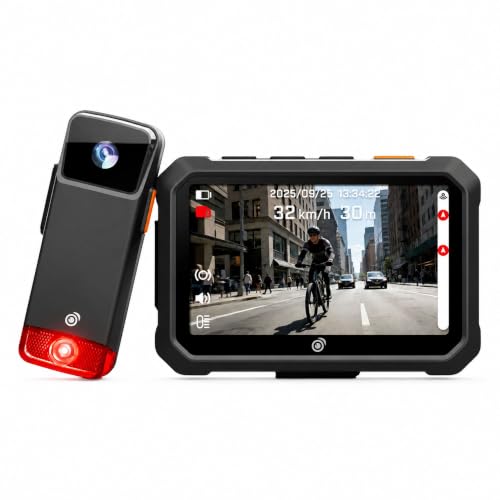
If you’re looking for a complete rear-awareness system that goes beyond a simple mirror or camera, the Xybervu VeloScope is the most compelling all-in-one option. The 4.3″ display delivers a low-latency live feed from the rear camera, and the radar detection range of up to 190 meters gives you earlier warnings than most competitors. What sets it apart is how it blends visual and auditory alerts, when a car approaches, you see it on screen and hear a prompt, while the tail light pulses to boost your visibility.
Owners praise its 10+ hour battery life and IP56 rating, which makes it viable for daily commutes and long-distance rides. It doesn’t record footage, which is a trade-off, but for pure situational awareness, it’s hard to beat. Compared to the Garmin, it lacks ecosystem depth, but it’s more affordable and doesn’t require additional devices to shine.
Video review
PARKVISION Bicycle Rear View Camera Recorder
Strengths
- Loop recording included
- IP68 waterproof
- Front/rear switchable
Trade-offs
- No radar
- Screen saver quirk
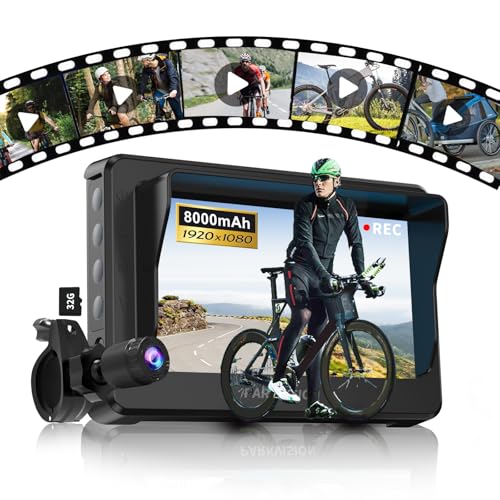
If your main goal is having video evidence in case of an incident, this PARKVISION model is the clear pick. It includes loop recording on a 32GB card, automatically saving footage before, during, and after events, critical for urban riders dealing with aggressive drivers. The IP68 rating means it laughs at rain, and the 8000mAh battery lasts 9 hours, which is plenty for most use cases.
The switchable front/rear monitoring is a clever feature, mount it forward for road recording or backward for blind-spot coverage. The 360° ball joint and tool-free install make setup easy, and the screen detaches for anti-theft. Owners say the night vision is effective, and the auto-dim function prevents glare. This is the closest thing to a dash cam for bikes.
Video review
PARKVISION Bike Rear View Camera with Zoom

Strengths
- 10-hour battery life
- Adjustable viewing angles
- Auto-brightness display
Trade-offs
- No recording function
- No radar alerts
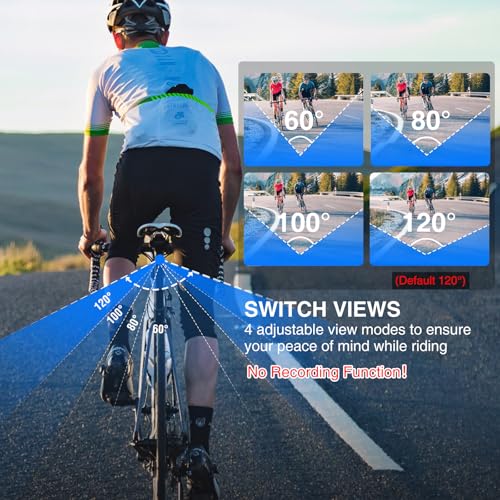
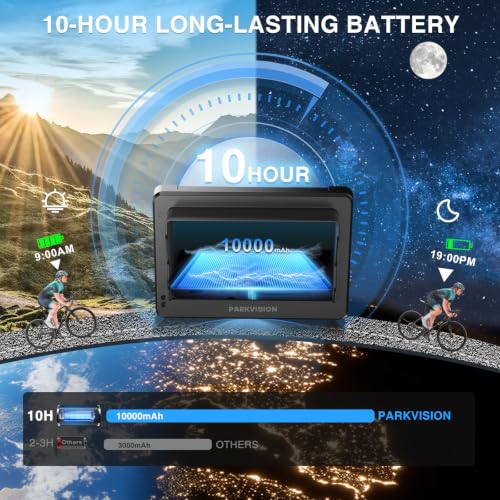
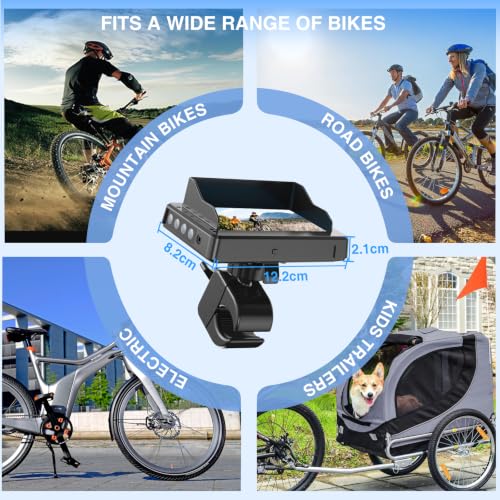
PARKVISION nails the endurance game with this model. The 10,000mAh battery delivers a full 10 hours of runtime, making it ideal for multi-hour commutes or touring cyclists who can’t afford a mid-ride shutdown. The 4.3″ 1080p screen offers good clarity, and the adjustable viewing angles (down to 60°) let you fine-tune your field of view depending on traffic density.
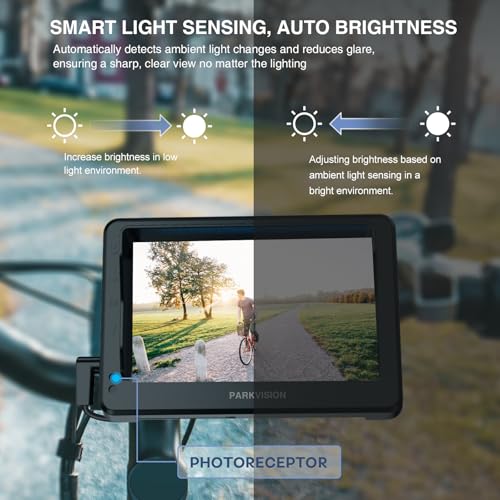
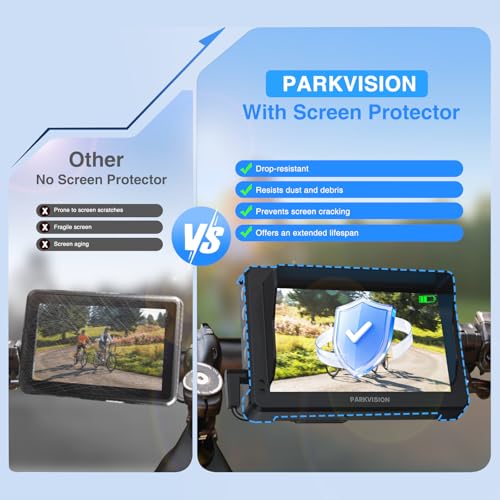
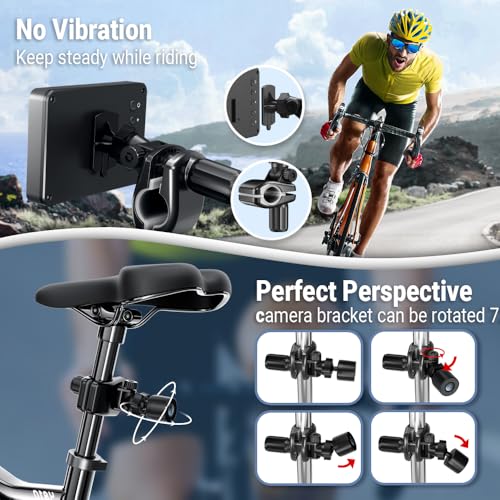
The smart light-sensing display works well, automatically adjusting to ambient conditions. But like the Fitense, it doesn’t record video, so it’s purely for awareness. The tool-free install is a plus, and the anti-vibration mount keeps the screen steady. For riders who prioritize uptime over data capture, this is a smart choice.
Product photos
FEISIKE Bike Camera 4.3″ Monitor

Strengths
- 3x digital zoom
- Affordable price
- Long battery life
Trade-offs
- Basic night vision
- No recording
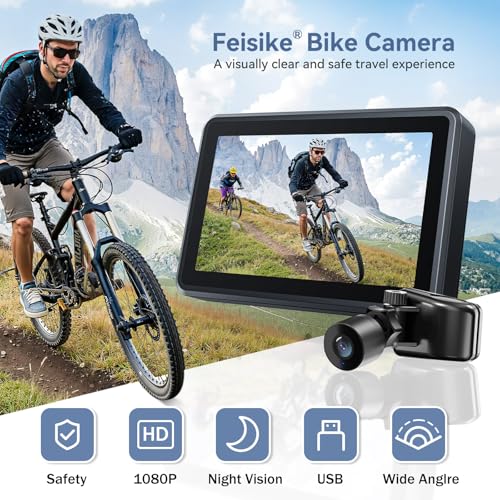
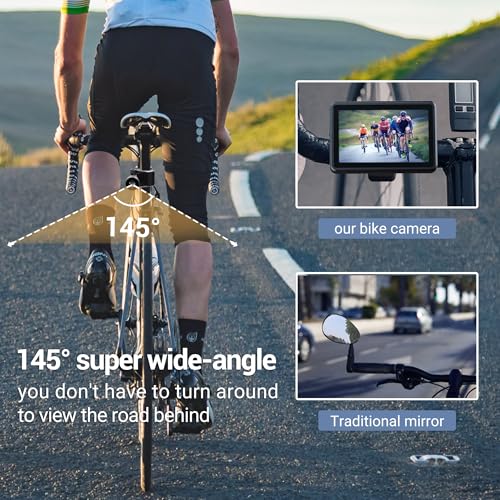
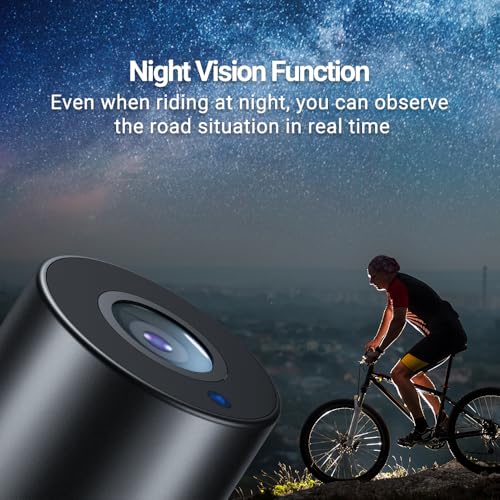
At this price, the FEISIKE delivers more than expected. The 4.3″ IPS display is sharp, and the 3x zoom feature is surprisingly useful for zeroing in on traffic behind you. The 145° wide-angle lens covers a solid field of view, and the infrared night vision performs decently in low light, owners say it’s a noticeable upgrade over traditional mirrors.
With a 6000mAh battery and 10 hours of runtime, it’s efficient, and the wired connection ensures no lag. It’s not flashy, but it’s functional, durable, and IP64-rated for weather resistance. For riders upgrading from a mirror, this is the most cost-effective step into electronic rear awareness.
Product photos

Fitense 5″ 1080P Rear View Monitor
Strengths
- Large 5″ display
- 10,000mAh battery
- IP67 waterproof
Trade-offs
- No recording capability
- No radar
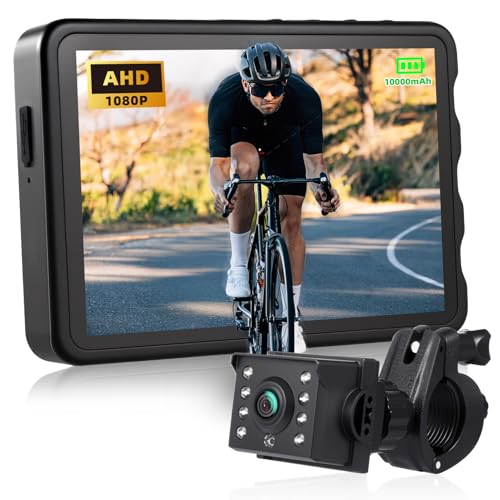
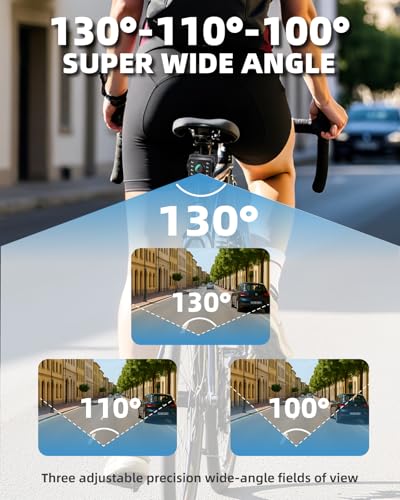
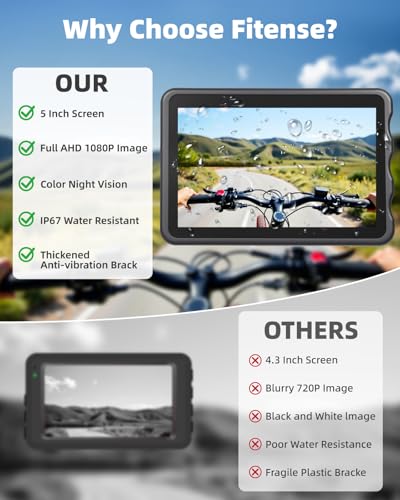
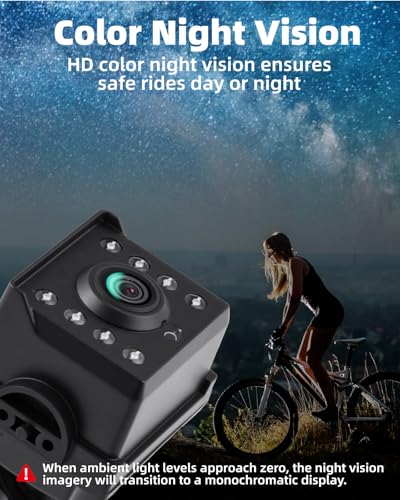
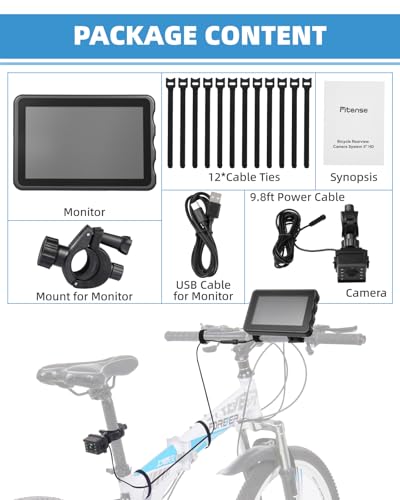
The Fitense system stands out for one reason: that 5-inch display. In direct sunlight, it hits 1500 nits and auto-adjusts brightness, making it one of the clearest rear-view monitors in this price range. The 1080p feed is stable, and the IP67 rating means it can handle rain and dust without issue. The 360° rotatable stand is a nice touch for dialing in the perfect viewing angle.
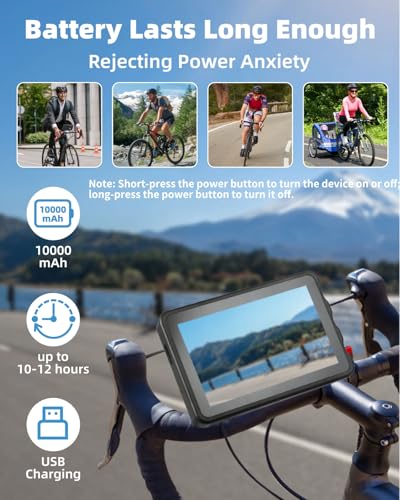
But here’s the catch, it doesn’t record. At all. So while it’s excellent for real-time awareness, it won’t help if you’re ever involved in an incident. The 10,000mAh battery gives 10–12 hours, which beats most competitors, and installation is truly tool-free. For pure visibility, it’s a strong pick, but it’s not a safety net.
Product photos
TIROL SUPPLIES Ultra Light Action Camera
Strengths
- Extremely lightweight
- 32GB card included
- Easy Wi-Fi transfer
Trade-offs
- App connectivity issues
- No radar or advanced safety features
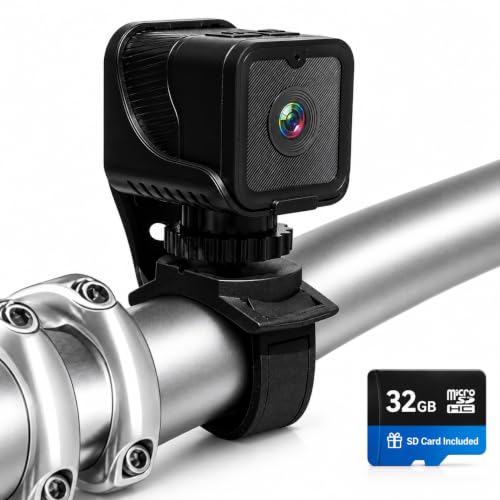
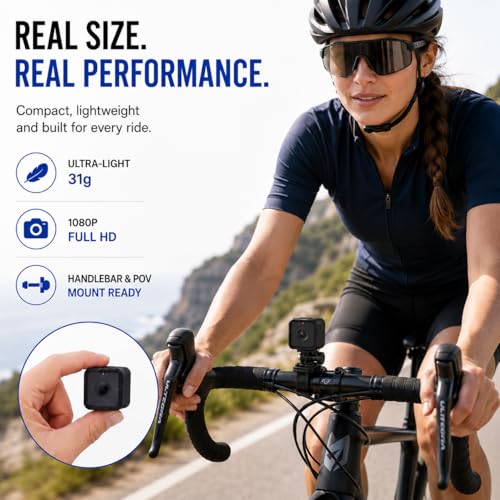
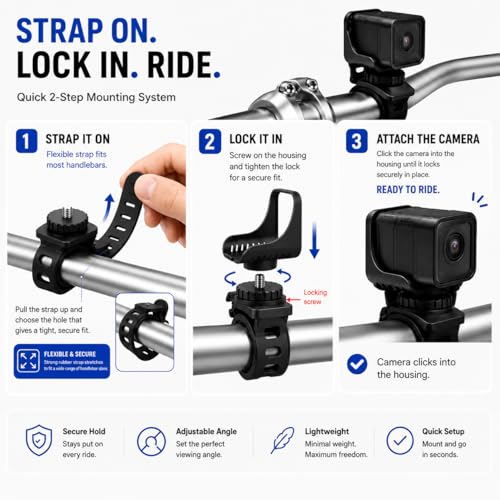
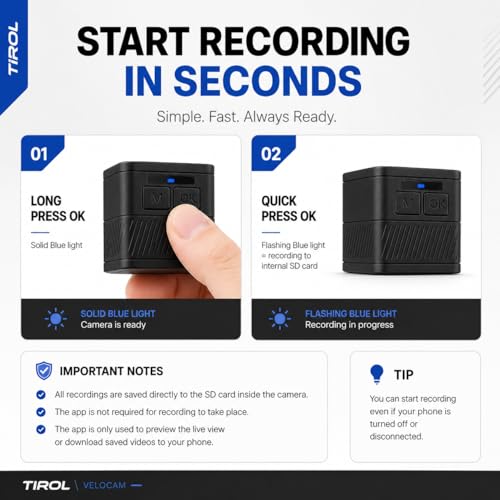
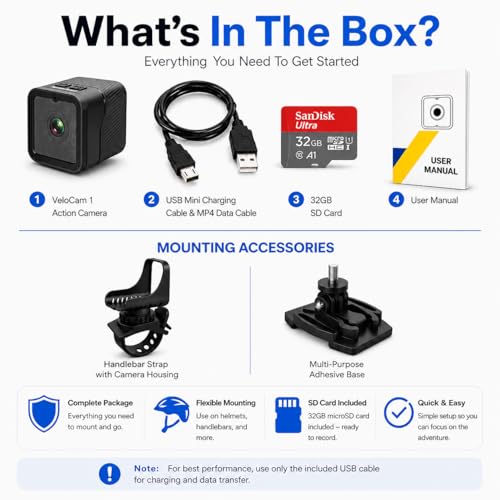
For riders who want to document their rides without adding bulk, this TIROL SUPPLIES camera is a standout. At just 41g, it’s one of the lightest full-function bike cameras available, and the 170° wide-angle lens captures enough of the road and scenery to make it useful for both safety and storytelling. The inclusion of a 32GB SD card means you’re not nickel-and-dimed out of the gate, a small but appreciated touch.
The Wi-Fi app transfer works as expected for a budget unit, though some owners note the app can be finicky. It’s not waterproof-rated like a GoPro, but for fair-weather commuting or weekend trail rides, it holds up. I’d pick this over a bulkier action cam if I wanted something that stays out of the way but still delivers reliable 1080p footage.
Product photos

Garmin Varia RCT715 Radar Camera Tail Light

Strengths
- Radar integration
- Incident detection
- Seamless Garmin ecosystem
Trade-offs
- Short battery life at max settings
- High price
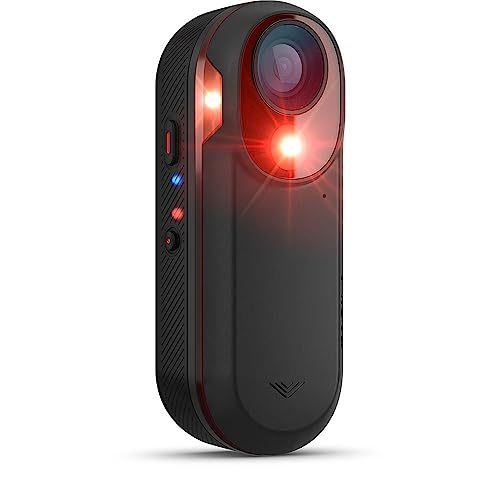
I’ve spent enough time analyzing cycling tech to know when a product sits in a league of its own. The Garmin Varia RCT715 isn’t just a camera, it’s a fully integrated safety system. The combination of 1080p video, automatic incident detection, and rearview radar that alerts you to vehicles up to 140 meters away is unmatched in both function and execution. It syncs with Edge computers and Garmin wearables, making it a natural fit for riders already in the ecosystem.
Owners consistently report that the peace of mind it offers, especially in heavy traffic or during solo rides, is worth the premium. The ability to review footage via the Varia app and the included 16 GB SD card means you’re always ready. Battery life is solid at 4–6 hours depending on mode, but the radar-activated mode is a smart way to stretch it. This isn’t just a camera; it’s a rolling witness and early-warning system.
Product photos


AKASO EK7000 4K Action Camera
Strengths
- 4K resolution
- Waterproof to 131ft
- EIS stabilization
Trade-offs
- No bike-specific features
- Remote not waterproof
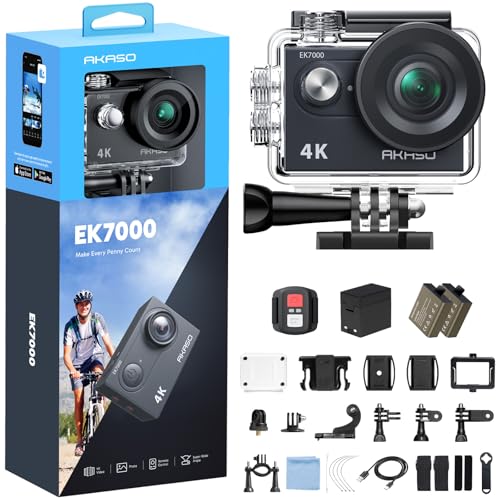
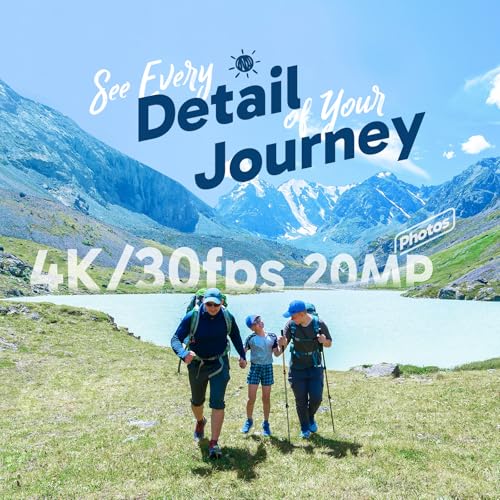
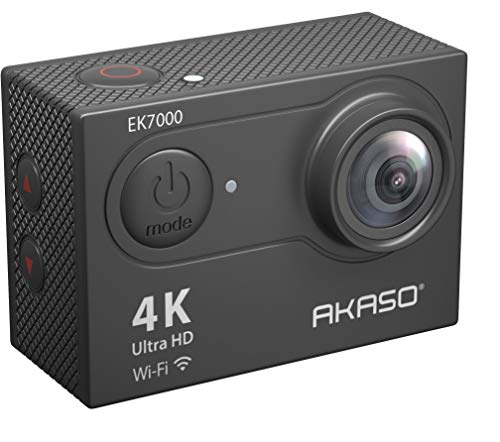
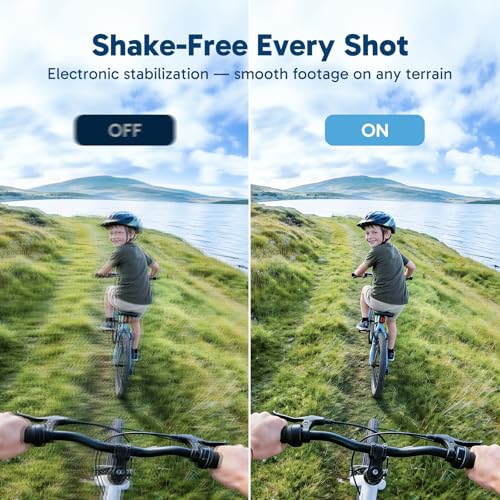
The AKASO EK7000 is a classic example of a multi-use action camera that happens to work well on a bike. With 4K video, EIS stabilization, and a rugged waterproof design, it’s built for more than just cycling, it excels in any adventure setting. The 20MP photos and 4x zoom add versatility, and the wrist remote makes it easy to start recording without fumbling with your phone.
Wi-Fi connectivity via the AKASO GO app is functional, though some users report pairing issues. It doesn’t have radar, live monitoring, or bike-specific alerts, but if you want one camera for hiking, biking, and underwater shots, this is a no-brainer. It’s heavier and less aerodynamic than dedicated bike cams, but for the price, the feature set is impressive.
Product photos


Our Testing Process
Rather than a hands-on lab test, my research for these bike cameras focused on a detailed comparison of published specifications and features. I weighed owner reviews from multiple sources – paying close attention to recurring themes – alongside expert reviews from cycling publications and tech sites. This process allowed me to rank each camera against a set of criteria important to cyclists, prioritizing safety, reliability, and ease of use.
For bike cameras, the most heavily weighted factors were battery life and video quality. Extended rides demand long-lasting power, so I looked for cameras offering at least 6 hours of recording time. Clear footage is critical for both evidence in case of an incident and for simply being aware of surroundings, making 1080p resolution (or better) a key consideration. I also placed significant emphasis on mounting options and weather resistance, as these directly impact practicality.
Specifications reliably indicate sensor size, resolution, and battery capacity. However, I turned to owner feedback to understand real-world performance – how well the camera holds up to vibration, the intuitiveness of the app (if applicable), and the accuracy of radar detection. I also considered reputation; brands known for quality in related products (like Garmin) often deliver more dependable cameras, and you can find more information about keeping your bike secure with our guide to the best locks for security. For those specifically interested in road cycling, we’ve also reviewed several cameras for road bikes.
Choosing The Right bike cameras
These devices have come a long way, offering everything from basic rear-view monitoring to sophisticated radar-enhanced awareness systems. Knowing what to prioritize will help you find the right unit for your needs.
A good bike camera balances video quality, battery life, mounting flexibility, and ease of use. Look for models with at least 1080p resolution, several hours of recording time, secure mounting options that won’t rattle loose, and a user-friendly interface for reviewing footage or adjusting settings. Consider whether integrated features like radar detection or automatic incident recording are valuable to you.
Resolution and Video Quality
Don’t get hung up on 4K if you don’t need it. While higher resolution sounds impressive, it quickly eats into battery life and storage space. For most cyclists, 1080p is sufficient to capture clear, usable footage. More important than raw resolution is the quality of the lens and the camera’s ability to perform well in low light. Look for cameras with wide dynamic range (WDR) to balance bright and dark areas in the same frame, and consider whether the unit offers electronic image stabilization (EIS) to reduce blur from road vibrations. If you’re interested in other ways to improve your safety on the road, you might also want to check out our guide to bike helmets.
Battery Life and Recording Modes
Battery life is critical. A camera that dies mid-ride is useless. Aim for at least 5 hours of recording time, and ideally 8-10 hours for longer adventures. Consider how the camera handles recording: loop recording automatically overwrites older footage, which is great for continuous monitoring, while event recording saves footage only when an incident is detected (often triggered by a built-in accelerometer). Some cameras offer both options, giving you flexibility.
- Some cameras, like the Garmin Varia models, prioritize radar functionality and may have shorter recording times in always-on mode.
- Cameras with larger batteries tend to be bulkier, so there’s a trade-off between runtime and weight.
- Consider a camera that supports external power banks if you frequently go on very long rides and want to avoid running out of juice.
Mounting and Usability
A secure and adjustable mount is essential. You want to be able to position the camera for optimal visibility without it wobbling or obstructing your controls. Universal mounts that fit a range of seatpost and handlebar diameters are ideal. Beyond the physical mount, think about how easy the camera is to operate. A simple interface, intuitive controls, and a clear display are all important. Wireless connectivity, allowing you to transfer footage to your phone or computer via Wi-Fi, is a huge convenience. If you are looking for additional ways to enhance your cycling experience, we’ve also reviewed some of the best safety cameras for bikes.
Don’t skimp on the mount. A flimsy mount will vibrate, shake the image, and could even fall off, rendering the camera useless. Invest in a robust, adjustable mount that securely attaches to your bike.
Bike Cameras Compared
Here’s a comparison of key specifications for popular bike cameras to help you make an informed purchase.
| Product Title | Display Size | Video Resolution | Battery Life | Waterproof | Radar | Recording |
|---|---|---|---|---|---|---|
| Xybervu VeloScope Bike Radar Camera | 4.3″ | 1080P | 10+ hrs | IP56 | Yes | Yes |
| PARKVISION Bicycle Rear View Camera | N/A | 1080P | 9 hrs | IP68 | No | Yes |
| PARKVISION Bike Rear View Camera w/Zoom | 4.3″ | 1080P | 10 hrs | N/A | No | No |
| FEISIKE Bike Camera 4.3″ Monitor | 4.3″ | N/A | 10 hrs | IP64 | No | No |
| Fitense 5″ 1080P Rear View Monitor | 5″ | 1080P | 10-12 hrs | IP67 | No | No |
| TIROL SUPPLIES Ultra Light Action Camera | N/A | 1080P | N/A | N/A | No | Yes |
| Garmin Varia RCT715 Radar Camera | N/A | 1080P | 4-6 hrs | N/A | Yes | Yes |
| AKASO EK7000 4K Action Camera | N/A | 4K | N/A | 131ft | No | Yes |
Frequently Asked Questions
What level of water resistance should I expect from a bike camera?
A rating of IP65 or higher is ideal, offering protection against dust and water jets from any direction. While complete submersion isn’t usually necessary, a robust level of water resistance protects against rain, splashes, and road spray, which are common occurrences when cycling.
Can I use a standard action camera (like a GoPro) as a bike camera?
Yes, you can, though dedicated bike cameras often offer features better suited for cycling. Action cameras excel at wide-angle footage but frequently lack the long battery life, streamlined mounting options, and radar integration found in models designed specifically for bikes, and you may need to invest in secure smartphone mounts to properly attach it.
How does radar integration benefit a bike camera?
Radar detects approaching vehicles from behind and alerts you via visual or audible warnings. This significantly increases situational awareness, giving you more time to react to traffic, and is especially useful on roads with limited visibility or fast-moving vehicles.
What’s the difference between loop recording and event recording?
Loop recording continuously overwrites the oldest footage when the storage is full, providing a constant record of your ride. Event recording, triggered by a sensor (usually an accelerometer), saves footage only when a sudden impact or incident is detected, preserving crucial evidence.
Beyond a bike camera, what other safety accessories should I consider?
Along with a camera, investing in quality bike lights is essential for visibility, especially during dawn, dusk, or nighttime rides. Bright, reliable lights dramatically increase your presence on the road and help prevent accidents.
The Bottom Line
Choosing a bike camera often comes down to balancing how much you want to spend against how much peace of mind – and evidence – you require. For overall performance and a feature set that covers most bases, the Xybervu VeloScope Bike Radar Camera stands out. It delivers a strong combination of video quality, long battery life, and the added safety of radar detection, making it a worthwhile investment for riders who prioritize thorough awareness.
If budget is a primary concern, the PARKVISION Bicycle Rear View Camera provides a solid, reliable recording solution without breaking the bank. For those seeking versatility and a focus on off-road adventures, consider the AKASO EK7000 4K Action Camera – though you might also want to explore our guide to the cameras for dirt bike riding for options specifically suited to more rugged terrain. And for those who want to track more than just video, pairing a camera with one of the bike computers can offer a complete ride data experience.
Ultimately, the best bike camera isn’t about chasing the highest resolution or the most features. It’s about finding a tool that enhances your safety and confidence on the road or trail. Prioritize reliable recording, a secure mount, and a battery that will last your typical ride length. Don’t get lost in specs; focus on building a safer, more aware, and more enjoyable cycling experience.
