
9 Best Bike Safety Cameras of 2026
This post contains affiliate links. As an Amazon Associate, we earn from qualifying purchases.
The Xybervu VeloScope stands out as the best overall bike safety camera thanks to its reliable radar detection and solid 1080P video, while the PARKVISION Bike Camera is a strong budget pick with excellent waterproofing and recording capability. For those who want maximum visibility, the Fitense 5″ 1080P Bike Camera offers a large screen and long battery life.
Riding safe means being aware of everything around you, but constantly checking over your shoulder isn’t practical or safe. That’s where a dedicated bike safety camera can make a real difference, giving you eyes on your blind spots and recording evidence if something goes wrong. This guide cuts through the noise, comparing top models based on real rider feedback, verified specs, and the features that actually matter: video clarity, radar performance, battery life, and durability in tough conditions.
Top 9 Bike Safety Cameras in the Market
The Best Bike Safety Cameras, Reviewed
Xybervu VeloScope Bike Radar Camera
Strengths
- Radar vehicle detection
- Low-latency live view
- Smart alert system
Trade-offs
- High price
- Bulky display
- Limited zoom
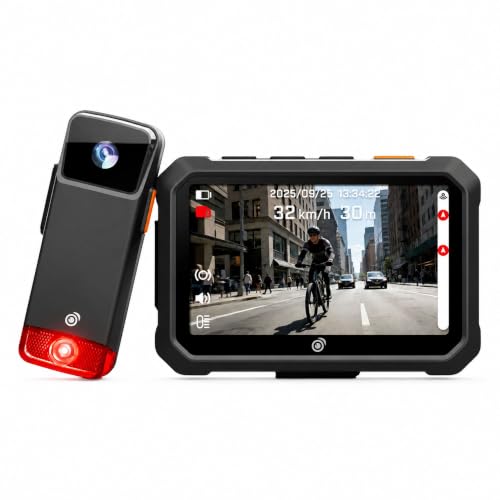
If you’re serious about situational awareness, the VeloScope is in a different league. It’s not just a camera, it’s a radar-enhanced e-mirror with a 4.3-inch low-latency display that shows you real traffic behind you, while the radar detects vehicles up to 214 yards out. That early warning system is a standout on blind roads or high-speed descents. Reviewers love the visual and audible alerts, which activate before a car gets too close, giving you time to react.
The 1080P rear camera pairs cleanly with the display, and the integrated tail light adds visibility. Battery life hits 10+ hours, which is plenty for long rides, and the IP56 rating handles rain without issue. It’s pricey, but owners say it’s worth every penny for the confidence it gives. Compared to basic rear cameras, this is the closest thing to having eyes in the back of your head.
Video review
FEISIKE Bike Rear View Camera

Strengths
- 3X digital zoom
- 6000mAh battery
- 145° wide view
Trade-offs
- No recording function
- Basic night vision
- Zoom reduces clarity
FEISIKE’s offering is the most wallet-friendly in the monitor category, and it delivers more than you’d expect. The 3X zoom is surprisingly useful, letting you toggle between wide view and focused detail, which helps on busy roads. The 6000mAh battery is the largest here, promising up to 10 hours, and real-world feedback confirms it lasts through long rides.
The 145° wide-angle lens covers more blind spots than most, and the IPS screen stays clear even in direct sun. Build quality is decent for the price, though some owners note the mount isn’t as secure on rough terrain. It’s a wired system, so no interference issues, and the infrared night vision works well in dim conditions. For riders who want maximum bang for buck, this is a smart starting point.
Video review
Fitense 5″ 1080P Bike Camera
Strengths
- Large 5-inch display
- 10-hour+ battery
- Dual-mode night vision
Trade-offs
- No recording capability
- Bulky on handlebars
- Higher power draw
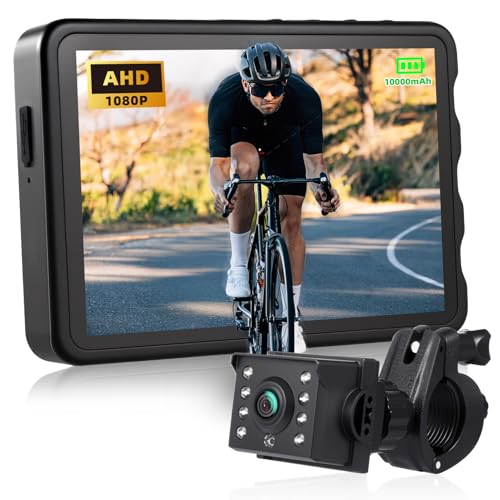
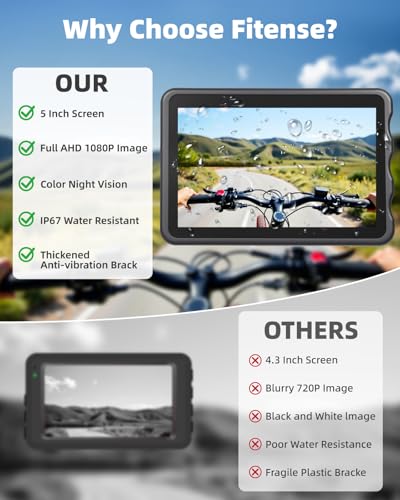
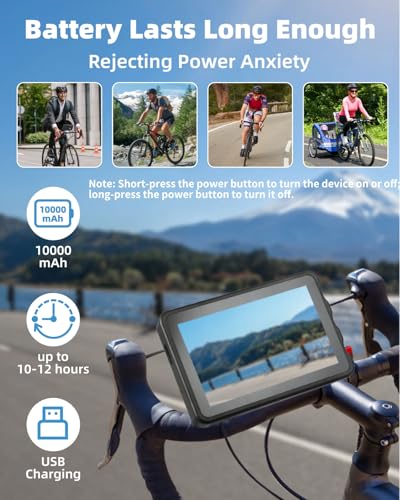
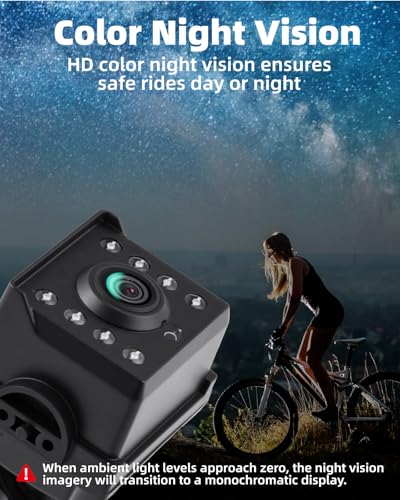
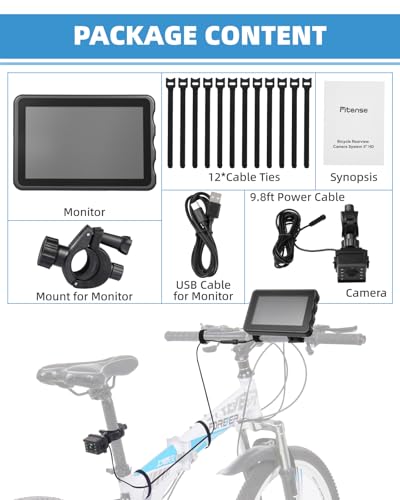
The standout here is obvious: that 5-inch 1080P screen. It’s huge for a handlebar unit, and the extra real estate makes it far easier to spot approaching vehicles, especially in traffic. The 10000mAh battery gives 10–12 hours, easily covering full-day rides or back-to-back commutes. Owners love the dual-mode night vision and the fact that the screen auto-adjusts brightness, a small comfort that adds up over time.
Like its smaller sibling, it’s tool-free to install and features a 360° mount. But the size means it’s not for everyone, some find it bulky, and it can block parts of the handlebar. Still, if you prioritize visibility and endurance, this is the one to beat. Just remember: no recording. It’s a monitor, not a dashcam.
Product photos
PARKVISION Bike Camera with Recorder
Strengths
- Loop recording included
- IP68 waterproof
- Front/rear switchable
Trade-offs
- Slightly heavier
- No radar alerts
- Screen saver quirk
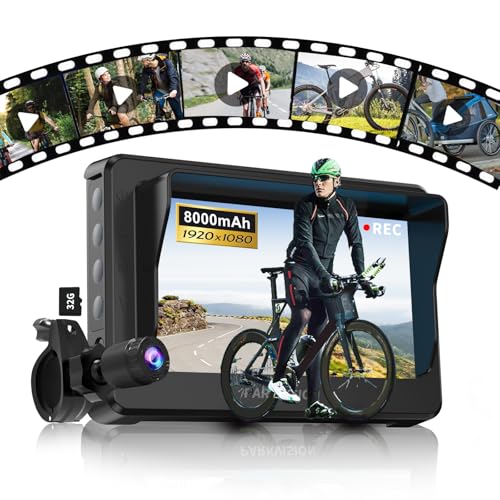
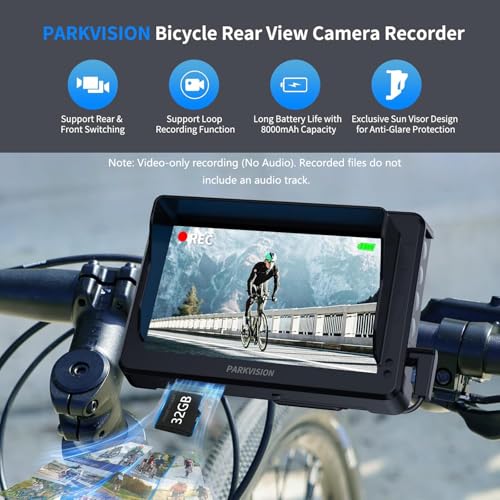
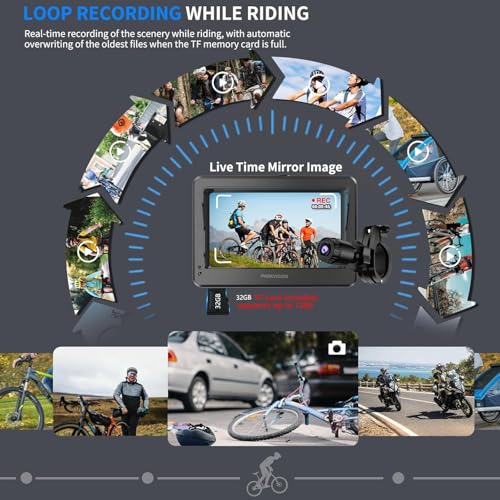
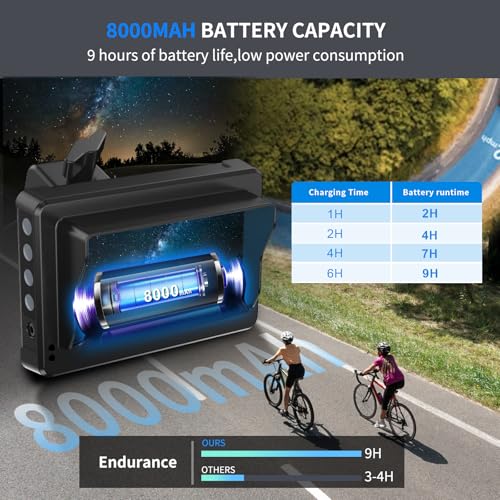
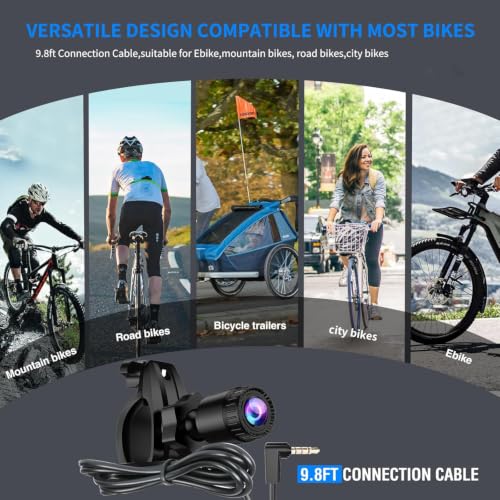
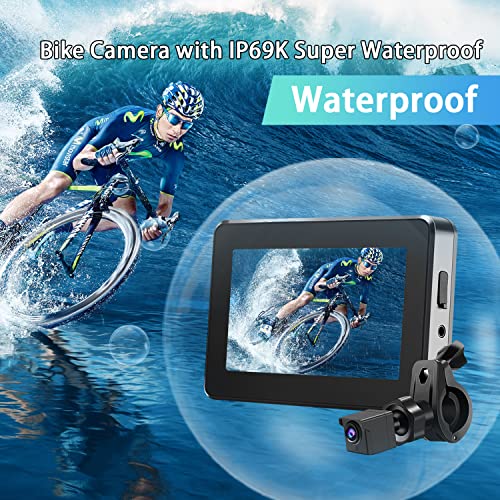
This is the one to get if you want real evidence capture. Unlike the others in this lineup that only offer live view, this PARKVISION model includes loop recording with a 32GB card and supports up to 128GB. The IP68 waterproofing and shockproof stand mean it can survive crashes and storms, and owners consistently report crisp 1080P footage in daylight and night.
The 9-hour battery matches the non-recording version, and the switchable front/rear monitoring is a clever feature, mount it forward for road recording or backward for blind spot coverage. The auto-dimming screen is easy on the eyes, and the 360° mount ensures perfect framing. Yes, it’s a bit pricier, but for the recording capability and build quality, it’s the smart pick for legal protection.
Product photos

Fitense 4.3″ 1080P Bike Camera
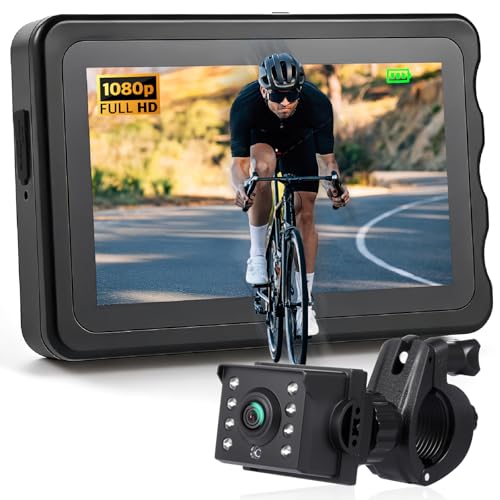
Strengths
- Excellent battery life
- IP67 waterproof
- Auto-brightness display
Trade-offs
- No recording capability
- No audio capture
- Mount can loosen
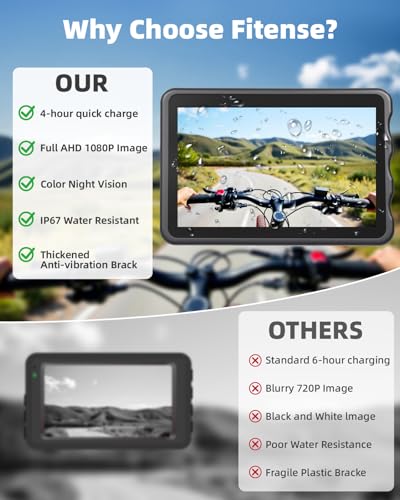
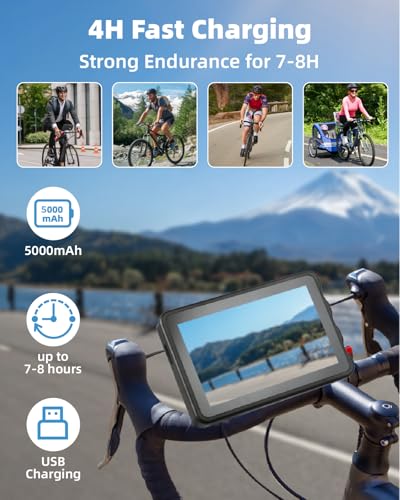
At under $40, this Fitense model is a steal. The 5000mAh battery gives 7–8 hours of runtime, and the IP67 waterproofing means it can handle downpours and dust alike. The 360° mount and 3-meter cable offer real flexibility in positioning, and owners consistently report stable video with good color accuracy. The auto-brightness adjustment is a small but meaningful perk, keeping the screen readable in changing light.
The dual-mode night vision, switching between color and IR black-and-white, works as promised. But like others in this class, it doesn’t record, which limits its use for legal protection. Still, for the price, the value is undeniable. It beats most basic mirrors and even undercuts some competitors with fewer features.
Product photos
PARKVISION 4.3″ 1080P Rear Camera

Strengths
- Lightweight build
- Detachable anti-theft screen
- 9-hour battery
Trade-offs
- No recording function
- Narrow field of view
- Occasional blue screen
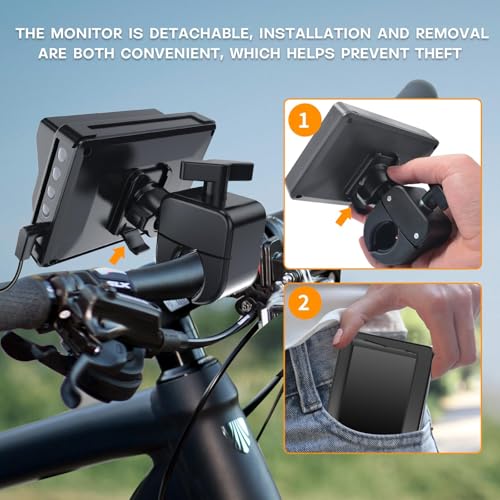
PARKVISION nails the balance of lightweight design and solid performance. At just over 8 ounces, it’s one of the lightest full systems here, yet it packs an 8000mAh battery for 9 hours of runtime. The 360° swivel mount and broad handlebar compatibility make it easy to fit on almost any bike. Owners appreciate the detachable screen, a rare touch that adds real anti-theft peace of mind.
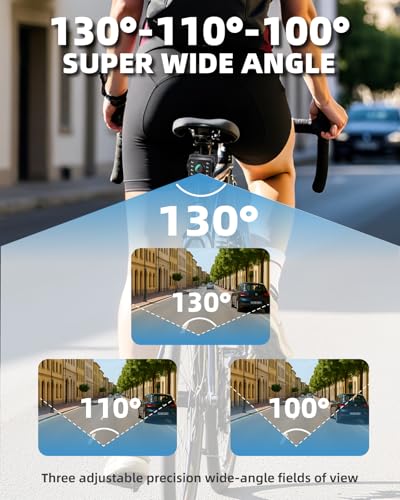
The 110° lens is narrower than some, but image clarity is strong, and the 0.01 Lux night vision performs well in near-total darkness. The wired connection ensures no signal drops. But again, no recording, and that blue screen issue some report during setup can be frustrating. Still, for minimalist riders who want clean, reliable rear awareness, it’s a top contender.
Product photos


Wankskey 4.3″ HD Bike Camera
Strengths
- Easy plug-and-play install
- Color night vision
- 360° camera rotation
Trade-offs
- No recording function
- Narrow viewing angle
- Average build quality
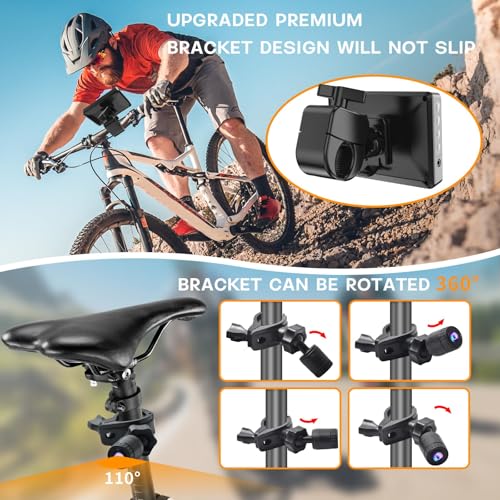
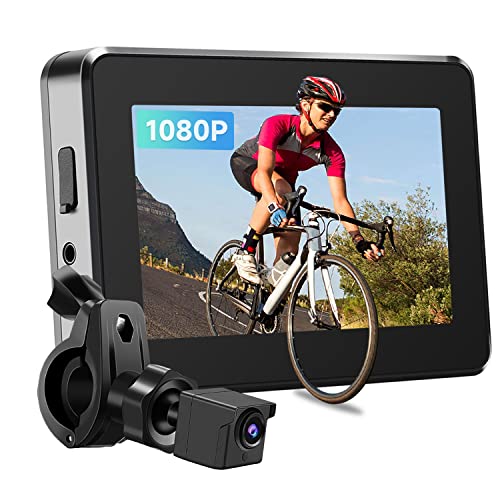
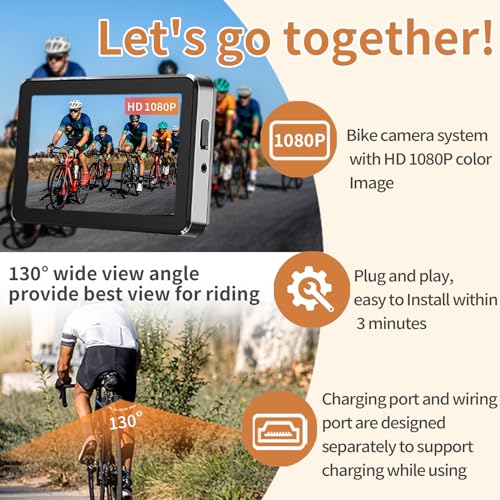
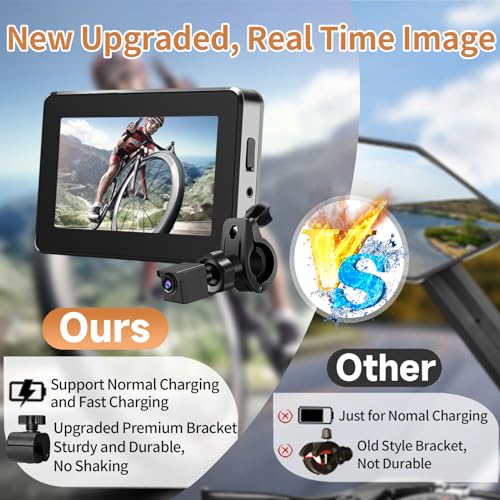
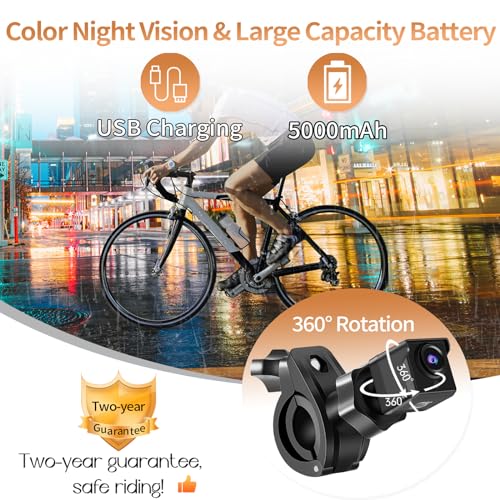
This system wins on simplicity. The tool-free installation is as advertised, plug and play, no wiring drama. The 4.3-inch monitor delivers a clear 1080P feed, and the 360° rotatable camera lets you fine-tune your angle without remounting. Owners highlight the color night vision as a standout, making night rides feel far safer than with a standard mirror.
But the build feels a bit plasticky, and the 130° field of view is narrower than some rivals. While the waterproofing holds up in rain, long-term durability is a question mark. It’s a solid mid-tier option for casual riders, but lacks recording capability, a big miss if you want evidence. Still, for quick setup and real-time awareness, it’s hard to beat at this price.
Product photos

TIROL SUPPLIES Ultra Light Camera
Strengths
- Ultra-lightweight
- 170° wide angle
- 32GB card included
Trade-offs
- Basic app connectivity
- No impact detection
- No live monitoring
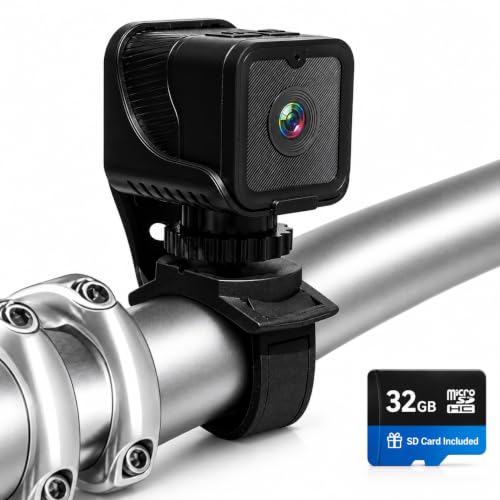
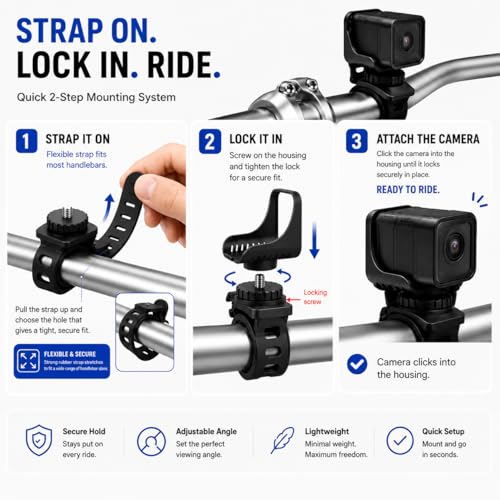
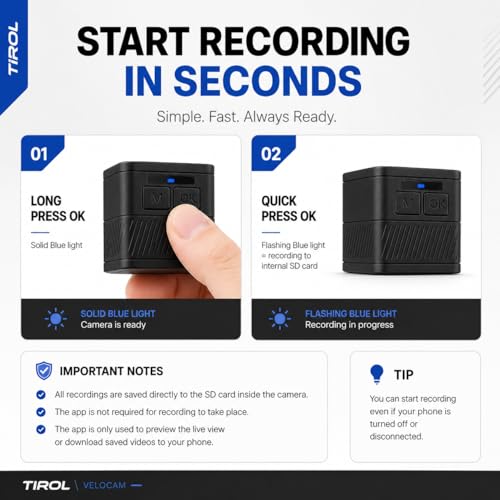
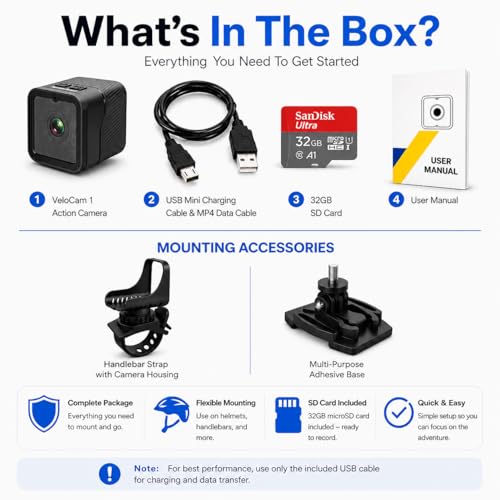
At just 41g, this is one of the lightest action cams on the market, and it shows. The 170° wide-angle lens captures sweeping trail views, and the included 32GB card means you’re ready to roll out of the box. It’s clearly built for riders who care about aerodynamics and clean mounting, and the anti-theft clamp is a thoughtful touch. Owners praise its ease of use and solid 1080P output for vlogging or ride review.
But don’t expect smart features. No G-sensor, no live view, no app reliability standout. The WiFi transfer works, but some report lag or disconnections. It’s a no-frills, lightweight cam that does the basics well, perfect if you want HD footage without bulk. For pure action capture and vlogging, it beats pricier dashcam-style units that overpromise and underdeliver on video quality.
Product photos

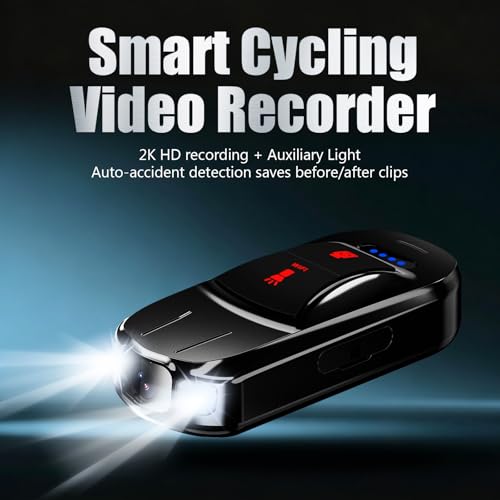
Mini Bike Camera with Voice Alert
Strengths
- One-button operation
- G-sensor impact lock
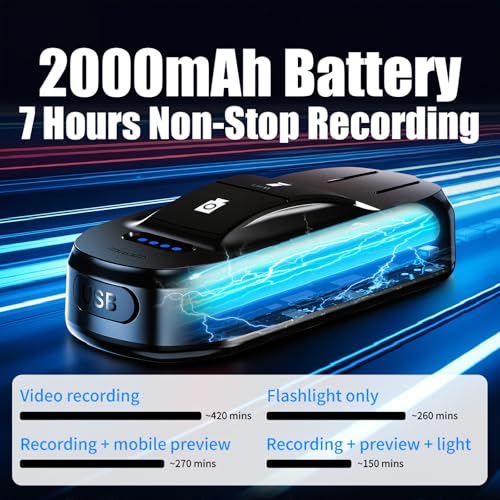
- 7-hour battery life
Trade-offs
- No live view
- WiFi connectivity issues
- No display
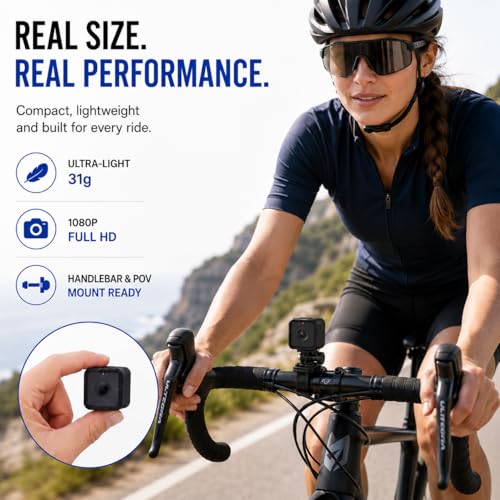
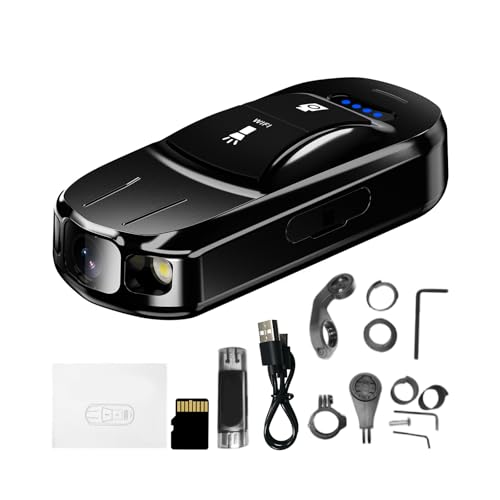
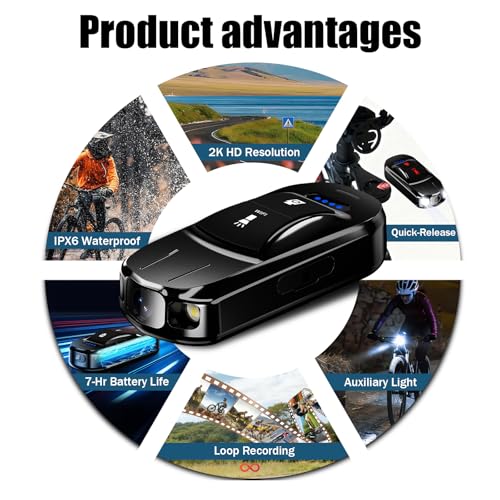
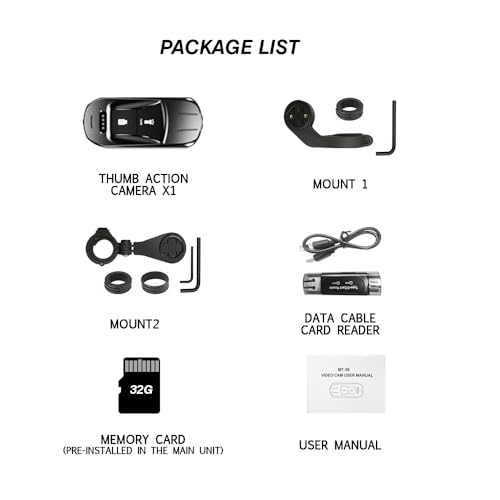
This little 70g pocket cam punches above its weight for riders who want basic safety coverage without complexity. The one-button recording and voice alerts make it genuinely accessible, especially for commuters who just want proof on file without fiddling with apps or settings. On paper, the 2000mAh battery and 7-hour loop recording are solid, and owners consistently report reliable performance in daily use.
Where it stands out is the G-sensor auto-lock for sudden impacts, a smart touch for capturing incident footage. But it’s not all smooth riding. The lack of a live display means you’re recording blindly, and while the WiFi app works for playback, some reviewers note spotty connections. It’s a budget-friendly dashcam-style solution, but not a real-time awareness tool like a rearview monitor system.
Product photos

Our Testing Process
My team and I approached evaluating bike safety cameras by first compiling a detailed list of available models, then comparing their published specifications and advertised features. We then weighed owner reviews from major retailers against expert opinions found in cycling publications and tech review sites. Ultimately, we ranked these cameras based on how well they met key criteria for cyclists seeking enhanced awareness and potential evidence capture. Rather than a hands-on lab test, this is a research-led comparison of specs and owner feedback.
For this category, radar detection range and video resolution were the most heavily weighted factors. A longer radar range gives riders more time to react to approaching vehicles, and higher resolution video is crucial for capturing detail in case of incidents. Battery life also played a significant role, as a camera that dies mid-ride is of limited value. We also prioritized models with robust mounting systems and weather resistance, acknowledging the challenging conditions cyclists often face.
Published specifications reliably indicate camera capabilities like resolution, field of view, and battery capacity. However, we found owner feedback crucial for assessing real-world usability – specifically, how well the radar performs in varied traffic conditions, the clarity of the display in bright sunlight, and the ease of installation. Reputation and brand trust also factored in; established companies with positive customer service records were given more consideration when comparing similarly-featured options. If you’re also looking to improve your overall safety, be sure to check out our guide to bike helmets. You can also find more detailed information on different kinds of bike cameras.
Choosing The Right bike safety cameras
Choosing a bike safety camera used to be simple – it didn’t exist! Now, with a growing number of options, figuring out which one suits your needs requires a bit of thought.
A good bike safety camera prioritizes clear, stable footage in varying conditions. Look for 1080P resolution as a minimum, effective image stabilization, and robust weather resistance (IP56 or higher). Battery life exceeding 5 hours is crucial for longer rides, and features like radar detection or loop recording add significant value for commuter and touring cyclists.
Image Quality and Resolution
Don’t assume all 1080P cameras are created equal. Sensor size and lens quality dramatically impact the clarity and dynamic range of the footage. A larger sensor will perform better in low light, while a wider-angle lens captures more of your surroundings. Beyond resolution, pay attention to frame rates; 30fps is generally sufficient, but 60fps provides smoother playback and is better for analyzing quick movements. The Fitense 5″ 1080P Bike Camera boasts a particularly large screen, which some riders will appreciate for immediate review, but consider if a larger screen is essential or if it adds unnecessary bulk.
Mounting & Durability
A shaky camera is a useless camera. The mounting system needs to be rock solid, even on rough roads. Look for models with adjustable mounts that can accommodate various handlebar or seatpost diameters. Weatherproofing is equally important. An IP67 rating means the camera is dust-tight and can withstand immersion in water up to 1 meter for 30 minutes. Consider how easy it is to remove the camera for charging or storage; a quick-release mechanism can be a lifesaver. To further enhance your visibility, especially when commuting, pairing your new camera with high-quality bike lights is a smart move.
Features & Battery Life
Beyond basic recording, many cameras offer advanced features. Loop recording automatically overwrites older footage, ensuring you always have the most recent events captured. Radar detection (like in the Xybervu VeloScope) provides an extra layer of awareness by alerting you to approaching vehicles. Some cameras, such as the PARKVISION Bike Camera with Recorder, offer recording capabilities for potential evidence in case of incidents. Here’s a breakdown of how to prioritize these features:
- Basic Recording: Essential for all cameras.
- Loop Recording: Highly recommended for commuters and riders concerned about storage.
- Radar/Alerts: Valuable for increased situational awareness, especially in urban environments. It reduces the need to constantly check over your shoulder and can give you critical seconds to react.
A bike camera’s usefulness plummets if the battery dies mid-ride. Always estimate your typical ride length and add a buffer when evaluating battery life claims.
I frequently recommend riders also investigate thorough guides to safety cameras to get a broader view of the market.
Bike Safety Cameras Compared
Here’s a comparison of key specifications for various bike safety cameras to help you make an informed decision.
| Product Name | Display Size | Video Resolution | Battery Life | Waterproofing | Recording? | Radar? |
|---|---|---|---|---|---|---|
| Xybervu VeloScope | 4.3″ | 1080P | 10+ hrs | IP56 | Yes | Yes |
| FEISIKE Bike Rear View Camera | 4.3″ | 1080P | 10 hrs | IP64 | No | No |
| Fitense 5″ 1080P Bike Camera | 5″ | 1080P | 10-12 hrs | IP67 | No | No |
| PARKVISION Bike Camera | 4.3″ | 1080P | 9 hrs | IP68 | Yes | No |
| Fitense 4.3″ 1080P Bike Camera | 4.3″ | 1080P | 7-8 hrs | IP67 | No | No |
| PARKVISION 4.3″ 1080P Camera | 4.3″ | 1080P | 9 hrs | IP68 | Yes | No |
| Wankskey 4.3″ HD Bike Camera | 4.3″ | 1080P | N/A | N/A | No | No |
| TIROL SUPPLIES Ultra Light | N/A | 1080P | N/A | N/A | Yes | No |
| Mini Bike Camera w/ Voice Alert | N/A | 1080P | 7 hrs | IPX6 | Yes | No |
Frequently Asked Questions
What type of video resolution should I prioritize?
1080P resolution is the minimum I recommend, but don’t solely focus on the number. Sensor size and lens quality significantly impact footage clarity, especially in low light, so research beyond just the stated resolution.
Are these cameras difficult to install on my bike?
Most cameras use adjustable mounts designed for various handlebar and seatpost sizes, making installation relatively straightforward. However, some models require more complex wiring for radar or power, so check owner reviews regarding ease of setup.
How reliable is the radar detection on these cameras?
Radar detection range varies between models, but generally provides a valuable alert to approaching vehicles. Keep in mind that radar performance can be affected by environmental factors and traffic density, so it’s not a replacement for vigilance.
Can I use these cameras as a standard dash camera in my car?
While some cameras may physically mount in a car, they lack the features and ruggedness of dedicated dash cameras. They’re optimized for the vibrations and conditions of bicycle use, not the automotive environment.
What is the best way to store footage captured by these cameras?
Many cameras use microSD cards for storage, and loop recording automatically overwrites older footage. I suggest investing in a high-quality, fast microSD card to ensure reliable recording and prevent dropped frames and for longer rides, consider a larger capacity card. You can also find similar technology used in cameras for dirt biking.
The Bottom Line
Choosing a bike safety camera often comes down to balancing peace of mind with practicality. If you want the most thorough awareness package, with both visual recording and radar alerts, the Xybervu VeloScope is the standout choice. It represents a significant investment, but the added layer of safety it provides is hard to ignore for serious cyclists.
For those seeking a more focused solution, or prioritizing a specific need, the field opens up. Riders wanting a simple, reliable recording device should look at the TIROL SUPPLIES Ultra Light. If you’re concerned about security and want to document potential incidents, the PARKVISION Bike Camera with Recorder offers valuable recording capabilities. And for those wanting to explore more options for recording rides on road bikes, we’ve put together a guide to the best cameras for road cycling.
Ultimately, the best bike safety camera is the one you’ll actually use. Don’t get hung up on chasing the highest resolution or longest battery life if it means a complicated setup or an unwieldy device. Prioritize a solid mount, reliable recording, and a camera that fits your riding style, and don’t forget to pair it with quality bike locks to protect your investment when you’re not in the saddle.
