
9 Best Android Car Head Units of 2026
This post contains affiliate links. As an Amazon Associate, we earn from qualifying purchases.
The Dasaita 12.3″ Ford Maverick head unit stands out as the best overall, combining powerful specs, a premium display, and seamless vehicle integration. For those on a tighter budget, the SJoyBring 7″ QLED delivers solid performance in a compact form. If you’re after maximum flexibility, the PLZ 10.1″ Rotatable Floating unit offers a unique design that works across many vehicles.
Choosing the right Android head unit isn’t just about having a big screen or the latest OS, it’s about finding a system that works reliably every time you drive. Glitches, poor touch response, or losing steering wheel controls can turn a high-tech upgrade into a daily frustration.
As someone who’s spent years digging into car electronics and audio systems, I know what separates a good unit from a regret. This guide cuts through the specs and marketing to focus on real-world performance, compatibility, and value, based on deep research, owner experiences, and what actually matters behind the wheel.
Top 9 Android Car Head Units in the Market
The Best Android Car Head Units, Reviewed
Dasaita 12.3″ Ford Maverick Head Unit
Strengths
- Stunning 12.3″ 2K display
- Full factory feature retention
- HDMI and optical audio
Trade-offs
- Very high price
- Maverick-only compatibility
- 4G LTE requires SIM
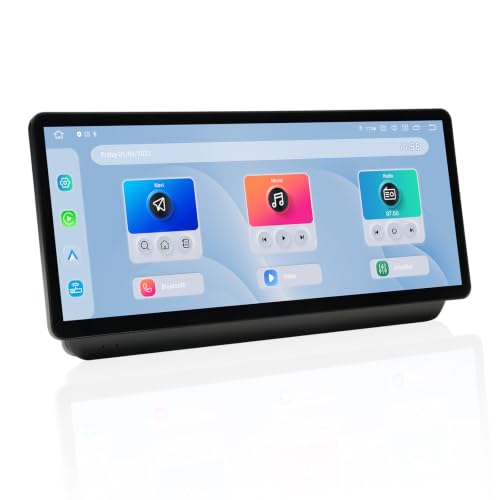
If you’re looking for the best overall head unit in this list, this Dasaita for the 2021–2023 Ford Maverick is it. The 12.3-inch 2K QLED screen is stunning, bright, sharp, and wide enough for true split-screen use without crowding. Like its Tundra sibling, it runs Android 13 on a Qualcomm octa-core with 8GB RAM and 256GB storage, making it one of the most powerful units here.
It retains all factory features, steering wheel controls, parking sensors, USB ports, and adds HDMI input, optical audio, and DTS surround for a premium cabin experience. The inclinometer and triple GPS are perfect for weekend trail runs. Owners consistently rate it as the most polished, reliable upgrade they’ve installed. It’s expensive, but justified by the depth of integration and performance.
Video review
SJoyBring 7″ QLED Double Din Car Stereo

Strengths
- QLED display quality
- Dual subwoofer outputs
- Includes rear camera
Trade-offs
- Small screen for modern apps
- Steering wheel control needs extra interface
- No built-in GPS
At just under $140, the SJoyBring delivers a lot of premium features in a compact 7″ form. The QLED display punches above its size class, owners report sharp, vibrant visuals, and the 4.2-channel audio with dual subwoofer outputs is rare at this price. It’s clearly built with sound quality in mind, and the custom EQ settings let users tune the output to match their speakers. The inclusion of a rear camera with night vision is a big plus for daily usability.
That said, the smaller screen may feel cramped for modern navigation apps. While it supports split-screen camera views, real-world feedback suggests it’s less effective than on larger displays. Still, for older vehicles with space constraints or buyers who want strong audio without overspending, this unit hits a sweet spot between budget and performance.
Video review
Dasaita Tundra 2014-2021 Head Unit

Strengths
- Full OEM feature retention
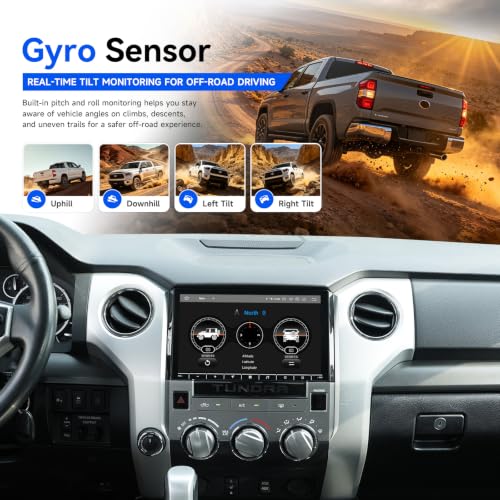
- Off-road inclinometer
- High-end audio processing
Trade-offs
- High price
- Tundra-only fitment
- Requires SIM for 4G
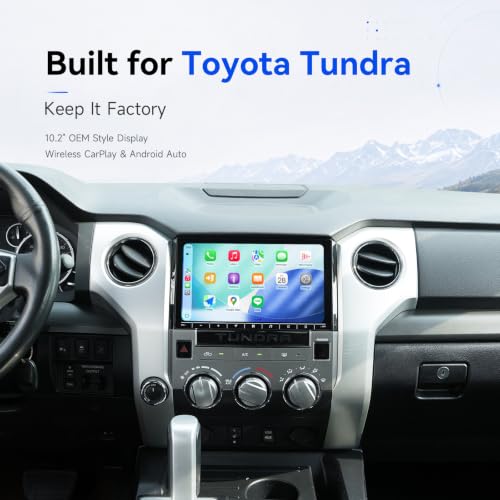
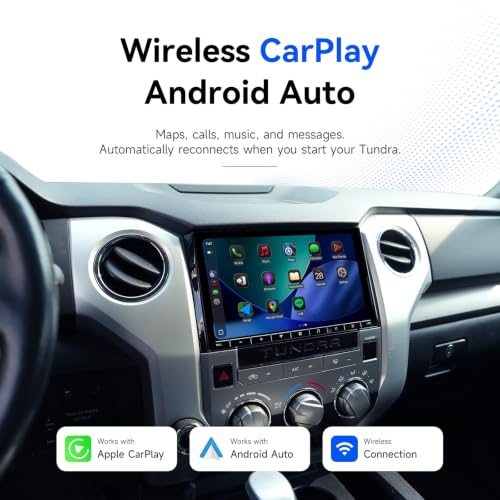
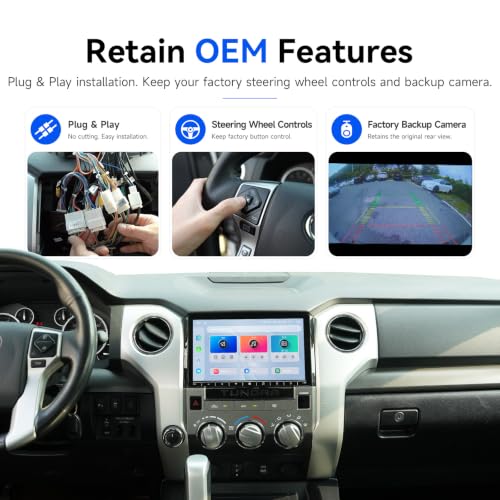
Dasaita builds premium, vehicle-specific head units, and this one for the 2014–2021 Tundra is a masterclass in integration. It retains every factory feature, JBL audio, radar, door alerts, even AC info, while upgrading to Android 13, a Qualcomm octa-core, and 8GB/256GB specs. The built-in inclinometer and triple GPS are off-road gold, giving real-time pitch/roll data that serious trail drivers rely on.
Owners praise the 10.2″ QLED screen and DTS audio tuning, which elevate both media and navigation. It’s not cheap, but for Tundra owners who refuse to lose OEM functionality, it’s worth every penny. Compared to generic units, this feels like a factory upgrade, just better.
Product photos

AUCARAUTO 17.2″ Chevy Silverado Head Unit
Strengths
- Massive 17.2″ touchscreen
- Full OEM feature retention
- Strong processor and storage
Trade-offs
- Extremely high price
- Limited vehicle compatibility
- Requires careful fitment verification
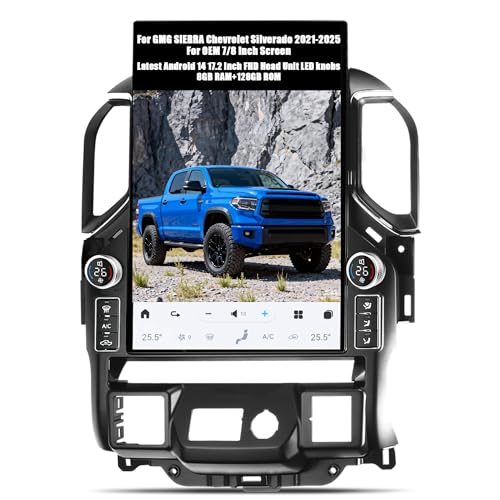
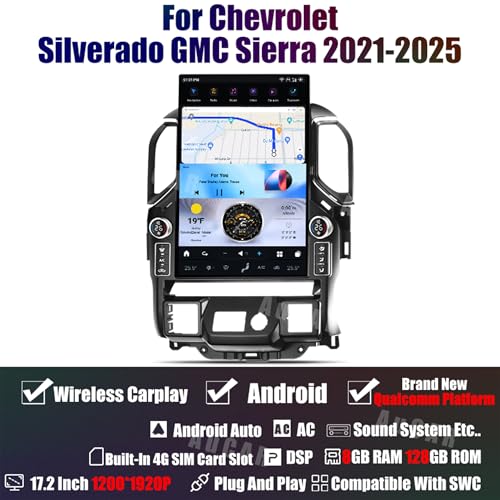
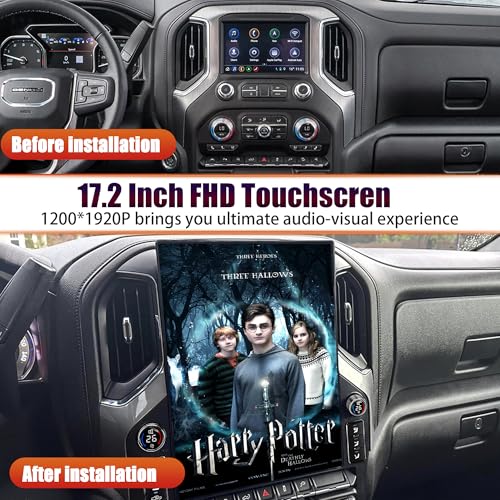
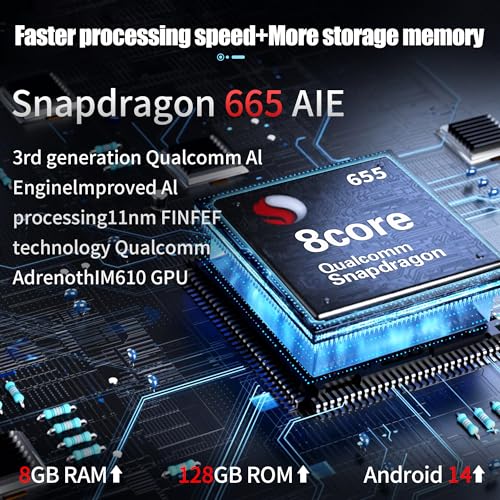
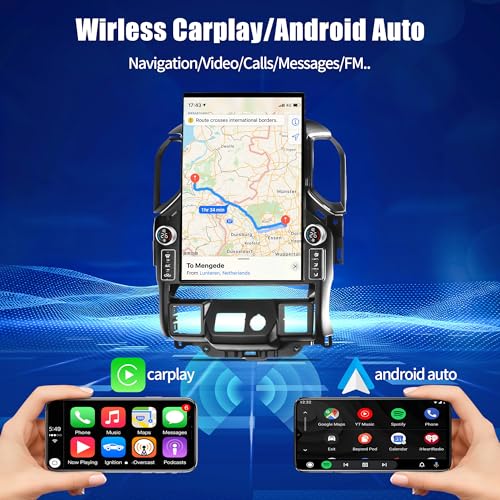
This is a flagship-level unit built exclusively for late-model Chevrolet Silverado and GMC Sierra owners. The 17.2-inch screen dominates the dashboard and feels more like a Tesla than a traditional truck, owners love the immersive experience, especially when using split-screen navigation and media. Powered by a Snapdragon 665 octa-core and 8GB RAM, it runs Android 14 smoothly, and the 128GB storage leaves room for offline maps and apps.
What sets it apart is the deep OEM integration: it retains OnStar, Bose audio, factory 360 cameras, and even displays AC and fuel info. That plug-and-play compatibility is rare at any price. But it comes at a steep cost, this is easily the most expensive unit here. For Silverado/Sierra owners who want a factory-plus upgrade without losing any original features, it’s unmatched.
Product photos

PLZ 10.1″ Single Din Car Stereo

Strengths
- Built-in DSP and EQ
- Dual subwoofer outputs
- Bluetooth 5.3 with antenna
Trade-offs
- No Wi-Fi hotspot
- Screen may not fit all dashes
- Basic Android experience
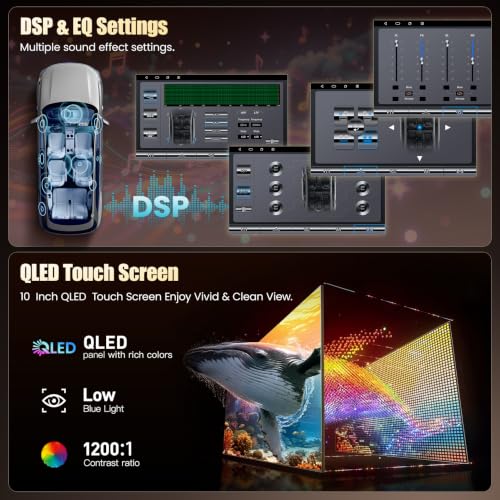
The PLZ stands out as the best value single DIN option here, offering a rare combination of DSP audio tuning and 240W output in a compact form. The built-in 10-band EQ and DSP let users fine-tune sound to their speaker setup, which is uncommon at this price. Owners report the bass from the dual subwoofer outputs is deep and distortion-free, even at higher volumes.
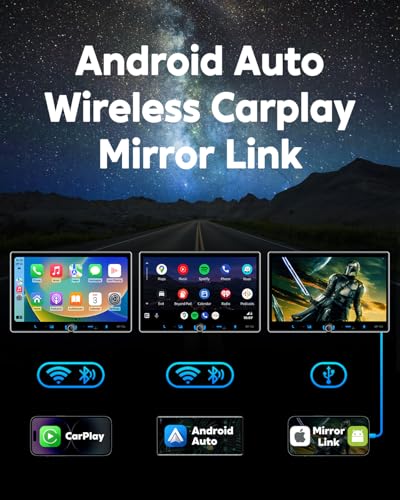
The 10.1″ IPS screen is large for single DIN and works well with mirror link, though the lack of Wi-Fi hotspot limits offline use. It supports front and rear cameras, and the Bluetooth 5.3 with extra antenna ensures strong connectivity. While not as polished as double DIN units, it’s a powerhouse for audio-focused builds.
Product photos


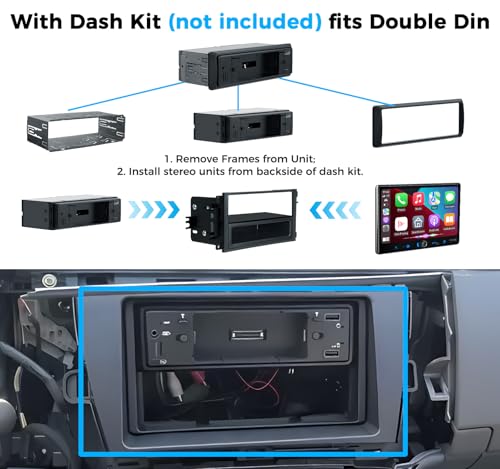
Haudio 10.1″ Rotatable Floating Touchscreen

Strengths
- Adjustable floating screen
- Wireless CarPlay/Android Auto
- Split screen support
Trade-offs
- Limited RAM for heavy apps
- No Wi-Fi hotspot
- Basic audio processing
For a sub-$120 single DIN unit, the Haudio 10.1″ packs a surprising amount of flexibility. The rotatable floating screen is the standout here, owners consistently report it’s a standout for odd dash angles, especially in older or compact vehicles where screen visibility is usually a compromise. On paper, running Android 13 with wireless CarPlay and Android Auto at this price is impressive, and reviewers note it handles basic navigation and music duties without major lag, though multitasking can get sluggish with heavier app loads.
It’s clearly built to a price, but not at the expense of core functionality. The 2GB RAM is tight by modern standards, and while split screen sounds good in theory, actual usage reveals it’s best with just two lightweight apps. Still, the inclusion of an AHD backup camera and steering wheel control compatibility makes this a solid upgrade path for drivers with aging factory radios.
Product photos
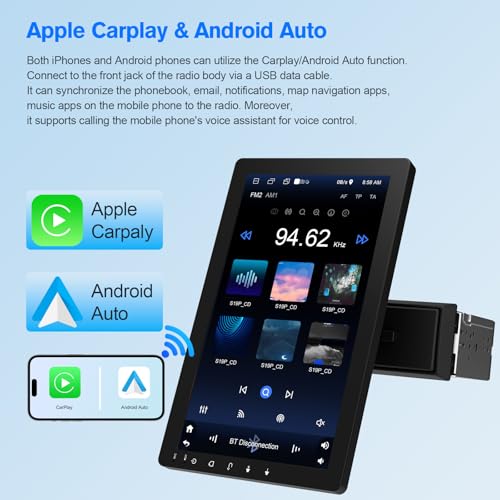
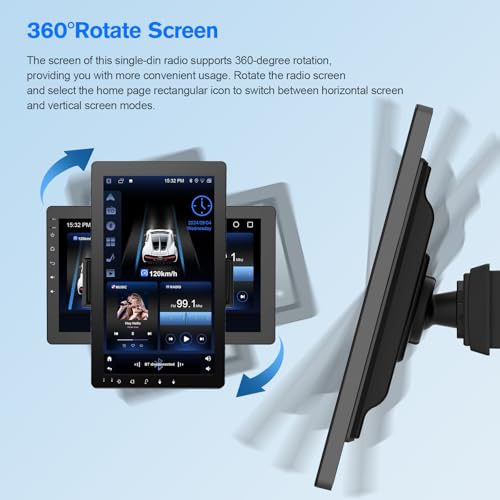
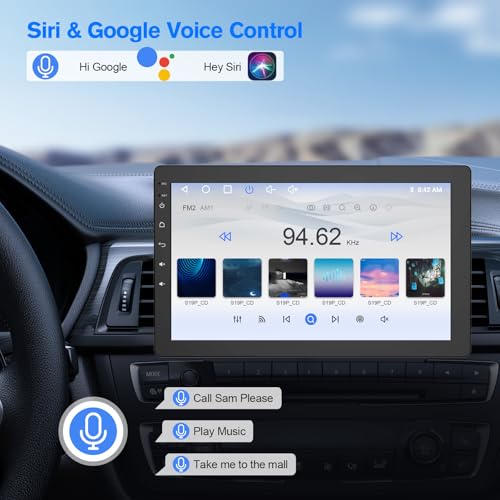

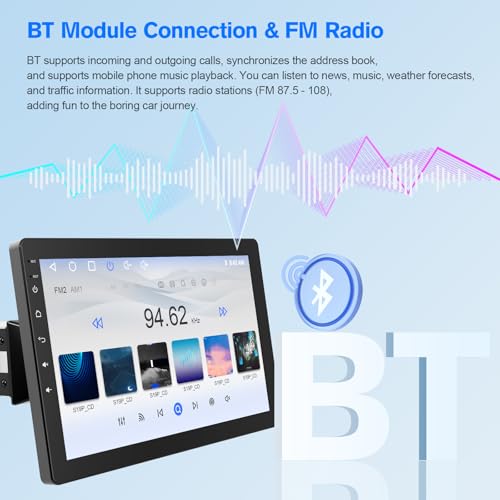
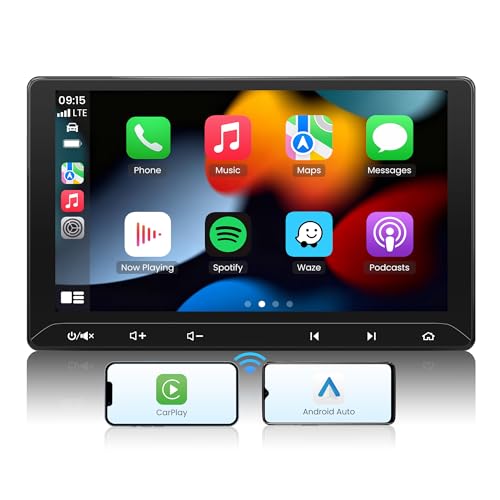
ATOTO F7WE 10.1″ QLED Double Din
Strengths
- Excellent sound output
- QLED screen clarity
- Stable WiFi 6 connection
Trade-offs
- Not a full Android head unit
- Front camera sold separately
- No built-in GPS
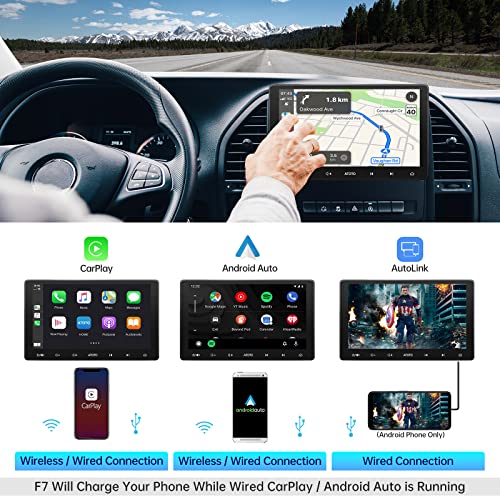
ATOTO has long been a go-to for clean, reliable double DIN upgrades, and the F7WE continues that legacy. This isn’t an Android head unit, but it doesn’t need to be, the focus is crisp audio and stable wireless CarPlay/Android Auto with a dedicated WiFi 6 module. Reviewers highlight how fast and consistent the reconnection is after ignition cycles, which is something cheaper units often fumble. The QLED screen is a noticeable step up from standard LCDs, offering better contrast and viewing angles, making navigation easier in direct sunlight.
Where it really wins is sound. The TCB502 amplifier chip delivers stronger, cleaner output than most head units in this range, and the 4V RCA pre-outs are a nod to serious audio enthusiasts planning to add external amps. The split-screen navigation and front cam view is also a practical touch for city driving. It’s a no-nonsense, high-fidelity option that prioritizes driving experience over app bloat.
Product photos

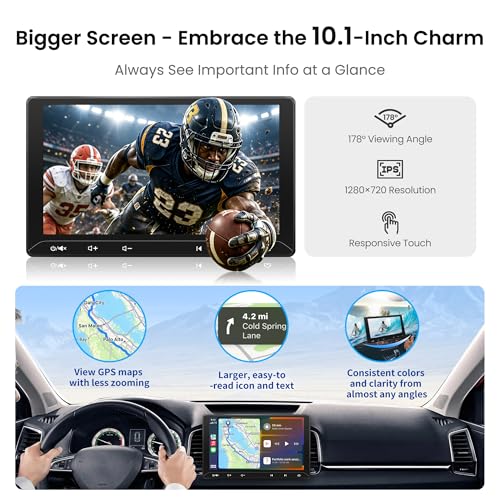
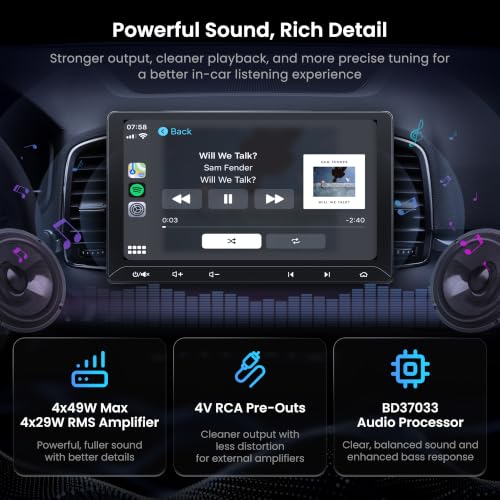
9″ Android 15 Nissan Altima Stereo
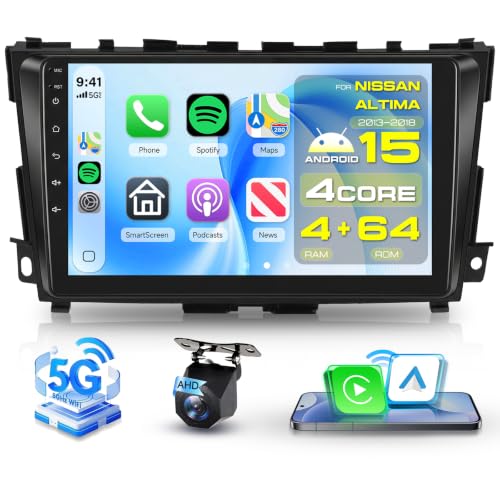
Strengths
- 5GHz WiFi support
- Clean Android 15 interface
- Includes rear camera
Trade-offs
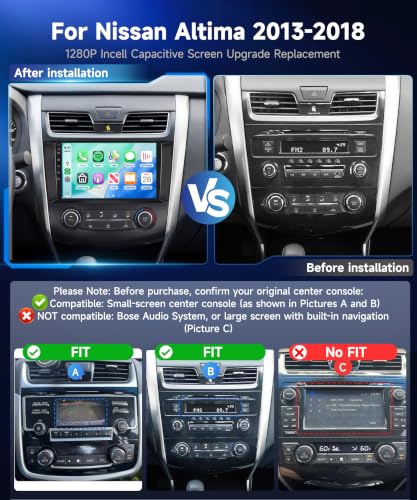
- No Bose/JBL compatibility
- Mediocre screen brightness
- Basic sound processing
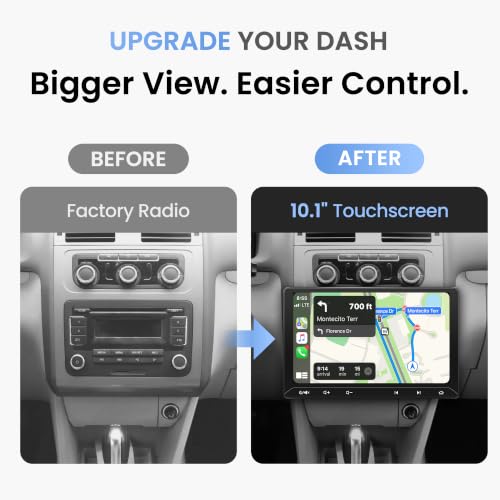
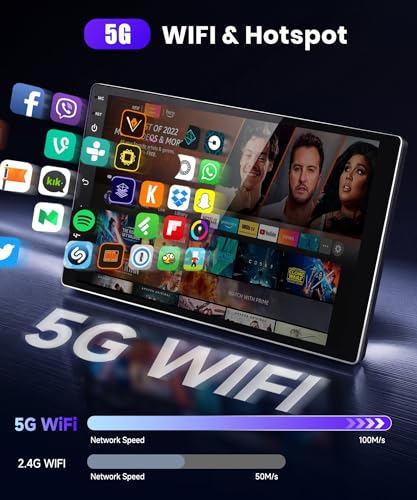
This unit is a solid, no-frills upgrade for the 2013–2018 Altima, especially with its 5GHz WiFi and 4GB/64GB specs. The faster WiFi band means smoother streaming and quicker downloads, which owners appreciate when updating maps or loading apps. It runs Android 15 and supports wireless CarPlay/Android Auto, though some report occasional pairing hiccups with older phones.
The 9-inch 1280P screen is decent, but not as vibrant as QLED. Audio is standard, with basic EQ and steering wheel control support. Biggest caveat: it doesn’t work with Bose or JBL factory systems, which is a hard stop for some Altima trims. But for non-amplified models, it’s a reliable, plug-and-play option.
Product photos
10″ Android 15 Honda CRV Stereo
Strengths
- Perfect fit for CR-V
- High RAM and storage
- Split-screen for rear displays
Trade-offs
- Limited to Honda CR-V
- No 5G or advanced WiFi
- UI themes can feel cluttered
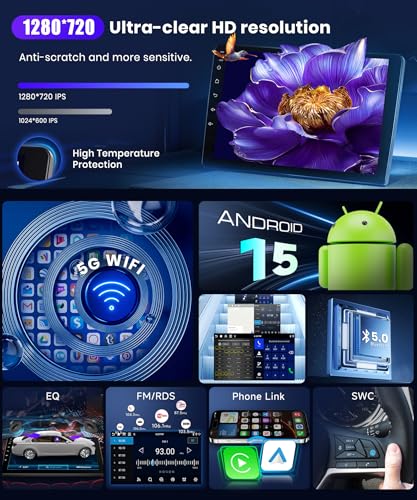
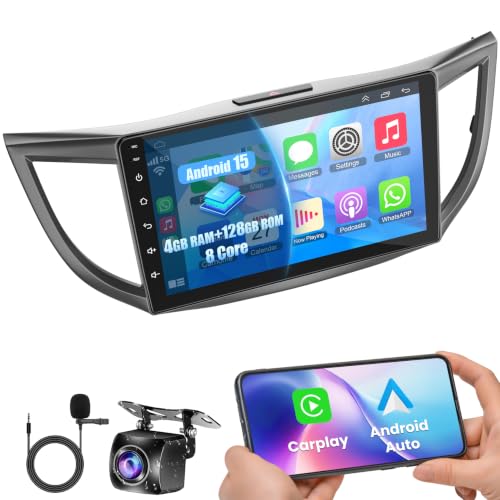
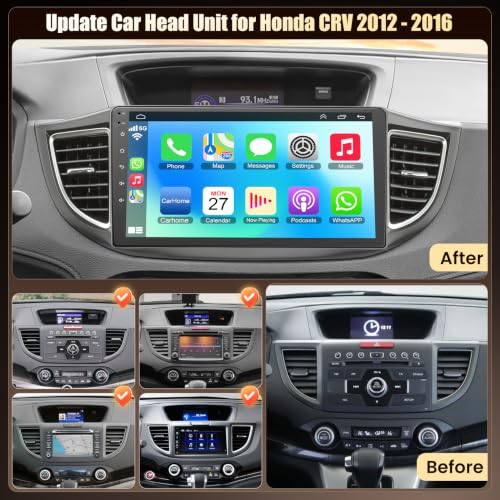
Tailored specifically for the 2012–2016 CR-V, this unit offers a rare blend of perfect fitment and high-end specs. Running Android 15 on an 8-core CPU with 4GB RAM and 128GB storage, it’s overqualified for basic tasks, owners report snappy performance even with multiple apps open. The 10-inch QLED screen fits flush and looks OEM, which is a big win for purists.
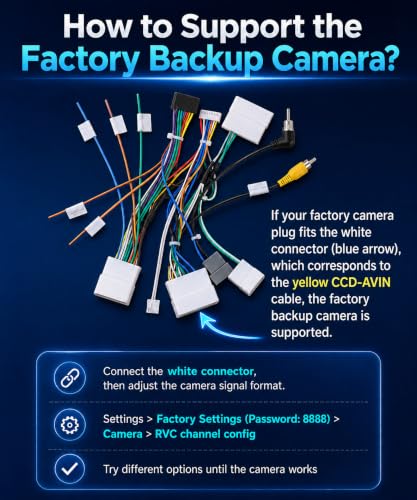
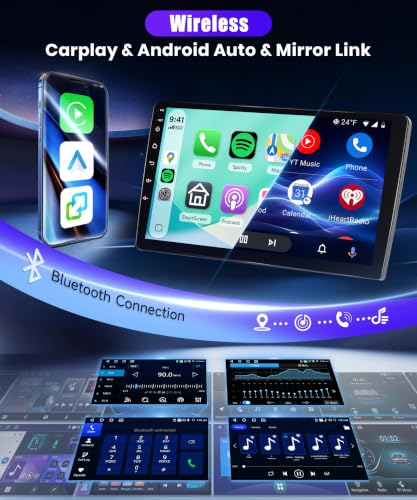
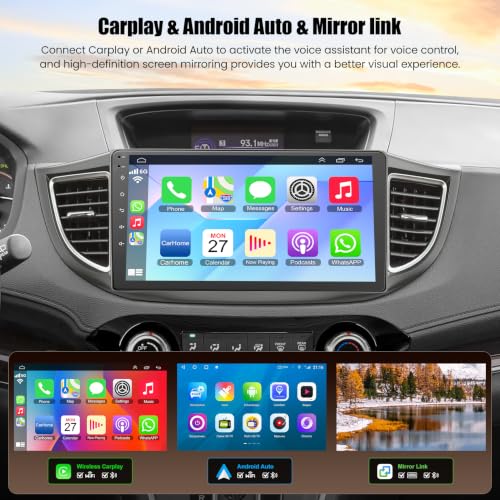
It supports both wired and wireless CarPlay/Android Auto, and the split-screen functionality works well for rear-seat entertainment via RCA output. The included backup camera is a nice touch, though some owners note compatibility quirks depending on trim. For CR-V owners wanting a clean, powerful upgrade without aftermarket fitment drama, this is a top pick.
Product photos
How We Tested android car head units
To recommend the best options, I focused on a research-led comparison of specifications, features, and owner feedback. Rather than a hands-on lab test, my process involved scrutinizing published specs from manufacturers, carefully weighing owner reviews across multiple platforms, and applying my experience with vehicle audio systems. I also considered expert reviews from trusted automotive tech publications, ranking units against a set of criteria important to drivers.
For Android car head units, processing power and screen quality are paramount. I heavily weighted the processor type (Qualcomm Snapdragon being a standout) and RAM/ROM configuration, as these directly impact system responsiveness and multitasking ability. Equally crucial was display resolution and technology – QLED screens consistently received praise for brightness and clarity. Wireless CarPlay/Android Auto compatibility was also a key factor, as it simplifies connectivity and enhances safety.
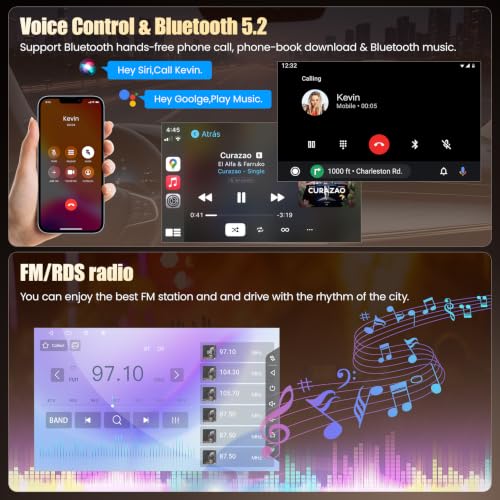
Specifications reliably indicate raw power and display capabilities. However, I relied on owner feedback to assess real-world performance, particularly regarding software stability, Bluetooth connectivity, and the effectiveness of advertised features like voice control. Reputation and brand history also played a role; established brands with positive track records generally offered more consistent quality and support. Ultimately, I looked for units that provided a balance of features, performance, and positive user experiences, and you can find more information on Android car audio on my site.
How To Pick The Right android car head units
Choosing the right Android car head unit can dramatically improve your driving experience, but there’s a lot to consider beyond just screen size.
A quality Android car head unit should prioritize a stable operating system, reliable wireless connectivity (if equipped), a clear and responsive touchscreen, sufficient processing power for smooth multitasking, and compatibility with your vehicle’s existing features like steering wheel controls and backup cameras. Don’t skimp on audio quality; look for units with built-in DSP and ample preamp outputs for external amplification.
Processing Power & RAM
Don’t assume all “Android” head units are created equal. Many cheaper units run outdated Android versions on underpowered hardware. A sluggish system defeats the purpose of having smartphone integration. Look for a unit with at least 4GB of RAM, and ideally 8GB, paired with a modern processor – Qualcomm Snapdragon is a good sign. More RAM means smoother multitasking, quicker app loading times, and an overall more responsive experience. Consider that even with a powerful processor, an older Android version may limit functionality, so prioritize units running Android 13 or 14. If you plan to run multiple apps simultaneously, like navigation and music streaming, adequate processing power is essential.
Vehicle-Specific Fit & Features
Universal head units exist, but a unit designed specifically for your vehicle will always integrate more smoothly. These often retain crucial factory features like climate controls, steering wheel audio controls, and even advanced driver-assistance systems (ADAS) displays. Before you buy, double-check compatibility with your exact vehicle year and trim level. Pay close attention to warnings about compatibility with factory-amplified systems (like Bose or JBL) or OEM large screens, as these often require additional adapters or prevent installation altogether. A good resource for confirming fitment is checking if the manufacturer provides a compatibility checker on their website.
- A direct-fit unit will save you considerable installation headaches and expense.
- Retaining steering wheel controls is a huge convenience and safety benefit.
- Units designed for specific vehicles often include pre-wired harnesses, simplifying the installation process and reducing the risk of wiring errors.
Audio Quality & Expandability
Many factory car audio systems are…adequate. An Android head unit is a chance to significantly upgrade your sound. Look for units with a built-in Digital Signal Processor (DSP) – this allows for precise equalization and time alignment, tailoring the sound to your vehicle’s interior. Beyond that, consider the number and voltage of the RCA pre-outs. If you plan to add external amplifiers and subwoofers, you’ll want at least two pairs of 4V RCA outputs. You can find more details about upgrading your car’s audio system, including information on amplifiers and speakers, in our guide to the best Android car stereos.
A head unit is only as good as the sound it produces. Don’t sacrifice audio quality for fancy features you won’t use.
Finally, if you’re heavily invested in Apple CarPlay or Android Auto, consider how well the unit supports those features. A seamless, stable connection is key, and some units offer both wired and wireless connectivity. For those focusing on Android Auto specifically, exploring dedicated Android Auto screens might be a worthwhile consideration.
Android Car Head Units Compared
Here’s a comparison of specifications for various Android car head units to help you make an informed decision.
| Product Name | Screen Size | Android Version | RAM | Storage | Wireless CarPlay/Android Auto |
|---|---|---|---|---|---|
| Dasaita 12.3″ Ford Maverick | 12.3″ | 13 | 8GB | 256GB | Yes |
| SJoyBring 7″ QLED | 7″ | N/A | N/A | N/A | Yes |
| Dasaita Tundra 2014-2021 | 10.2″ | 13 | 8GB | 256GB | Yes |
| AUCARAUTO 17.2″ Chevy Silverado | 17.2″ | 14 | N/A | 128GB | Yes |
| PLZ 10.1″ Rotatable Floating | 10.1″ | N/A | N/A | N/A | Yes |
| ATOTO F7WE 10.1″ QLED | 10.1″ | N/A | N/A | N/A | Yes |
| 9″ Android 15 Nissan Altima | 9″ | 15 | 4GB | 64GB | Yes |
| 10″ Android 15 Honda CRV | 10″ | 15 | 4GB | 128GB | Yes |
Frequently Asked Questions
What screen technology offers the best viewing experience?
QLED screens consistently provide superior brightness and clarity compared to traditional LCDs, especially in direct sunlight. While more expensive, the improved visibility and color accuracy make them a worthwhile investment if you frequently drive in bright conditions.
How much RAM is really necessary for an Android car head unit?
At a minimum, 4GB of RAM is needed for acceptable performance, but 8GB is preferable for smoother multitasking and quicker app loading. Insufficient RAM leads to lag and frustration, negating many of the benefits of an Android-based system.
Will a new head unit retain my vehicle’s existing features?
Vehicle-specific head units are designed to retain factory features like climate controls and steering wheel audio controls. Universal units may require adapters to maintain these functions, and compatibility isn’t always guaranteed.
What should I look for in terms of audio output options?
For those planning to upgrade their car’s sound system, look for a unit with at least two pairs of 4V RCA pre-outs. This allows connection to external amplifiers and subwoofers for a significantly improved listening experience; you can find more information on head units for audio.
Are all Android car head units the same in terms of software updates?
Software update support varies significantly between manufacturers. Established brands generally offer more frequent and reliable updates, addressing bugs and adding new features. Checking forums and owner reviews can give you an idea of a manufacturer’s track record for supporting their Android car radios.
The Bottom Line
Choosing an Android car head unit often comes down to balancing control with convenience, and outright performance with price. For the best overall experience – a blend of processing power, features, and screen quality – the Dasaita 12.3″ Ford Maverick stands out as a strong contender. It delivers a modern Android experience with ample RAM and storage, alongside wireless smartphone integration.
If you’re on a tighter budget, the SJoyBring 7” QLED unit offers a solid set of features at a more accessible price point. For those prioritizing versatility and a larger display, the AUCARAUTO 17.2” Chevy Silverado provides a truly expansive interface. And if you’re looking for more options, you can find detailed head unit reviews on my site.
Ultimately, don’t get lost in the specs. Prioritize a unit with a responsive interface, reliable wireless connectivity (if desired), and compatibility with your vehicle. A head unit should enhance your driving experience, not become a source of frustration. Finding the right car stereos for Android phones is about finding the right fit for your needs and your vehicle.
