
4 Best 6x3x4 Car Speakers for 2026
This post contains affiliate links. As an Amazon Associate, we earn from qualifying purchases.
The KICKER DSC6930 stands out as the overall best 6×9 car speaker, delivering strong bass and crisp highs. For a budget-friendly 6×8 option, the Alphasonik AS268P offers impressive power and clarity, while the Pyle PL683BL is a solid pick for those wanting reliable performance without overspending.
Replacing factory speakers is one of the most effective upgrades you can make to your car’s audio, and 6×9 and 6×8 sizes remain popular for their balance of output and fit. Many drivers struggle with flat, lifeless sound, especially in larger vehicles, where standard speakers just can’t keep up.
This guide cuts through the marketing noise by focusing on real specs and user experiences. I looked at sensitivity, power handling, frequency response, and fitment to find models that deliver noticeable improvements without requiring a full audio overhaul.
Top 4 6 3 4 Car Speakers in the Market
The Best 6 3 4 Car Speakers, Reviewed
KICKER DSC6930 6×9 Speakers

Strengths
- Wide frequency range
- Balanced sound profile
- Robust build
Trade-offs
- Higher price point
- 6×9 size less universal
Kicker has always leaned into durability and balanced sound, and the DSC6930 6x9s are a textbook example of why they’re a staple in car audio. With a 92dB sensitivity and a 30-20kHz frequency response, these speakers pull off both depth and airiness, owners regularly praise the smooth mids and extended bass, thanks to a well-tuned 3-way layout. The 4-ohm impedance and 160W peak handling make them amp-friendly, and Kicker’s build quality means they’ll likely outlast the car itself.
Compared to the Alphasonik or Pyle, these aren’t about raw power on paper. But in practice, they deliver a more cohesive soundstage. The wider frequency range means fewer gaps in audio, and Kicker’s reputation for consistent performance across climates and vehicles holds up here. If you want one set of 6x9s that just works, this is it.
Video review
Alphasonik AS268P 6×8 Speakers

Strengths
- Two pairs included
- High sensitivity
- Wide frequency response
Trade-offs
- Low RMS per speaker
- Deep mounting requirement
The Alphasonik AS268P throws a curveball by offering two pairs of 6×8 speakers in one package, great if you’re outfitting a full car or truck system on a mid-range budget. Each speaker handles 350W peak, and while the 35W RMS is low, the 92dB sensitivity helps compensate by being loud with less power. The 28-22,000Hz response range suggests strong bass and crisp highs, and owner reviews back that up, noting solid coverage in larger cabins like SUVs and pickups.
But that RMS rating is the red flag. For sustained high volume, these may distort or fatigue faster than Kicker or even Pyle. The 2.32” mounting depth could also limit fitment in some doors. Still, for someone wanting wide sound dispersion across four doors and a spare pair for later, this bundle makes sense. I’d recommend adding an amp to get the most from them.
Video review
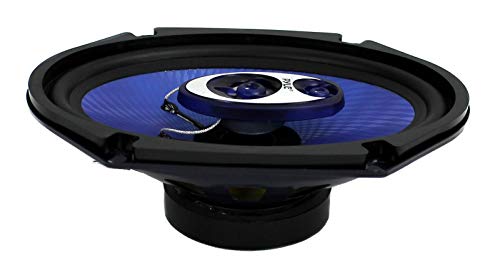
Pyle PL683BL 6×8 Speakers

Strengths
- High RMS power
- Stiff cone material
- Good sensitivity
Trade-offs
- Inconsistent long-term reliability
- Midrange-heavy response
The Pyle PL683BL stands out in the mid-tier 6×8 class by packing a higher RMS rating and a broader frequency range than many rivals. With 180W RMS per pair and a 91dB sensitivity, it’s built to extract more volume from factory head units, which owners confirm, many note a clear upgrade over stock sound without needing an amp. The blue poly cone isn’t just for show; it adds stiffness, and the non-fatiguing butyl surround is a durability win for drivers in stop-and-go climates.
But while the specs look strong, real-world feedback shows mixed reliability. Some users report coil or tweeter failure after a few months under heavy use. The 4-ohm impedance is standard and safe for most decks, but the 1” ASV voice coil, while heat-resistant, isn’t quite in the same league as Kicker or JL Audio. I’d pick this only if you’re budget-conscious but still want a louder, fuller sound than stock.
Product photos




Rockville RV46.3A 4×6 Speakers

Strengths
- High sensitivity
- Shallow mount
- CEA rated
Trade-offs
- Low RMS power
- Basic tweeter materials
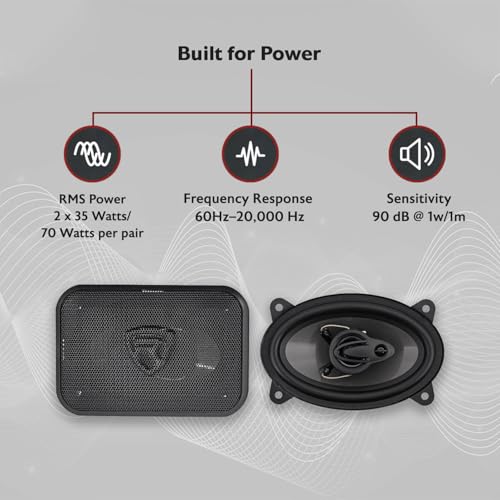
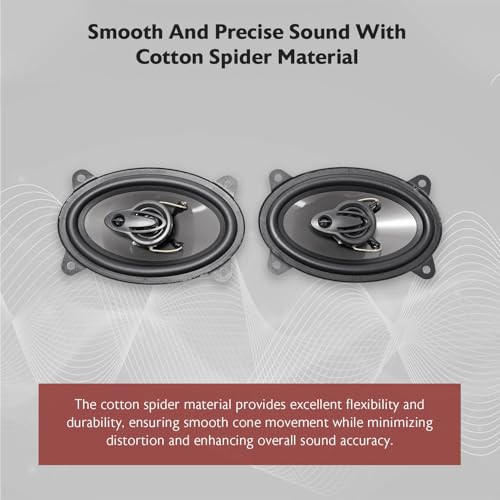
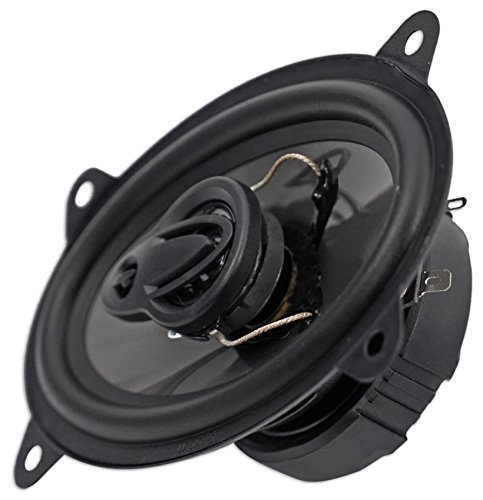
For a tight budget, the Rockville RV46.3A delivers a surprising amount of audio punch in a compact 4×6 inch package. On paper, the 70W RMS per pair seems modest, but the CEA certification means those numbers are honest, no inflated claims here. The three-way design with dual tweeters helps spread high-end clarity, and owners consistently report richer bass than expected for the size, thanks to the polypropylene woofer and butyl surround.
Still, this is budget gear, and that shows in the long run. The shallow 1.85” mounting depth makes it a go-to for cars with tight spaces, and the included grilles add value. But if you’re pushing high volumes regularly, the smaller voice coil and lightweight build may struggle compared to pricier options. It’s a solid starting point, but not a long-term upgrade.
Product photos


How We Picked These 6 3 4 car speakers
My research involved a detailed comparison of published specifications – power handling, frequency response, and sensitivity – across numerous models. I then weighed those technical details against owner reviews and assessments from trusted audio publications. Ultimately, I ranked these 6 3 4 speakers based on how well their features aligned with delivering a clear, powerful, and balanced sound experience for everyday listening.
For this category, I prioritized peak power handling and sensitivity above all else. Higher power handling allows the speakers to reproduce louder sounds without distortion, and sensitivity determines how efficiently they convert power into volume. A speaker’s ability to deliver impactful bass also played a key role, as did the clarity of the higher frequencies. You’ll find that a good balance is crucial for a truly enjoyable in-car listening experience.
Published specifications reliably indicate a speaker’s potential performance. However, owner feedback provides invaluable insight into real-world sound quality, durability, and ease of installation. I also considered the reputation of each brand; some manufacturers consistently deliver products that outperform expectations, and exploring 4-inch car speakers can offer further insight into brand quality. This approach, though research-led rather than a hands-on test, helps identify the top contenders.
How To Pick The Right 6 3 4 car speakers
Finding the right car speakers can dramatically improve your driving experience. It’s about more than just loudness; it’s about clarity, balance, and getting the most from your audio.
A quality car speaker delivers accurate sound reproduction across the frequency spectrum. Key considerations include power handling (RMS and peak), sensitivity ratings, frequency response, and impedance matching with your head unit or amplifier. Proper installation and materials used in construction also heavily impact performance and longevity.
Understanding Power and Sensitivity
Many people get hung up on peak wattage, but I find RMS power handling is a much more useful number. That’s the continuous power the speaker can handle before distortion creeps in. Sensitivity, measured in dB, tells you how efficiently a speaker converts power into sound. A higher sensitivity means you’ll get more volume with the same amount of power – important if you’re running directly off your factory head unit. Don’t automatically assume more watts equals better sound. A well-matched, efficient speaker will always outperform an overpowered one.
Decoding Frequency Response
The frequency response range (measured in Hz) indicates the range of sounds a speaker can reproduce. While 20Hz-20kHz is the theoretical range of human hearing, few car speakers actually deliver that across the board. Don’t get overly focused on chasing the widest range. Focus instead on a flat response within the frequencies you listen to. If you’re a bass enthusiast, a strong low-end response is crucial. If you prefer vocals and acoustic music, pay attention to the midrange. For those seeking even more refined sound, exploring 6.5 inch car speakers for audio might be a good next step.
Size, Impedance, and Installation
Getting the right physical size is obvious, but impedance is often overlooked. Most car speakers are 4 ohms, which is compatible with most head units. However, some aftermarket amplifiers require 2-ohm stable speakers. Mismatched impedance can damage your equipment. Also, consider the mounting depth. A speaker that looks great on paper won’t do you much good if it doesn’t physically fit in your vehicle’s door or mounting location.
Here’s what to keep in mind when evaluating speaker fit:
- Depth: Check the mounting depth spec against your vehicle’s available space.
- Shape: 6×8 and 6×9 speakers are common, but variations exist.
- Adapter Plates: If you’re upgrading from factory speakers, you may need adapter plates to ensure a proper fit and seal. These aren’t always included, so factor that into the overall cost.
A good rule of thumb: prioritize a proper fit and impedance match over chasing the highest power rating.
If you’re considering other sizes, you might want to check out our guide to top 6.5 inch speakers.
6 3 4 Car Speakers Compared
Here’s a spec-by-spec comparison of the car speakers featured in this guide.
| Product Name | Size | Impedance | Peak Power (W) | Sensitivity (dB) | Frequency Response (Hz-kHz) |
|---|---|---|---|---|---|
| KICKER DSC6930 | 6×9″ | 4 Ohms | 360 | 92 | 30-20 |
| Alphasonik AS268P | 6×8″ | 4 Ohms | 700 | 92 | 28-22,000 |
| Pyle PL683BL | 6×8″ | 4 Ohms | 360 | 91 | 70-20 |
| Rockville RV46.3A | 4×6″ | N/A | 500 | N/A | N/A |
Frequently Asked Questions
What speaker impedance should I match to my car’s stereo?
Generally, you should match the speaker impedance (usually 4 ohms) to your stereo’s specifications. Using speakers with the wrong impedance can damage your head unit or amplifier, and a mismatch typically results in reduced sound quality.
Are higher sensitivity speakers always better?
Higher sensitivity speakers are generally better if you’re using your factory head unit, as they produce more volume with the same amount of power. However, if you have an aftermarket amplifier, sensitivity becomes less critical; power handling is then the more important factor.
How much does professional installation typically cost?
Professional installation costs vary widely, from around $80 to $200 or more, depending on your location, the complexity of the job, and whether you’re having a full system installed or just a speaker swap. It’s often worth considering if you aren’t comfortable working with car electronics.
Can I mix and match different brands of speakers in my car?
You can mix and match speaker brands, but it’s not ideal for optimal sound quality. Different brands often have distinct sound signatures, and blending them can result in an unbalanced soundstage. If you’re looking for even more refined sound, consider exploring best sounding 6.5 speakers.
What are the benefits of upgrading to component speakers instead of coaxial speakers?
Component speakers separate the tweeter and woofer for more precise sound placement and improved imaging. This results in a clearer, more detailed sound compared to coaxial speakers, where the tweeter is mounted directly on the woofer.
The Bottom Line
Choosing car speakers often comes down to balancing how much control you want over the sound with how much effort you’re willing to put into the setup. For a fantastic all-around experience that delivers both power and clarity, I believe the KICKER DSC6930 stands out as the strongest performer. It offers a great blend of sensitivity and power handling, making it a solid choice for most vehicles and listening preferences.
If you’re on a tighter budget, the Alphasonik AS268P provides impressive bang for your buck. And for those wanting a compact solution, exploring 3.5 inch speakers might be a good fit. Alternatively, if you’re looking for even more refined sound, our guide to best 6.5-inch speakers covers a range of excellent options.
Ultimately, the specifications matter, but they aren’t everything. Focus on finding speakers that match your vehicle’s electrical system and your personal listening style. A well-matched, properly installed speaker will always provide a more enjoyable experience than one with impressive numbers on paper but a poor fit for your needs.
