
8 Best 2 Stroke Bicycle Engine Kits of 2026
This post contains affiliate links. As an Amazon Associate, we earn from qualifying purchases.
The YUNLAIGOTOP 100cc Engine Kit stands out as the best overall choice, thanks to its upgraded carburetor and large 2L fuel tank. For budget-focused riders, the 80cc Bicycle Engine Kit offers a lower-cost entry point, while the AKSDSGA 100CC Gas Motor Kit balances power and load capacity for heavier use.
Adding a 2-stroke engine to your bike can transform a simple ride into something far more exciting, but not all kits deliver the same level of performance or reliability. Many riders end up frustrated with poor fitment, finicky engines, or parts that don’t last.
This guide cuts through the noise by focusing on real-world specs and owner experiences to find kits that actually work. We looked at engine size, fuel efficiency, carburetor quality, and compatibility to identify the ones worth your time and money.
Top 8 2 Stroke Bicycle Engine Kits in the Market
The Best 2 Stroke Bicycle Engine Kits, Reviewed
100cc Gas Bike Engine Kit
Strengths
- High power output
- Premium hardware upgrades
- Excellent customer support
Trade-offs
- Expensive
- Steep learning curve
- Requires tuning knowledge
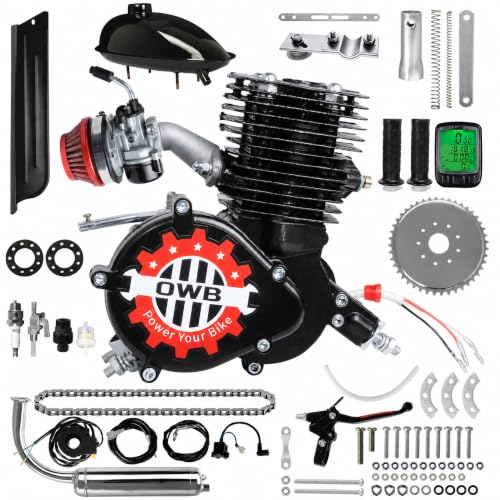
This is the most polished package in the lineup, and it shows in both specs and owner sentiment. With 2.8kw output and a 50 km/h (31 mph) top speed, it outpaces most competitors, and the upgraded hex socket bolts are a small but meaningful improvement, fewer stripped heads during installation. The digital speedometer is sharp and functional, and the fuel efficiency rating of 3.8L per 100km suggests strong combustion tuning.
Owners note it requires some mechanical know-how, but the availability of online tutorials and responsive customer support softens the learning curve. When compared to the H-YEEU or YUNLAIGOTOP, it offers better all-around performance and build quality, though it’s nearly double the price of budget kits. For those who want the most complete, highest-performing kit without stepping into custom territory, this is the one to beat.
Video review
80cc Bicycle Engine Kit
Strengths
- Affordable
- Good fuel economy
- Includes speedometer
Trade-offs
- Lower power output
- Basic materials
- Not for heavy loads
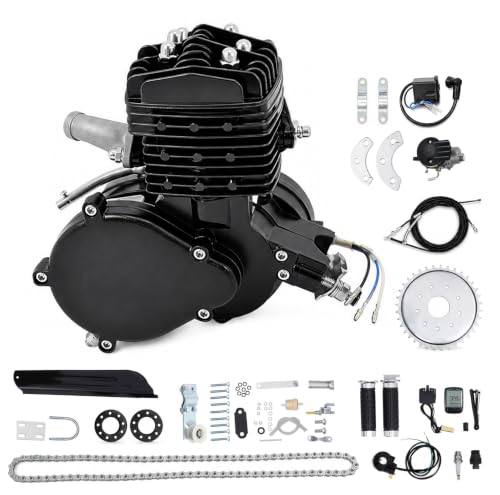
For riders dipping their toes into motorized bikes without wanting to drain the wallet, the JAYGOVAN 80cc kit makes a compelling first step. On paper, its 2.1kw output and 23.6 mph top speed are modest, but owners consistently report it delivers reliable punch for flat terrain and light hills, especially when tuned properly. The fuel economy stands out, with many users logging around 100+ mpg under steady riding, which lines up with its sub-0.6 gallon per 60-mile claim.
Where it shines is simplicity: the CDI ignition is praised for consistent starts, and the included speedometer adds a touch of modern convenience rarely seen at this price. That said, it’s built to a budget, so don’t expect premium fitment or long-term durability under heavy use. Compared to 100cc kits, it’s noticeably less powerful, but for casual riders or short commutes, it’s a functional entry point.
Video review
Upgraded 110cc Bike Engine Kit
Strengths
- High rpm potential
- Wide bike compatibility
- Complete hardware set
Trade-offs
- Lacks cooling details
- Minimal performance data
- Reports of overheating
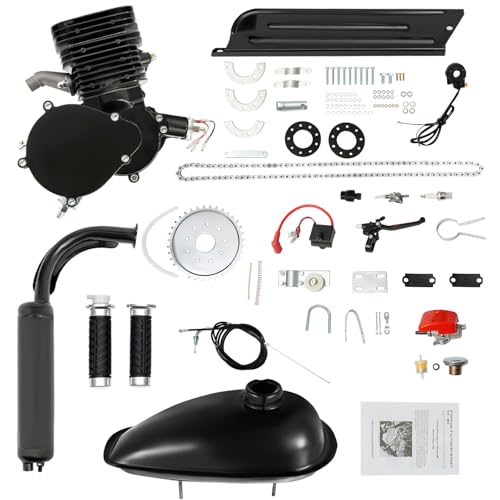
The 110cc claim jumps off the page, but in reality, this engine’s 6000rpm capability doesn’t always translate to real-world dominance over 100cc kits, some owners note it’s more about marketing than measurable gains. Still, the higher displacement does offer a bit more torque, especially useful when climbing or carrying moderate loads. It fits a wide range of frames, and the complete hardware package reduces the need for extra purchases, which is a win for DIYers.
That said, there’s little detail on cooling, fuel mix ratios, or noise levels, and owner feedback suggests this kit can run hot if not properly maintained. Compared to more refined 100cc options like the YUNLAIGOTOP or DNYSYSJ, it lacks performance tuning features and durability upgrades. It’s a solid choice if you prioritize displacement, but I’d still lean toward better-documented 100cc builds for reliability.
Product photos


H-YEEU 100cc 2-Stroke Engine Kit
Strengths
- Fuel efficient
- Clear instructions
- Reliable ignition
Trade-offs
- Prone to overheating
- No performance upgrades
- Average build quality
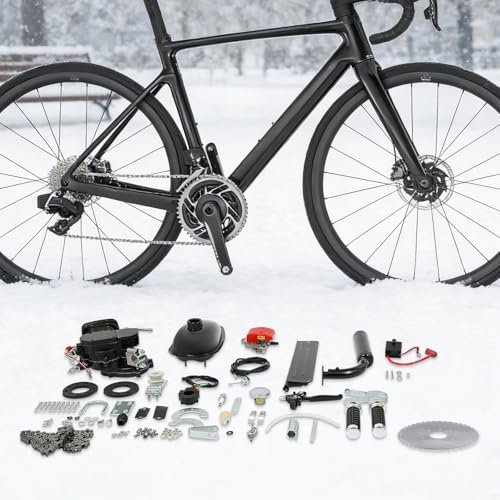
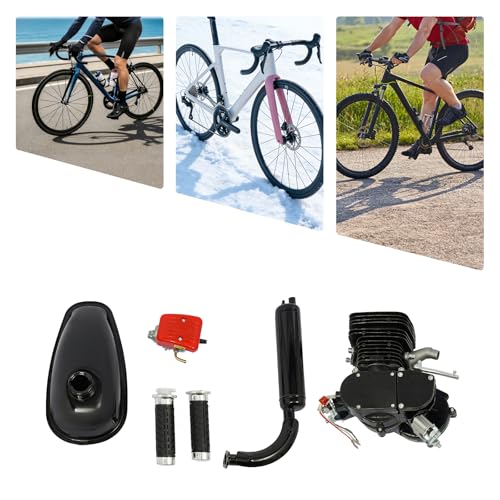
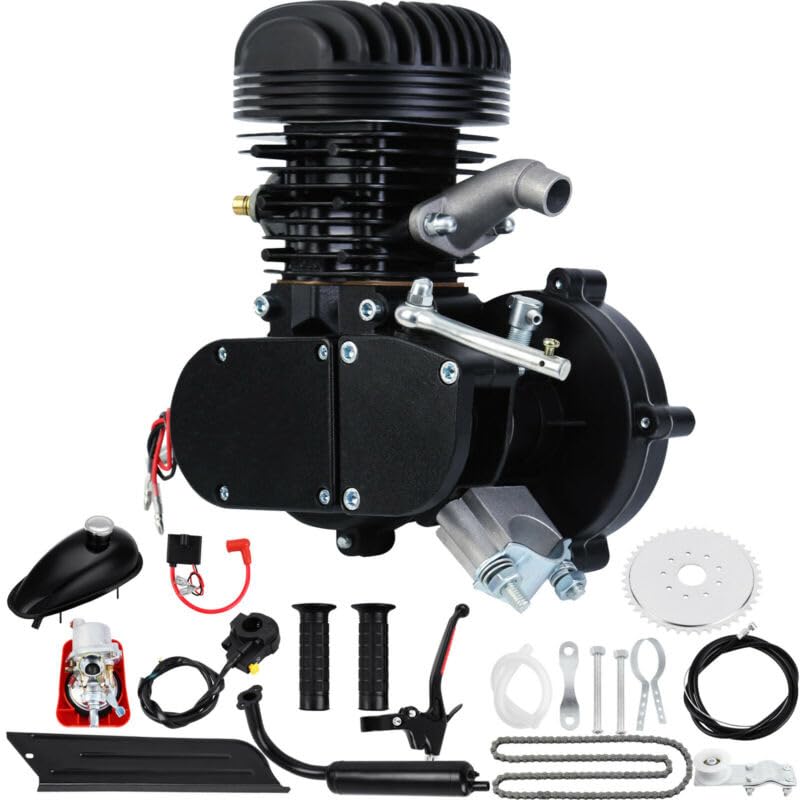
Priced in the middle, the H-YEEU 100cc kit brings solid fuel economy, 2.5L per 100km, or roughly 94 mpg, making it a strong contender for efficiency-focused riders. Its 55 km/h (34 mph) top speed is ambitious, though real-world reports suggest it hits closer to 30 mph under normal conditions. The CDI ignition is reliable, and the included instructions are more detailed than average, which helps reduce installation frustration.
But there’s a caveat: multiple owners emphasize the need for diligent oil pre-mixing and cooling breaks to avoid cylinder scoring. It doesn’t include performance-enhancing features like an upgraded carburetor or reinforced mounts, so while it’s a dependable mid-range option, it doesn’t stand out in durability or tuning. Compared to the DNYSYSJ or YUNLAIGOTOP, it’s less exciting, but still a safe bet for steady commuting.
Product photos

eaizybuk 100CC Bike Motor Kit
Strengths
- Highest load capacity
- Smooth operation
- Corrosion-resistant build
Trade-offs
- No tuning features
- No speedometer
- Average top speed
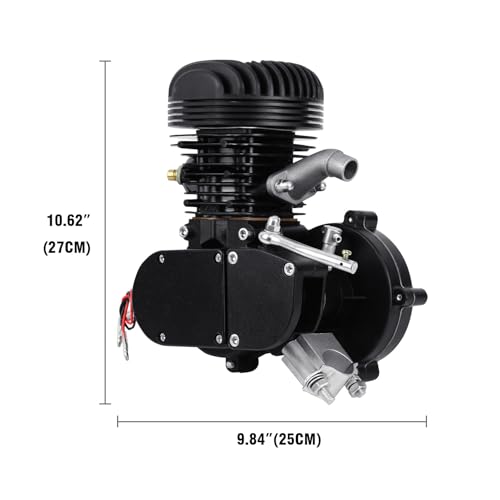
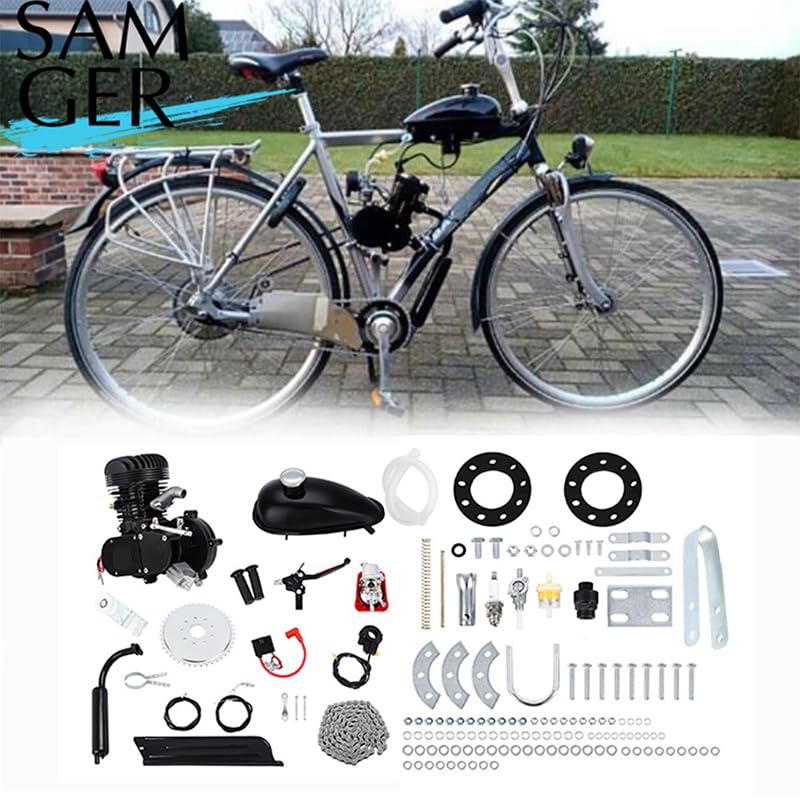
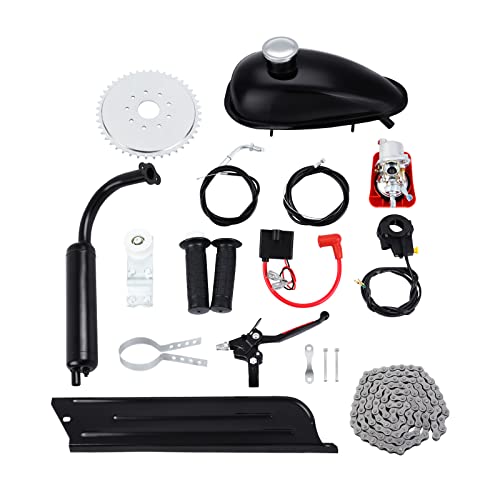
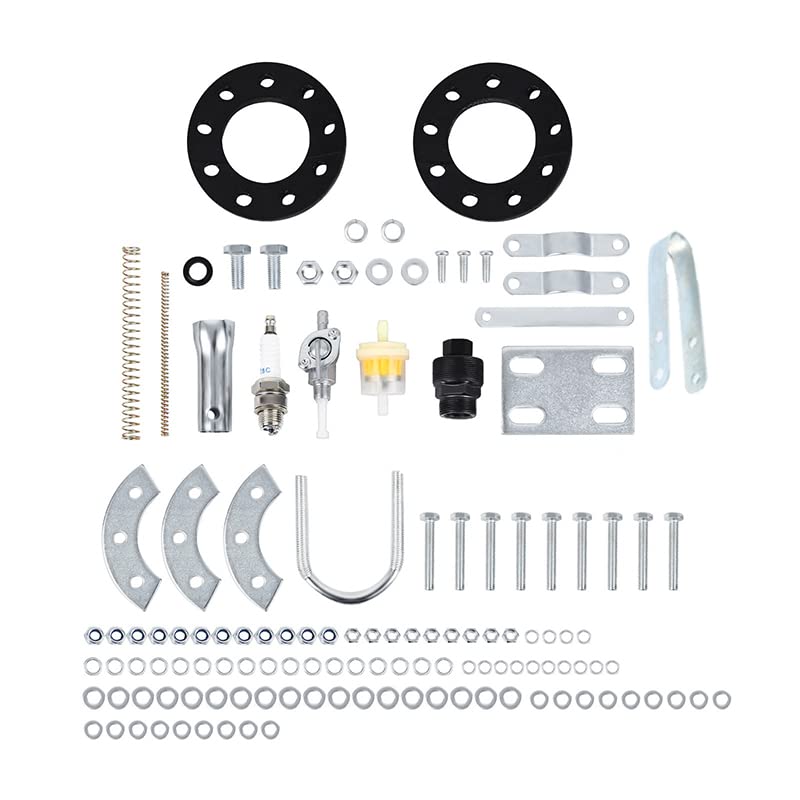
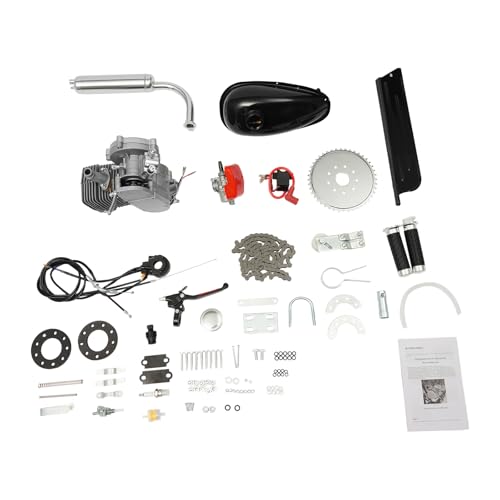
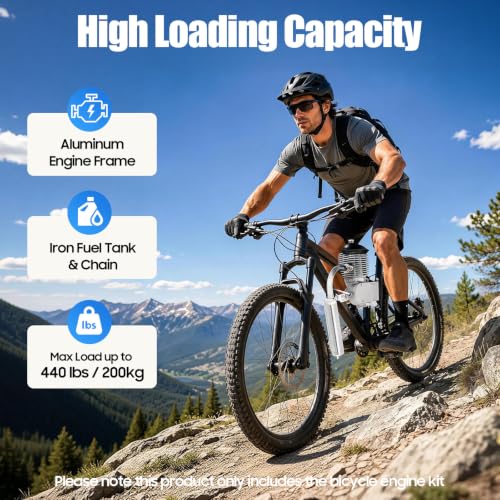
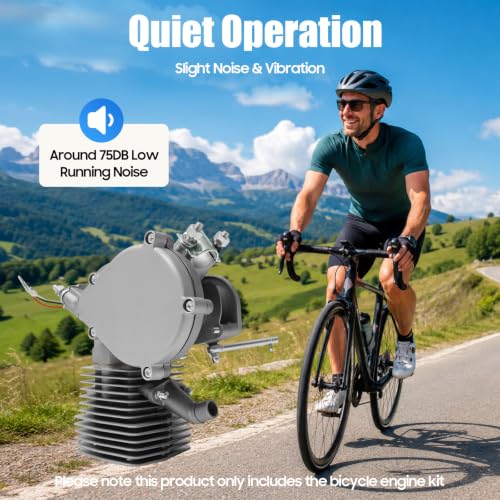
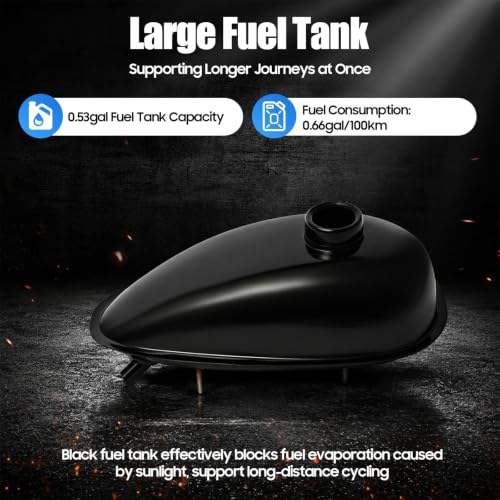
When load capacity is your top concern, the eaizybuk kit stands alone. Its 440 lb limit matches the AKSDSGA but couples it with better-reported vibration control and noise dampening, many owners describe it as “surprisingly smooth” for a 2-stroke. The 0.53-gallon tank and 0.66 gal/100km consumption make it viable for longer trips, and the aluminum-iron construction shows up in long-term durability reports.
It doesn’t offer tuning options or digital gauges, but it’s built like a workhorse. Compared to the DNYSYSJ or YUNLAIGOTOP, it’s less performance-focused but more practical for daily hauling. If you’re using your motorized bike for deliveries, errands, or carrying passengers, this one delivers where it matters.
Product photos
YUNLAIGOTOP 100cc Engine Kit

Strengths
- Superior cooling design
- Strong 8mm mounts
- Tunable carburetor
Trade-offs
- Higher fuel use
- Slightly lower mpg
- Complex tuning for beginners
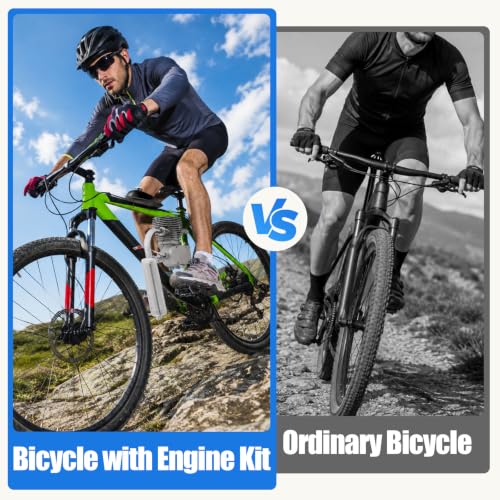
Cooling and mounting strength are where the YUNLAIGOTOP kit pulls ahead. Its single-piece 50mm cylinder/head design improves heat dissipation, and the 8mm engine mounts, thicker than the usual 6mm, are a real upgrade for stability. Owners report fewer vibrations and better sustained power, especially during longer rides. The red speed carburetor and re-jettable jets add tuning flexibility, making it easier to adapt to elevation or temperature changes.
With a max load of 180kg (397 lbs) and a 2L tank, it’s built for serious use. While its 5L/100km fuel consumption is on the higher side, the trade-off is consistent performance. Compared to the AKSDSGA or eaizybuk, it’s more performance-oriented and better engineered for heat management. If you ride frequently or in warm conditions, this one’s worth the extra investment.
Product photos


AKSDSGA 100CC Gas Motor Kit
Strengths
- High weight capacity
- Durable materials
- Quiet for a 2-stroke
Trade-offs
- No tuning carburetor
- Basic CDI system
- Fuel consumption average
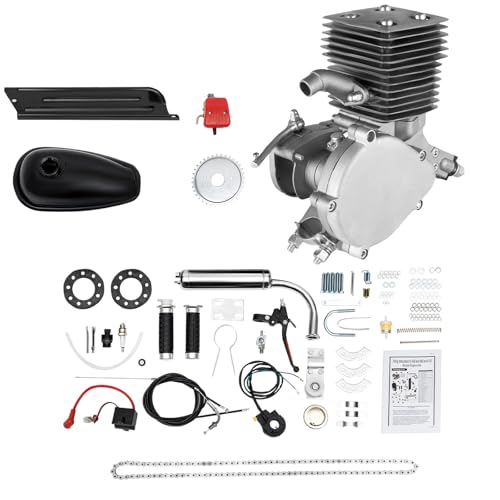
If you’re after a balanced mix of power, durability, and price, the AKSDSGA 100cc kit is one of the smarter buys in the mid-tier segment. It pushes a claimed 28 mph, which aligns with what most verified owners achieve when riding solo on level ground. The 440 lb load capacity is a real standout, matched by few in this class, and makes it a practical pick for heavier riders or those hauling gear.
The build quality also earns praise: aluminum engine body, iron fuel tank, and treated chain components suggest this kit is built to last longer than typical budget models. Noise is reportedly low for a 2-stroke, around 75dB, so it won’t draw constant attention. Compared to the JAYGOVAN 80cc, it’s clearly more capable, and while it lacks the tuning options of the DNYSYSJ, it’s more dependable out of the box.
Product photos

DNYSYSJ 100cc 2-Stroke Engine Kit

Strengths
- Highly tunable carburetor
- Excellent cold starts
- 8mm engine mounts
Trade-offs
- Overstated fuel claims
- No digital display
- Assembly can be fiddly
The DNYSYSJ kit wins on one key front: the carburetor. Its fully tunable setup, with choke lever on the handlebars, re-jettable main and pilot jets, and copper oil needle, is rare at this price and gives serious riders real control over fuel delivery. Cold starts are noticeably easier, and owners in colder regions appreciate the choke design that enriches the mix instead of just restricting air.
It also shares the 8mm engine mounts and single-piece cylinder with the YUNLAIGOTOP, meaning solid build and heat management. The claimed 150 mpg is optimistic, most real-world numbers land closer to 100 mpg, but fuel economy is still strong. While it lacks a digital speedo or premium packaging, its engineering focus makes it my pick for tinkerers who want to extract every bit of performance.
Product photos
How We Picked These 2 stroke bicycle engine kits
My research into these kits focused on a detailed comparison of published specifications and features across numerous models. I weighed owner reviews from multiple online retailers alongside expert opinions found in cycling and motorization forums. As someone who’s spent years observing and appreciating the mechanics of two-wheeled vehicles, I applied that understanding to assess the relative merits of each kit based on build quality, performance potential, and overall value. Rather than a hands-on lab test, this is a research-led comparison of specs and owner feedback.
For 2-stroke bicycle engine kits, consistent performance and durability hinge on a few key factors. Engine displacement is critical, as it directly impacts power and top speed. Equally important is the quality of the carburetor; a well-designed unit delivers smoother operation and better fuel efficiency. Finally, the robustness of the mounting system and overall build quality determine how well the kit will hold up to regular use and vibration. I also looked closely at whether kits included necessary extras like speedometers.
Specifications tell you about engine size, compression ratios, and fuel economy, but owner feedback reveals real-world usability. I paid close attention to reports of installation difficulty, long-term reliability, and ease of maintenance. Positive mentions of upgraded components, like stronger bolts or improved carburetors, were also significant indicators. For enhanced safety, exploring options for protective cycling gear, like finding the right adult bicycle helmets, is always a good idea when increasing speed and power. If you’re considering even more power, checking out 200cc engine kits may be worthwhile.
Choosing The Right 2 stroke bicycle engine kits
These kits offer a fun, relatively affordable way to add some punch to your ride.
A quality bicycle engine kit balances power with reliability and ease of installation. Key considerations include engine displacement (cc), fuel efficiency, the robustness of the carburetor and ignition system, and the kit’s overall compatibility with common bicycle frame designs. Pay close attention to owner reviews regarding long-term durability and the availability of replacement parts.
Engine Displacement and Power
The engine’s displacement, measured in cubic centimeters (cc), directly impacts the power output. While 80cc kits offer a budget-friendly entry point, 100cc or even 110cc options deliver noticeably more acceleration and hill-climbing ability. However, more power isn’t always better. Consider your typical riding terrain and intended use. If you’re mainly on flat ground, a smaller displacement might suffice, offering better fuel economy. Don’t automatically assume the highest number is best; read reviews to see if the power is delivered smoothly or feels peaky and hard to control.
Carburetor and Ignition Quality
The carburetor and ignition system are the heart of the engine’s operation. A poorly designed carburetor will lead to inconsistent performance, difficult starting, and excessive fuel consumption. Look for kits that boast upgraded, tunable carburetors like those found in the YUNLAIGOTOP kit, allowing for finer adjustments to optimize the air-fuel mixture. Similarly, a reliable ignition system (CDI is common) is crucial for consistent spark and smooth running. Often, the lower-priced kits skimp on these components, so be prepared for potential tuning headaches.
- A basic kit might get you running, but expect to spend time adjusting the carburetor.
- Upgraded carburetors offer better responsiveness and fuel efficiency, but come at a cost.
- Consider the availability of replacement parts for the carburetor and ignition system. Sourcing parts for obscure brands can be a real issue.
Frame Compatibility and Ease of Use
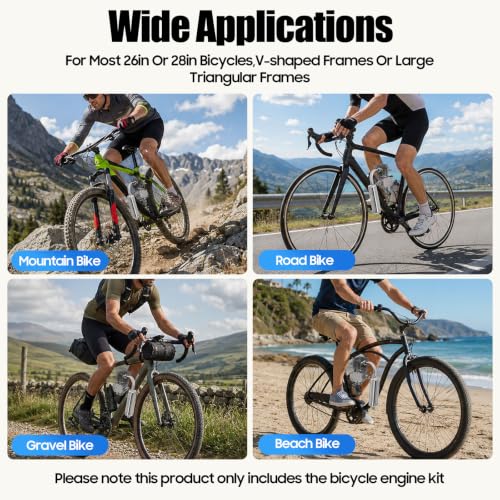
Not all kits fit all bikes. Most are designed for standard V-frame bicycles with 26″ or 28″ wheels, but some offer greater compatibility. Before purchasing, carefully measure your bike’s frame to ensure adequate space for the engine and fuel tank. Beyond fitment, think about the overall usability. The AKSDSGA kit, for example, highlights a large fuel tank for extended range, which is a plus if you plan on longer rides. If you’re new to motorizing a standard bike, be realistic about your mechanical aptitude. Even the “easy to assemble” kits require a degree of mechanical skill and patience. Don’t hesitate to search for instructional videos before you buy – a little preparation can save a lot of frustration. Investing in good bicycle headlights is also a must, especially if you plan on riding at night or in low-light conditions.
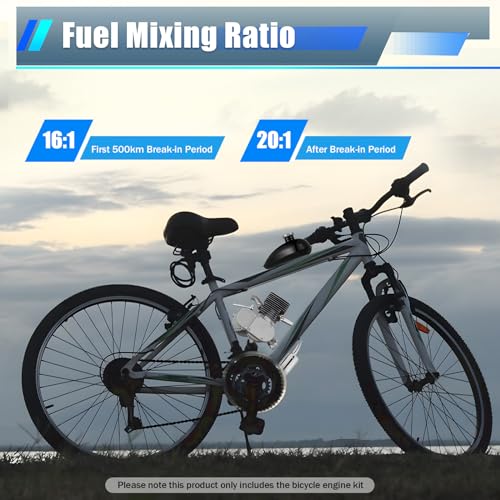
A well-maintained two-stroke engine requires a precise fuel-oil mixture. Always adhere to the manufacturer’s recommended ratio, and use high-quality two-stroke oil for optimal performance and longevity.
If you’re considering a kit, exploring other options for bicycle engine kits is a great place to start.
2 Stroke Bicycle Engine Kits Compared
Here’s a comparison of key specifications for different 2-stroke bicycle engine kits to help you evaluate your options.
| Product Name | Engine Size (cc) | Max Speed (km/h) | Fuel Tank Capacity (L) | Mixing Ratio (Fuel:Oil) | Max Load (kg) | Carburetor |
|---|---|---|---|---|---|---|
| 100cc Gas Bike Engine Kit | 100 | 50 | N/A | 16:1 (new), 20:1 | N/A | N/A |
| 80cc Bicycle Engine Kit | 80 | 50 | 0.53 | N/A | N/A | N/A |
| Upgraded 110cc Bike Engine Kit | 110 | 60 | N/A | N/A | N/A | N/A |
| H-YEEU 100cc 2-Stroke Engine Kit | 100 | 55 | N/A | 18:1 | N/A | N/A |
| eaizybuk 100CC Bike Motor Kit | 100 | 45 | 0.53 | N/A | 199 | N/A |
| YUNLAIGOTOP 100cc Engine Kit | 100 | 48 | 2 | N/A | 180 | Upgraded |
| AKSDSGA 100CC Gas Motor Kit | 100 | 45 | N/A | N/A | 199 | N/A |
| DNYSYSJ 100cc 2-Stroke Engine Kit | 100 | N/A | N/A | N/A | N/A | Upgraded |
Frequently Asked Questions
What fuel-oil mixture ratio should I use?
Most kits recommend a 16:1 or 20:1 ratio for initial break-in, then transitioning to 25:1 or 32:1 for normal use. Always check the manufacturer’s instructions for your specific kit, as using the wrong ratio can cause engine damage.
Are these kits street legal?
Generally, no. Most jurisdictions have regulations prohibiting motorized bicycles on public roads and sidewalks. These kits are best suited for off-road use on private property, and checking local laws is crucial before use.
What kind of maintenance is required?
Regular maintenance includes checking and adjusting the carburetor, cleaning or replacing the air filter, and ensuring proper chain tension. You’ll also need to consistently mix the fuel and oil at the correct ratio, and monitor the spark plug for fouling.
How difficult is installation?
Installation can range from moderate to challenging, depending on your mechanical skills. Most kits require basic tools and some mechanical aptitude. If you’re not comfortable working on engines, consider seeking assistance from a qualified mechanic or browsing online instructional videos.
Can I add a bike speedometers to these kits?
Yes, many owners successfully add aftermarket speedometers or cycling computers to monitor their speed. However, kits don’t typically include them, so you’ll need to purchase and install one separately. You might also consider looking into electric bike kits if you want a more integrated solution.
The Bottom Line
Ultimately, choosing a 2-stroke bicycle engine kit comes down to balancing your desire for speed and power against the effort involved in installation and maintenance. For the best overall experience, with a good blend of performance and features, I recommend the YUNLAIGOTOP 100cc Engine Kit. It strikes a sweet spot in terms of power, usability, and the inclusion of an upgraded carburetor, promising a smoother ride and easier tuning.
If you’re on a tighter budget, or simply want a simple kit to get started with, the 80cc Bicycle Engine Kit is a solid choice. For those prioritizing range and the ability to tackle longer rides, the AKSDSGA 100CC Gas Motor Kit’s larger fuel tank is a noticeable advantage. Understanding the fundamental engine type differences will also help you appreciate the quirks of a 2-stroke design.
Don’t get too hung up on chasing the highest top speed or the biggest engine displacement. The most important things are a good fit for your bicycle, a reliable ignition system, and a commitment to regular maintenance – making sure your tires are properly inflated with a quality bike tire pumps is a great place to start. A well-maintained kit, carefully installed, will provide years of enjoyment.
