
9 Best E-Bike Conversion Kits of 2026
This post contains affiliate links. As an Amazon Associate, we earn from qualifying purchases.
The BAFANG BBS-HD Mid Drive 1000W stands out as the best overall ebike conversion kit, delivering strong torque and smooth integration with your bike’s drivetrain. For budget-conscious riders, the 26″ 48V 1000W Rear Hub Kit offers solid performance at a lower price, while the BAFANG Mid Drive Kit 1000W gives a premium alternative with higher voltage support for demanding terrain.
Converting a regular bike into an electric one sounds simple, until you’re buried in specs, compatibility charts, and conflicting reviews. Many riders end up with a kit that doesn’t fit, underperforms, or fails prematurely because they focused on wattage alone.
This guide cuts through the noise. Based on a deep explore technical specs and real-world owner feedback, I’ve ranked the top conversion kits that balance power, fit, and reliability. We’ll break down what actually matters, like torque, motor placement, and system compatibility, so you can make a smart, lasting upgrade.
Top 8 Ebike Conversion Kits in the Market
The Best Ebike Conversion Kits, Reviewed
BAFANG Mid Drive Kit 1000W

Strengths
- Top-tier torque and speed
- Long-life battery options
- App-connected displays
- Thorough tool kit
- Excellent BMS protection
Trade-offs
- Expensive upfront
- Complex assembly
- Frame clearance critical
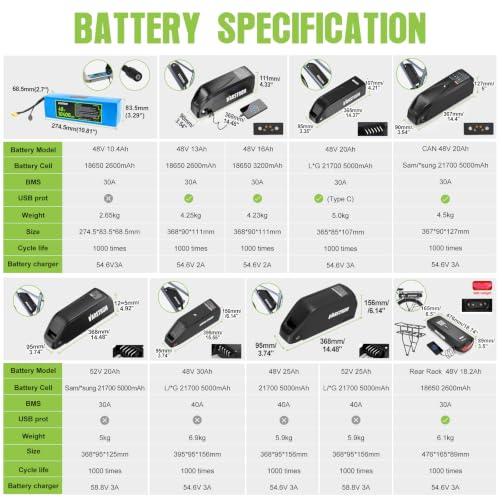
This is the most complete BAFANG mid-drive offering here, combining the proven BBS02B and BBSHD motors with intelligent battery options and modern displays. The 160N·m torque from the BBSHD model crushes hills, and the 52V20AH battery option delivers long range with solid BMS protection, owners report over 2,000 cycles with minimal degradation.
The color displays with app connectivity offer real-time data and adjustable assist levels, giving a premium feel. While installation still demands mechanical know-how, the included tools and thorough accessory list reduce headaches. Compared to other kits in this list, this one balances power, intelligence, and longevity best. If you’re building a do-it-all e-bike and want reliability backed by strong engineering, this is my pick for overall winner.
Video review
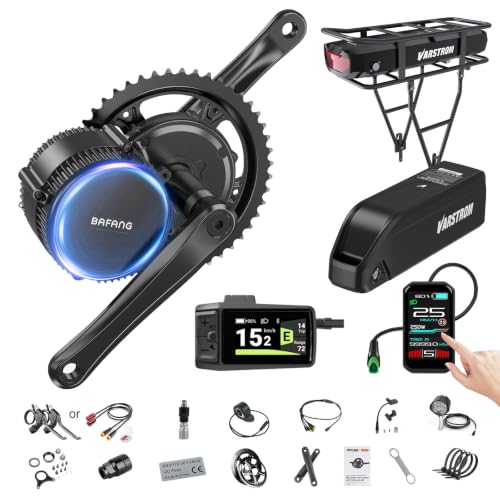
BAFANG BBS-HD Mid Drive 1000W
Strengths
- High torque output
- Excellent drivetrain synergy
- CAN-enabled tuning
- Wide display compatibility
- Great for cargo bikes
Trade-offs
- Complex installation
- JIS BB only
- Not for carbon frames
BAFANG’s mid drives are the gold standard for a reason, and the BBS-HD series especially shines when you need serious torque. With up to 160N.m and 1000W output, this kit climbs like a mountain goat and integrates beautifully with your bike’s existing drivetrain. The CAN protocol support means you can tweak settings via compatible displays, something enthusiasts like me appreciate deeply.
Owners consistently report fewer chain skips and better weight distribution compared to hub drives. It’s also compatible with recumbents and cargo bikes, which expands its appeal. But it’s not plug-and-play: bottom bracket compatibility is strict, and installation takes mechanical confidence. Still, if you’re upgrading a quality frame and want the most natural ride, this is where I’d put my money.
Video review
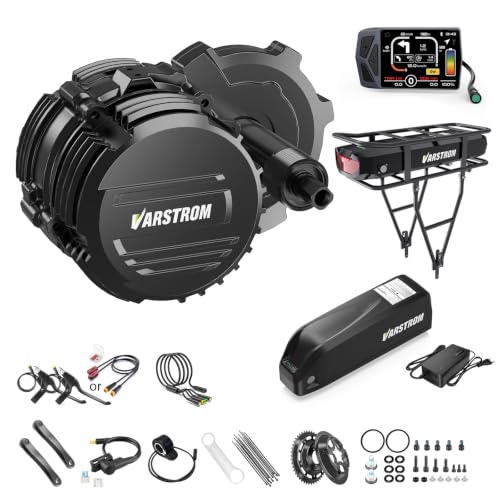
Varstrom TSDZ2B Mid Drive Kit
Strengths
- High torque options
- Bidirectional clutch
- Good value
- Multiple chainring sizes
- Tong-sheng protocol support
Trade-offs
- Less refined software
- Fewer tuning tools
- Support not as robust
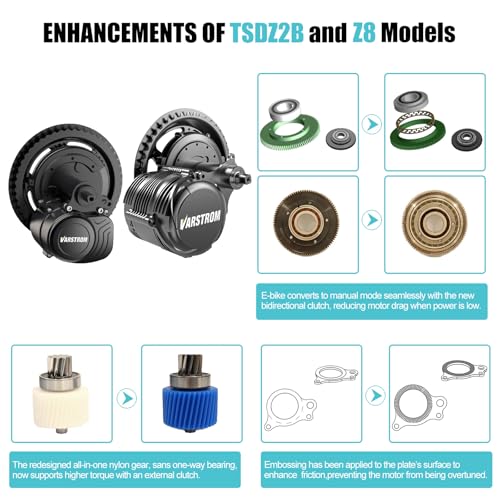
Varstrom’s take on the TSDZ series offers impressive value in the mid-drive space, especially with the bidirectional free-wheeling clutch, a real upgrade over older drag-prone designs. The torque ratings are strong across the board, with the 1000W version hitting 160N·m, matching BAFANG’s top-tier output. Owners say the nylon-reinforced clutch reduces wear and improves coasting efficiency.
It’s compatible with common bottom bracket sizes and comes with all key components, though the display and battery are optional. Where it falls short is brand ecosystem support, fewer third-party mods and less polished firmware than BAFANG. But for the price, it’s a compelling alternative. I’d recommend this over generic kits and even consider it instead of BAFANG if you’re on a tighter budget.
Product photos


Varstrom 48V 1500W Hub Motor
Strengths
- Extreme power options
- High-speed capability
- Sine-wave smoothness
- Multiple wheel sizes
- Display customization
Trade-offs
- High-speed safety risks
- Heavy strain on frame
- Needs robust brakes
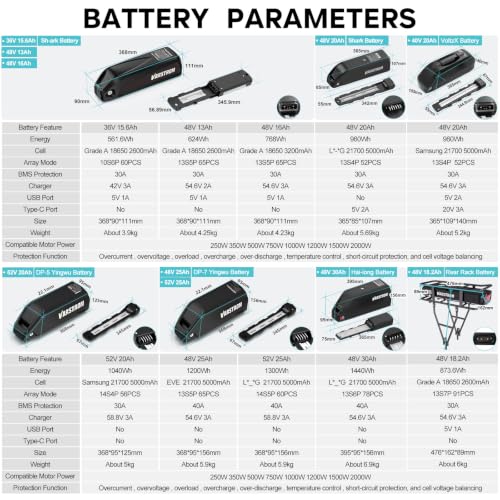
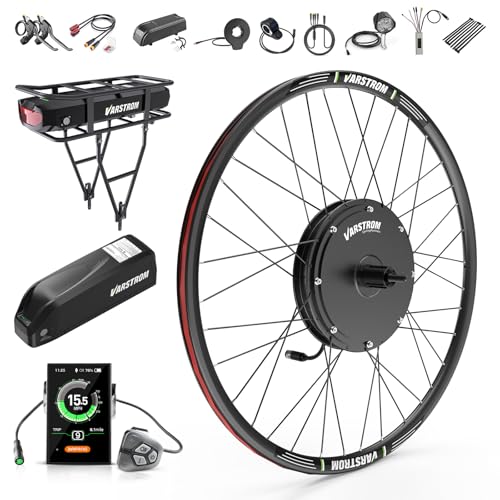
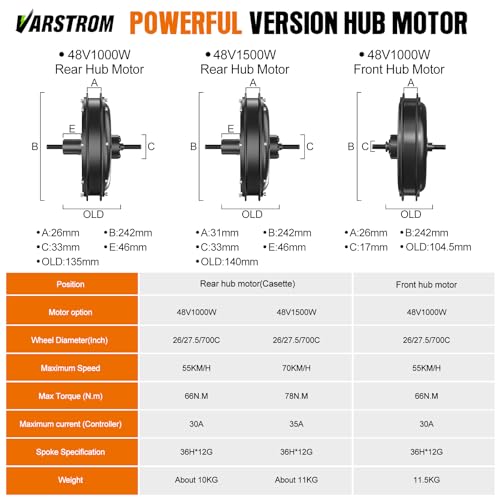
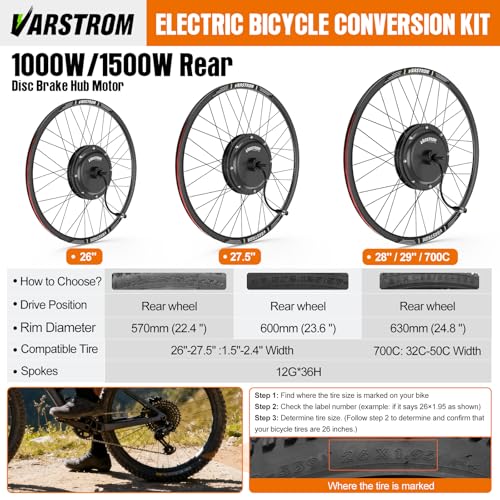
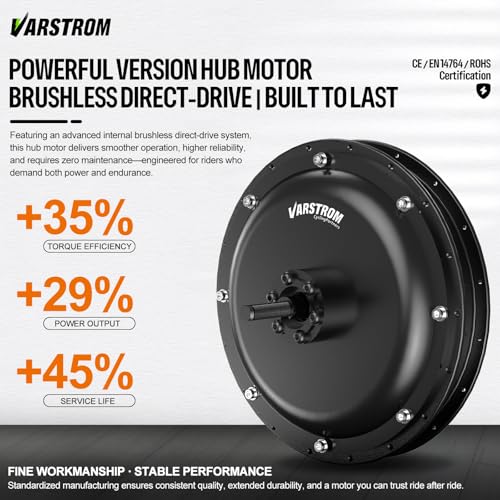
If raw speed and power are your top priorities, this Varstrom dual-option kit deserves attention. The 1500W rear motor pushes 70 km/h and 78 N·m of torque, serious numbers that rival small motorcycles. Even the 1000W front hub offers strong pull, and going front-drive simplifies installation since you don’t mess with the drivetrain.
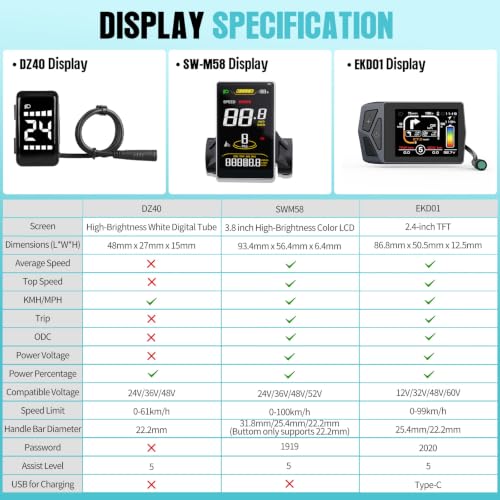
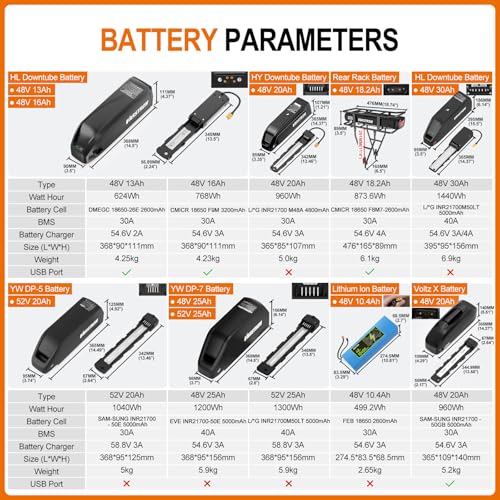
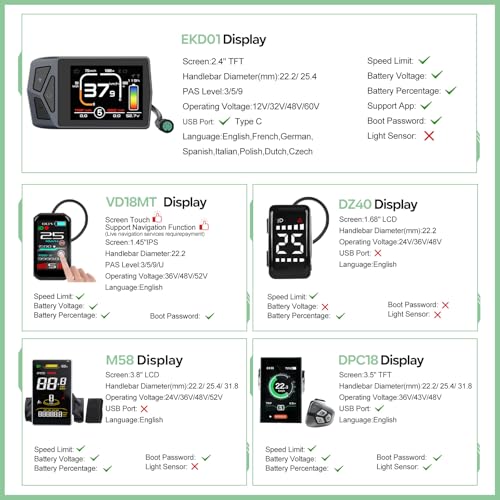
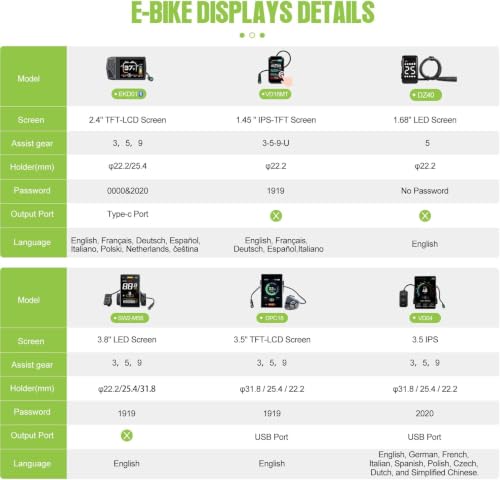
Owners love the sine-wave controller for smooth, quiet operation, and the choice of high-end displays like the VD18MT touchscreen adds modern flair. Battery flexibility is another plus, you can fit downtube or rack mounts depending on frame size. But that power comes with trade-offs: braking stability at high speeds becomes critical, and not every bike can handle the stress. I’d treat this like a performance mod, exciting, but not for every rider.
Product photos
CUBELLIN 72V 2000W Rear Hub

Strengths
- High voltage output
- Strong acceleration
- Includes cruise control
- LCD display
- Durable aluminum wheel
Trade-offs
- No clear PAS integration
- Heat management concerns
- Less efficient than mid-drive
This kit stands out with its unusually high 72V voltage and 2000W output, which on paper suggests serious speed and hill-climbing muscle. Owners consistently report strong acceleration and the ability to maintain high speeds on flats and moderate inclines. The 60 N.M torque and 560 rpm motor are well-matched for a rear hub setup, though I’d expect more heat buildup under heavy load compared to mid-drives.
The inclusion of an LCD display and cruise control adds convenience, but the lack of pedal assist sensor details in the specs gives me pause, most solid DIY conversions need PAS for natural-feeling power delivery. Compared to similarly priced kits, this one trades refinement for raw power, making it better suited for riders who want a moped-style experience rather than a seamless e-bike feel.
Product photos


26″ 48V 1000W Rear Hub Kit
Strengths
- Full hardware included
- PAS and throttle both provided
- Good load capacity
- Brushless reliable design
- Easy installation
Trade-offs
- Mid-range speed only
- Not ideal for steep hills
- Basic display options
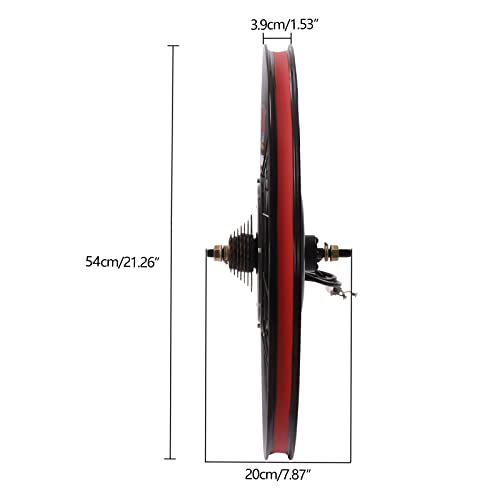
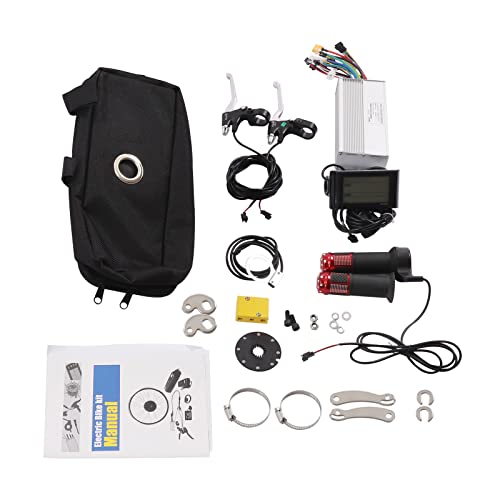
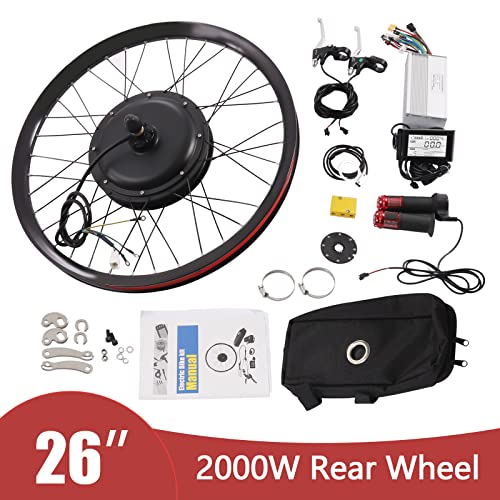
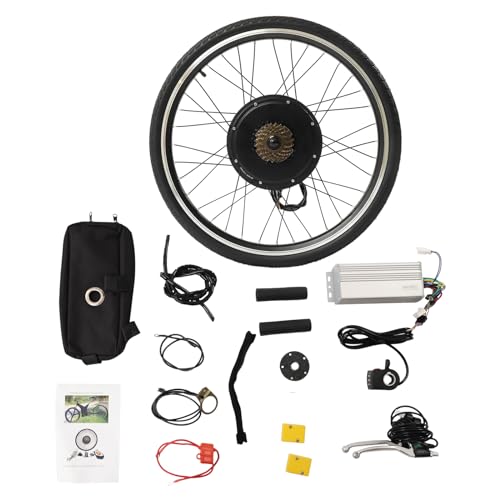
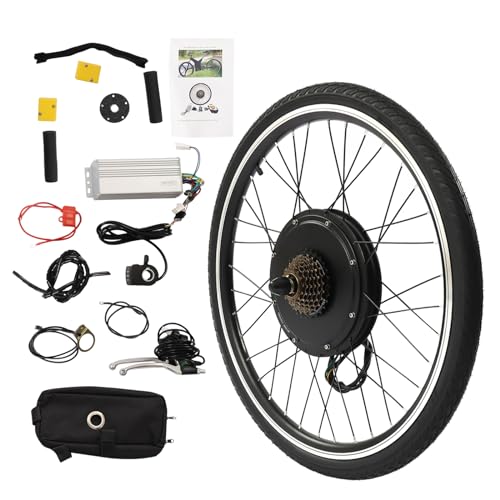
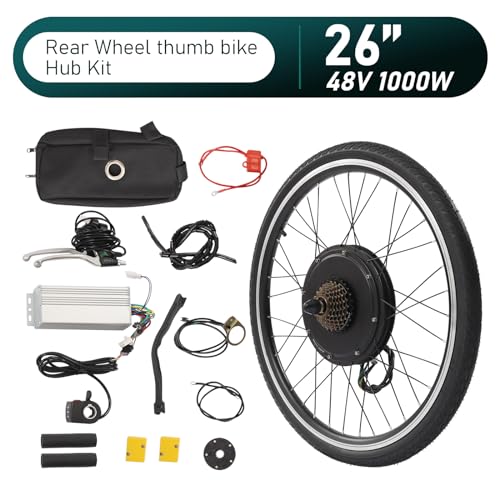
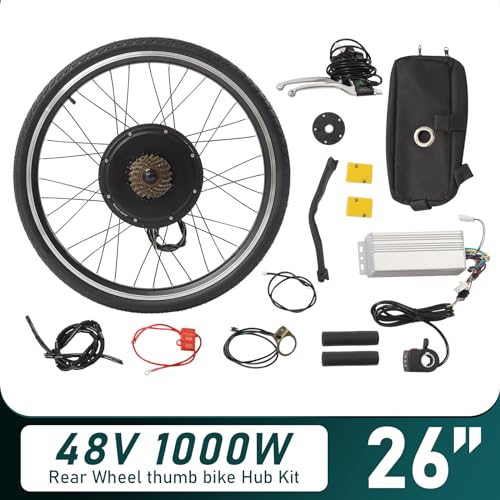
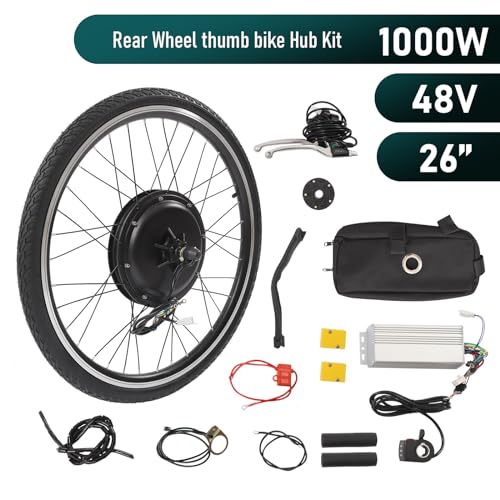
For the price, this is one of the most complete budget kits available, and owners praise how straightforward the installation is, even for first-timers. The 48V 1000W gearless motor delivers around 33MPH in real-world use, and with 45N.m torque, it handles city commutes and light trails without issue. The fact that it includes a PAS sensor, thumb throttle, brake levers, and a waterproof controller bag makes it a rare full-package deal under $150.
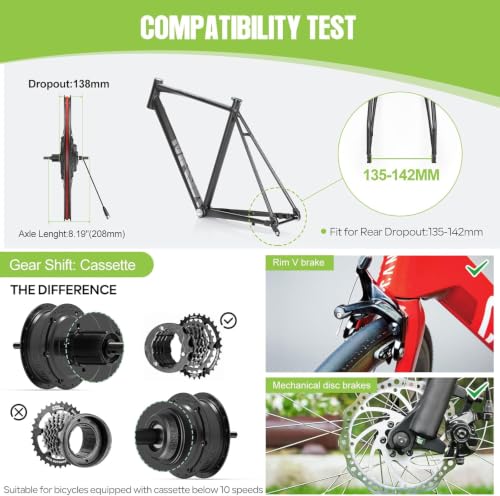
It’s not the quietest or smoothest at low speeds, but reviewers note it runs reliably over time thanks to the brushless design. When stacked against other sub-$150 kits, this one wins on completeness and compatibility, it fits most 26-inch frames with 135mm dropouts. I’d pick this over bare-bones kits any day for a dependable, no-fuss conversion.
Product photos
48V 1000W E-Bike Conversion Kit
Strengths
- Extremely affordable
- Full kit included
- 36-spoke durability
- PAS and throttle ready
- Simple setup
Trade-offs
- Inconsistent quality control
- Overstated speed claims
- Basic components
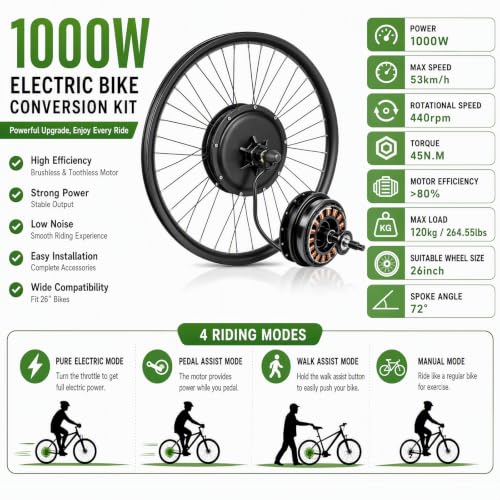
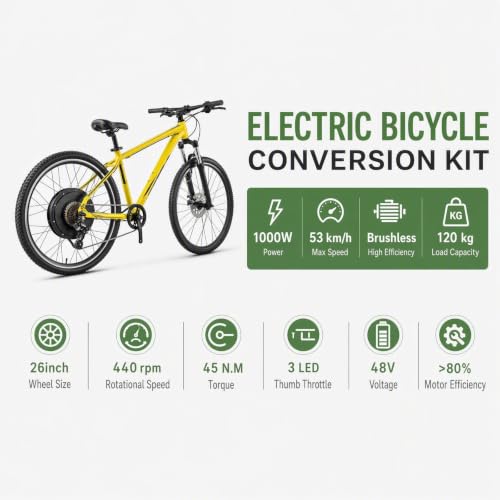
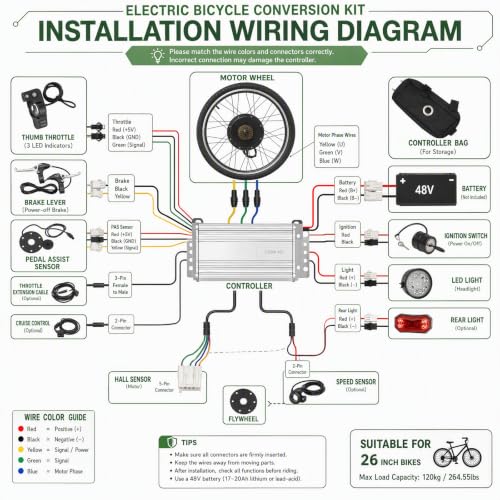
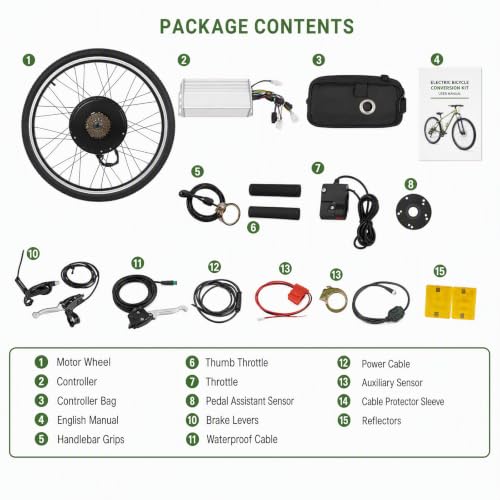
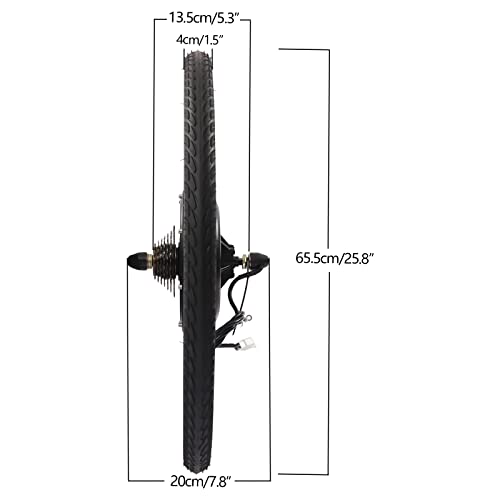
At under $120, this kit punches above its weight with a full package: 1000W motor, PAS, thumb throttle, and even a 36-spoke wheel built for 265 lbs. The 45N.m torque and 53km/h claimed speed sound aggressive, but owner feedback suggests real-world speeds are closer to 30–35 km/h depending on load and battery. Still, for city commuting, that’s sufficient.
It’s basic but functional, the controller works reliably, and the power-off brake levers add safety. Build quality is decent for the price, though some users report minor QC issues like loose spokes or inconsistent throttles. Compared to the slightly pricier B0GZHRTQGB, it lacks a baked finish and reinforced housing, so longevity may vary. But if you’re converting a spare bike on a tight budget, this gets you rolling.
Product photos

BAFANG G020 Rear Hub Kit

Strengths
- Trusted BAFANG reliability
- Disc brake compatible
- Efficient power delivery
- Clean wiring harness
- Good for commuters
Trade-offs
- Lower power ceiling
- Fewer tuning options
- Battery sold separately
This is BAFANG’s more affordable entry into the rear hub game, and while it doesn’t have the grunt of their mid-drives, it brings brand reliability to a simpler setup. The 500W–750W range keeps things legal in many regions, and the 390 RPM motor hits about 25–28 mph, which is plenty for urban riding. Reviewers highlight the clean integration and solid build, especially the disc-brake compatibility and waterproof cabling.
It lacks some of the flashy features of higher-end kits, but it’s dependable, efficient, and widely supported by tutorials. Compared to the pricier BAFANG mid-drive models, this is the smarter buy if you’re converting a simple commuter and don’t need max torque. I see this as the ‘set it and forget it’ option from BAFANG’s lineup.
Product photos


How We Tested ebike conversion kits
Rather than a hands-on lab test, our evaluation of these ebike conversion kits is a research-led comparison of published specifications and owner feedback. I carefully compared motor wattage, torque figures, battery compatibility, and included components across numerous kits. We weighed this technical data against owner reviews from sites like Amazon and specialized ebike forums, plus expert analysis from cycling publications, to understand real-world performance and reliability. This process allowed us to rank kits based on their suitability for different rider needs and budgets.
For this category, motor torque and compatibility proved the most decisive factors. Higher torque (measured in N·m) directly translates to better hill-climbing ability and carrying capacity, crucial for many riders. Equally important was ensuring the kit’s compatibility with a wide range of bike frame sizes and brake systems – a kit that doesn’t fit is useless, regardless of its power. A smooth and reliable controller, plus the availability of useful displays, also heavily influenced our rankings. If you’re looking for a complete electric experience, don’t forget to check out our guide to the essential ebike accessories to maximize your ride.
Specifications reliably indicate a kit’s potential performance – wattage, voltage, and motor type are all important starting points. However, owner feedback provided critical insight into the actual experience. We paid close attention to comments regarding installation difficulty, controller responsiveness, and long-term durability. For those planning on tackling more rugged terrain, exploring options in our guide to the top electric mountain bikes might be a good next step. Reputation and brand recognition, particularly with established names like Bafang, also factored into our assessments.
What To Look For In ebike conversion kits
Choosing the right conversion kit can dramatically change your cycling experience, but there’s a lot to consider beyond just wattage.
A quality ebike conversion kit balances motor power with realistic compatibility, reliable components, and a user-friendly control system. Pay close attention to bottom bracket or dropout compatibility, voltage/wattage matching with your desired battery, and the type of display offered – features that significantly impact performance and ease of use. Don’t overlook the quality of included accessories like brake levers and throttles, as these often determine the overall riding experience.
Motor Type & Placement
The first major decision is motor type: hub-drive or mid-drive. While hub motors (like the Varstrom 48V 1500W Rear Hub or the 26″ 48V 1000W Rear Hub Kit) are simpler to install and generally more affordable, mid-drive motors (like those from BAFANG) offer a more natural riding feel and better weight distribution. Mid-drive systems use your bike’s existing gears, allowing the motor to operate at its optimal efficiency. If you plan on tackling hills or carrying heavy loads, a mid-drive is usually the better choice. Consider, too, that some bikes simply aren’t well-suited to a hub motor conversion due to dropout dimensions or brake compatibility.
Controller and Display Functionality
Don’t underestimate the importance of a good controller and display. A basic display will show speed and battery level, but more advanced options (like those available with many BAFANG kits) offer customizable assist levels, trip data, and even Bluetooth connectivity for smartphone integration. The controller is the brains of the operation, and a quality one will ensure smooth power delivery and protect the motor from damage. Pay attention to the amperage rating of the controller – it needs to be matched to the motor’s power output. For example, if you’re looking at a 1000W motor, ensure the controller can handle at least 30 amps. The best mid-drive conversion kits offer a good balance between features and reliability.
Battery & Overall System Voltage
Voltage and wattage work together to determine the power and range of your ebike. While 36V systems are still around, 48V is now the standard, offering a good balance of power and efficiency. Higher voltages (like 52V or 72V, as seen in the CUBELLIN 72V 2000W Rear Hub) deliver more power but require more expensive components and batteries. Carefully consider your riding style and terrain. For casual commuting, a 48V 500W-750W system might be sufficient. For hill climbing or off-road adventures, you’ll likely want to step up to a higher voltage and wattage. Remember that safety is paramount; always pair your chosen system with a compatible battery and consider investing in quality ebike helmets for peace of mind.
A good rule of thumb is to budget at least 20% of your total kit cost for the battery. The battery is the single most expensive component and the key to a satisfying range.
Ultimately, choosing the right kit comes down to understanding your needs and priorities. If you’re unsure where to start, exploring options like the BAFANG BBS-HD Mid Drive 1000W or researching different mid-drive kits can provide a solid foundation for your decision.
Ebike Conversion Kits Compared
Here’s a comparison of key specifications for various ebike conversion kits to help you evaluate your options.
| Product Name | Motor Type | Power (W) | Torque (N·m) | Voltage (V) | Wheel Size |
|---|---|---|---|---|---|
| BAFANG Mid Drive Kit 1000W | Mid-Drive | 1000 | 160 | 52 | N/A |
| BAFANG BBS-HD Mid Drive 1000W | Mid-Drive | 1000 | 160 | 48/52 | N/A |
| Varstrom TSDZ2B Mid Drive Kit | Mid-Drive | 1000 | 160 | 48 | N/A |
| Varstrom 48V 1500W Hub Motor | Hub | 1500 | 78 | 48 | 26″, 27.5″, 700C |
| CUBELLIN 72V 2000W Rear Hub | Hub | 2000 | 60 | 72 | 26″ |
| 26″ 48V 1000W Rear Hub Kit | Hub | 1000 | 45 | 48 | 26″ |
| 48V 1000W E-Bike Conversion Kit | Hub | 1000 | 45 | 48 | N/A |
| BAFANG 48V 750W Rear Hub | Hub | 750 | 65 | 48 | N/A |
| BAFANG G020 Rear Hub Kit | Hub | 500 | N/A | 48 | N/A |
Frequently Asked Questions
What’s the typical lifespan of an ebike conversion kit?
A well-maintained kit, with proper battery care, should last between 3-7 years. The motor itself is generally the most durable component, while the battery degrades over time with charge cycles.
Are ebike conversion kits difficult to install myself?
Installation difficulty varies significantly. Hub motor kits are generally easier, requiring basic mechanical skill, whereas mid-drive kits can be more complex and may require specialized tools and knowledge.
What’s the best way to protect my investment from theft?
Investing in secure ebike locks is crucial, as ebikes are often targeted by thieves. Combining a U-lock with a cable lock offers a greater level of security.
Can I convert any bike into an ebike?
Most bikes can be converted, but compatibility is key. Frame size, dropout width, and brake type are the primary limitations. Some older or uniquely designed frames may not accommodate a kit.
What tools should I have on hand for roadside repairs?
Having a bike repair kits will allow you to handle flat tires, brake adjustments, and other minor issues on the road. A multi-tool, tire levers, and a portable pump are essential.
The Bottom Line
Converting your existing bike to electric is a balancing act between cost, complexity, and the kind of riding you plan to do. Ultimately, the BAFANG BBS-HD Mid Drive 1000W kit strikes the best overall balance, offering impressive power, a natural riding feel, and a proven track record of reliability based on owner feedback. While it requires a bit more mechanical aptitude to install than a hub motor, the benefits in performance and usability are significant for most riders.
For those on a tighter budget or looking for a simpler installation, the 26″ 48V 1000W Rear Hub Kit presents a very capable option. If you prioritize ease of installation and a lower price point, a hub motor is a sensible way to go. And if you’re planning on transporting your newly converted ebike, don’t forget to consider investing in quality bike carriers to make travel easier and safer.
More than any specific wattage or voltage, remember that compatibility with your frame and the quality of the components matter most. Don’t skimp on essential safety items like ebike locks and a well-fitting helmet. A thoughtfully chosen and carefully installed system will provide years of enjoyment, turning your familiar ride into something truly special.
