
8 Best Bicycle Odometers of 2026
This post contains affiliate links. As an Amazon Associate, we earn from qualifying purchases.
The VLOXO GPS Bike Computer with Headlight stands out as the best overall bicycle odometer, delivering long battery life, solid GPS tracking, and a built-in headlight. For budget-focused riders, the Hilceriy Wired Bike Computer offers reliable basics without the cost, while the CYCPLUS Wireless GPS Bike Computer G1 brings strong versatility with its balance of features and performance.
Cyclists often struggle to find an odometer that actually keeps up with their rides, whether it’s a unit that dies early, loses signal on trails, or is too hard to read in sunlight. As someone who’s spent years around two-wheel machines, I know how frustrating unreliable data can be. This guide cuts through the noise, ranking odometers based on accuracy, battery life, and real-world usability, so you can pick one that matches your riding style and sticks with you mile after mile.
Top 8 Bicycle Odometers in the Market
The Best Bicycle Odometers, Reviewed
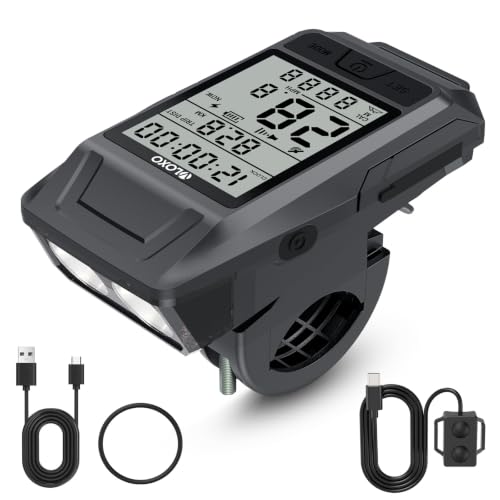
VLOXO GPS Bike Computer with Headlight
Strengths
- 3-in-1 function (light, horn, computer)
- Exceptional battery life
- Sunlight-readable screen
- Clean wireless design
- USB-C charging
Trade-offs
- Slightly bulky
- First GPS fix takes 5 minutes
- Light output not for high-speed night riding
This is the rare bike computer that actually improves your setup by doing more with less. The integration of a front light, audible horn, and GPS odometer into one unit is brilliant, fewer mounts, fewer cables, cleaner bars. The 2.4-inch screen is sharp and sunlight-readable, and the manual backlight control is a thoughtful touch for preserving battery. But the real standout is the 90-hour battery life on a 4000mAh USB-C rechargeable cell, which dwarfs most competitors.
Owners praise the plug-and-play GPS setup and consistent satellite lock, even under tree cover. It tracks elevation, incline, and distance accurately, and the 3-in-1 design is a standout for commuters. Compared to other mid-priced GPS units, this one offers unmatched value. I’d pick it over similarly priced models that only do one thing well.
Video review
CYCPLUS Wireless GPS Bike Computer G1

Strengths
- Long 55-hour battery
- Sunlight-visible screen
- IPX6 waterproof
- Auto backlight
Trade-offs
- Heavier than rivals
- Interface a bit dated
- Mount could be sturdier
With a 55-hour battery life and IPX6 waterproofing, the CYCPLUS G1 stands out in the crowded GPS budget segment. The 1200mAh battery is a serious upgrade over most sub-$40 units, and the FSTN screen with automatic backlight is easy to read in all conditions. It locks onto GPS quickly and tracks altitude, distance, and speed reliably, owners report consistent performance on both road and trail.
It’s not the lightest or most compact, but it’s rugged and functional. The auto-sleep mode saves power, and the interface is straightforward. Compared to the BKVTOP or Bikevee models, it trades some weight for significantly better battery. For riders who do long weekend rides without easy charging access, this is the smarter buy.
Video review
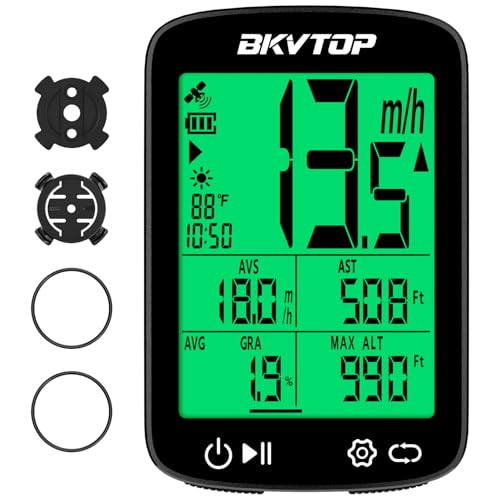
BKVTOP Wireless GPS Bike Computer
Strengths
- Ultra-lightweight
- Sensor-free GPS
- Auto backlight
- IPX7 rated
Trade-offs
- Short 28-hour battery
- Mount feels flimsy
- Display visibility so-so
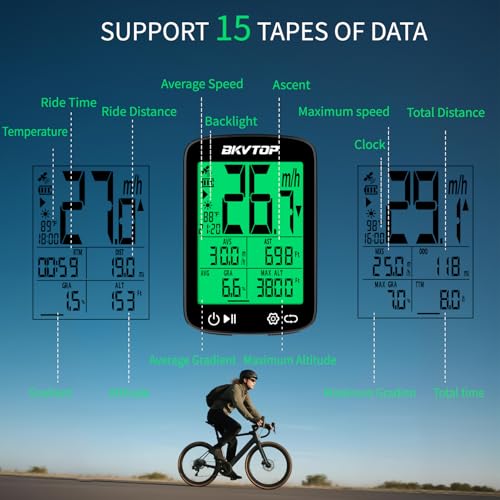
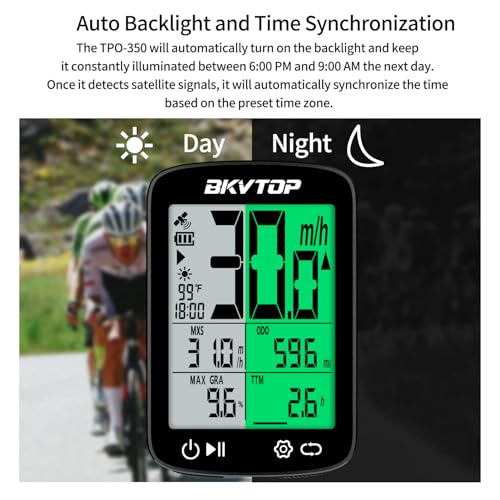
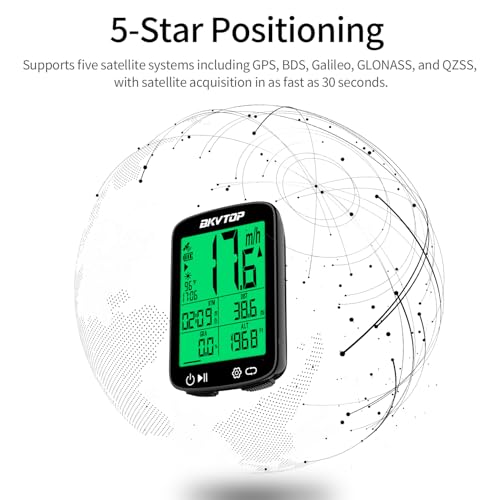
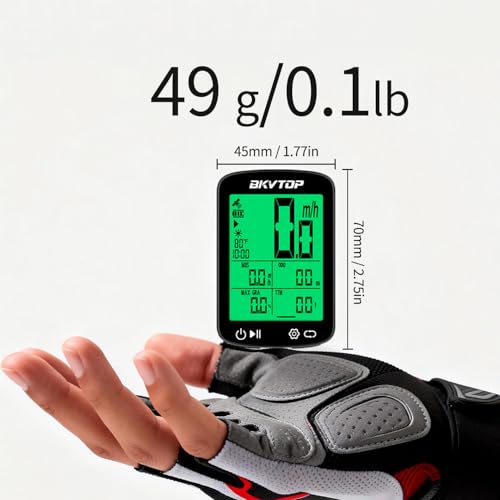
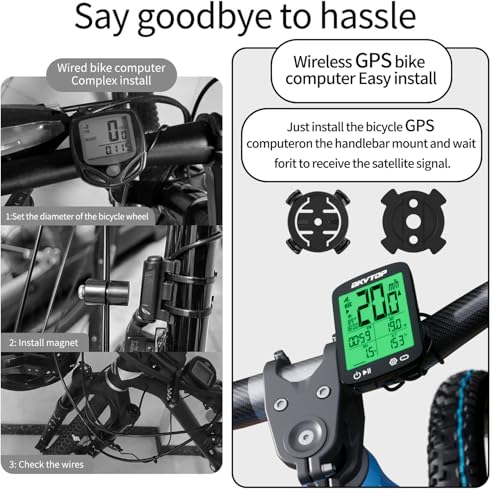
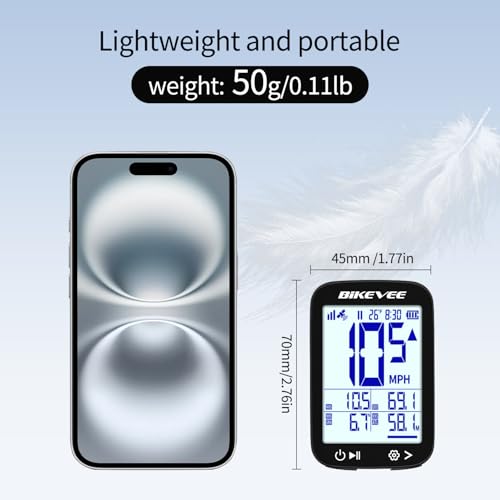
At just 50 grams, the BKVTOP is one of the lightest GPS bike computers available, making it a natural fit for weight-conscious riders or those with minimalist setups. It tracks all the essentials, speed, distance, altitude, gradient, temperature, with built-in GPS and no external sensors. The 2.4-inch screen is legible, and the green automatic backlight works well in low light, though it’s not as bright as some competitors.
It shares the same 28-hour battery and IPX7 rating as the Bikevee, but the mount and build feel slightly less robust. Owners note it’s best for casual and commuter use, not rugged trail rides. Compared to the CYCPLUS G1, it sacrifices battery and durability for featherweight design. I’d pick it only if low weight is your top priority.
Product photos
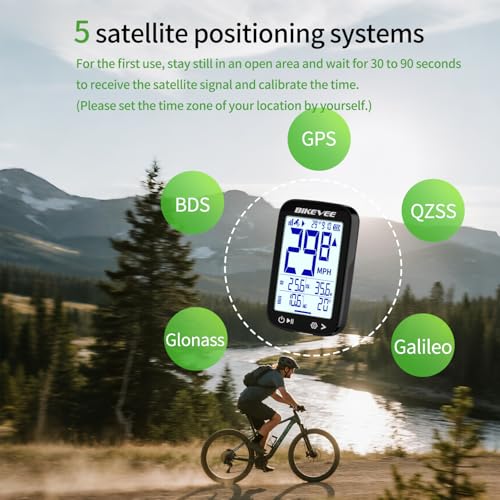
Bikevee Wireless GPS Bike Computer
Strengths
- No sensor setup
- IPX7 waterproof
- Clear 2.4″ screen
- Auto start/stop
Trade-offs
- 28-hour battery life
- No integrated light
- Basic mount included
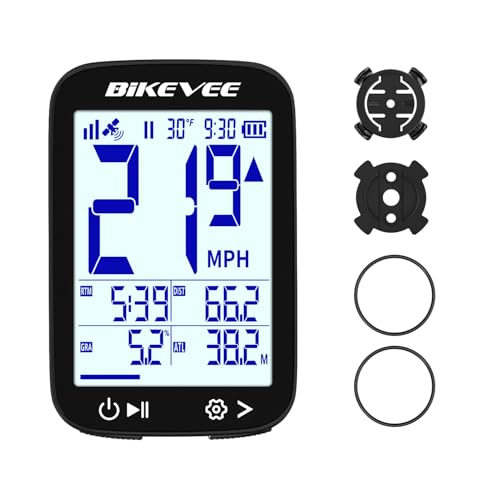
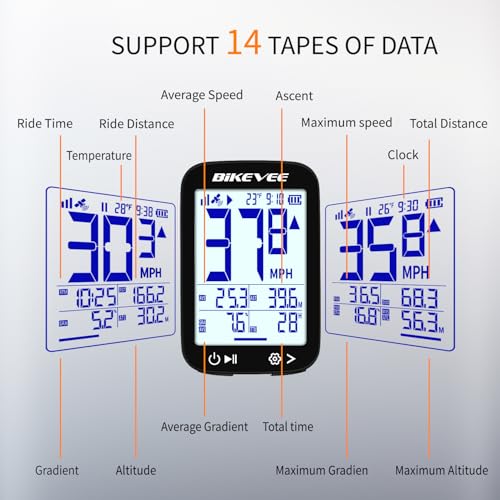
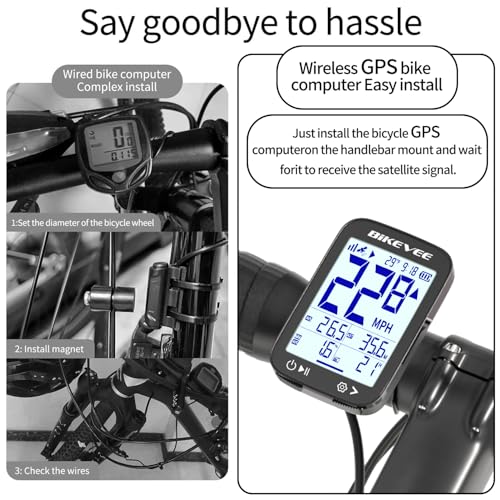
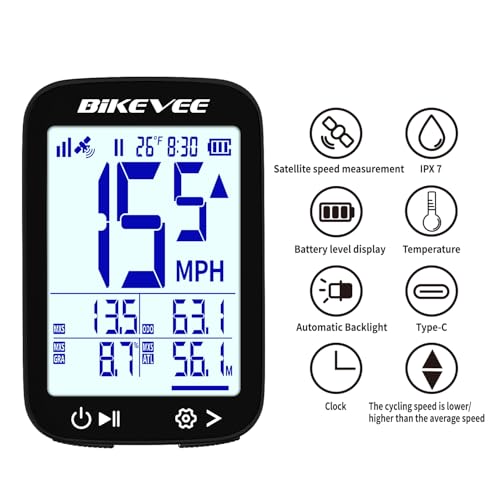
The Bikevee stands out for one key reason: no sensors needed. Thanks to built-in GPS, you skip the magnet, sensor, and cable mess entirely, just mount it and ride. The 2.4-inch screen is large and well-laid out, showing speed, distance, altitude, gradient, and temperature with clarity. Auto start/stop works reliably, and the IPX7 rating means it can survive full immersion, not just rain.
Battery life is modest at 28 hours, which is fine for most riders but short of the CYCPLUS or VLOXO. It doesn’t have integrated lights or a horn, so it’s less versatile than the VLOXO, but for pure GPS simplicity and clean setup, it’s one of the best in its class. I’d recommend it for riders upgrading from wired units who want hassle-free installation.
Product photos
CATEYE Padrone Wireless Bike Computer

Strengths
- Reliable wireless signal
- Auto stop/start
- Simple interface
- Tool-free mount
Trade-offs
- No GPS or elevation
- No backlight
- Limited data fields
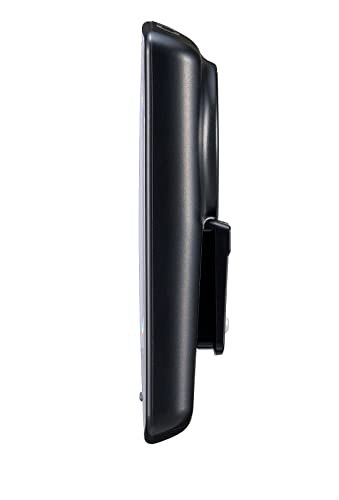
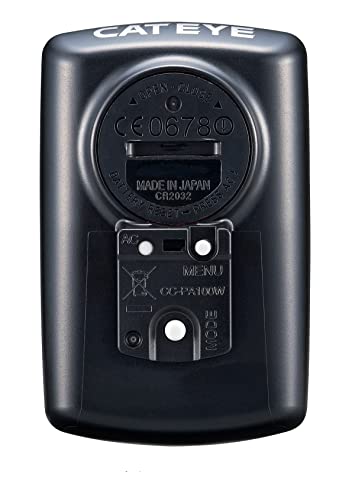
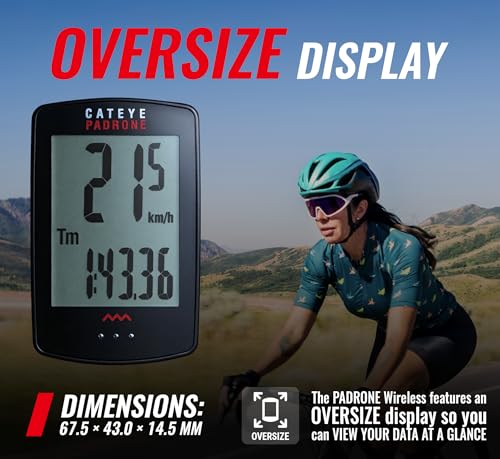
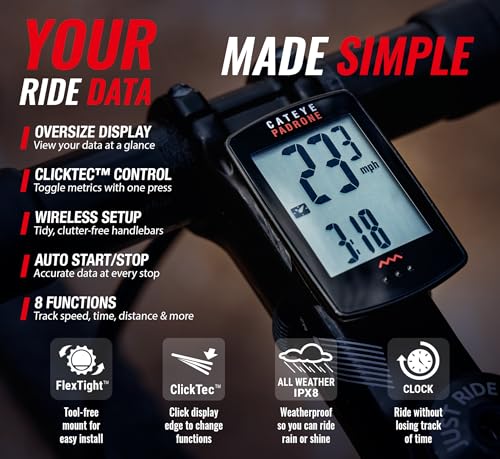
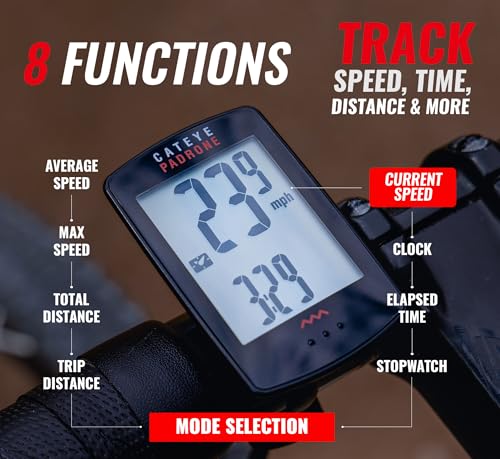
CATEYE has been a staple in bike computers for decades, and the Padrone shows why. With a 70cm wireless signal range, it’s among the most reliable non-GPS units out there, real-time speed data comes through cleanly, and the lack of GPS keeps battery life strong and the interface simple. I appreciate that it auto-pauses at stops, so your average speed isn’t ruined by red lights, and the ClickTec button design makes toggling through metrics intuitive without looking.
It’s not flashy, but that’s the point. Compared to GPS models, it lacks route tracking or elevation, but for riders who just want accurate, no-nonsense stats, this is a trusted workhorse. The tool-free FlexTight bracket is a small win, easy to install and adjust by hand. If you’re not sold on GPS complexity, this is the smarter buy over pricier, overbuilt units.
Product photos
CATEYE Velo 9 Wired Bike Computer

Strengths
- Extremely long battery life
- Auto stop/start
- Tracks calories and carbon
- Reliable wired signal
Trade-offs
- No backlight
- Wired installation
- Basic display
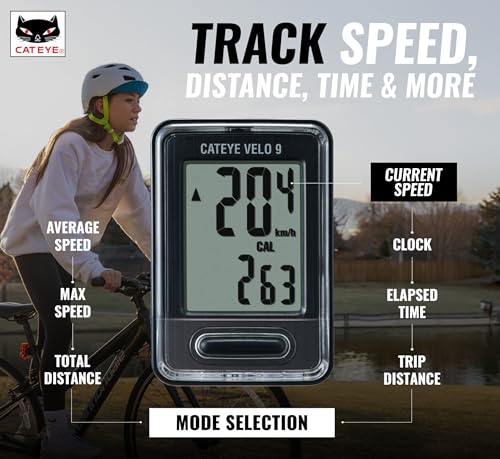
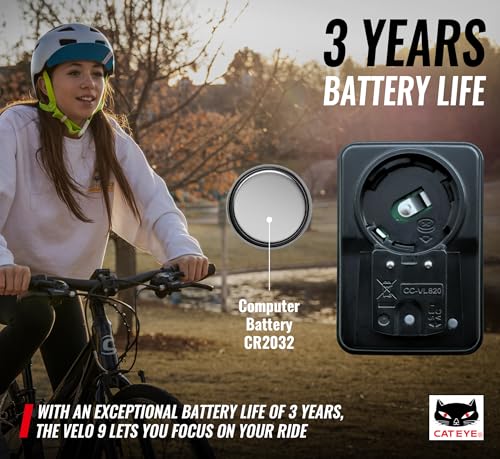
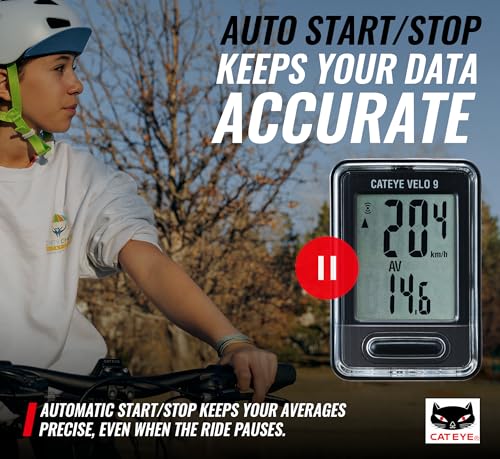
The Velo 9 is a reminder that sometimes, the old-school way still wins. It’s wired, yes, but that’s part of why it can run for up to three years on a single coin cell battery, a huge advantage over rechargeables that need frequent topping up. It covers all the basics: current, max, and average speed, trip and total distance, elapsed time, and even adds useful extras like calorie tracking and carbon offset estimates, which give casual riders a bit more context for their effort.
It lacks the wireless convenience of modern units, and the screen is small and unlit, so night visibility is poor. But for someone who rides regularly and wants to install once and forget it, this is a dependable choice. Compared to budget wireless models, it’s more reliable over time. I’d recommend it for fitness riders who don’t need GPS but want long-term, set-and-forget operation.
Product photos

Bike Computer with LCD Display

Strengths
- Affordable
- Auto wake-up
- Multi-function display
Trade-offs
- Sensor alignment fussy
- Build quality average
- No GPS or wireless convenience
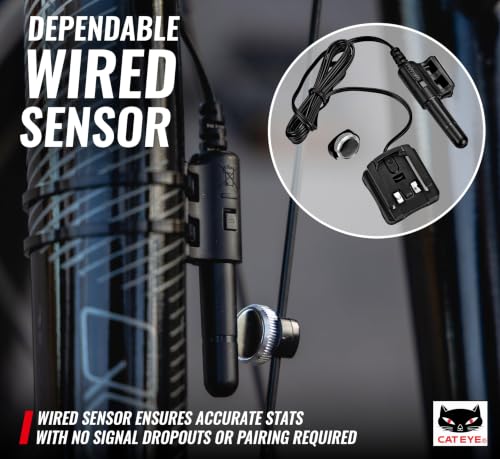
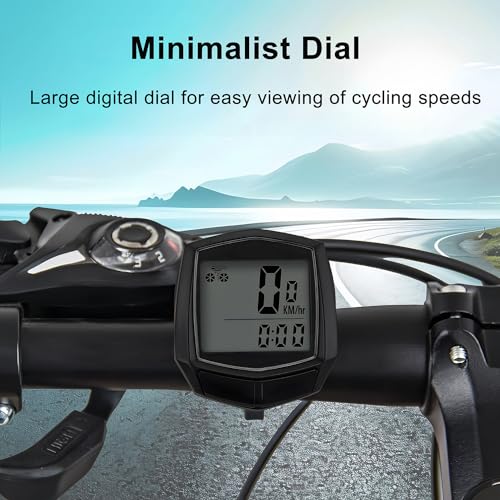
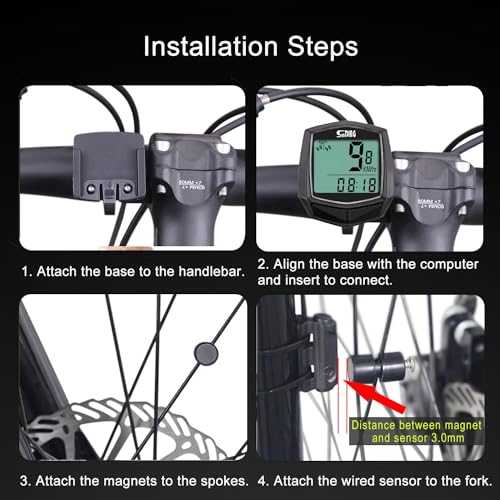
For the price, this basic wired odometer delivers more than you’d expect. It covers all the fundamentals, speed, average speed, max speed, trip distance, total mileage, and ride time, with a clear LCD that’s easy to read in most lighting. The automatic wake-up is a nice touch, activating as soon as you start pedaling or press a button, and owners consistently report reliable performance once the sensor and magnet are properly aligned within that 3–5mm window.
Where it stumbles is in consistency. Some users note erratic readings when the alignment isn’t perfect, and while it’s labeled waterproof, long-term durability in heavy rain is questionable. Compared to even mid-tier wired units, this one feels more fragile, but for a beginner or casual rider who wants basic data without spending much, it’s a functional starting point.
Product photos

Hilceriy Wired Bike Computer

Strengths
- Low cost
- Backlight included
- Multi-function display
- IPX6 rated
Trade-offs
- Temperature inaccurate in rain
- Sensor alignment sensitive
- Wired clutter
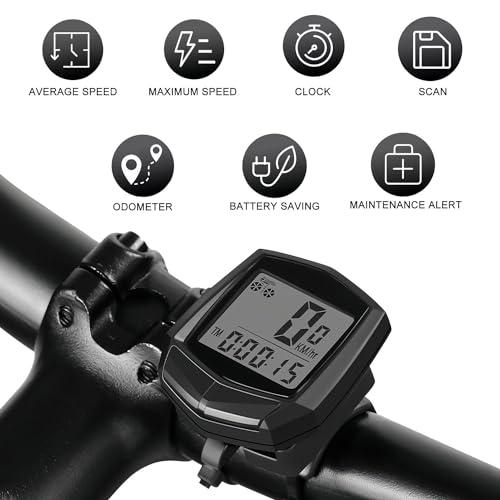
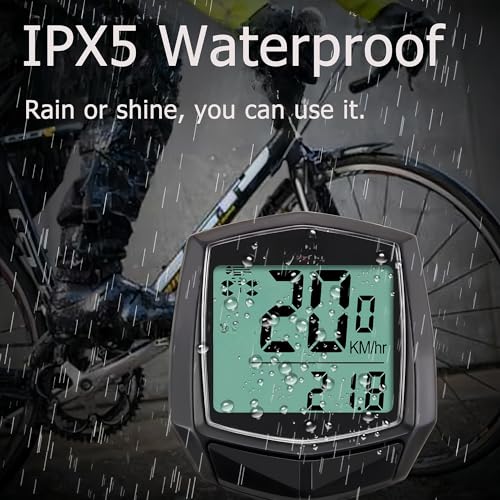
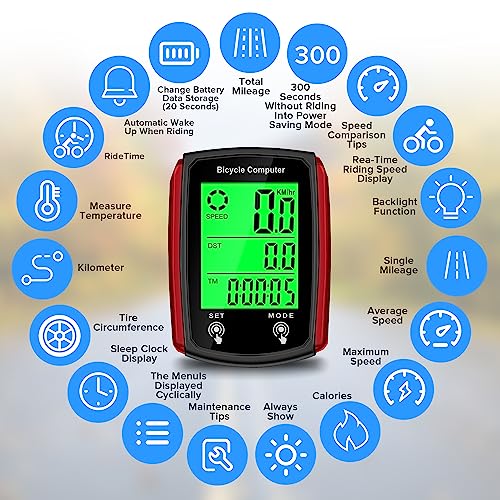
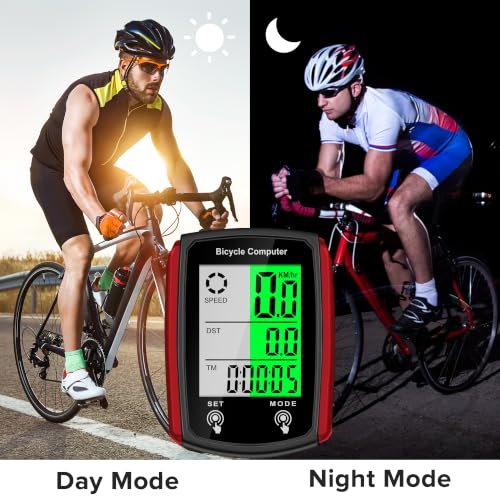
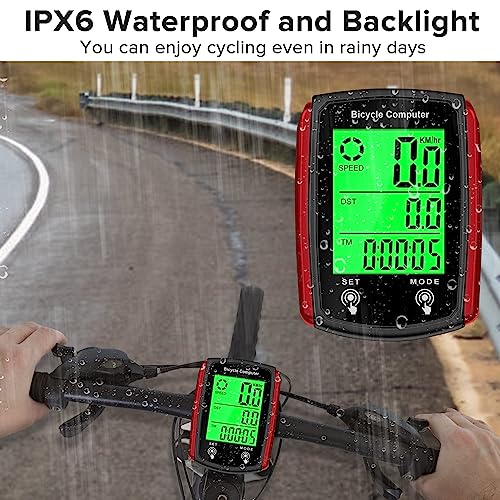
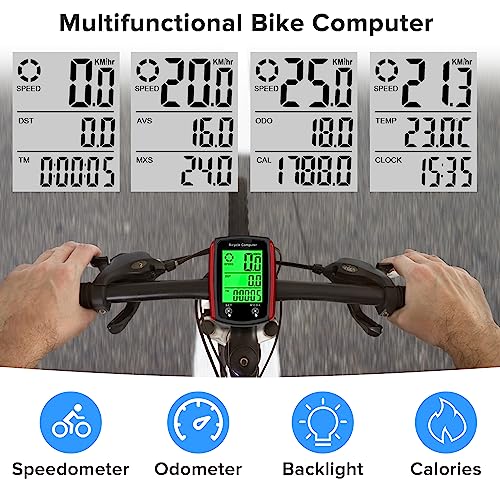
At $15, the Hilceriy wired odometer punches above its weight with a solid feature list: speed, distance, time, calories, temperature, and auto wake-up. The backlight is manually activated but bright enough for tunnels or dark paths, and the IPX6 rating means it can handle heavy rain without issue. Installation is straightforward for wired units, and the LCD is clear during the day.
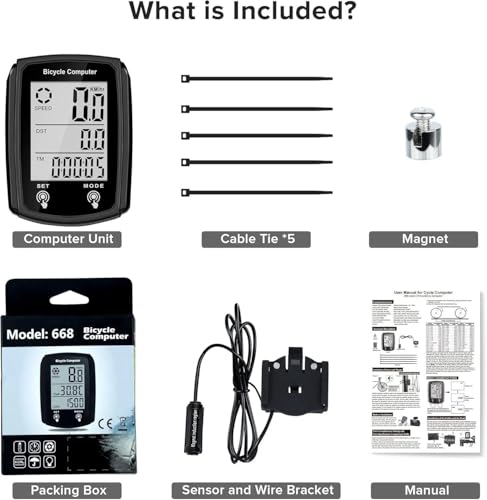
But like most budget wired models, it’s finicky about sensor alignment, and the temperature reading can go off in wet conditions, owners note it picks up water temperature instead of air. It’s not built to last like a CATEYE, but for a second bike or a commuter on a tight budget, it’s a capable option. I’d pick it over the cheapest Amazon units for the extra functions and better build.
Product photos
How We Evaluated bicycle odometers
My approach to evaluating bicycle odometers centered on a detailed comparison of published specifications and features across numerous models. I weighed these technical details alongside extensive owner reviews and assessments from trusted cycling publications. Rather than a hands-on lab test, this is a research-led comparison designed to highlight the strengths and weaknesses of each unit based on real-world feedback and documented performance. Ultimately, I ranked these odometers against a set of criteria important to a broad range of cyclists.
For bicycle odometers, accuracy, battery life, and ease of use proved to be the most significant factors. Accurate GPS tracking or reliable sensor data is paramount, as inaccurate readings defeat the purpose of having an odometer. Equally important is battery life; long rides or bikepacking trips demand an odometer that won’t quit mid-journey. Finally, a straightforward interface and simple installation process make a big difference for casual riders and those new to cycling computers – and a great user experience is often reflected in positive owner reviews.
Specifications reliably indicate a unit’s core capabilities – screen size, waterproofing, and connectivity options. However, owner feedback provided crucial insight into real-world performance, particularly regarding GPS signal acquisition and battery life claims. Reputation, as indicated by consistent positive (or negative) trends in reviews, also played a role. For those interested in monitoring their physical exertion alongside their ride data, exploring options like best cycling heart rate monitors can provide a more complete picture of your cycling performance. And for peace of mind when parking, consider investing in one of the top-rated bicycle alarm systems.
How To Choose The bicycle odometers
Picking the right bicycle odometer can elevate your rides from simple exercise to data-driven training or exploration.
A quality bicycle odometer accurately tracks crucial metrics like speed, distance, and time. Look for features like GPS connectivity for route mapping, a clear and readable display even in bright sunlight, robust waterproofing (IPX6 or higher is preferable), and a battery life suited to your typical ride length. Wireless models minimize handlebar clutter, while some offer smart features like automatic start/stop and backlight control.
Understanding GPS vs. Wired Options
The first major decision is whether to go with a GPS-enabled odometer or a traditional wired one. Wired odometers, like the Hilceriy Wired Bike Computer, rely on a sensor and magnet attached to your wheel and fork. They’re generally more affordable and have excellent battery life, but the installation can be fiddly, and the data isn’t as thorough. GPS models, such as the VLOXO GPS Bike Computer with Headlight, offer more features – route tracking, elevation data, and often smartphone connectivity – but demand more from the battery. If you’re a serious cyclist interested in analyzing your performance and exploring new routes, a GPS unit is the way to go.
Display Clarity and Usability
Don’t underestimate the importance of a clear, readable display. A tiny, dimly lit screen makes it difficult to glance at your stats while riding. Look for odometers with larger screens (2.4 inches or greater is ideal) and high-contrast displays. Many models, like the CYCPLUS Wireless GPS Bike Computer G1, feature automatic backlights that adjust to ambient light conditions. Beyond size, consider the layout. Is the information presented logically? Can you easily toggle between different data fields? A cluttered or confusing interface defeats the purpose of having an odometer in the first place.
- A simple screen with only essential data is best for casual riders.
- A customizable display allows you to prioritize the metrics you care about (speed, distance, cadence, heart rate).
- Consider how easily the odometer can be operated with gloves on. Some units have small buttons that can be difficult to press accurately when your fingers are cold or wet.
Battery Life and Additional Features
Battery life is a critical consideration, especially for long-distance riders or those planning multi-day bikepacking trips. While wired odometers boast impressive battery longevity (often years), GPS models require more frequent charging. The CYCPLUS G1 stands out with a claimed 55+ hour battery life, while the VLOXO offers up to 90 hours. Beyond battery life, think about additional features. Many odometers now integrate with bicycle lighting (like the VLOXO’s built-in headlight), some offer audible alerts, and others can connect to smartphone apps for data analysis and route planning. If you want to track your rides and share them with friends, a model with Bluetooth connectivity and app integration, or even a dedicated bicycle GPS might be a better fit.
Don’t settle for an odometer with a battery that dies mid-ride. Always overestimate your needs and choose a model with ample power reserves.
Bicycle Odometers Compared
Here’s a comparison of key specifications for various bicycle odometers to help you choose the right one.
| Product Name | GPS Enabled | Battery Life (Hours) | Waterproof Rating | Screen Size (inches) | Wireless | Price |
|---|---|---|---|---|---|---|
| VLOXO GPS Bike Computer | Yes | 90 | N/A | 2.4 | Yes | N/A |
| CYCPLUS Wireless GPS Bike Computer G1 | Yes | 55 | IPX6 | N/A | Yes | N/A |
| BKVTOP Wireless GPS Bike Computer | Yes | 28 | IPX7 | 2.4 | Yes | N/A |
| Bikevee Wireless GPS Bike Computer | Yes | 28 | IPX7 | 2.4 | Yes | N/A |
| CATEYE Padrone Wireless Bike Computer | No | N/A | N/A | N/A | Yes | N/A |
| CATEYE Velo 9 Wired Bike Computer | No | 3 Years | N/A | N/A | No | N/A |
| Bike Computer with LCD Display | No | N/A | Waterproof | N/A | No | N/A |
| Hilceriy Wired Bike Computer | No | N/A | IPX6 | N/A | No | N/A |
Frequently Asked Questions
What’s the difference between IPX6 and IPX7 waterproofing?
IPX7 provides a higher level of protection than IPX6. IPX6 resists powerful water jets, while IPX7 allows for immersion in up to 1 meter of water for 30 minutes.
Can I use a wired odometer if I already have a smartphone mount for navigation?
Yes, a wired odometer can complement a smartphone mount. While your phone handles navigation, the odometer offers a dedicated, always-visible display for essential metrics like speed and distance, without draining your phone’s battery.
Do GPS odometers require a subscription for map updates or data storage?
Generally, no. Most GPS bicycle odometers store map data internally and do not require a subscription for basic functionality. However, some advanced features like live traffic updates or cloud-based data analysis may offer optional paid subscriptions.
How does cadence tracking improve my cycling?
Understanding your bicycle cadence allows you to optimize your pedaling efficiency and reduce fatigue. Maintaining an optimal pedaling cadence can help you ride faster and longer with less effort.
Are bicycle odometers compatible with safety accessories like lights?
Some models are. For example, the VLOXO GPS Bike Computer includes an integrated headlight, and many odometers can be paired with bicycle tail lights via Bluetooth to control them directly from the unit.
The Bottom Line
Choosing a bicycle odometer often comes down to balancing how much you want to spend against how much data you need. If you’re after a thorough, feature-rich experience that includes GPS tracking and smartphone connectivity, the VLOXO GPS Bike Computer offers an excellent blend of capability and value. It really stands out as a solid all-around performer for most riders.
For those on a tighter budget, or those who prefer the simplicity and longevity of a wired connection, the Hilceriy Wired Bike Computer is a fantastic choice. And if you’re a serious cyclist or commuter who also values visibility, the VLOXO deserves another look, it smartly integrates bicycle headlights directly into the unit. Ultimately, consider whether you’ll be carrying gear as well; a comfortable ride often requires one of the cycling backpacks to hold essentials.
Beyond the specs and features, remember that the best odometer is the one you’ll actually use. Don’t get bogged down in endless data fields or complicated menus. Prioritize a clear display, intuitive controls, and reliable accuracy – those fundamentals will always matter more than the latest bells and whistles.
