
8 Best Bicycle Heart Rate Monitors of 2026
This post contains affiliate links. As an Amazon Associate, we earn from qualifying purchases.
The Polar H10 stands out as the best overall bicycle heart rate monitor for its proven accuracy and reliable dual-band connectivity, while the Polar H9 offers a solid budget-friendly alternative. For those who prefer not to wear a chest strap, the COROS armband provides a comfortable, if slightly less precise, option.
Cycling with inconsistent or inaccurate heart rate data is frustrating. You can’t fine-tune your training zones or track progress effectively when your monitor lags, disconnects, or gives erratic readings. As someone who’s spent years evaluating fitness tech through the lens of real-world use, I know how critical reliability is when you’re pushing your limits on the road or trail.
This guide cuts through the noise by focusing on what actually matters: accuracy backed by owner feedback, seamless compatibility with cycling computers and apps, and a design that stays comfortable mile after mile. I compared specs and user experiences across the most talked-about models to find the ones that deliver consistent performance where it counts.
Top 8 Bicycle Heart Rate Monitors in the Market
The Best Bicycle Heart Rate Monitors, Reviewed
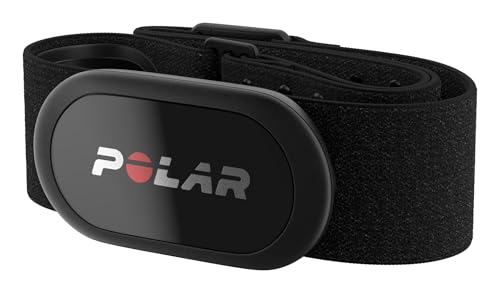
Polar H10 Heart Rate Monitor
Strengths
- Best-in-class accuracy
- Dual Bluetooth pairing
- Internal memory
Trade-offs
- Non-rechargeable battery
- Strap can chafe over time
- Slightly stiff clasp
The Polar H10 has earned its reputation as the go-to chest strap across cycling, running, and research labs. It’s not flashy, but it works with everything, ANT+, Bluetooth, even two Bluetooth devices at once. That kind of versatility is rare. Owners consistently report rock-solid accuracy, even during HIIT or hill repeats, and the internal memory lets you record workouts without a watch. That’s a lifesaver for early-morning sprints or poolside laps.
Yes, it uses a non-rechargeable CR2025, but given the 400+ hour life, it’s a minor trade-off. Compared to the Garmin HRM 600, it’s less flashy on metrics but more universally compatible. For trainers, coaches, or multi-sport athletes, this is the baseline I’d trust.
Video review
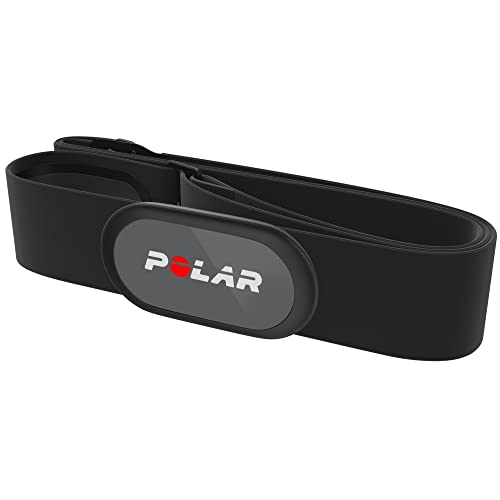
Polar H9 Heart Rate Sensor
Strengths
- Excellent value
- Dual ANT+/Bluetooth
- Trusted Polar accuracy
Trade-offs
- No internal memory
- Non-rechargeable battery
- Basic strap design
The Polar H9 is the most compelling budget step into Polar’s trusted accuracy. It carries the same gold-standard reputation as the H10 but drops the internal memory and dual Bluetooth pairing to hit a lower price. Still, it supports both ANT+ and Bluetooth, works with nearly every fitness app, and delivers consistent data across runs and rides. Owners say it feels nearly identical to the H10 on the chest, just without the backup smarts.
Battery life is strong, though the non-rechargeable CR2025 means eventual replacement. Compared to the GEOID HS500, it’s more polished and reliable, especially during interval training. For those not recording without a watch, the H9 is the smarter buy under $70.
Video review
Garmin HRM 200 Heart Rate Monitor

Strengths
- Replaceable battery
- Garmin-optimized
- Durable water resistance
Trade-offs
- ANT+ only
- No Bluetooth
- Fewer features than HRM 600
If you’re already in the Garmin ecosystem, the HRM 200 is the no-fuss, long-lasting heart rate strap that just works. It delivers accurate real-time data and HRV, syncs cleanly with Forerunners and Edge units, and uses a replaceable battery that lasts up to a year. For riders who log hundreds of miles and don’t want to recharge every few weeks, that’s a real perk.
It doesn’t offer the advanced metrics of the HRM 600, and it lacks Bluetooth (only ANT+), so phone or Zwift use requires a bridge device. But for pure cycling computer integration, it’s reliable. Compared to the Polar H9, it’s less versatile but more durable in wet conditions. A solid workhorse, not a showpiece.
Product photos


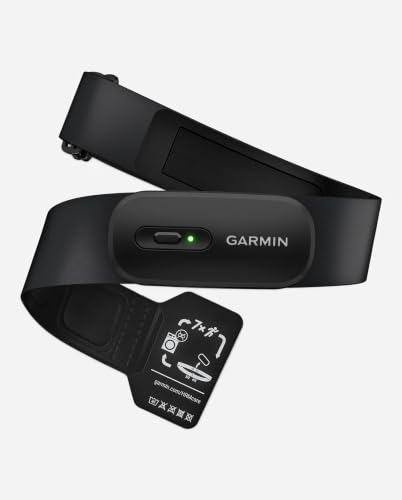
Garmin HRM 600 Premium Monitor

Strengths
- Advanced running dynamics
- Long battery life
- Waterproof for swim tracking
Trade-offs
- Garmin-centric features
- No ANT+
- Expensive
The Garmin HRM 600 is clearly built for serious athletes who want more than just heart rate, it’s about precision metrics and integration within the Garmin ecosystem. On paper, it delivers advanced running dynamics like ground contact time and vertical oscillation, which are typically reserved for high-end training setups. Owners consistently report solid data continuity across runs, swims, and indoor sessions, especially when paired with a Forerunner or Fenix watch. It’s not just a strap, it’s a full training node that stores and syncs activity independently.
That said, the premium price reflects its niche. If you’re not using a compatible Garmin watch, you’re leaving features on the table. Compared to the Polar H10, it offers similar accuracy but leans harder into Garmin-specific analytics. For riders and runners deep in that ecosystem, this is the logical upgrade.
Product photos


Wahoo TRACKR Heart Rate Monitor

Strengths
- Rechargeable battery
- Dual ANT+/Bluetooth
- LED status indicators
Trade-offs
- No internal memory
- Strap less durable long-term
- Slightly bulky sensor
Wahoo’s TRACKR stands out with its rechargeable battery and sleek, soft strap, two things most chest straps still get wrong. Over 100 hours of active use means you won’t be swapping batteries mid-season, and the USB-C charging is a modern touch. The LEDs are genuinely useful: they confirm heart rate lock, connection status, and low battery, so you’re never guessing if it’s working.
It’s not as data-rich as the Garmin HRM 600, but it doesn’t need to be. For Zwift riders or spin class regulars, it’s a dependable bridge between trainer and app. Compared to the Polar H10, it lacks internal memory and dual Bluetooth pairing, but it’s more than accurate enough for training zones. If you hate buying coin cells, this is your best rechargeable bet.
Product photos


COROS Heart Rate Monitor Armband
Strengths
- Armband comfort
- Auto on/off detection
- Multi-device pairing
Trade-offs
- Bluetooth only
- Shorter battery life
- Armband fit limits some users
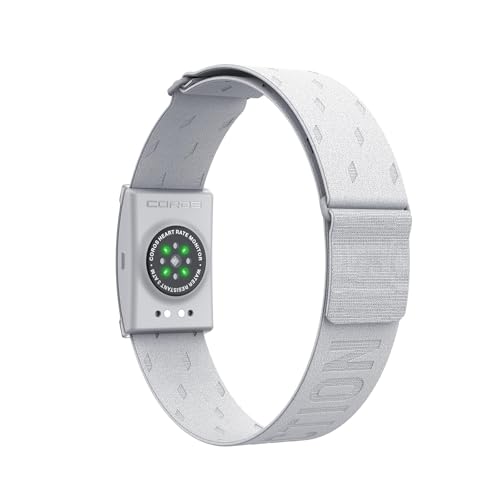
I’ve seen plenty of chest straps, but an armband that actually holds up during sprints and intervals? That’s rare. The COROS armband design skips the chest strap entirely, sitting snugly on the upper arm with a textured, flexible band. Reviewers note it stays put during mountain biking and trail runs, and the auto-wear detection is a small but meaningful convenience, no fumbling to start or stop tracking. The sensor delivers reliable data on par with chest-based units, at least for aerobic efforts.
It only uses Bluetooth, so if your bike trainer or watch relies on ANT+, you’re out of luck. But for COROS users or anyone using Bluetooth-only apps like Zwift or Strava, it’s a clean, comfortable alternative. Battery life isn’t class-leading, but 38 hours of active use covers most weekly training loads.
Product photos



GEOID HS500 Heart Rate Sensor

Strengths
- Extremely affordable
- ANT+ and Bluetooth
- Replaceable battery
Trade-offs
- Basic build quality
- Not swim-safe
- Inconsistent during spikes
At under $30, the GEOID HS500 punches above its weight. It supports both ANT+ and Bluetooth, which is a big win at this price, most budget straps pick one. Owners praise its quick pairing and the small LED that confirms heart rate detection, a handy touch when you’re rushing to start a ride. The CR2032 battery lasts ages, and being replaceable means this strap could outlive pricier models with sealed batteries.
It’s not perfect. The build feels basic, and while accuracy is decent for steady-state efforts, some users report lag during rapid heart rate shifts. Still, for indoor cycling apps like Rouvy or TrainerRoad, it works reliably. Compared to the Wahoo or Polar options, it’s a stripped-down tool, but for the price, that’s fair.
Product photos


CYCPLUS H2Pro Chest Strap
Strengths
- Exceptionally long battery
- Dual connectivity
- Lightweight design
Trade-offs
- Basic companion app
- No internal memory
- Strap durability concerns
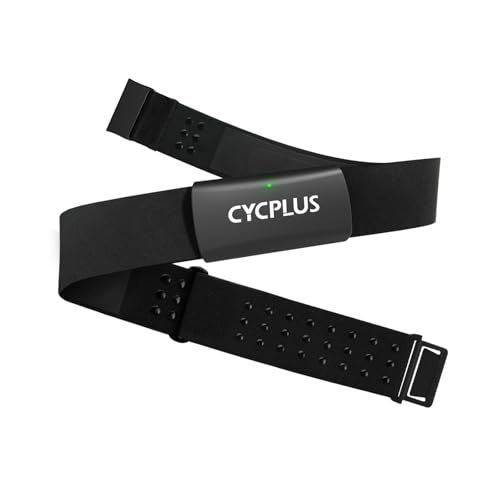
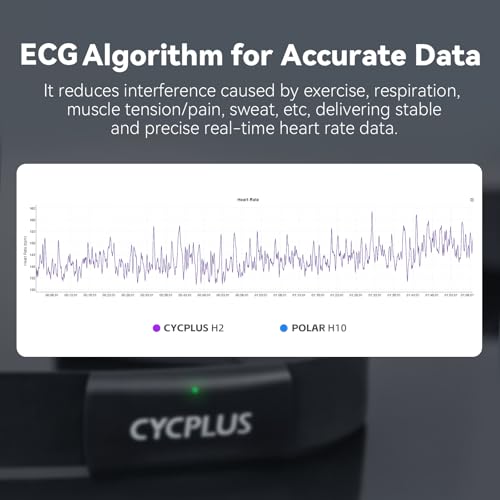
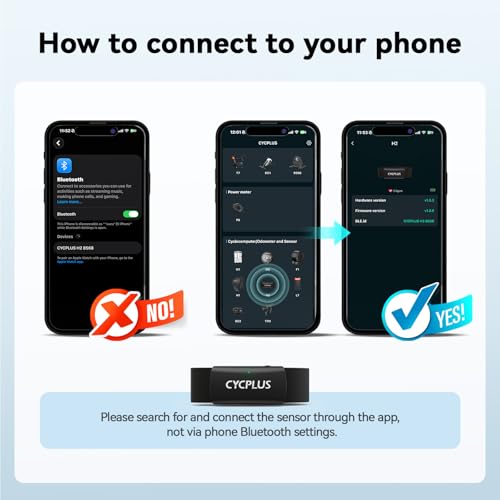
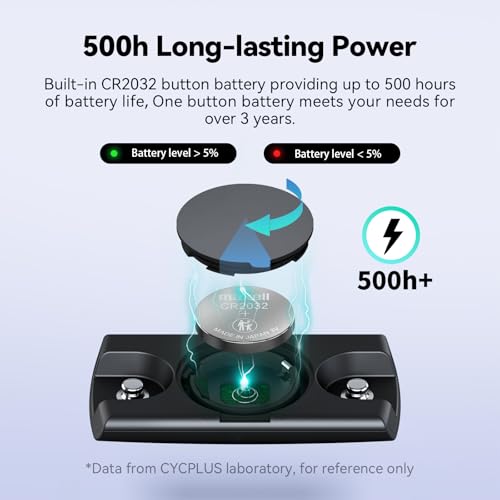
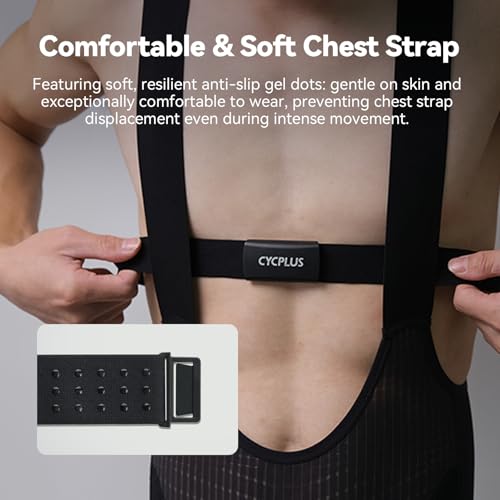
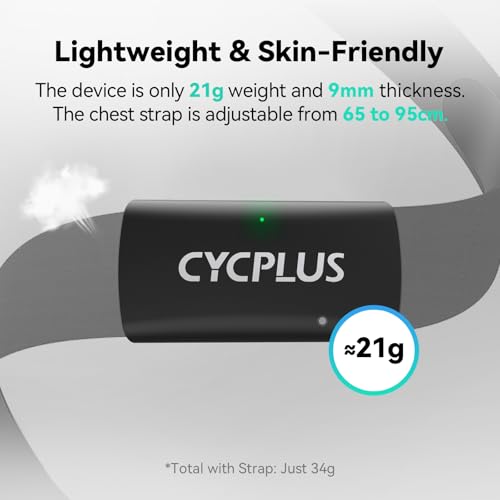
The CYCPLUS H2Pro is a dark horse with a standout 500-hour battery life, that’s years of weekend rides on a single CR2032. For low-maintenance riders who hate charging or battery swaps, this is a real advantage. It supports both ANT+ and Bluetooth, and owners report stable connections with Zwift, Garmin, and Wahoo setups. The ECG-based algorithm helps smooth out noise from vibration or bumpy roads, which matters on long gravel or mountain rides.
It’s not Polar-level refined, and the app support is limited to third-party platforms, but for pure heart rate delivery, it’s dependable. At $30, it splits the difference between the GEOID and Polar H9, better battery than both, similar accuracy. A quiet winner for endurance riders.
Product photos
How We Picked These bicycle heart rate monitors
Rather than a hands-on lab test, my research focused on a detailed comparison of published specifications and features across a range of models. I weighed owner reviews from multiple sources – including Amazon and dedicated fitness forums – alongside expert opinions from sites specializing in wearable technology. This data was then ranked against key criteria for accuracy, connectivity, comfort, and battery life, informed by years of experience exploring the intersection of fitness and technology at TheAutoZenith.
For bicycle heart rate monitors, consistent and reliable accuracy is paramount, followed closely by compatibility with existing cycling computers and smartphone apps. Battery life also played a significant role; longer runtimes mean less fussing with replacements, especially for those who frequently use a bicycle GPS for tracking rides. The form factor – chest strap versus armband – was considered in terms of both comfort and potential for accurate signal transmission.
Specifications clearly indicate battery capacity, connectivity options (Bluetooth and ANT+), and waterproof ratings. However, I found owner feedback invaluable for assessing real-world accuracy, particularly regarding interference from movement or fit issues. Reputation and consistency of a brand’s performance, as reflected in reviews, were also important factors, helping to identify models known for long-term reliability and support. Understanding how users actually use these devices informed my assessment more than raw specs alone.
Choosing The Right bicycle heart rate monitors
Choosing the right bicycle heart rate monitor can dramatically improve your training and overall cycling experience.
A quality bicycle heart rate monitor accurately captures and transmits your cardiovascular data, offering insights into exertion levels, training zones, and recovery. Key features include accurate sensors (ECG or optical), comfortable strap design, reliable connectivity (Bluetooth and/or ANT+), and user-friendly data interpretation via compatible apps or devices. Battery life and water resistance are also critical considerations.
Sensor Accuracy & Technology
The core of any heart rate monitor is its ability to reliably read your pulse. While optical sensors (like those in armbands) are improving, chest straps using Electrocardiogram (ECG) technology still generally offer the most accurate readings, especially during intense efforts. Don’t fall for marketing hype; look for monitors that have been independently verified for accuracy. The Polar H10, for example, consistently receives high marks for precision. Consider if you also want heart rate variability (HRV) data; advanced models like the Garmin HRM 600 can provide this, offering deeper insights into recovery and training load.
Connectivity & Compatibility
A heart rate monitor is useless if it can’t talk to your other devices. Most modern monitors use both Bluetooth and ANT+ connectivity, which covers a broad range of cycling computers, smartwatches, and fitness apps. However, compatibility isn’t always guaranteed. If you’re integrated into the Garmin ecosystem, the Garmin HRM 200 is a natural fit. If you’re already using a COROS watch, their armband monitor will offer the most straightforward pairing. Before buying, double-check that the monitor plays nicely with all the devices you plan to use it with. If you’re interested in other bike accessories, checking out top bicycle odometer models can help you keep track of your distance and speed alongside your heart rate.
Strap Comfort & Usability
Don’t underestimate the importance of comfort. A poorly fitting or irritating strap will quickly become a source of distraction during rides. Look for straps made from soft, breathable materials with adjustable sizing. Some straps, like those from Wahoo, feature LED indicators to confirm a good connection. Battery life is also a usability factor. While CR2032 coin cell batteries offer long life and easy replacement, rechargeable options like the Wahoo TRACKR provide convenience, though they require remembering to charge.
A comfortable heart rate monitor is a consistent heart rate monitor. If the strap is irritating or the sensor slips, you won’t wear it – and accurate data relies on consistent contact.
Bicycle Heart Rate Monitors Compared
This table provides a side-by-side comparison of key specifications for popular bicycle heart rate monitors.
| Product Name | Connectivity | Battery Life | Water Rating | Strap Type | Special Features |
|---|---|---|---|---|---|
| Polar H10 | Bluetooth, ANT+ | CR2025 (included) | N/A | Chest Strap | Internal memory |
| Polar H9 | Bluetooth, ANT+ | CR2025 (included) | N/A | Chest Strap | Budget friendly |
| Garmin HRM 200 | Bluetooth, ANT+ | 1 year | 3 ATM | Chest Strap | HRV data |
| Garmin HRM 600 | Bluetooth, ANT+ | 2 months (rechargeable) | N/A | Chest Strap | Running dynamics |
| Wahoo TRACKR | Bluetooth, ANT+ | 100+ hrs (rechargeable) | N/A | Chest Strap | LED indicators |
| COROS Heart Rate Monitor Armband | Bluetooth | 38 hrs / 80 days standby | N/A | Armband | Wear detection |
| GEOID HS500 | Bluetooth, ANT+ | 800 hrs | IP67 | Chest Strap | LED light, value priced |
| CYCPLUS H2Pro | Bluetooth, ANT+ | 500 hrs | N/A | Chest Strap | HRV, long battery life |
Frequently Asked Questions
What’s the difference between Bluetooth and ANT+ connectivity?
Both Bluetooth and ANT+ are wireless communication protocols, but ANT+ is generally more reliable for cycling applications. It’s designed for low-power devices and broadcasts a consistent signal, while Bluetooth can sometimes experience interference from smartphones or other devices.
Can I use a heart rate monitor with any cycling computer?
Most heart rate monitors are compatible with a wide range of cycling computers, but not all. Compatibility depends on whether your computer supports both Bluetooth and ANT+ – check your device’s specifications before purchasing to ensure a proper connection with best cycling heart monitors.
Are armband heart rate monitors as accurate as chest straps?
While armband technology has improved, chest straps using ECG sensors remain more accurate, particularly during high-intensity exercise. Armbands are more convenient, but potential inaccuracies due to movement can affect the quality of your training data.
How often will I need to replace the battery in a heart rate monitor?
Battery life varies significantly by model. CR2032 coin cell batteries typically last six months to a year, whereas rechargeable monitors require charging every few weeks or months, depending on usage. Consider your riding frequency when choosing a power source.
What should I look for in a comfortable heart rate monitor strap?
A comfortable strap should be made from a soft, breathable material and offer adjustable sizing. Look for features like low-profile designs and adjustable buckles to prevent chafing or irritation during long rides, and don’t forget to consider comfortable bicycle seats for overall ride comfort.
The Bottom Line
Choosing a bicycle heart rate monitor often comes down to balancing how much control you want over your data with how much fuss you’re willing to tolerate. For the rider who wants a reliable, accurate reading and isn’t afraid of a chest strap, the Polar H10 consistently stands out as the strongest all-around performer. It’s a workhorse that delivers data you can trust, ride after ride.
If specific needs dictate your purchase, we have recommendations. For those on a budget, the Polar H9 offers excellent value. If you’re looking for an armband option, the COROS Heart Rate Monitor Armband provides a convenient alternative. And for Garmin users seeking advanced metrics, the Garmin HRM 600 integrates beautifully into their ecosystem. Don’t forget to check out our guide to best cycle heart monitors for a more detailed look at each model.
Ultimately, the best heart rate monitor is the one you’ll actually use. Don’t get caught up chasing the highest specs; prioritize a comfortable fit, reliable connectivity to your existing devices, and a sensor that consistently delivers accurate data. And remember, a quality helmet is just as important; be sure to explore options for adult bicycle helmets to stay safe on the road.
