
What is Rental Car Reimbursement? Coverage & How It Works
This post contains affiliate links. As an Amazon Associate, we earn from qualifying purchases.
Rental car reimbursement coverage is an optional auto insurance add-on that pays for a rental car or other transportation if your vehicle is undrivable after a covered accident. It comes with a daily dollar limit and a maximum total limit, and it requires you to have comprehensive and collision coverage on your policy. Travelers notes there is no deductible for this coverage.
That daily limit is the single most important number on your policy. It decides whether you’re in a compact sedan or an SUV for the three weeks your truck is in the shop. Most insurers offer tiers, with Progressive’s typical range sitting between $40 and $70 per day.
What follows is a breakdown of exactly how those limits work, the paperwork dance between direct billing and reimbursement, and the specific situations, like a rental car wreck on vacation, where this coverage still applies. By the end, you’ll know whether the few dollars a month is worth it for your garage.
Key Takeaways
- Your daily limit (e.g., $30, $50, $100) caps what the insurer pays per 24-hour rental period; you cover any overage.
- This coverage typically has no deductible, but it only activates after a covered comprehensive or collision claim.
- It can cover public transit and rideshares, not just rental cars, and may apply to rental vehicles you wreck while on vacation.
- Filing through your own policy is faster than waiting for an at-fault driver’s insurer, but you’re bound by your own limits.
- Mechanical breakdowns do not trigger rental reimbursement; you need separate mechanical breakdown coverage.
How It Works: Daily Limits, Maximums, and Timelines
The mechanism is simple: a cap per day, a cap per claim, and a clock. The specifics are where people get surprised.
Progressive states their rental car reimbursement coverage carries daily limits typically between $40 and $70. That coverage lasts up to a total of 30 or 45 days, depending on state regulations. Travelers frames it with ranges: the lowest limits they provide are up to $30 per day for a maximum of $900, and the highest go to $100 per day for a maximum of $3,000.
A per day limit of $30 and a per loss limit of $900 means the insurance company may pay up to $30/day for rental needs up to a total of $900 for a covered loss.
This creates a hard ceiling. If your rental costs $45 a day and your limit is $30, you pay $15 daily out of pocket. If the repair takes 20 days, you hit your $900 maximum at day 30 and coverage stops, you pay for everything after that.
| Insurer / Example | Typical Daily Limit | Maximum Total Limit | Coverage Duration |
|---|---|---|---|
| Progressive | $40 – $70 | Varies by policy | Up to 30 or 45 days |
| Travelers (Low) | $30 | $900 | Until $900 is spent |
| Travelers (High) | $100 | $3,000 | Until $3,000 is spent |
| State Farm Example | $30 | $900 | 30 days maximum |
The timeline starts when your car is deemed undrivable after a covered loss and ends when repairs are complete, your total limit is exhausted, or the maximum day count is reached, whichever comes first. You must start the claims process to activate it.
What Does Rental Reimbursement Actually Cover?
The name “rental car reimbursement” is a bit narrow. The official term from companies like Travelers is “extended transportation expenses coverage.” That broader label hints at the actual scope.
First, it covers rental cars. Second, it can cover public transportation like buses, trains, or car services (Uber, Lyft). This is crucial if you live in a city where renting a car is impractical or if you only need occasional trips to the body shop.
Where this goes sideways: Assuming your policy only covers rental agencies. If your daily limit is $30 and a week of train fares totals $140, that’s often a valid reimbursement, save every receipt.
A critical, often-overlooked provision applies to non-owned vehicles. Travelers explicitly states this coverage “can also apply when non-owned vehicles you drive are involved in a covered loss, such as a rental car you drive while on vacation.” If you wreck a vacation rental car and it’s a covered loss, your own policy’s rental reimbursement can help cover the cost of a replacement rental while that vehicle is being repaired. This interacts directly with your decisions about coverage needs for situations outside your daily driver.
The Claims Process: Direct Billing vs. Reimbursement
You have two paths to get a car: direct billing or pay-and-claim. The easier path depends on your insurer’s partnerships.
Some insurers have direct billing arrangements with specific rental companies. State Farm notes that if you work with a “preferred partner,” they can bill the insurer directly up to your coverage limits. Travelers confirms this, advising you to ask the rental counter if direct billing is available. You’ll still need a credit card for a security deposit.
If you choose a different rental company, or use rideshares and taxis, you pay upfront. You then submit receipts to your insurer for reimbursement, up to your policy’s limits. This is the more common method for non-rental transportation expenses.
Common mistake: Not verifying the direct billing option before you rent. Calling your claims rep first can save you from fronting thousands of dollars.
The process is tied to your main insurance claim. There is typically no separate deductible for rental reimbursement, as Travelers confirms: “There is no deductible applicable to extended transportation expenses coverage.” However, the underlying collision or comprehensive claim that triggered the need for a rental will have its own deductible.
What It Doesn’t Cover (The Fine Print)
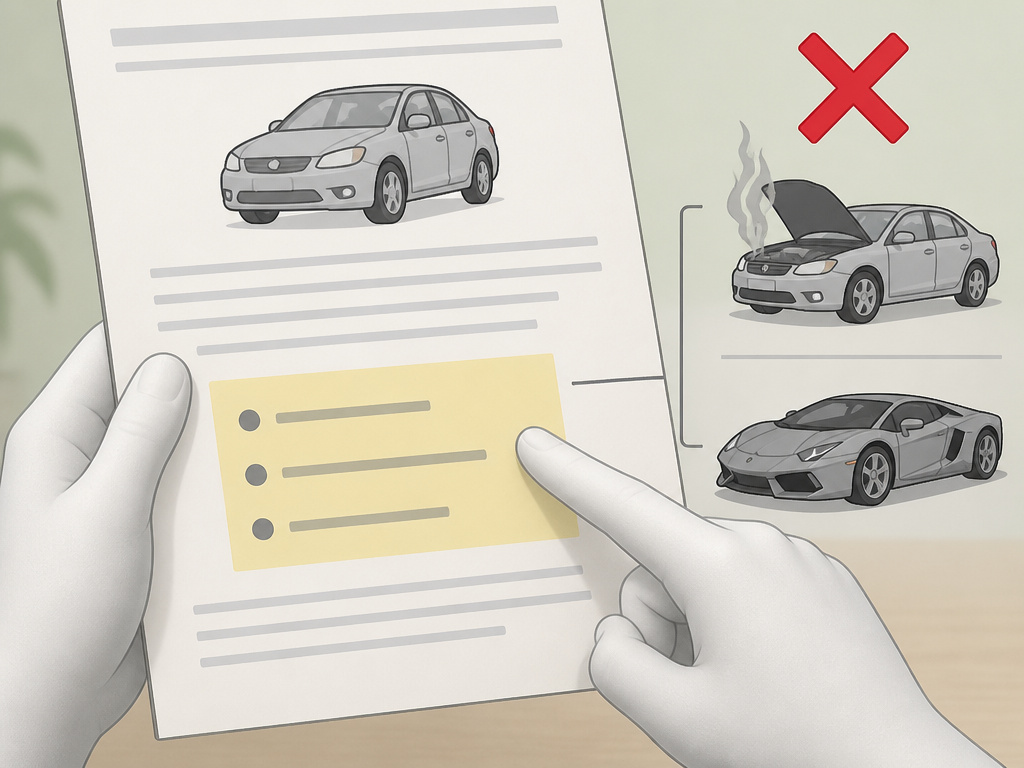 The exclusions are as important as the inclusions. Knowing them prevents a nasty shock at the counter.
- Mechanical Breakdowns: If your engine seizes or your transmission fails, rental reimbursement does not apply. This coverage is for covered accidents (collision) and specific perils (comprehensive like theft, fire, hail). You need separate mechanical breakdown insurance for those scenarios.
- Fuel, Mileage, and Deposits: No insurer covers gasoline, extra mileage fees, or the security deposit you give the rental agency. Those are always out-of-pocket.
- Additional Rental Company Insurance: The optional Collision Damage Waiver (CDW) or Liability Insurance Supplement (LIS) sold by the rental counter is not covered. Your personal auto policy’s liability coverage and physical damage coverages usually extend to rental cars, making these extras often redundant.
- Luxury or Exotic Cars: Your daily limit is a ceiling. Renting a Porsche on a $30/day allowance is a financial shortcut to a large personal bill. Insurers explicitly warn against this.
Furthermore, this coverage is not a substitute for uninsured motorist protection. If an uninsured driver hits you, your rental coverage would still apply under your own collision coverage, but the at-fault driver’s lack of insurance doesn’t change your reimbursement limits.
When Should You Add This Coverage?
 The math is personal, but the decision framework is straightforward. Consider your tolerance for risk and your daily mobility needs.
If you have a second vehicle, you might skip it. If you work from home and can manage with occasional rideshares, the potential out-of-pocket cost for a rental might be an acceptable risk. However, if you commute daily, have no backup transit, and a repair could take weeks, the coverage is cheap insurance against a major, stressful expense.
It’s a classic risk-transfer calculation. For a few dollars added to your monthly premium, you cap your exposure to rental costs after an accident. This is especially valuable if you carry a high deductible to lower your premium; the rental coverage helps manage the cash flow hit after a claim.
Compare it to other types of coverage. It’s far less critical than liability or uninsured motorist, but it can be more immediately useful than some add-ons if you’re in a collision. Review your policy’s declarations page or talk to your agent to see your current limit, many people have it and don’t know.
How This Affects Your Premiums and Claims
Adding rental reimbursement has a minimal impact on your premium, usually just a few dollars per month. It’s considered a low-risk, low-cost add-on.
The more significant financial interaction is with a claim. Using your rental reimbursement is part of a larger insurance claim. While the rental coverage itself may not trigger a rate increase, the underlying at-fault accident that necessitated it almost certainly will. Your premiums are likely to rise based on the collision claim, not the ancillary rental payout.
If your car is a total loss, the rental coverage timeline changes. Insurers typically provide a limited number of days of rental coverage after they make a total loss settlement offer. This “settlement period” is often shorter than a repair period, so ask your adjuster for the exact cutoff date.
A common question is whether using this coverage after a not-at-fault accident affects your rates. The answer is complex. The act of using the benefit shouldn’t, but some insurers consider any claim activity when calculating future risk. The surest way to manage long-term costs after any accident is to explore strategies to lower insurance.
Frequently Asked Questions
Does rental reimbursement coverage have a deductible?
No. According to Travelers, “There is no deductible applicable to extended transportation expenses coverage.” You still pay the deductible for the associated collision or comprehensive repair, but the rental benefit itself is not subject to one.
Will insurance cover a rental car if my car breaks down?
No. Rental reimbursement only applies for losses covered under your comprehensive or collision coverage. A mechanical failure is not a covered loss. You would need separate mechanical breakdown insurance or a manufacturer’s warranty to help with those costs.
Can I use my own insurance for a rental car after an accident?
Yes, and it’s often faster. If you have rental reimbursement coverage, you can use it immediately after filing a claim under your own policy. This avoids waiting for the at-fault driver’s insurer to accept liability. You are, however, bound by your own policy’s daily and maximum limits.
How long will insurance pay for my rental car?
It pays until one of three things happens: your car is repaired, you reach the maximum dollar limit of your coverage (e.g., $900), or you reach the maximum number of days specified in your policy (e.g., 30 days). The insurer will coordinate with the repair shop for an estimated timeline.
Should I buy the extra insurance from the rental car company?
Probably not. Your personal auto insurance policy’s physical damage coverages (comprehensive and collision) and liability coverage typically extend to rental cars. Purchasing the rental company’s CDW is often duplicate coverage. Always confirm with your insurer before declining.
The Bottom Line
Rental car reimbursement coverage is a straightforward product with a simple job: keep you mobile after your car is wrecked. Its value hinges entirely on your daily limit. A $30-a-day cap might only get you a basic compact in a major city, while a $70 limit provides breathing room.
For most single-car households or daily commuters, the low annual cost makes it a sensible add-on. It turns a potential financial scramble into a managed logistics problem. Check your policy’s declarations page tonight. Know your number before you need it. That way, if you ever have to file a claim, you’ll know exactly what kind of wheels you’re getting into.
