
Kia Sportage Automobiles: Essential Recalls & Owner Insights
This post contains affiliate links. As an Amazon Associate, we earn from qualifying purchases.
The Kia Sportage is a compact SUV that balances style, technology, and value, but owning one means staying on top of two specific safety recalls and understanding its precise maintenance requirements to protect its warranty. The 2023 model has a known electric oil pump fire risk, and many 2011-2018 models need a critical engine software update. Skip either, and you risk a stranded vehicle or a voided warranty claim.
That one-hour recall repair is non-negotiable. The Sportage isn’t a “set and forget” vehicle; its value proposition hinges on you following the manual to the letter, especially with fluids. This is where owners who treat it like any other crossover get into expensive trouble.
What follows: a breakdown of the two mandatory recalls, the exact specs your mechanic needs to see, a frank comparison against the Toyota RAV4 and Hyundai Tucson, and the ownership realities most reviews gloss over.
Key Takeaways
- Two critical recalls exist: a 2023 model electric oil pump fire risk (NHTSA 23V531) and a 2011-2018 model engine bearing wear software update (KSDS). Each takes about one hour to fix at a dealer.
- Using the wrong engine oil voids warranty coverage. The manual demands API SM/ILSAC GF-4 SAE 5W-20 for fuel economy, but has a temperature-based viscosity chart as a fallback.
- Maintenance records are your legal shield. The warranty explicitly denies claims if you can’t prove scheduled service was done with Kia-specified fluids.
- The Sportage trades some long-term reliability confidence for more standard features and a bolder design than the Toyota RAV4. The Hyundai Tucson is its mechanical twin but with different styling.
- Hybrid and plug-in hybrid variants exist, offering a compelling alternative to the standard gas models for urban drivers.
The Two Safety Recalls You Can’t Ignore
Every modern car has recalls, but the Sportage has two that are direct gatekeepers to safety and engine longevity. These aren’t vague customer satisfaction campaigns; they are federal safety actions with specific failure modes.
The first is NHTSA Recall 23V531 for certain 2023 Sportage models. The defect is in the electronic controller for the Idle Stop & Go (ISG) oil pump. A damaged component can overheat. The official NHTSA safety recall notice states this increases the risk of a vehicle fire. Symptoms include the ISG system failing, the vehicle entering “limp home” mode, an inability to turn off the engine, or smoke from the engine bay. If you see smoke, pull over immediately and call for a tow. The fix is an inspection and potential replacement of the electric oil pump controller, which dealers will do in about an hour at no cost.
The second is a Product Improvement Campaign for 2011-2018 Sportages with 2.4L GDI and 2.0L T-GDI engines. This isn’t a recall in the classic sense, but ignoring it is foolish. It involves installing Knock Sensor Detection System (KSDS) software into the Engine Control Unit. This software listens for vibrations indicative of excessive connecting rod bearing wear—a known failure point on these engines. As outlined in the NHTSA technical service bulletin, once the update is installed, Kia provides a 15-year/150,000-mile warranty on the engine long block for bearing damage. If the software detects an issue, the check engine light will blink and the car will limit power. Drive it like that for too long, and you’ll void that extended warranty.
Where this goes sideways: Assuming a recall notice is just paperwork. The 2023 pump issue can escalate to a thermal event. The KSDS update for older models is a free early-warning system that converts a potential $7,000 engine replacement into a covered repair. Missing either puts you at financial and physical risk.
| Recall / Campaign | Affected Models | Core Issue | Repair Time | Owner Consequence if Ignored |
|---|---|---|---|---|
| NHTSA 23V531 | 2023 Sportage | Electric oil pump controller overheats | ~1 hour | Increased fire risk; possible stranding |
| KSDS Software Update | 2011-2018 Sportage (2.4L GDI/2.0L T-GDI) | Undetected connecting rod bearing wear | ~1 hour | Engine failure not covered by extended warranty |
Engine & Maintenance: The Specs That Matter
The Sportage’s service manual isn’t a suggestion list. It’s a contract. Deviate from its fluid specifications, and you give Kia a clear reason to deny a future warranty claim. This is especially true for engine oil and fuel.
The 2016 owner’s manual is a good reference point. For the GDI engine, it specifies 4.8 liters of oil, API Service SM, ILSAC GF-4 or above. The recommended viscosity is SAE 5W-20 for optimal fuel economy. This is non-negotiable for warranty compliance in normal conditions. However, there’s a critical edge case: if 5W-20 isn’t available in your region, the manual provides a temperature-based viscosity chart to select an alternative. Using an oil not on that chart can cause engine damage.
The same precision applies elsewhere: – Automatic Transmission Fluid: Must be SP-IV specification (e.g., MICHANG ATF SP-IV). Generic “universal” ATF can ruin the transmission. – Fuel: Do not use gasoline containing more than 15% ethanol (E15) or any methanol. Kia recommends TOP TIER Detergent Gasoline to keep fuel system deposits at bay. Using “E85” in a non-flex-fuel Sportage voids the fuel system warranty. – Coolant: Must be ethylene glycol base for aluminum radiators.
The 2024 Kia Sportage service manual, like all of them, opens with a Proposition 65 warning about chemicals from exhaust and servicing. It’s a reminder: service in a ventilated area, wear gloves, and don’t idle the engine unnecessarily. This isn’t legal boilerplate; brake dust and exhaust residues are real workplace hazards.
TL;DR: The oil cap and your gas pump handle are the two most important tools for Sportage longevity. Use only what the manual explicitly approves.
Ownership Costs and Warranty Realities
The Sportage’s warranty is strong on paper: a 5-year/60,000-mile basic warranty and a 10-year/100,000-mile powertrain warranty. The catch is in the fine print. Coverage is contingent on completing all scheduled maintenance and being able to prove it with receipts.
The 2025 owner renotification letter for older models makes this brutally clear: “You should retain documents that show proper maintenance has been performed in order to establish compliance.” This means: – A logbook or folder of every service receipt. – Proof that the correct fluids (meeting exact Kia specifications) were used. – Timely completion of service intervals.
If your engine fails and you can’t produce a receipt for, say, the 45,000-mile service, Kia can legally deny the powertrain claim. This shifts the burden of proof to you, the owner. It also makes independent mechanic visits a risk unless they use OEM-specified parts and fluids and provide detailed invoices.
Beyond warranty, expect costs in line with the compact SUV segment: – Insurance premiums are typically average for the class. – Fuel economy is middling, especially for AWD models. – Repair costs after the warranty expires can be higher than a Toyota RAV4, partly due to the complexity of its turbocharged engines (T-GDI) and technology features.
How It Stacks Up Against the Competition
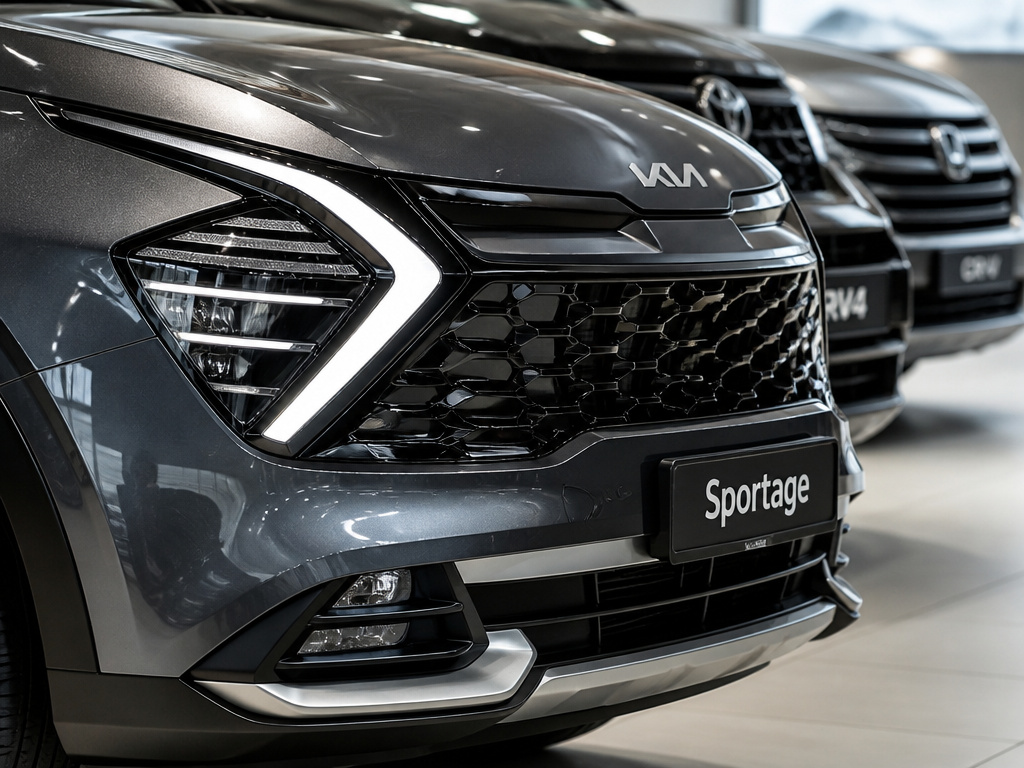 The compact SUV segment is brutally competitive. The Sportage doesn’t exist in a vacuum; it’s directly fighting the Honda CR-V, Toyota RAV4, and its corporate cousin, the Hyundai Tucson.
| Model | Sportage’s Advantage | Sportage’s Disadvantage | Best For |
|---|---|---|---|
| Toyota RAV4 | More daring interior/exterior design, often more tech as standard, better infotainment interface. | Perceived long-term reliability and resale value are lower. Hybrid system is less refined. | The buyer who prioritizes style and features over decades-long brand reputation. |
| Hyundai Tucson | Nearly identical mechanically (engines, platform). | Styling is more subjective; the Sportage often has sharper handling tuning. | Someone who wants the Sportage’s mechanics but prefers the Tucson’s aesthetic. |
| Honda CR-V | More engaging drive on curvy roads, often a stronger warranty. | Interior space and packaging genius, especially cargo utility. The CR-V’s hybrid system is superb. | The driver who values the driving experience over maximum passenger and cargo volume. |
The Sportage makes its case through design and value. You often get more for your money compared to a base Toyota RAV4. Its interior uses interesting materials and shapes that stand out against the conservative Honda CR-V. However, when you look at the growing electric SUV market, the Sportage’s gas-only base models feel like part of an older paradigm, though its hybrid and PHEV variants are credible entries.
I prefer the Sportage’s steering feel to the Hyundai Tucson—it’s just a fraction more communicative. That’s a tuning difference, not a mechanical one. For daily driving, most won’t notice, but on a backroad, the Sportage feels slightly more tied-down.
Where the Nissan Rogue leans into pure comfort and the Toyota RAV4 into rugged pretension, the Sportage splits the difference with European-inspired flair. It’s a compelling choice if you find the segment’s usual players bland. Just know the benefits of hybrid cars might lead you to spend more upfront for the Sportage Hybrid to offset its so-so gas mileage.
The Sportage Hybrid and the Electric Future
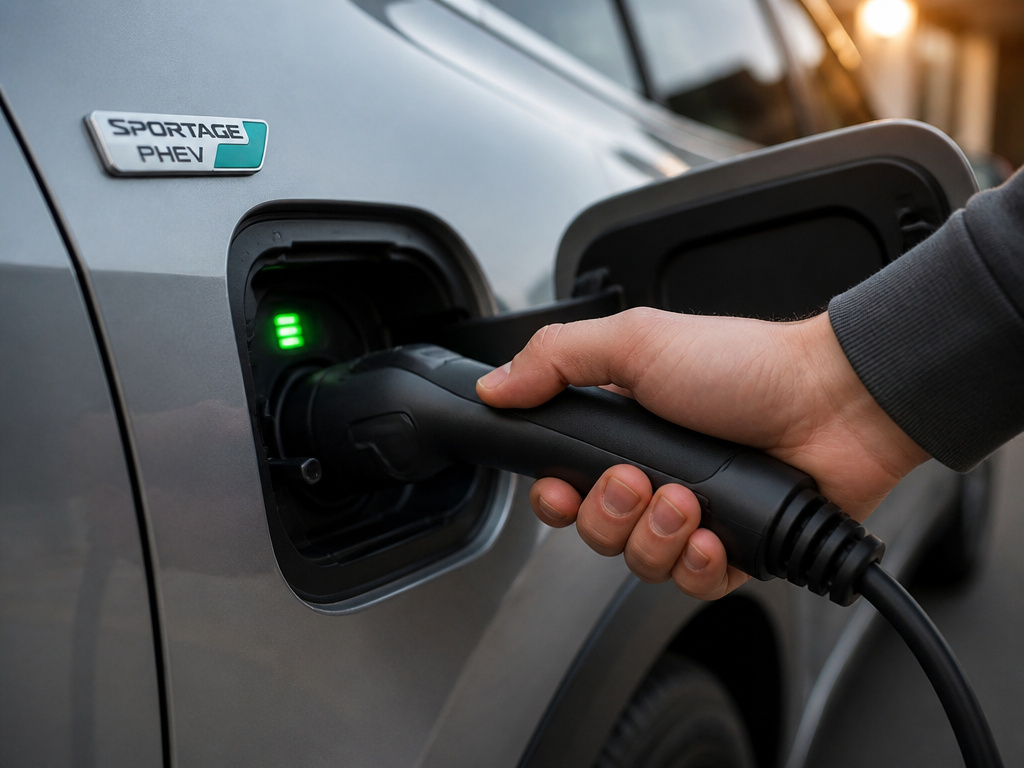 Kia offers hybrid (HEV) and plug-in hybrid (PHEV) versions of the Sportage. These are crucial for urban and suburban drivers looking to cut fuel costs. The hybrid system pairs a 1.6-liter turbo engine with an electric motor, delivering significantly better city mileage than the standard 2.5-liter engine.
The PHEV variant offers an all-electric range of about 34 miles. For commutes under that distance, you could theoretically use zero gas on weekdays. This positions the Sportage PHEV as a bridge vehicle for those curious about the rise of electric cars but not ready to commit to a full BEV. It’s also a smarter choice for many than waiting for the distant promise of the future of robotaxis.
Charging the PHEV at home on a standard 120V outlet takes several hours, so a 240V Level 2 home charger is a practical investment. The hybrid models require no plug-in behavior—they recharge the battery through regenerative braking and the engine.
Common Problems and Long-Term Reliability
Beyond the recalls, Sportage owners report a few recurring issues. These aren’t universal, but they’re frequent enough to check for: – Electrical gremlins: Infotainment screen freezes, faulty USB ports, or erratic behavior from advanced driver aids. A software update at the dealer often fixes this. – Turbocharger concerns (on T-GDI models): Early turbo failure is rare but expensive. Adhering to strict oil change intervals with full-synthetic oil is the best prevention. – Suspension noise: Clunks or squeaks from the front struts, especially in colder climates. This is often a worn strut mount or sway bar link.
Long-term, the non-turbo 2.5-liter engine in newer models is expected to be more durable than the older 2.4L GDI and 2.0L T-GDI units. The key to reliability is militant maintenance. This isn’t a car that forgives extended oil changes or cheap parts.
If you’re considering an older, used Sportage as an affordable sports car alternative isn’t for you, but you want a cheap SUV, get a pre-purchase inspection that specifically checks for: 1. Completion of the KSDS software update. 2. Signs of oil consumption (blue smoke at startup, low oil between changes). 3. A full service history with matching receipts.
Frequently Asked Questions
Are Kia Sportages good cars?
Yes, for the right buyer. They offer excellent interior tech, bold styling, and a strong warranty. However, they demand precise, documented maintenance to avoid warranty issues and require attention to two major safety recalls. They are better as new or certified pre-owned vehicles under warranty than as high-mileage used cars without a proven history.
What is the biggest problem with the Kia Sportage?
The largest specific problem is the risk of engine failure due to connecting rod bearing wear in 2011-2018 models with the 2.4L GDI and 2.0L T-GDI engines. This is addressed by a free software update (KSDS) that provides an extended warranty. The biggest ongoing problem is owner neglect of the precise fluid specifications, which can lead to denied warranty claims.
Is the Kia Sportage as good as a Toyota RAV4?
It depends on your metrics. The Sportage often offers more features for the money and a more stylish interior. The Toyota RAV4 has a stronger reputation for bulletproof reliability and higher resale value. The RAV4 Hybrid is also more refined and efficient than the Sportage Hybrid. The Sportage is better if you prioritize design and tech; the RAV4 is better if you prioritize peace of mind and long-term cost.
Does the Kia Sportage hold its value?
Not as well as a Toyota RAV4 or Honda CR-V. Kia’s improved dramatically, but the Sportage’s depreciation curve is steeper in the first three to five years. This makes it a better value as a used purchase, provided it has a clean history and all recalls are completed.
Can the Kia Sportage tow?
The standard front-wheel-drive Sportage with the 2.5-liter engine has a maximum tow rating of 2,000 lbs. All-wheel-drive models and those with the turbocharged engine are not rated for more; they are also rated at 2,000 lbs. This is sufficient for a small trailer or jet skis, but well below the capacity of body-on-frame SUVs or trucks.
Before You Go
The Kia Sportage is a compelling package of style and technology that punches above its price. Its fatal flaw is also its defining characteristic: it requires an informed, diligent owner. You must address the recalls—both of which take about an hour. You must follow the maintenance schedule with OEM-grade fluids and keep every receipt. You must understand that its resale value won’t match a Toyota.
If you can live with those terms, and you prefer its design over the safer bets in the segment, it’s a satisfying drive. For the majority who want minimal hassle, the Toyota RAV4 or even the mechanically similar Hyundai Tucson might be less stressful long-term partners. But for the buyer who does their homework, the Sportage rewards with a lot of car for the money. Just keep that folder of receipts.
