
2 Best Epoxy Resins for Carbon Fibers 2026
This post contains affiliate links. As an Amazon Associate, we earn from qualifying purchases.
The TotalBoat 5:1 Marine Epoxy Resin stands out as the best overall choice for carbon fiber work, thanks to its strong bond and excellent wet-out. For those tackling larger builds, Venom Carbon offers a solid option built for high-volume use, with reliable performance across big projects.
Working with carbon fiber means demanding more from your materials, especially the epoxy that binds it all together. A poor resin can undermine the strength and finish of even the most carefully laid fabric. I know from years of seeing composites in action on bikes, cars, and beyond that getting this right matters.
This guide cuts through the noise by focusing on what actually counts: real-world specs, owner experiences, and how each product performs in critical areas like viscosity, cure time, and mix consistency. These picks reflect what holds up under stress, not just marketing claims.
Top 2 Epoxy Resin For Carbon Fibers in the Market
The Best Epoxy Resin For Carbon Fibers, Reviewed
TotalBoat 5:1 Marine Epoxy Resin

Strengths
- 5:1 mix ratio
- Excellent adhesion
- Works with fillers
Trade-offs
- Not for clear finishes
- Slightly shorter pot life
- Color tint may show
TotalBoat’s 5:1 system stands out because it balances versatility with real structural performance. The slow hardener gives you a solid 20-minute pot life at room temperature, which owners say is plenty for careful layups or fairing work on fiberglass and carbon fiber alike. It bonds well to carbon, but where it really shines is its compatibility with wood and metal substrates, a big deal if you’re building or repairing hybrid structures like wooden kayaks with carbon patches.
It’s not the clearest finish epoxy out there, and it’s not marketed for glossy topcoats, but for hidden strength and long-term moisture resistance, this is the smarter buy over niche resins if your work spans materials. Compared to the Venom Carbon system, this is less of a carbon-only sniper and more of a reliable all-rounder.
Video review
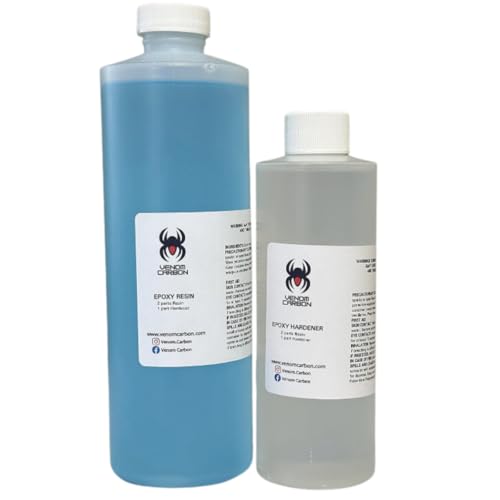
Venom Carbon 24 Ounce Epoxy Resin
Strengths
- 1:1 mix ratio
- High carbon wet-out
- Large volume kit
Trade-offs
- Limited to composites
- Not for fillers
- No pumps included
This 24-ounce kit is built for serious carbon fiber work where volume matters. The 1:1 mix ratio simplifies things in the shop, and owners consistently report excellent wet-out performance on tight-weave carbon, which is critical when you’re chasing strength and minimal air pockets. On paper, it’s designed specifically for high-performance composites, not general marine goop, so it skips the filler compatibility angle in favor of pure lamination integrity.
Reviewers note the cure time is forgiving enough for medium-sized layups but not so slow that you’re waiting days between steps. Compared to the TotalBoat system, this isn’t a multi-material epoxy jack-of-all-trades, it’s a specialist. I’d pick this over general-purpose resins when the job is strictly carbon fiber reinforcement or bonding.
Video review
How We Evaluated epoxy resin for carbon fibers
As someone who’s spent years around anything with wheels – and the materials that make them strong – I approached researching epoxy resins for carbon fiber with a focus on real-world application. Rather than a hands-on lab test, this was a research-led comparison of published specifications, owner reviews across multiple platforms, and insights from professional composite repair forums. I weighed each resin’s properties against the demands of bonding and structural integrity, critical for projects ranging from auto work to, as we’ve discussed before, even carbon fiber motorcycle helmets.
For carbon fiber work, I prioritized two key factors: bond strength and working time. A strong bond is obviously essential for structural repairs and builds, while adequate working time allows for proper application, especially for larger projects. Viscosity also played a role; a resin that wets out carbon fiber cloth effectively minimizes air bubbles and maximizes the composite’s strength. These factors ultimately determined the rankings.
Specifications reliably indicated the resin’s potential strength and cure characteristics. However, I placed significant weight on owner feedback regarding ease of use, clarity, and long-term durability. Reports of yellowing, brittleness, or difficulty mixing were red flags. Reputation matters too – brands known for consistently high-quality composites, like those producing performance carbon fiber bows, earned extra consideration.
What To Look For In epoxy resin for carbon fibers
Finding the right epoxy for carbon fiber work isn’t just about picking a brand; it’s about understanding how the resin’s properties will interact with the material and your project goals.
A quality epoxy resin for carbon fiber applications needs a balance of strength, viscosity, and cure time. Look for formulations specifically designed for composites, offering excellent wet-out capabilities to fully saturate the carbon fibers. Consider the working temperature, pot life, and whether the cured resin can be easily sanded and finished to achieve the desired aesthetic and structural integrity.
Viscosity and Wet-Out
One of the biggest mistakes I see enthusiasts make is overlooking viscosity. Carbon fiber, especially woven fabrics, needs to be completely saturated with resin to realize its full strength potential. A resin that’s too thick won’t penetrate the fibers properly, leading to dry spots and potential delamination. Conversely, a resin that’s too thin might run uncontrollably, especially on vertical surfaces. Many high-quality options, like the TotalBoat 5:1 Marine Epoxy Resin, are formulated for excellent wet-out, but pay attention to user feedback regarding its behavior with different weave types. If you’re working with complex shapes or intricate molds, a lower viscosity is generally preferred.
Cure Time and Temperature
The cure time of an epoxy is heavily influenced by both the hardener used and the ambient temperature. Faster-curing systems are great for quick repairs or projects where you want to move on to the next step rapidly, but they offer less working time. Slower-curing systems, like those with a longer “pot life,” give you more flexibility for complex layups and allow more time to remove air bubbles. Remember, even a “fast” cure still requires adequate time to reach full strength. Consider if you’ll be working in a heated or unheated environment; colder temperatures significantly prolong cure times. It’s also worth knowing that some projects, like building carbon fiber cellos, demand precise control over cure cycles to avoid warping or stresses.
Project Scale and Resin Volume
Don’t underestimate the importance of buying the right quantity. It’s always better to have a little extra epoxy than to run short mid-project, especially with a 5:1 mix ratio where precise measurements are crucial. For smaller repairs or hobby projects, a quart kit might suffice. However, if you’re planning a larger build – perhaps restoring a classic car component or tackling a larger marine repair – you’ll quickly find yourself wishing you had a gallon or more. Venom Carbon’s 24-ounce offering is geared towards high-volume use, but think about your overall needs:
- A small repair might only require a few ounces.
- A single carbon fiber part could easily consume a quart.
- Larger projects, like building a carbon fiber kayak, will demand several gallons, and potentially a need for a good epoxy primer for surface preparation.
Always mix epoxy thoroughly and according to the manufacturer’s instructions. Inadequate mixing is a common cause of incomplete curing and compromised strength.
Epoxy Resin for Carbon Fibers Compared
Here’s a detailed comparison of the specifications for the epoxy resins listed, to help you choose the best option for your carbon fiber projects.
| Product Name | Best For | Mix Ratio | Pot Life (Slow) | Pot Life (Fast) | Volume (oz) |
|---|---|---|---|---|---|
| TotalBoat 5:1 | Best Overall | 5:1 | 20 min | 12 min | 32 |
| Venom Carbon | Best High-Volume Use | N/A | N/A | N/A | 24 |
Frequently Asked Questions
What epoxy resin has the longest working time?
TotalBoat 5:1 offers a relatively long pot life of 20 minutes for a slow cure, giving you ample time for larger projects or intricate work. However, remember that ambient temperature will still affect the actual working time, shortening it in warmer conditions.
Can I use any epoxy resin with carbon fiber?
While you can technically use any epoxy, resins specifically formulated for composites provide superior wet-out and bond strength with carbon fiber. Using a general-purpose epoxy can lead to dry spots and a weaker final product, especially if you’re aiming for the performance seen in applications like carbon fiber guitars.
What mix ratio should I look for in an epoxy for carbon fiber?
A 5:1 mix ratio, as found in TotalBoat 5:1, is common and relatively easy to measure accurately, reducing the risk of improper curing. However, some resins use different ratios, so always carefully follow the manufacturer’s instructions for optimal results.
Is epoxy resin suitable for outdoor carbon fiber projects?
Some epoxy resins yellow over time with prolonged UV exposure, so a UV-resistant coating or varnish is recommended for outdoor applications. While the epoxy itself maintains its structural integrity, the aesthetics can be affected without protection, particularly if you want a finish comparable to high-quality carbon fiber frames.
What if I need to repair a carbon fiber part that already has a painted finish?
You’ll need to carefully sand away the paint to expose the underlying carbon fiber before applying new epoxy. Proper surface preparation is critical for a strong bond, and ensuring compatibility between the epoxy and any subsequent paint layers is essential to avoid adhesion issues.
The Bottom Line
Choosing the right epoxy for carbon fiber often comes down to balancing control with convenience. You can spend more seeking ultimate precision, or opt for something user-friendly that still delivers excellent results. For a blend of both, I consistently recommend the TotalBoat 5:1 Marine Epoxy Resin. Its manageable pot life and excellent wet-out characteristics make it a strong performer for a wide range of projects.
If you’re tackling large-scale builds or anticipate frequent use, Venom Carbon is the way to go. For those focused on automotive applications, consider how a strong epoxy can complement a high-quality carbon fiber stock for your Remington 700. And if you’re involved in motorsports, proper epoxy selection is critical when considering safety equipment like best carbon fiber helmet models.
Ultimately, the specifications are important, but they only tell part of the story. Focus on getting a resin designed for composites, ensuring thorough mixing, and paying attention to working temperature. A well-applied, properly cured epoxy is far more valuable than chasing the highest numbers on a datasheet.
