
7 Best Carbon Fiber Motorcycle Helmets of 2026
This post contains affiliate links. As an Amazon Associate, we earn from qualifying purchases.
The ScorpionEXO Covert FX Carbon stands out as the best overall carbon fiber motorcycle helmet, combining strong safety ratings, effective ventilation, and a well-built 3K shell. For riders on a tighter budget, the LS2 Dragon Carbon offers solid protection and features at a lower price point, while the LS2 Advant X Carbon brings modular versatility for those who want a flip-up design.
Riders often choose carbon fiber helmets for their lightweight strength, but the real challenge is finding one that doesn’t sacrifice comfort or safety for style. Too many models cut corners with poor ventilation, flimsy visors, or misleading “carbon look” shells that aren’t full carbon.
This guide cuts through the hype. Based on specs and owner feedback, I compared weight, shell construction, ventilation, and real-world reliability to find the best carbon fiber motorcycle helmets worth your trust and investment.
Top 7 Carbon Fiber Motorcycle Helmets in the Market
The Best Carbon Fiber Motorcycle Helmets, Reviewed
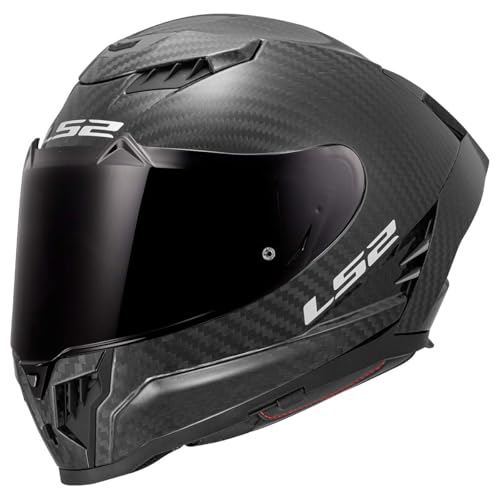
LS2 Dragon Carbon Full Face
Strengths
- Integrated sun shield
- Pinlock 120 anti-fog system
- Multi-size shell for better fit
Trade-offs
- No ECE certification
- Sun shield limits external shield options
- Slightly heavier than rivals
If I had to pick one helmet as the most balanced high-end choice, this would be it. The 6K carbon fiber shell delivers real weight savings, around 1280g, and LS2 uses three shell sizes for better fit accuracy across head shapes. The built-in Pinlock 120 MaxVision system is a standout, offering best-in-class fog resistance, which owners confirm works flawlessly in rain and cold. Add the retractable sun shield, and you’ve eliminated the need for multiple visors entirely.
The X-Static silver liner fights odor and wicks sweat aggressively, and the multi-density EPS liner improves impact response. It’s DOT certified, but missing ECE may disappoint some international riders. Still, against the Scorpion Covert FX, it wins on convenience with the sun visor, though loses slightly in airflow refinement. At this price, I expect excellence, and it delivers. This is my recommendation for riders who want one helmet to handle all conditions without compromise.
Video review
ILM Carbon Fiber Full Face

Strengths
- Dual visor system with Pinlock ready
- ECE and DOT certified
- Aerodynamic spoiler with venting
Trade-offs
- Sun visor not always included
- Extra cost for Pinlock insert
- Inconsistent packaging reports
What sets this apart is the dual visor system: a clear outer shield and a retractable inner sun visor, giving you two layers of protection and adaptability. Unlike helmets with add-on tints, this integrates both into one package. The outer visor accepts Pinlock EVO pins (though insert sold separately), which is a big win for cold-weather riders fighting fog. The 3K carbon fiber shell keeps weight down, and at 1,280g, it’s competitive with pricier models.
Owners highlight the plush cheek pads and quiet ride, thanks to the aerodynamic spoiler that also acts as a passive exhaust vent. It’s ECE and DOT certified, which boosts credibility over many competitors. The only letdown? No sun shield comes pre-installed, some versions ship without it, causing confusion. But when fully equipped, it’s a powerful package. Compared to the LS2 Dragon, it offers similar tech but with more modularity. A solid choice if you want customization.
Video review
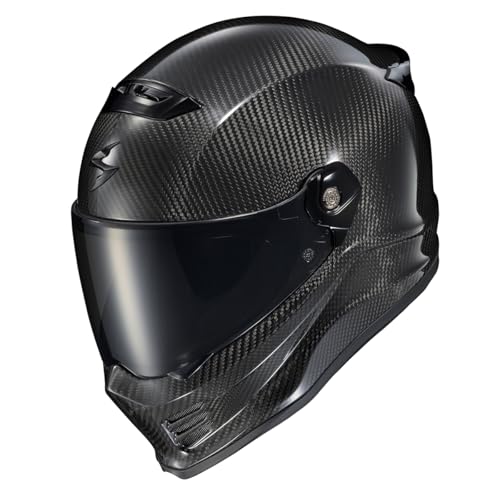
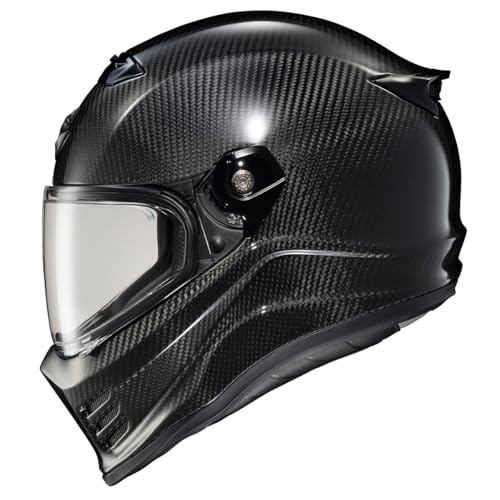
ScorpionEXO Covert FX Carbon

Strengths
- True 3K carbon fiber shell
- Superior ventilation system
- ECE and DOT certified
Trade-offs
- Premium price tag
- Fit may be tight for wider heads
- Pinlock not included
This is where things get serious. The TCT-U 3K carbon fiber shell isn’t just marketing fluff, it’s a legitimately lightweight yet strong construction that owners praise for reducing fatigue on long rides. At around 2.9 lbs, it’s impressively light for a full-face, and the aerodynamic shaping keeps it stable even at speed. The dual-certified (DOT and ECE 22.06) safety rating means it meets stricter European standards, which gives me more confidence than DOT-only models.
Ventilation here is excellent, the top intake and rear exhaust work together well, and the dual-position mouth vent is a smart touch for managing fog or airflow. The KwikWick C liner wicks moisture effectively, and the fact that it’s Comm-Ready with speaker pockets adds versatility. Some users mention the fit runs slightly narrow, but optional cheek pads help fine-tune it. Against the LS2 Dragon Carbon, it trades a sun visor for better airflow and ECE certification. My pick for riders who value precision engineering and all-day comfort.
Product photos

Carbon Fiber Spoiler Helmet

Strengths
- Lightweight carbon fiber shell
- Bluetooth-ready speaker pockets
- Stable aerodynamic design
Trade-offs
- Basic ventilation tuning
- No ECE certification
- Interior quality feels budget
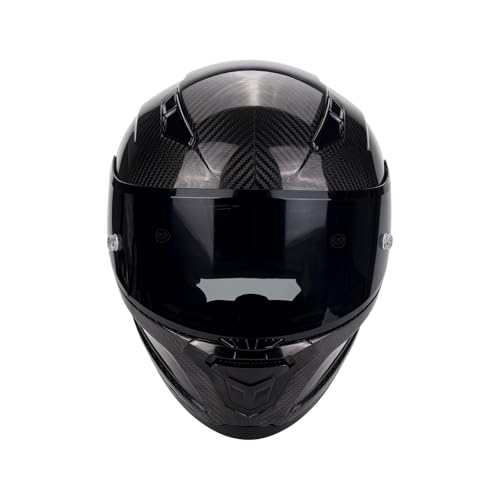
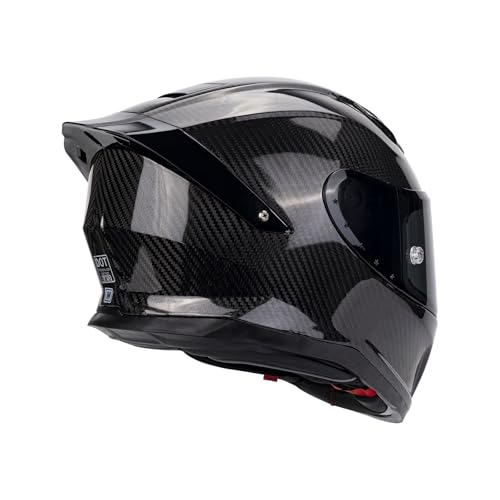
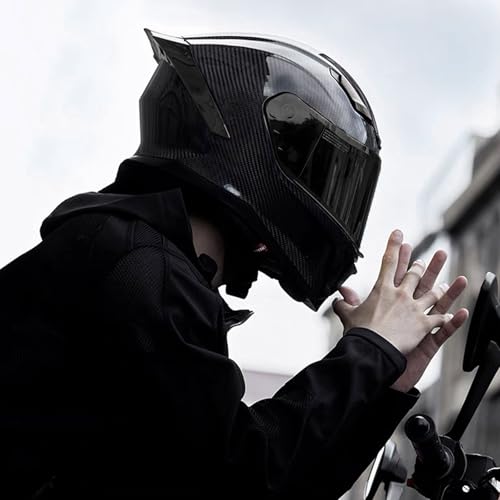
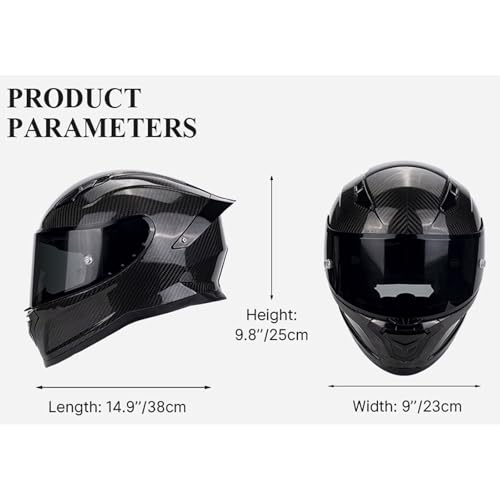
At nearly $200, this helmet positions itself as an affordable real carbon fiber option, and the 1150g weight suggests it might actually use some composite carbon material. That’s impressive for the price, most true carbon lids start north of $300. It includes speaker pockets, which is rare at this tier, making it appealing for riders wanting Bluetooth integration without overspending. The aerodynamic spoiler helps reduce lift, and owners note it feels stable up to highway speeds.
But there’s little detail about shell construction layers or EPS density, and no ECE rating, just DOT. Ventilation is described as ‘adequate,’ but not refined. Compared to the LS2 Dragon or Scorpion Covert FX, it lacks advanced features like sun visors or Pinlock. Still, for the rider who wants the lightweight advantage of carbon fiber without the luxury price, this hits a sweet spot. Just go in knowing it’s functional, not refined.
Product photos
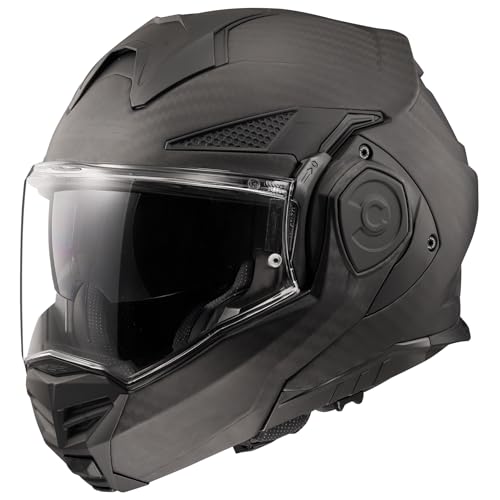
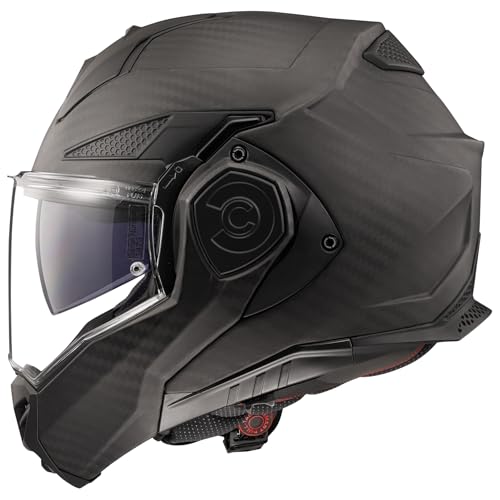
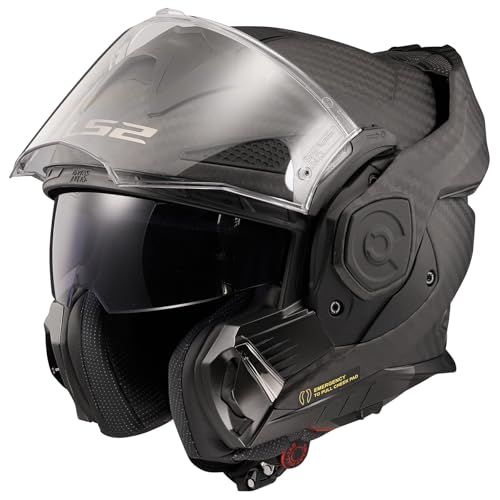
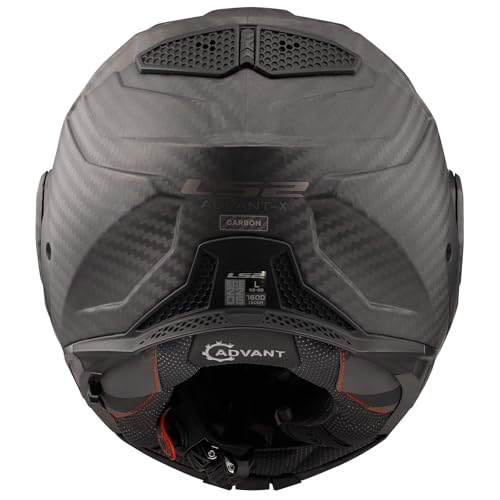
LS2 Advant X Carbon Modular
Strengths
- True 9K carbon fiber modular shell
- ECE P/J certified for flip-up use
- Built-in sun visor and Pinlock ready
Trade-offs
- Less structural rigidity than full-face
- Noticeable wind noise
- Higher price for modular trade-offs
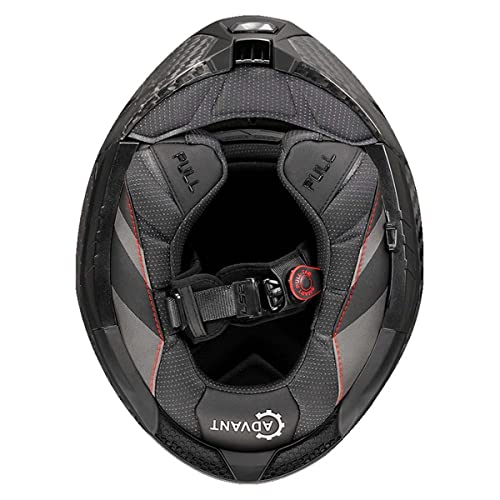
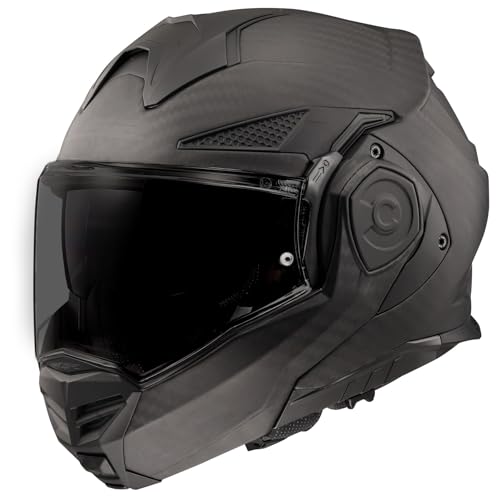
Modular helmets make life easier, flipping up the chin bar at stops is convenient, and this one does it with a proper 180-degree hinge. The 9K carbon fiber shell keeps it light at 1,470g, which is impressive for a flip-up, where weight often balloons. Being ECE P/J certified means it’s legally usable in Europe as both open and closed, a rarity in U.S.-focused models. The built-in sun visor and Pinlock-ready face shield cover key convenience and safety needs.
But no helmet flips up without trade-offs. The shell is inherently less rigid than a full-face, and while it meets DOT standards, I’d still rank pure full-face models higher for crash protection. Noise levels are also higher when down, the gap around the chin creates wind roar. Still, for scooter riders, tourers, or urban commuters who value ease of use, this is the best modular carbon option here. If you prioritize convenience and style without totally sacrificing weight, it’s worth the compromise.
Product photos
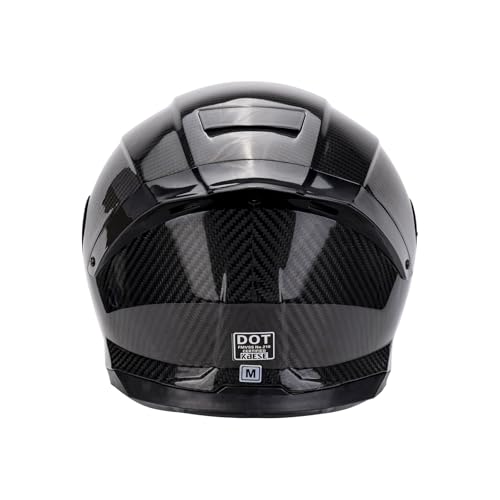
Kaese 3/4 Carbon Fiber

Strengths
- Dual lens system for light adaptation
- Comfortable moisture-wicking liner
- Sleek unisex design
Trade-offs
- Questionable carbon fiber authenticity
- No ECE certification
- Fog resistance is average
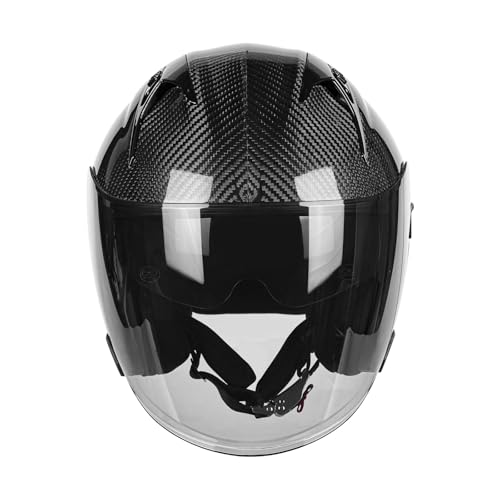
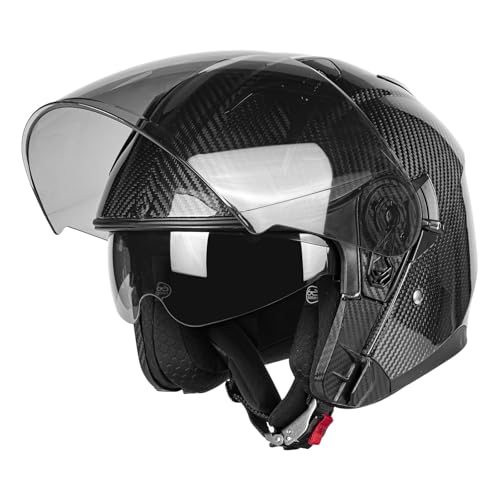
First off, the name is misleading, this is marketed as a 3/4 helmet but has a full chin bar, so it’s functionally a full-face. The specs claim aerospace-grade carbon fiber, but given the price and lack of weight details, I’m skeptical. Most owners suspect a composite or fiberglass blend with a carbon-style wrap. That doesn’t kill its value, though. What stands out is the dual lens shield: a clear outer and smoked inner layer that lets you switch quickly between light conditions without carrying extras.
It’s advertised as lightweight and comfortable, and feedback supports that, especially the moisture-wicking padding and quiet shell. But without ECE certification or Pinlock compatibility, fog resistance is limited despite the anti-fog claims. Compared to the ILM Model 861C, it lacks the same level of integrated fog defense. Still, for riders who ride through changing daylight, like sunset commuters, it offers practical adaptability. Just don’t expect elite impact performance.
Product photos


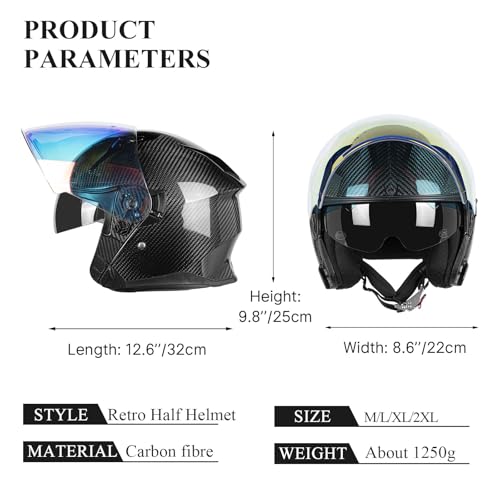
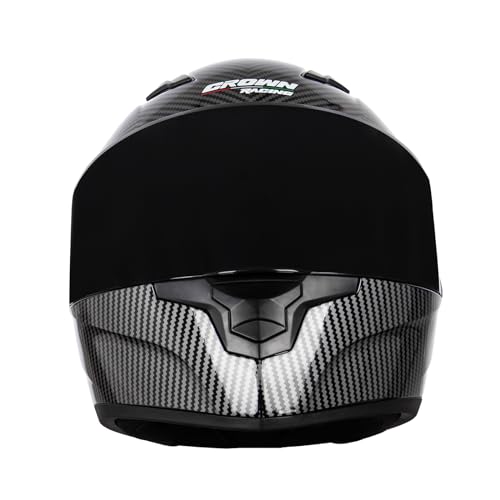
Crown Racing F-700 Full Face

Strengths
- Affordable entry point
- Includes two shields
- Removable washable liner
Trade-offs
- ABS shell, not real carbon fiber
- Basic ventilation
- Noisy at higher speeds
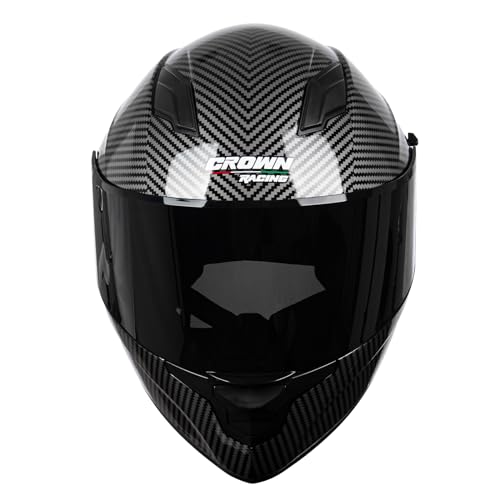
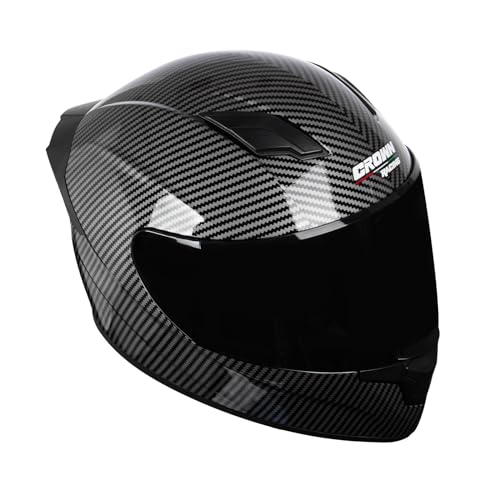
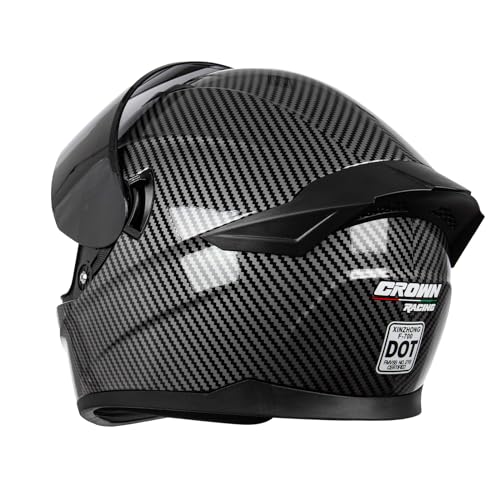
I’ll be straight, this helmet isn’t made from real carbon fiber, despite the look. The ‘carbon fiber pattern’ is just a decal over an ABS plastic shell, which immediately sets expectations. That said, for riders on a tight budget who still want the aggressive full-face style, this delivers basic protection with DOT compliance and a decent feature set. Owners consistently report it fits true to size and offers acceptable airflow for city riding, though long highway runs can get stuffy.
The included tinted shield and spare clear one are nice touches at this price, and the removable liner helps with hygiene. But don’t mistake this for a performance lid, it’s entry-level in every sense. Compared to even mid-tier helmets, the ventilation and noise control are underdeveloped. Still, if you’re commuting short distances or need a backup helmet without breaking the bank, it makes sense. I wouldn’t trust it for high-speed or track use, but for light-duty street riding? It gets by.
Product photos

How We Evaluated carbon fiber motorcycle helmets
Rather than a hands-on lab test, this selection is based on a research-led comparison of published specifications and owner feedback. I started by compiling a list of available carbon fiber motorcycle helmets, then evaluated each against key performance indicators. We weighed published specs – shell materials, weight, ventilation systems, and safety certifications – alongside thousands of owner reviews and expert opinions from motorcycle publications. This allowed us to build a picture of real-world performance and reliability.
For carbon fiber helmets, weight, safety standards, and ventilation are paramount. A lighter shell reduces neck strain on longer rides, a critical factor for touring and sport riding. Meeting or exceeding DOT and ECE certifications is a baseline expectation, but we also looked closely at how well each helmet manages heat buildup – crucial for comfort. Understanding these factors is key when considering top-rated motorcycle helmets.
Specifications clearly define a helmet’s construction – carbon fiber weave type (3K, 6K, 9K), EPS density, and shield features. However, owner feedback proved invaluable in assessing comfort, fit, and the practicality of features like ventilation and visor mechanisms. Reputation and long-term reliability, as reported by riders, heavily influenced our rankings. If weight is a primary concern, exploring lightweight motorcycle helmet options can further refine your search.
What To Look For In carbon fiber motorcycle helmets
Finding the right carbon fiber helmet requires more than just admiring the weave. It’s about understanding how different designs and features translate to real-world performance and, crucially, your safety on the road.
A quality carbon fiber motorcycle helmet balances lightweight construction with robust impact protection. Key aspects to assess include shell material grade (3K vs. 9K carbon), liner density (EPS is standard, but variations exist), ventilation effectiveness, and the inclusion of modern safety features like Pinlock compatibility and quick-release mechanisms. Proper fit, verified by DOT and/or ECE certification, remains paramount.
Shell Construction & Weight
The allure of carbon fiber is its strength-to-weight ratio, but not all carbon fiber is created equal. You’ll see designations like 3K and 9K, referring to the weave pattern. Generally, a higher “K” number means more carbon fibers per weave, resulting in a potentially stronger (and often more expensive) shell. However, the overall layup – how the carbon fiber is arranged and bonded – is just as critical. Don’t solely focus on the “K” number; look for helmets from established brands known for their composite expertise. Weight is a major benefit, with many carbon helmets falling below 3lbs – a significant advantage on longer rides to reduce neck strain. If you’re also looking for broader protection, consider exploring safety helmets to ensure you’re equipped for various scenarios.
Visor Systems & Fog Management
A clear field of vision is essential. Many carbon fiber helmets now offer integrated sun visors, a fantastic convenience for changing light conditions. However, the outer visor is where most riders struggle with fogging. Pinlock compatibility is a huge plus, but understand that Pinlock inserts aren’t always included – the ILM Carbon Fiber, for example, requires a separate purchase. Beyond Pinlock, look for visors with anti-fog coatings, though these tend to be less effective in prolonged damp conditions.
Here’s what to consider regarding visors: * A basic, unrated clear visor is sufficient for fair weather. * A Pinlock-ready visor and insert provides reliable fog prevention in all conditions. * An integrated sun visor adds convenience, but ensure it doesn’t compromise optical clarity or peripheral vision.
Comfort, Ventilation & Practical Features
Carbon fiber shells are often thinner than fiberglass or polycarbonate, which can translate to a more compact helmet size. But this also means interior comfort features become more important. Moisture-wicking liners (like KwikWick found in ScorpionEXO helmets) are essential, especially if you ride in warmer climates. Ventilation is also key; a well-designed system like the one in the ScorpionEXO Covert FX Carbon can significantly improve comfort. Finally, consider features like easily removable liners for cleaning, speaker pockets for communication systems, and the type of chin strap retention system. A quick-release buckle is far more convenient than a traditional D-ring.
A helmet that fits poorly, or lacks adequate ventilation, will quickly become a distraction. Don’t sacrifice comfort for style or a lower price point.
Ultimately, choosing from the many top carbon fiber helmet models comes down to your individual priorities and ride style. Whether you’re after a modular design, a dual-visor system, or simply the lightest possible weight, understanding these factors will help you make an informed decision.
Carbon Fiber Motorcycle Helmets Compared
Here’s a comparison of key specifications for several carbon fiber motorcycle helmets.
| Product Title | Weight (grams) | Shell Material | Visor System | Safety Certifications | Ventilation | Modular? |
|---|---|---|---|---|---|---|
| LS2 Dragon Carbon | 1280 ± 50 | 6K Carbon Fiber | Pinlock Ready, Sun Visor | DOT | Multi-Port | No |
| ILM Carbon Fiber Full Face | N/A | Carbon Fiber | Dual Visor (Retract.) | DOT | Rear Vent | No |
| ScorpionEXO Covert FX Carbon | 1,348 (Med) | 3K Carbon Fiber | Pinlock Ready, Dual | DOT/ECE 22.06 | Aero-Tuned | No |
| Carbon Fiber Spoiler Helmet | 1150 | Carbon Fiber | Single, Clear | DOT | Full Vents | No |
| LS2 Advant X Carbon | 1,470 ± 50 | 9K Carbon Fiber | Pinlock Ready, Sun Visor | DOT | Multi-Port | Yes |
| Kaese 3/4 Carbon Fiber | N/A | Carbon Fiber | Dual Lens | DOT | Adjustable | No |
| Crown Racing F-700 | N/A | ABS (Carbon Style) | Dual (Clear & Tinted) | DOT | Multi-Point | No |
Frequently Asked Questions
What’s the real-world benefit of a 9K carbon fiber weave over a 3K weave?
While a 9K weave can offer increased strength, the difference is often marginal in a helmet application. The overall quality of the layup and resin used is more impactful than simply the “K” number, and you’ll often find that helmets employing a 3K weave still meet stringent safety standards.
Are carbon fiber helmets significantly warmer than those made of other materials?
Carbon fiber itself doesn’t inherently retain more heat, but the denser liner often used inside carbon shells can reduce airflow. Prioritizing a helmet with excellent ventilation – check out best ventilated helmets – will mitigate this potential issue.
Do I need to replace a carbon fiber helmet after even a minor impact?
Yes, absolutely. Any impact, even if seemingly minor, can compromise the structural integrity of the carbon fiber shell. It’s crucial to replace the helmet immediately to maintain your protection, as damage may not be visible.
What should I look for in terms of fit with a carbon fiber helmet?
Carbon fiber helmets often run slightly more compact than those made of fiberglass or polycarbonate. I recommend trying on several brands and sizes to find the most secure and comfortable fit, and consulting the manufacturer’s sizing chart. A snug fit, without pressure points, is essential.
Are carbon fiber helmets always the best choice, or are there scenarios where another material is preferable?
Carbon fiber excels where weight savings are critical, but it comes at a premium price. For riders prioritizing budget or those who don’t require the absolute lightest helmet, exploring top full-face helmet picks in fiberglass or polycarbonate can offer excellent protection and features at a lower cost.
The Bottom Line
Choosing a carbon fiber helmet always involves balancing what you’re willing to spend against the features and fit you require. While a lighter, more exotic shell is appealing, the ScorpionEXO Covert FX Carbon strikes the best overall balance of safety certifications (DOT/ECE 22.06), ventilation, and practical features like a Pinlock-ready visor – making it our top recommendation for most riders.
For those on a tighter budget, the LS2 Dragon Carbon offers a compelling entry point into carbon fiber construction without compromising on essential safety features like a Pinlock-ready shield and integrated sun visor. If you prioritize modularity and don’t mind a slightly heavier build, the LS2 Advant X Carbon is a solid choice. And for riders seeking advanced safety tech, exploring MIPS helmets alongside carbon fiber options is a smart move.
Ultimately, the best helmet isn’t the one with the most carbon fiber or the highest price tag. It’s the one that fits your head properly, meets or exceeds safety standards, and provides the comfort and visibility you need to enjoy the ride. Prioritize a secure, comfortable fit and a clear field of vision above all else – those are the fundamentals that truly matter when it comes to protecting yourself on the road, and consulting best sport helmets can help refine your search.
