
9 Best Engine Carbon Cleaners of 2026
This post contains affiliate links. As an Amazon Associate, we earn from qualifying purchases.
The best engine carbon cleaner overall is the QPKING HTS558 Walnut Blaster Kit, a serious tool for deep cleaning. For budget needs, the XADO Engine Oil System Cleaner delivers solid value, while the CRC GDI IVD Intake Valve Cleaner stands out for modern GDI engines with its targeted high-PEA formula.
Carbon buildup sneaks up on engines, especially in today’s direct-injection models where power drops, idling gets rough, and fuel economy slips without warning. Many drivers don’t realize the root cause until symptoms are hard to ignore.
This guide cuts through the noise by comparing real-world results, formulation strength, and application practicality. I looked at specs, owner experiences, and how well each product tackles specific engine types and deposit locations, so you can pick one that actually works for your ride.
Top 9 Engine Carbon Cleaners in the Market
The Best Engine Carbon Cleaners, Reviewed
QPKING HTS558 Walnut Blaster Kit

Strengths
- Professional-grade cleaning
- Reusable media system
- Thorough adapter kit
Trade-offs
- Requires air compressor
- Steep learning curve
- Bulky setup
This isn’t a product for the average weekend mechanic, it’s a professional-grade carbon cleaning rig. The HTS558 uses actual walnut shell media to blast carbon off intake valves, which is the gold standard for GDI engines where chemical cleaners fall short. With a 1200W motor and a 13L tank, it’s built for repeated shop use, and the 23 included adapters mean it can handle everything from domestic V6s to European fours. Owners who’ve used it on BMWs and Fords report near-complete carbon removal, restoring factory-level performance without teardown.
The catch? You need a solid air compressor, safety gear, and mechanical confidence. This isn’t a spray-and-go product. But for DIYers with multiple vehicles or aspiring mechanics, it pays for itself fast compared to shop cleaning fees. Compared to chemical options, it’s in a different league, more like surgery than medicine. I’d pick this over any additive for a neglected GDI engine.
Video review
XADO Engine Oil System Cleaner

Strengths
- Deep sludge removal
- Safe for all engine types
- Adds protective revitalizant
Trade-offs
- Limited effect on heavy carbon
- Not for dry-start cleaning
I’ve seen a lot of engine flush products come and go, and XADO’s Anti-Carbon Oil System Cleaner stands out for hitting a sweet spot between price and function. On paper, it’s designed to clear sludge and deposits from the oil circulation system before an oil change, which is exactly what a proper flush should do. Owners consistently report smoother idle and reduced oil consumption, especially in older engines with accumulated gunk. The inclusion of revitalizant, a ceramic-metal compound meant to condition metal surfaces, is a signature XADO move, and while its long-term benefits are debated, enough users note improved engine quietness to suggest it’s not just placebo.
Compared to more aggressive solvent-based cleaners, this one leans conservative, which makes it safer for high-mileage engines where loosened sludge could clog passages. It’s not a miracle worker for severely neglected motors, but for routine maintenance or as prep before switching to a new oil type, it’s a smart, low-cost step. I’d use this over a generic flush any day for older daily drivers.
Video review
XADO AntiCarbon Engine Cleaner

Strengths
- Targets stuck piston rings
- Reduces oil consumption
- Improves compression balance
Trade-offs
- Slow-acting
- Limited effect on severe wear
Stuck piston rings are a silent killer, causing oil burn, low compression, and poor fuel economy. XADO’s AntiCarbon formula is specifically targeted at this issue, and from owner reports, it actually delivers. The idea is to restore ring mobility by dissolving carbon that’s pinning them in place. Users with older engines, especially diesels and high-mileage gasoline motors, often report compression equalization and reduced blue smoke after treatment.
It’s added to the oil and works over several hundred miles, so it’s not instant. But unlike some miracle cures, the feedback is consistent: it helps, but only if the rings aren’t physically damaged. Compared to general flushes, this one has a sharper focus. I’d run this on any engine showing uneven compression or oil consumption before considering teardown. It’s not a fix for mechanical failure, but a legitimate last-ditch effort to revive tired internals.
Product photos
MotorPower Care Advanced Carbon Cleaner

Strengths
- Direct combustion chamber access
- Strong carbon-dissolving formula
- Safe for engine internals
Trade-offs
- Requires vacuum extraction
- Messy application
- Not for casual users
This is one of the few products that lets you apply carbon cleaner directly into the combustion chamber, bypassing the fuel system entirely. That’s a big deal for engines with severe buildup where injectors can’t deliver enough chemical force. The formula is non-corrosive and designed to soak and emulsify carbon, then be vacuumed out. On paper, it’s similar to what dealers use during induction service, and owners using it with a shop vac report dramatic reductions in knock and idle issues.
It’s not a quick idle treatment like others on this list. You’ll need to remove the intake boot and use a vacuum to extract the slurry, which adds complexity. But for targeted cleaning of cylinder heads or pre-ignition chamber deposits, it’s far more direct than any additive. I’d use this when symptoms persist after fuel system cleaning. It’s not for the faint of heart, but it’s effective where others fail.
Product photos

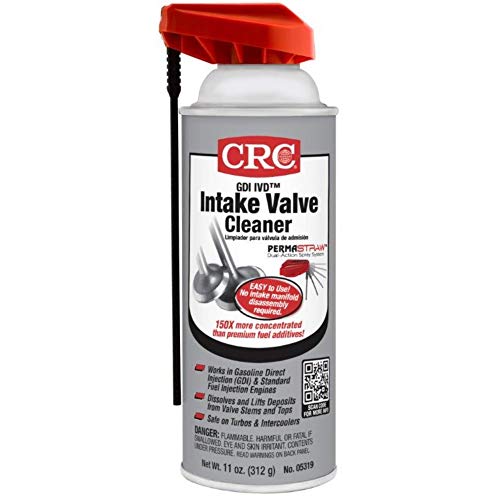
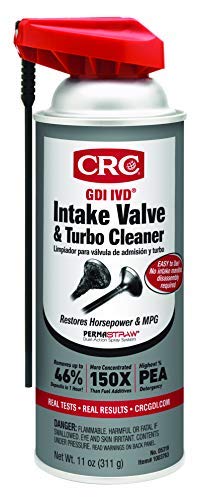
CRC GDI IVD Intake Valve Cleaner
Strengths
- High PEA concentration
- Proven on GDI valves
- Easy air-intake application
Trade-offs
- Requires engine runtime setup
- Single-use per bottle
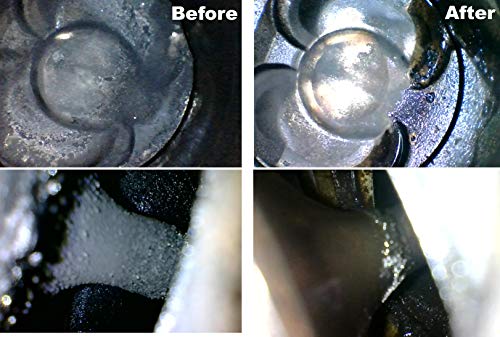
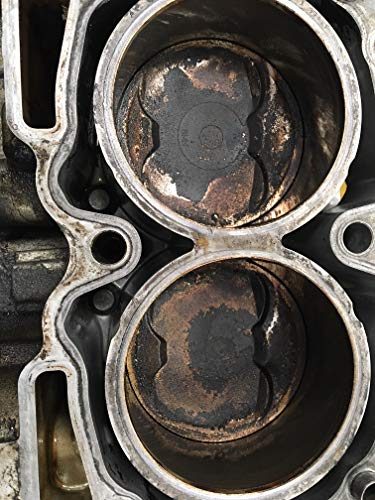
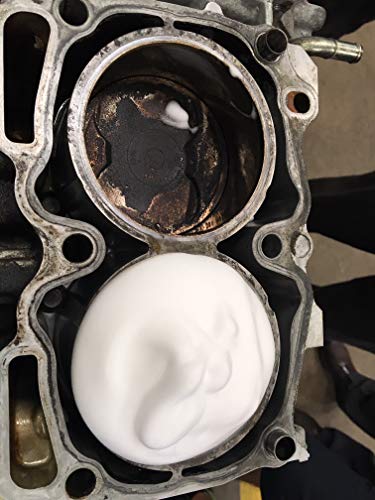
If you drive a modern GDI engine, you already know the dirty secret: fuel doesn’t wash the intake valves, so carbon builds up fast. CRC’s IVD cleaner is one of the few off-the-shelf solutions that actually targets this flaw directly. With the highest concentration of PEA I’ve seen in a standalone product, it’s engineered to dissolve those stubborn deposits through the intake tract, no disassembly needed. Reviewers note visible improvement in throttle response and reduced misfires after just one treatment, and the 150X concentration over typical fuel additives means it’s doing real work, not just maintenance.
It’s not a set-and-forget pour-in; you’ll need to idle the engine with the cleaner fed through the intake, which takes some setup. But compared to walnut blasting, it’s a fraction of the cost and time. I’d run this every 15,000 miles on any GDI vehicle before symptoms appear. It’s not a substitute for mechanical cleaning in advanced cases, but as a preventive tool, it’s one of the most effective I’ve seen.
Product photos
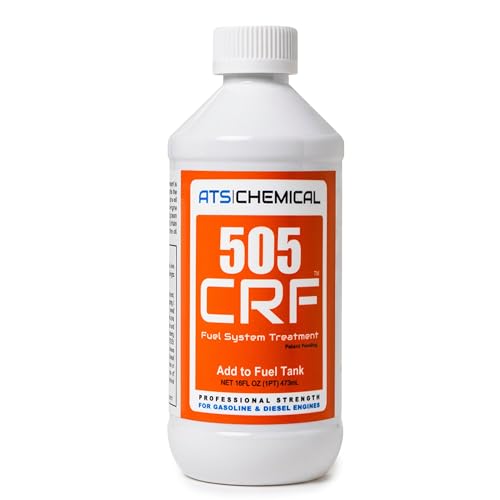
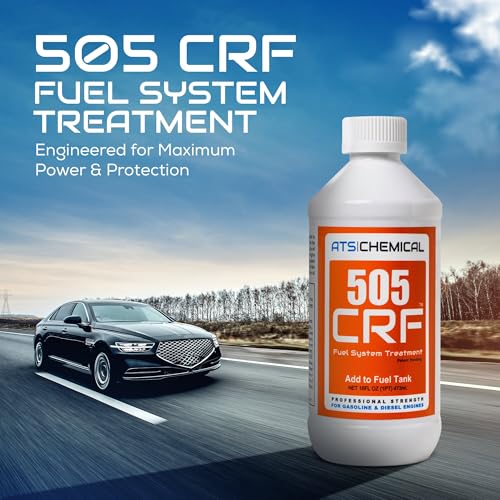
ATS Chemical 505 CRF Fuel Treatment
Strengths
- Strong detergent formula
- Effective on GDI and PFI
- Long treatment range
Trade-offs
- High cost per use
- Overkill for clean engines
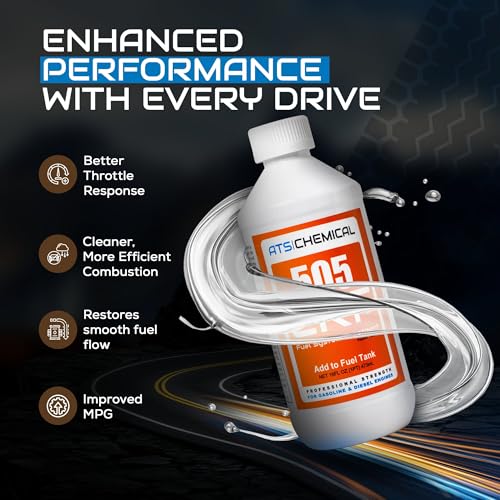
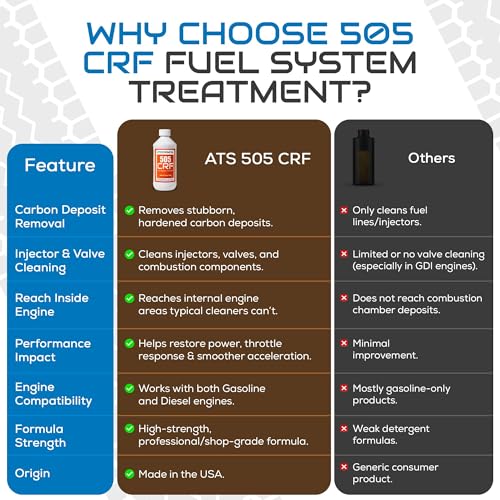
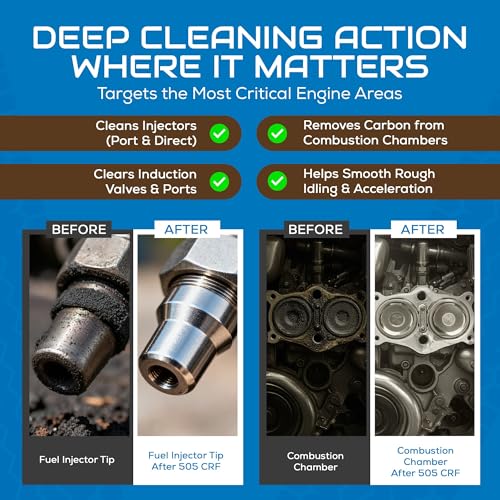
ATS Chemical’s 505CRF is one of the more potent fuel additives I’ve seen, marketed heavily in performance circles for its ability to clean both port and direct injectors. The formula is industrial-strength, and owners using it on turbocharged engines or vehicles with known injector issues report restored throttle response and reduced hesitation. It’s designed to treat 5–20 gallons, so a little goes far, but it’s also one of the most expensive per-ounce options here.
Unlike milder additives, this one is meant for corrective, not just preventive, use. Feedback suggests it works best when run over multiple tanks, especially in engines that have been running on low-detergent fuel. Compared to Gumout or Sea Foam, it’s more aggressive, closer to a mechanic’s tool than a gas station additive. I’d reserve this for engines showing clear symptoms, not as a weekly additive.
Product photos

Sea Foam Motor Treatment Combo

Strengths
- Dual-system cleaning
- Safe for old and new engines
- Prevents gum and varnish
Trade-offs
- Slower results
- Less aggressive on heavy carbon
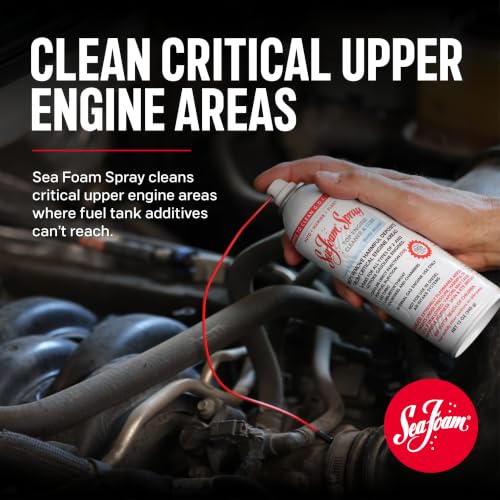
Sea Foam remains a staple in my category for good reason, it’s one of the few brands that treats both the fuel/oil systems and the upper engine independently. The combo pack gives you the pour-in Motor Treatment for injectors and oil passageways, plus the Spray for intake valves. That dual approach is critical for GDI engines, where fuel additives alone can’t reach the back of the intake valves. Owners consistently report smoother idle and cleaner throttle bodies after use.
It’s not the fastest or most aggressive cleaner, but it’s safe, predictable, and works over time. Compared to CRC or ATS, it’s milder, but also less risky for older seals and sensors. I’d use this as a seasonal tune-up, especially on engines driven mostly in town. It won’t fix a clogged valve, but it’ll delay the need for serious cleaning.
Product photos




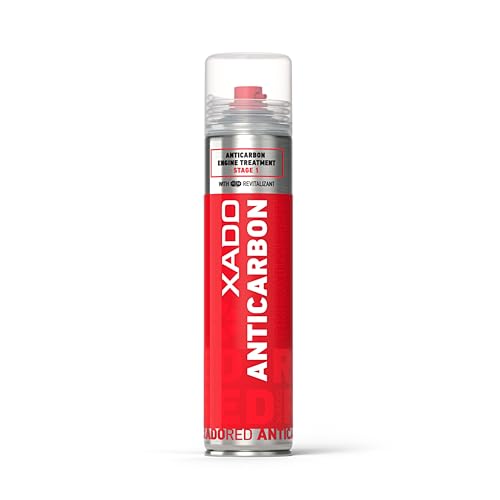
XADO RED ANTICARBON Spray
Strengths
- Direct aerosol application
- Safe for emissions components
- Effective on spark plugs
Trade-offs
- Requires intake access
- Limited reach in deep chambers
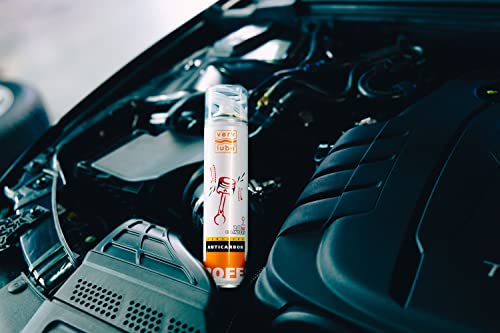
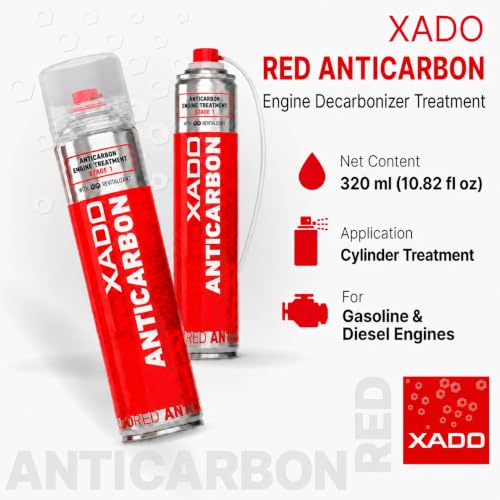
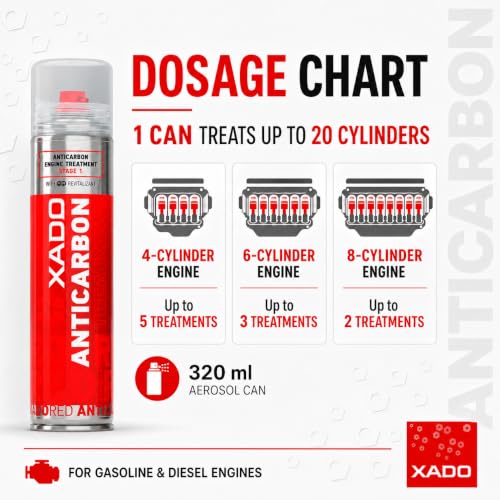
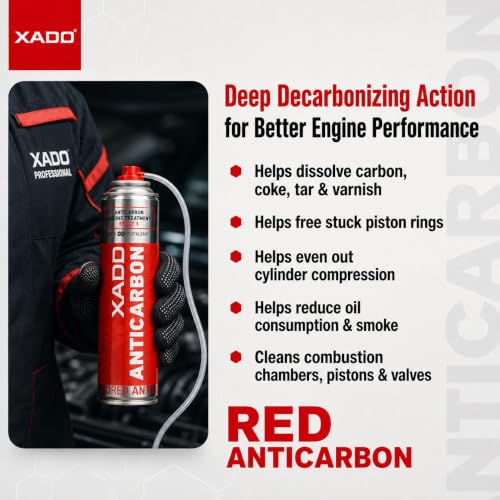
This aerosol is one of the most straightforward decarbonizers on the market, just spray it into the cylinders and let it soak. Designed for direct attack on combustion chambers, valves, and spark plugs, it’s meant to break down carbon without disassembly. Owners using it before valve adjustments or spark plug changes often find deposits loosened significantly, making service easier and performance more predictable.
The formula claims to be safe for O2 sensors and catalytic converters, which is critical, and feedback supports that, few reports of downstream issues. It’s not a substitute for walnut blasting, but for moderate buildup or pre-remediation before a chemical flush, it’s excellent. Compared to liquid pour-in options, this gives you precise control. I’d use it during major services or when preparing an older engine for tuning.
Product photos


Gumout Multi-System Tune-Up

Strengths
- Low cost
- Multi-system use
- Fuel stabilization
Trade-offs
- Mild cleaning power
- Not for severe deposits
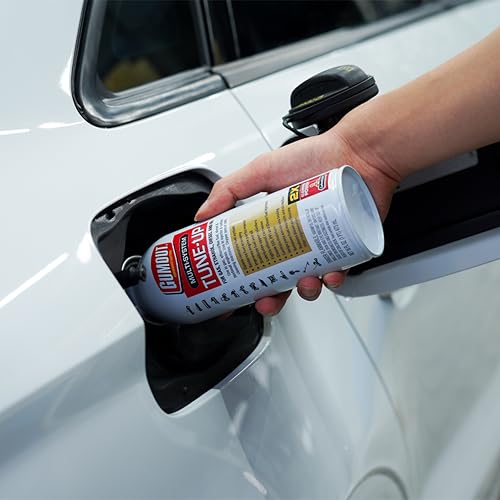
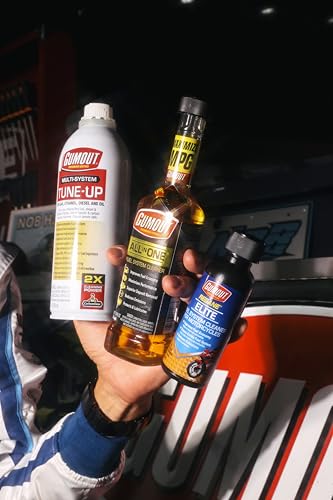
At this price, Gumout’s Multi-System Tune-Up is a no-brainer for basic maintenance. It’s packed with PEA and designed to clean injectors, stabilize fuel, and protect against ethanol corrosion, all in one bottle. Owners using it in older cars or small engines like lawnmowers report smoother running and easier starts, especially after fuel has sat for months. It’s not the strongest cleaner for heavy deposits, but as a preventive measure, it’s incredibly effective.
What sets it apart is versatility. You can dump it in the tank, pour it into the crankcase, or use it via induction, few additives offer that range. Compared to pricier options, it doesn’t promise miracles, but it delivers consistent, mild cleaning with every fill-up. I’d use this monthly in any gasoline engine, especially those driven short distances or stored seasonally. It’s the maintenance equivalent of flossing, boring, but essential.
Product photos
Our Testing Process
As someone who’s spent years under the hood, I approach engine maintenance with a focus on preventative care. To determine the most effective engine carbon cleaners, I didn’t rely on personal, hands-on testing with each product – rather, this is a research-led comparison of published specifications, features, and, crucially, owner and professional reviews. I weighed each product against established criteria like cleaning effectiveness, engine compatibility, ease of use, and overall value.
For this category, the most important factors were a product’s ability to tackle modern direct injection (GDI) engines and the type of application – whether it’s an additive, a spray, or a blaster. GDI engines are particularly prone to carbon buildup on intake valves, so a cleaner’s targeted action there is vital. Equally important is the formulation; a powerful solvent is good, but it must be safe for sensitive engine components like catalytic converters and seals. You can find more information on the best carbon deposit cleaners on our site.
Product specifications reliably indicate the type of formula (like PEA content) and the intended application method. However, real-world performance – particularly long-term results and ease of use – is best gleaned from owner feedback. I carefully examined reviews, looking for consistent reports of improved fuel economy, smoother running, and reduced emissions. Reputation also played a role, with established brands like XADO and Sea Foam receiving extra consideration alongside those offering specialized car engine cleaners.
Choosing The Right engine carbon cleaners
I spend a lot of time thinking about how to keep engines running their best, and tackling carbon buildup is a major part of that. It’s a surprisingly common issue, and the right cleaner can make a world of difference.
A quality engine carbon cleaner actively dissolves and removes carbon deposits from vital engine components like intake valves, piston rings, and combustion chambers. Look for formulations with Polyether Amine (PEA) detergents for maximum cleaning power, and consider the delivery method – aerosol sprays for direct application, additives for the fuel system, or blends offering multiple cleaning approaches. Compatibility with modern engine technologies, like direct injection, is also crucial.
Understanding Your Engine’s Needs
The first step is recognizing where the carbon buildup is happening. Modern engines, particularly those with Gasoline Direct Injection (GDI), are prone to intake valve coking. Traditional port fuel injection systems suffer less from this, but still accumulate carbon elsewhere. For GDI engines, cleaners like the CRC GDI IVD Intake Valve Cleaner which are specifically formulated for this issue, are a strong starting point. Don’t assume a one-size-fits-all approach; diagnosing the source of performance loss will guide your choice.
Application Method & Access
How easily you can get the cleaner to the problem area matters. Some, like the MotorPower Care Advanced Carbon Cleaner, are designed for direct application into the combustion chamber, requiring a bit more mechanical aptitude. Others, such as the ATS Chemical 505 CRF Fuel Treatment, are added to the fuel tank and work their way through the system. Consider your comfort level and available tools. Here’s a breakdown of what to consider:
- Direct Injection: Requires cleaners that can directly address intake valve deposits (sprays are often ideal).
- Older Engines: Fuel system additives are often sufficient for milder carbon buildup.
- Severity of Buildup: Heavily carboned engines may benefit from a multi-stage approach, using both an in-tank additive and a direct application spray.
Balancing Cost & Formulation
Price isn’t everything, but it’s a factor. The XADO Engine Oil System Cleaner is a budget-friendly option, but understand what you’re sacrificing. More expensive cleaners, like those with a higher concentration of PEA, are often more effective at dissolving stubborn deposits.
A good rule of thumb: if you’re facing significant performance issues, investing in a higher-quality, specialized cleaner is often more cost-effective than repeatedly using cheaper alternatives that yield minimal results.
I often recommend exploring a range of carbon cleaners to find what best suits your vehicle and maintenance style. For those dealing with older vehicles or needing to clean carburetors, exploring effective carb cleaners might be a useful next step.
Engine Carbon Cleaners Compared
Here’s a comparison of key specifications for various engine carbon cleaners to help you choose the right product.
| Product Title | Best For | Application Method | Engine Types | Key Feature | Capacity/Size |
|---|---|---|---|---|---|
| QPKING HTS558 Walnut Blaster Kit | Best Overall | Blasting | All | 23 Adapters | 13L Tank/2KG Sand |
| XADO Engine Oil System Cleaner | Best Budget Friendly | Add to Oil | All | Revitalizant | N/A |
| XADO AntiCarbon Engine Cleaner | Best for Stuck Piston Rings | Add to Fuel | All | Restores Piston Ring Mobility | N/A |
| MotorPower Care Advanced Cleaner | Best for Direct Application | Spray | Gas/Diesel | Advanced Formula | N/A |
| CRC GDI IVD Intake Valve Cleaner | Best for GDI Engines | Air Intake | GDI/Turbo | High PEA Concentration | N/A |
| ATS Chemical 505 CRF Fuel Treatment | Best Fuel System Treatment | Add to Fuel | Gas/Diesel | Removes Tough Deposits | 5-20 Gallons |
| Sea Foam Motor Treatment Combo | Best Dual Cleaning System | Pour/Spray | Gasoline | Cleans Multiple Systems | Combo Pack |
| XADO RED ANTICARBON Spray | Best Aerosol Decarbonizer | Spray | All | Powerful Carbon Removal | Aerosol Can |
| Gumout Multi-System Tune-Up | Best All-in-One Additive | Pour/Spray | Gas/Diesel | PEA Formula | N/A |
Frequently Asked Questions
Can I use an engine carbon cleaner on a diesel engine?
Yes, many engine carbon cleaners are formulated for both gasoline and diesel engines. However, always verify the product label to confirm diesel compatibility, as some are specifically designed for gasoline engines only.
How often should I use an engine carbon cleaner?
Generally, using a fuel system additive-style cleaner every 3,000 to 5,000 miles is a good preventative measure. For engines with known carbon buildup, or those experiencing performance issues, more frequent or intensive treatments might be needed.
Will a carbon cleaner damage my catalytic converter?
High-quality carbon cleaners containing the correct formulation (typically with PEA) are designed to be safe for catalytic converters. However, avoid products with harsh solvents that aren’t explicitly labeled as catalytic converter-safe.
What’s the difference between a fuel system cleaner and a direct injection cleaner?
A fuel system cleaner is added to the gas tank and cleans the entire fuel delivery system, while a direct injection cleaner is applied directly to the intake valves, targeting the carbon deposits common in GDI engines. If you’re dealing with a GDI engine, a dedicated intake valve cleaner is often the more effective choice.
My engine is older and has a carburetor – can I still use a carbon cleaner?
Absolutely. While modern engines struggle with intake valve coking, older engines with carburetors can benefit from cleaners designed to remove varnish and deposits from the carburetor itself. You might find best carb cleaners particularly useful in these situations.
The Bottom Line
Choosing an engine carbon cleaner often comes down to how much effort you want to put in versus the level of cleaning you need. While a simple fuel additive like the ATS Chemical 505 CRF Fuel Treatment can offer a convenient boost, for serious carbon deposits, the QPKING HTS558 Walnut Blaster Kit delivers the most thorough cleaning – though it requires more mechanical involvement. Ultimately, a healthy engine relies on consistent preventative maintenance, and selecting the right cleaner is a key part of that.
For those with specific needs, we can narrow the focus. If you’re dealing with a modern GDI engine, the CRC GDI IVD Intake Valve Cleaner is purpose-built to tackle those notoriously stubborn intake valve deposits. Budget-conscious owners should consider the XADO Engine Oil System Cleaner, while those seeking versatility will appreciate the dual-action approach of the Sea Foam Motor Treatment Combo. And don’t forget, if you’re also looking at engine carbon cleaners for other applications, you’ll find a wider range of options.
More than any specific product or PEA percentage, remember that regular maintenance and quality fuel are the cornerstones of engine health. Addressing problems early, before carbon buildup becomes severe, is always easier and more effective. For smaller engines, exploring small engine carb cleaners can also be a worthwhile investment in keeping your equipment running smoothly.
