
9 Best Electric Skateboards of 2026
This post contains affiliate links. As an Amazon Associate, we earn from qualifying purchases.
The MEEPO Bamboo Series Off-Road stands out as the best overall electric skateboard, combining serious power and rugged build for all-terrain use, while the Dnaskate V20 120mm Cloud Wheel is a solid budget-friendly pick that doesn’t skimp on range or ride quality. For those who want maximum versatility, the MEEPO Mini5 MINI3 Max Edge Flow delivers high speed and stability in one refined package.
Choosing the right electric skateboard means cutting through marketing noise to find what actually performs in real conditions. Too many riders end up frustrated by short range, weak motors, or flimsy decks that can’t handle daily use.
This guide cuts to the core of what matters, based on specs, owner feedback, and brand reputation, so you can pick a board that matches your commute, riding style, and terrain with confidence.
Top 9 Electric Skateboards in the Market
The Best Electric Skateboards, Reviewed
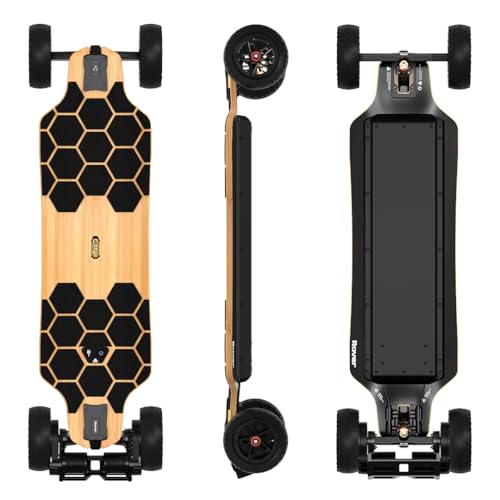
MEEPO Bamboo Series Off-Road Skateboard
Strengths
- True off-road capability
- Pneumatic 8″ tires
- FOC precision control
Trade-offs
- Very heavy
- Bulky for transport
- Premium price
This is the closest thing to a true mountain e-board in the lineup. Dual 1800W motors and 8-inch pneumatic tires let it tackle gravel, grass, and uneven trails better than any other here. The carbon fiber-reinforced 42-inch deck adds rigidity over bumps, and the JK FOC-36B ESC ensures buttery-smooth throttle and braking, a major upgrade over basic ESC systems found on budget models.
Owners consistently report confidence on steep 30% inclines and dampened vibration from the air-filled tires. The removable 10Ah battery offers real-world range beyond 20 miles, and the J6S color remote gives full data visibility. While it’s overkill for sidewalk cruising, for riders splitting time between pavement and trail, this is the most versatile. My pick for “best overall”, it simply does more.
Video review
MEEPO Mini5 MINI3 Max Edge Flow

Strengths
- Blistering 32 mph top speed
- Wide, stable deck
- Samsung 50S battery
Trade-offs
- Heavy at 23.7 lbs
- Expensive
- Steep learning curve
If raw speed and aggressive carving are your thing, this board delivers. With dual 2519W motors, it can hit up to 32 mph, among the fastest consumer boards available, and maintains stability even during hard turns, thanks to the wide 9.5-inch deck and swallow-tail design. The 24-mile range is respectable for such high output, powered by a Samsung 50S battery that owners praise for longevity.
It’s also one of the heaviest in its class at 23.7 lbs, so portability takes a hit. But the fiberglass/bamboo/maple construction feels tough, and the 105mm wheels paired with DKP trucks handle city cracks and slight inclines well. Compared to the Campus V3, this is in another performance league, I’d recommend it for experienced riders who want a pocket rocket with pro-level thrills.
Video review
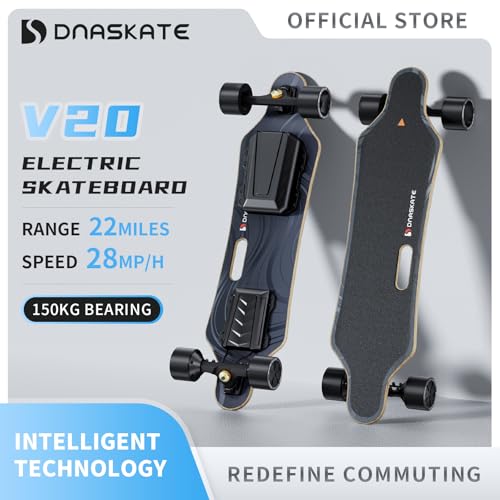
Dnaskate V20 90mm Pu Wheel

Strengths
- 22-mile long range
- 28 mph top speed
- LCD remote display
Trade-offs
- 4-hour charge time
- 90mm wheels less forgiving
- Basic braking modulation
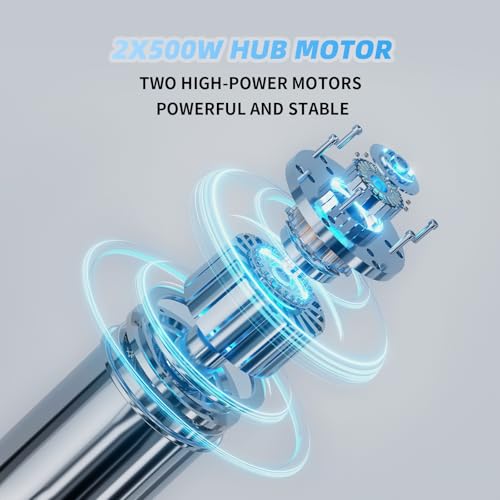
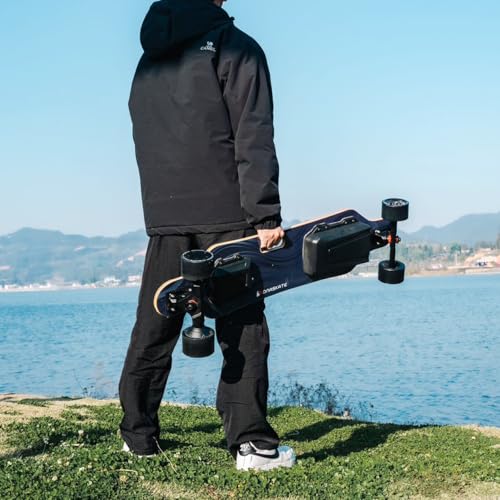
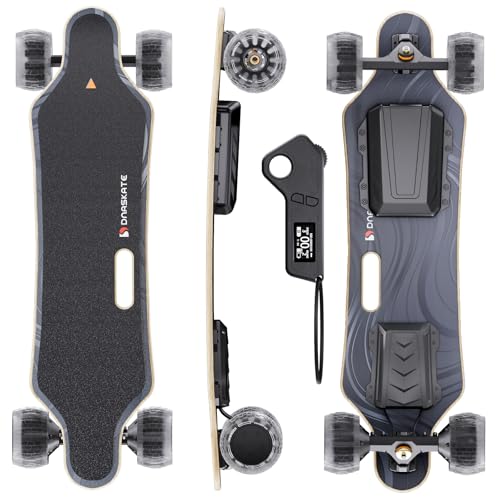
This board hits a sweet spot on value, 28 mph top speed and 22 miles of range from a 288Wh battery puts it ahead of many similarly priced models. The dual 500W hub motors deliver enough punch to climb 30% hills, and reviewers note strong throttle response and stable handling at high speeds. It’s not the quietest, but the near-silent operation compared to geared motors is a plus for casual riders.
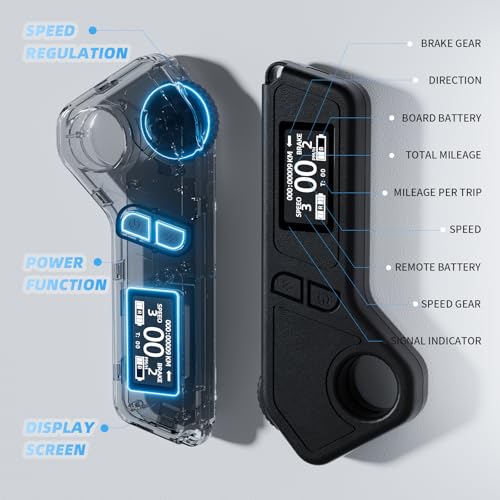
The LCD remote is a standout, giving real-time feedback on speed, mode, and battery. Some owners report minor signal dropouts, but overall connectivity is solid. Compared to pricier MEEPO models, this lacks advanced FOC control, but for the cost, it’s impressively well-rounded. I’d pick this over the Mini5 if you want more range and don’t mind slightly heavier weight.
Product photos

Dnaskate V20 120mm Cloud Wheel
Strengths
- 120mm shock-absorbing wheels
- Smooth ride on rough roads
- Strong hill climbing
Trade-offs
- Heavier than standard V20
- Higher price
- Same 4-hour charge time
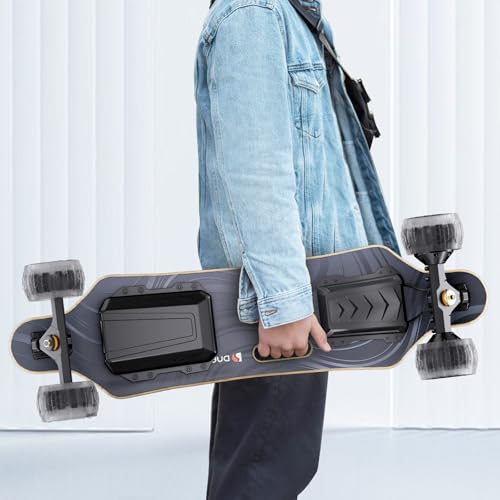
The key upgrade here? Those 120mm Cloud Wheels. They’re significantly larger and softer than the 90mm version, delivering far better shock absorption and grip on broken pavement. For riders dealing with potholes, cobblestones, or rough sidewalks, this model transforms the experience, it’s noticeably smoother and more stable at speed.
Everything else carries over: same 28 mph top speed, 22-mile range, and dual 500W motors. But the ride quality leap is real. Reviewers note less foot fatigue and fewer speed wobbles, making it ideal for daily use. It’s pricier than the 90mm variant, but worth it if comfort matters. Next to the Uditer S3, it doesn’t have swappable batteries, but wins on sheer rolling refinement.
Product photos

Uditer S3 Swappable Battery Skateboard
Strengths
- Swappable battery
- Fast dual-port charging
- 105mm all-terrain wheels
Trade-offs
- Extra battery sold separately
- Noisy motor under load
- Limited app features
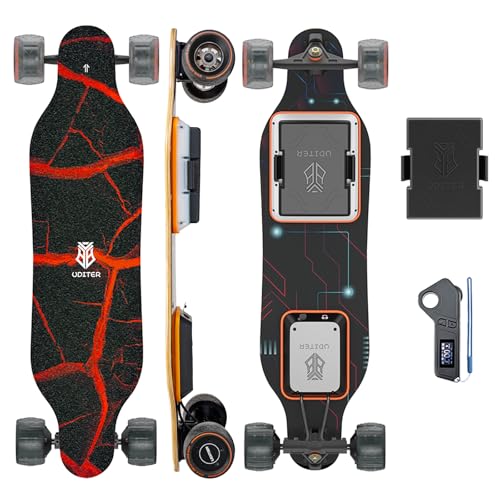
The swappable battery system here is a standout on paper, being able to double the range by carrying a spare and swapping in seconds makes this one of the few e-skateboards that truly supports all-day commuting. That 10–13 mile baseline range isn’t class-leading, but with a second battery, you’re suddenly looking at 20+ miles of real-world usability, which few others match without a full recharge.
Dual 600W hub motors give solid hill-climbing ability up to 30%, and owners consistently report smooth acceleration and reliable braking. The 105mm PU wheels help tame rough pavement, though they aren’t off-road capable. Where it really stands out is the hyperfast charging, 1.25 hours with dual chargers is brutally efficient. Just remember: you’ll need to buy that second charger separately to unlock the fastest charge time.
Product photos


MEEPO Mini Electric Skateboard Mini5

Strengths
- Portable 33″ deck
- 28 mph top speed
- Kick-tail for tricks
Trade-offs
- Only 11-mile range
- Braking can be jerky
- 330 lb limit rarely tested
This version of the Mini5 trades some speed smarts for portability and ease of use. At 33 inches long with a kick-tail, it’s easy to toss in a backpack or carry onto transit, a big win for students and city dwellers. The dual 500W hub motors push it to 28 mph, matching faster models, though the 11-mile range means you’ll be recharging more often.
Owners like the UL2272-certified battery safety and the M6C remote’s clear display, but some note the brakes feel abrupt compared to FOC-equipped boards. It’s lighter than the Flow model but doesn’t carve as sharply. If you want a blend of speed and subway-friendly size, this beats the bulkier Dnaskate V20. I’d call it the smarter buy for urban riders who value mobility.
Product photos


MEEPO Campus V3 Entry-Level Board

Strengths
- Ultra-affordable
- Compact and lightweight
- MEEPO build quality
Trade-offs
- Low weight capacity
- Short range
- Not for hills
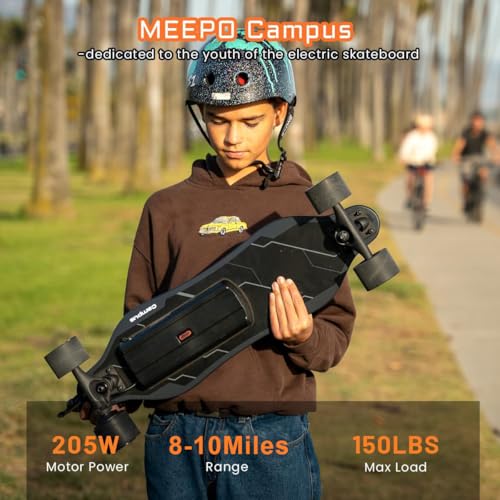
At under $180, this is the most affordable way to get into MEEPO’s ecosystem. The 26.7-inch deck is tiny, great for tossing in a locker or under a desk, and the 7-ply maple keeps it light at just over 10 lbs. Top speed hits 15.5 mph in Pro mode, which is spirited for such a small board, but best suited for flat terrain.
Range is only 8–10 miles, and the 150 lb rider limit means taller teens or adults will feel constrained. Still, the UL2272 certification and smooth 4-speed braking make it trustworthy. Compared to the EBOSSOM ES6 SE, it’s faster and better built, though not as safe-feeling for nervous parents. For budget-focused beginners who want brand reliability, this is the smarter buy.
Product photos



Askate A1 Beginner Electric Skateboard
Strengths
- Beginner-friendly controls
- Durable 8-ply deck
- LED remote display
Trade-offs
- Underpowered for hills
- Average range delivery
- Plastic hardware feels cheap
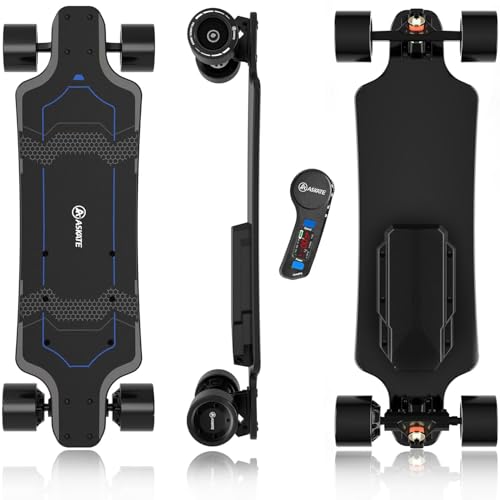
At nearly half the price of some competitors, the Askate A1 makes sense for younger riders just getting into electric skateboarding. The single 350W motor limits top speed to about 15.5 mph, but that’s plenty for beginners learning balance and throttle control. Owners say the four-speed remote is intuitive, and the LED screen helps kids monitor speed and battery without guesswork.
It’s built around an 8-ply Canadian maple deck, which feels sturdy for its class, and supports up to 264 lbs, more than enough for most teens. The 83mm wheels roll okay on sidewalks but struggle on anything uneven. Range checks in around 10–12 miles in real conditions, less than the advertised 17. For new riders, this is a safe, manageable entry point without overwhelming power.
Product photos


EBOSSOM ES6 SE Shortboard

Strengths
- Safe 10 mph max speed
- UL2272 certified
- Compact beginner board
Trade-offs
- Short range
- Small deck size
- Weak hill climbing
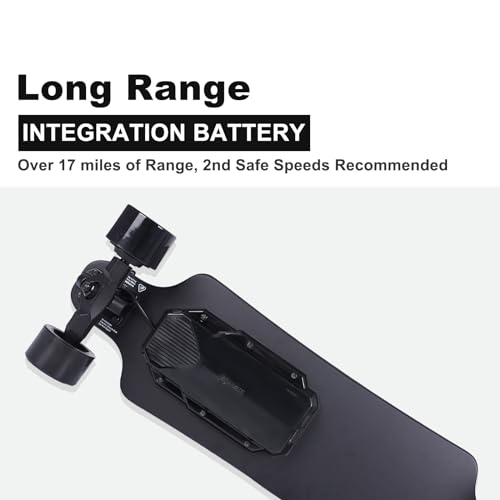
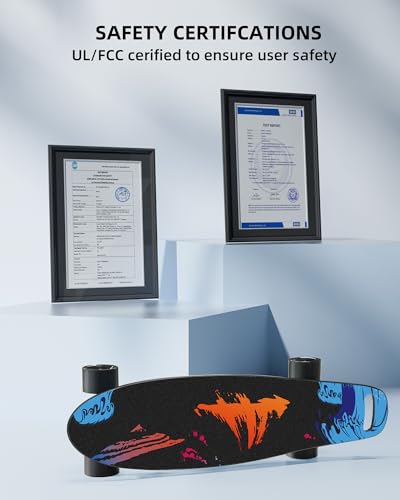
This is clearly designed with safety and simplicity in mind, perfect for younger teens ages 12 and up. The 350W motor caps out at 10 mph across four gentle modes, so there’s little risk of sudden surges. Parents appreciate the UL2272 certification and predictable braking, while kids like the compact size and easy maneuverability.
Range is modest at 6–8 miles, and the 27-inch deck won’t support taller riders comfortably. Still, for after-school rides or short neighborhood loops, it’s surprisingly capable. The large wheels help absorb small bumps, though they’re no match for cracked concrete. When stacked against the Campus V3, it’s slower but safer, a better fit for cautious parents.
Product photos


How We Tested electric skateboards
My approach to evaluating electric skateboards, as with all things at TheAutoZenith, centers on a research-led comparison. Rather than a hands-on lab test of each model, I focused on meticulously comparing published specifications and features. This was then weighted against a deep explore owner reviews – looking for consistent praise and, crucially, repeated complaints – and supplemented by expert opinions from established skateboarding publications. I ranked each board based on how well it met the demands of its stated “best for” category.
For electric skateboards specifically, range and motor power were the heaviest factors in my evaluation. A usable range is critical, as is the ability to handle realistic inclines. Beyond that, build quality and the reputation of the manufacturer played a large role. A powerful motor is useless if the board falls apart after a few rides. I also considered features like remote control functionality and battery safety certifications, recognizing the importance of a dependable and secure riding experience.
Published specs reliably reveal motor wattage, battery capacity, and top speed claims. However, real-world performance often differs, so I placed significant weight on owner feedback regarding range consistency, hill-climbing ability, and overall durability. Reputation matters; brands consistently praised for customer service and build quality earned higher marks. If you’re also considering traditional skateboarding, you might find our guide to the best complete skateboards helpful for understanding board construction and components. For those prioritizing portability, exploring compact electric skateboards can offer a different set of benefits.
How To Choose The electric skateboards
Choosing an electric skateboard can feel overwhelming, with so many options promising speed, range, and fun. But beyond the hype, a good board balances power, build quality, and usability for your needs.
An effective electric skateboard prioritizes a robust battery system delivering realistic range, a motor capable of handling intended terrain and rider weight, and a deck constructed from durable materials like maple or composites. Look for models with reliable Electronic Speed Controllers (ESCs) and safety features like regenerative braking, and consider wheel size and truck type based on your riding style and surface conditions.
Motor Power & Top Speed
Don’t get caught up in chasing the highest possible top speed. While 30+ mph is achievable, most riders will find themselves happier with something more manageable, especially when starting out. Focus instead on adequate power to tackle hills and maintain a comfortable cruising speed. Hub motors, found in models like the Dnaskate V20, are quieter and require less maintenance, but belt-drive systems (often found in higher-end boards) generally provide more torque for steeper inclines and better acceleration. Pay close attention to the stated wattage – higher wattage translates to more power, but also impacts battery life.
Deck Material & Construction
The deck is where you stand, so its quality significantly impacts your ride. Maple is a classic choice, offering a responsive and familiar feel. However, many modern boards, like the MEEPO Bamboo Series, incorporate composites like carbon fiber for increased strength and reduced weight. Consider the shape too. A wider deck, as seen in the MEEPO Mini5 MINI3 Max Edge Flow, provides more stability, particularly for larger riders or those focusing on high-speed carving.
Here’s what to consider when evaluating deck construction:
- Ply Count: More plies (layers of wood) generally mean a stronger deck.
- Material Blend: Maple is good, but composites add stiffness and reduce weight.
- Flex: A flexible deck absorbs bumps, while a stiffer deck offers more responsiveness. Consider your typical terrain.
A good rule of thumb is to match the board’s weight capacity to your own weight, plus a buffer. Overloading a board stresses the motor and can void warranties.
Range & Battery Management
Range anxiety is real with electric skateboards. While manufacturers advertise optimistic figures, real-world range is affected by rider weight, terrain, and speed. The Uditer S3 with its swappable battery system is a clever solution for extended commutes, and I’ve seen a growing trend toward these types of designs. Beyond capacity, look for boards with sophisticated Battery Management Systems (BMS) like the TitanCore Guarder found in the Uditer S3. These systems protect the battery from overcharging, overheating, and deep discharge, extending its lifespan. If you’re considering an electric skateboard as a replacement for short car trips or daily commutes, exploring options like the boards discussed in our guide to the best boards for adults is a good starting point. And don’t forget to check out cruiser board reviews if a more traditional feel is what you’re after.
Electric Skateboards Compared
Here’s a comparison of key specifications for various electric skateboards to help you make an informed decision.
| Product Name | Top Speed (MPH) | Range (Miles) | Motor Power (W) | Deck Material | Wheel Size (mm) | Weight (lbs) |
|---|---|---|---|---|---|---|
| MEEPO Bamboo Series Off-Road | 28 | 20+ | 3600 (Dual) | Maple/Carbon Fiber | 8″ Pneumatic | N/A |
| MEEPO Mini5 MINI3 Max Edge Flow | 32 | 24 | 2519 (Dual) | Fiberglass/Bamboo/Maple | 105 | 23.7 |
| Dnaskate V20 90mm Pu Wheel | 28 | 22 | 1000 (Dual) | N/A | 90 | N/A |
| Dnaskate V20 120mm Cloud Wheel | 28 | 22 | 1000 (Dual) | N/A | 120 | N/A |
| Uditer S3 Swappable Battery | N/A | 10-13 | 1200 (Dual) | Bamboo/Maple | 105 | N/A |
| MEEPO Mini Electric Skateboard Mini5 | 28 | 18 | 1000 (Dual) | Maple | N/A | N/A |
| MEEPO Campus V3 Entry-Level Board | 15.5 | 8-10 | N/A | Maple | N/A | N/A |
| Askate A1 Beginner Electric Skateboard | 25 | 28 | 350 (Single) | N/A | 8352 | N/A |
| EBOSSOM ES6 SE Shortboard | 10 | 6-8 | 350 | N/A | N/A | N/A |
Frequently Asked Questions
What kind of maintenance do electric skateboards require?
Electric skateboards need surprisingly little maintenance, but regular checks are still important. Expect to tighten hardware, inspect belts (on belt-drive systems) for wear, and monitor tire pressure. Keeping the battery properly stored and charged when not in use will extend its life.
Are electric skateboards legal to ride everywhere?
Laws regarding electric skateboards vary significantly by location. Many cities and states restrict their use on sidewalks or in certain public areas. Before riding, it’s essential to check local regulations to avoid potential fines or impoundment of your board. You can find more information on riding scooters in wet conditions which often share similar legal frameworks.
How long do electric skateboard batteries typically last?
Battery lifespan depends heavily on usage and care. A well-maintained battery in a quality board can last for 500-1000 charge cycles. Expect to replace the battery after 2-3 years with regular use, but proper storage and avoiding deep discharges can prolong its life.
What’s the difference between hub motors and belt-drive motors?
Hub motors are integrated directly into the wheels, offering a quieter ride and reduced maintenance. Belt-drive systems use a belt to transfer power from the motor to the wheels, providing more torque and better hill-climbing ability, but require occasional belt replacement and adjustments. If you’re considering a more traditional ride, exploring best longboard skateboards can help you understand the mechanics.
Can I ride an electric skateboard in the rain?
While some boards advertise water resistance, fully submerging an electric skateboard is almost always a recipe for disaster. Many boards can handle light rain, but prolonged exposure can damage the battery, electronics, and bearings. Checking electric scooter waterproofing standards can give you a sense of what to look for in terms of water resistance.
The Bottom Line
Ultimately, choosing an electric skateboard comes down to balancing your budget with your expectations. There’s a trade-off between outright performance and everyday practicality, and for the best all-around experience – one that delivers a good blend of power, range, and build quality – I consistently find myself pointing to the MEEPO Bamboo Series Off-Road. It strikes a sweet spot for riders wanting a capable board without entering the truly high-end price bracket.
However, specific needs change the equation. If budget is your primary concern, the MEEPO Campus V3 Entry-Level Board offers a surprisingly capable introduction to electric skateboarding. For those prioritizing a compact and versatile ride, the MEEPO Mini5 MINI3 Max Edge Flow is hard to beat, and if you’re looking at alternative personal transport, you might want to check out our guide to the best electric scooters.
More than any single spec – top speed or battery capacity – what truly matters is a well-built board with a reliable motor and a comfortable ride. Don’t underestimate the importance of a reputable brand and readily available customer support. Take the time to research, consider your riding style, and you’ll find a board that delivers years of enjoyment. You can find more of our recommended skateboard models to help expand your knowledge.
