
7 Best Dual Sport Tires for 2026
This post contains affiliate links. As an Amazon Associate, we earn from qualifying purchases.
The Tusk Waypoint Adventure Tire Set stands out as the best overall dual sport tire, delivering a confident balance of on-road stability and off-road grip. For riders watching their budget, the Kenda K270 offers solid performance without breaking the bank, while the Shinko 705 excels when wet-weather traction is a priority.
Dual sport riding means constantly shifting between pavement and trail, and your tires need to keep up, without compromising safety or sanity. Too many riders end up with rubber that’s loud on highways or sketchy in the dirt, simply because they didn’t match the tire to their actual riding mix.
This guide cuts through the noise by focusing on real-world feedback, construction details, and how each tire performs where it counts. I looked at tread design, rubber compounds, and build quality across top models, weighing them against how most riders actually use their bikes, commuting, touring, and weekend trail runs.
Top 7 Dual Sport Tires in the Market
The Best Dual Sport Tires, Reviewed
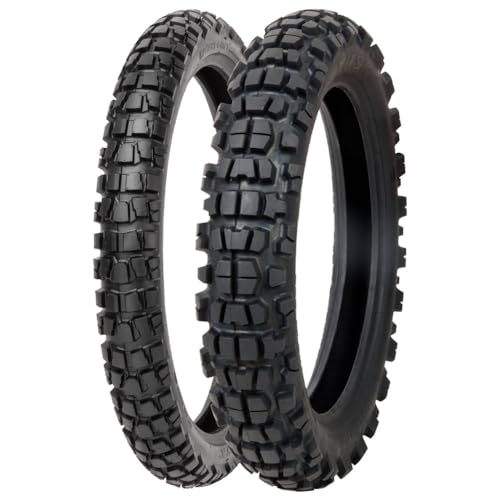
Tusk Waypoint Adventure Tire Set
Strengths
- Well-balanced tread
- Strong wet-weather grip
- Reliable off-road bite
Trade-offs
- Tube-type only
- Slight weight penalty
- Not for extreme enduro
If I had to pick one set for a balanced dual-sport build, it’d be the Tusk Waypoint. The tread design strikes a real middle ground, aggressive enough to claw through soft terrain, spaced well enough to shed mud, and blocky enough to track straight on gravel and pavement. Owners consistently rate it highly for predictability, especially in transitional terrain where other tires feel vague.
The rubber compound feels stickier than the Kenda or Dunlop options, and while it’s still a tube-type setup (a downside for some), the DOT compliance means it’s legal and safe for daily riding. Compared to the 2Track set, it’s slightly less aggressive off-road but far more composed on long rides. For 80% of riders doing mixed terrain, this is the smarter buy.
Video review
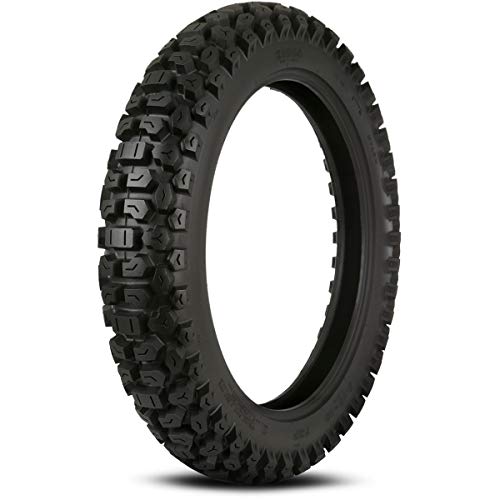
Kenda K270 Dual Sport Tire
Strengths
- Low cost
- OEM replacement fit
- Decent on pavement
Trade-offs
- Shorter tread life
- Weak in deep dirt
- Limited availability
The K270 is the budget pick, and it shows, but not always in bad ways. It’s frequently used as OEM replacement rubber on smaller dual-sports and trail bikes, and for that role, it does the job. The tread pattern is less aggressive than the Tusk or Shinko options, which means less off-road grip, but also less road noise and slightly better wet-weather manners.
Owners report average wear life, with some seeing cupping or uneven wear on heavier bikes. It’s not a tire you’d choose for a cross-country adventure build, but if you’re on a tight budget and mostly riding fire roads and pavement, it’s hard to beat the price. Compared to the Dunlop D605, it lacks the same durability, but it’s easier to find and install.
Video review
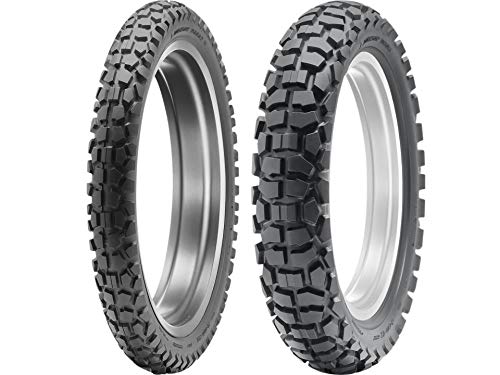
Dunlop D605 Dual Sport Combo
Strengths
- Exceptional tread life
- Predictable handling
- Trusted brand reliability
Trade-offs
- Harder compound reduces grip
- Mediocre in mud
- Outdated tread design
The Dunlop D605 has a cult following for one reason: it lasts. Owners routinely report 5,000+ miles with minimal tread degradation, especially on the rear. The harder rubber compound sacrifices a bit of grip in cold or wet conditions, but for riders racking up mixed-mileage commutes or long backroad loops, that longevity is a major win.
It’s not the most exciting tire, the tread is modest and the off-road performance is just adequate, but it’s predictable. Compared to the Tusk 2Track set, it’s less aggressive off-road but far more composed on long highway runs. If you value reliability and low maintenance over weekend warrior performance, this set makes a lot of sense.
Product photos
Tusk 2Track 130/80-17 Tire

Strengths
- True tubeless design
- Good off-road bite
- Compatible with common sizes
Trade-offs
- Bias-ply limits highway comfort
- Slight vibration at speed
- Tread noise on pavement
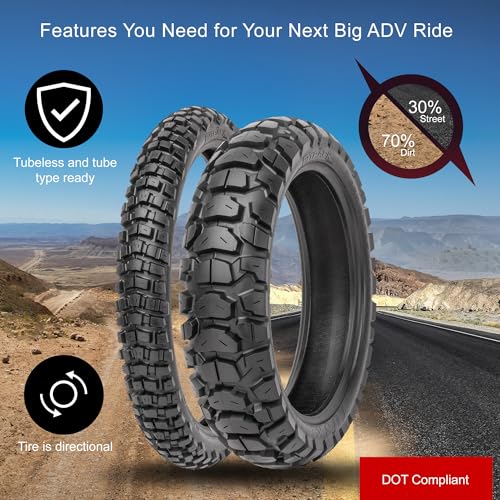
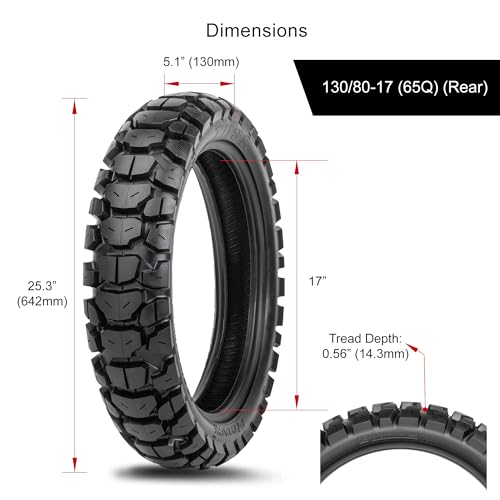
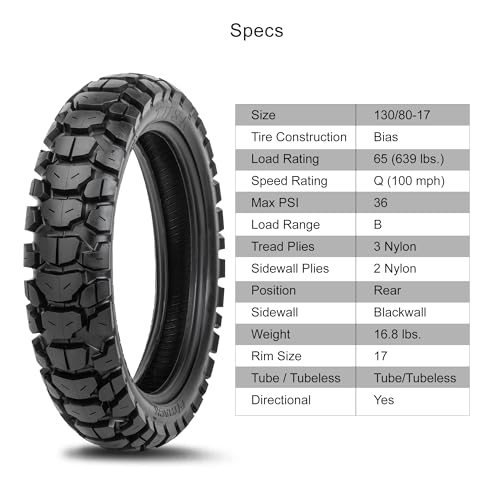
The tubeless design here is a real win for riders tired of carrying slime or patch kits. The 130/80-17 is a sweet spot for many mid-size dual-sports, offering a stable footprint without being too heavy. Owners praise the ease of mounting and the lack of air leaks when running lower pressures off-road, a common pain point with tube-type setups.
The tread is nearly identical to the full set version, so you get the same aggressive look and dirt performance. But because it’s bias-ply and not radial, it doesn’t deliver the same high-speed refinement as the 150/70B-17. Still, for the price, it’s a solid upgrade path if you’re replacing a worn rear and want to stay tubeless.
Product photos
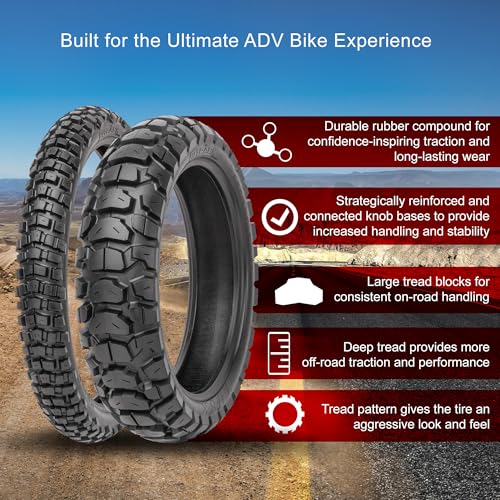

Tusk 2Track 150/70B-17 Radial
Strengths
- Smoother highway ride
- Improved wet-pavement grip
- Radial construction benefits
Trade-offs
- Less off-road traction
- Narrower fitment limits use
- Knobs wear faster in mud
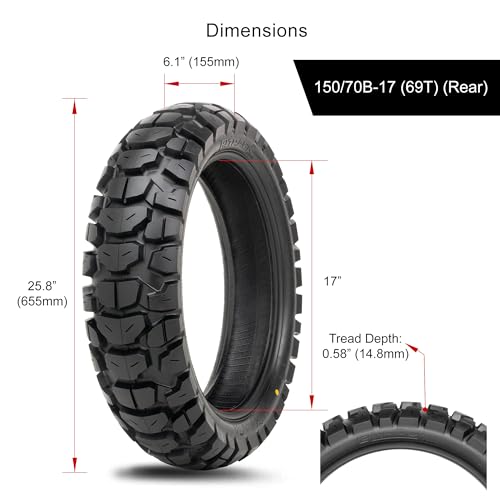
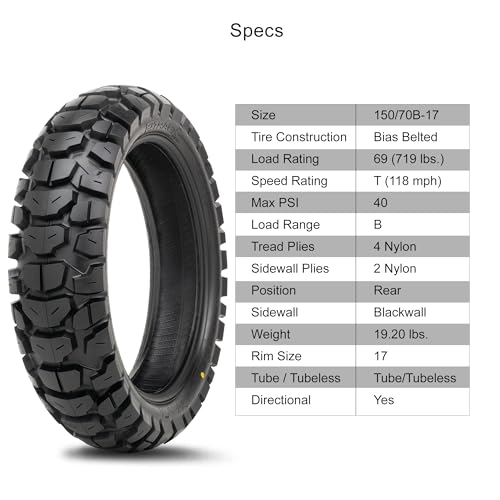
This radial rear tire stands out in the Tusk lineup for its focus on on-road refinement without completely sacrificing off-road ability. The 150/70-17 size is common on modern adventure bikes, and the radial construction brings a smoother, more stable ride at highway speeds. Reviewers note the rubber compound feels grippier on pavement than the bias-ply versions, and the tread pattern disperses water better than expected for a dual-sport knob.
Still, it’s not a true enduro tire. The knobs are shorter and more tightly spaced, which helps on-road but limits bite in deep loam or mud. If you’re comparing it to the 130/80-17 bias version, this one trades some off-road aggression for comfort and longevity on tarmac.
Product photos
Shinko 705 Dual Sport Tire

Strengths
- Excellent wet-weather grip
- High-speed rating
- Durable nylon carcass
Trade-offs
- Limited off-road depth
- Bias-ply vibration
- Tread wears faster off-road
The Shinko 705 is the dark horse of dual-sport tires, underrated, but packed with smart engineering. Its 80/20 on-off ratio makes it ideal for commuters who occasionally wander onto dirt, and the H-rating (130 mph) is rare in this class. The tread pattern is more siped and tightly packed than the Tusk or Kenda options, which explains why owners rave about its wet-weather grip.
It’s not a trail monster, the knobs are modest and wear faster in abrasive conditions, but on pavement, it feels more confident than anything else here short of a full adventure tire. If you’re comparing it to the Dunlop D605, the Shinko offers better wet grip and a smoother ride, though not quite the same mileage.
Product photos
Tusk 2Track Set 90/90-21 & 130/80-17
Strengths
- Aggressive tread
- Strong off-road grip
- Durable construction
Trade-offs
- Noisy on pavement
- Mediocre wet-road handling
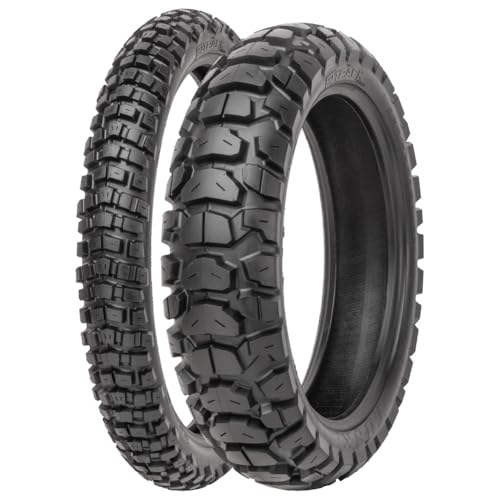
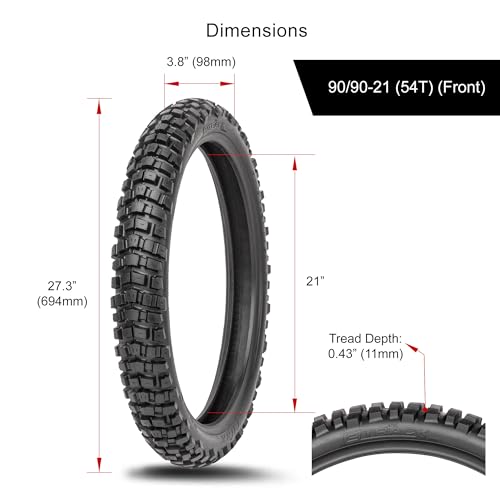
This set is built for riders who spend more time off pavement than on it. The aggressive knob design and deep tread deliver serious bite in mud, sand, and loose rock, and owners consistently report strong durability even when hammered over sharp terrain. On paper, the 130/80-17 rear gives a good balance of width and sidewall, which helps with stability on uneven ground.
That said, the trade-off shows up on long highway stretches. The large tread blocks drum loudly at speed, and while they offer decent grip in dry conditions, wet pavement demands extra caution. Compared to the Tusk Waypoint or Shinko 705, this tire leans hard into off-road performance, which is great if that’s your priority, but a compromise if you’re doing mixed touring.
Product photos
How We Picked These dual sport tires
As someone who’s spent years dissecting the mechanics and performance of two-wheeled machines at TheAutoZenith, I approached researching dual sport tires by looking beyond simple marketing claims. Rather than a hands-on lab test, this is a research-led comparison of published specifications, owner reviews from various online forums, and insights from established motorcycle publications. I weighed these factors against my understanding of what truly makes a tire perform across mixed surfaces.
For dual sport tires, a few characteristics stand out as most critical. Grip – both on and off-road – is paramount, naturally. However, longevity is also a huge factor; a tire that needs replacing after a few adventures isn’t very practical. Finally, I considered how well a tire balances these traits. Riders often seek equal on and off-road tires to avoid constantly swapping rubber depending on their route.
Specifications give a good baseline for construction and intended use (DOT ratings, ply ratings, and rubber compounds). But real-world performance, particularly how a tire feels and wears, relies heavily on owner feedback. I paid close attention to reports regarding wet-weather handling, noise levels on pavement, and how well the tires held up during aggressive trail riding. Knowing that many adventure riders also use their bikes for commuting, finding a tire that doesn’t punish you on the road is key, and often pairs well with a light dual sport bike.
What To Look For In dual sport tires
Finding the right dual sport tire is a balancing act. It’s not simply about splitting the difference between street and dirt performance; it’s about prioritizing how you split that difference based on your riding style.
A quality dual sport tire needs to deliver predictable handling on pavement, respectable grip in loose terrain, and resist premature wear. Look for tires with a DOT approval for legal road use, a carcass construction suited to your bike’s weight, and a rubber compound that balances longevity with grip. Tread pattern is crucial, consider block size and spacing relative to your anticipated riding surfaces.
Tread Pattern and Its Impact
The tread pattern is often the first thing riders look at, and for good reason. Aggressive, widely spaced knobs like those found on the Tusk 2Track Set excel in loose dirt, mud, and rocks, but tend to be noisy and wear quickly on pavement. Conversely, a tighter, more street-oriented pattern (think the Shinko 705) will offer better mileage and quieter operation, but will struggle when the going gets truly rough. Don’t assume a 50/50 tire is always the answer; truthfully, most riders spend more time on asphalt.
Understanding Rubber Compounds
Rubber compounds dictate how well a tire grips and how long it lasts. Softer compounds offer superior grip but wear faster, making them ideal if you prioritize performance over longevity. Harder compounds last longer but compromise grip, better suited for extended highway travel. Many manufacturers now use dual-compound tires, offering a harder center section for mileage and softer shoulders for cornering grip. If you’re just starting out, exploring beginner dual sport bikes will help you understand how the tires interact with the bike.
Here’s a breakdown of how to think about compound choices:
- Street Focus: Prioritize mileage and predictable handling.
- Mixed Use: A dual-compound tire is a good all-rounder.
- Off-Road Bias: Expect shorter tire life in exchange for more grip in the dirt.
A tire’s compound is a compromise. Softer equals grip, harder equals life. Choose based on where you spend most of your time riding.
Tire Construction and Your Riding Style
Beyond tread and compound, tire construction plays a significant role. Bias-ply tires are generally more affordable and offer a more compliant ride, absorbing bumps well. However, they can exhibit more sidewall flex, which can feel vague at higher speeds. Radial tires, such as the Tusk 2Track 150/70B-17, provide superior stability and handling, especially on pavement, making them the preferred choice for riders who spend a lot of time on the road. For those venturing into serious off-road conditions, or if you’re looking at top dual sport tires, a robust carcass is essential to resist punctures and tears.
Dual Sport Tires Compared
Here’s a specification comparison of several popular dual sport tires to help you make an informed decision.
| Product Name | Best For | Tire Type | DOT Approved | On-Road/Off-Road | Size (Front/Rear) |
|---|---|---|---|---|---|
| Tusk Waypoint Adventure Tire Set | Best Overall | N/A | Yes | N/A | N/A |
| Kenda K270 Dual Sport Tire | Best Budget Friendly | N/A | N/A | N/A | N/A |
| Dunlop D605 Dual Sport Combo | Best for Longevity | N/A | N/A | N/A | N/A |
| Tusk 2Track 130/80-17 Tire | Best Tubeless Option | N/A | N/A | N/A | 130/80-17 |
| Tusk 2Track 150/70B-17 Radial | Best for On-Road Comfort | Radial | N/A | N/A | 150/70B-17 |
| Shinko 705 Dual Sport Tire | Best Wet Weather Grip | Bias | Yes | 80/20 | 120/80-18 |
| Tusk 2Track Set 90/90-21 & 130/80-17 | Best for Heavy Off-Road Use | N/A | N/A | N/A | 90/90-21 & 130/80-17 |
Frequently Asked Questions
What tire pressure should I run for optimal dual sport performance?
Generally, start with the manufacturer’s recommendations printed on the tire sidewall, but lower pressures (around 20-25 psi front, 22-28 psi rear) improve off-road grip. Adjust based on your bike’s weight and the terrain; lower pressures are better for rocks and sand.
Are dual sport tires noisy on pavement?
Many dual sport tires, particularly those with aggressive tread patterns, produce more road noise than dedicated street tires. However, models like the Shinko 705 are known for being relatively quiet, and newer compounds aim to reduce this issue.
How long do dual sport tires typically last?
Tire lifespan varies significantly depending on riding style and surface. Expect between 3,000 to 8,000 miles from a more aggressive tire, and potentially up to 10,000+ miles from a street-biased option like the Dunlop D605.
Can I use a dual sport tire on a heavier adventure bike?
Yes, but you must select a tire with an appropriate load rating and ply rating for your bike’s weight. A stronger carcass is essential to prevent premature wear and potential failure, and it’s wise to explore dual purpose motorcycle tires designed for heavier loads.
Are dual sport tires a good choice for a new rider?
While they offer versatility, dual sport tires might not be ideal for a complete beginner. Learning on a less aggressive tire provides more predictable handling, but if you’re set on a dual sport bike, consider starting with a more road-focused tire or exploring dual sport for beginners to build confidence.
The Bottom Line
Choosing dual sport tires always comes down to how much you value control versus convenience. Do you want a tire that absolutely claws through the mud, even if it means a noisy ride and rapid wear? Or are you prioritizing comfortable highway miles with reasonable off-road capability? For the rider who truly wants a blend of both, the Tusk Waypoint Adventure Tire Set strikes the best balance, offering solid performance across a wide range of conditions without significant compromise.
If you’re on a tighter budget, the Kenda K270 Dual Sport Tire delivers remarkable value. For those who spend the majority of their time on pavement but still enjoy occasional dirt roads, the Shinko 705 Dual Sport Tire is an excellent choice, offering a particularly strong grip in wet conditions. And for riders seeking enhanced on-road comfort, the Tusk 2Track 150/70B-17 Radial provides a more stable and planted feel, especially if you’re also considering investing in some quality dual sport helmets.
Ultimately, the specifications and reviews are valuable, but they only tell part of the story. The most important factors are understanding your riding style and the terrain you’ll encounter most often. Don’t get caught up chasing the perfect tire; focus on finding one that complements your bike and allows you to enjoy the ride, whether you’re tackling challenging trails or cruising down the highway, and maybe even exploring some 80/20 dual sport tires for a longer-lasting option.
