
Beginner Dual Sport Motorcycles: How Weight Limits Decide
This post contains affiliate links. As an Amazon Associate, we earn from qualifying purchases.
Yes, dual-sport motorcycles are good for beginners, if they meet three specific criteria: weight under 300 pounds wet, horsepower around 30, and a seat height you can flat-foot. Models like the Honda CRF300L, Yamaha XT250, and Suzuki DR-Z400S fit this profile perfectly. They are forgiving, manageable, and teach both on- and off-road skills without intimidating a new rider. Stay away from heavier “adventure” bikes and high-strung competition-derived models for a first bike.
The 300-pound rule isn’t arbitrary. It’s the point where a bike stops being easy to pick up after a tip-over in soft dirt, which happens to every beginner. A 400-pound machine pinned on its side feels like a ton of dead weight; a 280-pound one is a manageable heave. That difference determines whether a frustrating moment becomes a learning experience or a day-ending struggle.
What follows: the exact specs that separate a beginner-friendly dual-sport from a punishing one, a breakdown of real-world maintenance, and a direct comparison of the current models that get it right.
Key Takeaways
- Target a wet weight under 300 pounds. This is the single biggest factor in off-road confidence and recovery from drops.
- Limit horsepower to around 30. Smooth, predictable power delivery is safer and more useful than explosive top-end speed.
- Match the bike to your actual riding mix. A 70/30 street/dirt split needs a different machine than a 30/70 split.
- Maintenance intervals in the manual are minimums for ideal conditions. Riding in dirt, sand, or mud cuts those intervals in half.
- A dual-sport is not a miniature adventure bike. Its range, comfort, and wind protection are limited by design.
What Makes a Motorcycle “Beginner-Friendly”?
Forget engine size alone. A 650cc cruiser can be beginner-friendly; a 250cc motocross bike can be terrifying. The factors that matter are predictable power, manageable weight, and ergonomics that let you build confidence.
Smooth, linear throttle response beats peak horsepower every time for a new rider. A bike that lurches or has a sharp powerband means you’re fighting the machine instead of learning control. Most air-cooled singles and modern fuel-injected 300s deliver this.
Common mistake: Choosing a bike for its highway capability when 90% of your riding will be backroads and trails. You’ll pay for that extra top-end with weight and seat height you don’t need.
Ground clearance and suspension travel are a trade-off with seat height. Long-travel forks are great for rocks but raise the bike. A beginner is better served by a slightly lower, softer setup that lets them reach the ground firmly. That stable footing is worth more than an extra inch of suspension when navigating a tricky, off-camber trail section.
The 300-Pound Rule (And Why It Matters)
This is the non-negotiable ceiling. When a manufacturer lists a “curb weight” or “wet weight,” that includes all fluids, fuel, oil, coolant. You need to know that number.
Physics is simple: a lower center of gravity and less mass make a bike easier to maneuver at low speeds and, critically, easier to recover when you drop it. In loose dirt or mud, a 280-pound bike is a lift. A 350-pound bike is a two-person job. That recovery happens more often than anyone admits during the learning phase.
Most dual-sports designed with beginners in mind cluster in the 270-300 pound range. The Honda CRF300L Rally comes in at about 309 pounds wet, which is right on the line. The Yamaha XT250 sits around 291 pounds. These are manageable weights.
Compare that to a “lightweight” adventure bike, which often starts at 430 pounds. That’s not a beginner dual-sport; it’s a different category with different skills required.
| Weight Class | Example Model | Beginner-Friendly? | Primary Risk |
|---|---|---|---|
| Sub-300 lbs | Yamaha XT250 | Yes | Limited highway speed |
| 300-330 lbs | Honda CRF300L | Yes, with caution | Becomes top-heavy when loaded with gear |
| 330-400 lbs | Suzuki DR650S | No for true off-road | Difficult to recover in soft terrain |
| 400+ lbs | KTM 390 Adventure | No | Requires advanced riding skills for off-road |
Not Too Much Motor: The 30-Horsepower Sweet Spot
Engine character matters more than displacement. A tractable, torquey single-cylinder engine around 250-400cc is the gold standard. It provides enough power for highway merging (just barely) but won’t loop you with a careless throttle input.
The KTM 390 Enduro R makes about 44 horsepower. That’s too much for a first bike. The Husqvarna FE 350s is derived from a competition motor and demands respect. In contrast, the Honda CRF300L makes roughly 27 horsepower. It’s forgiving. You can whack the throttle open mid-corner and the front wheel might get light, but it won’t instantly highside you.
Where this goes sideways: Buying a “beginner” bike with a aggressive powerband because it’s “more future-proof.” You’ll spend your first season managing fear instead of building skill. Future-you can always trade up.
Carbureted engines, like on the Honda XR150L, are simple but require more tuning knowledge. Fuel-injected engines, like on the CRF300L or DR-Z4S, are set-and-forget, which is one less variable for a new rider to worry about. For a first bike, fuel injection is worth the extra cost.
The Real Cost: Understanding Dual-Sport Maintenance
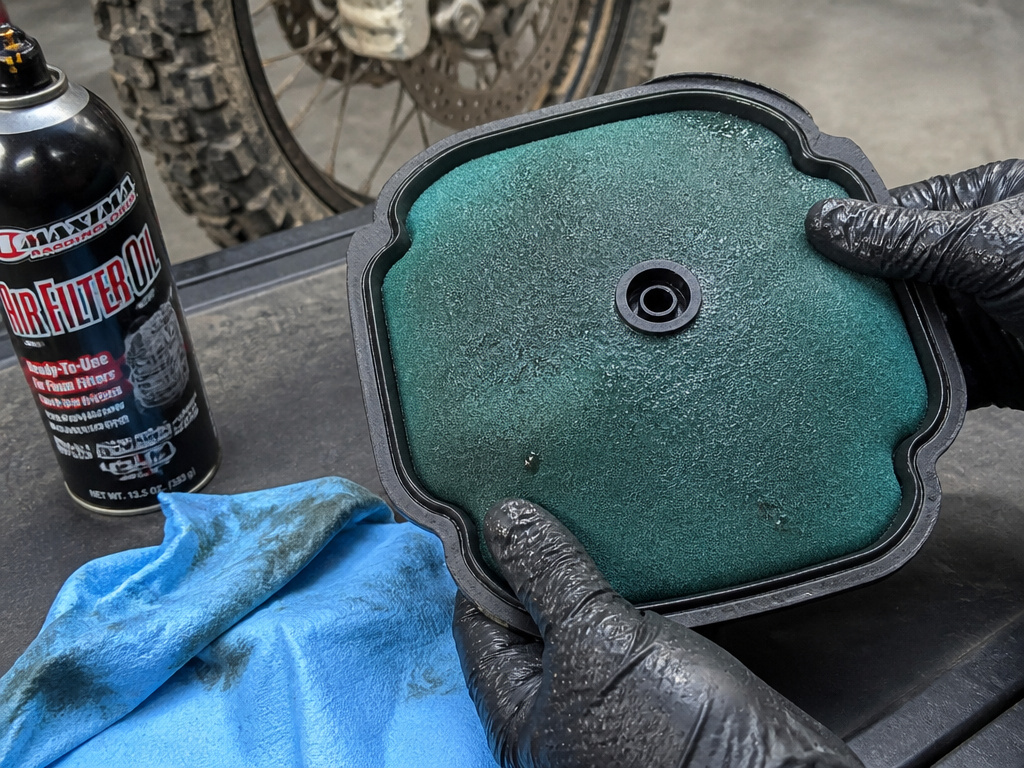 A manufacturer’s maintenance schedule is written for controlled conditions. Your garage is not a laboratory.
The Honda manual says to inspect the air cleaner every 6 months. Ride one day in Utah dust, and you need to clean it that night. The Suzuki DR-Z4S manual lists valve checks every 15,000 miles for road use. If you’re slipping the clutch in technical terrain or frequently hitting the rev limiter, cut that interval by two-thirds.
Here is the reality, drawn from OEM manuals and distilled for actual use:
| Component | Manual Interval (Street) | Real-World Interval (Mixed Use) | Consequence of Delay |
|---|---|---|---|
| Engine Oil & Filter | 4,000 miles / 12 months | 2,000 miles / 6 months | Accelerated cam and clutch wear, oil breakdown |
| Air Filter | Clean every 6 months | Clean after every dusty ride | Restricted airflow runs engine hot, power loss |
| Drive Chain | Adjust every 1,000 miles | Lube every ride, adjust every 500 miles | Rapid sprocket wear, chain snap risk |
| Valve Clearance | Inspect 16,000-32,000 miles | Inspect 8,000 miles | Hard starting, power loss, valve damage |
| Brake Fluid | Replace 2 years | Replace annually (hygroscopic) | Spongy lever, boiling fluid on long descents |
The takeaway? You don’t just ride a dual-sport; you maintain it. The workload is higher than a street-only motorcycle. If you’re not prepared to clean an air filter on a Saturday morning, this might not be the genre for you.
Starter Dual-Sport Roundup: Three That Get It Right
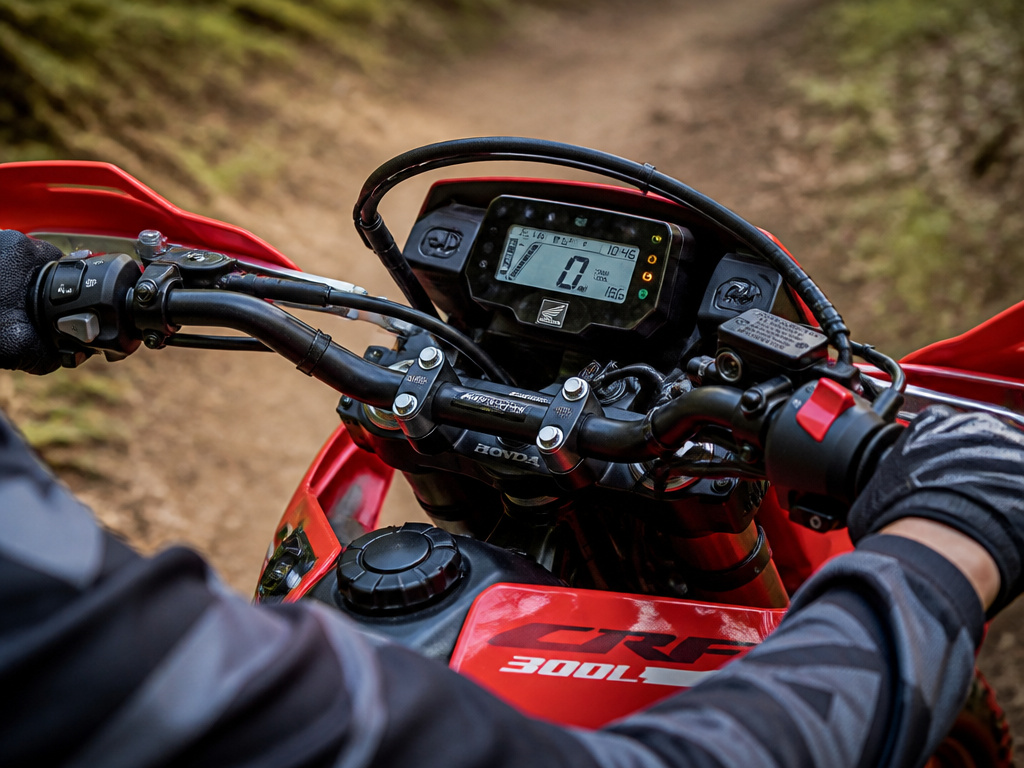 You need names. These are the current-production models that best balance the beginner criteria. This isn’t an exhaustive list, but these are the benchmarks.
Honda CRF300L / CRF300L Rally
The default choice for a reason. Its 286cc engine is smooth, the clutch is feather-light, and the seat height is manageable at around 34.7 inches. The suspension is soft, which experts hate but beginners love. It soaks up small bumps without kicking. The Rally version adds a fairing for slightly better highway comfort. This is the bike I’d point most new riders toward first. Its aftermarket support is massive, and its reliability is proven.
Yamaha XT250
The simplicity king. Air-cooled, fuel-injected, and ultra-low seat height (just under 32 inches). It feels even lighter than its 291 pounds. It won’t win any races, and its suspension is basic, but for building pure fundamentals on forest roads and light trails, it’s brilliant. It’s also one of the most affordable new options.
Suzuki DR-Z400S (and the new DR-Z4S)
The old DR-Z400S is a legend. The new DR-Z4S adds fuel injection, modern electronics, and updated suspension. It has more power, around 40 horsepower, so it sits at the upper limit of “beginner-friendly.” It’s for the rider who is confident, physically larger, or plans to do more aggressive trail riding from the start. Its five-speed gearbox is a minor limitation on long highway stints, but its torque is perfect for technical terrain.
Dual-Sport vs. Adventure Bike: Don’t Confuse Them
This is a critical distinction missed by many first-time buyers. A dual-sport is a street-legal dirt bike. An adventure bike is a street bike with off-road capability.
A KTM 390 Enduro R leans toward adventure. A Husqvarna FE 350s is a pure dual-sport. The KTM has more road-biased ergonomics, a larger fuel tank, and is geared for higher speeds. The Husqvarna is taller, lighter, and has more suspension travel for hitting whoops.
If your goal is to commute during the week and explore fire roads on the weekend, the KTM 390 Enduro R is a compelling choice. If your goal is to ride single-track trails and only use the road to connect them, the Husqvarna FE 350s is the tool. Buying the wrong one leads to frustration.
Adventure bikes promise comfort and range. Dual-sports promise agility and simplicity. As a beginner, you want simplicity. Navigating a 450-pound adventure bike through a rutted trail is an expert skill. Picking a 280-pound dual-sport out of a mud puddle is a beginner’s rite of passage.
What’s Your Actual Riding Mix?
Be brutally honest. Will you ride 70% paved roads and 30% dirt? Or the inverse? Your answer decides your bike.
For a 70/30 street/dirt split, you want a bike that can comfortably hold 65 mph for an hour. The Honda CRF300L, KTM 390 Enduro R, and Suzuki DR-Z4S can do this, though you’ll want a seat upgrade. You’ll prioritize smoother tires and maybe a small windscreen.
For a 30/70 dirt/street split, you need true off-road tires, hand guards, and a skid plate from day one. The Yamaha XT250, Honda CRF250F (if you can find one plated), and the more aggressive Husqvarna FE 350s are in play. Highway comfort is sacrificed for dirt performance.
Most beginners overestimate their off-road ambitions. Starting with a bike slightly more road-biased is the safer bet. You can always make a street-oriented bike more dirt-worthy with tires and suspension adjustments. It’s much harder to make a dirt bike comfortable on long road stretches.
The Bottom Line
Are dual-sport motorcycles good for beginners? Absolutely, provided you choose the right one. Stick to the weight and power guidelines, under 300 pounds, around 30 horsepower, and you’ll have a forgiving, capable teacher. Start with a Honda CRF300L or Yamaha XT250. Learn the maintenance rhythms they demand. Most importantly, ride within the bike’s, and your own, limits. The skills you build on a simple, lightweight dual-sport will form the foundation for every two-wheeled adventure that follows.
Frequently Asked Questions
What is the best dual-sport motorcycle for a complete beginner?
For most new riders, the Honda CRF300L is the best starting point. It has the ideal blend of manageable power (27 hp), a reasonable seat height, proven reliability, and a huge support network. It’s competent enough to not outgrow in a season but gentle enough to learn on without fear.
Is a 400cc dual-sport too much for a beginner?
It depends on the specific 400cc bike. The Suzuki DR-Z400S (and newer DR-Z4S) is manageable for a taller or more athletic beginner due to its linear power delivery. A KTM 450 EXC-F, however, is a competition bike with a license plate and is absolutely too much, its power is explosive and maintenance is intense.
How often do I really need to change the oil on a dual-sport?
For mixed on- and off-road riding, change oil every 2,000 miles or 6 months, whichever comes first. The first change should be at 600 miles to flush break-in debris. This is far more frequent than a street-only bike because off-road riding strains the engine with higher RPMs, dust, and heat.
Can I use a dual-sport for long highway trips?
You can, but you won’t enjoy it. Dual-sports have narrow, firm seats, minimal wind protection, and engines that vibrate intensely at highway speeds. They are designed for connecting trails, not interstate touring. For trips over an hour on pavement, a different type of motorcycle is recommended.
Are used dual-sport motorcycles a good option for beginners?
Yes, a well-maintained used model like a Yamaha XT250 or older Suzuki DR-Z400S is an excellent, cost-effective way to start. The technology is simple and durable. Just budget for immediate maintenance: change all fluids, check valve clearances, and replace the tires if they’re older than 5 years.
