
6 Best Commuter Motorcycle Boots of 2026
This post contains affiliate links. As an Amazon Associate, we earn from qualifying purchases.
The SHIMA Black Leather Boots stand out as the best overall commuter motorcycle boot for their durable construction and dual ankle support, while the KEMIMOTO Quick-Dial Boots are the top budget-friendly pick thanks to their practical design and waterproof build. For riders wanting certified protection, the RIDEIRON CE Certified Riding Boots offer strong versatility.
Commuting on two wheels means your gear has to work hard both on the bike and on foot. You need protection without sacrificing the comfort to walk into work or grab coffee downtown. Too many riders compromise on safety for style, or end up with stiff, impractical boots that make off-bike life a hassle.
This guide cuts through the noise by focusing on real-world needs, protection, comfort, and daily usability. I researched each boot based on specs, owner feedback, and what matters most for city riding, from CE certification to closure types and sole comfort. These picks balance safety and practicality for riders who log miles every day.
Top 6 Commuter Motorcycle Boots in the Market
The Best Commuter Motorcycle Boots, Reviewed
ILM BRC1 Motorcycle Racing Boots

Strengths
- CE-certified protection
- TPU impact zones
- Excellent airflow
- Quick-lock buckle + zipper
- Ergonomic flex zones
Trade-offs
- Bulky off-bike
- Premium price point
- Break-in period needed
This is one of the few street-ready racing boots that actually meets serious protective standards without feeling like armor plating on your feet. The dual-layer design, with a rigid outer shell and flexible inner bootie, is smart engineering. Owners praise how the TPU protectors at the shin, heel, and toe absorb impacts without sacrificing mobility, and the anti-torsion sole has tested well in real-world drops. The CE certification here isn’t just a sticker; it reflects real structural integrity.
Ventilation is surprisingly effective thanks to the 3D mesh and heel/shin vents, making these usable year-round. I’d pick these over the SHIMA if you’re regularly covering longer distances or riding faster bikes. They’re pricier than most, but when compared to the KEMIMOTO or RIDEIRON models, this one delivers a noticeable step up in protective confidence.
Video review
KEMIMOTO Quick-Dial Motorcycle Boots
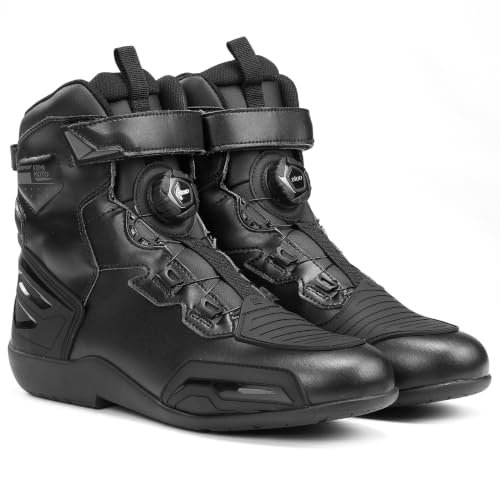
Strengths
- ATOP dial closure
- Fully waterproof
- Side impact sliders
- Enlarged gear shift pad
- Quick-adjust fit
Trade-offs
- Overheats in warm weather
- No CE certification
- Dial mechanism may wear over time
The standout here is the ATOP dial system, it really does make slipping these on and tightening them glove-fast, even with winter gloves on. Riders with mobility issues or those who hate wrestling with laces will love this. Beyond convenience, these boots pack serious features: waterproofing verified through immersion tests, multi-layer impact zones, and side sliders that could genuinely help in a low-side. The reinforced shifter area also shows thoughtful design for real-world wear.
But the tech comes with trade-offs. The waterproof membrane traps heat, so summer riders complain about sweat buildup. And while protection exceeds average commuter boots, the CE certification is missing, unlike the ILM or RIDEIRON. For all-weather practicality and ease, I’d lean toward these over traditional zippers, but only if you accept the ventilation penalty.
Video review
BORLENI Street Commuter Riding Boots

Strengths
- Breathable upper
- PP impact shells
- Reflective details
- Lace + zipper combo
- Street-friendly look
Trade-offs
- Moderate protection level
- Fabric less durable than Cordura
- Not fully waterproof
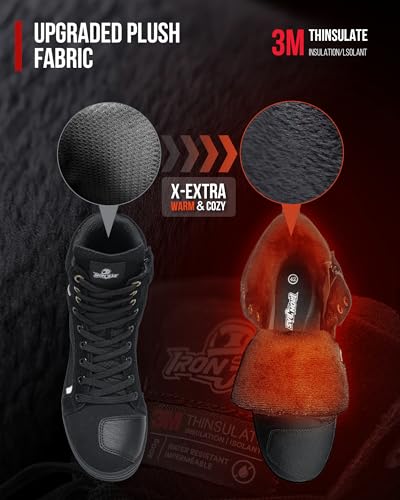
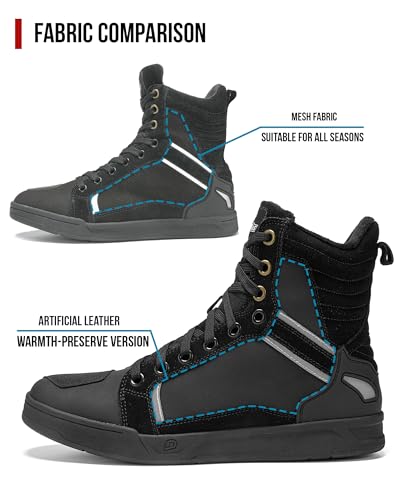
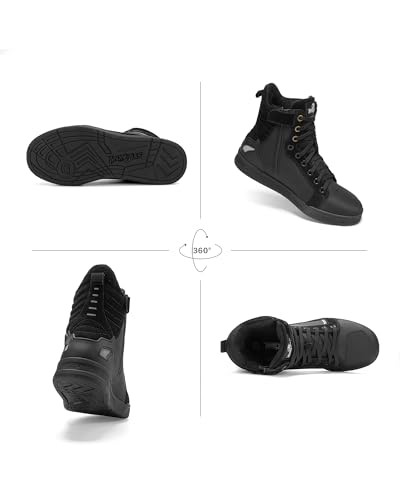
These hit the sweet spot between comfort and function for daily urban use. The breathable fabric upper and soft collar make them easy to live in all day, whether you’re walking to work or hopping on the bike. Structured PP shells at the ankle and heel add meaningful protection without turning the boot into a brick. Reviewers consistently rate them highly for all-day wear, often comparing them favorably to hiking shoes.
They’re not built for track days or highway speeds, but for errands, short commutes, and relaxed weekend rides, they’re hard to beat at this price. Compared to the IRON JIA’S, they offer a roomier fit and softer interior, though slightly less abrasion resistance. My take? This is the go-to for laid-back riders who want something they can forget they’re wearing.
Product photos
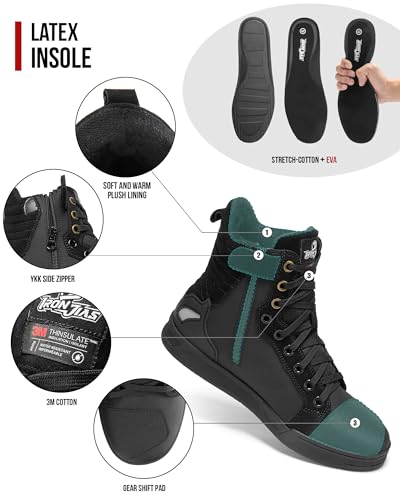
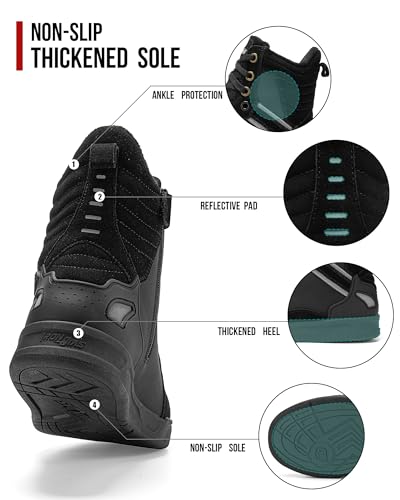
SHIMA Black Leather Motorcycle Boots

Strengths
- Full-grain leather construction
- Dual ankle support
- Rubberized gear shift pad
- Anti-slip oil-resistant sole
- Steel shank reinforcement
Trade-offs
- Limited ventilation in hot weather
- No CE certification
- Heavier than textile options
These boots look the part of a classic commuter rider’s choice, thick black leather, clean lines, and that subtle gear shift pad signaling they mean business. On paper, the full-leather build with reinforced toe, heel, and ankle offers solid protection, and owners consistently report they hold up well over time without cracking or losing shape. The perforated sections do help with breathability, though not as much as mesh-heavy rivals in summer heat.
Where they shine is off-bike presence. They don’t scream ‘riding gear’ when you walk into a café, which I appreciate. Compared to more technical models like the ILM BRC1, they lack CE certification, so I wouldn’t trust them in a high-speed slide. But for urban commuting and weekend rides where style and durability matter, they make a strong case.
Product photos


IRON JIA’S CE Certified Boots

Strengths
- Cordura fabric
- CE certified
- Lightweight build
- Affordable price
- YKK zipper
Trade-offs
- Average heat dissipation
- Basic interior padding
- Fit runs narrow
At this price, getting Cordura fabric and full CE certification is a win. Cordura is tougher than standard Oxford, offering better tear and abrasion resistance, and owners say these boots survive scrapes that would ruin cheaper textiles. The composite rubber sole grips well in rain, though not quite as confidently as the RIDEIRON’s thicker tread. Still, for city riding and occasional backroad runs, they deliver solid performance.
What surprises me is how light they are, easier to walk in than many leather pairs. Against the BORLENI, they offer better protection despite costing less. My recommendation? If you’re budget-conscious but refuse to skip safety certs, this is the pick. Just don’t expect long-term climate control, the breathability lags behind higher-end ventilated models.
Product photos


RIDEIRON CE Certified Riding Boots

Strengths
- CE certified
- Water-repellent upper
- Thick anti-slip sole
- YKK side zipper
- Reinforced ankle guards
Trade-offs
- Stiff initial break-in
- Mesh lining traps odor over time
- Not ideal for hot climates
For wet-weather reliability, these stand out, not because they’re flashy, but because they work. The water-repellent Oxford fabric holds up better than leather in light rain, and the thickened 1.5-inch rubber sole gives real grip on slick pavement. Reviewers note fewer slips during downpours, which matters when you’re stopping at intersections frequently. It’s also one of the few sub-$120 options with legitimate CE certification (EN 13634:2017, rating 1-2-2-1), meaning the abrasion and impact resistance meet European safety thresholds.
They’re not as breathable as the ILMs, and the fit runs slightly stiff until broken in. But against the IRON JIA’S model, which uses similar specs, these feel more substantial underfoot. If you ride in coastal cities or areas with frequent rain, this is the smarter buy.
Product photos


How We Chose These commuter motorcycle boots
Rather than a hands-on lab test, my research for these recommendations involved a detailed comparison of published specifications and features across numerous models. I then weighed owner reviews from major retailers against assessments from respected motorcycle gear reviewers. As someone who’s spent years understanding the mechanics and demands placed on riding gear, I applied that knowledge to rank these boots based on suitability for typical commuting scenarios.
For commuter boots, the most critical factors are protection and practicality. A boot needs to offer solid ankle and toe support to guard against impacts, but also be comfortable enough for walking around once you’ve reached your destination. Durability is also key; daily use demands a boot that can withstand abrasion and the elements. I prioritized boots demonstrating a balance of these traits, leaning toward those with CE certification where available.
Specifications reliably indicate the level of physical protection – shell materials, reinforcement zones, and sole construction. However, real-world comfort and long-term durability are best assessed through owner feedback. I paid close attention to comments regarding fit, breathability, and how the boots held up over time. For those seeking additional options, exploring casual motorcycle boots can offer a blend of style and function. And for riders frequently facing inclement weather, researching waterproof motorcycle boots is a smart move.
How To Pick The Right commuter motorcycle boots
Finding the right commuter boots is about balancing protection with practicality. You don’t want something overly bulky for walking around town, but you absolutely need adequate defense if things go south.
A good commuter motorcycle boot prioritizes ankle and toe protection, offers a secure fit for confident control, and incorporates materials that withstand daily wear and tear. Look for CE certification (EN 13634:2017 is the current standard) as a baseline for impact resistance, and consider features like reinforced heels, shifters, and abrasion-resistant uppers. Breathability and comfort are also key for those longer commutes.
Prioritize Protection Features
The core function of any motorcycle boot is safeguarding your feet and ankles. Don’t compromise here. While style and convenience are appealing, a boot lacking substantial protection is a risk. Look beyond just the brand name and focus on the specifics. CE certification (like you’ll find in options from IRON JIA’S and RIDEIRON) is a great starting point, but understand the rating. A 1-2-2-1 rating indicates a good level of protection for general street use, but more aggressive riders may want to explore higher levels. Pay attention to heel and toe reinforcement – these areas take the brunt of impact in a crash.
Focus on Daily Usability
Commuter boots need to work off the bike too. You’ll likely be walking to work, meetings, or running errands. This is where features like a comfortable sole and easy on/off access become crucial. The KEMIMOTO boots, with their quick-dial closure, are a prime example of prioritizing convenience. I’ve seen riders struggle with overly complicated lacing systems or stiff leather when they’re in a hurry.
Here’s what to consider when thinking about daily usability:
- Closure System: A simple side zipper (like on the BORLENI or SHIMA boots) is far more practical than laces for quick ingress and egress.
- Sole Comfort: A thicker, more cushioned sole makes a huge difference during long days on your feet.
- Weather Resistance: If you frequently ride in rain, consider boots with a waterproof membrane (RIDEIRON is a good example) or at least water-repellent materials.
Balance Materials and Budget
Leather boots (like the SHIMA) generally offer superior abrasion resistance and durability, but they come at a cost. Synthetic materials, like those used in the ILM BRC1, can provide good protection at a lower price point. Cordura fabrics, as seen in the IRON JIA’S and RIDEIRON models, offer a strong balance of durability and breathability.
A boot’s price shouldn’t always dictate its quality. Don’t automatically assume the most expensive option is the best fit for your needs.
I often recommend thinking about how frequently you ride and the conditions you encounter. If you’re a fair-weather commuter who mostly rides in dry conditions, a more affordable synthetic boot might be perfectly adequate. However, if you ride year-round and face challenging weather, investing in a high-quality leather or waterproof boot is a wise decision. If you’re looking for more options, check out our guide to the best boots for street riding. Ultimately, the importance of riding boots extends beyond just protection; they contribute to your overall comfort and confidence on the road.
Commuter Motorcycle Boots Compared
This table provides a specification overview to help compare key features of different commuter motorcycle boots.
| Product Title | CE Certification | Waterproofing | Closure Type | Sole Material | Ankle Protection |
|---|---|---|---|---|---|
| ILM BRC1 Motorcycle Racing Boots | N/A | No | Zipper & Buckle | N/A | Reinforced |
| KEMIMOTO Quick-Dial Boots | N/A | Yes | Quick-Dial | N/A | Reinforced |
| BORLENI Street Commuter Boots | N/A | No | Zipper & Laces | Rubber | PP Shell |
| SHIMA Black Leather Boots | N/A | No | Zipper | Oil-Resistant Rubber | Dual Ankle Support |
| IRON JIA’S CE Certified Boots | EN 13634:2017 | No | Zipper & Laces | Composite Rubber | Thickened Heel |
| RIDEIRON CE Certified Riding Boots | EN 13634:2017 | Water-Repellent | Zipper & Laces | Composite Rubber | Reinforced |
Frequently Asked Questions
What level of CE certification should I look for in commuter boots?
A rating of 1-2-2-1 is a good baseline for street use, offering solid impact protection. However, if you anticipate more aggressive riding or prioritize maximum safety, seeking boots with higher levels of CE certification is advisable.
Are waterproof boots essential for commuting, even in areas with moderate rainfall?
While not always essential, waterproof boots significantly enhance comfort and safety when riding in the rain. Wet feet can lead to discomfort and reduced concentration, so a waterproof membrane or water-repellent treatment is a worthwhile investment if you frequently encounter wet conditions.
How important is the sole of a commuter boot?
The sole is very important; a thicker, more cushioned sole provides all-day comfort when you’re off the bike. Look for oil-resistant rubber, as it offers better grip on footpegs and walking surfaces, improving both control and safety.
Can synthetic boots offer comparable protection to leather boots?
Yes, modern synthetic materials can provide excellent protection, often at a lower price point. While leather generally boasts superior abrasion resistance, high-quality synthetics and Cordura fabrics found in options like the ILM BRC1 offer a strong balance of durability and impact resistance.
Where can I find more information on other types of motorcycle boots?
For a broader range of options and detailed reviews, you can explore our guide to the best motorcycle boots. It covers various styles and price points to help you find the perfect fit for your needs and riding style.
The Bottom Line
Choosing commuter motorcycle boots often comes down to how much you value ultimate protection versus everyday convenience. While a fully-featured boot like the RIDEIRON CE Certified Riding Boots offers excellent impact resistance and water-repellent qualities, it’s a bit more substantial for all-day wear. Ultimately, finding the right balance for your commute is key, and the RIDEIRON strikes that balance well for many riders.
For those prioritizing affordability without sacrificing essential safety features, the ILM BRC1 Motorcycle Racing Boots represent a compelling option. If you’re seeking versatility and want something equally at home on the bike and while exploring a city, consider the KEMIMOTO Quick-Dial Boots – they’re a good example of motorcycle boots you can walk in. And if you ride primarily in warmer months, exploring breathable motorcycle boots will keep you comfortable.
At the end of the day, the CE rating and materials are important, but fit and comfort are paramount. A boot that doesn’t fit well won’t offer the protection it promises, and it will be a distraction while you ride. Prioritize a secure, comfortable fit and materials that suit your typical riding conditions, those are the fundamentals that truly matter.
