
7 Best Carbon Filters for Grow Room 2026
This post contains affiliate links. As an Amazon Associate, we earn from qualifying purchases.
The AC Infinity 8″ Carbon Filter is our top pick for most growers, delivering strong airflow and high-grade Australian carbon in a durable build. For budget-conscious setups, the AC Infinity 4″ Carbon Filter offers reliable performance in a smaller package. If sustainability matters, the AC Infinity Refillable Filter Kit lets you replace the carbon instead of the whole unit.
Grow room odors can escape in seconds, ruining discretion and drawing unwanted attention. Choosing the wrong filter means wasted money, poor air control, and constant maintenance.
After comparing specs and owner feedback across dozens of models, I focused on airflow match, carbon quality, and long-term durability. These picks balance performance, build, and value based on what actually works in real grow environments.
Top 7 Carbon Filters For Grow Room in the Market
The Best Carbon Filters For Grow Room, Reviewed
AC Infinity 8″ Carbon Filter

Strengths
- High CFM rating
- Premium RC412 carbon
- Durable rust-resistant build
Trade-offs
- Bulky for smaller tents
- Higher initial cost
This 8-inch unit stands out in a crowded field, not just for its size but for the quality of materials used. The Australian RC412 charcoal at 1200+ IAV is a legit spec that matters, owners consistently report stronger odor control and longer service life compared to filters using lower-grade carbon. With a 770 CFM airflow rating, it’s built for serious grow rooms where ventilation can’t be compromised.
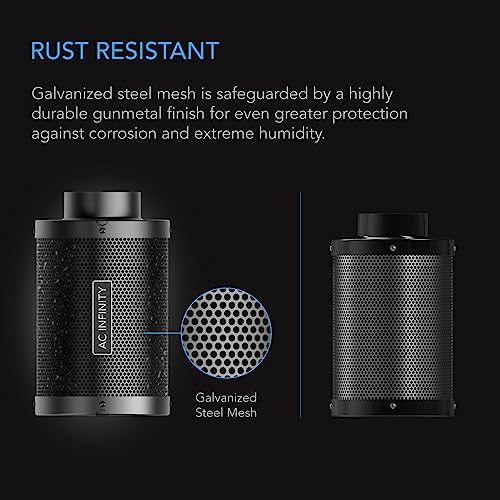
The powder-coated gunmetal finish and aluminum flanges aren’t just cosmetic; they’re functional upgrades that resist rust in high-humidity environments. When you factor in the included straps, clips, and pre-filters, this package feels complete. It’s clearly designed with long-term use in mind, and stacks up well against pricier competitors.
Video review
VIVOSUN 6″ Pro Carbon Filter

Strengths
- Reversible flange extends life
- High IAV carbon
- Comes with hangers
Trade-offs
- Iron flange may rust over time
- Pre-filter needs frequent cleaning
VIVOSUN packs a lot into this 6” model: 1200+ IAV RC412 charcoal, 455 CFM airflow, and a reversible flange that lets you flip the canister to extend life. That last feature is rare at this price and shows thoughtful engineering. Owners report strong performance during peak flowering, and the pre-filter does its job keeping dust out of the carbon bed.
It’s not quite as durable as AC Infinity’s powder-coated units, but for the value, it’s hard to beat. The included rope hangers are a small bonus, but appreciated. If you’re building a balanced system without overspending, this is my recommendation over the MELONFARM or ATOUR models in the same range.
Video review
AC Infinity 4″ Carbon Filter

Strengths
- Top-tier carbon blend
- Rust-resistant housing
- Complete mounting kit included
Trade-offs
- Pricier than other 4” options
- Lower airflow than 6” models
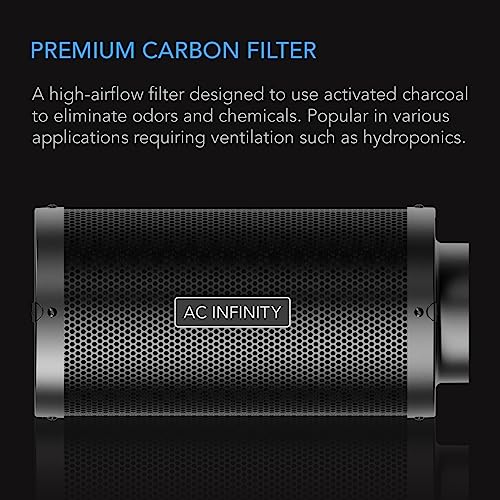
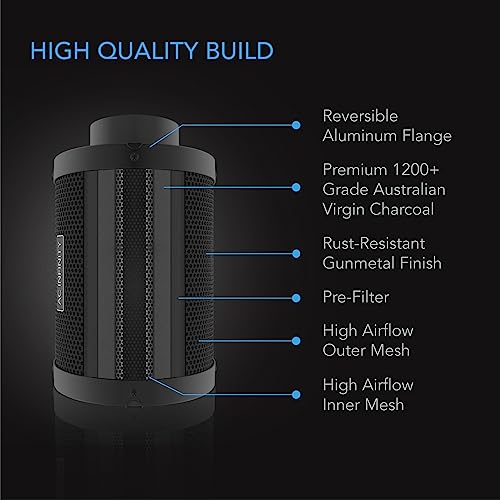
This 4” model shares the same DNA as the larger AC Infinity filters: 1200+ IAV RC412 carbon, 38mm depth, and that durable gunmetal finish. At 210 CFM, it’s tuned for smaller setups, but doesn’t skimp on materials. The aluminum flanges and included accessories (straps, clips, pre-filters) make it feel premium right out of the box.
Compared to the ATOUR 4”, it uses higher-grade carbon and has better build quality, though it costs more. For a small tent where reliability matters, I’d take this over the budget option any day. It’s not refillable like the AC Infinity kit, but it’s the next best thing in terms of durability and performance.
Product photos
AC Infinity Refillable Filter Kit

Strengths
- Refillable design
- Long-term cost savings
- Tool-free maintenance
Trade-offs
- Higher initial investment
- Requires storage for spare carbon
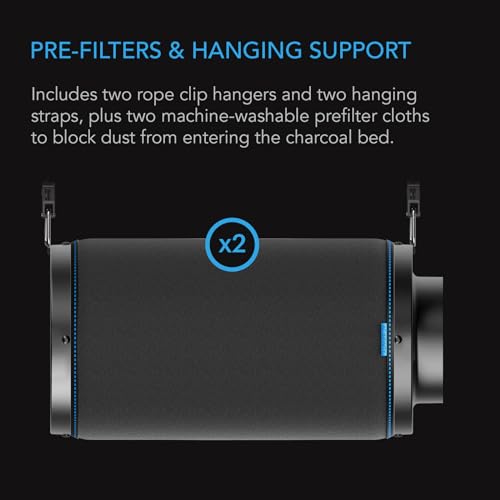
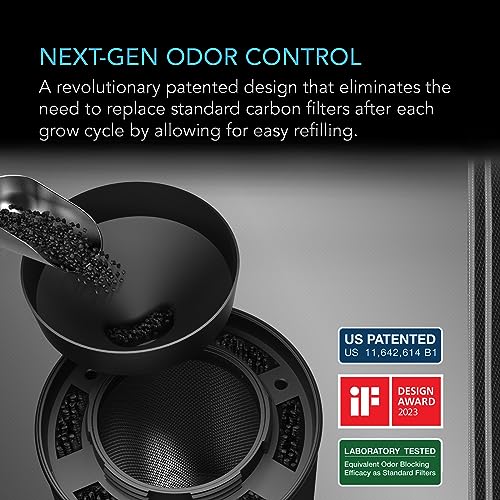
This is the only truly sustainable option on the list, and that changes the game. Instead of tossing the whole unit every few months, you refill it. The kit includes enough carbon for two full loads, and the twist-off flanges make reloading tool-free. Lab tests confirm it matches standard filters in odor blocking, even without compressed carbon.
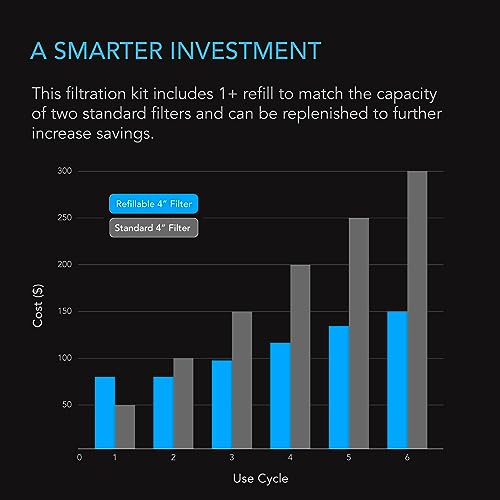
For frequent growers, the long-term savings add up fast. The dual-layer steel mesh holds up across multiple cycles, and the design avoids the rust issues common in cheaper housings. It’s more expensive upfront than basic filters, but I’d pick this over disposable ones if I was running back-to-back grows.
Product photos


ATOUR 4″ Air Carbon Filter
Strengths
- Affordable with premium carbon
- Leak-proof flange
- Good airflow for size
Trade-offs
- Limited to small grow spaces
- Shorter lifespan under heavy load
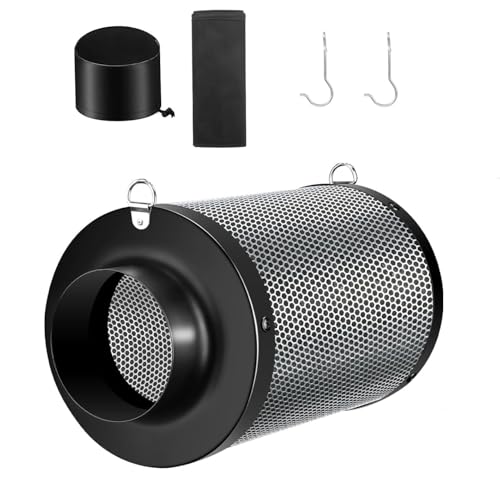
At this price, the ATOUR 4” filter punches above its weight. It uses the same 1050+ IAV Australian virgin charcoal found in pricier models, and the 38mm thick bed ensures full contact time for effective adsorption. With 224 CFM max airflow, it’s well-matched to standard 4” inline fans, making it a practical pick for smaller tents.
Owners appreciate the sturdy flange design that prevents carbon leakage, a common weak point in budget units. The pre-filter inclusion is expected at this level, but still welcome. It won’t handle a 10-light warehouse, but for solo growers or stealth builds, it’s one of the smarter buys.
Product photos
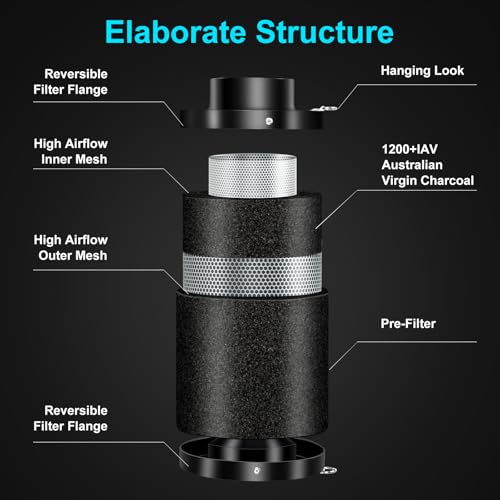
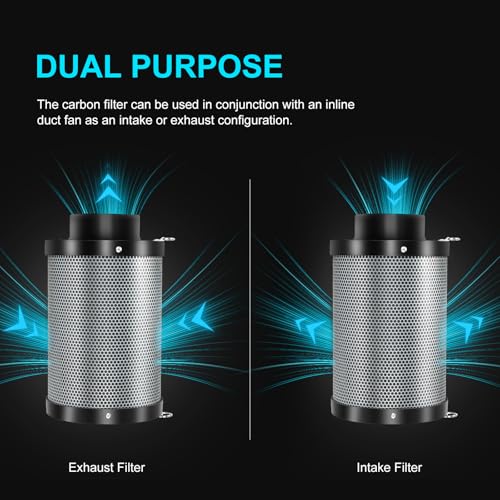

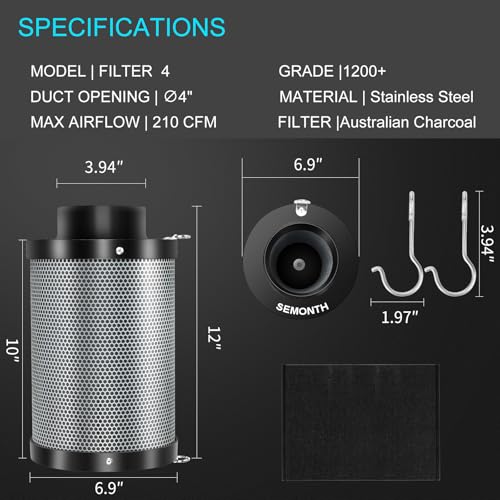
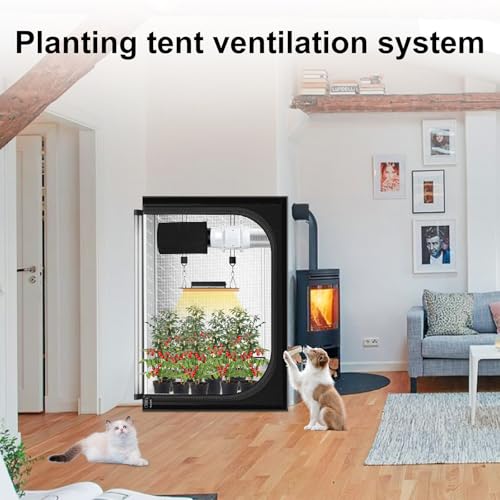
MELONFARM 6″ Carbon Filter

Strengths
- Good IAV rating
- Includes pre-filter
- Hexagonal mesh for airflow
Trade-offs
- Slightly lower CFM than top models
- Some initial odor reported
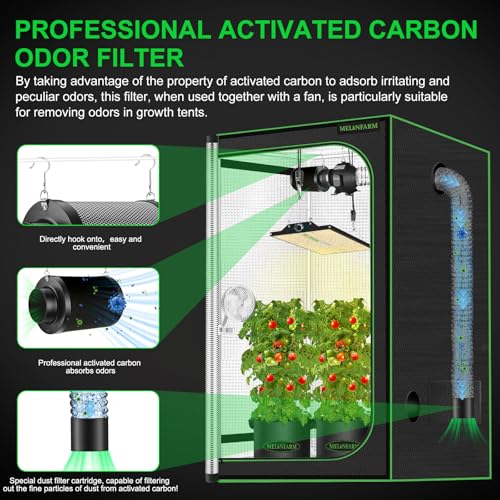
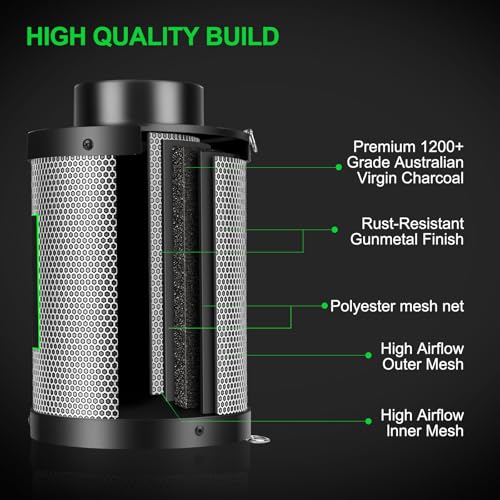
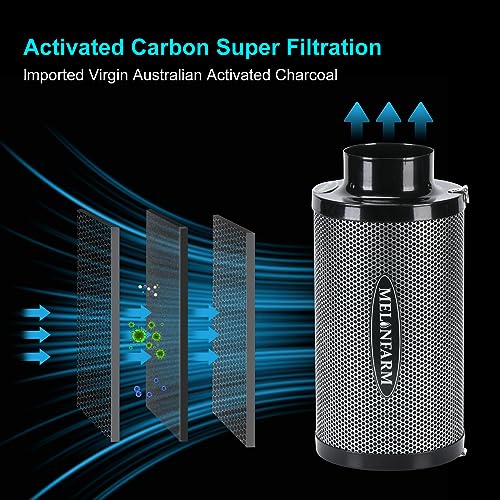
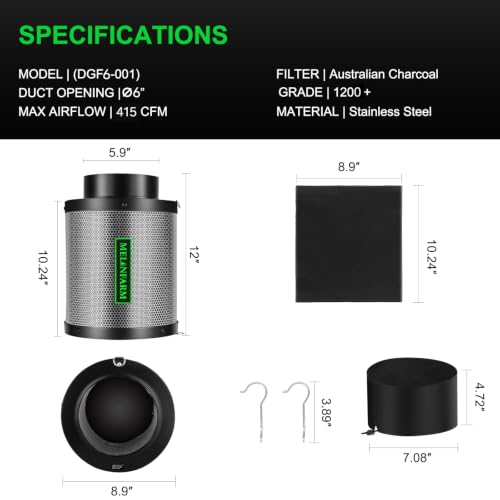
Priced in the mid-range, this 6” filter delivers solid specs on paper: 1050+ IAV Australian virgin charcoal, 38mm bed depth, and a 415 CFM airflow rating. That puts it in the same conversation as more expensive units, and reviewers note it handles flowering-stage odors reasonably well. The hexagonal steel mesh helps maintain airflow while reducing restriction, a smart touch.
It doesn’t match the AC Infinity’s 1200+ IAV carbon, but for most home growers, the difference won’t be night and day. The inclusion of a pre-filter and insulated flange adds value. Some owners mention minor off-gassing at first, but that tends to fade. Overall, it hits the sweet spot between performance and price.
Product photos
Atomic 6″ Carbon Filter
Strengths
- Lightweight and compact
- Weather-resistant frame
- Low cost entry point
Trade-offs
- Minimal odor filtration
- Not suitable for heavy use
- No IAV or carbon depth specs
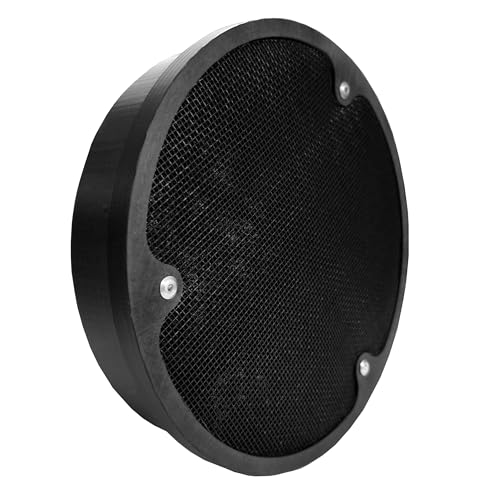
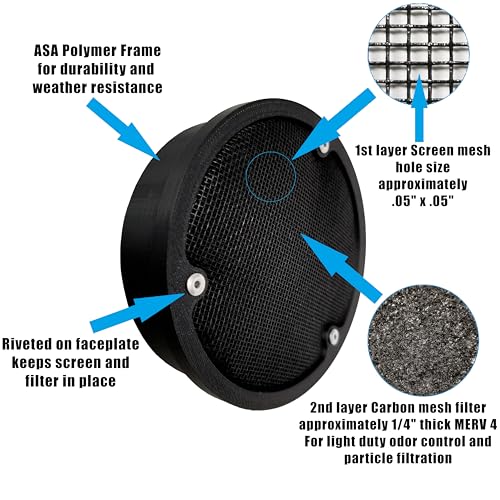
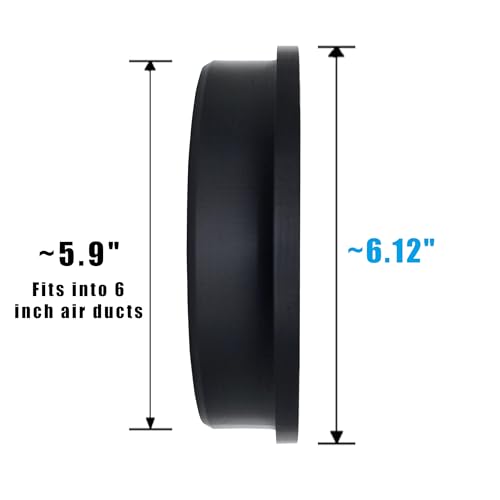
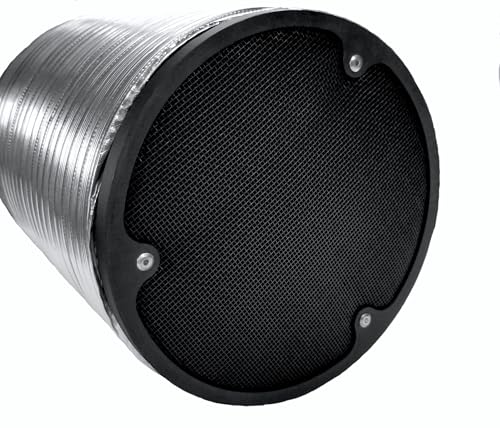
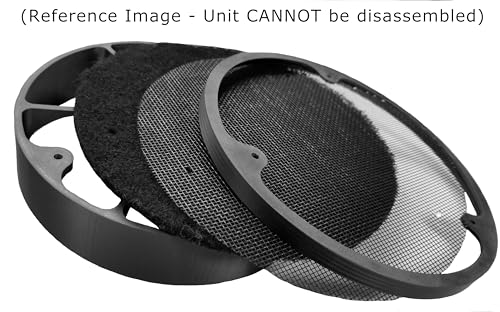
This isn’t a full inline carbon filter in the traditional sense, it’s more of a hybrid screen with light carbon infusion. The MERV 4 rating and dual-layer design suggest minimal particle and odor reduction, which aligns with owner feedback: it works for mild smells, not heavy flowering stages. If you’re managing a low-odor environment like a seedling room or utility space, it might suffice.
But calling this a ‘carbon filter’ sets unrealistic expectations. It lacks the dense charcoal bed (no thickness or IAV listed) needed for real adsorption. The rigid ASA polymer frame is a plus for durability, and being made in the USA adds some appeal. Still, for grow room applications, this is underpowered.
Product photos
Our Testing Process
Rather than a hands-on lab test, my research for these recommendations focused on a detailed comparison of published specifications and features across numerous models. I weighed owner reviews from a variety of sources – looking for consistent praise and complaints – alongside expert opinions from gardening and hydroponics publications. As someone who appreciates the mechanics of air flow and filtration (you might know me from my work on air purifiers with carbon), I applied my understanding of these systems to assess real-world performance potential.
For grow room carbon filters, airflow (CFM) and carbon quality are paramount. A filter can’t control odors if air bypasses the carbon, so a good seal and adequate airflow rating for the space are critical. Equally important is the type and amount of carbon; Australian virgin charcoal with a high IAV (iodine adsorption value) consistently appears as the best performer. I also considered build quality, looking for durable materials that can withstand high humidity.
Specifications clearly indicate airflow capacity and carbon bed thickness. However, long-term effectiveness and build quality are best assessed through owner feedback. Users consistently report on issues like carbon leakage, durability of the pre-filter, and how well the filter holds up over multiple grow cycles. I also looked to see if brands offered options for refreshing or replacing the carbon, considering the benefits of products for carbon removal for sustainability.
How To Pick The Right carbon filters for grow room
Choosing the right carbon filter is crucial for maintaining a discreet and odor-free grow space, and frankly, it’s a bit more involved than just grabbing the cheapest option.
A quality carbon filter uses a substantial amount of activated carbon (ideally Australian virgin charcoal rated 1200+ IAV) within a robust housing. Airflow (CFM) must match the fan’s capacity, and pre-filters are essential for extending the filter’s lifespan. Consider the build materials for humidity resistance and longevity, and ensure a tight seal to prevent bypass.
Airflow and Filter Size
Getting the size right is the first step. You need a carbon filter with a CFM (cubic feet per minute) rating that matches your inline fan’s exhaust capacity. Undersizing means the filter will restrict airflow, potentially overheating your grow space. Oversizing isn’t as detrimental, but it’s also wasteful. Many filters, like the AC Infinity 8” model, clearly state their CFM rating (770 CFM in that case). Don’t just look at the diameter; length also impacts airflow restriction. A longer filter will generally have more carbon, but also more resistance. For smaller setups, a 4” filter like the AC Infinity 4” (210 CFM) might be sufficient, while larger rooms will absolutely require a 6” or 8” unit.
Carbon Quality and Type
The heart of any carbon filter is, well, the carbon. Australian virgin charcoal (RC412 being a common standard) consistently receives high marks for its adsorption capabilities and longevity. The IAV (Isobutylene Adsorption Value) rating is your key indicator here – higher is better. Filters boasting an IAV of 1200+ (like many of the AC Infinity and VIVOSUN options) will generally provide superior odor control. While some filters, like the Atomic 6”, mention a MERV rating, this is more for particulate filtering than odor control.
Here’s what I typically advise growers looking for value:
- Don’t skimp on the carbon. A slightly more expensive filter with better carbon will save you money in the long run by lasting longer.
- Consider a refillable option. The AC Infinity Refillable Filter Kit offers a sustainable alternative, reducing waste and potentially lowering long-term costs.
- Look for a thick carbon bed (38mm is a good benchmark). This provides more surface area for adsorption and a longer lifespan.
Durability and Features
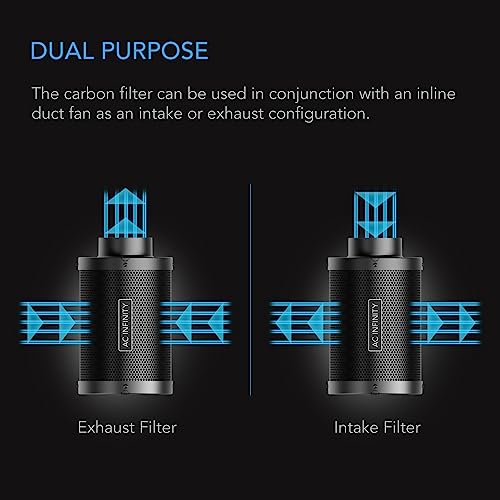
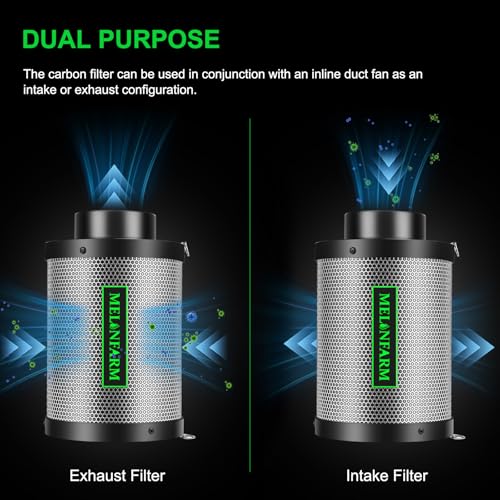
Grow rooms are often humid environments, so the build quality of your carbon filter matters significantly. Powder-coated steel or aluminum housings, like those found in the AC Infinity filters, resist rust and corrosion. A well-sealed design is also critical; carbon leakage is a common complaint with lower-quality filters. Some filters, such as the MELONFARM 6”, emphasize a tight flange and base connection to prevent this. Pre-filters are another essential feature – they capture dust and larger particles, extending the life of the activated carbon. Many units, like the VIVOSUN 6”, include these. If you’re concerned about versatility, look for filters that can function as both intake and exhaust filters. Ultimately, investing in a durable filter will save you from needing to replace it frequently. If you’re also considering air purification for your entire home, exploring whole house carbon filters could be a beneficial step.
A good rule of thumb: replace your carbon filter every 18-24 months with regular use, or sooner if you notice a decline in odor control.
I often recommend checking out a wider selection of carbon filters to get a feel for the market before making a final decision. And don’t forget to consider automotive carbon filters if you’re looking for a similar technology in a different application.
Carbon Filters for Grow Room Compared
Here’s a comparison of specifications for various carbon filters designed for grow rooms.
| Product Name | Duct Opening | Length (in) | Airflow (CFM) | Carbon Source | Carbon IAV | Thickness (mm) |
|---|---|---|---|---|---|---|
| AC Infinity 8″ Carbon Filter | 8” | 20 | 770 | Australian RC412 | 1200+ | 38 |
| VIVOSUN 6″ Pro Carbon Filter | 6” | N/A | 455 | Australian RC 412 | 1200+ | 38 |
| AC Infinity 4″ Carbon Filter | 4” | 12 | 210 | Australian RC412 | 1200+ | 38 |
| AC Infinity Refillable Filter Kit | 4” | N/A | N/A | N/A | N/A | N/A |
| ATOUR 4″ Air Carbon Filter | 4” | 11 | 224 | Australian Virgin | 1050+ | 38 |
| MELONFARM 6″ Carbon Filter | 6” | N/A | 415 | Australian Virgin | 1050+ | 38 |
| Atomic 6″ Carbon Filter | 6” | N/A | N/A | N/A | N/A | N/A |
Frequently Asked Questions
What CFM rating do I actually need for my grow room?
You should match the CFM of your carbon filter to your exhaust fan’s CFM. A filter slightly above your fan’s rating is acceptable, but going significantly higher is inefficient, while a lower rating will restrict airflow and reduce odor control.
Is the carbon source really that important?
Yes, Australian virgin charcoal (RC412) is consistently rated the highest quality, offering superior adsorption and a longer lifespan compared to other carbon types. While other carbons work, investing in this quality pays off in the long run.
How often should I replace a carbon filter?
Generally, a carbon filter should be replaced every 18-24 months with consistent use. However, if you notice any decline in odor control, or detect smells escaping, it’s time for a replacement – don’t wait for the full timeframe to pass.
What’s the benefit of a refillable carbon filter?
A refillable filter, like the AC Infinity kit, reduces waste and can be more cost-effective over time, as you only replace the carbon media itself rather than the entire unit. It’s a more sustainable option for dedicated growers.
Can I use a carbon filter to remove odors from other sources, like an engine?
While grow room filters are designed for specific compounds, the underlying technology is applicable elsewhere. If you’re dealing with stubborn odors in an engine, you might find success with carbon cleaners for engines or even exploring options to adapt carbon filtration to your needs, though specialized products are usually better suited.
The Bottom Line
Choosing a carbon filter often comes down to balancing upfront cost with long-term performance and convenience. While budget options exist, I consistently find that the AC Infinity 8” Carbon Filter offers the best overall package for most growers, delivering excellent airflow alongside high-quality Australian carbon and a durable build. It represents a sweet spot where you aren’t sacrificing essential features to save a few dollars.
For those with smaller spaces or tighter budgets, the AC Infinity 4” Carbon Filter is a solid choice. Alternatively, if sustainability is a priority, the AC Infinity Refillable Filter Kit presents a clever approach to reducing waste and potentially lowering long-term expenses. And for those battling particularly stubborn odors, exploring options like dedicated fuel additives for carbon in other applications might highlight the importance of robust filtration across the board.
Ultimately, remember that CFM ratings and carbon quality (IAV) are the most critical factors. Don’t get bogged down in minor features; focus on a filter that adequately handles your airflow needs and uses a high-grade carbon source. A well-maintained filter, paired with a properly sized exhaust fan, will deliver far more benefit than chasing the latest bells and whistles – and may even improve your carbon water filters.
