
8 Best Air Purifiers with Activated Carbon Filter 2026
This post contains affiliate links. As an Amazon Associate, we earn from qualifying purchases.
The WINIX 5520 stands out as the best overall air purifier with an activated carbon filter, delivering strong performance and smart features for most homes. For those on a tighter budget, the LEVOIT Core 300 offers solid filtration in a compact design, while the Jafanda Air Purifier brings serious odor-fighting power with its 300g carbon filter, making it ideal for pet owners or smokers.
If you’re dealing with lingering cooking smells, pet odors, or air quality concerns from traffic or smoking, a basic HEPA filter won’t cut it. You need real activated carbon, and enough of it, to tackle gases and VOCs that affect how your home smells and feels.
As someone who digs into the details of how things work, I focused this guide on models that combine proven filtration tech with real-world usability. These picks are based on specs, owner feedback, and what actually matters in daily use: carbon weight, CADR ratings, room coverage, and noise.
Top 8 Air Purifiers With Activated Carbon Filter in the Market
The Best Air Purifiers With Activated Carbon Filter, Reviewed
WINIX 5520 Air Purifier
Strengths
- True HEPA filtration
- Strong carbon filter
- AHAM verified performance
- Smart app support
- Whisper quiet on low
Trade-offs
- Higher price point
- Filter replacements cost extra
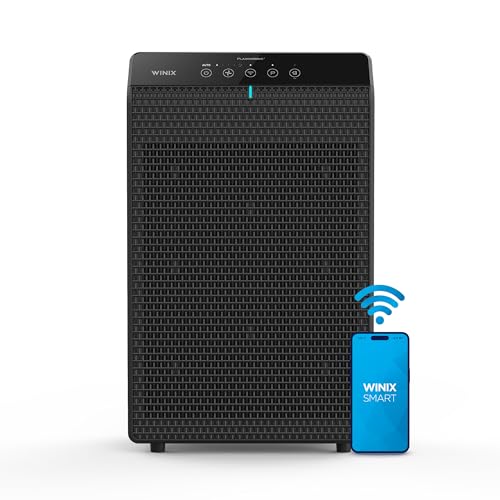
The WINIX 5520 is a high-performing air purifier built for large spaces, and it shows in both specs and owner feedback. With AHAM verification at 392 sq ft and the ability to cycle air in rooms up to 1,882 sq ft per hour, it’s clearly designed for open-concept homes or big living areas. The True HEPA filter captures 99.99% of particles down to 0.01 microns, which beats the standard H13 threshold, this is serious filtration. What really sets it apart is the Advanced Odor Control carbon filter, which owners consistently report makes a noticeable difference with pet odors and cooking smells.
Smart features like the Winix Smart App, auto mode with real-time air sensing, and a light-automated sleep mode make this a hands-off machine once set up. It’s nearly silent at 23.5dB on low, and the washable pre-filter is a practical touch that reduces long-term costs. Compared to the 5510, it’s functionally identical, so unless you’re set on app control, you’re not missing much with the older model.
Video review
WINIX 5510 Air Purifier

Strengths
- True HEPA filtration
- Strong odor control
- Large room coverage
- AHAM verified
- Washable pre-filter
Trade-offs
- No app connectivity
- Same price as superior model
- Dated interface
The WINIX 5510 is essentially the predecessor to the 5520, and honestly, it’s hard to justify the nearly identical price when the 5520 offers the same core features. It covers the same massive 1,882 sq ft per hour, uses the same True HEPA and Advanced Odor Control carbon filter, and includes auto mode, a washable pre-filter, and an air quality indicator. The 23.5dB quiet operation and light-automated sleep mode are identical.
Where it falls short is in app support, the 5510 lacks the Winix Smart App, which the 5520 includes. That’s a meaningful gap if you want remote monitoring. Otherwise, performance is nearly indistinguishable. Owners report strong results with pet allergens and smoke, and the AHAM verification backs its real-world effectiveness. If you find the 5510 significantly cheaper, it’s a good value. At the same price, the 5520 is the smarter buy.
Video review
LEVOIT Core 300 Purifier
Strengths
- Excellent for allergies
- Very quiet operation
- AHAM verified
- Filter performance tested
- Dark-sleep mode
Trade-offs
- Smaller room coverage
- No air quality sensor
- No auto mode
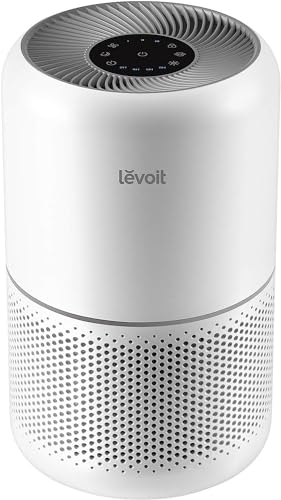
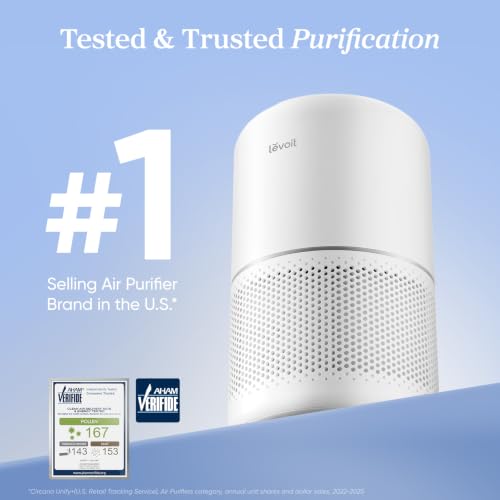
If you’re battling allergies or sharing your home with pets, the LEVOIT Core 300 stands out as a focused, efficient performer. It’s AHAM verified with solid CADR numbers, 143 CFM for smoke, 153 for dust, and 167 for pollen, making it effective in spaces up to 222 sq ft at 4.8 air changes per hour. That’s ideal for a bedroom or office. The H13 True HEPA filter delivers 99.97% efficiency on particles as small as 0.1 microns, and owners praise its consistency in reducing sneezing, itchy eyes, and pet dander in the air.
It’s also one of the quietest units here, hitting just 24dB in sleep mode, and the display can be fully turned off, no blinking lights to ruin your sleep. The lack of a smart sensor or auto-adjusting fan might disappoint some, but the simplicity works in its favor for undisturbed use. Compared to the MOOKA or VOOPNU models, it trades raw coverage for proven, reliable filtration in smaller zones.
Product photos


Cypcat Pet Air Purifier
Strengths
- Dual intake for faster cleaning
- Optimized for pet odors
- Portable with handle
- Quiet in auto mode
- 6-stage filtration
Trade-offs
- Bulky design
- No app support
- High fan noise at max
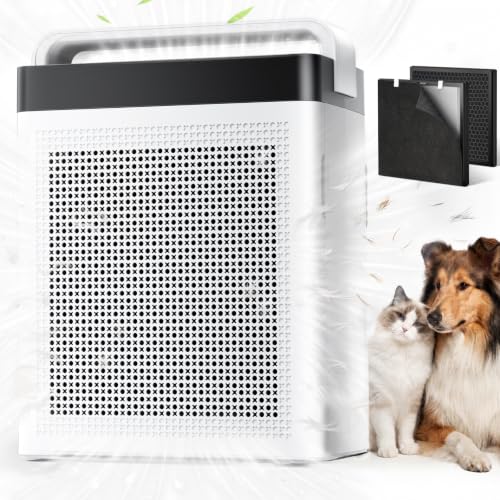
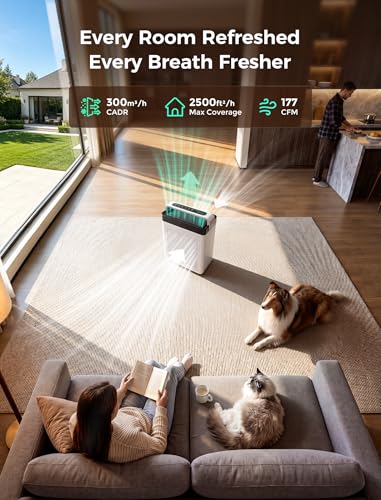
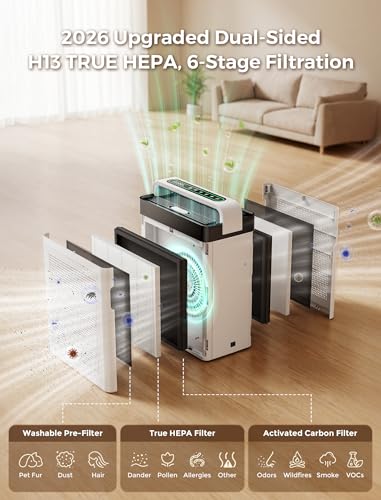
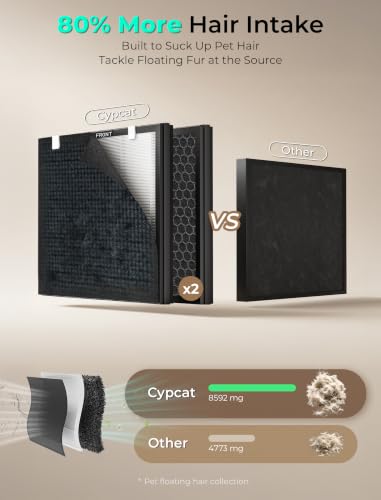
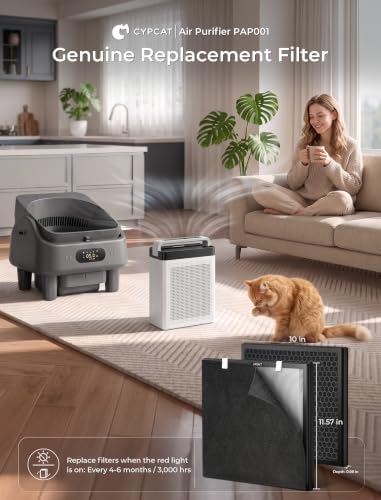
The Cypcat PAP001 is built for pet owners, and it shows. With dual-sided intake and 6-stage filtration, it pulls in air from both sides at 177 CFM each, giving it 2X the airflow of standard units. It claims to handle up to 2,500 sq ft at 1 ACH, which is ambitious, but owners confirm it’s powerful in large, open spaces with multiple pets. The high-activated carbon filter is optimized for locking in pet odors, and the Pet Mode boosts circulation to tackle dander and hair fast.
It’s also portable, thanks to a built-in handle, and runs at just 22dB in auto mode, quiet enough for bedrooms. The display shows air quality with color-coded lights, and the filter reset function is handy. However, its size and noise on high might be too much for small rooms. Compared to the Winix or KNKA, it’s less refined but more specialized. If you’ve got dogs, cats, or both, this one earns its keep.
Product photos

KNKA APH4000 Air Purifier
Strengths
- Real-time AQI display
- High CADR rating
- Dual air intakes
- PET and ECO modes
- Quiet sleep mode
Trade-offs
- Display light can’t be dimmed
- Filters are pricier
- Setup takes time
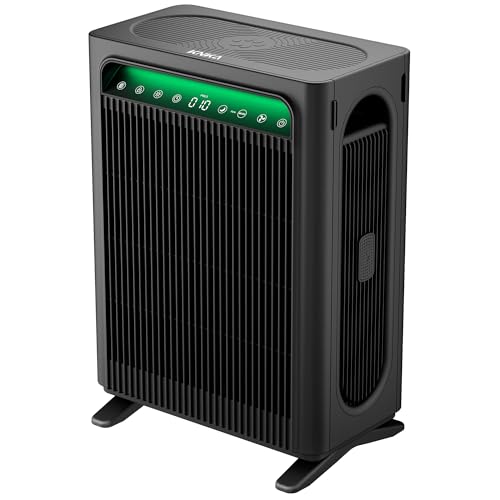
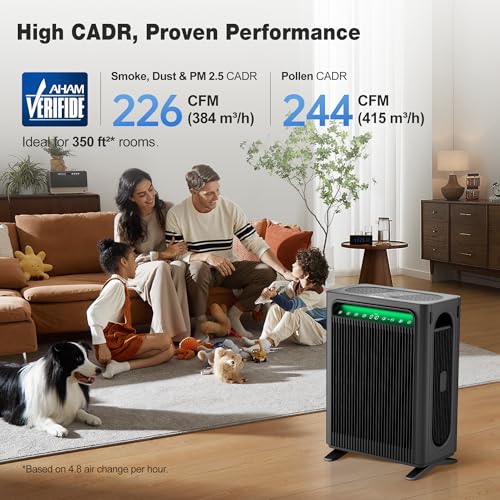
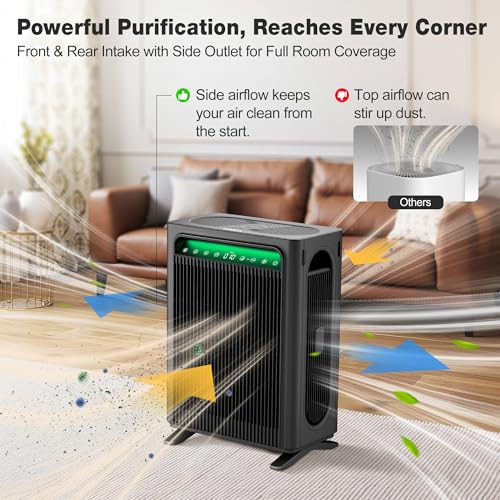
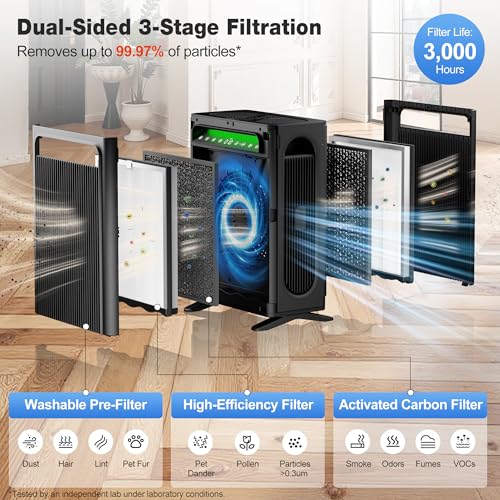
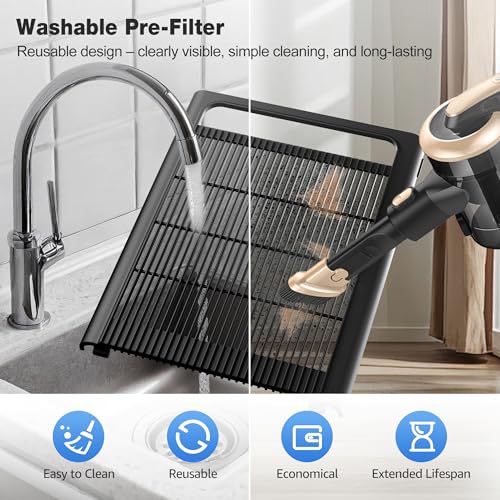
The KNKA APH4000 wins on one key feature: real-time air quality monitoring with a color-coded AQI display. That makes it easy to see at a glance whether your air is good, moderate, or poor, no guessing. It’s AHAM verified with a high CADR of 226 CFM for smoke and dust, and it covers up to 1,695 sq ft per hour, making it strong for large rooms. The dual intake and outlet design improves airflow, and the three-stage dual-filter system includes a solid activated carbon layer for odors.
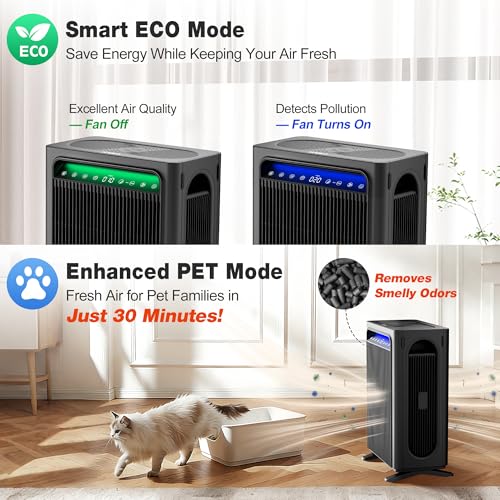
PET Mode ramps up airflow to tackle pet dander quickly, and ECO Mode saves energy when air is clean. Owners appreciate the balance of features and price, though some note the display can be bright at night. Compared to the Jafanda or MOOKA, it offers smarter automation and better feedback. If you want to see your air improve, this is the model to get.
Product photos
MOOKA B-D02L Air Purifier
Strengths
- Extremely quiet
- Low price
- True HEPA filter
- Child lock included
- Energy efficient
Trade-offs
- No air quality sensor
- No auto mode
- Basic build quality
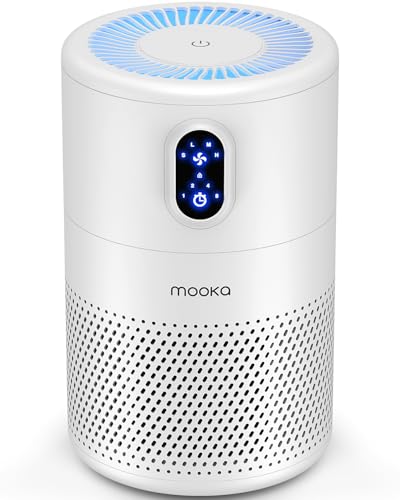
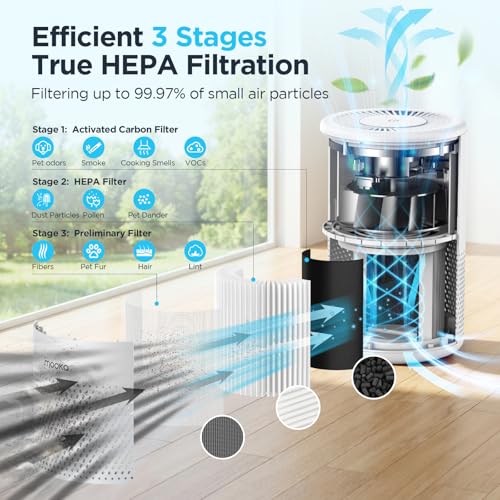
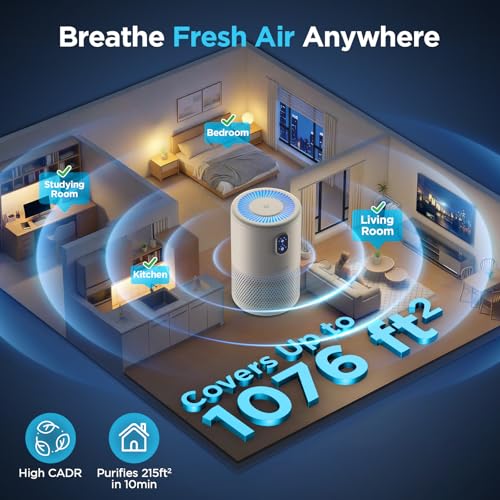
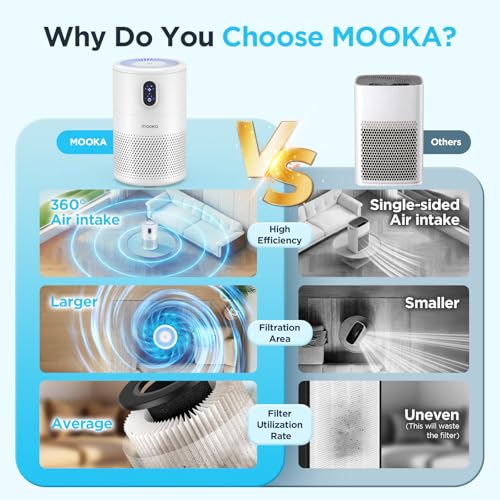
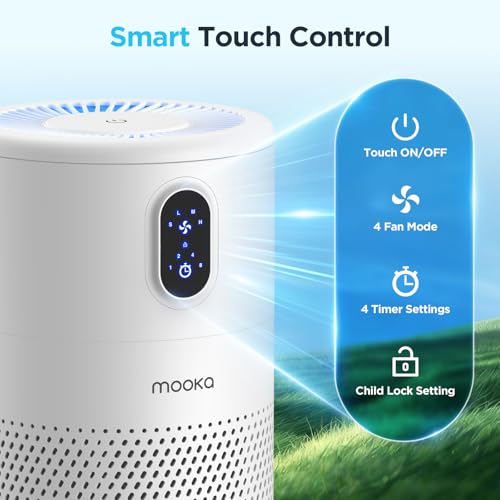
At under $50, the MOOKA B-D02L is a standout for budget buyers who still want real performance. It covers up to 1,076 sq ft per hour and uses a true HEPA filter with activated carbon to trap dust, smoke, pet dander, and odors. The 20dB noise level is among the quietest here, barely audible in a bedroom. It also includes a child lock, timer settings, and a soft night light that can be turned off, making it practical for nurseries or shared rooms.
Owners consistently report it performs well beyond its price, though the filter life tends to be shorter in dusty environments. It lacks smart sensors or auto mode, so you’ll need to manually adjust settings. Compared to the VOOPNU or Levoit, it’s less refined but offers better value for pure coverage and quiet operation. If you don’t need automation, this is a steal.
Product photos

Jafanda Air Purifier
Strengths
- High carbon filter load
- Real-time PM2.5 display
- Auto and sleep modes
- Good large-room coverage
- True HEPA filter
Trade-offs
- Plastic build quality
- No app connectivity
- Filter indicator not as intuitive
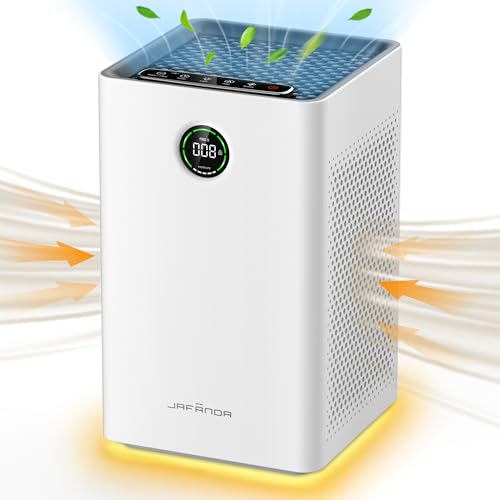
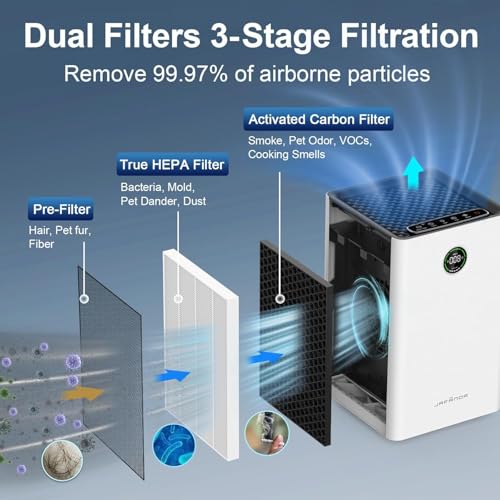
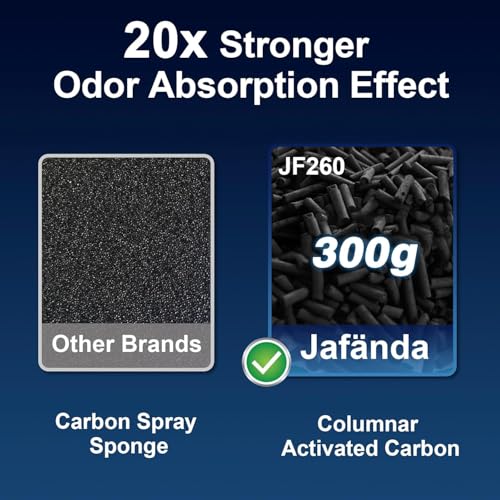
The Jafanda JF260 makes a strong case for itself with a 300g activated carbon filter, one of the heaviest in this group for odor control. That’s a big plus if you’re dealing with persistent smells from cooking, pets, or smoking. The 3-in-1 filtration system includes a true HEPA filter that traps 99.97% of particles down to 0.01 microns, and it covers up to 1,190 sq ft per hour, solid for a mid-tier unit. Owners report it handles smoke and kitchen odors better than similarly priced models.
It includes a PM2.5 sensor with a clear display, five fan speeds, and both auto and sleep modes, making it more feature-rich than some competitors in its price range. The 23dB sleep mode is quiet enough for bedrooms, and the auto mode adjusts well to air quality shifts. Still, it lacks app support and the build quality isn’t as robust as the Winix models. For the price, it’s a smart middle ground between performance and cost.
Product photos



VOOPNU Black Air Purifier
Strengths
- Ultra-compact design
- Essential oil tray
- Very quiet
- Simple one-touch operation
- 360° airflow
Trade-offs
- No air quality sensor
- Overstated room coverage
- No auto mode
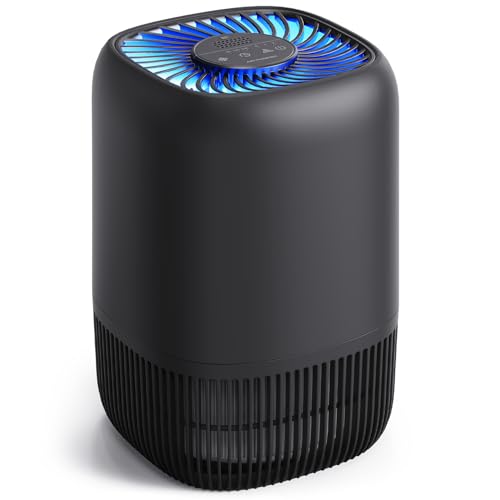
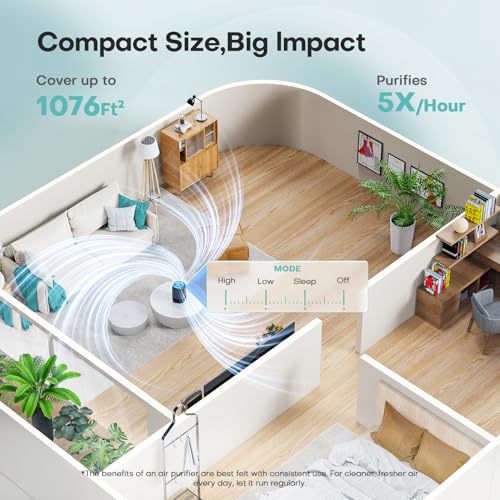
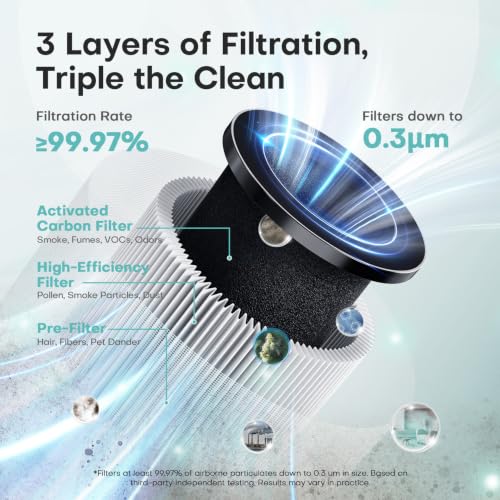
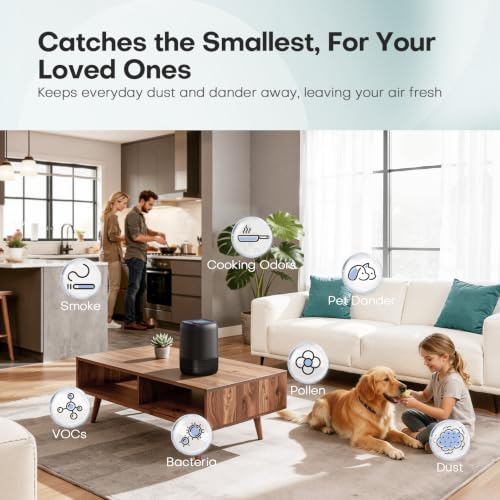
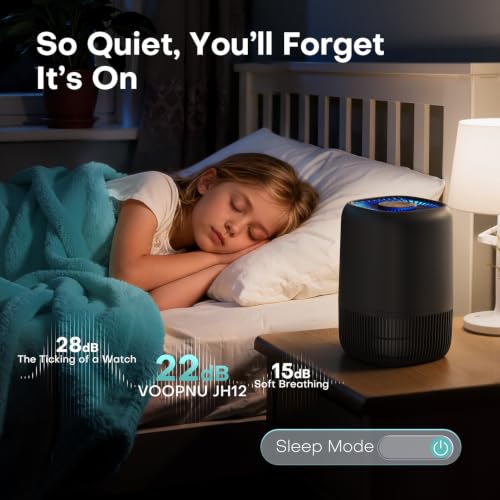
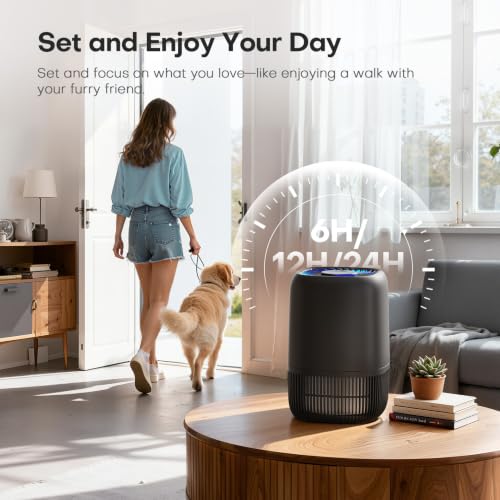
The VOOPNU stands out purely on form and convenience, it’s one of the most compact units here, yet it claims to cover up to 1,076 sq ft per hour. Laboratory testing shows it cleans 250 sq ft every 15 minutes, which is believable for a small room, but real-world owners note it struggles in larger spaces despite the bold specs. The H13 triple-layer filter captures 99.97% of airborne pollutants, and the 360° airflow design helps it pull in air from all sides efficiently.
What really grabs attention is the built-in essential oil tray, a rare feature that lets you add a calming scent while purifying. At 22dB, it’s whisper quiet, and the simple one-button control makes it accessible for all ages. But it lacks an air quality sensor or auto mode, so it won’t adapt on its own. Compared to the MOOKA or Levoit, it’s less precise but more portable. For a desk, nursery, or small bedroom, it’s a sleek, no-fuss option.
Product photos
How We Picked These air purifiers with activated carbon filter
Rather than a hands-on lab test, this is a research-led comparison of published specifications and owner feedback. I started by compiling a list of models consistently appearing in reputable reviews and then compared their features – focusing on filtration stages, room size capacity, CADR ratings, and noise levels. We then weighed owner reviews from multiple sources to understand real-world performance and durability, alongside expert opinions from sites dedicated to home appliance testing. This process allowed us to rank units against a set of clear criteria.
For air purifiers with activated carbon filter, the key factors we prioritized were the weight of the carbon filter itself (more grams generally mean better odor control) and the CADR (Clean Air Delivery Rate) ratings for both smoke and dust. A higher CADR indicates a quicker cleaning cycle, which is critical for allergy sufferers and households with pets. The ability to effectively remove volatile organic compounds (VOCs) – a job primarily handled by the carbon filter – was also heavily weighted, as was verified room coverage.
Specifications reliably tell you about filter types (HEPA, carbon, pre-filter) and CADR numbers, offering a baseline for performance expectations. However, owner feedback proved invaluable in gauging the longevity of filters, the accuracy of auto mode sensors, and the true noise levels at various fan speeds. Reputation also played a role; brands with consistently positive reviews for customer service and product reliability were favored. You can find more details on a wider range of options in our guide to air purifiers with carbon filter. If you’re concerned about smoke in your vehicle, we also cover best purifiers for smoke.
Choosing The Right air purifiers with activated carbon filter
Choosing the right air purifier can feel overwhelming, but focusing on a few key aspects will ensure you get one that truly improves your indoor air quality.
An effective air purifier combines a robust filtration system – typically pre-filter, HEPA filter, and activated carbon – with appropriate room size coverage. Evaluate CADR (Clean Air Delivery Rate) ratings, filter replacement costs, noise levels, and smart features to find a unit matching your specific needs and lifestyle. Consider whether you require specialized filtration for pet dander, odors, or VOCs.
Filter Composition & Type
The heart of any air purifier is its filtration system. While HEPA filters excel at capturing particulate matter like dust and pollen, it’s the activated carbon component that truly sets some models apart. Don’t assume all “activated carbon” filters are created equal; the weight of the carbon is critical. Models like the Jafanda Air Purifier boast a substantial 300g of activated carbon, offering superior odor and VOC removal compared to units with minimal carbon. If you’re sensitive to smells or live in an area with high pollution, prioritizing a higher carbon weight is a smart move. For those seeking even more thorough solutions, exploring top air purifiers with activated carbon can provide a wider range of options.
CADR & Room Size
CADR (Clean Air Delivery Rate) is the most reliable metric for determining an air purifier’s effectiveness. A higher CADR means faster cleaning. However, don’t solely focus on the maximum CADR; consider your room size. Manufacturers often list coverage areas (like the WINIX 5520’s claim of 392 sq ft), but these are often based on ideal conditions. It’s better to slightly overestimate your room size and choose a purifier with a CADR that comfortably exceeds your needs. Remember, running an undersized purifier constantly won’t compensate for its lack of power.
- A purifier that’s too small won’t adequately clean the air.
- A purifier that’s too large might cycle the air too frequently, potentially creating a drafty feeling.
- Consider the purifier’s ACH (Air Changes per Hour) rating. Aim for at least 4 ACH – meaning the purifier cleans the entire room’s air four times every hour – for optimal performance.
Noise Level & Usability Features
Air purifiers aren’t set-it-and-forget-it devices. You’ll be living with its operation, so noise is a significant factor. Many models, like the Levoit Core 300, offer a “Sleep Mode” that drops noise levels to around 24dB, barely audible. Beyond noise, consider usability. Smart features like app control (found in the WINIX 5520 and 5510) and automated modes are convenient, but aren’t essential.
A quiet air purifier that blends into your life is far more likely to be used consistently. Don’t sacrifice a comfortable living environment for a marginally higher CADR.
If you spend a lot of time in your vehicle, you might also be interested in best car air purifiers to extend that clean air experience.
Air Purifiers with Activated Carbon Filter Compared
Here’s a comparison of key specifications for air purifiers featuring activated carbon filters to help you make an informed decision.
| Product Name | Room Size (sq ft) | CADR (CFM) | Filter Stages | Carbon Filter Weight | Noise Level (dB) | Smart Features |
|---|---|---|---|---|---|---|
| WINIX 5520 | 392 / 1,882 | N/A | 3 | N/A | 23.5 | App Control |
| WINIX 5510 | 392 / 1,882 | N/A | 3 | N/A | 23.5 | App Control |
| LEVOIT Core 300 | 222 / 1,073 | 143 | 3 | N/A | 24 | N/A |
| Cypcat Pet | 2,500 / 530 | 177 | 6 | N/A | 22 | N/A |
| KNKA APH4000 | 350 / 1,695 | 226-244 | 3 | N/A | 22-24 | N/A |
| MOOKA B-D02L | 1,076 | N/A | 3 | N/A | N/A | Timer |
| Jafanda | 1,190 / 595 | 153 | 3 | 300g | N/A | PM2.5 Sensor |
| VOOPNU Black | 1,076 | N/A | 3 | N/A | 22 | Essential Oil |
Frequently Asked Questions
What CADR rating do I really need for my bedroom?
Generally, you’ll want a CADR rating of at least two-thirds of your room’s square footage. So, for a 300-square-foot bedroom, aim for a CADR of 200; a higher rating will clean the air more quickly.
Do activated carbon filters remove viruses?
While activated carbon filters don’t capture viruses, they can remove the larger droplets that carry them, and can also help with gaseous pollutants often co-occurring with viral particles. A HEPA filter is more effective at directly capturing viruses, so a combination of both is ideal.
How often should I replace the activated carbon filter?
Replacement frequency varies, but most manufacturers recommend replacing the activated carbon filter every 3-6 months. However, if you notice odors returning or live in an area with significant air pollution, you might need to replace it more frequently.
Are air purifiers with activated carbon filters noisy?
Noise levels vary significantly between models. Many modern air purifiers offer a “sleep mode” that reduces fan speed and noise output to around 22-24dB, making them quiet enough for bedroom use.
Can I use essential oils with my air purifier?
Some air purifiers, like the VOOPNU Black, include a tray specifically designed for essential oils. However, many manufacturers advise against using essential oils, as they can potentially clog the filters or damage the unit, so always check the owner’s manual. If you spend time in your car, you might also consider best car air filters to maintain air quality on the go.
The Bottom Line
Ultimately, choosing an air purifier with an activated carbon filter comes down to balancing your needs with your budget. While advanced features and high CADR ratings are appealing, the Jafanda Air Purifier strikes a strong balance, offering a substantial amount of activated carbon for odor control alongside respectable filtration power, making it our overall pick. It’s a solid choice for most homes seeking noticeable air quality improvement.
For those prioritizing affordability, the Levoit Core 300 remains a compelling option. If you have specific concerns like pet dander or require coverage for a very large space, the Cypcat Pet air purifier or the MOOKA B-D02L are worth considering. Remember to explore other options in our guide to best carbon air purifiers to find models suited to your specific circumstances.
Don’t get lost in the numbers. A high CADR or a long list of features won’t matter if you don’t consistently run the purifier and replace the filters as recommended. Prioritize finding a unit that fits your lifestyle and addressing the root causes of poor air quality whenever possible, like regular cleaning and proper ventilation, will always have the biggest impact.
