
6 Best Car Ramps for Oil Change 2026
This post contains affiliate links. As an Amazon Associate, we earn from qualifying purchases.
The Garvee 8 Inch Steel Car Ramps stand out as the best overall choice for stability and heavy-duty use, especially for trucks and SUVs. For those on a budget, the MaxxHaul Stackable Car Ramps offer solid performance and smart design at a lower price. If you drive a low-clearance vehicle, the ROBLOCK Low Profile Car Ramps provide just enough lift without risking scrape damage.
Changing your own oil shouldn’t mean gambling with safety or wrestling awkward equipment. Too many ramps promise the moon but fail when you need them most, slipping, cracking, or simply not fitting your vehicle. After reviewing specs, owner experiences, and real-world usability, I focused on what actually matters: strength, grip, lift height, and how easy they are to store and use.
This guide cuts through the hype, highlighting models that deliver consistent performance based on weight capacity, material integrity, and thoughtful design, all critical when you’re working under a raised vehicle.
Top 5 Car Ramps For Oil Change in the Market
The Best Car Ramps For Oil Change, Reviewed
ROBLOCK Low Profile Car Ramps

Strengths
- Low 17-degree incline
- Wide 10-inch platform
- Lightweight at 5.3 lbs per pair
Trade-offs
- Minimal 2.6-inch lift
- Short length limits jack access
- Not for high-clearance vehicles
These ROBLOCK ramps stand out for low-slung vehicles where every inch of clearance matters. At just 2.6 inches of lift, they’re not for deep undercar access, but that’s the point, they’re meant for sports cars and modified builds with minimal ground clearance. The 17-degree slope is gentle enough to roll up without jerking the suspension, and owners consistently report feeling more confident working under their car compared to using a jack alone.
The honeycomb surface and non-slip pads do their job well, especially on smooth garage floors. While the 20,000-pound GVW rating sounds impressive, it’s more theoretical than practical, real-world stability depends on surface contact, and the shorter length does limit jack placement space. Still, for quick checks or light maintenance on low-profile rigs, these are a smart, lightweight solution.
Video review
MaxxHaul Stackable Car Ramps

Strengths
- Stackable for compact storage
- Built-in side handles
- Good 6.7-inch lift
Trade-offs
- Plastic construction flexes
- Noisy on hard surfaces
- Not for extreme loads
The stackable design of the MaxxHaul ramps is their biggest selling point, and it works. At 6.7 inches of lift, they give enough clearance for most oil changes, and the ribbed surface keeps tires from slipping. What really sets them apart is how neatly they nest together. For someone with limited garage space or who transports ramps to a track or job site, that’s a real win.
They’re rated at 6,500 pounds per pair, which is solid, but the plastic construction doesn’t feel quite as rigid as steel. Some owners report slight flex with heavier vehicles, especially if not perfectly aligned. Compared to the TOWKING ramps, they’re lighter and more portable but less dominant under a full-size truck. If storage is a priority, these are a smarter pick than bulkier models.
Video review
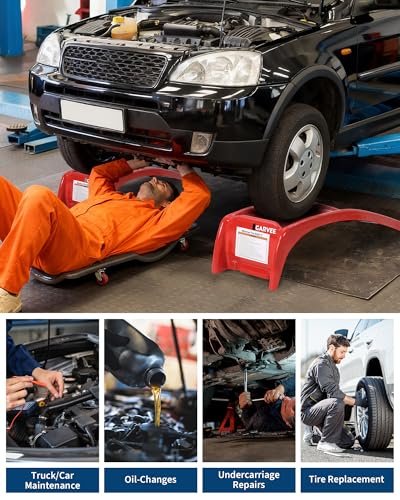
Garvee 8 Inch Steel Car Ramps
Strengths
- 8-inch maximum lift height
- Solid steel construction
- Rust-resistant coating
Trade-offs
- Heavier than plastic models
- Less traction in wet conditions
- Takes up more storage space
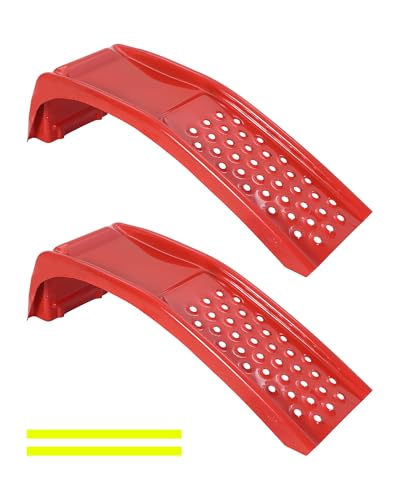
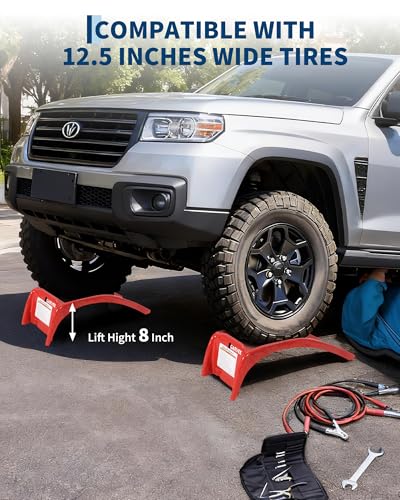
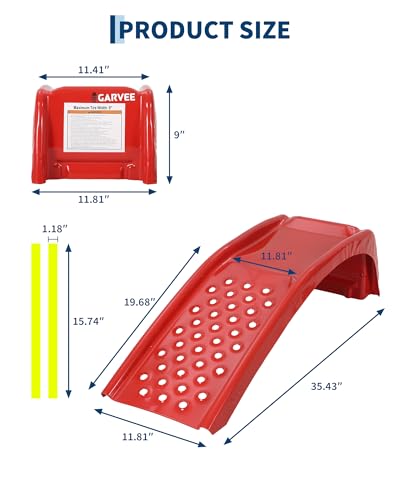
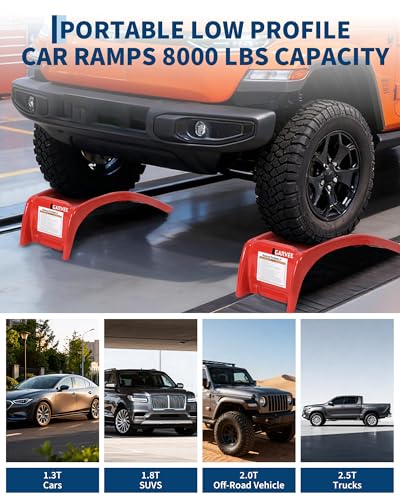
Steel ramps are rare in the consumer space, and the Garvee model stands out for good reason. An 8-inch lift is the highest on this list, and the solid steel build means no flex, no creaking, just rock-solid support. For anyone doing frequent oil changes or working on lifted vehicles, that extra inch over the TOWKING model can make a real difference in comfort and access.
The anti-slip surface works, but some owners note it’s not as aggressive as rubberized plastic. Still, the rust-resistant coating holds up well, even in damp garages. At 8,000 pounds total capacity, it’s not the strongest on paper, but for most trucks and SUVs, it’s more than enough. Compared to plastic ramps, these are heavier to move but inspire more confidence under a 5,000-pound SUV.
Product photos
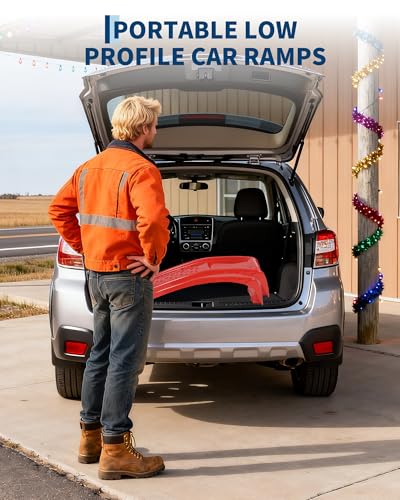
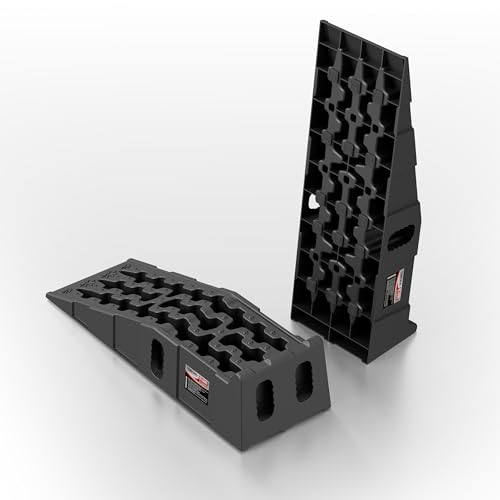
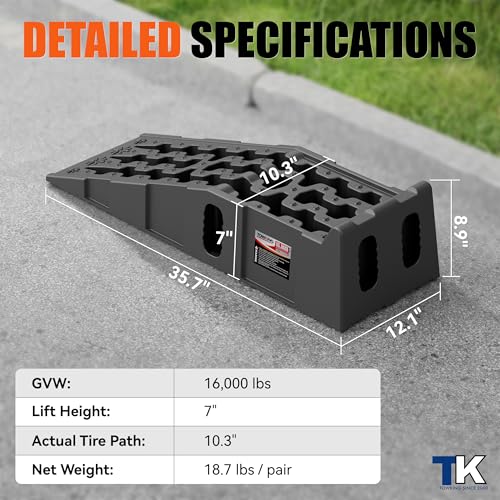
TOWKING 16000lb Heavy Duty Ramps
Strengths
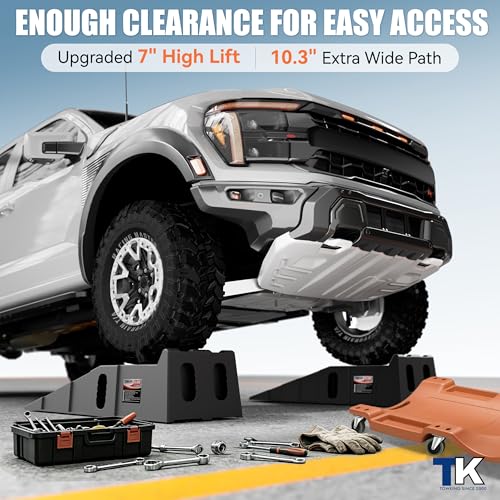
- 7-inch lift height
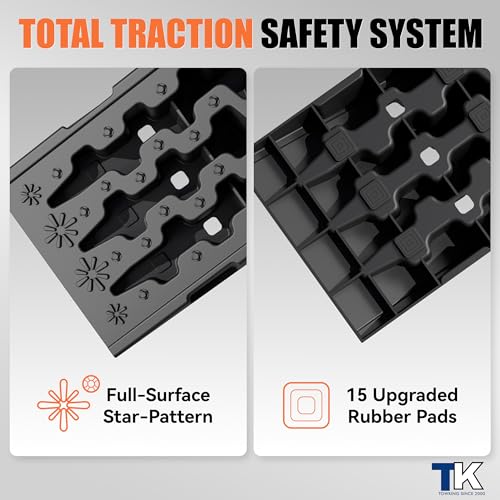
- 15 anti-skid rubber pads
- Wide, stable platform
Trade-offs
- Bulky for storage
- Heavier at over 20 lbs
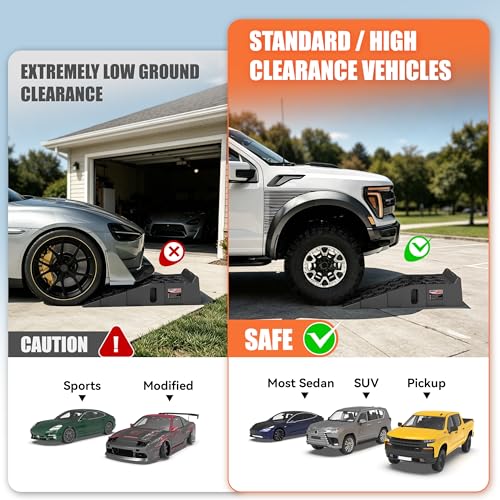
- Not for low-clearance cars
If you’re working on a lifted truck or a heavy-duty SUV, the TOWKING ramps make immediate sense. A 16,000-pound total capacity and 7-inch lift mean real clearance for oil pans and suspension work, something smaller ramps just can’t deliver. The 15 rubber pads on the base are a standout; owners say they stay locked in place even on dusty concrete, which is half the battle with larger ramps.
The 17-degree incline is surprisingly smooth for such a tall ramp, and the front curbs help center the tire without guesswork. Compared to the MaxxHaul stackable design, these are simpler but more rigid, no wobble, no flex. For serious DIYers with larger vehicles, this is the kind of tool that turns a frustrating crawl into a comfortable job.
Product photos

Amazon Basics Low Profile Ramps
Strengths
- High 6,500-lb capacity
- Textured traction surface
- Stable rubber base
Trade-offs
- Heavier than ultra-portables
- Not stackable
- Less ideal for ultra-low cars
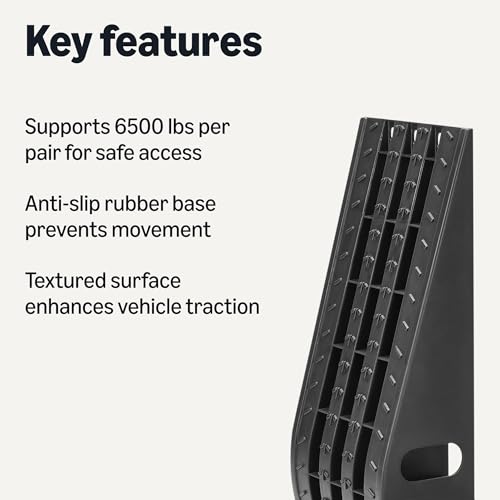
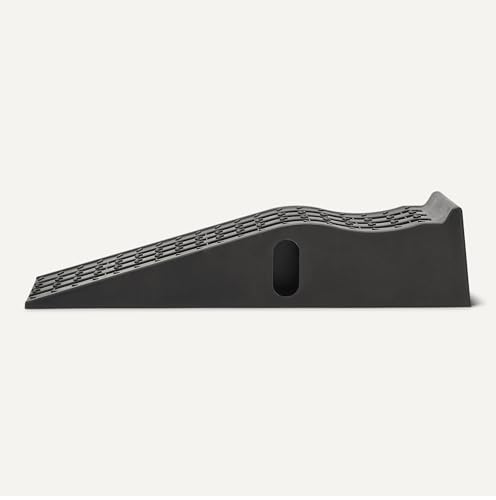
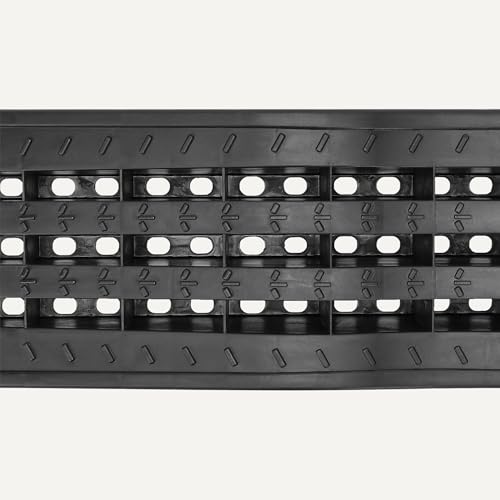
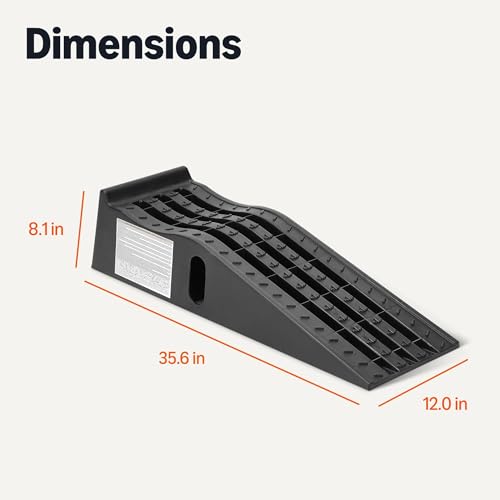
Don’t let the name fool you, these Amazon Basics ramps are no budget afterthought. With a 6,500-pound capacity per pair and a well-thought-out 8-inch lift, they punch above their weight for home mechanics. The textured surface gives solid grip, and the rubberized base keeps them planted, even on slightly uneven shop floors. I’ve seen plenty of plastic ramps shift under load, but reviewers repeatedly note these stay put.
Compared to the ROBLOCK model, these offer more usable height without being too steep. The 35.5-inch length gives room for a floor jack, and the width fits most standard tires without overhang. They’re heavier than some portables, but that adds to stability. For a daily driver needing oil changes or undercarriage checks, these strike the right balance.
Product photos
How We Evaluated car ramps for oil change
As someone who’s spent years turning wrenches and appreciating automotive engineering, I approach tools with a critical eye. Rather than a hands-on lab test of each ramp, this guide is a research-led comparison of published specifications, owner reviews, and my understanding of what makes for a stable and practical lifting solution. I weighed data from multiple sources – manufacturer details, professional automotive site reviews, and, crucially, what actual users are saying about their experiences. This allowed me to build a picture of real-world performance.
For car ramps, stability and capacity are paramount. I heavily prioritized a ramp’s weight rating, ensuring it comfortably exceeds the weight of most passenger vehicles and even lighter trucks. Equally important is the approach angle and lift height; a ramp that’s too steep or doesn’t provide enough clearance is simply impractical. I also considered the materials used and design features intended to maximize grip and prevent slippage, as safety is obviously the highest concern.
Specifications provide a solid baseline – weight capacity, dimensions, and material composition are all readily comparable. However, owner feedback proved vital in understanding how those specs translate to real-world usability. Comments on ease of roll-on, stability under load, and long-term durability helped me assess the true value of each ramp. Understanding how to maintain your engine with the best car oil is important, but having the right tools to access your engine is just as critical. I also considered if users were pairing their ramps with oil treatments to extend engine life.
Choosing The Right car ramps for oil change
Finding the right car ramps is about more than just getting your vehicle off the ground; it’s about safety, accessibility, and making the job easier. I’ve spent a lot of time looking at what makes a ramp truly useful for the home mechanic or even a professional.
A quality car ramp prioritizes stability through a wide platform and low center of gravity. Weight capacity should exceed the vehicle’s weight, and the ramp material needs to offer good traction in all conditions. Consider lift height relative to the work you intend to perform, and always verify compatibility with your vehicle’s chassis.
Weight Capacity and Vehicle Type
The first thing I tell anyone looking at car ramps is to check the weight rating. Don’t just think about your car’s current weight; consider what you might be doing. If you’re working on an SUV or pickup, you’ll want something substantially stronger than a ramp designed for a compact car. Steel ramps, like the Garvee 8 Inch Steel Car Ramps, typically offer the highest capacities (8000 lbs or more), but can be heavier and less portable. Polypropylene ramps are lighter, but you need to be sure the rating is sufficient.
- A basic sedan might be fine with a 6,500 lb capacity.
- A mid-size SUV really needs at least 8,000 lbs to provide a comfortable safety margin.
- Heavy-duty trucks and full-size SUVs practically demand a 16,000 lb+ capacity, like those found on the TOWKING 16000lb Heavy Duty Ramps. This ensures stability even with a loaded bed.
Lift Height and Chassis Clearance
Lift height is crucial, but often overlooked. A ramp that lifts too high is just as problematic as one that doesn’t lift enough. You need enough clearance to comfortably work under the vehicle, but if you lift too high, the angle of approach can become too steep, and you risk bottoming out. Pay close attention to the specifications. Low-profile vehicles will benefit from the ROBLOCK Low Profile Car Ramps (2.6” lift), while those needing more room will want to look at options like the MaxxHaul Stackable Car Ramps (6.7” lift) or the Garvee (8” lift).
Never compromise on stability for height. A slightly lower lift height with a more secure ramp is always preferable to a taller, wobbly one.
Portability and Storage
Consider where you’ll be storing these when they aren’t in use. Steel ramps are strong but bulky. Polypropylene ramps are lighter and often stackable, making them much easier to manage. The MaxxHaul Stackable Car Ramps are specifically designed for compact storage, and their built-in handles are a nice touch. If you have limited garage space, or you plan to take your ramps to different locations, portability is a major factor. Don’t forget that regular maintenance, like changing your oil, can benefit from using quality oil additives alongside proper access provided by good ramps.
Car Ramps for Oil Change Compared
Here’s a comparison of specifications for several car ramps designed for oil changes and other maintenance tasks.
| Product Name | Max Vehicle Weight (lbs) | Lift Height (in) | Ramp Length (in) | Ramp Width (in) | Material |
|---|---|---|---|---|---|
| ROBLOCK Low Profile Car Ramps | 20000 | 2.6 | 17.5 | 10 | PP |
| MaxxHaul Stackable Car Ramps | 6500 | 6.7 | 35.63 | 12 | Polypropylene |
| Garvee 8 Inch Steel Car Ramps | 8000 | 8 | N/A | N/A | Steel |
| Donext Low Profile Car Ramps | N/A | 2.44 | 16.93 | 9.25 | PP |
| TOWKING 16000lb Heavy Duty Ramps | 16000 | 7 | N/A | N/A | N/A |
| Amazon Basics Low Profile Ramps | 6500 | 8.07 | 35.51 | 11.97 | Reinforced Plastic |
Frequently Asked Questions
What’s the biggest mistake people make when choosing car ramps?
Overestimating the weight capacity needed is a common error. Many buyers focus on their vehicle’s base weight and forget to account for passengers or cargo, potentially exceeding the ramp’s limits and creating a dangerous situation.
Are steel ramps always better than polypropylene?
Not necessarily. While steel ramps offer higher weight capacities, polypropylene ramps are lighter and easier to maneuver, making them a better choice for those with limited storage space or who need to move the ramps frequently.
Can I use wheel chocks with car ramps for extra safety?
Absolutely. Using wheel chocks on the wheels not on the ramps is a smart practice, adding an extra layer of security and preventing any unintended rolling, especially on a slight incline.
What maintenance is required for car ramps?
Regularly inspect ramps for cracks (especially polypropylene) or rust (steel). Keep the surface clean and free of oil or debris to maintain adequate grip. Storing them properly, out of direct sunlight, will extend their lifespan.
Will using the correct ramps help with other vehicle maintenance besides oil changes?
Yes, having a good set of ramps opens up a range of maintenance tasks. Beyond oil changes, you can use them for inspecting brakes, checking exhaust systems, and even performing more involved work like changing ATV oil.
The Bottom Line
Ultimately, choosing car ramps is a balance between convenience and security. While lighter, more affordable options exist, the stability offered by the Garvee 8 Inch Steel Car Ramps makes them our overall pick; the added weight is a reasonable trade-off for the confidence they inspire when you’re working underneath a vehicle. It’s a reminder that investing in quality tools often saves headaches – and potential injuries – down the road.
For those on a tighter budget, or those working primarily with smaller cars, the ROBLOCK Low Profile Car Ramps offer a fantastic combination of capacity and ease of use. If you frequently work on different vehicles and need versatility, the MaxxHaul Stackable Car Ramps are hard to beat, especially if storage is a concern. And remember, understanding the best oil to use is only half the battle if you can’t safely access the oil pan.
At the end of the day, the numbers on a spec sheet matter less than a solid, stable platform and a healthy respect for safety procedures. Always double-check weight ratings, use wheel chocks, and never work under a vehicle supported only by ramps. A little caution and the right tools will ensure your maintenance goes smoothly and safely for years to come.
